


|
|
|
|
|
 |
 |
   |
livelihood analysis Sad
but true economy A
bitter pill environment Need
for inclusive development Trust
deficit
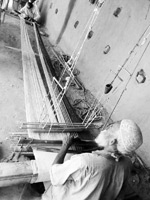
A thing of the past The diminishing handloom enterprise sounds death knell for local communities By Beenish Kulsoom For a means of living, rural people adopt diverse and
complex strategies, best described as 'livelihoods'. The livelihood
strategies adopted by them are, nevertheless, linked with their geographic
conditions, social positioning and economic considerations. In the case of
Pakistan, however, rural livelihoods – more than anything else – are
reflective of people's social groupings. Traditionally, people's livelihoods
strategies were based on indigenous skills, knowledge and tools, and this
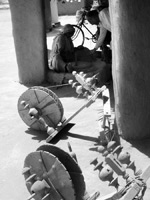
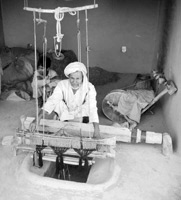
differentiated them as specific social groups. However, with the advent of market economy and shift away from traditional livelihood strategies, the poor are facing the challenge of adopting livelihood options opposed to their indigenous skill base. The people who traditionally derived livelihood through their ancestral skills, based on their ethnicity, are now being marginalised and labelled as poor. These people, who represented a unique identity and imparted diversity to the rural livelihood options, are fast disappearing and their skills are dying! Khaddis offer one such example. The ethnic group possessing the skills of spinning, dyeing, coning and weaving is fast disappearing due to the market forces and recurrent livelihood challenges. In particular, it is important to consider the case of paavlis (traditional weavers) based in Thal, southern Punjab. This community has been traditionally engaged in spinning, dyeing, coning and weaving to make different varieties of fabrics, such as khais (bedcovers), daris (rugs) and khaddar. In the past, artisans and craftspeople who worked on the development and marketing of different varieties of fabrics were never considered as poor, because their work was always in high demand. The situation has, however, changed drastically now. For example, there used to be 26 khaddis in the Tibba Imam
village (Tehsil Choubara, District Layyah), but now their number has
decreased to only two. "People are not taking up weaving as a
profession, because it has no more remained profitable, especially
considering that the prices of commodities are rising exponentially,"
says Manzoor Fatima, a local paavli. Khaddis have always been a symbol of antiquity and ingenuity, while charkha (spinning wheel) of purity. The Sufi poets of yore used these symbols for developing harmony between the people of the land, representing different ethnicities and religions. However, the charkha has now become a thing of the past without any utility in the household. It is interesting to note that in Sufi poetry, spinning yarn from the wheel is always referred to as a feminine task. In fact, according to the traditional division of labour among the household, making yarn has always been a women's domain. Men, on their part, would do the weaving. "The workload was divided on a fifty-fifty basis. Women made yarn, starched it and coned the thread for men to weave cloth on khaddi. They played an active role in making the final product," says Manzoor Fatima, while explaining the gender division of work when the whole family was actively engaged in making fabrics: Interestingly, she recounts the working mechanism followed in Thal by the more affluent social groups: "Before the advent of rain-fed cultivation, we were all herders who depended on our livestock. At the same time, women used to make yarn at home, which they would give to male weavers for making the final fabric, be it in the form of khais, dari or khaddar." With the advent of irrigation canals about four to five decades ago, the livelihood pattern of the area changed and the local people started engaging in activities that were financially more rewarding. Ghulam Rasool, 75, a resident of the Khehri Munda mauza, recalls that "before the canal was brought in, we all owned livestock and had time to work on khaddis. Now women's workload has increased manifold, because they have to do everything, from spinning yarn to weaving." The local herd management was the primary source of raw
material for the local communities before the advent of machine-woven cloth.
"Different varieties of cloth were made available for use in both
winters and summers. The local livelihood was based primarily on 'livestock
grazing', which meant that we had a major source for woollen yarn from
fleecing sheep. Similarly, cotton yarn was made on spinning wheels. Now, no
one has time to make yarn on the charkha," recalls Mai Asha, of Makhni
Khooh. The people still engaged in weaving have been forced to use cheap yarn. Most of them get second-hand clothes from flea markets in Multan and tear them down to get the thread, which is recycled for making khais and daris. Bundles of used clothes are sold in these markets by weight. The weavers purchase them, make the final product and sell it in Multan and nearby areas. In essence, the producer now has to rely on the market forces for survival. In the past, these people could get the raw material, either in the form of yarn or cotton, from the buyer himself, who could be a local landlord or any influential person who owned vast livestock. "The buyers themselves provided material and paid us for our labour. Only two decades ago, I had loads of work and was always burdened with consignments. Now it all seems like a dream," remembers Allah Bakhsh, the husband of Manzoor Fatima. "We always had work and we were content with our simple life. We had so much of work that our son also learnt the skill and started helping us." The situation has changed drastically within a few years. "Now no one comes to give orders or provide us raw material. That raw material was all locally produced and was not woven on machines. Now we rarely get orders for making khais, even if we arrange raw material ourselves," says Ameer Bakhsh, their son. The khaddis in use in Layyah can be termed the most conventional hand-weaving machines. However, weavers in other parts of the country also face the same set of issues as the traditional weaving community does in Layyah. For example, Tehsil Kamalia of District Toba Tek Singh was once considered as the hub of hand-woven khaddar, but now it has been badly affected by the changing market trends. With the advent of power looms and the availability of machine-made cloth, "the traditional skill-based work as a primary livelihood source has become a thing of the past," remembers Mohammed Anwer, who used to make cloth on a hand-powered khaddi, a model introduced by refugees coming from East Punjab after the partition. The settlers in Kamalia, who were mostly from Jallandhar, engaged in hand-loom production and developed a market for hand-made cloth in the region. Natives of Kamalia usually made lungis and lachas on traditional khaddis before settlers from East Punjab came, says UC Nazim Ijaz Rasool, whose family is engaged in the business since well before the partition. He remembers making khaddar on the traditional handloom with his father and grandfather. "Only marketing of products according to the current market needs can ensure the sustainability of this skill," views Abdul Majeed, of Dawoo Wala, who – with his extended family of eight households – is managing an enterprise and producing khais for markets in neighbouring districts. The family decided to adopt the profession as its main source of income generation after a local police official came to them with his own designs for ordering a few blankets. The family later improvised on these designs and now has more than 30 design patterns for khais. There are six khaddis in their small family enterprise, on which they make on average 10 to 12 pieces of khais daily. "We produce more than 300 blankets monthly and supply them to our buyers, who have been contacting us regularly," says Abdul Majeed, though he worries that the younger generation is hesitant to take up this profession because of low returns and strenuous labour. However, such enterprises need capital support and market links. Until craftspeople are able to earn enough, the younger generation will not be motivated to adopt the profession. "My brother makes over Rs500 daily, while after a week of hard labour I earn only Rs200. My children, seeing this disparity, do not want to learn the skill, no matter how hard I try to convince them," says Ameer Bakhsh, who is supporting his father to keep the khaddi alive in the village. His father, Allah Bakhsh, painfully remembers the charkha: "No woman spins yarn anymore. The symbol of piety is dead; everything is now determined by the market." Paradoxically, the demand for khaddar, as well as for other hand-woven fabrics, in big cities has increased in the last few years. Commercial enterprises have developed designs according to the latest fashion and have carved a niche for their products among the upper class, trendy buyers in urban centres. The trend towards hand-woven clothes and organic products is an indication of the people's changing attitudes in favour of natural and indigenous products. This ingenuity, however, needs support from the market, innovation from the producer and protection from the state; for making better use of the surplus labour densely populated on the rural frontiers. Civil society, represented by the non-governmental organisations, can play a major role in this regard, acting as an intermediary between the producer and the buyer at the macro level. In many developing countries, this model is used for keeping the dying skills alive; however, for tangible results, a more concerted effort from the state, civil society and the market is needed.
Stemming the rot The manner in which the majority of people continue to be denied their basic right of access to quality education has been instrumental in guaranteeing Pakistan's decline By Khayyam Mushir In 1927, HG Wells wrote that "human history becomes
more and more a race between education and catastrophe." More than 60
years after its creation, Pakistan – like a rusted and rickety old bus;
shaky administration at the wheel and a payload of terrorists, fanatics, inept
politicians and a corrupt elite – splutters and coughs along a barren,
potholed road which at this point seems sure to lead it to a precipice before
which there are no pit-stops in sight and beyond which there is no likely
return. Two of Pakistan's four provinces are currently in flames: one having been surrendered to a pack of armed fanatics who challenge the writ of the state in the name of their self-styled and perverse interpretation of religion; and the other finally threatening secession having endured decades of neglect and exploitation by the Centre. The country is bounded on either side by hostile neighbours and – with a crumbling economy – it finds itself at the mercy of international financial institutions and in a discomfited alliance with an increasingly intrusive superpower. While many an obstacle has beset the country on the road to progress and the establishment of a truly democratic, modern and just society, the diabolical manner in which the mass of people have been and continue to be denied their basic right of access to quality education has been instrumental in guaranteeing its decline. Education impacts all aspects of a nation's evolution: social, economic, political and religious. A first step in understanding this is to examine the evolution of the world's developed economies: At the dawn of industrialisation in eighteenth century Europe, individual craftspeople were the harbingers of innovation and informed the technology of the earlier stages of the Industrial Revolution. This brand of knowledge had its basis in experience, and could be acquired through practical instruction and observation. It was gradually replaced with more structured and systematic knowledge upon which hinged the development of industry and manufacturing processes, and which could only be acquired through a gradual process of instruction beginning with quality secondary education and leading into higher education. Industrialisation slowly spread beyond Europe, all the while advancing into more sophisticated forms well into the twentieth century. By this time, all developed countries were industrialised with the Third World still trailing far behind and relying on primarily agrarian economic models with trace elements of technology. The living standards between the first and third worlds were accordingly disparate and continue to be so to the present day. In the latter half of the twentieth century, knowledge-based economies began replacing the more traditional manufacturing economies. This phenomenon, which ushered in the information age, was a composite of progress in communications, scientific research and financial services. These knowledge-based economies use human capital as the primary driver of economic growth and, therefore, increasingly focus on specialised and technical theoretical and practical knowledge. With the enablers of economic progress having undergone this radical transformation, the world has become increasingly competitive with little space for people with basic skills or general education. That is why countries like Pakistan – without a mass education system that is able to equip people from all economic backgrounds with the knowledge and skills to participate in a globally integrated, complex and swiftly evolving world economy – are unable to participate in the economic progress and improving living standards their developed counterparts are able to enjoy. Second, the absence of free quality education determines the degree to which archaic interpretations of religion affect the everyday life in developing countries. People are left with no option but to rely on misinterpreted religious knowledge gained from informal institutions as a panacea for all their dilemmas. The most obvious example is when parents in marginalised communities, without any established public education system, find the alternative offered by madrassas (seminars) run by militant groups attractive for their children. In these institutions, young minds are brainwashed into believing that the most glorious achievements of Islam are to do with military conquests and that all Muslims in today's world – surrounded as they are by belligerent Hindus, Jews and Christians – are obligated to wage war for protecting themselves and their religion. Because of the ignorance of the managers of madrassas, children fail to learn about the accomplishments of Islam in the field of mathematics or science, and the emphasis placed on the acquisition of worldly knowledge. Without sound intellectual development through formal and balanced instruction in religion, science and the humanities beginning at the primary level and progressing through to at least the secondary school level, the ability to question tradition, superstition and dogma will not be instilled in young minds. This is the reason for the popularity of pirs and faqirs in our country, for the perpetuation of large scale quackery in every field from medicine to plumbing and carpentry, and for engendering an attitude of resistance and suspicion towards all forms of scientific progress and social change owing simply to its western origin. As a result, the mass of people are vulnerable to exploitation and economic deprivation, unwittingly surrendering their lives to mediocrity. Third, the above has a complementary effect on the political voice possessed by the people of a country and their ability to participate in politics. Without education, the opportunity to make informed choices in selecting leadership and ensuring that it serves the people's interests is compromised. Decade after decade, we have continued to elect the same political representatives from a handful of political parties, many of which have gradually acquired a distinctly feudal character. For new politicians and parties, breaking into the political scene is at least a gargantuan task because few people are prepared to break vote casting habits that elect parties on the basis of ethnic, religious or emotional ties. Moreover, the majority of people – because of their illiteracy – are unable to enter the arena of politics to represent their communities. With no competition and a secured vote bank, political parties elected time and again are liable to incompetence and corruption and, therefore, sure to disappoint. In the end, what is left is a jaded public that in our case even hankers for the return of a failed dictator. Fourth, the protection of the rights of women and their ability to participate in and contribute equally to the economic, social and political arenas can only be guaranteed through literacy. One wonders if the poor girl flogged in Swat would have suffered the same fate had she been part of an empowered community of women capable of standing up to men and challenging their barbarism. Studies all over the world reveal that women from literate communities are better placed to protect their sexual, physical and economic rights, and are able to guarantee higher mortality and literacy rates for their children. Fifth, an educated mass of people is required to protect the sanctity of democratic institutions. Regardless of the criticism that was hurled at lawyers in the last year and despite the probability that the decision to reinstate the ousted judges was more a case of political expediency, it must be acknowledged that the impetus for this historic achievement came from the perseverance of a body of professionals responsible for ensuring that the writ of law prevails in the land. Had it not been for the efforts of this group, can we for certain claim that the decisions taken by the ex-president in this regard would have ever been challenged? In Pakistan, the foundation for a sound public education system was never laid down. As a consequence, the investment in the sector, both intellectual and financial, has been maintained at dismal levels, fluctuating only in accordance with the manifesto of successive ruling parties or army generals in power. Quality education, therefore, became restricted to the private sector which, taking advantage of free market economics, has managed to make it one of the most profitable businesses in the country. The problem, of course, with private enterprise and profit maximisation is that it discriminates on the basis of wealth. With no place on their campuses (housed mainly in the plush residential sectors of the country's urban centres) for the children of common people, private educational institutions cater primarily to the elite, and in the last three decades have done little more than promote class divisions and emigration. They have done so by endorsing a hodgepodge of western values and culture, the product of which is an army of confused and alienated young men and women who find they have no resemblance and only a token connection with the social, cultural and political landscape of their country. This confusion in its least damaging form manifests itself in the boys and girls who speak in foreign accents without having stepped outside the country, who grow up worshipping the cult of western celebrity and its hedonistic lifestyle, and who eventually emigrate from the country to enjoy the economic and social freedoms that the rich economies of the West are able to offer. In its worse form, this confusion leads to disillusionment, accompanied with drug use and moral decay. Pakistan has only a few quality institutions of higher education and they are out of the reach of the common people. The public universities, for lack of resources, struggle to compete with their richer competitors and are unable to develop curricula and facilities or employ faculty capable of delivering modern education. However, progress is still possible in Pakistan, provided there is political will and commitment to achieve it. If education continues to suffer from the same neglect it has in the last 60 years, there is every possibility that the country will become the embodiment of the catastrophe HG Wells was referring to. Why women choose to procure the services of unsafe providers?
By Sarah Rahman Good health refers not only to the absence of disease or
infirmity, but also involves a state of complete physical, mental and social
well-being. According to the World Health Organisation (WHO), good health is a
resource imperative for leading a normal life. It is no surprise then that
Pakistan aspires to achieve the social goal of providing equal and adequate
health services to all its citizens. However, disparities between
socioeconomic and physical capacities of different segments of the population
pose a serious challenge to the achievement of this goal. Pakistan's public health sector remains entangled in a web of corruption and unprofessional practices, which has made the common people weary of heading in the direction of government institutions, despite the fact that they provide treatment free of cost. Similarly, the private sector is infested with its own set of problems. Therefore, most of the country's population cannot afford to procure the services of qualified professionals. Shahida (names have been changed to maintain privacy) resides in a small community on the outskirts of Karachi. She gave birth to a baby boy recently. Relating her experience, Shahida tells The News on Sunday that she made a conscious choice to give birth at home with the assistance of a midwife, because private hospitals cannot be afforded by those belonging to a humble background. The expenditure on delivery at a public hospital usually amounts to the same as that at a private hospital, if one takes into account expenses incurred on currying favour with the hospital staff. Shahida stresses that she is not in favour of public hospitals, because the staff is intolerant. Moreover, it seems to pay no heed to the privacy of the patient; several women are crammed together in the same room, with two women lying on each bed and just a scrap of cloth covering the lower part of their bodies. Shahida acknowledges that she is fortunate to have had a good experience during her delivery, because there have been many instances in her neighbourhood where the life of the mother or baby was jeopardised due to the incompetence of the provider. Dilemmas of health-seeking behaviour are exacerbated when individuals are willing to pay beyond their means for quality treatment, but they do not possess the ability to identify safe health providers from the surge of quacks that have plagued our private health sector. Every year, thousands of women fall prey to unsafe providers without realising the potential risk posed to their lives by the unhygienic and unprofessional practices of these self-proclaimed doctors. The Sindh government proposed in 2004 to give licenses to all qualified professionals and institutions, to ensure that citizens are protected from fake health providers, but no concrete measures have so far been adopted in this regard. The intimacy of emotions and the often uncomfortable and private nature of information shared between a patient and provider necessitates a relationship based on respect and trust. Within the context of Pakistan, where familial ties play an important role in conditioning social actions, a good rapport with a provider goes a long way and acts as the major impetus for women that continue to flock to such unsafe providers regardless of their qualification. For example, Shahida says she has great faith in her provider because since the last two generations women in her family have had their deliveries performed at home by the same midwife. She is also satisfied with the quality of the midwife's services. But her story is in stark contrast to that of thousands of women who are unaware of the dangers that lurk behind the unsafe practices of unqualified providers and who jeopardise their lives rather than questioning the credibility of those treating them. One such woman lives in another impoverished area of the city. Rukhsana, a mother of two, recounts the tale of her last pregnancy that traumatically ended in a stillbirth. She consulted a doctor who was renowned in her community for successfully dealing with complicated pregnancy cases. However, only a few residents knew that she was actually a con and had received no formal training. She had been posing as a qualified professional since many years, though her only skills comprised of what she had learnt while observing a doctor at a clinic, where she herself performed only menial duties, such as cleaning. She had a strong support base in the community, despite the fact that many women and children had lost their lives due to her incompetence. While performing the delivery, the 'doctor' injected Rukhsana three times and used her hands to try to pull the baby out of the birth canal, in order to hasten the delivery process. No qualified professional would have adopted such measures to force the baby to come out; therefore, it is extremely unfortunate that Rukhsana lost a healthy baby due to the ignorance of her 'doctor'. Rukhsana was overcome with grief when she found out, but the doctor was prompt to clear her conscience by claiming that she had known that the baby would not survive the minute she examined her. The 'doctor' said she deliberately kept quiet to stop Rukhsana from rushing to a hospital in panic. She asserted that Rukhsana should be thankful that she saved her from an unnecessary burden, because, in her opinion, hospitals are only interested in making money and the staff there would definitely have performed a c-section to expropriate large sums of money from her. Rukhana still believes this bizarre story and says she will always remain indebted to the doctor for saving her life, not realising that the actual reasons for her baby's death were lack of professionalism and use of unsafe practices. Rukhsana's story resonates with the plight of many women who are unaware of the perils of consulting unsafe providers. Trying to reconcile with the unfortunate circumstances that engulfed her, Rukhsana says: "The doctor did whatever was in my best interest. What happened to my baby was due to fate and I am grateful that I am still alive to take care of the rest of my family." (The writer works with the Collective for Social Science Research, Karachi. Email:info@researchcollective.org)
Surviving in a competitive world A narrow export base is not helping Pakistan's precarious financial situation By Hussain H Zaidi Export promotion is widely regarded as a powerful
instrument of job creation, improvement in the balance of payments (BoP)
position, economic growth and increase in the level of incomes. Like other
developing countries, Pakistan is also making efforts to increase its exports.
Though the country's exports have exceeded $19 billion, they constitute only
0.16 percent of global exports. The share of exports in gross domestic product
(GDP) is below 15 percent. Export promotion in Pakistan is facing both demand-
and supply-side constraints. The former is shown by a narrow export market
base, while the latter is evident from a narrow export product portfolio. Only 10 product categories make up 90 percent of Pakistan's total exports. Of these, the share of five – textiles and clothing, leather, rice, sports goods, and carpets and rugs – in total exports is 85 percent. About 65 percent of total exports consist of only one product: textiles and clothing. Pakistan's trade pattern is diametrically opposed to most countries of the world. Engineering goods make up nearly 60 percent of the total global trade, while the share of textiles and clothing products is only 6 percent. In contrast, in Pakistan's export mix, engineering goods are not even among the top 10 products and their share in the country's total exports is only about 1 percent. More than 75 percent of Pakistan's exports are destined to four regions: the European Union (EU), North America, the Middle East and China, including Hong Kong. Only two regions – the EU and North America – contribute nearly 56 percent of the country's total exports. Even within these two regions, there is lack of market diversification. More than 90 percent of our North American exports are purchased by the United States alone, while within the EU, only four countries – the United Kingdom, Germany, Italy and the Netherlands – buy 62 percent of our total exports. Ten countries account for more than 61 percent of Pakistan's total exports. The US remains the single largest export buyer, contributing to about 24 percent of total exports. The share of South Asian Association for Regional Cooperation (Saarc) countries in Pakistan's exports is only 2.53 percent, while that of the Association of South East Asian Nations (Asean) is 3 percent. The share of Eastern Europe and Central Asian Republics (CARs) in our exports is almost negligible. Pakistan is the member of two regional trade blocs: Saarc and the Economic Cooperation organisation (ECO). However, with the exception of Afghanistan, no other member of these two blocs is among Pakistan's top 15 export partners. Similarly, none of our major buyers is from CARs, Oceania region, Africa or Europe (excluding the EU or South America). Thus, export diversification offers a number of advantages. However, on account of a narrow export base, Pakistan cannot use the same. Firstly, export diversification is a safeguard against world price fluctuations. If a country has a narrow export base and relies on a few products, reduction in unit price of those commodities may adversely affect the monetary value of exports. However, if a country exports a large number of products, none of which has a major share in its total export earnings, reduction in international market price of a few export items will not affect the monetary value of its exports. Secondly, export diversification protects a country against demand fluctuations in international markets. In case a country exports only to a few markets, reduction in demand for its products will substantially affect the volume of its exports. This possibility looms large when political relations between importing and exporting countries worsen or the exporting country's image in the importing country deteriorates. However, in case a country has a large number of export markets, none of which contributes a substantially large portion to its total export sales volume, the repercussions of fluctuations in international market demand can be minimised. Thirdly, diversification is a check against market saturation. A country with a limited number of export markets and products may experience a reduction or stagnation in its market share if the markets become saturated. Fourthly, diversification is an effective strategy against product lifecycle. The four stages in product lifecycle are introduction, growth, maturity and decline. Profits and sales are highest when a product is at the growth stage. Conversely, when a product enters the maturity stage, sales and profits fall, leading to the decline in and replacement of the product. What is important about the product lifecycle from export point-of-view is that the same product can be at different stages of lifecycle in different markets. Take the example of mobile phones. This product is at growth stage in Pakistani and many other developing countries' markets. However, it is in the maturity stage in the markets of the EU and US. One advantage of having a large number of export markets is that the same product may be at different stages in different markets. As a result, fall in sales and profits in a mature market can be counterbalanced by increase in sales and profits in a growth market. Finally, diversification is an effective weapon against problems in supply chain. Suppose a country's export earnings are heavily dependent on textile products. However, in a particular year, there is a bad cotton crop and raw material needs cannot be adequately met from the domestic market. To overcome this problem, the country has to import cotton. However, imports may not be supplied in time or supplied at a higher price, which may make the final product expensive or less competitive. In either case, exports will be seriously affected, which, in turn, will substantially reduce the country's total export earnings. Pakistan's exports are open to all the risks associated with lack of diversification. Take lack of product diversification first. Textiles make up nearly 65 percent of the country's exports. In the wake of the abolition of textile quotas with effect from Jan 1, 2005, textile exports from Pakistan are facing intense competition from other countries, particularly India, China and Bangladesh. Both India and China are more price competitive than Pakistan, with the possible exception of bed wear, mainly because of the economies of scale and lower input cost. Bangladesh, being a least developed country (LDC), is entitled to duty free access in the markets of EU countries, collectively the largest importer of textiles and clothing products. Hence, successfully facing competition from their competitors in India, China and Bangladesh is a big challenge for Pakistani textiles and clothing exporters. China's share in global textiles and clothing exports increased to 25 percent in 2006, from 21 percent in 2004; while that of India to 3.41 percent from 3 percent. On the other hand, Pakistan's share went down to 1.84 percent in 2006, from 2 percent in 2004. Moreover, our economy being agrarian is overwhelmingly dependent on nature. A bad cotton or rice crop simply means a big shortfall in total export earnings. Now take lack of market diversification. The US and EU are the two largest buyers of Pakistani exports. Since political and economic relations go hand in hand, deterioration in political relations with the two is likely to affect trade relations with them. Another relevant factor is national image. Bad national image, particularly in the context of terrorism, religious extremism or human rights abuse, may cause consumers in the US or EU to reduce purchases of Pakistani products. It follows that Pakistan needs a broad export base in terms of both products and markets. However, a country's export performance is as good or bad as its industrial performance. The growth of the manufacturing sector in Pakistan has slowed down during the last few years. From 14 percent growth in 2003-04, it decelerated to 12.6 percent in 2004-05, 8.6 percent in 2005-06, 8.2 percent in 2006-07 and 5.4 percent in 2007-08. Pakistan has been trying to enter into preferential trade agreements (PTAs) or free trade agreements (FTAs) with other countries to diversify its export markets. The FTA with China came into force in July 2007; however, the Early Harvest Programme (EHP) came into effect in January 2006. The FTA with Sri Lanka came into force in June 2005, the South Asian Free Trade Agreement (Safta) in January 2006, the PTA with Mauritius in January 2006, the PTA with Iran in September 2006 and the FTA with Malaysia in January 2008 (building on the EHP that came into effect in January 2006). In the wake of the EHP / FTA with China, exports have risen by 62.6 percent to $556 million in 2006-07, from $354 million in 2005-05. In the wake of the FTA with Sri Lanka, exports have gone up by 28.7 percent to $201 million in 2006-07, from $156 million in 2004-05. Exports to Saarc countries excluding Sri Lanka have risen by 23 percent to $610 million in 2006-07, from $497 million in 2004-05. The Pak-Iran PTA has been instrumental in pushing up Pakistan's exports by 14 percent to $167 million in 2006-07, from $147 million in 2004-05. Thus, PTAs / FTAs have contributed to diversify Pakistan's markets, though the country is still relying on its traditional export destinations. (Email: ahussainhzaidi@gmail.com)
The local pharmaceutical industry is facing many problems, the foremost among them being discriminatory treatment by the government By Tahir Ali The global pharmaceutical industry has crossed over
$700 billion and is on the rise. Similarly, the Pakistani pharmaceutical
industry too is witnessing a surge. Sales of medicines in the country in
2008 were recorded at Rs105.86 billion, showing an increase of 18 percent
over the preceding year. Of these, multinational pharmaceutical companies
(MPCs) accounted for 49.98 percent of sales, pocketing Rs52 billion and
showing a growth of 13 percent over 2007. On the other hand, the share of
local pharmaceutical companies (LPCs) grew by 24 percent in 2008, and they
pocketed over Rs53 billion. Among the market leaders for the year, a Pakistani company is at the sixth number while another is at the tenth number. Twelve of the top 20 pharmaceutical companies are MPCs, while nine of 12 leading pharmaceutical products are marketed by them. Though the share of local industry has improved over the years, the country's drug exports have not increased proportionately. Pakistan exports medicines to 29 countries. According to latest figures, the country's total drug exports, growing by 23 percent annually, have increased to $128 million. The Pakistan Pharmaceutical Manufacturers Association (PPMA) plans to increase drug exports to $500 from the current $100 million by 2013. Medicines can be either research-based patent drugs or generic brands. The former are costlier and are marketed by MPCs, while the latter are cheap and are marketed by LPCs. Branded generics account for an estimated 75 percent of prescriptions in terms of unit-wise sales in Pakistan. MPCs control the market in terms of patent rights. Interestingly, no LPC has patent rights over any of the medicines used in Pakistan. It may be reminded that companies that originate research and production of any medicine are given property rights over the products for 10 to 15 years. Other companies cannot repack and market these medicines in a given market during that period. After the expiry of the said period, other interested companies may produce same generic medicines but they have to sell them at much lower prices. There are 692 pharmaceutical companies (though some put the figure as high as 1,000) in Pakistan. These include manufacturers, importers and promoters. Of these, 405 are registered / licensed drug manufacturers, including 28 MPCs. The rest are drug importing / promoting companies, most of which are local. Almost all the local companies are repacking and formulating industries that are dependent on the import of raw materials from abroad. There are 60 pharmaceutical companies in the NWFP. Of these, 35 are located in Hayatabad, Peshawar, followed by 15 in the industrial estate of Gadoon, Swabi. The rest are scattered in other parts of the province. The province's population, about 25 million, is 14 percent of Pakistan's total population. However, the provincial share in the country's total drug sales is as high as 25 percent and it is further increasing. In short, the NWFP has a huge market for medicines. Most of the people from the tribal and northern areas, as well as from the Pakhtun belt of Afghanistan, come to Peshawar for treatment. According to a rough estimate, medicines worth millions of rupees are traded daily in Peshawar's Dubgari Garden's medicine market, the biggest drug centre in the country. However, the local pharmaceutical industry feels alienated. Several pharmacists told this scribe that MPCs are unduly facilitated and patronised, while local companies are discriminated against. "Though at least 70 percent Pakistanis use locally manufactured medicines, the government treats LPCs unjustly; we are offered half the price paid to MPCs on the grounds that our standard is low. Can the government allow a multinational to charge more for oil than the Pakistan State Oil (PSO), which is also a local company? Certainly not, so why this injustice is being done to the pharmaceutical industry?" a pharmacist asks. The local pharmaceutical industry is against selective application of prices; it is for uniform rates across the board, because the labour, contents and raw materials are the same for both LPCs and MPCS. They also suggest leader-price-concept, which means that if an industry is allowed to sell a medicine, say, for Rs10, all companies making that item should be allowed to do the same. The price of a capsule of 250mg of Cephradine, for example, varies between Rs6.5 to Rs12 per capsule – the latter being sanctioned for an MPC. The local pharmaceutical industry wants this anomaly to be done away with, and stresses that prices should not be different for different companies. According to Mumtazuddin, deputy chief executive of a local pharmaceutical company, there is an imbalance not only between market prices of MPCs and LPCs, but also between different companies of the latter type. "There must be price rationalisation between local and foreign companies. Intra-local companies' price rationalisation is also needed. There should be balance between all. There should be standard criteria for price fixation. Quality control system, standard of production machinery, cleanliness, packing, experience of the company, cost of production, prices of raw materials and other things should be considered while fixing prices for a certain product. Ten percent differentiation between prices of different companies is justifiable, but it should not be left at the will of drug inspectors," he stresses. Mumtaz further says the cost of production had increased manifold due to costly power and gas tariffs. "Prices of all commodities have increased two to three hundred percent in the last couple of years. The prices of petrochemicals were stable until 2006. After that, the rupee devalued, thus packaging prices increased. Moreover, power rates went up, and cost of production and inflation also increased, during this period. As a result, now the cost of production exceeds the allowed retail prices, but the Ministry of Health (MoH) would not reschedule the prices. In fact, it has not done so since 2001. Therefore, we demand that the prices of medicines should be increased by at least 50 percent." It is pertinent to mention here that after the government declined to accept repeated demands for increase in the prices of medicines, pharmaceutical companies increased their prices by up to 143 percent in February. Now the matter is in the court. Market sources say the government recently accepted the demand and increased the prices of certain medicines. A dealer told this scribe that the price of 400mg Evian capsules has been increased to Rs440, from the old price of Rs225. Before 1996, the Pakistani government controlled only life-saving medicines, but the second Benazir government opted for control of all medicines, a decision over which there is still widespread resentment. "The governments of India and Bangladesh control prices of 74 and 114 medicines, respectively. The Pakistani government should control only the life-saving medicines, and the rest should be left to the market forces of demand and supply," a pharmacist says. The pharmaceutical sector in Pakistan is strictly regulated. However, against common perception, drug cost in medical care accounts for only 15-20 percent, while the rest is incurred on consultation, laboratory services, imaging facilities and hospital costs. This means almost 80 percent of the health sector remains unregulated. Pharmacists believe that prices invariably come down when there is open competition in the market. Famotidine, for example, was sold at Rs29 per tablet 25 years ago, but now due to open competition its price has come down to less than Rs3 a tablet. The PPMA wants an agreement with the government on a framework of policy implementation regarding for how long a policy and prices would be operative. "A long-term policy is badly needed, because arbitrary decisions and changes in policies spoil the confidence of investors. Moreover, the government should provide constitutional cover to the adopted policy," suggests Zahid Saeed, chairperson of the PPMA. Lack of official patronage for research and development, refresher courses for pharmacists, and interaction and exchange between the public and private sectors is also causing harm to the pharmaceutical sector. The MoH should include the PPMA in the formulation of the health policy, as well as involve it in related decision making. Support of the Ministry of Commerce, Federal Board of Revenue and the Planning Commission are also important for the sector. Health is a provincial subject under the constitution. Thus, local pharmaceutical industry representatives demand of the government to immediately hand over the sector to the provincial government. "Currently, the MoH is overburdened. Matters such as price fixation and review, registration of companies and drugs and their renewal, and drug manufacturing license and its renewal are all handled by the ministry. As people from the entire country converge on the MoH, this causes delay. The authorisation of the provincial health department for these issues will not only lessen the MoH's workload, but will also help in developing the pharmaceutical industry," Mumtaz says. The lengthy and complicated official procedure for drug license registration should be made easy, and unnecessary investigations about income of the prospective and intending industrialists should be avoided. Because medicines are highly sensitive to temperatures, storage facilities should be improved and air-conditioners installed at all pharmacies to avoid any loss to the efficacy of medicines. Illegal smuggling of medicines should be stopped forthwith and the trade should be regulated. The government should also slash duty on basic raw and packaging materials, build basic raw material manufacturing units, and ensure power availability or allow import of gas generators. (Email: tahir_ali1971@yahoo.com) environment The green generation Living in the twenty-first century, we are faced with
atypical challenges, demanding non-traditional and extraordinary
responses. Climate change and global warming are threats that have
surfaced on the scene in this century, and crammed both the natural and
social sciences communities equitably. The disruption of delicate poise of
all variables in earth's climate has been linked with global warming,
resulting mainly from the burning of fossil fuels: coal, oil and gas. The
carbon dioxide and other greenhouse gas emissions from the fossil fuel
burning, especially after the Industrial Revolution in the mid-nineteenth
century, is resulting in unprecedented changes in earth's ecology. According to Fourth Assessment report of the Intergovernmental Panel on Climate Change (IPCC), the average global temperature is expected to increase by 1.8-4.0 degrees Celsius over this century, resulting in increased frequency and intensity of extreme climate events – such as heavy rains, severe sea storms, droughts, glaciers retreat, sea level rise, etc – causing large-scale damages. There is an emerging consensus in both the scientific and political communities that the global warming must not exceed 2.0 degrees Celsius in order to keep the magnitude and extent of climate change within manageable limits, but this level can only be reached with drastic reductions in greenhouse gas emissions. Scientists are riveting on the agendas of cleaner and efficient energy technologies, and of reducing the world's energy dependence on fossil fuels. Renewable energy technologies characteristically generate energy from , such as , , hydel, biomass, , etc. Renewable energy systems encompass a broad, diverse array of technologies, and the current status of these varies considerably. Some technologies are already mature and economically competitive, such as geothermal and hydropower, while others need additional support to become competitive without subsidies. By their nature, renewable energy sources are generally carbon-free or carbon neutral. Most long-term energy projections show that renewable energy will play a major role in the global energy supply in the second half of this century, with capacity increasing gradually in the first three decades. According to 2006 report by the United Nations Environment Programme (UNEP), titled Changing Climates: The Role of Renewable Energy in a Carbon-Constrained World, the global energy demand will continue to grow, increasing by approximately 50-60 percent by 2030; hence, renewable energy technologies at a competitive cost offer promising prospects of meeting the world's energy needs as well as of fighting global warming. Starting on April 22, 1970, from Kent in the United States, each year the world marks the anniversary of the birth of the modern environmental movement for healthy and sustainable environment. The Earth Day 1990 went global, giving a huge boost to recycling efforts worldwide and helping pave the way for the 1992 UN Earth Summit in Rio de Janeiro. At the turn of the century, the Earth Day had Internet to help link activists around the world, reaching out to hundreds of millions of people in a record 184 countries. The Earth Day 2000 sent the message loud and clear that citizens the world around wanted quick and decisive action on clean energy. The Earth Day 2009, being celebrated today, will mark the beginning of the Green Generation Campaign – a two-year initiative striving for a carbon-free future based on that will end our common dependency on fossil fuels – that will culminate with the 40th anniversary of the Earth Day in 2010. In Pakistan, the World Earth Day with focus on renewable energy has a special significance of providing us the opportunity to concentrate on alternate energy resources (renewable energy), not only to meet the growing energy demands of expanding economy but also to be environment friendly. The worst power crisis has been demonstrating itself acutely for the last two years. The long hours of terrible load shedding paint a grim and bleak scenario, making even the more skeptical to reassess their opinion on renewable and localised energy generation for Pakistan's major population centres. According to Alternate Energy Development Board (AEDB) sources, Pakistan has a total electrical energy capacity of 19,522 megawatts (with a shortfall of over 6,000 megawatts), of which 64 percent is produced by the burning of fossil fuels, 33 percent by hydel sources and only 2 percent by nuclear sources. In recent years, the annual gross domestic product (GDP) growth rate has been 7 percent, while the corresponding increase in demand for electricity has been 8-12 percent per annum. The demand for electricity is projected to be 162,590 megawatts by 2030, with a shortfall of over 143,000 megawatts, requiring an investment of $150 billion. According to the Mid-Term Development Framework (MTDF), prepared by the Planning Commission of Pakistan, 5 percent of energy demand is to be met by renewable sources by 2030. However, predominant sources of energy remain natural gas (45 percent), followed by oil (19 percent) and coal (18.5 percent). The geo-strategic location of Pakistan offers a paradigm of inexhaustible renewable energy projects. Solar, wind and mini-hydel energy options are more feasible, given the geography and climatic conditions as well as the maturity of the technology worldwide, but options of bio-fuel are also being explored. Wind energy is now almost competitive with natural gas-derived electricity, and solar is not that far behind as well. Many European countries and the US have carried out successful experiments. India too has made huge inroads into these two sectors. According to AEDB sources, the current alternate renewable energy capacity of the country (excluding large hydro projects of over 50 megawatts capacity) is about 25 megawatts, but the potential is gigantic: marking 346,000 megawatts from wind and 2.9 million megawatts from solar energy. The revelations are woozy and boggle every Pakistani that why we are not exploiting this potential? In addition, potential for other alternate renewable energy technologies – such as geothermal, wave energy, tidal energy, biomass, etc – has not been researched to date. Given the right kind of support, over 10,000 megawatts can be added to the national capacity through renewable energy resources by 2030. There are ambitious plans to install projects generating 700 megawatts of wind energy at Keti Bandar and Gharo through the private sector; develop solar products, such as solar lights, solar fans, solar cooker, solar geyser, etc; provide electricity to already identified 8,000 remote, off-grid villages in Balochistan and Sindh through renewable energy sources; and replace 5 percent of total annual diesel consumption with bio-diesel by 2015 and 10 percent by 2025. What we really need is a focussed and integrated effort, commitment, and proper planning to meet the energy needs of the country using clean mechanisms. The lack of coordination between various agencies responsible for developing the alternate renewable energy sector must be addressed. Tariff subsidies need to be considered to attract investors. Laws and taxes should be designed to encourage self energy generation by the domestic sector, such as use of solar heating, solar geysers, etc. A growing renewable energy industry would offer new prospects of employment and business opportunities to local manufacturers and service providers. Investment in renewable energy, conforming to international concerns of low-carbon economy, is a win-win game and the government should focus on it without further delay. (The author is scientific information officer at Global Change Impact Studies Centre, Islamabad. Email: asma.rashid@gcisc.org.pk)
Need for inclusive development The scary tale of impending climate change-induced disasters does not make social sense, nor is it politically relevant By Zubair Faisal Abbasi The concept of economic growth and development has been at
the centre of planning in both developed and developing countries since World
War II. The idea of increasing peoples' choices and social well-being through
physical infrastructure and human development forms the core of development
interventions. However, the economic growth and development thinking can be
divided in two distinct periods, each resulting in different outcomes. The period between the early1950s and early 1980s is called the 'golden age of capitalism'. During this period, there was significant economic growth and development in most of the developing world. Many countries in different regions of the world made significant progress in industrialising and modernising their economies. East Asian economies later became symbols of growth with equity and inclusive development. Later, after the oil crisis of the mid-1970s, many countries ran into financial problems and a new economic system, called 'neo-liberalism', overtook the reigns of 'development policy'. Under the ideological supremacy of the neo-liberals, Prof Colin Kirkpatric argues that the economic growth has been divergent, not convergent. Divergent means that some countries were developing fast and had high rates of growth, while many developing countries were languishing behind in the scale of economic development despite implementing the neo-liberal policies. In the 1990s, Latin America virtually stopped growing, while sub-Saharan Africa witnessed negative growth. According to Prof Jeffery Henderson, in sub-Saharan Africa per capital gross domestic product (GDP) fell by 15 percent during 1980-2000, after having grown by 34 percent during 1960-80. Similarly, in South Asia, high levels of poverty and hunger persist with three-fourths of the region's population living below $2 a day – perching on weak and debilitated physical infrastructures, lack of sustained accumulation of human and financial capital, and ultimately multiple levels of social and economic exclusions. The purpose of this introduction is to set the stage for the main argument: the growth divergence and a general lack of inclusive development strategies during the last 30 years at the global and regional levels have created a situation in which developing countries will suffer more under the climate change conditions. They will suffer more due to lack of access to technological, financial and human resources for developing adaptation and mitigation strategies. They will suffer more due to huge gaps in development-oriented state-society synergies at the national and local levels, which signals the need for reforming the systems of governance and institutional effectiveness. Moreover, they will suffer more due to a global and national lack of unambiguous resolve to create situations of 'climate justice', which can result in 'poor-centred development' – one step ahead of the 'pro-poor development'. Under these circumstances, Prof Antony Giddens insists in one of his recent books that the climate change is so serious a threat that it goes beyond the traditional arguments of 'green lobbyists' and anti-modernisation activists. It needs skilful planning and action, while balancing the need for development of resilient infrastructure and national levels of carbon emissions. In fact, developing countries need to modernise their economies, which entails technological and infrastructural upgrading. In addition, they need environmental share in the global pie for equitable economic growth and development. Therefore, the main idea – without looking into climate change as an issue of economic justice and inclusive development – is that the scary tale of impending climate change-induced disasters does not make social sense, nor is it politically relevant. As argued by many experts – including Qazi Kholiquzzaman Ahmad, Sperling and Klein – the idea of 'climate justice and inclusive development' has to be made part of Millennium Development Goals (MDGs) and Official Development Assistance (ODA). They have emphasised that support for sustainable livelihood, equitable growth and governance must make the centre of climate change adaptation strategies. To them, adaptation projects are basically 'development projects'. It is being argued by the World Resource Institute, after surveying about 100 adaptation projects, that climate change adaptation is primarily a call for 'good development' that can respond to the needs of response capacity while addressing the drivers of climate change vulnerability in developing countries. In short, the core argument is that at the global, national and local levels, mainstreaming adaptation strategies must be part of development efforts. The Government of Punjab recently took a serious note of climate change impacts in important geographical areas of industrial and agricultural significance. However, the state in Pakistan must create policy frameworks in which the powerful socioeconomic and political groups do not privately reap benefits of consuming environmental resources, while increasing vulnerabilities of the poor. In South Asia, the failure of governments to control the 'resource capture' has damaged the capacities of the poor to manage their lives. While South Asia is highly vulnerable to climate change impacts – such as floods, cyclones, tornadoes, storm surges, saline intrusions, droughts and river bank erosions – there is a strong need for the countries in the region to make a comeback and use the 'collective social will' and 'autonomy' of the state institutions to ensure functioning of equitable and poor-centred inclusive development processes. In the modern economy, only a developmental state with entrepreneurial vision can bring such shifts in economic development situations. Notwithstanding this, the 'functionality' of institutional arrangements is more critical a factor than the 'forms' they take. Developing countries suffer from the 'form-fetish'. They create bodies (forms) without souls (effective functionality). This practice needs to be changed to effectively and adequately respond to the challenges of climate change with the vision of inclusive development.
(The writer is visiting faculty for Sustainable Development Policy Institute and Iqra University, Islamabad. Email: abbasi.zubair@gmail.com)
It is high time to think about the future of local government system By Dr Noman Ahmed Time is now up for the current crop of nazims and their
coterie as per the stipulated tenure. If everything moves as designed in 2005,
the present year should be the election year for the next lot of local bodies'
representatives. But no quarter is even raising the issue. The sitting nazims
are content with the prevailing status quo. They are fully aware that the
Centre has far more pressing issues to address than to turn its canons towards
them! They know that at least a short term extension in their tenures would
come their way when the need arises. Political parties, especially the large ones, have already lost a sizable steam during the duel fought over restoration of the judiciary. They consider it unwise to trigger another conflict in the present turbulent time. Members of bureaucracy are also trying to fit into the newly-assigned offices and roles after having braved through the whimsical transfers, suspensions and deputations. And the masses obviously follow the 'wait and see' approach to experience the better or worse in governance scenario with or without a local government. Like other domains of our political affairs, the institution of local government has been marred by trust deficit. Political leadership considers this tier as a competing rival, not as a collaborating arm. This feeling is especially widespread among the henchmen who control provincial tiers of respective parties. It is true that the local government systems have been bolstered by military dictators for their vested interests, but this fact does not undermine the merits and opportunities inbuilt in them. The foremost in this respect is the creation of a legitimate avenue for leadership development. In an arena where dynastic and aristocratic claims to leadership overstake merit at every end, the only option which can enable future political leadership to emerge is local government. There are hundreds of case studies of councillors, women / labour councillors, union council nazims, town / tehsil / taluka level leaders and district level representatives who were able to win their offices purely on merit and later proved their popularity through re-election. Even in the most dangerous labyrinths of the NWFP and Balochistan, these dedicated public representatives made tireless efforts to solve pressing problems related to education, health, social welfare, etc. Some of them were even devoid of any political affiliation and had to face the wrath of both right and left wing parties. The last two elections in 2001 and 2005 were reasonable tests for their performance evaluation, malfunctioning of electoral process notwithstanding. Real political culture cannot be nurtured without frequent practice of voting process. It is disappointing to note that the parties that demand promotion of democracy are probably the outfits closest to dictatorship. No internal elections are held with any credible process. Party heads nominate committees of cronies that are termed working or executives committees. Thus, the common people have little or no capacity to make inroads into this well-guarded oligopolistic enterprise. Practical experiences have shown that the day-to-day governance, as well as problems faced by the common people, needs focussed attention. If the decision making apparatus and concurrent actions are centralised in the provincial headquarters and in the person of chief minister, very little progress can be expected. Similarly, the expectation from bureaucrats alone to be sympathetic to the issues faced by the population may not be very realistic. A well-functioning local government system in urban and rural domains has to be strengthened after removing the various handicaps that it has faced. Continuing problems identified during the last eight years include poor quality of human resource, paucity of operational budgets, weak mechanism of monitoring, absence of effective audit and accounts procedures, financial dependence on the provincial / federal government, lack of control over police force, tutelage exercised by federal / provincial institutions, and inability to generate development finance for local scale works. One finds more developed cities like Karachi struggling with shortage of funds to strengthen vital services such as fire fighting. Many other contexts are even worse in service delivery outreaches. At many instances, local political interests also preponderate in decision making and implementation mechanisms. It may be worthwhile for the political leadership of the country to use local government tier as a tool for emboldening democracy. This can only be achieved after removing the anomalies and handicaps that exist in the system. Capacity building in the local service delivery; notification and enaction of various bodies, such as public safety commissions, citizen community boards or finance commissions; development of municipal services as specialised cadres; launch of appropriate taxes to generate local revenue; and the acceleration of mass contact to stretch the outreach of this tier are some of the basic steps in this regard. The elections to the local bodies must be held on party basis, but they be subject to a strict code of conduct. The past precedence has clearly shown that party affiliation and support automatically come into play. Violence and hooliganism must be controlled by tactful means during the conduct of electoral process. It claimed many lives during the past instance. The matter must be taken upfront as a core policy issue now. To generate a debate, it may not be out of context to suggest a multi-stakeholder conference to deliberate the matter in an open ended manner. The experience sharing and option forming approach may be applied. In this respect, the near-moribund National Reconstruction Bureau (NRB) may be tasked to manage this discourse and establish its own capacity by leading to rational decision making and consensus building on this vital count.
Home|Daily Jang|The News|Sales & Advt|Contact Us| |
|