


|
|
|
|
 |
 |
   |
hockey 'We
have all had to grow up' Lights,
camera, action boxing By Will Luke Hamid Hassan turns 22 in June. For a young man, he has already achieved the sort of dreams that many of his peers in Afghanistan might dismiss as outlandishly ambitious. Even foolish. Not only has he visited Europe and stayed in "lovely, lovely" Britain, he has reached cricketing nirvana by playing at Lord's. His aspirations jut as high as the rocky peaks of Bati'Kot in the eastern province of Nangarhar, near Jalalabad, where he grew up. By Hasan Junaid Iqbal Finally the Formula One's ruling body (FIA) has ruled that the diffuser fitted to championship leader Jenson Button's Brawn GP is legal. It's nothing like "rocket engineering" but the simple state-of-the-art split-level designed aerodynamic 'device' that generates more downward thrust at the rear of the car which increases the car's speed by around 0.5 seconds a lap.
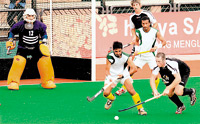
Below-par Pakistan remain hopeful for Asia Cup glory "You're looking for players whose name on the front of the sweater is more important than the one on the back. I look for these players to play hard, to play smart and to represent their country." – Herb Brooks, coach of the US ice hockey team that achieved the 'Miracle on Ice' victory over the Soviet Union at the 1980 Winter Olympics By Khalid Hussain What Pakistan hockey needs is its very own Herb Brooks. Regarded as one of the greatest innovators in sports history, Brooks was the key man when the Americans pulled off one of the greatest upsets ever, beating the mighty Soviets with a squad of mostly college players at the 1980 Winter Olympics at Lake Placid. His fiery leadership helped turn a ragtag team into Olympic champions. The one man in the Pakistan camp who has to play a
similar role is the team's head coach Shahid Ali Khan. Like Brooks, Shahid has seen it all as a player. He was a hero of the Pakistan team that won the 1982 World Cup in Bombay and also featured in the country's memorable title-winning campaign in the 1984 Olympic Games in Los Angeles. In February this year, Shahid was entrusted with the responsibility of putting an under-achieving Pakistan team back on track. It's certainly not an easy job. In their last major international assignment -- the 2008 Olympic Games in Beijing last August -- Pakistan crashed to an all-time low eighth position. Since then they have played little hockey at the international level and their rustiness was visible in this month's five-nation Sultan Azlan Shah Cup in Ipoh (Malaysia) in which they finished fourth, just ahead of debutants Egypt. Lack of match practice wasn't the only reason why they flopped in the tournament. They also lacked proper training. Shahid only got the job in February this year after another former Olympian Ayaz Mehmood, who was initially appointed as national coach, couldn't report for duty because of his commitments with Pakistan International Airlines. Ayaz works as PIA's country manager in Russia. The Pakistan Hockey Federation (PHF) wasted more than three months as it kept waiting for Ayaz to return home and begin training the national players. It only took a decision to replace Ayaz after it became evident that there was no other way. Pakistan could have started training for the Asia Cup last December, nearly six months before the start of the tournament. But they only began the preparations in March. A lot of time was lost. But Shahid says that alls not lost. "It is true that we are lagging behind other title contenders like India and Korea before the Asia Cup but there is still hope," he told 'The News on Sunday' in an interview. "What we need is real commitment and hard work from the boys. If they really realise what a great honour it is to play for your country and that very few people get that opportunity, I'm sure that they can do a great job at the Asia Cup," he added. He certainly is talking like Brooks did ahead of that memorable campaign for the 1980 Winter Olympics. In many ways, the current Pakistan hockey team also resembles that US ice hockey team that went on to write one of the greatest fairytale sports stories of all-time. They were clear underdogs just like Pakistan are as they get ready to begin the final phase of preparations for next month's Asia Cup in Kuantan, Malaysia. Pakistan will go into the Asia Cup less than a month after crashing to a morale-shattering fourth position Ipoh. The Greenshirts lost to hosts Malaysia, New Zealand and India to fall out of the race for the title clash and then faltered again against the Kiwis in the play-off for the third position. Following what seems like a series of unconvincing results in the Azlan Shah Cup, many experts are not even giving Pakistan a slim chance of the winning the Asia Cup to be played from May 9-15. To some extent, Asif Bajwa -- the PHF secretary who is currently attached with the Pakistan team as its manager -- agrees with them. "It's been twenty years since we last won the Asia Cup," he says. "Its actually been a long time that we last won any major event so to say that we will go to Kuantan and bring home the title will be childish," he told this correspondent. "We have given a below-par showing for too long and it might take some time before we start producing the desired results which is why I always suggest that all of us will have to show more patience," adds the former Olympian. But Shahid, one of Pakistan's most celebrated goalkeepers, is not ready to let the team's track record in the recent past to dents its morale ahead of the Asia Cup assignment. "We may not be the favourites for the Asia Cup but as coach I have this firm belief that we can win it. We will have to remain positive and rise to the challenge." In spite of Shahid's optimism, it's quite evident that Pakistan are far from being fully prepared for the Asia Cup. In the Asia Cup, Pakistan will have India and ever-improving China as their Pool B rivals apart from minnows Bangladesh. The Greenshirts have failed to perform convincingly against either of the two teams in recent times, a record that should be a cause of concern for the team management. But Shahid is quick to underline the fact that Pakistan will be bolstered by the return of four senior players including Sohail Abbas -- a drag-flick expert who has the record of scoring the highest number of goals in international hockey. He also says that the lessons learnt during the Sultan Azlan Shah Cup will help his boys in Kuantan. "Our results were disappointing at the Azlan Shah Cup but we achieved our primary target which was to warm up for the Asia Cup," says the coach. Shahid believes that his team was a bit inconsistent in the tournament but is quick to point out that it played very close games against all teams except for Egypt whom they outclassed completely. "Our main weakness in Ipoh was penalty corners both in offence and defense," he says. "But I'm hopeful of some major improvement in those areas because of the return of players like Sohail and (goalkeeper) Salman Akbar." Sohail, 32, has not played for Pakistan since the 2006 World Cup in Germany but is all set for a comeback in the Asia Cup along with three other senior players. Former captains Waseem Ahmed, Rehan Butt and Salman Akber are also likely to return for the Asia Cup. The quartet missed the Sultan Azlan Shah Cup because of club commitments in the Netherlands. Pakistan are also expected to induct a couple of junior team players including its prolific captain Abdul Haseem Khan in the 18-man squad for the Asia Cup to be named next week after trials at the National Hockey Stadium in Lahore. Shahid intends to carry out a series of strenuous training sessions at an Asia Cup preparatory camp starting in Lahore from Monday (tomorrow). It's a race against time as Pakistan are to fly for Malaysia early next month for the Asia Cup. They have planned a couple of practice games against hosts Malaysia and title-contenders South Korea before going into the tournament. They have to win the tournament to earn a direct spot in the 2010 World Cup to be played in New Delhi. If they fail to win the title, then the record four-time World Cup champions will face some risky business as they will have to feature in a qualifying event to make the cut for next year's edition of the quadrennial spectacle. The next four best teams from the Asia Cup will go into qualifying tournaments, tentatively set to be held this November in three venues -- Lille (France) and Auckland (New Zealand) and Dubai (UAE). There is general consensus among hockey pundits that winning a World Cup qualifying tournament will prove tougher than winning the Asia Cup. This is what happened with India who won the previous edition of the Asia Cup but lost in a qualifying event for the Beijing Olympic Games in Chile and failed to compete in the sporting gala for the first time in eight decades. India are the most successful hockey team in Olympic history with a record eight gold medals. Shahid is hoping that Pakistan -- the most successful team in World Cup history -- do not have to go through similar embarrassment. "If we fail to regain the Asia Cup title and are also unable to win a (World Cup) qualifying event, then our hockey will be pushed back into deeper crisis," he says. "There is no way we can afford such a thing to happen which is why I and my fellow coaches will try our level best to prepare a team capable enough of winning the Asia Cup." The Pakistan coach certainly sounds like a determined man. Whether he would be able to inspire his under-achieving charges just like Brooks did almost three decades ago remains to be seen. The writer is Editor Sports of The News, Karachi
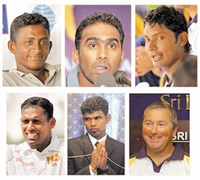
The cricketing victims of the March 3 Lahore attack take their first steps to returning to the game and life as usual By Alex Brown Ahsan Raza remembers laughing. "On the way to the ground, Chris Broad joked with me that there was no way the policeman outside the bus could resist a terrorist," Raza said. "He was carrying his rifle like a bat." It was the last time the Pakistani umpire's lungs
were at full capacity. Within moments of his exchange with Broad, two
bullets had passed through the Raza's body. Surgeons required 20 pints
of blood to stabilise his blood pressure while operating on his ruptured
liver and damaged lung. The father of three remains under regular
medical supervision. A month has passed since the terror attack outside the Gaddafi Stadium in Lahore, and the effects are still being acutely felt. For Raza, the fourth umpire for the Pakistan-Sri Lanka Test, the simple act of talking serves as a reminder of the moment his bus came under terrorist gunfire. His lungs ache. "I don't have words to describe what happened," he said. "It has left horrified feelings in my memory. But it will not stop me. I would love to umpire again. Definitely I will join the Elite panel. I was motivated before the attack and I am now more motivated after this. I recently received an email from Daryl Harper, who said one day we would again be umpiring together on the ground. I would like that." Raza and Thilan Samaraweera, the Sri Lankan batsman, were the most severely injured of the cricketing victims of the Lahore attacks. Samaraweera remained in hospital for a fortnight after surgery to his left leg, and is now undergoing painful sessions of physiotherapy to repair muscles damaged by a terrorist's bullet. His captain Mahela Jayawardene is under no illusions as to the enormity of the challenge before his young batsman, who prior to the attack had posted double-centuries in consecutive Tests. "There is still pain for him, but hopefully in
six-to-eight weeks he will be back training again," Jayawardene
said. "The wounds, I have been told, have healed better than was
anticipated. He is a very tough character. It is obviously a difficult
road for him after the terrible thing that happened to him. But knowing
him like I do, I am confident he will make a full comeback." Jayawardene might not bear physical scars from the attack, but his experiences since returning from Pakistan have been harrowing all the same. Along with his team-mates, he has undergone group counselling sessions, and as leader has watched as his players have struggled to come to terms with the events of March 3. "The guys have been through quite a bit of trauma, and everyone responds to that in their own way," he said. "Quite a few of the guys in the team are youngsters, and the way they have pulled through everything that has happened has shown a lot of maturity. But it is different person to person. One of the good things is that we have been able to spend a lot of time with our families, and I think that has helped. In Sri Lanka, family is a very important and close-knit aspect to our culture. There has been a lot of talking. "One thing which we have not yet done is sit together as a team in a bus again. That will be a big moment for all of us. But to my mind there is no safe place anymore. What we do is try to play cricket wherever it is possible, but with the attitude of these people, bad things can now happen anywhere in the world." Kumar Sangakkara concurs. Having replayed the events of Lahore in his mind countless times, Sri Lanka's captain-elect feels cricketing administrators must be more vigilant in their attitudes towards security in future. "You think about it all the time -- 'What if, what if, what if?' -- but even though the horror of it is running through your mind, you are very thankful to be in one piece and able to enjoy time with your family again," Sangakkara said. "Life and time do not wait. You have to try and find your way to a normal life again, and all the guys are looking forward to that. "We have all had to grow up a bit more and not be so naive to think that sportsmen are somehow immune from the troubles of the world. The Munich Olympics were probably the last time a sports team has been targeted like this. We lived in a bubble thinking we were untouchable. That has gone now. The sense of security has disappeared. These threats are real, and not just confined to one section of society." The resilience demonstrated by the Sri Lankans has been nothing short of astonishing. Within three weeks of coming under terrorist fire, the nation's cricketers -- with the exception of the hospitalised Samaraweera -- returned to the field for an inter-provincial Twenty20 competition. Among them was Ajantha Mendis, the 24-year-old spinner, who spent more than a week under medical supervision after being struck in the chest and back by shrapnel. Though the wounds have yet to heal, Mendis has nonetheless been in action domestically for Wayamba, and will be in the coming weeks for the Kolkata Knight Riders. "I never really had that kind of military training," said Mendis, who plays for the Army in Sri Lanka's first-class cricket competition. "Even though my rank is 'gunner', I have never taken part in war. I was really shaken. I knew I had had a brush with death. Physically there was pain, but the shock of what happened was the big thing. "It has been a very difficult time. There has been a lot of pain. But it is nice to be back on the field again and I am looking forward to soon joining my franchise in South Africa." The writer is deputy editor of Cricinfo
Befitting a competition conceived in one of the world's more volatile sporting regions, IPL splashes the cash and shrugs off the consequences By Abdul Ahad Farshori IPL Doosra is the stage for all the glitterati of
Bollywood alongside the players of Indian Premier League (IPL). All eyes
were on Cape Town as it was being invaded by the biggest celebrity
influx of the year. IPL organisers shifted this razzmatazz of cricket away from home as Indian government was not able to provide sufficient security to the stars of cricket -- both local and international. Lalit Modi the man behind IPL who is also the chairman of the league didn't want the same fate for IPL Doosra as that of the Champions League, which was also termed as a jinxed tournament by many cricket pandits. The need for change of venue came up after the government declined to provide it adequate security. The government refused to release paramilitary forces to guard the 59-match event since the dates clashed with parliamentary elections that will be held in five phases from April 16 to May 13. Leading cricketers, including Sachin Tendulkar, said that the IPL will not be the same away from home where they are used to being cheered by packed crowds upwards of 60,000. And even if the organizers are able to lower the crowd they would not be able to produce the same charisma that surrounded the tournaments first edition. As a popular holiday destination and film-shoot location, Cape Town is no stranger to the rich and famous, but with the glamorous Twenty20 tournament which started here on Saturday (yesterday), the city is set for a different sort of invasion. The eight teams in the Indian competition are owned by some of the biggest Bollywood stars and richest people in the world, who will stay at Cape Town's new five-star hotel, One and Only. Shah Rukh Khan one of Bollywood's biggest stars and the owner of the Kolkata Knight Riders, while Shilpa Shetty is co-owner of the Rajasthan Royals and a former winner of Celebrity Big Brother. Fellow actress Priety Zinta is part-owner of the Kings XI Punjab franchise and will jet in from Port Elizabeth where she has been watching the team train and attending the fourth ODI between South Africa and Australia. Business tycoon Dhirajlal Ambani is the head of the fourth-richest family in the world, and owns the Mumbai Indians through his conglomerate Reliance Industries. If that weren't enough, the various wives and girlfriends (WAGS) of the players due to compete in the IPL opening weekend will add extra sparkle around Cape Town. England batsman Kevin Pietersen will return to his homeland on Thursday with wife Jessica Taylor. Bollywood actress Lakshmi Rai is expected to spend some time in Cape Town watching India's heartthrob captain Mahendra Singh Dhoni, with the duo rumoured to be dating. Celebrity watchers will hope Andrew Symonds' girlfriend Katie Johnson, recently voted Australia's top WAG in an online poll will add some Australian flavour by following his exploits with the Deccan Chargers. And there's the local contingent, with Jacques Kallis' model partner Shamone Jardim and actress Jeanne Kietzmann, girlfriend of Dale Steyn, set to represent the host nation at gatherings set to dazzle South Africa's fairest city. From our view point The Indian Premier League will be missing one spicy ingredient from its heady mix in 2009 after Pakistan's exhilarating players were exiled from the money-spinning tournament. The Pakistan government banned its players from participating in the IPL after political relations with India deteriorated in the wake of November's terror attacks in Mumbai, which New Delhi blamed on militants based across the border. By the time the IPL was relocated to South Africa Pakistani players' contracts had already been either terminated or suspended. The IPL refused to include Pakistan players even after the relocation, claiming new stars had been bought by franchises as replacements. Even two of Pakistan's world class umpires Aleem Dar and Asad Rauf were left out of the mix. Pakistan's limited overs series against Australia from April 22-May 7 in the United Arab Emirates, which clashes with the first half of the IPL, will also divert the attention of television viewers away from events in South Africa. But for the fun that the people in Pakistan had last year watching this extravaganza there will be a change in attitudes for the second half of the competition which stretches over five weeks and ends on May 24. With hardly any international cricket in mid-May the fans will turn towards the IPL and the GEO super sports channel showing the matches is also drumming up the event. All-rounder Sohail Tanvir played a leading role in Royals' title triumph, taking 22 wickets to finish as player of the tournament. Fast bowler Shoaib Akhtar, who in spite of playing only four games for Kolkata Knight Riders was a huge attraction. Befitting a competition conceived in one of the world's more volatile sporting regions, the IPL splashes the cash and shrugs off the consequences. Meanwhile, IPL chairman Lalit Modi, under fire for shifting the event to a different continent, will require his own beefed-up security after reports his life was under threat from India's underworld. The IPL's riches have not been entirely successful in their seduction techniques. Much to the delight of the traditionalists, the likes of Australians Nathan Bracken, Brett Lee and Andrew Symonds will miss the first three weeks because of the ODI series against Pakistan in the UAE. Australian skipper Ricky Ponting, Michael Hussey and Mitchell Johnson have opted out of the IPL entirely, preferring to concentrate on the forthcoming Ashes. England stars Kevin Pietersen and Andrew Flintoff were sold for 1.5 million dollars each, bankrolled by the new rich of India's staggering financial transformation. Pietersen was bought by liquor baron Vijay Mallya's Bangalore Royal Challengers while Flintoff went for the same price to Chennai Super Kings. However, both men are required for England's home series against the West Indies, so will play IPL just for the first two weeks. Amongst other stars to command huge auction fees were highly-rated South African Jean-Paul Duminy, bought for 950,000 dollars by industrialist Mukesh Ambani for his Mumbai Indians team to play alongside Sachin Tendulkar. Shane Warne's Rajasthan Royals, the 2008 champions, who are partly owned by Bollywood actress Shilpa Shetty, created a stir when they picked up 34-year-old South African Tyron Henderson for 650,000 dollars. Bangladesh seamer Mashrafe Mortaza, whose base price was 50,000 dollars, went to Bollywood star Shahrukh Khan's Kolkata Knight Riders for 600,000 dollars. There will be some intriguing line-ups. Warne can call upon old adversary Graeme Smith, the South Africa skipper. Pietersen, who turned his back on his native South Africa to play in England, has Proteas wicket-keeper Mark Boucher alongside him at Bangalore along with Indian stalwarts Rahul Dravid and Anil Kumble. India skipper Mahendra Singh Dhoni, who was purchased by the Chennai franchise for 1.50 million dollars in 2008, has Flintoff, Muttiah Muralitharan and Makyaha Ntini. Delhi Daredevils will be led by Virender Sehwag with a squad which includes the 40-year-old Glenn McGrath. The writer is a sub-editor at The News, Karachi boxing Boxing blues Pakistani pugilists have earned numerous laurels for the country in the past but their future appears to be grim because of a variety of reasons By Alam Zeb Safi It is an undeniable fact that supremacy in any field
could only be maintained through solid long-term planning. Once Pakistan
was a great force in the world of squash, hockey and even snooker but we
lost those glorious days after the cream of our sportsmen retired and
now it looks quite difficult to reclaim all the prestigious world titles
in these games. This happened because the concerned authorities did not
take enough pains to look into the future as well. Had they run the affairs of these sports through long-term planning by focusing on building competitive back-up to replace the stalwarts, Pakistan would still have been the rulers in the sports world. A similar story plagues the exciting sport of boxing though its achievements were not on global level like that of squash, hockey and snooker but at least it remained a medal-producing discipline for the country at Asian level and even helped us win an Olympic bronze. Pakistan launched their campaign of wining medals at Asian level by lifting two silver and two bronze medals in the third Asian Games held in Tokyo in 1958. The start was encouraging and the productive march was kept intact till the 14th Asian Games held in Busan (South Korea) in 2002 when our pugilists returned with a gold medal through Lyari-born Mehrullah Lassi, four silver and a bronze medal. From 1958 to 2002, Pakistan never returned from Asian Games without any medal, winning a total of 58 medals including six gold, 17 silver, and 35 bronze medals. Besides these achievements at the Asian level, Syed
Hussain Shah made Pakistan proud when he grabbed a surprise bronze medal
in the 1988 Seoul Olympic Games, the only medal the country has so far
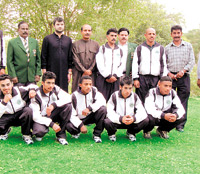
managed in boxing in the history of the mega event. But then came a twist to the success story. Pakistani boxers returned empty handed from the 15th Asian Games Doha in 2006. The decline worsened when our boxers did not qualify for the 2008 Beijing Olympics for the first time in history. Most of Pakistan's achievements in boxing came during the era of Professor Anwar Chowdhry, who had in his hands the reins of not only the Pakistan Boxing Federation (PBF) but also of international boxing governing body (AIBA). Chowdhry was AIBA president for 20 years and served the body in a capacity of secretary-general for 12 years. He also worked as AIBA vice-president for eight years. Chowdhry ruled the Pakistan Boxing Federation (PBF) as president for 20 years, also acted as secretary for 12 years and chairman for four years. Ironically, as he lost his seat as AIBA chief, a sudden decline was witnessed in Pakistan's boxing arena. The presence of Chowdhry in AIBA might have benefited the national boxers from an angle on which much debate has already been made in the media. But one of the drawbacks of Chowdhry's era as the country boxing chief was that he did not care for developing strong base for future use and only focused on few top-ranking boys for achieving short-term gains. After Chowdhry made an exit from AIBA and also PBF, the responsibility of running the affairs of boxing fell on the young shoulders of the Doda Khan Bhutto (PBF president) and Muhammad Akram Khan (secretary). The new set-up looks determined to bring boxing out of crisis. Akram Khan will tell you about the PBF future plans which the federation intends to implement to revive Pakistan's lost glory in boxing. Akram admitted that the main reason behind Pakistan's sharp downfall in boxing is that for the last ten years no work has been done at grassroots level. The Cuban coaches used to come and train the top-ranking boxers in the national camps. Though this strategy was effective for achieving short-term gains and Pakistan used to lift medals at the South Asian and Asian level but it damaged the future of the game as there was no one left on the benches to replace their seniors. In order to broaden the base, PBF plans to set up academies at regional level in all the four provinces till June this year in which the boxers from 13 to 16 years of age will be trained. The three-time Olympian Syed Ibrar Hussain Shah, who is also a qualified coach, has been assigned the task of looking after the academies as an in-charge. The PBF secretary said the Sialkot-based multinational sports equipment manufacturing company "Green Hill" will sponsor this training project. Professor Chowdhry has also promised to provide equipment to the boxers in these academies. "Pakistan have a lot of talent in boxing. Currently, there are around 400 such boxers who play regularly while there are 3000 such boys who compete on seasonal basis. Around 2500 school boys in between the age of 13 to 16 years are also competing regularly. Luckily, we have got a substantial pool of boxers but we need to form a polished and well-trained base to ensure a long-lasting future for the country in the game," Akram said. He said the PBF have finalised a deal with the Cuban coach Francisco Fernando and he will be brought here after the Pakistan Sports Board (PSB) will give its formal approval. Fernando has also served as an assistant coach of the Cuban national team and is believed to be the right man for the job. The same coach will impart training to a pool of 25 to 30 top-ranking boys besides preparing the cream for the international assignments. Akram said Pakistan is currently experimenting with different youngsters at international level so that a better pool could be formed for the 11th South Asian Games to be held in Dhaka early next year. The federation has also sent boxers to the Asian Championship to be held in China in June and once the Cuban coach will arrive here more planning will be made for the event. He said that the lot which will be used in the SAG spectacle will be further developed through sheer training and international exposure so that they could produce encouraging results in the 2010 Guangzhou Asian Games. Akram stressed that when the boxers will start performing at the Asian level then their qualification for the 2012 London Olympics would not be difficult and people would see that the national boxers will once again make it to the prestigious event. "But for all these comebacks the government will have to fund the PBF generously so that a comprehensive effort could be made on implementing its policies," Akram concluded. The writer is a staff member of The News, Karachi. Email: 73.alam@gmail.com
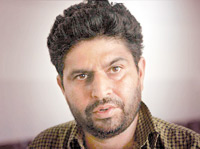
Hamid Hassan picked up a bat as a refugee in Pakistan and his life has been cricket, cricket, cricket ever since By Will Luke Hamid Hassan turns 22 in June. For a young man, he
has already achieved the sort of dreams that many of his peers in
Afghanistan might dismiss as outlandishly ambitious. Even foolish. Not
only has he visited Europe and stayed in "lovely, lovely"
Britain, he has reached cricketing nirvana by playing at Lord's. His
aspirations jut as high as the rocky peaks of Bati'Kot in the eastern
province of Nangarhar, near Jalalabad, where he grew up. Afghanistan's improbable rise has been well documented. Less obvious is which among them have the talent to succeed for years to come. Hassan's career has only just begun, but his whippy action and pace have already impressed the likes of MCC's Head of Cricket, John Stephenson, and Mike Gatting and Robin Marlar, all of whom were won over by his natural ability to bowl quickly, and rushed him on to the Lord's ground staff in 2006. He has been clocked at 90mph and, a few days ago was too quick for Ireland in the World Cup Qualifiers. Four were bowled in Hassan's 5 for 23, his best figures, in Afghanistan's greatest win. Like the once-potholed roads of Jalalabad, Hassan's path has been predictably bumpy. As many of his team-mates have, Hassan's family sought refuge in Pakistan -- a journey trod by thousands, exemplified in its treacherousness in Khaled Hosseini's A Thousand Splendid Suns. "We moved from Jalalabad when I was five or six. It became too unsafe. Really unsafe, with bombs and so on. Our house was shot at, too, but we all escaped. So, we moved to Peshawar. I saw cricket for the first time in Peshawar, in Tehkal. Boys playing on streets and roads -- everywhere. And I just picked up a bat and started hitting balls. I didn't know how to hold it, but I just wanted to play -- hitting it like a baseball bat. From then on, life was cricket, cricket, cricket." School got in the way, or tried to. His family were all bored by the game and unimpressed by his seemingly foolish ambition to forsake education for cricket. "I had to play in secret," he says, with detectable pride. "My father always hated cricket. In an exam, I'd just write my name at the top and the date and throw it down and run away. My dad heard about me failing one or two papers, so I began revising from 2am until midnight. "But eventually my mum said 'Okay, it's your life, I won't tell you any more.' My father was always angry, but now he phones me and says: 'Hi son. I am so proud of you.' He phoned me last night after my five wickets changed the game (against Ireland), and he was so happy. 'Do it again for Afghanistan, son. Do it for me.'" So impressed were his once-apathetic family that a few days ago, sweets were handed around his tiny hometown. "Our village boy took five wickets!" they sang. "They bought a huge lamb and gave it to all the poor people," Hamid said." They spent 100 dollars on it and then handed little bits around to everyone, as many poor people as they could. All in my name. It was incredible." Like all parents, Hamid's only want what is best for their son. They may not know or care that he learned reverse swing from one of his heroes. And his mother would certainly be more alarmed than proud that one of her sons nearly broke toes of several opposing batsmen a couple of years ago. "We played against MCC in Mumbai, March 23, 2006. I remember it well. It was the biggest day in my life. The ball was 20-overs old and I came on in training shoes. Flat shoes. Not spikes. "So I pitched it short, and the keeper went back a bit. And he kept going back. I pitched it up and hit some of them on the toes -- four were injured. I finished with something like 2 for 8 from six or seven overs. When I finished the game, this friendly old man called me over. 'Come here, son. How old are you? What are you doing?' he asked. I was 19 or something. He said: 'Why are you bowling in these shoes? You have to try spikes'. I had only ever bowled in flat trainers. And he said I should come and learn cricket in England. "I didn't know who he was. Maybe he was just a fan, just some Englishman watching the game. I thought he was just joking. Then I heard other players talk to him. 'Hi, Mr Robin Marlar', they say. And then I realised he was president of MCC -- a big man. I was shocked. They invited all the players for dinner, and he called me over. 'Hamid, come here, I want to talk to you alone.' We spoke for 30 minutes about what I wanted from my life, if I wanted to play in England, and I said, 'Of course, I'd love to.'" And so in 2006 he came to England and met his hero, Andrew Flintoff, while England and Pakistan practised at Lord's. Even mentioning Flintoff's name has Hassan shaking his head. "I learned reverse swing from him over those four days. When I first saw him, I was in shock -- my mouth wide open. He had big hands -- a heavy, huge person and brilliant bowler. A brilliant body and a good face, too -- everything just like an English hero. So friendly, always smiling, always encouraging. 'Good ball, buddy,' he'd say. "I hit Monty Panesar on the helmet and broke it. He said, 'You owe me 200 pounds, these things are expensive'. Well, I didn't have any money, but luckily he was joking." So impressed were they by his pace and control, MCC organised, and helped pay, for him to play Lancashire League cricket in 2007, with the help of Asif Mujtaba to translate, after Afghanistan's maiden tour of England in 2006. "It was a trial game. The keeper was standing quite close. Mujtaba was umpiring and an MCC person was nearby. And the keeper said, 'Yeah, not much pace here. He's a bit slow.' So Mujtaba turned round and said 'Right, come on boy. You are Afghan. Fire up.' So I fired in a quick one which smashed the wicketkeeper's hands, and he threw off his gloves. I was timed last year at 90mph." England, he says, was not unlike the small district of Peshawar where he moved to as a small boy. Fruit is abundant in Tehkal, a green and lush land, where olive trees grow wild. "We saw England in films and movies, but it was so different. When I arrived, it was like seeing a film in colour for the first time, having watched it in black-and-white. Different people, culture, styles, everyone so nice. English people are very kind and friendly. I was playing in Rochdale: small hills, rolling little hills -- green, so green everywhere. Lovely, lovely place. I spent five months there. I would love to go there again." His family no longer hate cricket, now that they have begun to see the world through Hassan's wide eyes. And Hassan's ambitions are predictably lofty. "I want to be a future big international cricketer. I want the world to know me, to be famous. 'Look, it's Hamid,' they might say." Mostly, though, his mission is to spread the good name of Afghanistan, to break down the barriers of prejudice. "Everyone knows the country has had 30 years of war, with the Russians, the Americans. And still the Americans carry on" A silent pause confirms his distaste for the current situation. "But hopefully we are showing the world we are a good team and a country of friendly, peaceful people. We are not what people say, when they say we only fight. We are also good cricketers and (have) good talent, and want to prove to the world Afghanistan is a country full of people like us. Insh'allah we will do that." A few hours later, Afghanistan's World Cup hopes lie in tatters after they are thumped by Canada. The team lay out prayer mats just inside the boundary rope, and most of the squad kneel in silent reflection while the Canadians whoop and cheer. Afghanistan may not reach the 2011 World Cup, but Hassan's own personal future seems far more assured. The writer is assistant editor of Cricinfo
By Hasan Junaid Iqbal Finally the Formula One's ruling body (FIA) has ruled that the diffuser fitted to championship leader Jenson Button's Brawn GP is legal. It's nothing like "rocket engineering" but
the simple state-of-the-art split-level designed aerodynamic 'device'
that generates more downward thrust at the rear of the car which
increases the car's speed by around 0.5 seconds a lap. The long-awaited verdict confirms the Briton at the top of the driver standings after sensational wins in the season's first two races in Australia and Malaysia -- after Ferrari protest over the device. The ruling came after a five judge FIA Court of Appeal panel sat to hear complaints that the diffuser on the Brawn, Toyota and Williams cars contravened the sport's new technical regulations. "Based on the arguments heard and evidence before it, the Court has concluded that the (Australian) stewards were correct to find that the cars in question comply with the applicable regulations," FIA said in a statement. After the Melbourne race stewards had rejected their appeal BMW Sauber launched another similar protest before Sepang, Malaysia which again was rejected. The FIA ruling means that the seven teams whose cars do not feature the diffusers which enhance downthrust and consequently improve a car's handling will probably try to incorporate them in their designs. All three teams are now free to compete in Sunday's (today) third-leg of the season in China with Brawn leading the constructor's title race on 25 points from Toyota in second on 16. In the driver's standings Button leads on 15 points from his teammate Rubens Barrichello on 10 with Toyota's Jarno Trulli on 8.5 points in third. "I am understandably delighted with how our season has begun. However, we are only two races in and everyone at the team is aware that our competitors will not stand still," said Button. "We fully expect a tough fight from here if we want to continue our early successes." And now Ferrari, Red Bull and Renault face a scramble to copy the design but it will almost certainly be 'too little too late' to match the Brawns in Shanghai. The success of the Brawns and Toyotas have contributed to what look like states of crisis at world champion Lewis Hamilton's McLaren team and that of last year's constructors' champions Ferrari. In spite of having his third place in Melbourne stripped from him over the incident, Hamilton has been doing his best with a poor car but his team mate Heikki Kovalainen has yet to complete a lap. The FIA decision will have come as a major relief to Ross Brawn and Button, who were in danger of being stripped of their points won in Melbourne and Sepang if the appeal had been upheld. During Tuesday's heated session at the FIA's headquarters at 'Place de la Concorde' in the centre of Paris, Brawn was described as "a person of supreme arrogance" by Ferrari's legal representative, Nigel Tozzi QC. The Briton countered, telling the court that his team's diffuser was merely "an innovative approach of an existing idea". Earlier, Ferrari's management have held a crisis meeting at the team's Headquarters on Tuesday following their poor start to the season is seems like "cry over spilled milk". The team has failed to pick up points in the opening two races of the 2009 campaign -- their worst start to a season in 17 years. Chinese Grand Prix facts and figures: Champions Ferrari have won three of the five Chinese Grands Prix to date. McLaren and Renault have one win apiece. Three of the races in Shanghai have been won from pole position. Button, team mate Rubens Barrichello, Alonso, Red Bull's Mark Webber and Force India's Giancarlo Fisichella are the only drivers to have finished every Chinese Grand Prix so far. Raikkonen, winner in 2007, has finished on the podium
four times in Shanghai. The writer is a sub-editor at The News, Karachi
|
|