



|
|
|
|
|
 |
 |
   |
overdue Freedom of
expression MOOD
STERREETS TOWN
TALK education Annoying
attendants
overdue Playing tricks with tax Huge properties in the heart of the city have been declared by the Excise and Taxation department as big defaulters as the first deadline for paying property tax dues closes tomorrow By Aoun Sahi Last week Punjab secretary Excise and Taxation sent a list of 35 big property tax defaulters in Lahore to Chief Minister Mian Shahbaz Sharif. The total amount of property tax these defaulters have to pay to the department is more than Rs 220 million. Pearl Continental Hotel
has to pay Rs 70.8 million property tax and is on the top of the list,
Wapda Director Excise and Taxation (Properties) Lahore region A. Akram Ashraf Gondal explains The News on Sunday (TNS) the department's position on the issue. He does not think that his department is responsible for delay in property tax collection from these defaulters. "In fact many legal and administrative loopholes and problems are responsible for the situation," he tells The News on Sunday (TNS). According to him cases of some of these defaulters are pending with the courts, some are disputed properties while others are trying to seek exemption from property tax since years. "The PC and Avari Hotels have filed cases against property tax assessment issued to them. Radio Pakistan and semi-government departments like Aitchison College are seeking exemption from property tax which under the law may not be possible as semi government departments and corporations cannot be exempted from property tax." According to taxation rules and regulations the exemption can only be given to 5 marla houses, welfare organisations, property owned by government (federal, provincial or district), public utilities like park, mosque, graveyard etc, widowers, orphans and handicapped and a residential house of less than one kanal owned by retired government official in which he is himself residing. According to Excise and Taxation department data these exemptions make 35 percent of total collection of tax in the province. There are four basic determining factors -- type of property (commercial, industrial or residential), covered area, land area and nature of occupancy (self or rented) -- to evaluate property tax. According to Ashraf Akram Gondal in Lahore High Court, property tax rate varies for different areas and categories. "Property tax is mandatory only for urban areas as it is linked to the civic facilities provided to citizens by the government. The rate is fixed for a specific area according to our area-wise evaluation table," he says. The department holds detailed property survey after every five years to revise the property tax rates and nature of the land. Last survey was done in 2001 and was implemented in June 2002. Since then the property tax is being levied on the basis of that survey. The new survey is underway which is expected to be completed in September 2008, Gondal tells TNS. According to him surveying teams of the department are already in field. They are going door to door to collect and amend the property data. "I request people to contact my office at Fareed Kot House Lahore if they have any complaint or problem with these teams because they will have to pay property tax for next five years on the basis of this survey. To make the process transparent the department for the first time has deputed a photographer with latest digital camera with every team." According to him detailed photographs of different properties will be saved in computer with its complete data. This will help them to determine the nature and size of the property and will also help the department if some property owner opts for litigation against their assessments. Experts in taxation question the legal capacity of the department to tackle the defaulters in courts. "Believe me that Excise and Taxation Department Punjab do not have its legal branch and totally depend on government lawyers for legal aid in different cases while their officials some time intentionally or unintentionally make wrong assessments of the property which create problems both for property owners as well as the department," Rana Tahir Saleem, senior advocate of Lahore High Court tells TNS. According to the lawyer the department also needs to have its own sophisticated force to deal with the defaulters. "At present they need to involve regular police to take action against defaulters which is complicated as well as time taking," he says. Ashraf Akram Gondal admits that the department lacks its own legal branch and depends totally on government lawyers for legal requirements. "We need to send all cases against the department first to Advocate General who provides us with a government lawyer. In most cases government lawyers are extraordinarily busy and find it difficult to give special attention to one department or one case. The same happens with us and that is why our officials including me are forced to spend a good time in courts to handle the cases related to property tax," he tells TNS. "The department has its own 'limited force' to handle the defaulters and they can also get help of regular police easily but they try not to use force against the defaulters and use other tactics for recovery. Every group of society tries to avoid the tax, the people who are less influential try to avoid it on the basis of 'wrong assessment done by the department' while those who are powerful and have more resources, go for litigation against the department," he concludes.
Protests create problems everyday at Shimla Pahari as it connects to important and ever-busy arteries of the city By Farooq Khattak While freedom of expression, especially the right to public display of anger against events -- national or international, politics and politicians or government policies, is a bliss for society, the same has become mental and somewhat physical torture for Lahorites. Noteworthy among all the places where protest rallies are held are the roads around the Shimla Pahari wherein the Lahore Press Club is situated. Nevertheless, countless people, especially school children, old men and women, patients and infirm, are suffering the most due to this bliss of freedom of expression, which is almost daily, without fail, being exercised in the form of protest rallies, sit-ins and demonstrations that blocks traffic all-around the Shimla Pahari and create a nuisance for all travellers. These commuters may include patients and sick going to a hospital or coming back home to recuperate, schoolchildren or office workers and housewives who venture out to buy kitchen items etc. As the Lahore Press Club is a hub of newsmen, these events and their participants are sure to get coverage by electronic media. Although the LPC general body had forbidden printing of such photos in newspapers, following the idea of not being left behind in the race of catching all the important events through the lens of the camera, newsmen cover these events and the protesters do get publicity. Organisers of such rallies and demonstrations know well and cash this opportunity by staging their events right in the middle of these roads, especially Davis Road, without realising the agonies people go through as a result of huge traffic jams. The city fathers have yet to earmark another venue for such events, which would not hamper traffic. In the absence of such a foresight, what the media -- both print and electronic, can do to alleviate these miseries, is to discourage coverage of such protest demonstrations and rallies and thus make their organisers go to a place away from populated areas. Blockage of roads and all traffic around Shimla Pahari to press for certain demands whether authentic or not, is freedom of expression that has gone awry and has entered the realm of nuisance for general public. It's not nice. Shimla Pahari is located at the junction of Davis Road, Edgerton Road, Empress Road, Queen Mary Road and Nisbet Road, which are important and ever-busy arteries of the city. Davis Road connects this part of the city with The Mall and Canal Bank Road while the Edgerton Road leads to the Mozang Chungi and ultimately Ichhra and the rest of south Lahore. LDA Plaza, Lahore Stock Exchange, main Telephone Exchange are on Egerton Road which leads to Chairing Cross and the Punjab Assembly building. The Empress Road leads towards the railway station and localities beyond and the Queen Mary Road is the main road connecting UET and localities around it including Mughalpura. In other words, the Shimla Pahari and Lahore Press Club are situated on a major intersection of the city from where thousands of motorists, public transport buses, vans, rickshaws, bicycles, tongas and donkey carts pass. People riding these transports include office workers, students, old men and women and most important of all, many ailing people or patients being shifted to emergency wards of hospitals. The access to the biggest hospital of the city, Mayo Hospital, and Ganga Ram Hospital is through these aforementioned roads from this part of the city. The Article on freedom of expression is being misused. MOOD STERREETS Through a screen darkly By Ali Sultan A few days ago, I asked
my wife about what she had talked about with a friend on the phone for the Orson Welles who made Citizen Kane and in turn made many a boy dream of making a film once said, "making a movie is the best train-set a boy could have." My attempt to make my first film by the way was a disaster. Western war movies and old Punjabi Ali Ejaz/Nana movies -- my father's favourites and every godamn Amitabh movie ever made -- my sister's obsession -- are the earliest memories I have, but those weren't the ones that gave me the film bug. It was actually a book. One day browsing through an old bookstore I came across a book of interviews of Martin Scorsese, the director and his various collaborators. In the book there is a passage where Scorsese who is madly in love with films, writes a letter to a friend describing a film's technical and artistic virtuosity, and Scorsese is so passionate in fact, that his letter is riddled with holes because he banged the keys of the typewriter with utter excitement. Now till this point I wasn't really excited by anything, perhaps reading was excitement but reading was a solitary experience, you open a page, you follow a letter and then you are lost, cut out from the rest of the world. But this book said that filmmaking was a magical experience, it was a collective experience, and I was hooked. I couldn't play sports. I couldn't remember anything, but I could go to a movie and I knew who starred in it, who directed it, everything. The start of it all was
making radio plays. Because nobody had a camera or afforded one back then, Many people don't know this but six years ago, Hot Spot, the ice cream joint in Defence was not only an ice cream joint, it was movie Mecca. It was filled with all these B class old classics and horror flicks one would ever want to see and all on tape! I remember going to Defence every second day with my movie fanatic friend Zeeshan, on Daewoo and getting a movie. It took us two hours to come and go but we watched every movie we wanted. The fun part was watching other people stare at us while we went on and on discussing every shot, every dialogue on our way back home. One day one of my friends got a video camera from somewhere (it was actually his sister's who was on vacation) In return for making him the hero of my first film (he was the worst actor I have ever met) he let me use his camera. I was ecstatic! I hurriedly wrote a script; (actually rehashing one of my gory horror radio plays about a wife, her extramarital affair with a postman and then her killing of her husband) borrowed money for tapes and to make fake blood and started shooting the film. From everyone forgetting their lines, technical mistakes and the weather being extremely hot, nothing went right, and when things started going a little smoother, my friend's sister's vacation ended! So the camera had to be returned and I never completed my first trashy B horror movie! The film bug stayed with me, from working for a production house and then studying filmmaking for my Bachelors, I made and worked in a lot of movies. But one day I just got tired I guess, because filmmaking is a collaborative process, a lot of egos are involved, compromises are to be made, therefore you can get tired of working with a lot of people. So here I am, writing this alone at a table in the office, I can see other people but they are on the other side of that glass window. Someday perhaps the bug will bite again. TOWN TALK • Exhibition titled 'Lahore - My Love', a preview of works by Farida Batool at Rohtas II till September 6. The gallery remains open from 10am to 5pm.
• Pakistani film is shown at Alhamra, Hall III, The Mall every Thursday at
8pm.
• Puppet Show at Alhamra, The Mall every Sunday at 11am.
• Talent Hunt Show (singing) every Saturday at 7pm at Alhamra, The Mall.
• Panjabi Sangat is a weekly gathering every Friday and Sunday at Najam Hussain Sayed's house at 7pm where Punjabi classical poetry is readand sung. The Sangat has been going on for the last 30-40 years. Any person who visits the Sangat can freely and actively participate in the above mentioned activities.
• 'Vasda Lahore' photo exhibition is being organised by Lahore Sudhaar and Urban Resource Centre Lahore. This exhibition will be based on entries submitted by citizens (which will then of course go through a selection process for the exhibition). The deadline for submissions is 30th September 2008. Other than photographs, verse and poetry, as well as sound recordings are also welcome.
• Sufi Night every Thursday at Peeru's Cafe at 9pm.
• Ghazal Night every Friday at the theatre adjacent to the Peeru's cafe building.
• Jazz Night with Jazz Moods every Saturday at Peeru's Cafe
education It is to be seen if the academies meant for preparing students for the civil superior service exam, meet their needs By Muhammad Imran In Pakistan, one has to go through a lot of hardship to get quality education. The process of getting a job is even more difficult. With surging unemployment in government sector, mostly people are doing private jobs, putting in long working hours at low salaries. Those who get good education and want to join government sector, prefer civil services. This is considered superior job in Pakistan. Some people choose it for its organised infrastructure, proper selection and promotion system while others associate prestige and honour with it. In either case, it is good service in Pakistan. The people who want to join civil services, have to pass through a lengthy process, which starts from selection of subjects and ends on final interview. They need proper guidance for that. Private academies are available which offer help and guidance. These academies have contributed towards producing a number of officers in the last five or six batches. The result which they have produced is very low when we compare it with the number of registration in these academies. The News on Sunday talks to all those who are directly involved; either on giving or receiving end. The students pay handsome amount and get guidance in exchange. They talk about the problems they are facing in their respective academies where they go for preparation of CSS. On the other hand, administrations of these academies show the other side of the picture by giving arguments in their defence. While the students who are qualified for allocation and have done preparation from these academies, tell the positives and negatives in their own way. I have done my master in political science and want to join civil services of Pakistan. One of my friends advised me to get admission in any of the academies and I did. I visited all the three academies and got admission in one of them. Later, I left it because I have not received proper attention for which I took admission but I had paid almost 27,000 rupees till then which went all in vain. No doubt I got some basic information about this exam but did not get proper attention and guidance as I had expected. I have come here from Bahawalpur, Sharjeel Ahmad says. Beside that, huge class, limited choice of optional subjects and least variation, a teacher teaches more than one subject. These are some of the problems with the academies and because of these problems the teachers pay less attention to all the students, he adds. Another young woman who recently qualified and was allocated Income Tax department, is also teaching in one of the academies. Sana Aslam Janjua talks about her experience of being a student and a teacher of CSS. She advises intelligent and hardworking students to stay home and prepare on their own. "Average students should take guidance from these academies which are providing their services and have produced good results." She highlights the features of her academy. She teaches with the techniques with which she got through this process. She also takes tests on regular basis. She endorses the role of academies in informing the students that CSS is not a Hurculean task, as they think it to be generally. Muhammmad Asif strongly recommends students that they take guidance either from a CSP or academies meant for guiding them. He is teaching in Toppers Academy and is a qualified CSP. "By preparing for CSS on their own the students may be misguided. At least they get the basic know how from the people who are in this business for few years. I am teaching everyday science and my students are quiet satisfied. It is a difficult subject for social science students but in this way they get general understanding," he adds. "We give basic information to the students who visit our academy for preparation." Muhammad Saleem, the owner of Toppers Academy says, "We start with helping the students select the optional subjects and it continues with preparation, presentation and then finally I check them by giving comprehensive tests. Students might have some problems but my academy is still in developing phase and with the passage of time I am trying to sort out important ones. You can check I pay special heed to my students on equal basis," he substantiates his points on the question of the problems of students. "You cannot satisfy all your students. My intention is to help them out because I have passed through this procedure and know the difficulties they face." Hammad, the administrator of Officers Academy tells his point of view. My academy produces more officers than any other. This is an evidence of how I am running the affairs of my academy. I am the first one to introduce the method to select the scoring optional subjects. I consider myself a trend-setter in this regard," he further says. Dr Shahid Wazir Khan, incharge of the KIPS Academy, a CSP in Audits and Accounts says, "I am not getting any monetary benefit from this section of the KIPS system.I just want to provide proper guidance to the students while giving them all the facilities at one place. KIPS Academy has its own library where students can study from morning till evening. You can judge the credibility as well as the standard of education at KIPS as we have opened our branches at Faisalabad and Islamabad now. I can't pay full attention to all the students but I am giving them what they require. My teaching staff is a blend of officers and professional teachers. I check the teaching techniques of the teachers by sitting in the classrooms while they deliver lectures. I am paying good money to the teachers so that they teach the students whole-heartedly. Team work is an essential part of KIPS School System, he further argues.
They become a nuisance for doctors, staff and even patients sometimes It's common observation
that whenever you go to a hospital, you find a glut of people there. Some Visitors can be good medicine for patients, family members and friends. They should always be welcomed to visit their patients but every hospital has specific visiting hours and regulations, which need to be followed to observe the quality of care. Contrary to this, visitors don't abide by the rules at all -- they have their own reasons and motives. "We have to stay
here in order to bring medicines prescribed by the doctors. Our patient is
serious, The authorities at the hospital criticise this practice. The personal staff officer of the Medical Superintendent, Farrukh Sultan of Mayo Hospital says, "We allow only one attendant with every patient and if such a condition arises that further help is needed, we have ward boys and staff to help the attendants and patients," he further adds. "We have 35,000 to 60,000 people who move within the boundaries of the hospital and from them only 5,000 are patients -- the remaining are the staff and attendants." At times patients also drive the doctors mad by their silly moves. Dr. Riaz Chaudhry, the MS of Punjab Institute of Cardiology (PIC) says, "I remember very well that once we were about to start operation of a patient from ICU when suddenly we heard some people shouting at the theatre door. On asking, we came to know that they had to sacrifice a goat before his operation and wanted to bring the goat in the operation theatre so that the patient touched it before they sacrificed it in his name." A patient at PIC says, "I was waiting for my angioplasty when the patient, (whose turn was before me), was taken in for the same. As he went in I heard dreadful screeches of the attendants of that patient who were four women. I really thought that the patient had expired. When he came out they started reciting verses from the Quran in a loud voice. This scared me greatly. My heart beat had slowed down with fear so much that I was about to faint when I went in. The doctors attributed this to the unreasonable cries of the attendants." The General Manager of Doctors Hospital, Zia Bokhari says, "The whole family tries to stay in the hospital till their patients get discharge slip. This culture prevails in Pakistan and India only. We have a policy on visitors which we get signed by the patients on their admission, still we have not been able to follow that." Patients are usually dissatisfied with the treatment they get and with the behaviour of doctors. Sometimes doctors also make blunders as Saima at Sheikh Zayed Hospital says, "My sister was operated upon few years back. After her operation she was not able to pass urine. When we told this to doctors, they did nothing for it and discharged us. After four days when she was trying to pass urine, she found a bundle of bandage inside her body. She took that out and again went to the doctor with that bandage and he said, "You should be thankful to God that its out now, otherwise we would have to go for another operation." Saima has lost trust in doctors. One reason why people come to hospitals with their patients is to keep an eye on them, that is the least they can do. Deputy Administrator of Sheikh Zayed Hospital says, "We encourage one attendant with one patient. The large number of attendants seen in the hospital are usually from villages as people from cities don't have much time to spend in hospitals." The P.A to MS at General Hospital, Amjad Ali says, "It's nothing more than double standards. When a patient is at home, no one takes proper care of them and when they do come to hospital, everybody comes here and starts complaining. The motive behind their coming to hospitals is just bashfulness and worldliness, nothing more than that." "These are the cultural practices and nothing more than that. When food and medicine is served to people, there is no need for attendants. Still we do allow one attendant with every patient so that the patient feels comfortable and their relatives also don't lose sight of their relative who is being treated," says Dr. M Farrukh Sultan of Mayo Hospital. From experience we say doctors discourage visitors in hospitals but exceptions are always there. The P.A of M.S Jinnah Hospital, Dr Saleemi believes that patients get better if they meet with friends and family. He also says that in the west people actually don't have enough time to visit their patients that's why they don't have flood of people at the hospitals. He says in the olden days people would give some money to the patients when they visited them or would sometimes bring fruits for them which proved quite helpful for the patient but now following the trend in the west they have started taking bouquet to them whose fragrance, after a day starts irritating the patients and they are thrown away. We have become a hypocrite nation and when we visit the patients we just visit them for the sake of showing face to the other members of society that we care. According to another doctor who was also present there, attendants should only visit during the visiting hours as Jinnah Hospital provides all the facilities to its patients with its staff. Whether its emergency, operation theatres or wards , all are free and the staff is always present there to help the patients so a patient doesn't need any attendant at all. M.S. Jinnah Hospital Zahid Pervez says, "Our social values allow 2 to 10 attendants with a single patient. 60,000 people cross the gate of our hospital daily. The people who comes from other cities and villages, bring their apparatus with them which is quite annoying. We have 100 beds in emergency and every patient comes with at least four attendants. This means we accommodate four hundred people in a ward of 100 beds. How can a doctor treat patients in such an environment?" He continues saying, "It affects the cleanliness of the hospital. They smoke at this juncture, spit here and there which causes a lot of bacteria. Moreover, people use the lawns of the hospital for spending the nights which also provides criminals a chance to hide from police, as no one checks the parks of hospital for this purpose at all." Doctors are facing the same problems with their patients at every hospital and people need to be educated in this respect as it is also not safe for them to visit hospitals so often.
|
|
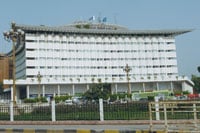 with Rs 20.7 million pending property tax, is the second in the list.
Other big defaulters include Avari Hotel, office of daily Mashriq,
National Industrial Cooperative Finance Corporation (NICFC), Naheeda
Manzoor, Punjab Boy Scouts Association, Pakistan Arts Council, Safia
Begum, Aitchison College, LDA, Progressive Paper Limited, some property
owned by American Consulate, Radio Pakistan etc. Some of them such as
Aslam Mehmood, NICFC, and Punjab Boy Scout Association have not paid
property tax since 1986-87, 1991 and 1993 respectively.
with Rs 20.7 million pending property tax, is the second in the list.
Other big defaulters include Avari Hotel, office of daily Mashriq,
National Industrial Cooperative Finance Corporation (NICFC), Naheeda
Manzoor, Punjab Boy Scouts Association, Pakistan Arts Council, Safia
Begum, Aitchison College, LDA, Progressive Paper Limited, some property
owned by American Consulate, Radio Pakistan etc. Some of them such as
Aslam Mehmood, NICFC, and Punjab Boy Scout Association have not paid
property tax since 1986-87, 1991 and 1993 respectively. longest time duration. "About life I guess," she replied.
"And you?" She asked. "Movies for five hours
straight," I replied.
longest time duration. "About life I guess," she replied.
"And you?" She asked. "Movies for five hours
straight," I replied.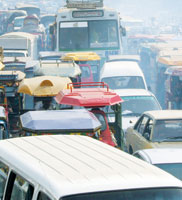 the computer was the saviour. I would write hilariously funny little
plays, about crazy wives locking their scared husbands in bathrooms for
the rest of their lives, or horror plays or anything that took my fancy
and then convince (rather beg) all my cousins to play parts. Then I would
record their voices into a cheap computer mike and mix and match
everything together with music and sound effects. It was like a drug
listening to it play back, it was a lot of fun, and the whole experience
of creating something was indeed magical.
the computer was the saviour. I would write hilariously funny little
plays, about crazy wives locking their scared husbands in bathrooms for
the rest of their lives, or horror plays or anything that took my fancy
and then convince (rather beg) all my cousins to play parts. Then I would
record their voices into a cheap computer mike and mix and match
everything together with music and sound effects. It was like a drug
listening to it play back, it was a lot of fun, and the whole experience
of creating something was indeed magical.
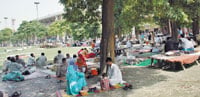 would be patients and staff and the others, attendants. A hospital, more
or less, seems like a fish market due to this mob of attendants who create
sometimes huge problems for the hospital authorities and occasionally for
their patients. This also leads to one of the reasons for bad condition in
hospitals.
would be patients and staff and the others, attendants. A hospital, more
or less, seems like a fish market due to this mob of attendants who create
sometimes huge problems for the hospital authorities and occasionally for
their patients. This also leads to one of the reasons for bad condition in
hospitals.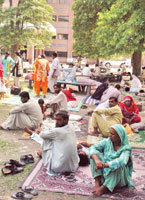 that is why we two are staying here so that if one goes to a chemist then
the other person can take the patient for certain tests if needed,"
says Sughran Bibi at Mayo Hospital.
that is why we two are staying here so that if one goes to a chemist then
the other person can take the patient for certain tests if needed,"
says Sughran Bibi at Mayo Hospital.