


|
|
|
|
 |
 |
   |
terrorism The
other voice Taal
Matol protest RIPPLE EFFECT
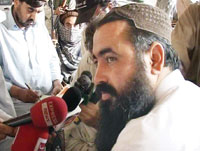
Amid claims and counter-claims With Baitullah Mehsud's fate still not known, what can the repercussions be By Rahimullah Yusufzai Almost a week after the US drone attack that was reported to have killed top Pakistani Taliban commander Baitullah Mehsud in South Waziristan, there is still no conclusive evidence that he is dead. The Pakistan government has yet to provide proof that he
is dead and the Taliban, despite denials that Baitullah wasn't harmed,
haven't come up with any evidence that he is alive. Cautiously optimistic that its drones had killed Baitullah, the US government wasn't willing even by August 11 to formally claim that the man it described as an al-Qaeda facilitator was dead. Lt Gen (Retd) James Jones, who commanded US troops in Afghanistan before retiring and becoming President Barack Obama's national security adviser, used choicest words to condemn Baitullah as a very bad man and a thug and said Pakistan and its people would be safer if he is no more. But he still wasn't ready to pronounce him dead. While Baitullah's fate was still being discussed and the government and Taliban were making claims and counter-claims, someone introducing himself as Azam Tariq tried to fool the media by making a call to reporters to claim that the Tehrik-i-Taliban Pakistan (TTP) head had died. The day before, the TTP had announced that henceforth a person named Azam Tariq would be its spokesman. It wasn't clear why the earlier spokesman Maulvi Omar was replaced. The caller claiming to be Azam Tariq was a fake and probably belonged to the anti-Baitullah militant group led by Turkistan Bhittani and Misbahuddin, brother of late Qari Zainuddin who was assassinated last month by a bodyguard at the behest of Baitullah. It turned out that the phone call was made from Tank, now a stronghold of the anti-Baitullah factions. The real Azam Tariq later phoned reporters in Peshawar to alert them that the TTP hasn't issued any statement about Baitullah's death. There was no change in the TTP stand that Baitullah was alive. By now it was obvious that the Baitullah-led TTP and the rival factions were involved not only in a bloody confrontation but also a propaganda war. With a little help from the government, the anti-Baitullah groups were making wild claims and the media in its present mood of patriotism was publishing and telecasting everything without checking the facts. As it turned out, the subsequent government claims voiced by interior minister Rehman Malik that a dispute over Baitullah's succession led to a shootout in a TTP shura meeting weren't true. The source of this information too was largely the anti-Baitullah factions. Malik, who is becoming less credible by the month, even claimed that Taliban commander Hakimullah Mehsud was killed in the firing incident and his rival Waliur Rahman Mehsud was wounded. This was debunked in the course of two days when first Waliur Rahman and then Hakimullah phoned reporters to deny that they were dead or injured. They said neither any shootout took place nor any special TTP shura meeting was called to choose Baitullah's successor. The reporters recorded their voices and it was proved beyond doubt that both Waliur Rahman and Hakimullah were alive. The government also claimed and got published reports in the media about the succession dispute being driven by the desire of the important TTP commanders to grab the almost Rs3 billion that Baitullah had accumulated. This piece of information could be believable if Baitullah was dead and a tussle for succession had broken out between the Taliban commanders. Thus the important thing was to first establish Baitullah's death. This was obviously proving to be a tricky job. The TTP, the organisation of Pakistani militants that Baitullah founded in December 2007, was unlikely to admit his death even if there are some indications that he may have died in the missile strike on his father-in-law Ikramuddin's house in Zangara village near Ladha. The Taliban were initially also denying the death of Baitullah's second wife in the missile strike but they had no choice but to admit it when the news was subsequently verified by both tribal and official sources. Despite lack of access to the remote, Taliban-controlled area where the missiles were fired, the Pakistani authorities were confident that the country's public enemy number one was killed in the attack. However, the government was in no position to take custody of Baitullah's body or gain access to the site of the attack to collect material for carrying out the DNA test. It was also impossible, for the time-being at least, to locate Baitullah's grave in case he was dead. The Pakistan government and its security forces have been unable to date to find the graves of any Taliban or al-Qaeda members who were killed in military operations or in attacks by the pilotless US spy planes. In his late 30s, Baitullah was relatively young like most Taliban commanders in Afghanistan and Pakistan, but he commanded respect from the militants and struck fear in the hearts of his opponents. He had fought in Afghanistan on the side of both Afghan mujahideen and Taliban and made friendships and alliances that were to prove useful in subsequent years. He belonged to an almost unknown and low-income Pashtun tribal family, but he rapidly rose in the militants' ranks by fighting the Pakistan Army and sending fighters into Afghanistan to attack the US-led coalition forces. By founding the TTP, Baitullah brought together disparate Taliban and jehadi groups operating in the tribal and settled areas of Pakistan's North-West Frontier Province (NWFP) on one platform to fight the country's security forces and establish control over large swathes of territory. He then became a binding force between all the militants' groups in Pakistan and acted as bridge to the Afghan Taliban and al-Qaeda. With his death, the TTP doesn't have a man of his stature to keep the organisation intact and prevent it from disarray. Even otherwise, the TTP isn't a disciplined organisation. In fact, it is a flexible alliance of Sunni militants' groups with different agendas ranging from anti-US goals to hatred for the Shias and from opposition to secular and nationalist political parties to hostility towards the dominant role of the military in Pakistan's affairs. The TTP was launched to bring together Pakistani Taliban to fight alongside the Afghan Taliban against the Western coalition forces in Afghanistan, but gradually it turned inwards to battle the Pakistan Army for control of territory in the Federally Administered Tribal Areas (FATA) and in Swat and rest of Malakand region. The TTP is unlikely to undergo a transformation after Baitullah's death and, in fact, his men could try and pursue the same agenda with greater vigour to avenge his assassination. This could take the form of suicide bombings and bomb explosions in Pakistani cities and attacks against the security forces and law-enforcement agencies. Baitullah and his men were responsible for almost all suicide bombings in the country in which many civilians were killed, injured and maimed and properties were damaged. His commander Qari Hussain, trainer of suicide bombers, is still around and he could unleash a new wave of terror through suicide bombers to take revenge in case of Baitullah's death. If the news of Baitullah's death turns out to be true, it would be the biggest loss that the Pakistani Taliban have suffered since they first emerged in 2003-2004. It would certainly weaken the TTP, but there is no indication that the organisation would collapse or Baitullah's demoralised followers begin surrendering to the Pakistani authorities. The government also appears in no mood to offer amnesty to the militants as seen in the ongoing military operations in Swat, Buner, Dir, Shangla and other parts of Malakand division, where some captured Taliban were reportedly executed and the houses of the rebels are being demolished. In such a situation, the militants would have no option but to continue fighting. In case it was established that the US drone attack killed Baitullah, the Pakistan government would be under obligation from Washington for having eliminated its biggest enemy. For the US, Mehsud was just one of the many al-Qaeda facilitators but for Pakistan he constituted the most serious threat to its security. The US would henceforth find greater justification for its policy to use drones to attack targets in Pakistani territory and destroy al-Qaeda and Taliban hideouts. It would be difficult for Pakistan to oppose the strikes by the US drones, though it might continue for the sake of its own public opinion to lodge verbal protests and ask Washington to provide it the drone technology.
By Aoun Sahi At first glance Muhammad Akram Jan Qadri appears to be
your average cleric cum peer. But once you get to know him, there could be a
few surprises. Unlike others from his clique, he likes it when his ideas are
challenged. He admits that the syllabus being taught in most of the madrassas
in Pakistan is outdated and unable to address many of today's issues. He
favours modern education incorporated in madrassa education. He got his early
education from a madrassa and now runs a madrassa and mosque in Rawalpindi.
After passing his Darsi Nazami he did masters in Islamic Studies and Arabic
from University of Punjab and a diploma in Arabic language from National
University of Modern Languages (NUML). He is currently doing his PhD from
NUML researching on jihad and terrorism. He was in Lahore last week and TNS
talked to him in detail about the concept of jihad and suicide bombing in
Islam along with some other important issues. The excerpts follow: The News on Sunday: A bit about your research and its impact on people relating Islam and jihad to extremism. Akram Jan Qadri: Terrorism has nothing to do with Islam or the Quran, contrary to what the Western press likes to portray. Jihad has a complete code of conduct and it can only be waged against offending forces. It is all about defending oneself by following certain rules and regulations. Muslims can only fight with those who stand against them. It is strictly prohibited in Islam to kill elderly people, women, children of opponents and those who are not fighting against them. Islam forbids the killing of the enemy who surrenders even in the battlefield. There are also prescribed rules for prisoners of war. Islam does not allow the killing of the opponent's animals or destroy his crops during war. What is going on now is not jihad because it does not differentiate between innocent and guilty and is only meant to spread terror. Our Prophet (pbuh) himself took part in 19 wars. The total number of those killed was 1040 in these wars. TNS: Who, according to the Quran, can wage jihad? Are non-state entities or individuals entitled to do so? AJQ: The essence and rules of jihad need to be known -- including its pre-requisites. It is clear as crystal that according to Islam non-state entities or individuals cannot wage jihad under any circumstances. If they do, it is terrorism. Only an Islamic state is allowed to launch jihad under given circumstances and that also to be announced by the ruler of that state. Individuals can only launch jihad against ignorance and poverty. These forms of jihad are more important in Islam. You have a system under which you are to go to your representatives (MNAs and MPAs) if you have some grievances instead of venting their anger by blowing people up. TNS: What does the Quran say about sacrificing one's life (suicide mission) as a strategy for success? AJQ: Suicide bombing is prohibited in Islam. The Quran clearly forbids one to take one's life. I cannot find even a single example from the Prophet's life where he ordered any such operation. The reference which they usually quote in favour of suicide bombing from the Prophet's life is of the battlefield when a Muslim asked the Prophet about the afterlife if he is killed while fighting. The Prophet told him he would go to heaven. We need to understand that the rules that apply in the battlefield cannot be applied at peace time. Islam only allows Muslims to sacrifice their lives on the battlefield TNS: Does the Quran and Sunnah make any exception regarding suicide missions as an option available to Muslims for instance in case of Palestine? AJQ: There is no exception that allows suicide bombing. Is the situation in Palestine worse than the first 13 years the Prophet spent in Mecca? Had the Prophet ever ordered the killing of Islam's worst enemies like Abu Jahal, Abu Lahab or anybody else? Muslims migrated thrice during these 13 years to escape tyrannies of infidels of Mecca but they never killed a single infidel. The government and people of Palestine should use diplomacy to get this problem solved. When Prophet migrated to Madina, he made a pact with the Jews of Madina, which included the clause that if somebody attacked a Jew, we (Muslims) will help you (Jews) to defend Madina and vice versa. At present, there are more than 50 Muslim states in this world. They should pressurise Israel through diplomatic sources. Isreal is a big power and can a suicide bomber compete with nuclear power of Israel. What he can do at most is blow up innocent people to get attention. TNS: We witnessed brutal killings by the Taliban who call themselves the defenders of Islam. What do you have to say about them? AJQ: Such an act is against humanity. Let alone Islam. Muslims are only allowed to slaughter animals. Allah does not like those who spread terror among His creatures. Look, there are only a few crimes whose public punishment is allowed in Islam and that too after the crime has been proved. TNS: Are Muslims allowed to impose their beliefs by force on people from other religions? AJQ: The answer to this question is in history when 70 Christians of Najran tribe, including their priests, came to see the Prophet in Madina. They were accommodated in Masjid Nabvi and Hazrat Abu Saeed Khuzri was appointed as their protocol officer. The Prophet also allowed them to worship God according to their belief within Masjid Nabvi. The Muslims offer their prayer facing Kabba while Christian pray facing Qudas and if you are in Masjid Nabvi both are exactly opposite to each other. The Prophet allowed them to say their prayers in their respective religious manners. Seventy verses of the Quran are about that event of discussion between Christians and Muslims which continued for several days. They did not try to impose each other's religion but discussed at length. TNS: How do you view the Taliban's regime in Afghanistan? AJQ: Their claim that Afghanistan was the only true Islamic state is not true. Look at Pakistan, where no law can be made contrary to the teachings of the Quran and Islam. According to the Taliban brand of Islam, women cannot even leave their houses without men. On the other hand, during the Prophet's time, women fought in the battlefields and took care of wounded soldiers. They ran business and clinics and even beauty parlours. But the Taliban forbid them from purchasing things from men. While the Prophet's own wife Ayesha educated men and women, the Taliban banned women's education. In short, the Taliban brand of Islam has little common with the Prophet's Islam. TNS: The recent incident of Gojra against minorities has raised the status of Blasphemy laws in our country. Are these laws in the light of Islam? AJQ: In the Muslim states, blasphemy laws were introduced in the 18th century but were already in place in Europe and America. People were killed and burnt alive for committing blasphemy against Jesus Christ. In any case, it is the duty of the state to punish the offenders not individuals. Has anyone humiliated the Prophet more than his own people of Mecca? The Prophet forgave them all when he returned after Fatah Mecca instead of burning their houses. The Prophet said that one who killed non-Muslim will not even feel the fragrance of heaven. In an Islamic system, it is the duty of the state to take care of minorities, to ensure the safety of their property and honour.
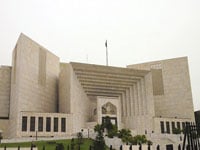
Silent successors By Shoaib Hashmi It's all a royal mess. When the fourteen-member bench of
the Supreme Court passed its judgement declaring the November 2007 emergency
illegal, we thought everything would be sorted out, but no such luck. As part
of the judgement they had declared all the judges who had taken oath under
the Provisional Constitutional Order (PCO) were defunct, but the day after
the judgement all the judges of the Balochistan High Court who were all
disqualified, attended court as usual, but the next day better judgement
prevailed and they all stayed home. Since then two judges of the Supreme Court have sent in their resignations to the president, citing the grounds that they do not want to be judged by the Supreme Judicial Council. It is obvious that many of the judges will come to a like conclusion and tender their resignations also. Meantime the news is going round that Baitullah Mehsud -- public enemy Number one and the leader of TTP -- has been killed in one of the drone attacks in his area. When the news first came no one would confirm or deny it, insisting that someone with greater authority than them should. Eventually followers of Mehsud confirmed the news, but three days later some of them have gone back on their word and are still insisting that he is alive and well, and they would offer proof in time. Now that is a real twister, as for months we have been insisting that the drone attacks were not doing any good except kill some civilians, and counting on the Americans to stop these -- and suddenly we find that it is these attacks which have got us rid of our proclaimed enemy. Meantime it is common knowledge that the drone attacks did have our tacit approval! It's going to be difficult for us to carry on our tirade against the Yanks or to blame them for not listening to us. Meantime all our attention is focused on exactly what difference Mehsud's elimination will make. There are guarded statements that it means the end of the Taliban, and widespread speculation on who his successor will be. There are half a dozen candidates, mostly unknown quantities, although it seems sure that any successor will not be half as bad. There are also guarded statements about how everyone in Pakistan should feel secure with the chief threat gone. But each of these statements is circumscribed as no one seems to be sure of his facts or his ability to take on the responsibility of their authenticity. The only good thing is that his successors seem to be all at sea, with no clear cut successor, which means we'll have at least a respite.
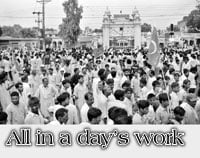
All in a day's work The closure of around 10,000 power loom units for eleven days in Faisalabad was hard for both owners and workers By Zulfiqar Shah For Abid, a 40-year-old power loom worker in Faisalabad,
August 6 was not a lucky day. It was his tenth day without work, due to
closure of around 10,000 power loom units in Faisalabad. The reason: a row
between worker unions and power loom owners on the issue of increase in
wages. This unprecedented closure of the industry had pushed thousands of
workers on the verge of starvation. "Looms have been closed for the last ten days, we have no money and shopkeepers refuse to give groceries on credit," said Abid. "I want to ask worker unions and employers' association, who will get me a bag of flour." Abid's concern is not who is right or wrong. His problem is arranging bag of flour to save his seven-member family from starvation. "I need atta, that's all," he told a union leader. Abid gets paid by the length of cloth per metre he weaves. Since the closure of the power looms on July 28, he has been without work and money. His case is not unique. Between July 28 and Aug 7 -- when the industry was closed due to a controversial strike -- about 15,000 power loom workers in Faisalabad lived through similar circumstances. These more than 100,000 power loom workers are poorly paid
keeping them out of the ambit of the labour laws depriving them of social
security and other such benefits. Falling under the category of 'informal
workforce', they are paid by the number of metres they produce each day --
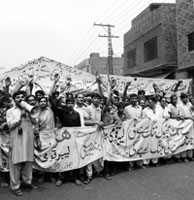
the rates unilaterally decided by loom owners. Interviews conducted with over a dozen loom workers, union activists and social workers in Faisalabad suggest that power loom workers are compelled to work for long hours in an unhealthy environment, without any check on occupational health, safety and other labour standards. "The government attitude towards workers is cruel. On the one hand, wages weren't raised in the budget and on the other hand, the prices of basic utilities has increased manifolds," said Mohammad Tahir, a member of Labour Rights Committee (LRC) in Faisalabad. "Demanding a raise in these circumstances is our legal right." Workers in Faisalabad work in the presence of a strong union, the Labour Quami Movement (LQM) with more than 20,000 members. "Two months ago we served a notice to power loom owners, demanding a raise but no attention was paid," said Aslam Mairaj, General Secretary of LQM. "We also complained to the labour department but no one listened." In reaction, LQM gave a strike call on July 28, which received an unprecedented response. "Almost 75 percent of power looms were closed as most of the workers did not go to work and joined us in a sit in." LQM called off the strike at the assurance of the DCO that
the issue would be resolved in a meeting on July 30. The following morning,
however, the units were closed by the owners who accused LQM of terrorising
owners and damaging property. "We went to see the DCO on July 30. But we were told that he had gone to Lahore for a meeting to discuss our issue. We were not informed that the meeting was cancelled," said Mian Abdul Qayom, Chairman LQM. "Dummy labour leaders were invited to Lahore for the meeting instead of us. Imagine, the government wanted to find a solution without consulting us." The situation worsened when neither the loom owners, who had organised themselves as Faisalabad Power Loom Owners Alliance, opened their factories nor the workers went back to work. The next week saw the continued closure of at least 50 percent of Faisalabad's estimated 35,000 power loom units. The closure led to further tension as both LQM and the owners' alliance accused each other of shutting down the looms. LQM showed its power by organising public meetings in different parts of the city. "We have had a public meeting every day and more than 4000 workers attended each meeting," said Rana Tahir, district president of LQM. The alliance went on the offensive. Not only did they
continue to close the looms at the cost of millions of rupees, but also
published advertisements in local newspapers and put up hundreds of banners
in the city declaring LQM a terrorist group involved in extortion, violence
and disturbing peace. Provincial and district government was pressurised to
use force against LQM. "They launched a campaign against us. But we had
nothing to worry about. We were demanding labour rights under the
constitution. Is asking for a raise terrorism?" asked Mairaj. "If a
single allegation is proved against us, we will offer ourselves for the
toughest punishment." Waheed Khalique Ramay, chairman of Faisalabad Power Loom Owners Alliance, who led the alliance of owners during the strike, said that the aggressive behaviour of some elements of LQM led the owners to act against the workers union. "In some sectors, LQM members came with batons and forcibly got power looms units shutdown," said Ramay. "We were left with no option but to close our units to avoid losses as police failed to take action." In contrast to the general perception that the industry was shut down due to the workers' strike, Ramay accepted that it was the owners who prolonged the closure. Interestingly, Ramay was unable to defend the employers' offensive on LQM: "Some of the members of the alliance are angry at LQM and the banners and advertisements are the result of that sentiment." Ramay, however, doesn't see any major problem with LQM. The ugly incident in Gojra, however, changed the situation in Faisalabad. "The chief minister was disturbed because of the Gojra incident and the murder of a factory owner in Muridke. He didn't want another situation to erupt in the province," said Malik Nawaz, a member of provincial assembly from Faisalabad. He said that the chief minister called him and Khawaja Islam, another MPA from Faisalabad and formed a four-member committee which also included the DCO and the RPO with instructions that the issue should be resolved within two days. All earlier committees were disbanded. On August 7, final rounds of talks were held at a meeting held at the DCO's office which included committee members, owners' representatives and LQM. In a final settlement, owners agreed on Rs24 and Rs14 respectively for big and small looms increase per 100 yards. This will translate into an additional Rs1500 in the monthly income of a worker on an average. According to Ramay, the industry suffered Rs one billion loss only because of cloth production and an additional Rs100 million because of taxes and eleven-day closure of the power loom industry. The workers might not be able to count the losses in millions but "I think it will take me months to repay loans I took to survive during those eleven days," said Abid. He expected the workers to be reimbursed for days when they were out of work, something that never happened.
Re-emerging labour power The process of globalisation has weakened the labour movement, so goes the general perception. However, recent uprising of power loom workers in Faisalabad and emergence of Labour Quami Movement (LQM) as a strong agency of informal workers has proved that new ways of labour activism can be found to challenge globalisation and achieve successes. Workers faced two major fallouts of globalisation: first, privatisation resulted in large scale retrenchments and withdrawal of rights as it minimised state role in industrial relations and job creation; second, dismantling of barriers on trade and capital flows replaced permanent employment with more contract and informal work. There are many victims of globalisation but labour movement was hard hit. The entire strength of trade union was based on plant-based unions, where it was easy to use right of collective bargaining through negotiations as well as by using the right to strike. The changing trend in work place, the concept of outsourcing and the supply chain systems where a large number of people now work from homes or other small places on piece rate systems, weakened the trade union in qualitative and quantitative terms. This is reflective in case of Pakistan as well where less than three percent of formal sector workforce is unionised. This number though is fast dwindling. Many labour leaders are worried as it has become difficult for even major federations to bring thousands of workers on streets. Increase in informal sector work is blamed for this decline in trade union power. In contrast, what we see in Faisalabad at least during last one year in general and last week in particular, labour had found new ways to challenge the process of globalisation. Latest strikes by power loom workers showed that the labour, though in informal sector, still had power to disrupt production supply chain. It was not only workers who suffered during recent eleven-day strike in Faisalabad but textile industry as whole was also badly affected as they could not meet orders in time. In globalised supply chains meeting orders in time is critical and workers strike proved that the key of frequent production and supply is still with workforce not with capital. Secondly, it also proved that workers in informal sectors if organised and lead by a genuine leadership can operate as collective bargaining agent (CBA) regardless of their legal status and labour activism is possible even without having plant level unions. LQM is not registered with any government agency and is not recognised as CBA officially but the government and employers were compelled to sit with organisation's leadership and bargain on wages and other demands due to LQM street power. The eight public meetings organised by LQM in different parts of Faisalabad during July 28 and August 8 with participation of more than 4000 workers in each meeting also proved that if a leadership is committed, connected to workers and are able to articulate their demands, have solidarity support from wider society then informal sector workforce can become strong street power. Power loom workers movement in Faisalabad had many lessons for Pakistan's trade union movement and brings opportunities for a renewed labour movement. If formal sector trade unions are willing to adopt change and align with informal sector organisations such as LQM, a new labour power can emerge in Pakistan.
-- Zulfiqar Shah RIPPLE EFFECT Fooling the consumer
By Omar R Quraishi If only Pakistan had something like Britain's equivalent of the Advertising Standards Authority (ASA). Because if it did we wouldn't have telecom and mobile phone operators offering all kinds of deals for phone calls and SMSs which on the face of it seemed superb but were actually packaged and advertised in a way that any consumer would be fooled by what's on offer. Take for instance the popular adverts of several mobile phone companies which all claim that users can send an "unlimited number" of SMSs for a seemingly paltry sum. However, when one reads the advert carefully one will notice that this apparently brilliant offer comes with a proviso -- and that is something like consumers will have to abide by a so-called 'fair use' policy and that this then goes on to put a cap on the number of SMSs that they can send every month, week or whatever the time period that the offer is linked with. If this is not misleading and false advertising then what is. Because most would-be users of such a service would in all probability look at the bold print and not pay too much attention to the fine print. Even something like 'conditions apply' is fine but the 'conditions' in this particular case completely contradict the main assertion of the advertising campaign -- which is to offer anyone willing to pay X rupees the facility of sending unlimited SMSs. This is just like a hotel or a restaurant offering an all-you-can-eat promotional offer and then putting in fine print something like 'a limit of three dishes per customer will apply because of the policy of fair use'!! Then there are other adverts, one by a well-known multinational which is involved in making all kinds of food items which claims that children who use its margarine every day will experience greater physical and mental growth/well-being compared to those who don't use the same margarine every day. No detail of such a study -- if that indeed is the case -- is mentioned. Clearly the likelihood is high that a significant percentage of people who are looking to purchase margarine may well be swayed by the claim made in the advertisement. In other words, would-be buyers of this particular butter substitute are being told that if their child doesn't partake of it during every breakfast then he or she risks growing up to be a cretin. Yet another example of misleading advertising is a slogan often used by one of the country's largest oil marketing companies which has several times in the past claimed that its fuel was "environmentally friendly". How or in what way it was 'environmentally friendly' is not mentioned at all and the fact that the composition of the fuel marketed by the company is exactly the same as that of its rivals (none of whom make such a claim) are all things that are quietly ignored. Then take another ad campaign -- one which is appearing in the print media especially with a considerable frequency. It is of a phone company which is now offering a wireless internet service via a USB device. The connection is rightly advertised as being portable and easy to use -- one simply has to plug the USB in one's laptop or desktop and it installs itself. The main reason why people would buy this connection is its claimed speed of 3.1 MB which is very high by any yardstick. However, once you visit the website you find out that the technology being used is similar to that used for mobile phone services and the quality of the service -- i.e. the speed of the connection in this case -- depends to a great extent on how far you use it from the closest transmission tower. As it turns out the company's tower network is not very extensive and hence the claimed speed is hardly attainable, unless as one blogger rightly said, one happens to rent an office right next to the exchange where the tower is installed. Also, when you go and purchase this device and try and reason with the sales reps of the company, only then you might be told -- as happened with me after several minutes of discussion and debate -- that the 3.1 MB speed is not a guarantee at all and that a speed of "UP TO" 3 MB is being advertised. Surely, there is a world of a difference between saying 3 MB and up to 3 MB because the latter could mean a connection with speed 2 MB, 1 MB, 500K or even 50 or 5 K! There are numerous other such ad campaigns -- all of which make either wrong claims or claims that possibly cannot be tested or for whom no figures or substantiation is provided to the consumer. There is also an advert (again by a well-known multinational involved in making home and personal care products) of a tooth paste which offers, according to the ad, "maximum cavity protection". What in the world does that mean? Does it mean that its competitors offer minimum protection and if so what constitutes or what is the yardstick by which one tooth paste is offering 'maximum' protection against cavities? Furthermore, is such a claim backed by any dentist or dentists and if it is do they have a minimum or maximum threshold for cavities? Now consider what would happen if we had something like the ASA in place in Pakistan. The British version is not paid for by taxpayers' money but by a levy on the industry and it is self-regulated. The ASA's mandate is to "regulate the content of advertisements, sales promotions and direct marketing" by investigating "complaints made about ads, sales promotions or direct marketing" and deciding whether such advertising complies with its advertising standards codes. Further, the codes stipulate that "before distributing or submitting a marketing communication for publication, marketers must hold documentary evidence to prove all claims, whether direct or implied, that are capable of objective substantiation" and that "no marketing communication should mislead, or be likely to mislead, by inaccuracy, ambiguity, exaggeration, omission or otherwise". The ASA is funded by a voluntary charge paid by advertisers and to keep it neutral it is not told which advertisers have contributed to the monies. If the complaint comes from "a competitor or someone with a trade or vested interest with the advertiser about which they are complaining", then they are required to give their name since this may help reduce the number of retaliatory complaints. It is a non-statutory organisation and hence cannot enforce legislation. Having said that, it is not toothless either. It rules on several adjudications every week (details of which can be found on its website) and any one of them is instructive. For instance, in one dated July 22 of this year, it was asked by Johnson & Johnson Consumers Services EAME Ltd to investigate a television advert by Colgate-Palmolive (UK) Ltd, regarding a claim made on its Colgate Plax mouthwash. It showed a man brushing his teeth with a voice-over saying: "Did you know Colgate Plax removes significantly more plaque?" claiming this at "six months use". A bar chart was then shown with two columns, one of which seemed approximately twice as tall as the other. Large text beside the bar chart stated "More plaque removal"; smaller text stated "With a regular fluoride toothpaste". In particular the claim of the product being "twice as effective at fighting plaque than brushing alone" was challenged and the question was raised whether Colgate-Palmolive would substantiate this. According to ASA, Colgate-Palmolive said that the bar chart was "not intended to show a specific result with respect to plaque removal with Colgate Plax compared to brushing alone and pointed out that no specific figure was quoted". The company said this was "intended to be an illustrative representation of the results obtained from a number of studies which demonstrated significant plaque reduction with Colgate Plax in addition to daily brushing". ASA said that although the vertical axis of the bar chart was "not labeled" the "overall impression given was that using Colgate Plax was twice as effective at removing plaque as brushing alone, because the column labelled "Colgate Plax" seemed approximately twice as tall as the other column. This was not the case, it said further, since an expert had said that the product removed 25 per cent more plaque than brushing alone and hence the bar chart was misleading. ASA told Colgate-Palmolive that it should not broadcast the ad again in its current form unless the bar chart is amended or removed. It also said that it had reminded Colgate-Palmolive that it was required to have with it adequate substantiation to support claims prior to the appearance of the ad. The writer is Editorial Pages Editor of The News. Email: omarq@cyber.net.pk |
|