



|
|
|
|
 |
 |
   |
appraisal Discovering
Charles Bovary Zia
Mohyeddin column
Chomsky's
stance By
Babar A. Mufti "In
a saner world, Noam Chomsky's tireless efforts to promote justice would have
long since won him the Nobel Peace Prize," writes Arthur Naiman. In
actual fact Chomsky has received life threats for his articulate condemnation
of US foreign policy. In the wake of 9/11 in particular, the gap between his
line of thinking and the decision making of the US establishment has become
further acute. Chomsky
has remained fearless and principled throughout these years. He has earned a
global Chomsky
was born in 1928. His father was a Hebrew scholar, whose extended family
engaged in debates on political and social issues. He has been privileged in
the sense that his surroundings encouraged him to undertake scholarly work.
The fertile ground evoked young Chomsky's interest in learning and research.
Chomsky was also fortunate to find his early mentor in Zellig Harris --
Linguistics professor of considerable repute at the University of
Pennsylvania -- who shaped his political views and developed interest in
Linguistics. He
completed his PhD dissertation entitled 'Transformational Analysis' in 1955
and the same year received a faculty position at Massachusetts Institute of
Technology, where he has continued to serve till this day. He got many awards
during his distinguished career, including George Orwell Award and the Kyoto
Prize in basic sciences. Chomsky's
biggest contribution is indeed in the field of Linguistics, though it is true
that his role as a public intellectual and political activist earned him a
larger fame. As a Linguist, Chomsky attracted worldwide attention by ushering
in what we call 'Chomskyan Revolution', challenging our long held belief in
the nature of human languages and showing that the language faculty is
genetically determined. This research, published as 'Syntactic Structures'
1957, has been equated in importance with Einstein's theory of relativity and
the recent unravelling of the genetic code of the DNA molecule. Apart
from being a Linguist par excellence, Chomsky has been active in the
left-wing politics, writing extensively on social and political issues
concerning the entire world. His books on politics include the bestsellers
such as 'Secrets, Lies and Democracy,' 'What Uncle Sam really Wants,'
'Deterring Democracy,' 'Necessary Illusions,' and 'Rogue States.' Chomsky's
life as a public intellectual has earned him recognition among people from
all walks of life. "Judged in terms of the power, range, novelty and
influence of his thought, Noam Chomsky is arguably the most important
intellectual alive today," notes Paul Robinson in the New York Times
Book Review. Chomsky's searing criticism against the US decision to go to war
in Vietnam first brought him in the public domain. Since then he has
expressed his views on issues such as US imperialism, globalisation, global
politics and US foreign and domestic policy. Chomsky's
stance on politics stems from his conclusion that the US's interests in human
rights, justice, and morality is just a show off and is inevitably
subordinated to big business profit taking. Accordingly, he has also
commented on US imperialism, and globalisation, which he sees as a tool of
exploitation and economic imperialism. It is not that Chomsky is against
globalisation on a theoretical level rather it is the manner in which it is
taking shape that is distasteful to him. He thinks that the globalisation can
degenerate into a form of tyranny if the rights of the people are not
protected. Although the global free trade is celebrated as a solution to
third world's economic problems, in reality, its arrival has seen a decline
in the growth rates. Chomsky shows that the so-called free trade is not free
for all. The rich countries ignore the rules and facilitate big business
interests, while only the already largely indebted countries are obliged to
follow the rules. Their economies, consequently, are pressurised to
restructure to serve the Western interests, increasing the gulf between the
rich and the poor. Chomsky
also does not buy official US statements on terrorism. Although the US
government's rhetoric on terrorism is never ending now, he thinks the US
first encouraged fanaticism and religious extremism inside Pakistan through
Zia-ul-Haq's regime. The Reagan Administration worked side by side with the
Saudis when a network of madrasas was set up because it was part of the US
global policies. Chomsky traces the origin of the attack on World Trade
Center and the resultant atrocity in these unjust actions of the United
States, which to him is a leading 'rogue state.' Chomsky
has seen relatively tougher time since 9/11. A collection of his interviews
published under the title '9/11,' instantly became a best seller at a time
when a dissident intellectual was not appreciated even among his own friends.
In the aftermath of the tragedy of 9/11, some sectors of the intellectual
left even succumbed to the ruling class pressure and turned against Chomsky.
His categorical anti-imperialism may have been acceptable before, but the new
reality and repressive environment of the world are no longer good for a
dissident intellectual. Despite such strong criticism, nevertheless, Chomsky
has retained his position at MIT of a professor. Many
reasons account for this. Chomsky is a linguist first and a political
activist afterwards. He owes his position at MIT to his scholarship in
Linguistics, not Politics. In Linguistics, he is second to none. The second
reason can be that he serves as a symbol of culture of tolerance and freedom
of expression in the US society. The US government tolerates him because he
can be publicised as a showpiece to larger world just as the world's biggest
democracy had a Sikh as a prime minister and a Muslim as a president to
reinforce its secular identity. And
finally, targeting Chomsky is not prudent because in essence he is not saying
anything that no one else knows. It is his position of a public intellectual
based on the power centre itself that gives his views importance and not the
novelty of views as such. His voice, consequently, is heard and is now
unstoppable. His position of being established in one of the most prestigious
universities has given him an edge over the opinion of the marginalised. It is
not difficult to see why Chomsky has become so popular in the third world
countries. His analysis of the US foreign policy at once creates a bond with
the people of the third world countries, as he exposes the ruthless US
foreign policy based on the principle of reaping maximum profit out of the
poor. He is a voice from within the US against Washington's oppression, war
crimes and exploitation of the South. Chomsky's
popularity in Pakistan is mainly due to his political views. He is popular
here as in other third world countries, which have experienced the US double
standards. The theme of US double standards has particularly endeared him to
the Pakistani intellectuals, both on the right and the left side of the
fence. What goes particularly to his credit is the difficulty with which the
fields of study, which we otherwise think quite rigidly compartmentalised.
His career as a linguist has never suffered due to his ever-increasing
indulgence in political issues. (Dec 7
was Chomsky's birthday when he turned 71).
Fantasy
and fiction blur themselves in Gustave Flaubert's 'Madame Bovary' but the
illusion never coincides By
Mina Farid Malik We all
remember the fairly famous story of the giant and the garden. There was a
lovely garden that belonged to an extremely ill-tempered giant, which he
surrounded by a wall to keep intruders and other annoying people out. Of
course, children are never easily barred from anything and soon Charles
Bovary is our giant, only in reverse. He discovers Emma Rouault in the
incongruous backdrop of a farm kitchen, her smooth dark hair and quietly
elegant dress turning her into a Snow White or even Madonna-esque figure, a
princess hidden in the depths of the forest. Indeed, Emma considers herself
to be a Sleeping Beauty of sorts, waiting to be rescued by a gallant prince
on horseback. The only man in her life who is not a farmhand or her father,
the young, good-looking enough Charles Bovary seems to be it. Fantasy and
fiction blur themselves in Emma's head; strangely enough it does in Charles'
too. The Bovarys are almost a Romeo and Juliet; star-crossed from the very
outset because of their need to live in dream-worlds of their own. Their
tragedy is that their illusions never coincide, but Charles' tragedy is more
pitiable because it is rooted in Emma- Charles' illusions are dependent on
her, and she is hardly what one would describe as a stable woman. When a
bourgeois writer is being read by bourgeois people, a reader can despise Emma
for her ignorance, born of an education not meant for people of her
background and a society that brackets women in the home so firmly that
anyone with an aspiration beyond is stifled and immobile. Emma's dilemma is
that she wants a better life, but lacks the intellectual capacity that would
have earned her that position. Leon, on the other hand, does not; he is able
to become a successful almost-lawyer because he in fact does possess more
grey matter than does the tempestuous, spoilt Emma. One almost wishes she had
been ugly; beautiful people are given a strange right to aspire to higher
things than ordinary people. Beautiful people often assume better things are
their right. Charles is not gallant enough, not debonair enough, not elegant
enough to consider himself elite; Emma has just enough to set her apart
without taking her the distance. The
problem for Emma is that she is unaware of this. Charles is not. Charles is
the gentle giant, happy in his garden, puttering around his quiet little
village prescribing foot baths and mustard plasters and coming home to a
pretty little toddler, a charming, perfumed wife and a hot dinner. Emma is
the little boy who showed him the stable, comfortable life he never had at
home between his profligate father, bitter mother and perpetual money
problems. Charles has rescued his princess and now has a right to a happily
ever after. Even after Emma dies he is a wild-eyed wreck of a man, but
naturally- he is mourning his queen, and his emotional storms are for her as
much as they are for their lost kingdom. The real
blow is Charles' discovery of Emma's adulterous affairs, and suddenly winter
descends upon Charles' garden. Emma's fairytale ended the night of her
nuptials -- her complete boredom with Charles' sexual prowess sets the tone
for her attitude to the rest of her married life. Charles' attachment to his
wife seems to be a more meaningful one in comparison; he loves her because
she is fascinating to him, because she is beautiful, because he can hardly
believe his luck, because he doesn't understand her but she is still there,
wearing her pretty frocks and his name! Charles is her Prince Charming almost
by accident, and he doesn't care one bit as long as he can believe that his
princess is actually his. Emma is shallow and merciless in her disdainful
judgment of her husband; Charles is shallow and overly-simplistic in his
surface-based love for his wife. But he remains true to her, because when he
lies to himself he does it because he cannot bear to let winter creep
anywhere near his precious, carefully preserved garden and if this means
refusing to believe her of adultery, so be it. Emma lies to herself when she
pretends to be something she isn't, convincing herself that she is in fact a
cynical, hardened seductress when in reality she is only playacting at being
one; a real woman of the world would probably never have ended up in her
penury or recourse in suicide. Even the Marquise de Merteuil took her
diamonds with her when she left France. Charles
dies of winter, turning into the reclusive giant, shut away in the memories
of the dreams he constructed around himself as life support. His last
attempts to stay in his chimerical utopia are when he lets Felicite wear
Emma's dresses, so that for a moment from afar he can imagine that Emma is
still alive. We may dislike Charles for his immediate retreat into a shell,
for his hysterical outpourings of grief, for dying of his fruitless love
instead of killing Emma's lover Rodolphe but what one must remember is that
he was never otherwise; never the stoic gallant, never the hero. Charles is
not prince material, he is not a prince any more than Emma was a princess.
While he never believes he is anything but a commoner with extraordinary good
luck, she believes she must deserve nobility. The dichotomy of the situation
is that Charles needs his illusions just as much as Emma does, and his garden
can survive debts, penury and social exile (unlike Emma's flimsier one), but
not deception. Perhaps
at the end of the day Charles is the purest character of them all; the simple
man who lives his life as honestly as he can but in the end cannot survive
the proof of his betrayal at the hands of the woman he loves. Perhaps all
Charles wanted was springtime, and an idyll in the sun. Perhaps Charles is
indeed the real romantic, firmly believing in the good in the people who
surround him, making the hypocrisy of people like Emma the more apparent and
them uncomfortable for being cast into relief. Emma would rather die than
admit that Charles is better than her; that his placid little garden life
better than her house of cards, flamboyantly constructed but destroyed in a
breath. People
like Charles are maybe best left to themselves, they are people who do not
have a place in society -- they are not grasping and avaricious like Homais,
nor are they beautiful and ambitious like Leon, nor possessed of a few airs
and graces that they can use to feel superior, like Emma. People like Charles
are a lot like the blind man -- peripheral and straight, their honest
existence makes frauds like Homais feel guilty and self-conscious of the lies
they tell themselves all the time. Like the blind man who is shut away in
prison, Charles too constructs a wall around his garden and recedes behind it
until death takes him, closing himself off from a society that has no place
for him. Charles' simple, almost childlike existence is thus not necessarily
a mark of his weakness, but a manifestation of his real difference from the
people around him, as opposed to Emma's contrived one; his fairytale is an
authentically romantic one.
In later
years, with his French cut beard and a reclining, intellectual forehead, he
looked like a benign academic from Sorbonne, but when I met Tennessee
Williams in New York he had a cherubic face with shiny, pink cheeks; the
thick moustache that he wore sat incongruously on his lips. He came
into my dressing room offering a limp hand. His companion, a man with a
creased faced, who looked very much like Burgess Meredith but wasn't, said
"Mr Tennessee Williams was very keen to meet you." Williams
smiled, more with his eyes than his mouth. He made none of the customary
remarks that visitors usually make when they go backstage after a
performance. He sat down, wearily, on the battered divan which occupied most
of my dressing room. Rumour had it that John Barrymore once slept in it. (His
companion chose to perch himself on a stool). He accepted a drink and asked
me if I liked New York. When I told him I did, very much, he said he wasn't
sure he did, any more. He
didn't talk much except to say that Forster was lucky to have found me. By
way of polite conversation I asked him if he was working on a new play and he
nodded rather enigmatically. It was obvious that he didn't want to talk about
it. I thought it would be foolish of me to make small talk. After a few
silences, during which it occurred to me that I would never be able to dine
out on the story of my encounter with the Tennessee Williams, his companion
stood up. "Come along," he said, "Let Mr Mohyeddin (he
pronounced it as Mo'yeddin accenting the second syllable heavily) rest."
William's eyes smiled, "Oh" he said, heaving himself up, "She
is a misery, She won't let me be." I was
used to such 'camp talk'. In England, actors, even those who were not
homosexual, enjoyed referring to each other as 'her' and 'she'. In America, I
was to discover later, the camp slang was the sole prerogative of the coterie
of gays. The
cultural watchdogs of America resented Tennessee Williams. In the wake of his
twin Broadway triumphs -- 'The Glass Menagerie' and 'A Streetcar Named
Desire' -- Time magazine accused him of creating works that were
"basically negative and sterile". The reason for this off-handed
dismissal was obvious: 'Time' (owned by rabid conservatives) had learnt that
William was gay. Being gay was akin to being highly depraved in the post-war
years in America. America
produced many fine playwrights in the post-war era, but the two names that
dominated the scene were Arthur Miller and Tennessee Williams. They not only
wrote good plays, they were box-office draws as well. In the sixties it was
generally believed that Williams wrote strong parts for women and Miller
wrote strong parts for men, a false assessment, in my view, as far as
Williams is concerned, because he has written excellent parts for men as
well. Stanley (A Streetcar Named Desire), the Gentlemen caller (A Glass
Menagerie), and Big Daddy (Cat on a Hot Tin Roof) are just some of the roles
that any actor would give an arm and a leg to play. 'Cat on
a Hot Tin Roof' is a play that was not allowed to be performed in London
until the office of the Lord Chamberlain, who censored every play, was
abolished. It is about a self-made Southern millionaire who refuses to
believe that he is dying of cancer. His two sons vie with each other for
Dad's money. The women in the family are gold-diggers as well. The younger
son is an alcoholic, an All-American football hero who would rather share his
bed with another All-American football hero than his attractive wife, but
when the wife announces that she is pregnant, he is greedy enough to
acquiesce in the falsehood; he must now sleep with her to support it. Along
with 'Death of a Salesman' this is one of the greatest American plays of the
20th century. In 1955,
when the play was produced on Broadway, the formidable, Elia Kazan directed
it. He did everything in his power to shroud the character of the alcoholic
ex-footballer in mystery so that his homosexual leanings would not be
visible. Kazan had come out of the McCarthy inquisition, unscathed, -- the
price for betraying friends and fellow-travellers who had left-wing leanings
-- and he was not prepared to be denounced for directing a play about
homosexuality. Ken Tynan has written an account of how Williams was badgered
to alter many of the key phrases in the play in order that the motives for
the hero spurning his wife remained vague. And indeed all the initial reviews
of the play insisted that the reason why the hero refuses to co-habit with
his beautiful wife were mysterious. It was not that the reviewers couldn't
fathom the reason. They fathomed it only too well; it was their prudery that
prevented them from mentioning a subject which was considered to be a taboo. Tennessee
Williams' remark that the "Theatre is a place where we have time for
people we would kick downstairs if they came to us for a job," is well
worth a thought. In a novel or a short story the characters you cannot
empathise with, skip away from your consciousness; on the stage you cannot
escape them unless you choose to walk out of the theatre. You may decide that
you want to have no truck with such unsavoury people, but they hold your
attention -- sometimes fascinate you -- and rivet you to a spot for the 'two
hour traffic on the stage.' Williams
made a seminal contribution to the theatre. He had the remarkable ability to
identify himself with men and women. His vivid language, complex characters
and rich emotional texture has captured the world's attention. His plays have
been performed -- in translation as well as in the original -- all over the
world. He has been an incalculable influence on the theatre. He is one of the
few playwrights whose plays are in constant revival. Today he is more popular
than ever. I rate
Tennessee Williams as one of the best playwrights, not just of the 20th
century, but of all time. He created characters who live on the extremes of
life, the social outcasts; people whose lives are marginal. He went beyond
realism and discovered in the voices of these outcasts a means of creating a
new sort of theatrical poetry.
|
|
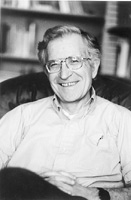 recognition as a dissident intellectual and impresses by the sheer
enormity of his work. As such, he is one of the most frequently cited authors
of all time, and has more than 50 books to his credit.
recognition as a dissident intellectual and impresses by the sheer
enormity of his work. As such, he is one of the most frequently cited authors
of all time, and has more than 50 books to his credit. 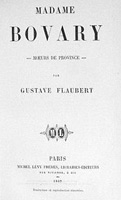 enough they
find the giant's garden. One thing leads to another and a little boy is able
to help the giant find his gentler side, driving away the winter. The garden
is then everyone's playground, and it is always spring.
enough they
find the giant's garden. One thing leads to another and a little boy is able
to help the giant find his gentler side, driving away the winter. The garden
is then everyone's playground, and it is always spring. 