



|
|
|
|
 |
 |
  
|
security review When
piano sings Festive
times
The 2007 version of National Command Authority vests huge powers in the person of the president as opposed to the vision of major political parties By Nadeem
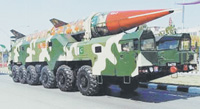
Iqbal The recent presidential ordinance re-establishing the National Command Authority (NCA) is seemingly another attempt to allay western fears regarding Pakistan's nuclear weapons. What it has done in effect is that it has established the presidential command over the country's nuclear arsenal. The ordinance no LXX of 2007, establishing NCA with the president as its chairman, was issued on December 13 at a time when the constitution was in abeyance and the January 8 elections were less than a month away. It was promulgated a month after the National Assembly had completed its term. This has come at a time when the major political parties' have issued their manifestoes, none of which envisage this kind of command structure. Instead they visualise empowering the prime minister to be an authority in handling security issues. The PPP manifesto says, "Nuclear Command and Control will be placed under the Defence Committee of the Cabinet." While PML-N calls for abolishing the National Security Council. Instead, the manifesto says, "The Defense Committee of the Cabinet will be reconstituted as the Cabinet Committee on Defense and National Security and will be chaired by the prime minister. It will have a permanent secretariat under a national security adviser to the prime minister. The efficacy of the higher defense and security structure, created two decades ago, will be reviewed. The Joint Services Command structure will be strengthened and made more effective." The PML-Q manifesto, however, does not offer any specifications on the issue. It is interesting that the recent ordinance has not established a new National Command Authority; a command structure has been functional since February 2000. The then NCA was established by an executive order of National Security Council and Pervez Musharraf was the head of that set-up by virtue of his being chief executive officer, army chief and joint chief of staff committee. Although the parliament -- and that too a pliant one -- came into existence in 2002, no effort was made to give NCA a legal cover in the five years of its existence. It is only after the president doffed his uniform that some amendments needed to be made in its formation and these have come in the form of an ordinance. The perpetrators of the emergency claim that these acts of the president -- the ordinances promulgated during the 40 day emergency -- are immune from any parliamentary review but many do not agree. Talking to foreign media, Army spokesman, Maj. Gen. Waheed Arshad said, while there was consensus among all political parties on the issue of Pakistan's nuclear arsenal, authorities wanted to put the National Command Authority on a firm legal footing before the elections. "There is a transition in process and the country is returning to full democracy, so whatever things were left to be done are being done," Arshad is quoted as saying. "No government would like to change it," he added. National Command Authority is a term used by the US military and government to refer to the ultimate lawful source of military orders. The term refers collectively to the US president as commander-in-chief and the US secretary of defence. The use of the term dates from the cold war, when the US and USSR had both nuclear missiles on constant alert and a responsible official had to be available to authorise a retaliatory strike within a matter of minutes. Only the NCA could order the use of nuclear weapons. Pakistan seems to have adopted the same nomenclature. Soon after the ordinance, NCA met and declared that Pakistan was fully capable of defending nuclear assets and interests and thwarting any 'misadventure.' The meeting also reportedly took note of a hostile campaign in a section of the international media about Pakistan's nuclear assets and reiterated that the security was foolproof. The NCA warned against creating an 'irresponsible alarm.' It seems that this 'irresponsible alarm' was raised by two US academics who published an article in the New York Times last month suggesting American forces could enter Pakistan to prevent radical Islamists from getting their hands on a nuclear device in the case of grave instability. Another report in the same newspaper said that for over the past six years, the Bush administration has spent almost $100 million on a highly classified programme to help Gen. Pervez Musharraf to secure the country's nuclear weapons. The 2007 version of NCA is different from 2000 as it is much larger in scope having new powers that also include cross cutting supremacy over all the strategic institutions of the country. The NCA in 2000 was responsible for policy formulation and exercised employment and development control over all strategic nuclear forces and strategic organisations. It consisted of an Employment Control Committee and a Development Control Committee, as well as the Strategic Plans Division which acted as its Secretariat. The Employment Control Committee was chaired by the head of the government and included Ministers of Foreign Affairs (Deputy Chairman), Defence, Interior, Chairman of Joint Chiefs of Staff Committee (CJCSC); Services Chiefs, Director-General of Strategic Plans Division (Secretary) and Technical advisers. While the Development Control Committee included CJCSC (Deputy Chairman), Services Chiefs, Director-General of Strategic Plans Division, representatives of the strategic organisations and scientific community. The Strategic Plans Division, headed by a senior army officer, was established in the Joint Services Headquarters under the CJCSC to act as the Secretariat for the NCA and perform functions relating to planning, coordination, and establishment of a reliable command, control, communication, computers and intelligence network. The NCA in 2007 has the president as its chairman and the prime minister as vice chairman while the ex-officio members include Foreign affairs, Defence, Finance and Interior ministers, three services chiefs, CJCSC and DG Strategic Plans Division (SPD). The Authority has a complete command and control over all nuclear and space related technologies, systems and matters and will also supervise the functions and administration of all the strategic organisations including Pakistan Atomic Energy Commission, Dr A Q Khan Research Laboratories and Upper Atmosphere Research Commission. Similarly, all the employees of the strategic organisations (civilian and military) will deem to be the Authority's employee, with the Authority having powers to regulate their affairs including assessing their reliability, integrity etc. Among other laws, the Army Act, 1952 (XXXIX of 1952) section 2 is also applicable on the employees. An amendment was also incorporated in the Army Act's section 2 during the emergency on November 10, 2007 attracting widespread criticism that the amendment has empowered the military courts to try civilians. Attorney General, Malik Mohammad Qayyum explained that by amending Section 2 (1) (d) of the Act, it has been provided that only those civilians who commit terrorist acts or offences mentioned in the Army Act would be put on trial. The DG, SPD is also empowered to undertake inquiry and investigations of any suspicion conduct. The maximum punishment for committing breach of security is 25 years. The breach of national security is defined as, "if any person including an employee in the service of the Authority or the Strategic Organizations acts in a manner which is prejudicial to the security or integrity or stability of Pakistan or attempts or commits or continues the breach of confidentiality or leakage of secured information directly or indirectly or in any way acts or conducts himself that endangers the security or secrecy of any aspect of the programmes or projects or activities under the Authority." The list of offences also include those offences as mentioned in 21 other existing laws related to money laundering, smuggling, corruption, terrorism, illicit arms etc. Since the 1998 nuclear detonations, the government has been incorporating different legal measures to project itself as a nuclear responsible state. This includes the separation of civilian and military nuclear installations. The government also projects these measures in the western capitals to attract European and American investment in the nuclear power plants to produce energy. But these efforts, it seems, have so far failed to bear fruit. Mainly, because for the western thinktanks, the Dr. Qadeer Khan affair remains a test case to judge the efficacy of anti-proliferation measures. In one such conference in Brussels held last year in November, the Pakistani official claims about nuclear export control preventing unauthorised spread of sensitive technology and know-how were countered by western researchers who asked why was Dr. Qadeer not tried under these laws. In February 2004, when Dr Qadeer Khan confessed of his involvement in proliferation activities, his mercy petition was considered by NCA and forwarded to the cabinet for consideration. Maybe this time around, NCA needs to more by setting examples to be referred in the international conferences -- to plead its case rather than just issuing statements about the safety and security of the country's nuclear programme. Aroosa Naz's work on display at Rohtas 2 in Lahore revolves around the truth of love and desire -- simultaneously questioning the two By Quddus Mirza "The illusion of desire has been lost in the ambient pornography and contemporary art has lost the desire of illusion. In porn, nothing is left to desire". The Conspiracy of Art, Jean Baudrillard The link between illusion
of desire and the desire for illusion, invoked by the French philosopher, is Similarly, in art the 'expectednes' has diffused the charm. Unlike the Classical period or Renaissance, the contemporary art ceases to produce an illusion of the world. It has liberated itself from the task of reproducing reality, and exists as an independent entity. There is no mystery or message to reveal in the present art practice. This turn in the function/meaning of art was stated by American artist Frank Stella, when he said that art is what you see on the surface (so there is no room for the play of illusion!). Actually these two phenomena, the contemporary art and the pornography, indicate the spirit of our age, which does not have the time or capacity for any kind of ambiguity -- since the market forces demand an urgent delivery, so nothing can be kept hidden or delayed. This lack of surprise, both in the realm of art and eroticism, is the subject of Aroosa Naz's new work. In her mixed media pieces, currently on display at Rohtas 2, the element of desire surfaces with a number of other concerns. Most of her work is constructed with a number of translucent sheets, joined and made into one painting. These layers are significant in our culture where even the most enlightened men and women are encased in numerous covers. Starting from costume, these continue into custom, caste, creed and conventions. People spend their lives in boundaries of various kinds, often without being aware of it. This applies to our most intimate moments. Often what is communicated is a blend of different phrases, camouflaged and picked from seen situations, identical or parallel (from the world of cinema). Hence we can not perceive anything without the already existing -- physical, linguistic and imaginary -- layers in our surrounding. All these layers --
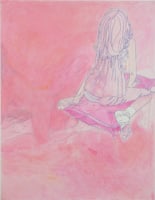
imaginary and virtual -- turn physical in the works of Aroosa Naz. Different Yet the real excitement lies in the way she deals with her concepts and imagery. She uses her technique and material cleverly to suggest her ideas. In majority of her works, human bodies are drawn with dark lines. At places the colours enter in the contours or fill the background, but mainly it is the flowing line that formulates the imagery. In some cases, colour enhances the theme; as the subtle tones of pink remind of (smeared) lip stick, and alludes to the world of a little girl in frilly frock and socks. However this young person is, tactfully placed in a playful position. On the surface she looks like an ordinary individual, but once seen with the underneath imagery, she acquires another personality. On the sheets behind the surface, male and female figures, in passionate postures (all selected from various websites) are portrayed. The origin of these characters, in the act of love making, reminds the link between private and public spheres of our lives. And due to this connection, the couples engaged in intercourse and occupying centre of the pictorial space, seem unreal, artificial and almost posing. Basically the work signifies the absence of love, predictability of sex, banality of eroticism -- features of a society consumed by extra information. However, if on one level the works are about the changing patterns of life outside, these also reveal the private world of a young woman. The surface of every work depicts an innocent, playful and immature girl, while underneath is a longing that is often suppressed due to moral pressures; It takes shape in the realm of subconsciousness, sometimes manifesting in dreams which are not in one's control. The formal structure of Aroosa's work in a way communicates the division of self. To some extent this association (or split) is directly conveyed in each work, except in other, more painted pieces with some symbolic imagery (such as the girl with the drops of rainwater or outlines of drains and pipes encircling a small figure). On the whole, the art of Aroosa Naz revolves around the truth of love and desire -- simultaneously questioning the two. But in line with her content, the surfaces of her paintings are truly tactile and delightfully desirable. A remarkable quality! (The
exhibition is being held between Dec 18-29 2007 at Rohtas 2 in Lahore) Pianist Maruan Ben Abdallah pays tribute to Hungarian composer Zoltan Kodaly at the German cultural centre in Lahore By Sarwat Ali The piano recital in which
Maruan Ben Abdallah performed last week at the Few people in Pakistan would know about this musician/teacher but then very little is known about the cultures of the various countries which are lumped together as the West. As it is, Hungary played a leading role in the expansion of music in Europe, led by Franz Liszt, who was one of the greatest composers and surely a great piano player. Kodaly's parents were also musicians and his earliest memories were classical music played by his parents, the gypsies singing and what the maids hummed in the kitchen. This combination of influences fascinated him and bringing together classical music and Hungarian folk music became his lifelong passion. He is credited for having created the Hungarian folk song. When the new Academy of Music was opened in Budapest in 1907 he was appointed a professor. In 1919 he was named deputy director, after 1945 he was appointed president and then honorary president. He taught music composition till 1942 followed by folk music. Maruan Ben Abdallah, a native of Rabat, Morocco started playing the piano at the age of four with his Hungarian mother. He then went to Budapest at the age of 13 to continue his musical studies. He entered the Bartok Conservatory of Music, where he studied piano with Gabor Eckhardt, chamber music with Gabor Csalog, conducting with Lenke Ogo. He was the pupil of Sandor Falval and Kalman Draft at the Frantz Liszt of Music Budapest from where he graduated in 2007. Since 2004 he consults regularly the legendary pianist and professor Ferenc Rados. As Abdullah played it was
clear that he had immense promise. He played pieces from some of the In Germany the idea was taken up by the organ builder Gottfried and Silbermann and demonstrated to Bach who was not impressed, nor was Voltaire who declared the pianoforte an ironmonger's invention compared to the harpsichord. The earliest instruments were referred to as fortepiano and the name is frequently used today to distinguish the type known to Mozart and Beethoven before the development of the more powerful models whose metal frames could stand up to the repeated hammerings against the strings. Most keyboard instruments had traditionally been made with horizontal strings as with square piano or the grand piano. Upright piano fortes were introduced by John Hawkins of Philadelphia around 1800. Cristofor's major pioneering devise had been an escapement action for releasing the hammers swiftly after they had struck the strings. This was later improved to prevent the hammer bouncing back and hitting the string again. Early in the 19th century the French manufacturer Erard invented a double escapement which by checking the hammer before it fell all the way back made faster playing possible. To produce an agreeable tone hammers were provided with padding, over the years there was first leather covering, then cloth over leather, leather over felt and then the all felt hammers. Ben Abdallah has been awarded the top prizes in different competitions -- in 2003 he won the second prize at the Hungarian Radio Piano Competition, first prize in at the Andorra International Piano Competition, second prize at the Naples International Competition in 2004, First prize at the Andor Foldes Piano Competition in 2005, second prize at the Gorizia International Piano Competition in 2006 and fourth prize in Grand Prix Animato Paris International Piano Competition in 2007. At this young age of 25 he has already performed in France Hungary, Morocco, the United Kingdom, Austria, Italy, Spain, Andorra, Portugal, Germany, Romania, China India and the United States. In the past Goethe Institute in Lahore was an exclusive precinct as long as it only focused on introducing German culture in Pakistan but the moment the focus shifted to a dialogue between the two cultures, exchange of ideas and a place for interaction it sprang to life. It became an extremely active rendezvous for the intellectuals and artists of Lahore. Plays were staged, concerts were held and many discussion programmes were organised. In the 1980s and the 90s the place to go to in Lahore was the Goethe Institute. It also was instrumental in the visits to Pakistan of many scholars and arranging of seminars on a wide range of topics. The parallel theatre of Lahore would not have flourished the way it did without Goethe Institute. Annemarie-Schimmel-Haus, the successor body it seems now has taken another step and has become the venue for the exposure of culture of other European countries.
Islamabad audience, starved for cultural activities, was given a generous dose in the last few weeks with mixed results By Babar A Mufti Pakistan National Council
of Arts, Islamabad (PNCA) planned some interesting and diverse cultural
activities in the last few weeks. On November 29 it organised a mime show
called Mimo in A week later, the PNCA arranged an exhibition of Sheherezade Alam's pottery along with the traditional pottery of the historic village of Saidpur, Islamabad. A renowned ceramist, Sheherezade also gave her presentation on the life of a potter called 'Once upon a Time', which was followed by a ceremony honouring Mohammad Niaz and Rahimdad, the last two master potters of Saidpur Village. Ajoka Theatre Festival starting on December 8, however, was the mega event and by far the best advertised. It was open to public unlike the other events, which were by invitation only. Ajoka claims to be a theatre for social change. The audience it received in Islamabad was best suited for the purpose if it is assumed that a social change is initiated from the top -- which at least seems to be the viewpoint of the PNCA administration. The ticket prices for the plays were possibly kept high for this reason. Even otherwise the PNCA's
location in the shadow of the presidency does not make it a people On the other hand, it was worth seeing that the Islamabad audience is so starved for such cultural activities that on the opening day, even those who did not understand Punjabi, turned up. Many of them who had tough time during almost the two hour long play Bullah did not come the next day. The audience shrank to half its size the subsequent day for the Saraike plays Kala Mainda Bhes. The consequence of all this was that there were fewer people to watch the plays and still fewer as potential agents of change. Madiha Gohar, the director of the plays, did refer to this trend at the end of the play Bullah when she said that she did not intend these plays for the Islamabad elite and that the PNCA has kept the ticket prices "ridiculously expensive." Furthermore, although Ajoka
calls itself a theatre for change, its selection of plays for the It was the play on the third day, a theatrical adaptation of Sadat Hasan Manto'sToba Tek Singh, which broke from the usual thematic sequence set in the first two days. The play showed the human cost of partition of India in the backdrop of official meetings aimed at settling issues of division. The partition was not just a territorial issue; it was, above all, a human issue. It goes to the credit of the Ajoka team, however, that the quality of acting remained un-compromised throughout the festival. The plays were entertaining irrespective of the purposes attached to them. It also goes to the credit of Ajoka that they have kept theatrics alive in Pakistan even in the worst of circumstances for performing arts. Many blame Ajoka Theatre of being monotonous and stylistically the same, but the acclaim for continuing to do theatre in the worst of circumstances cannot be taken away from them.
|
|
 intriguing since in contemporary culture, both art and pornography have lost
their attraction due to an absence of shock value. Today any voyeur, whenever
he wishes, can visit a porn site and enjoy the display of most intimate
situations and gaze at the naked bodies of opposite sex. The abundance and
availability of the erotic have reduced the pleasure that was associated with
this activity earlier, when a person used to strive for veiled delights.
intriguing since in contemporary culture, both art and pornography have lost
their attraction due to an absence of shock value. Today any voyeur, whenever
he wishes, can visit a porn site and enjoy the display of most intimate
situations and gaze at the naked bodies of opposite sex. The abundance and
availability of the erotic have reduced the pleasure that was associated with
this activity earlier, when a person used to strive for veiled delights.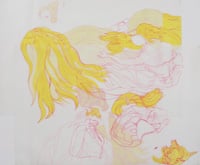 images overlap each other to create a large picture; yet it is in the vision
of a viewer that these visuals assume a complete shape. Because of this --
the outsider's constant engagement with the pictorial substance -- an aspect
of excitement is added to her mix media pieces.
images overlap each other to create a large picture; yet it is in the vision
of a viewer that these visuals assume a complete shape. Because of this --
the outsider's constant engagement with the pictorial substance -- an aspect
of excitement is added to her mix media pieces.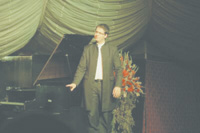 Annemarie-Schimmel-Haus, the German cultural centre in Lahore was to honour
the Hungarian composer, ethnomusicologist, educator and linguist.Zoltan
Kodaly.
Annemarie-Schimmel-Haus, the German cultural centre in Lahore was to honour
the Hungarian composer, ethnomusicologist, educator and linguist.Zoltan
Kodaly.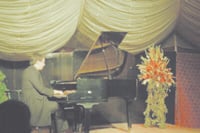 greatest composers like Hayden, Kodaly, Debussy, Schumann and Liszt. His
playing had the lightness of touch which comes with sensitivity to the
greater fluidity of folk music. And he could actually make the piano sing.
Piano is not a very old instrument for in the 18th century music was created
by action of hammers on strings. The most important features of the
instrument were the way in which gradations of force in the fingering could
produce contrast between soft and loud production of notes.
greatest composers like Hayden, Kodaly, Debussy, Schumann and Liszt. His
playing had the lightness of touch which comes with sensitivity to the
greater fluidity of folk music. And he could actually make the piano sing.
Piano is not a very old instrument for in the 18th century music was created
by action of hammers on strings. The most important features of the
instrument were the way in which gradations of force in the fingering could
produce contrast between soft and loud production of notes.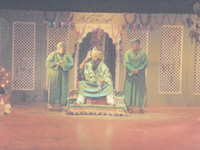 collaboration with the Royal Netherlands Embassy. Mimo was performed and
directed by Carlos Lagoeiro and touched upon a theme of the burden of
memories in a classically unique way. It was a one man act with lots of
puppets and the music to go with it. There were no words spoken except for
the introductory ones: "Mimo is waiting, he has no idea for what. His
head is bursting with memories, Fat memories, thin memories, quiet ones and
noisy ones."
collaboration with the Royal Netherlands Embassy. Mimo was performed and
directed by Carlos Lagoeiro and touched upon a theme of the burden of
memories in a classically unique way. It was a one man act with lots of
puppets and the music to go with it. There were no words spoken except for
the introductory ones: "Mimo is waiting, he has no idea for what. His
head is bursting with memories, Fat memories, thin memories, quiet ones and
noisy ones." friendly place. The security and the stares of the guards make it a no go
area for the commoners. There is no good public transport system either in
Islamabad and F-5 is surely not a place for the promotion of art amongst the
ordinary and less civilized. Its proximity to Diplomatic Enclave does bring
our artists well paying customers but as a national institution, it is the
duty of the PNCA to take the art to the commoners.
friendly place. The security and the stares of the guards make it a no go
area for the commoners. There is no good public transport system either in
Islamabad and F-5 is surely not a place for the promotion of art amongst the
ordinary and less civilized. Its proximity to Diplomatic Enclave does bring
our artists well paying customers but as a national institution, it is the
duty of the PNCA to take the art to the commoners. Islamabad audience seems to give another kind of emphasis. Ajoka selected
three plays for the audience of Islamabad --Bullah, Kala Mainda Bhes, and
Toba Tek Singh. The first play Bullah speaks against the religious clergy and
its narrow mindedness but supports another form of religiosity --
spiritualism. While the results of the power of maulvis and religious clergy
are in front of all of us, we are not completely ignorant of the issues of
spiritualism. For common people both conflicting forms of religion are
confusing and difficult to understand. While the mullah's power has bogged
them down, the sufis have made them stoic and resigned to their fate. Both
forms, thus, in their own characteristic way take the initiative away from
the common people.
Islamabad audience seems to give another kind of emphasis. Ajoka selected
three plays for the audience of Islamabad --Bullah, Kala Mainda Bhes, and
Toba Tek Singh. The first play Bullah speaks against the religious clergy and
its narrow mindedness but supports another form of religiosity --
spiritualism. While the results of the power of maulvis and religious clergy
are in front of all of us, we are not completely ignorant of the issues of
spiritualism. For common people both conflicting forms of religion are
confusing and difficult to understand. While the mullah's power has bogged
them down, the sufis have made them stoic and resigned to their fate. Both
forms, thus, in their own characteristic way take the initiative away from
the common people.