



|
|
|
|
 |
 |
   |
interview Dynastic
dictates Zia
Mohyeddin column
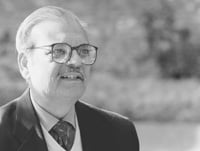
By Altaf Hussain Asad The News on Sunday: What was the environment like in your childhood? Khurshid Rizvi: Amroha was
a vibrant place, hometown of many literary giants and renowned artists TNS: Why and how did you make the transition to Arabic literature? KR: As a child my mother made me study Arabic. But it was on Dr. Sufi Ziaul Haq's encouragement that I pursued Arabic professionally after matriculation. He was our Arabic teacher at Government College Sahiwal and a great scholar who was at home with Arabic, Persian and Urdu. When I went to Oriental College he was in Government College so my association with him did not sever. TNS: What is the extent of Arabic influence on Urdu literature? KR: Not directly. Persian influence is stronger and since Persian literature itself is influenced a great deal by Arabic literature so was Urdu indirectly. But Persian was the court language so it was better entrenched in this region. TNS: How would you evaluate pre-Islamic Arabic literature? KR: This is an area that I am researching on these days for literary magazine 'Savera'. The available pre-Islamic literature goes back to 150 years before the arrival of Islam. There was no concept of writing in Arab. An oral society, they lost a huge chunk of their literature. Arabs were a tribal society, given to a lot of infighting but their literature was simply of a superb quality. Poetry was their forte -- an amalgam of pure language and supreme quality. TNS: The general opinion is that pre-Islamic poetry was bawdy? Do you agree? KR: They used to compose long poems called 'qasida'. It was a long Nazm that ranged from from forty to hundred verses -- just like an Ode. A.J. Arberry translated seven qasidas from that era including one by Imraul Dais, one of their greatest poets. Yes there is erotic element in his verse but that's not how you can label all of it. One can find all shades in their poetry. You see Arabs were very candid about their sexual experiences. Their poetry also encompasses appreciation of physical nature particularly their wildlife and desert. Proud of their tribal heritage and warring abilities they sang of tribal superiority and celebrated their warriors. Arabic literature is a manifestation of the Arab world. TNS: Why is Arabic literature on a decline in Pakistan? KR: We have people who may be well versed in Arabic grammar. But there is acute shortage of scholars of Arabic literature. I believe that even Quran has a literary merit of its own. It is a very high literary masterpiece too. There is need to patronise Arabic literature. We have ended our connection with Arabic literature. There are few translations in this regard. Modern Arabic literature is alien for us. We can not appreciate it due of lack of interest. Arabic produced giant like Naguib Mehfouz. He was a master novelist. I really appreciate his Cairo Trilogy. He has depicted the life of Cairo with great finesse. TNS: What inspired your interest in Urdu poetry? KR: I believe one can only be a born poet. I was only ten when I composed my first poetry, it is in my blood. To date I have published four books of poetry and they are now compiled in one volume. TNS: You have been teaching 'Iqbaliat' for a decade now but you haven't written a book on him? KR: I have written a lot of articles on Iqbal. I plan to collect these articles in a book soon. TNS: What in your opinion is the best work on Iqbal? KR: A lot has been written on Iqbal -- both good and ordinary. 'Malfoozat-e-Iqbal' complied by Mahmood Nizami is a personal favourite. The book was published soon after Iqbal's demise. It is a compilation of first hand impressions by people who saw Iqbal regularly. Hameed Ahmad Khan and Syed Nazeer Niazi too have written valuable books on him. TNS: What are you doing these days? KR: I am editing an ancient text of Arabic poetry dating back to the twelfth century. A university in Iraq contacted me to edit this text some time back. I have been working on this cumbersome task for the past eight years. Punjab University Lahore has published some part of it in a volume. It was acknowledged by the Islamic world. It will take a lot of time. TNS: Any plans to write an autobiography? KR: There are not many incidents in my life that are worth recounting. It has been a simple life. By Mustafa Nazir Ahmad Women
and the Fatimids in the World of Islam Of the numerous Islamic dynasties that have ruled various parts of the world over the centuries, only one has been named after a woman -- the Fatimid dynasty. This comes as no surprise considering the fact that women have never been accorded their due status in Islamic societies -- always forced to play a subservient role to men -- and have hardly ever been in positions of authority. It is also precisely for this reason that we do not hear much about their accomplishments, while history books abound with those of their male counterparts. The women who were related
to the rulers by birth were perhaps the most unfortunate, as many of them
were forced into spinsterhood by dynastic dictates. This, however, afforded
them a unique The Fatimid dynasty, named after Hazrat Bibi Fatima (AS), the beloved daughter of the Holy Prophet (PBUH), ruled most part of the Islamic world at that time -- comprising North Africa and the Middle East -- for almost two centuries (969-1171 AD). Writings about the Fatimid period abound, as it is one of the best-documented in medieval Islamic history. However, as is the case with the overwhelming majority of medieval sources, none of these was written by women and, as a whole, none of the male writers dealt with women as their primary concern. Therefore, till recently not much literature was available on the lives of prominent women during the Fatimid period. The overwhelming majority of past and present monograms on women in classical and medieval Islam have focussed on women in the Holy Prophet's (PBUH) household and on women who belonged to Sunni dynasties, such as the Abbasids, the Saljuqs, the Mamluks and the Ottomans. As for the women in Shiaism, while there are number of publications on contemporary issues relating to Twelvers (Asna Ashri), as well as to women in Ismaili denominations such as the Druze, the Khoja and the Bohra, extensive studies on women in pre-modern Shiaism in general and in Fatimid Ismailism in particular are indeed rare. The book under review, authored by Delia Cortese and Simonetta Calderini, deals with a hitherto neglected area. Basing their research on a variety of sources from historical works to chronicles, official correspondence, documentary sources and archaeological findings, the authors provide a richly informative analysis of the status and influence of women in the Fatimid period. Their contribution is explored first within the context of Ismaili and Fatimid genealogical history, and then within the courts in their roles as mothers, courtesans, wives, daughters, concubines and servants. The book introduces us to some amazing women characters, none more interesting than that of Sitt al-Mulk ("the Daughter, the Sister and the Aunt"). Born in 970 A.D., she grew up to become the most powerful woman of the Fatimid dynasty, wielding tremendous influence in the court. At the age of five, a twist of fate propelled Sitt al-Mulk into a life of prestige -- when her father, Ali al-Aziz, was designated to succeed to the throne -- from what would have otherwise been one spent in historical obscurity. As she grew up, Sitt al-Mulk witnessed the flourishing of court life, as well as the complexities of a world in transformation. On account of the love bestowed by Ali al-Aziz upon his eldest child, Sitt al-Mulk soon gained a prominent position in the court and is reported as having had some 4,000 slave-girls working for her. However, Sitt al-Mulk's life was not a bed of roses. Crucially, in 993 AD, her half-brother Muhammad, Ali al-Aziz's designated heir apparent, died. Al-Aziz's younger son al-Mansur, aged eight, was designated instead as the heir to the throne and was to succeed his father with the dynastic name of al-Hakim bi-Amr Allah. Al-Hakim had been placed under the guardianship of the eunuch Barjawan, another of the amazing characters of the Fatimid dynasty. With his designation as heir, al-Hakim's status shifted from irrelevance to paramount importance, while Barjawan's position changed from small-scale dignitary to major player, with all the winning cards in his hands. This has profound consequences for Sitt al-Mulk vis-a-vis her position in the court. Matters finally came to a head when Ali al-Aziz died in 996 AD. His succession did not run smoothly, though, as Sitt al-Mulk ostensibly led a palace-based coup d'etat to secure the enthronement of one of her cousins instead of al-Hakim, her half-brother who was only 11 at that time. Barjawan's handling of Sitt al-Mulk on this occasion seems to corroborate the coup d'etat theory. Not only did Barjawan prevent Sitt al-Mulk from entering the palace, he also placed her in house arrest, having her guarded by as many as 1,000 horsemen. Not surprisingly, Barjawan hurried on to proclaim al-Hakim as the new imam-caliph. Within a year of al-Hakim's succession to the throne, Barjawan managed fatally the power of all his opponents and thus became the effective master of the regime. Well versed in palace politics, Sitt al-Mulk soon took a U-turn and joined hands with al-Hakim. However, as long was Barjawan was at the helm of affairs, Sitt al-Mulk either kept a low profile or was sidelined. She reappeared on the scene only in 1000 A.D., after Barjawan was killed. Within two years, she became a trusted advisor to al-Hakim, who consulted her in all state affairs. In the following years, the two again developed differences over a number of issues, mainly succession to the throne and appointment of court officials. In 1021, al-Hakim mysteriously disappeared or was killed. Many historians accuse Sitt al-Mulk of fratricide, but there is no conclusive evidence against her. Lying low for a few years prior to this event, Sitt al-Mulk eventually reappeared as the central figure in one of the greatest causes celebres in medieval Islamic history. Following al-Hakim's death, the palace dignitaries gathered around Sitt al-Mulk, who -- as protector of her under-age nephew and designated heir al-Zahir -- now had in her hands the reins of power. Now mature and experienced, she manipulated the powerful men of the court to her advantage. Sitt al-Mulk also introduced many policy changes at the domestic and international level. After an intense and eventful life, "the Daughter, the Sister and the Aunt" finally died in 1023 AD. The book also introduces us to some other fascinating women -- Queen Arwa al-Sayyida al-Hurra, who was born 20 years after Sitt al-Mulk's death -- and narrates some interesting events in a highly accessible style without compromising academic standards. In particular, the events relating to harems maintained by the imam-caliphs and their escapades with concubines make the book an interesting read. In short, 'Women and the Fatimids in the World of Islam' is historiography at its very best, and is a must read for all those interested in Islamic history and gender studies.
I don't know about you, but I have a great admiration for Bill Bryson. I like his engaging scepticism; his magnificent wit and the gentle, delightful manner in which he satirises mores that are held to be sacrosanct in the United States of America. Those of you who have read, 'Neither Here Nor There' or 'Made in America' will know what I am talking about. Bryson's latest work, published recently by Harper and Collins, is called 'Shakespeare'. Well, I thought to myself when I saw the book in the shelf marked 'Humour', if Sellars and Yeatman could write '1066 And All That', a marvellous parody of history text-books, why shouldn't Bryson spoof Shakespeare? Behold my surprise when I discovered that 'Shakespeare' is a vivid and one of the most beautifully written accounts of the Bard's life and times. The wild speculation about who authored the plays we know as Shakespeare's has been a burning question for every biographer. Bryson's untiring research reveals some amazing and hilarious episodes related to the conspiracy theory. Since no one in Shakespeare's lifetime or for nearly two hundred years after his death had any doubts about who wrote Shakespeare. Bryson's tells us that the story of 'Shakespeare wasn't Shakespeare' begins, in 1811, with an odd American lady called Delia Bacon. Ms Bacon was a school teacher who also indulged in writing fiction of sorts. She lived with her brother, a church minister, in New Jersey. It was after she had had an unhappy affair with a much younger man that she became convinced that the true author of the works of Shakespeare was Francis Bacon, her namesake, but no relation. So, in 1852 she travelled to England in her quest to prove that Shakespeare was a fraud. Bryson has no doubt that the lady was unstable, mildly demented even, but she had such charm that many influential people believed in her. Her trip to England, as well as her long stay -- four years -- was financed by a wealthy American. She carried with her an introduction to Carlyle from no less a worthy than Emerson, who must have shared her conviction. She saw Carlyle all right, but when Carlyle offered her introductions to the leading scholars of the day, she declined. "Instead," says Bryson, "she sought out locations where Francis Bacon had spent time and silently 'absorbed atmosphere' by a kind of intellectual osmosis." Five years later, she produced her 'great' work, 'The Philosophy of the Plays of Shakespeare Unfolded', published by a Boston firm. It turned out to be an unreadable book. Bryson finds it odd that not once in this huge book does she actually mention Francis Bacon: "The reader had to deduce that he was the person she had in mind as the author of Shakespeare's plays". Incredibly enough, Nathaniel Hawthorne, another esteemed American poet, wrote the preface to Ms Bacon's magnum opus. He, later on, regretted it and admitted that he hadn't actually read the book. Exhausted, Miss Bacon returned to America and retreated to insanity. After four years she died, "believing she was the holy ghost". Ms. Bacon's death did not put an end to the Bacon lobby; in fact, it grew, and even Mark Twain and Henry James became convinced that Bacon it was who wrote Shakespeare. There has been no dearth of highly respected academics who believed that Shakespeare was not the true author of 'Shakespeare.' Bryson talks of a Dr Arthur Titherley, a dean of science at the Liverpool University, who devoted "thirty years of spare-timer researches to determining (to virtually no one's satisfaction but his own) that Shakespeare was William Stanley, the sixth Earl of Derby." And when you learn that Sigmund Freud, later in his life, had come to believe that Shakespeare was of French stock who was actually named Jacques Pierre, you begin to wonder why you laugh at people who believe that Shakespeare is a Punjabi mystic and that his real name is Shaikh Peer. I am not sure that the authorship question is entirely dead now. More than fifty candidates have so far been suggested as possible alternative Shakespeares. I wouldn't be surprised if a new scholar, having worked out the secret codes contained in his plays, announces in the next decade that it was Peter Quince, a carpenter from Newcastle-upon-Tyne, who wrote Shakespeare's plays. Bryson celebrates Shakespeare as a man who provided an incomparable, ever-delighting body of work, which has enthralled us for four hundred years. He has the gift of an excellent story-teller and his knowledge is truly amazing. Step by step, he takes you inside the Globe. The picture, he paints, of the atmosphere in the theatre of the late 16th century, is remarkable in every way. Plays were performed in the mid afternoon. Playgoers were reminded that a play was about to start with the appearance of a banner waving from the highest spot of the structure in which the performance was to take place. Instead of a third bell which announces that the curtain is about to go up, (the modern method) there was a fanfare of trumpets which could be heard miles away. Admission for the groundlings cost a penny. Those who wished to sit in the pit paid two pennies, and the nobs who desired a cushion paid three pennies. The money was dropped in a box, which was taken to a special room for safe-keeping. This was called the box-office. For those who could afford an extra treat, apples and pears, nuts gingerbread and ale was on offer. Apples and pears were also used as missiles during the moments that the audience disliked, or disapprove of. Tobacco was the most expensive item, a small pipeful cost 3 pence (much more than the price of admission). The theatre, apart from a few discerning play-goers, was a natural haunt of cutpurses, prostitutes and shady characters. Since all the female parts were played by boys, there were many patrons who went to see a play because they fancied a certain lad (much as the late 19th century aristocrats went to see melodrama or a music hall entertainment because they were enamoured of a tiller girl). There is wonderful story that Bryson picked during his research. I quote: "A young wife pleads with her husband to be allowed to attend a popular play. Reluctantly the husband consents, but with the strict proviso that she be vigilant of thieves and keep her purse buried deep within her petticoats. Upon her return home, the wife bursts into tears and confesses that the purse had been stolen. The husband is naturally astounded. Did his wife not feel a hand probing beneath her dress? Oh yes, she responds candidly, she had felt a neighbour's hand there -- but I did not think he had come for that". (To be continued)
|
|
 -- Sadeqain and Raees Amrohvi among them. Scholarly tradition was handed down
to my family by one of my ancestors Maulana Ahmad Muhaddis Amrohvi who was
one of the learned men of his times. For my part, I read a lot of detective
fiction. In those days, Teerath Ram Ferozpuri used to translate English
detective stories into Urdu. They were a class apart. I was an avid reader of
his books. I still remember that I always wanted to be a teacher.
-- Sadeqain and Raees Amrohvi among them. Scholarly tradition was handed down
to my family by one of my ancestors Maulana Ahmad Muhaddis Amrohvi who was
one of the learned men of his times. For my part, I read a lot of detective
fiction. In those days, Teerath Ram Ferozpuri used to translate English
detective stories into Urdu. They were a class apart. I was an avid reader of
his books. I still remember that I always wanted to be a teacher.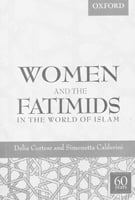 opportunity to dedicate their time to other ventures. While most of them
busied themselves with pastimes like gardening, reading and fine arts, others
played an active role in palace intrigues and in the making of future kings.
opportunity to dedicate their time to other ventures. While most of them
busied themselves with pastimes like gardening, reading and fine arts, others
played an active role in palace intrigues and in the making of future kings.