


|
|
|
|
 |
 |
   |
trend Rise of
the emperor Zia
Mohyeddin column
Bye bye Potter hello Cullen! Can Twilight be as big as Harry Potter?
By Bushra Shehzad "Move over Harry Potter" reports a foreign newspaper. If 2007 was the year of the wizard, Harry Potter, year 2008 has definitely been the year of the vampire, Edward Cullen. Well, if you have not guessed already, allow me to introduce to you this year's most sought after novel Twilight. Twilight is a four-book series written by Stephenie Meyer
which entails the romance between a girl named Isabella or Bella Swan, a
social outsider and an immortal vampire named Edward Cullen. Ever since the
first book came out in 2005, the series has been a perennial best-seller.
Millions of Twilight fans all over the globe sat on the edges of their seats
for three years to wait and see if Edward bites Bella in the last installment
of the series, Breaking Dawn. The drama ended this year on Aug 2. This
exciting journey does not end here because Stephenie Meyer is preparing to
write another sequel to it. With the opening of Twilight's first motion
picture on Nov 21, the thrill, the drama, the romance, has started yet all
over again. These days anywhere you go, a book clad in black, red or white cover clasped in some teenager's hands would instantly summon your attention. It is Twilight. Youngsters especially teenagers (and in some cases even their mothers) have been possessed by the charming and ever-so-perfect vampire Edward and Jacob, a werewolf, so much so that when I asked a friend, what she thought about Twilight, all she could utter was "Jacob, Jacob and Jacob." "I want more of this world to lose myself in," says sixteen year-old Sara Rashid. I know it is a cardinal sin to say anything against Twilight or its perfect characters or its perfect creator. And saying anything bad about it is tantamount to calling upon the wrath of the world's billion youngsters and their billion mothers. The question, however, to be asked is whether such books are worthy enough for youngsters today to be obsessed with? Having found nothing so riveting or extraordinary about the series, I set out to find the answer to my question. I got hold of a couple of college and high school students to comment on Twilight. As expected, all of them had read the whole series. Some could even quote entire lines from it. Despite the hype about Twilight the book has failed to interest the literary snobs like Ameena Rehman, a literature student, who remarked: "It was Mills and Boon with vampires and werewolves." Mills and Boon being 'trash,' to put it in the genre of literary context. Shahpara Saeed termed it "a horrible and utterly
pathetic excuse at writing" and so did Asad Raza who found it
"entertaining but completely ruined the idea of vampires," for the
vampires in twilight are not affected by sunlight. Hiba Alam on the other
hand called it "a joke." Faryal Ahsan, while reiterating the above
feelings for Twilight says "it nevertheless sets really high standards
for mortal men to achieve." These thoughts did not quite answer my question. Because despite their negative comments, everyone had read it. Youngsters today are more interested in stuff like Twilight which offers them thrill, drama and romance rather then what our parents grew up reading. Reading literary classics like Jane Eyre or The Mayor Of Casterbridge, love stories that address wider social issues, is utter agony for teenagers. As far as fantasy is concerned, classics like Dracula and Interview With the Vampire are more universal catering to both the young and the old besides offering profound depth. Twilight is, by no means, comparable to Harry Potter which
is a modern classic. Consider, for example, the fact that on its opening day
Twilight sold 2.1 million copies whereas Harry Potter managed a record sale
of 7.8 million copies. Harry Potter is a classical phenomenon which shall
hold generations of audience in trance whereas the craze associated with
Twilight is a pop phenomenon which will soon fade. I completely agree with
Irfana Jafri, a teacher of English Literature and a mother of two teenage
daughters, who says "this series appeal to the side of our nature which
inclines towards the fairy-tale and the unnatural. This side is subdued with
age and although Meyer has managed to create a new world of vampire lore, it All said and done, keeping in mind the current craze and obsession of Twilight reaching bloodcurdling levels, bookstores would continue to fill their shelves with it and continue to mint money. Youngsters would continue to waste their parent's hard-earned money. When they've whet their appetite for vampires and werewolves and old-country romance, the books shall find their way in some divorced corners of their rooms. Time for another hit. Till then it's bye bye Harry Potter and hello Edward Cullen.
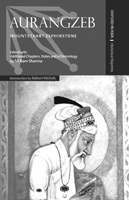
By Aziz Omar Aurangzeb by Mountstuart Elphinstone Edited by Sri Ram Sharma Published by Oxford University Press, 2008 Pages: 220 Price: 495 Mountstuart Elphinstone was one of the pioneers of Indian historiography who also served as the Governor of Bombay. This 2008 edition is actually a reprint of the 1929 compilation done by Sri Ram Sharma of selected chapters on Aurangzeb from Elphinstone's 1841 History of India: the Hindu and Mahometan periods. The first chapter is actually a five page essay included by Ram Sharma to serve as an edifice for the chapters following it that contain the original text by Elphinstone. Hence, it only very briefly lists major events in the first forty or so odd years of Aurangzeb's life. These include his various viceroyships such as those of Deccan and Gujrat, his stint as the governor of Multan as well as the mention of his siege of Kandahar, his proxy attack on Golconda through its Prime Minister Mir Jumla. Elphinstone compares the four sons of Shah Jahan -- Aurangzeb, Dara Shikoh, Shuja and Murad. Aurangzeb himself is described by the author to be fanatical in his religious observances and in promoting its ideals, He concedes "neither religion nor morality stood for a moment in his way when they interfered with his ambition." Elphinstone also clarifies here that upon Shah Jahan's ailing condition due to a kidney disorder, Aurangzeb did not immediately take to arms and vie for the crown, something that Shuja and Murad spared no time and resources in doing. Instead, he manipulated Murad in joining forces with him and marched against Raja Jaswant Singh. After defeating him, he faced Dara's armies Samugarh. The ensuing battle is described in considerable detail, especially focusing on Murad's bravery as well as contrasting it with his eventual callous dismal to the prison of Gwalior by the triumphant Aurangzeb. Dara had taken flight during the battle at Samugarh and the book relates Aurangzeb's attempts to pursue him on his south-westward journey via Lahore and Multan. Yet, as the chapter progresses, the reader is exposed to a series of events that revolve around Aurangzeb's armies engaging those of both his brothers, Dara and Shuja. Dara was captured and eventually executed along with his brother Murad.on the orders of their captor on the basis of exaggerated charges. After mentioning Aurangzeb's dangerous illness, Elphinstone departs from the general narrative of the events pertinent to the Mughal emperor's life and devotes nearly an entire chapter to tracing the background of the Marathas and the rise of the Shivaji. The author was of course writing in the broader context of his History of India and Ram Sharma may have considered including it so as to establish a framework for Aurangzeb's interactions with Shivaji. The author concedes that the reasons behind the fallout of relations between the Marathas and the Mughals is not clear. However, the editor explains in one of his notes that it would not have been the 1857 Maratha incursions against some Mughal cities but the growing clout of Shivaji and his successes against the Bijapuris that led to the initial attack on the Marathas. Elphinstone also explains that out of extreme infuriation at Hindu uprisings, the Mughal emperor revived the jizya (that had been abolished by Akbar) and placed complete bans on gambling, drinking and later on all forms of music, dancing and even astrology and poetry. As these measures were geared towards marginalising Hindus, the author points out that out of resentment, "every Hindu in the Deccan became at heart a partisan of the Marathas." Such development had grave implications for relations between the Rajputs and Mughals and the jizya proved to be the final bone of contention for open hostility from the former and placed Deccan on centre stage. The book deals with the various battles that were fought by Mughal armies, usually under the command of Aurangzeb's sons, Akbar and Muazzam who ironically was later imprisoned for conspiring with the enemy. After the inhuman execution of Shivaji's son Samabhaji by Aurangzeb, the Marathas became more outraged and resolved to "plunder the enemy" as a means to victory. The period from 1698 to Aurangzeb's death in 1707 is dealt with and the author discusses the aging emperor's last attempts at regaining control of his empire. Elphinstone explains that though Aurangzeb established stringent systems of monitoring the government at virtually every tier, the tide of resistance in the form of the Rajputs and the Marathas proved to be too formidable for the decaying Mughal armies. The last two chapters present an analysis of the governmental and administrative setup of Aurangzeb's empire as well as the state of his subjects. Elphinstone explores the governing hierarchy right from the emperor down to the lowest revenue official in the village, the chaudhry. The author also touches upon aspects such as the judicial department, the army, revenue administration, trade and commerce, education and learning as well as the mineral wealth and the various industries. In the updated 1929 edition, Ram Sharma added three additional chapters as appendices dealing with Aurangzeb's character, his relationship with the Sikhs and his contribution to the downfall of the Mughal Empire. A chronology and several endnotes develop perspective for scholars, students of South Asian history and the general reader to gain further insight into the life of this final effective Mughal emperor.
Zia Mohyeddin column Journalism, Art and Television It is hard not to be affected by a feeling of abject despair; so much seems to be wrong and so little seems to get better. The recent carnage in Mumbai occupied most of the airtime of television networks throughout the world. For us it was a 24 hour show in which our highly knowledgeable experts chided the Indian media for creating an unnecessary hysteria. They dubbed the campaign as a pathetic attempt at covering up their own security lapses. We scoffed and ridiculed the Indians for being hasty in pointing their finger at us; we yelled and screamed at the world to believe that we are victims of terror ourselves -- how can they blame us? we shouted; they should search their own house; had they forgotten that there were thirty three (registered) terrorist organisations operating within their country? Jingoistic politicians prompted by fervently patriotic presenters described, in detail, how our nuclear missiles could take care of all their strategic posts. There was talk of pre-emptive strikes; there were strident voices telling us that the Hindus were a cowardly bunch who could never dare to look us straight in the eye because we had ruled over them for a thousand years. In all the discussions about the havoc in Mumbai I did not hear any analyst observe that we really ought to confront our own devils. So much for our 'responsible media.' It was only in the columns of a newspaper that Kamran Shafi had the courage to say that we are "not likely to get out of the hideous cycle of events unless we trace the filth that lies under our beds." It is not just us, dwellers of the Third World, who display gung-ho nationalism at the time of crisis; those in the First World too, become chauvinistic when it suits them. I can offer you two striking examples. The jingoistic fervour that the British media created when Margaret Thatcher invaded the Falklands was an eye-opener. The Tory Press and the yellow papers went into top gear crying, "God for Harry, England and Saint George." Overnight, the Argentinians became oily and unctuous Argies, who had to be taught a lesson. The brouhaha that followed the restoration of the Union Jack over a tiny island that had no political strategic relevance (that I could comprehend) except that it was an imperial possession, proves my point. The second event was the invasion of Iraq ordered by President Bush on the pretext of coming, to the aid of helpless Kuwait. Britain, America's staunchest ally, joined in, immediately. Throughout the first Gulf War I was fed a diet of unremitting news broadcasts showing the horrors of air strikes. I searched in vain for a voice which questioned the wisdom and conduct of the war, but its morality and its philosophy remained unexamined, drowned in the wash of 'expert voices.' Only when I saw, in a BBC2 programme, a photograph of a dead Iraqi soldier in his armoured car, charred with a grimacing skeletal death mask, and heard Tony Harrison read his poem about him, did I find a voice that echoed the outrage, confusion and despair that I felt about the whole event. This is what Art does and journalism doesn't. We have been led by the politics of the 20th century to the conviction that the Arts should be for everyone. We'd like art and popular entertainment to be the same thing, but in practice they are not. We wish it to be true but wishing doesn't make it happen. The most popular entertainment in our country is, of course, television. Now, television has close relationship to the Arts if only because it sometimes shows us glimpses of artistic activity, be it painting, sculpture, architecture music, dance or drama. If this activity is shown as part of a happening it is a reportage. If, on the other hand, a programme deals exclusively with the work of a dramatist or a painter, it can turn out to be a dull and pretentious affair or a work of art itself. What, after all is art, but making something that displays a sense of wonder, form, beauty and an unusual perception? In England, the BBC was, until recently, a Public Broadcasting Service, independent of government control. It had a duty to serve the public and its philosophy asserted that the public is best served by making the best programmes. The commitment to quality was the fuel which drove the BBC throughout what is known as its golden age. Their dramatic output alone gave a new dimension to the craft of television. Superb adaptations of Galsworthy's Forsyte Saga and Evelyn Waugh's Brideshead Revisited (to pick just two of the most memorable serials) became ideal models of creative television throughout the world. Market forces were invoked by the New Labour government (supposed to be friendly to the Arts) to justify the destruction not only of the BBC but other public utilities as well. The BBC tried to stay one jump ahead of the government, but only just. Like the government it faced a massive deficit and they could balance the books only by either draconian cuts in the staff and facilities or going commercial. They were forced to make programmes conceived by market researchers to fit the shape of the required ratings. Since the Arts do not flourish in our part of the world the question is not "what is the relationship of the Arts to Broadcasting?" but "what is the place of Broadcasting in our country?" To the administration in power and its Information ministry, the objective has always been to make sure that people, who have access to radio and television, should only hear and see what the ministry considers to be fit for them. This they cannot do any larger for most people today have access to other channels. Commercial television exists to make money. There is, in our country, an enormous hypocrisy when it comes to television. No one wants to admit that it is a commercial enterprise whose primary aim is to make money. Every channel takes up a high moral stance to proclaim that their first obligation is to the viewers. The fact is that their first obligation is to the advertisers. What the West has learned, and we have not, is that the motivation to make money is not incompatible with making good programmes. Our television can be good if those who are making it have a respect for it and have a determination to make it work on its own terms and not as a surrogate for Star Plus or for any other form of art or Journalism, but as itself, confident, imaginative and distinctive. Only then can we hope to narrow the vast gap that exists between popular entertainment and art.
|


 shall end very soon." She told me that her daughters read Twilight on
the internet because she did not allow them to buy the books. I think
"young people should be reading meaningful books rather then wasting
their time on such unnecessary stuff. I would never read such a book and I
shall ban it," she said laughing.
shall end very soon." She told me that her daughters read Twilight on
the internet because she did not allow them to buy the books. I think
"young people should be reading meaningful books rather then wasting
their time on such unnecessary stuff. I would never read such a book and I
shall ban it," she said laughing.