


|
|
|
|
|
 |
 |
   |
analysis Newswatch industry Another
blow to agriculture review Growth Unexplored
options Following
in Pakistan’s footsteps firstperson
Reclaiming history By Aasim Sajjad Akhtar Academic standards in Pakistan are not very high by any
objective measure. But mediocrity is perhaps no more pronounced than in the
discipline of history. In fact, there is no subject called history in the
state-approved curriculum through primary and secondary school. For this we
have to thank Zia-ul-Haq, who replaced history with the so-called ‘Pakistan
Studies’, or what can be more accurately described as official propaganda.
However, even before Zia and ‘Pakistan Studies’, more often than not what
was called history was effectively a web of disinformation weaved by the
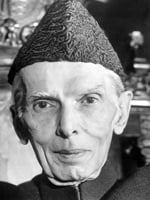
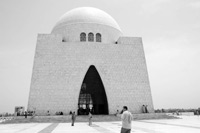
state’s spin doctors. It is in the person of the man we like to call the ‘father of the nation’ that history takes its most pernicious beating. Mohammad Ali Jinnah will undoubtedly always reserve a central place in the modern history of the Indian subcontinent; there already exist numerous academic and biographical studies of the man and his politics. Unfortunately, what most Pakistanis – deprived of objective sources of study – know about Jinnah is a very bad caricature of the real thing. As yet another December 25 passes by innocuously, it is worth dwelling briefly on Jinnah and how he has been transformed by the history-writing of the Pakistani state. Perhaps it is best to start off with what Jinnah was not. He was not a revolutionary, man of the people, or even a freedom fighter through and through. He was, first and foremost, a constitutionalist reared in the best British tradition, completely committed to the notion that the liberal elite was ‘burdened’ with the task of bringing modernity to the backward peoples of India (and the Muslims of India in particular, of course). He detested agitation and conflict, and never spent time in a British prison. Jinnah was unique in that he negotiated a share of post-British India without once engaging the colonial master in a frontal battle. Crucially Jinnah was concerned most with the fate of the relatively privileged Muslims who constituted a minority in the old heartland of Mughal power, namely the United Provinces (today called Uttar Pradesh). He himself hailed from Bombay, another hub of well-to-do Muslims, also in a minority. As such, a large part of his political life was spent trying to garner constitutional guarantees for Muslims in the UP and Bombay. The limited representative government that the British granted to Indians made the province into the primary arena of politics, and so Muslim-majority provinces such as Bengal and Punjab shared little with Muslim minorities in the UP and Bombay. Like all good liberals, Jinnah believed firmly in the
principles of secular government. Time and again individuals and groups have
called attention to Jinnah’s speech in the Constituent Assembly of Tellingly, it was a fierce personal rival of Jinnah, Maulana Maudoodi, who recognised the instrumental nature of the slogan. Maudoodi disliked Jinnah with a passion (the feeling was probably reciprocal) and was unequivocal that he could not support a secularist like Jinnah who was claiming to represent the Muslims of India. Famously, Maudoodi opposed the creation of a separate state for Muslims on theological grounds. But Maudoodi also noted that if this Pakistan was to be created, then the invocation of religious sensibilities would permit individuals such as himself (and religious organisations more generally) to play a very powerful role in public life. And he was proven absolutely correct. In a similar vein, Jinnah tried to win over the support of another elite constituency that he privately despised; namely, the Muslim landed classes of Punjab, Sindh and Bengal (the UP nobility was far more modern). His overtures were rejected for a long time, but eventually a politics of expediency prevailed because the alternative for both sides, while not devastating, involved the likely relinquishing of positions of dominance. In the few months that Jinnah ruled Pakistan, he demonstrated contempt for the fledgling political process while also insisting on a unitary national identity. He was not responsible for the crises of praetorianism and ethno-national exclusion that later erupted, but he definitely laid the foundations for future leaders to centralise power. Likewise, he was not party to the debates in the Constituent Assembly that produced the Objectives’ Resolution, but he presided over the politicisation of religion that set the stage for the digressions from the principle of secular government. That Jinnah managed to carve out a separate state in British India in spite of the geographical limitations of the party that he ran indicates that he was a man of considerable stature. But he was ultimately a representative of a Muslim elite that was more concerned with its own interests than that of the majority of Muslims who hailed from working classes and neither identified themselves politically as Muslims nor shared the elite high culture of UP and Bombay. In the chaotic last few months before the partition, religious sensibilities were ignited to devastating effect. Therefore, in the aftermath of Pakistan’s creation, it was not surprising that the lasting distrust of the ‘other’ permitted the re-writing of history about Jinnah and the ‘Pakistan Movement’. But it is crucial that Jinnah is not made out to be a saint that stands apart from the real politics that shaped the subcontinent after his death. While there are many principles that Jinnah espoused that can and should be invoked to fashion a more tolerant society and democratic state, there are also many principles that need to be rejected. Pakistan was founded as a state on the basis of an abstract notion of a nation. To build a nation requires much more than simply invoking Mohammad Ali Jinnah as the ‘Quaid-e-Azam’ and reiterating the vague concept of shared religious identity that Jinnah employed to negotiate a settlement with the Britons that he sought to emulate.
Newswatch Politics is about mirrors, blue smoke and the art of the impossible By Kaleem Omar Politics, it is said, is about the art of the possible. But Chairman Mao disproved that, emerging from a poverty-stricken village in the heart of rural China, where his family bred pigs, to bring about a socialist revolution in the world’s most populous nation. Closer to our own time, this old adage has, to a certain extent, also been disproved by Barack Obama. Only four years ago, he was a member of the Illinois Senate – and that, too, an African American member, who went to school in Indonesia, had a Kenyan father and a white mother. Today, he is President-Elect of the United States of America. That’s like somebody going from janitor to chief executive officer of the world’s biggest corporation in 48 months. And he has chosen, Hillary Clinton, his main rival for the Democratic Party presidential nomination and the wife of a former president, as his secretary of state. If somebody had written a novel on this theme, people would have said it was too improbable to be credible. Yet it’s happened, which only goes to prove the truth of that other old adage that life can sometimes be stranger than fiction. The late British novelist Kingsley Amis, who began his literary career in the mid-1950s as an angry young man and ended it in the 1990s as a bit of a curmudgeon and something of a misogynist to boot, once said: "Politics is a thing that only the unsophisticated can really go for." Is that true? Well, yes, to the extent that the sophisticated tend not to be passionate about anything, and without passion there can’t really be any politics – at least, not in the classical sense. The sophisticated also tend to see both sides of every issue, a la: on the one hand, there is this; but then, on the other hand, there is that. This, again, is not fertile ground for politics, which requires that one be partisan, even blatantly partisan, about things. So does nationalism, with its credo: my country right or wrong. Jerry Brown, the son of a former governor of California, and himself a former governor of America’s most populous state, was once asked why he had entered the US presidential race in 1976. He replied, "Because I couldn’t think of a good reason not to. A little vagueness goes a long way in this business." Small wonder, then, that Brown – one of the first of America’s touchy-feely brand of politicians – was known as ‘Captain Moonbeam’. He dated pop singer Linda Rondstadt for a while and then sank into well-deserved obscurity. Back in 1978, however, Jerry Brown said one other thing: "People will tear each other apart if given half a chance. Politics is a jungle and it’s getting worse. People want a dictator these days, a man on a white horse. They’re looking for a man on a white horse to ride in and tell them what to do. A politician can do anything as long as he manipulates the right symbols." We, in this country, of course, are only too familiar with this men-on-white-horses phenomenon, having had more than our fair share of them. Ayub Khan put on a suit and proclaimed himself a civilian president. Zulfikar Ali Bhutto put on an awami suit and became the first civilian chief martial law administrator in history. Zia-ul-Haq put on a sherwani and became the world’s ‘humblest’ president. According to the American politician Wych Fowler, what politics is really about is a lot of mirrors and blue smoke. Fowler said: "People have power when other people think they have power. If they don’t think that, then you’re an empty vessel." The British politician Lord Hailsham said: "The moment politics becomes dull, democracy is in danger." Willie Whitelaw, the Tory leader in the House of Lords in the days of the Margaret Thatcher government, would have agreed with this formulation. He once accused the British Labour Party of "going around stirring up apathy." That’s also what a lot of Pakistani politicians spend their time doing: going around stirring up apathy. Even so, it’s surprising just how many cynics there are in politics. Take the American politician Eugene McCarthy, for instance. Back in 1968, when he was running for president against Richard Nixon, McCarthy said: "Being in politics is like being a football coach. You have to be smart enough to understand the game and dumb enough to think it’s important." Even Ronald Reagan could be cynical about politics. Just before he announced his candidacy for president of the United States in 1979, he said: "I used to say that politics was the second oldest profession, and I have come to know that it bears a great similarity to the first." During the 1980 presidential campaign, Reagan – a former ‘B’ movie actor – was once asked by a television interviewer if he was nervous about his forthcoming TV debates with his Democratic rival, incumbent President Jimmy Carter, who, like Al Gore, in later years, was known as a policy wonk with a prodigious memory for details. "Not at all," Regan replied. "Don’t forget, I’ve been on the same stage as John Wayne." Implied in the answer was that, compared with Duke Wayne, who was Carter? Just another politician! On the subject of actors, film star Robert Mitchum – who, in his younger years, had a reputation for being a bit of a wild boy – said after the 1976 US presidential election: "I didn’t bother to vote. I’m an anarchist anyway. I don’t think it makes any difference who has his hand in the till." In his book St. George & the Godfather (1972), the American author Norman Mailer writes: "Politics is not an art of principles, but of timing. The principles are few and soft enough to curve to political winds. The fundamental action of politics is to gain the most one can from a favourable situation and pay off as little as possible whenever necessity forces an unpopular line." Mailer, whose first book, titled The Naked and the Dead (1948), is arguably the best American novel to come out of World War II, wrote a book in 1967 titled Why are We in Vietnam?. The choice of title was an obvious attempt to cash in on the Vietnam War that was raging at its height then. In fact, the book has nothing to do with Vietnam or the war. It’s actually about a bear hunt in Alaska. Mailer, who died a few years ago, didn’t believe in the idea of the author as recluse – he was a public figure, or liked to think of himself as a public figure at any rate, much involved in politics, and often the centre of controversy. He once even toyed with the idea of running for public office, but then thought better of it. Murphy’s Law says: If there’s any chance of something going wrong, rest assured it will. But Murphy’s Law is now old hat. Now, we have O’Reilly’s Comment on Murphy’s Law, which says: Murphy was an optimist. On second thought, even O’Reilly’s Comment may now be old hat, given the fact that we now also have Schnatterly’s Summing Up of the Corollaries, which says: Even if anything can’t go wrong, it will. Schnatterly’s observation is particularly relevant in the context of Pakistani politics. I mean, who in Pakistan could have thought on October 1, 1999, what would happen to Nawaz Sharif’s government only two weeks later? American journalist James Reston, who worked for The New York Times and was the paper’s Washington bureau chief back in the 1970s, once said: "All politics are based on the indifference of the majority."
The hidden treasure By Tahir Ali In I973, a herder spotted some glowing stones in his
village, Ghundo. This was a new beginning. The pink topaz, known as the
Katlang topaz, is one of the world’s best and most precious stones. In
1985, the golden topaz was explored at the nearby Shamozai hill. The
people converged on the spot and each took stones, often weighing five to
10 kilogrammes or more, to homes. As the news spread, foreign and local
gemstone mafias flocked here and took the stones away on petty returns
from the locals. In the following years, the topaz treasure was virtually plundered as indiscriminate mining went on. The random blasting played havoc with the treasure and hundreds of tonnes of debris still lie there. Contractors come, make money as fast as they can and make good their escape. Outsiders may have made money, but the lot of the locals has mostly remained unchanged. The NWFP is indeed a ‘Treasure Island’. The province has an enormous hydro-power potential, immense forest and gas resources, and, above all, vast natural treasures of precious and semi-precious stones. The gemstones found here include emerald, ruby, pink topaz, quarts, tourmaline, beryl, moonstone, chalcedony, zircon, aquamarine, garnet, kunzite and peridot. Gemstone buyers make their way to Peshawar, which is called ‘the city of gems’, thanks to the hustle and bustle in Namak Mandi’s gems and mineral market. The total gemstone potential of the NWFP has been estimated for emerald in Swat at 70 million carats; for pink topaz in Katlang, Mardarn, at nine million carats; and for peridot in Hazara and Kohistan at 10 million carats. For aquamarine and tourmaline in Chitral and for garnet in Bajaur Agency, no official estimate is available. Local traders and experts, however, believe many of the deposits of these and other precious stones are yet to be explored. Below the snow-covered mountain ranges of Himalaya, Hindu Kush and Karakoram, vast untapped reservoirs of gemstones are expected. The best and most expensive emeralds in the world are
known to be Columbian, but the emeralds found in the Watkai village near
Mingora in Swat District are even prettier and costlier. Emeralds are
expected at Gandao in Mohmand Agency; Amankot, Mora Darra and Barang in
Bajaur Agency; Makhad and Charbagh in Swat District; and Khaltaro in
Gilgit. These deposits, except those of Makhad and Charbagh, are yet to be
explored. Some experts believe that the Katlang topaz, along with its Brazilian counterpart, is the best in the world, but many others rate the former higher than the latter. Abdul Moeed Khan, a local expert of gems, says the Katlang topaz has no parallel in beauty, weight, hardness and shine. "Its plate has a hardness of nine, which is only the speciality of diamond." He informs that the Mingora emerald and the Katlang topaz can fetch prices of Rs2,000-20,000 per carat; as the weight and beauty increase, so does the price. Abdul Moeed further tells that quality sapphire is also present at the site of the Katlang topaz. The aquamarine of Chitral and Kalam and peridot of Indus Kohistan and Hazara are among the world’s prettiest gemstones. The latter is a light yellowish green to dark green stone of the finest variety found only in Pakistan and Myanmar (formerly Burma). "The gemstone industry is the largest income-generating sector in the NWFP after tourism," former NWFP Chief Minister Akram Khan Durrani tells The News on Sunday. He was clueless about the exact potential of the gemstone sector or the revenue earned by the province through it during his tenure. However, Akram Khan says that during his tenure as chief minister he did his best to attract local and foreign dealers towards the sector by organising international seminars. Abdul Akbar Khan, former speaker of the NWFP Assembly, believes that the gemstone sector has the potential to earn hundreds of billions of rupees for the province. "If utilised fully, this will also attract labour from outside the NWFP." He tells TNS that at present three emerald deposits in Mingora and Shamozai (Swat) and Shangla (Buner), topaz sites in Katlang and a peridot mine in Hazara are ready for auction. The three emerald deposits, Abdul Akbar informs, have been leased for 10 years fetching Rs54, Rs44 and Rs9.5 million, respectively. Reminding that there are many other sites that are yet to be explored, he believes that the gemstone sector can rid the country of its external debt, as well as help bridge the burgeoning trade and current account deficits. Abdul Akbar suggests that computer-aided designing and manufacturing courses should be organised for the people working in the gemstone sector, because they would go a long way in improving investment in the sector. He laments that the NWFP is getting a very small share from the total income of the sector. "The sector is currently included in the concurrent list. As Prime Minister Yousuf Raza Gilani has said, it should be brought under provincial control at the earliest." The government wants to increase exports and bring down the country’s trade deficit to $16 billion (from the current $20 billion) in the ongoing financial year. Trade Development Authority Pakistan (TDAP) Chief Executive Syed Muhibullah Shah told participants of a gems and mineral show in Peshawar in September that the sector can earn huge foreign exchange for the country. "If the government and business community work hard in this sector for the next six years, it could earn $10-$12 billion for the country, which makes 50 percent of the total export," he observed. According to an article published in the Asia Precious Magazine in 1997, some foreign experts had suggested that if emerald mining in Pakistan’s Swat valley was modernised, the country would be able to pay off its massive foreign debts within two years. Knowledgeable sources believe that there are huge prospects for investment in the sector in terms of scientific mining and cutting / polishing for value addition of gemstones. "If illegal trade in gems is brought under official control, the proceeds could be several times higher. The sector has a huge potential to generate funds, but like other public sectors it is in a shambles," remarks Istikhar Khan, a local gems lover. He adds that currently a large quantity of precious and semi-precious stones are being exported in raw shape, which obviously fetches lower prices. Istikhar Khan also points out that because most of the precious stones are found in remote areas, infrastructure improvements are needed to draw higher investment in the sector. Abdul Moeed laments that indiscriminate blasting and rough cutting are spoiling the precious mines and stones. According to him, law and order problem, lack of modern cutting / polishing equipment and indifference by the government to open local training / purchase centres are some of the problems being currently faced by the gemstone sector. Fazle Mabood, another gems expert, endorses this view. He was also unhappy at the nominal money charged for leasing the deposits. "On average, a minimum of half a kilo of emerald is discovered daily. Now compare this with per carat price and think for yourself how cheaply the deposits are being leased," he says. The NWFP Mining and Mineral Department that oversees the business of gems has three divisions. The Exploration and Promotion Division has the responsibility to generate basic data of mineral potential of the province, provide upgraded mineral testing facilities, mechanise mining and up-grade / re-evaluate mineral data. The Titles and Licensing Division has to grant mining licences and leases, compile fresh data and publish it, and control unauthorised excavation / transportation of minerals. The Labour Welfare Division works for the welfare of mine workers. The website of the department neither has relevant data nor contact details. It also does not have any concrete spelled out future plans either. The lack of adequate gem identification facilities and the resultant limited understanding of gemstones often lead to underselling of precious stones. There are currently five Gems and Gemmological Institutes in Pakistan (GGIPs). Located in Gilgit, Peshawar, Karachi and Quetta, these GGIPs serve as gems identification / certification centres. Sources within the All Pakistan Commercial Exporters Association, however, say that these labs have limited identification capacity and use outdated tools. The GGIP in Peshawar has so far trained 1,512 people as apprentices, 528 as cutters and 984 as polishers, but the number is much less than required. More gem-training centres and gem-processing factories should be opened, and preferably at places where gemstones treasures are in abundance. The mining sector’s contribution is mentioned in the country’s trade data. However, because mining is a big sector that includes over a hundred items, one cannot know as to what exactly the gemstone sector’s contribution was. Despite hectic efforts by this scribe, separate and latest figures for the gemstone sector could not be found. The areas where gemstones are found do not get a considerable share in the income from their trade. The country’s mineral policy states that except for 10 percent royalty on precious stones, there will be no other provincial or local taxes on minerals or mining operations. These provisions should be amended and the royalty should be increased. In an interview with TNS a couple of months back, veteran Pukhtoon nationalist leader Azam Khan Hoti said: "If Punjab and Sindh can have authority over their wheat, cotton, rice and gas, why cannot the NWFP have authority over its forests, minerals and water resources? It is this lack of equity that spoils things. I think the time has come that if we want to save the federation, then the smaller federating units will have to be satisfied. Otherwise, it would be very difficult to save the federation, especially in the prevailing situation. So the sooner this is done, the better for the country." Renowned economic expert Dr Shahid Javed Burki also believes that the provinces should be given resource-based royalties from the common divisible pool. "In the (national finance) commission I headed, Punjab was represented by reasonable people, but once they put on their provincial garb they sidestepped the national interest. They fought hard to preserve the provincial interest, which could not accommodate large natural resource-based royalties to the provinces that possessed them. All provinces other than Punjab have natural resources vital for economic development. Balochistan has gas, copper, gold and granite. Sindh has gas and coal. The NWFP has gems and hydro-power. Given the stage of development of the various provinces, Punjab is by far the largest user of these resources. It should be prepared to pay for them." (Email: tahir_ali1971@yahoo.com)
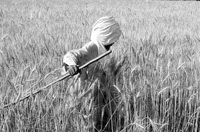
The next wheat crop is in danger because of the shortage of urea By Sibtain Raza Khan Wheat growers across the country are protesting against
the shortage of fertilisers, particularly urea, which is used for
sprouting saplings at the sowing time as well as for the crop’s vigorous
growth. There is an apprehension that if urea is not provided to farmers
immediately, the wheat crop can suffer an irreparable loss. The shortage
of urea in the country is mainly due to its smuggling and black marketing.
In order to get more prices, urea is being smuggled to neighbouring
countries where its prices are higher. Similarly, hoarders and profiteers
have also become active to create an artificial shortage of urea to sell
the stock at their desired rates. These market players are charging
Rs900-1,000 per bag of urea instead of Rs650, the rate prescribed by the
government. It is unfortunate that the hoarders and profiteers are fleecing poor farmers, while provincial and district governments are not taking any action against them. It is even more unfortunate that, on the one hand, the government is spending millions of rupees to mobilise farmers to cultivate more wheat; while, on the other hand, it is not taking any step to check black-marketing and shortage of fertilisers. The district administration has even failed to enforce the price of urea that has been prescribed by the provincial government. Chaudhry Neemat, a progressive wheat grower, says: "There is an acute shortage of urea in our area, but the government does not seem serious in taking any action against the dealers who are selling fertilisers at high rates. it is very regrettable." Malik Riasat, another wheat grower, says that the government should immediately ensure the supply of urea to save the small growers who are facing problems due to the shortage of urea. "Urea shortage is not the loss of farmers only. It is country that will have to face the music during hard times," says Haq Nawaz, a cultivator. Growers from various parts of the country complain that they are being forced by the dealers and manufacturers to purchase urea for up to Rs900-1,000 per bag. Agricultural experts view that the shortage of fertilisers will not only affect the cultivation of wheat, but also all government efforts to avoid its shortage in the coming season. Agricultural expert AD Bhatti blames the bureaucracy for this. "The country is facing the fertiliser crisis only because of the incompetence of bureaucracy, which has badly failed to deliver on all fronts." Dr Nazir, another agricultural expert, warns that due to the shortage of urea, the wheat production next year will be lower than this year. The government has set the next year’s target of wheat production at 25 million tonnes, which is the highest-ever in the country’s history. Meeting this target will be an uphill task for the government due to the shortage of fertilisers, as well as water in the rabbi season. To ensure food security in the country, the government has adopted a two-pronged strategy: first, increasing the support price of wheat; and second, increasing the per acre yield of wheat. The per acre yield of wheat can be increased by timely sowing, using certified healthy seeds, using fertilisers in right amounts, supplying irrigation water at critical stages of growth and controlling weeds by spraying insecticides. However, the shortage of urea has become the main hindrance in achieving this goal. According to official sources, there is no need to worry: the Ministry of Food, Agriculture and Livestock (MINFAL) will import 390,000 tonnes of urea by January 15, 2009. Of this, 190,000 tonnes of urea is supposed to reach Pakistan by the end of the year for distribution among wheat farmers. The consignments of imported urea have already started reaching Karachi and Gwadar ports, and are being hauled upcountry for distribution to outlets in all the provinces. This task has been assigned to the National Finance Commission (NFC) that has set up sale points for the sale of urea in all divisions of the country. The use of fertilisers is an integral part of crop production. In Pakistan, a balanced use of fertilisers has shown tremendous results with regard to increase in per acre yield of wheat. Moreover, a balanced use of fertilisers helps maintain the fertility and productivity of cultivated lands, as well as improves the quality of crop. The government needs to develop the agriculture sector by facilitating the farmers in growing more wheat, so that Pakistan can become a wheat surplus country and save the precious foreign exchange spent on importing it. Although the government has taken some belated steps to overcome the shortage of urea, it needs to adopt a more aggressive approach. The government should encourage private manufacturers to produce more fertiliser and supply it in the market, to break the cartel of market players. In addition, it should make available more urea in the market after purchasing it from these private manufacturers. There is also a dire need to give subsidy on fertilisers to farmers, so that they can cultivate more land and have the maximum yield. Moreover, incentives should also be given to private manufacturers, especially fertiliser producers, for the growth and development of the agriculture sector. Besides this, the government needs to speed up the supply of imported urea to wheat growers, because its shortage is causing an irreparable loss to them. It is the responsibility of the government to provide fertiliser to the growers across the country. Though the government is trying to ensure the availability of urea to farmers through utility stores and the National Fertiliser Marketing Limited, it needs to establish a network of fertiliser sale points at the union council level. In fact, there should be at least two to three sale points in each union council in the wheat-growing belt of the country. In this regard, the government should immediately form farmers’ committees to distribute fertilisers among small wheat growers. (Email: sibtainrazakhan@yahoo.com)
On a downward course By Hussain H Zaidi Several domestic and international factors – political uncertainty, surge in terrorism, energy crisis, record increase in world oil and commodity prices, and global economic turmoil – combined to make 2008 a difficult year for Pakistan’s economy. Growth rate fell, savings and investment levels went down, fiscal and current account deficits shot up, foreign exchange reserves plummeted, and the rupee nosedived against the US dollar. A precarious balance of payment (BoP) position forced the country to borrow from the International Monetary Fund (IMF). Growth During financial year 2007-2008 (FY08), the economy grew at 5.8 percent; 1.2 percentage points slower than that during the preceding financial year, but nevertheless healthy. Because the pattern of economic growth is as important as its rate, mere expansion of the economic output does not tell us the whole story: one also has to see whether the growth is broad based and whether it is accompanied by macro-economic stability. The economic expansion had a narrow base and the services sector alone accounted for 75 percent of the total growth. The services sector grew by 8.2 percent, while agriculture and manufacturing – the commodity-producing sector – grew by 1.5 percent and 5.4 percent, respectively. The growth of the services sector was led by the financial services sub-sector, which grew by 17 percent. The growth of the services sector and the financial sub-sector in FY08 was in line with the preceding years. During the last four years, the services sector and the financial sub-sector have grown on average by 7.1 percent and 24.42 percent, respectively. In fact, the financial services sub-sector has grown faster than any other sub-sector. The problem with this sub-sector is that it is not labour-intensive and does not have much effect in terms of employment generation. The lackluster performance of the agriculture sector was due to negative growth of the major crops like cotton and wheat. Cotton production fell by 1.2 million bales, resulting in negative growth of 9 percent. Similarly, wheat output declined by 1.6 million tonnes, resulting in negative growth of 6.9 percent. The slow growth of the manufacturing sector was mainly due to sluggish growth – only 4.8 percent – of the large-scale manufacturing (LSM), which accounts for 70 percent of total manufacturing. The poor performance of the commodity producing sector not only inhibited employment generation capacity of the economy, but also contributed to increasing inflationary pressures. During July-September 2008, LSM registered negative growth of 6.2 percent, resulting in huge job losses. The textile sub-sector, which accounts for 40 percent of industrial employment, has been forced to cut one third of jobs. As growth in the manufacturing sector is a strong contributor to growth in the services sector, the dismal performance of LSM may slow down growth of the services sector during the next financial year (FY09). The IMF has already predicted Pakistan’s economy to grow by only 3.5 percent during FY09. Another discouraging factor about economic growth was its essentially consumption-oriented nature: total consumption grew by 6.5 percent faster than the overall gross domestic product (GDP) growth. Investment grew by only 0.7 percent compared with 2.7 percent during the preceding financial year (FY07). The other component of GDP, the net exports (difference between exports and imports), registered negative growth of 1.2 percent compared with 1 percent during FY07. The disposable income (income minus taxes) is either consumed or saved. Therefore, increase in consumption is at the expense of savings. Though increase in consumption expenditure also increases aggregate demand, which may serve as a stimulant for investment, actual increase in investment depends on funds generated through savings. That is why increased consumption may serve as a drag on both savings and investment. Hence, during FY08, national savings to GDP ratio fell to 13.9 percent from 17.8 percent during the preceding financial year. As a result, investment to GDP ratio fell to 21.6 percent from 22.9 percent during FY07. Increase in consumption had other effects as well: one, given the sluggish growth of the commodity-producing sector, consumption-driven increase in aggregate demand in the absence of a corresponding increase in supply accentuated inflation; and two, as the difference between domestic output and domestic demand is met by buying foreign goods, increased consumption contributed to increase in imports, as well as trade and current account deficits. The key to achieving sustained high growth rate is to increase the level of savings and investment. Investment has a two-fold role in the economy. In the short-run, it affects aggregate demand and, thus, output and employment. In the long-run, it affects GDP growth. A country’s rate of growth largely depends on how much it sacrifices present consumption to provide for production of capital goods. That is why savings and investment are called the ‘engines of growth’. Fiscal balance Fiscal policy is the principal tool available to the government for aggregate demand management. To push up the aggregate demand and, thus, raise employment level, it has been pursuing an expansionary fiscal policy for some time. Expansionary fiscal policy in itself is not a problem. In case of most of the developing countries, where the private sector is not very dynamic, the public sector has to play a leading role in stimulating the aggregate demand and, thus, create job opportunities. However, the expansionary fiscal policy poses problems when public revenue remains stagnant, as in Pakistan’s case. During the last five years, public revenue to GDP ratio has remained stagnant at around 14 percent. To finance the budget deficit, the government resorts to borrowing from the State Bank of Pakistan (SBP). This means printing more money, thus adding to inflationary pressures. During FY08, fiscal deficit rose to 7.4 percent of the GDP from 4.3 percent during the preceding financial year. Total revenue collected was Rs1.49 trillion, while total expenditure incurred was Rs2.27 trillion, meaning fiscal deficit of Rs772.2 billion, more than double during FY07. Revenue to GDP ratio fell to 13.4 percent from 13.9 percent during the preceding financial year. Tax revenue to GDP and direct tax to GDP ratios remained 9.6 percent and 3.7 percent, respectively, the same as during the preceding financial year. Not only did the fiscal deficit rose drastically, the way it was financed was unsatisfactory. Almost 67 percent of the fiscal deficit (Rs520 billion) was financed by bank borrowings, in particular from the SBP, which, though a most convenient source, is highly inflationary. The share of external assistance in financing of the fiscal deficit was less than 20 percent. To curtail the fiscal deficit, the government has decided to phase out fuel and power subsidies. During FY08, the government provided subsidies worth Rs407.48 billion, including subsidy of Rs175 billion on petroleum products in the wake of an unprecedented increase in world oil prices. Inflation Inflation remains a fundamental macroeconomic problem. During FY08, consumer price index (CPI) inflation was 12 percent, which more than doubled to 24.7 percent during July-November 2008. Similarly, food inflation, which was 17`.3 percent during FY08, rose to 31.9 percent during the first five months of FY09. Inflation begets many problems. For example, it brings down real incomes of people and, thus, discourages both savings and investment. If grown out of bounds, inflation wrecks the monetary system by bringing down the value of the currency. It also diverts economic resources to speculative or non-productive activities, such as investment in real estate. By increasing the prices of inputs, inflation pushes up the cost of production and, thus, increases the final price of exportable goods, making exports less competitive in the international market. However, what makes inflation a real problem is that the efforts to contain it generally end up lowering output and employment levels. This is because, in its attempts to check inflation, the government slows the pace of the economy by pursuing either a restrictive monetary or fiscal policy, or both. This trade-off between inflation and unemployment makes disinflation a real challenge for the policymakers. It is primarily with a view to containing inflation that the SBP tightened the monetary policy several times during FY08. However, the doubling of inflation shows that the policy has not borne fruit. Moreover, the increase in bank interest rates may have contributed to the slowdown of the economy. External balance During FY08, the current account deficit reached the highest-ever level of $14 billion – 8.38 percent of GDP – from $6.87 in the preceding financial year. The surge can be attributed to the trade deficit, which rose to $20 billion. During July-November 2008, the trade deficit was registered at $8.74 billion, 21 percent higher than $7.22 billion during the first five months of FY07. The current account deficit would have been higher, but for workers’ remittances of $6.45 billion during FY08 and $2.34 during July-October 2008. The huge trade and current account deficits put a strong pressure on the country’s foreign exchange reserves. They decreased from $15.61 billion on June 30, 2007, to $11.39 billion on June 30, 2008, and further to only $6.4 billion on November 25. On November 26, the country received the first tranche of $3.1 billion, of the total agreed assistance of $7.8 billion, from the IMF. The capital eased the pressure on the foreign exchange reserves and they increased to $9.09 billion as on December 5. The precarious BoP position also pushed the value of the Pakistani rupee down. After remaining more or less stable against the dollar for nearly six years, it started sliding in November 2007 and by the end of April 2008, the rupee-dollar parity had exceeded Rs64 per dollar. In mid-May, the rupee declined to 69.40 per dollar and to Rs72.55 dollar in the first week of July. On August 15, the rupee-dollar parity sunk to Rs77.10 per dollar. Thereafter, the rupee recovered some ground, but again declined to more than 80 per dollar. On December 20, 2008, the rupee-dollar parity was Rs79 per dollar. A country’s current account deficit is financed by inflow of capital from outside, of which the most credible source is foreign direct investment (FDI). The growth of FDI in Pakistan has been remarkable, increasing from $949 million during FY04 to $5.15 billion during FY08. During July-October 2008, FDI inflows were registered at $1.32 billion, representing an increase of nearly seven percent over the corresponding period of the previous year. However, the composition of FDI inflows remains a matter of concern: they are concentrated in communications (31.5 percent) and financial sector (31.2 percent). On the other hand, the share of the manufacturing sector reduced to 11.9 percent during FY08 from 18.8 percent during the preceding financial year. The all-important textile sub-sector accounted for only 0.6 percent of FDI inflows, down from 1.2 percent during FY07. Human capital Human capital development is necessary for sustaining the growth momentum. Poverty, sickness and illiteracy reduce people’s productivity and, thus, their capability of making contribution as economic agents. Human capital development has been given a short-shrift in Pakistan. This is evident from low budgetary allocation for human development-related expenditure, which was only 2.7 percent of GDP during FY08. Of this, education expenditure accounted for 1.7 percent of GDP, while health spending for 0.6 percent of GDP. The share of total pro-poor expenditure in GDP increased to 5.5 percent during FY08 from 4.9 percent during the preceding financial year. Expenditure on social safety nets accounted for 0.6 percent of GDP, while food support programmes made up 0.5 percent of GDP. During FY09, Rs34 billion have been allocated to the Benazir Income Support Programme, under which Rs1,000 per month will be given to each family in the lowest-income bracket. Although per capita income in Pakistan has risen to $1,085, the increase is nominal rather than real, thanks to a high inflation rate. As noted by the SBP, the 12 percent inflation in FY08 was 14.26 percent for the lowest-income group, compared with 10.71 percent for the highest-income group. The reason for this is that the low-income groups spend the bulk of their budget on food items, for which the average inflation was 17.3 percent during FY08. By the same token, the average 24.7 percent inflation during July-November 2008 must be much higher for the low-income groups given the 31.9 percent food inflation during the same period. (Email: hussainhzaidi@gmail.com)
Unexplored options It is high time to acknowledge that eco-friendly technologies are important for Pakistan By Dr Noman Ahmed In a desperate attempt, the Government of Sindh has
recently moved a summary to cancel the lease of lands given to the
Alternative Energy Development Board (AEDB). Of the 22 companies
approached for the work, only one has been able to show even some
progress. Importantly, five projects are still going through the process
of clearance from the Sindh Environmental Protection Agency. It is
deplorable that, on the one hand, the country is grappling with extreme
shortages of power, ageing distribution system and limited initiatives to
scale up the generation; while, on the other hand, commissioned projects /
schemes have to be wrapped up due to total incompetence on the part of
concerned institutions. Many options still await response from the government, both with respect to decisions and their implementation. For example, wind energy is an extremely useful option. It has enormous potential for Pakistan, especially along the country’s southern areas. According to pre-feasibility studies that were done after the creation of the AEDB in 2005, the Gharo-Keti Bandar wind corridor possesses the net potential of 50,000 megawatts (MW) of energy. Hence, it was decided to launch a pilot project of 100 MW, the output of which was to be supplied to the Hyderabad Electric Supply Corporation (HESCO). These enterprises were to generate 700 MW by 2010 and 9,700 MW by 2030. Electrification of some 40,000 villages, preparation of relevant laws and statutes, local development of solar panels, and establishment of solar thermal plants were some of the other stated goals. Given the dismal performance so far, these targets appear to be a remote possibility, especially considering that very little success in terms of implementation has been made. There are many other technologies and approaches that can be used for adding value to the energy sector, as well as clearing the environment to a considerable extent. ‘Waste to energy’ power plants are a significant example in this regard. Lifestyles in the country in general and in urban areas in particular have changed at a rapid pace. As a consequence, the generation of domestic and other forms of solid waste has increased phenomenally. Karachi alone generates more than 10,000 tonnes of solid waste each day. With the advancements in science and technology, many processes have been successfully created and applied that transform waste into energy. Common typologies that can be considered in this regard include incineration, gasification, thermal deploymerisation, pyrolysis and plasma arc gasification. Careful analysis of the generated waste and the choice of compatible technology are the essential prerequisites that need to be followed up without delay. This approach will not only clean up the environment by consuming urban waste, but shall also generate the much needed electric power that our cities badly require. The best way to go about it is to complete the feasibility studies on a scientific basis to arrange for harnessing the enormous amount of potential in large- and medium-sized cities. For coastal cities like Karachi and Gwadar, the technology can be adapted to generate potable water through the desalination of sea water. Urban organic waste can be transformed into plant food and compost by employing conversion methods of an appropriate type. Similarly, such territories where the sunny days and high temperatures are common, development of extensive solar parks can change the destiny of local population. Intelligent generation and use of renewable energy can change the lifestyles. It is also worthwhile to note that the expansion and consolidation of renewable energy shall positively impact the business competitiveness of the country. It is a well-known fact that thermal power, which now accounts for 64 percent of the total power in Pakistan, has a high ratio of carbon dioxide emissions. With the rising global concern on climate change, it is very likely that such countries would capture more business opportunities that demonstrate better capacity of renewable and environment-friendly sources of energy. With vast desert lands and sunny plateaus, Pakistan has all the scope to develop these options. A related area of exploration is the bio-fuels. A lot of debate has taken place to question the moral and ethical justification of using food crop outputs to cater to bio-fuel technologies. This is a valid argument, but research has informed waste lands can also generate such botanical species that can be used for bio-fuel development. Millions of hectares of land in Pakistan are infested with water logging and salinity. If our scientific community puts together the results of laboratory-scale findings in this direction into a proper framework of application, a remarkable headway can be made. Threshold analysis of available wastelands, review of their productivity and choice of the concurrent process can lead to extremely positive results. Some experimentation and laboratory-scale work is already under way at local universities and institutions, but it needs relevant support from concerned government agencies. The building design process in our country, if modified, can give rise to very useful permutations and combinations. For instance, tall buildings can be finished with curtain walls made up of solar panels and related devices. This will enable buildings to become self-sufficient in electricity generation and consequent usage. If other options are explored, the buildings shall also be able to recycle wastewater for enhanced usage. The basic requirements to introduce this change include willing minds to adapt, technical known-how, training and educational opportunities. A strong regulatory regime is also an integral component of this strategy to safeguard the interest of all stakeholders. If poor African countries like Ethiopia can demonstrate effective launch of eco-friendly energy generation options, Pakistan can certainly do much better!
Following in Pakistan’s footsteps Bangladesh is no better when it comes to military’s intervention in politics By Aimal Khan The new election rules introduced by the
military-backed caretaker government in Bangladesh have imposed certain
restrictions on vehicular processions and big gatherings, besides putting
limit on election-related expenditures, but the people’s involvement in
the electoral process is worth seeing as Dec 29, the election day,
approaches. Of late, there has been an immense interest in Bangladeshi
politics in Pakistan due to the so-called ‘Bangladeshi Model’, with
the military experimenting with an indirect rule. Before the February 18
general elections, some of the Pakistani commentators even discussed the
replication of this model in Pakistan. It is important to remember that there are stark similarities in the political histories of Pakistan and Bangladesh, mainly due to the military’s intervention in politics in both countries. There are strong reasons for this too: Bangladeshi military inherited more than two decades of experience of direct and indirect rule when the country was still part of Pakistan. Some of the senior military leaders, including the current Chief of Staff Gen Moeen Uddin Ahmed, got training in Pakistani military institutions. Therefore, like Pakistan, the Bangladeshi history is also full of examples where the military did not hesitate to directly or indirectly intervene in politics. However, the similarities between Pakistan and Bangladesh have become only too obvious to ignore in the last few years. For example, illegally and unconstitutionally removing an elected government, promising to introduce clean politics, initiating anti-corruption drives, breaking and weakening political parties, trying to create the King’s party, sending major political leaders into self-exile are some of the tactics applied by Gen (r) Pervez Musharraf in Pakistan and replicated by the military-backed caretaker government in Bangladesh. The situation in Bangladesh became tense after the Awami League led-Grand Alliance announced to boycott the January 22, 2006, elections, terming the then-caretaker government headed by Iajuddin biased and partisan. During a successful three-day strike called by the alliance, hundreds of protestors were injured in clashes with the personnel of law-enforcement agencies. Finally, under increased internal and external pressure, Iajuddin’s caretaker government was forced to resign and postpone the elections. A state of emergency was declared and Dr Fakhruddin Ahmed, a former World Bank employee, took oath as chief advisor of the caretaker government, which was considered by many local and international commentators as a front of the military. After a bloodless coup in January 2007, many political workers were rounded up and attempts were made to put curbs on the media. After the proclamation of emergency, the caretaker government imposed a complete ban on political activities, including indoor politics, processions and meetings. Moreover, the movement of two top political leaders, Hasina Wajed and Khalida Zia, was restricted. Corruption and criminal charges were levelled against the leading politicians, besides a murder charge against Hasina Wajed. To justify the takeover, the military charged the previous civilian governments of corruption, cronyism, dynastic politics and keeping private militias. It also accused the last civilian government of the Bangladesh National Party (BNP) of planning to rig the forthcoming elections. Although the caretaker government seems all set to fulfil its promise of holding the elections before the end of 2008, for handing over power to an elected government, it spares no words to criticise what its calls the corrupt, incompetent and dynastic leadership and the lack of intra-party democracy. To clean the politics, the caretaker government announced to introduce and implement electoral reforms. It claimed that the proposed reforms would create conducive environment for holding free and fair elections and encouraging honest and competent leaders, besides ensuring intra-party democracy. The caretaker government also used direct and indirect means to pressurise both Hasina Wajed and Khalida Zia to go into self-exile. While Hasina Wajed was allowed to return soon under increased internal and external pressure, the attempt to send Khalida and her family to Saudi Arabia could not materialise because the Saudi embassy did not issue visas. The caretaker government’s policy of attacking the mainstream political parties was initially welcomed by the people, but soon it invited public anger. Moreover, the policy was not approved by the powerful external powers that feared fundamentalist parties like the Jamaat-e-Islami could exploit the situation in their favour in the absence of the mainstream political parties. There are varying opinions about the performance of the caretaker government, but the fact is that the majority of Bangladeshis favour democracy and want to return to an elected civilian rule. The Dec 29 elections, ninth in the country’s history, are going to be held after a period of seven years. Bangladesh’s election record is better than Pakistan’s. The former has held nine elections (including tomorrow’s) in 37 years, while the latter only seven in 61 years. Political commentators are predicting a high voter turnout in the elections. In comparison with Pakistan, the voter turnout in Bangladesh is normally high; it was 74.96 percent and 75.59 percent in the 1996 and 2001 elections, respectively. Bangladesh’s National Parliament (Jatiya Sangsad) consists of 345 seats. Of them, 300 seats are filled thought direct elections, while the remaining 45 seats are reserved for women. In all, 32 political parties are taking part in the elections, which are supposed to completely end a two year military-backed state of emergency and restore democratic governance in Bangladesh. However, the real contest is between two major groupings: the Awami League-led Grand Alliance and the BNP-led four-party alliance. The large enrolment of new voters, who are mostly young, will play a decisive role in the elections. According to some estimates, the Awami League-led alliance is in a slightly better position, because the people still remember the BNP’s corrupt government. Moreover, it is important to remember that the influence of religious parties, especially the Jamaat-e-Islami, has increased significantly during the last few years. Bangladesh is also experiencing a new phenomenon this time: the ‘NGOisation’ of politics – fielding of candidates by non-governmental organisations (NGOs). This follows an unsuccessful attempt by Bangladeshi Noble Laureate Younus Khan to form a political party. The Dec 29 general elections are likely to be the most closely-observed elections in the country’s history. In addition to 165,000 national election observers, hundreds of international observers will monitor the elections for providing an independent assessment of the electoral process. (The writer, an Islamabad-based political commentator, is currently in Bangladesh to cover the Dec 29 general elections as an observer.) For comments and feedback: Email: editorpe@gmail.com
A call for governance reforms By Murtaza Shibli Director of International Law and Economic Development
Centre, and senior fellow and scholar of Law and Economics at Stanford
University and Columbia University, Dr Edgardo Buscaglia has designed and
implemented United Nations and World Bank-funded projects aimed at
governance reforms in 91 countries throughout the world. He has
contributed to delineation and implementation of anti-corruption
programmes aimed at enhancing public and private sector governance and
promoting democratic institutions, as well as offered inputs in public
financial, administrative and regulatory measures for promoting
transparency and accountability. In 2005-2006, Dr Buscaglia was chief of mission of the Afghan project ‘Enhancing the Professional Capacity of Legal Professionals in Afghanistan’, which encompassed the training of 600 judges, 350 prosecutors and 250 members of the Ministry of Justice and Parliament. It also included assisting in the drafting and implementation of a code of ethics for MPs in the Wolesi Jirga (Lower House), as well as training Ministry of Justice and Parliament officials in legislative drafting techniques. Dr Buscaglia is also training and thesis advisor of the United Nations Institute for Training and Research, training judicial staff focussing on organised crime, corruption and money-laundering. The News on Sunday interviewed him recently in Madrid, Spain. Excerpts follow: The News on Sunday: Is terrorism a product of bad governance? Dr Edgardo Buscaglia: Terrorism is not just a product of bad governance. It has many roots; main among them is old conflicts like the one between Palestine and Israel. You can’t explain the origin of terror simply in terms of bad governance. However, it becomes chronic when we have a situational context in low governance. TNS: How do you see Kashmir in this context? EB: It is a complex issue rooted in the partition of the subcontinent, and the ensuing tussle between India and Pakistan. I can’t give you a technical opinion about the Kashmir problem, but it can certainly be explained in the context of bad governance approaches employed by both India and Pakistan. Bad governance is related to the continuum of violence that we are currently experiencing in South Asia. TNS: Why are only Muslim countries and societies blamed for terrorism? EB: I do not agree with this approach, because it is not a fact. There is no doubt that most grievances are rooted or placed in the Muslim world, but we cannot blame Muslims alone for terrorism. However, one of the reasons for this terrorism is bad governance in the Muslim world that fuels global violence. Because there is a lack of mechanisms to address these grievances, we see increase in violence and terrorism. A good example of how to prevent acts of terrorism and violence is Jordan, which has very well-developed institutions. Jordan is situated in the middle of a very unstable region, but it has been able to prevent terrorism gaining ground within its territory, despite having a large population of Palestinians. The way Jordanians have been able to develop this preventive mechanism is that they have very good and wide-ranging preventive programmes like education for the Palestinian youth, who could have otherwise fallen into the hands of various Palestinian groups for terror activities. In addition, they have very effective and wonderful intelligence system that pre-empts any such attempts. TNS: The Western view often cites the Shariah as an impediment to judicial reforms in Muslim countries. What is your experience? EB: It depends more on a country rather than the law itself, in addition to the various schools of thought within the Shariah that differ variously. Many Muslim countries have transplanted Shariah with other legal structures. For example, in Jordan and Tunisia, Shariah has been made compatible with legal transplants without any problems. Therefore, in these cases, the Shariah is not an impediment to judicial reforms. However, the application of human rights standards is another matter within the Shariah tradition. TNS: During the so-called ‘war on terror’, the US placed emphasis on promoting democracy in the Muslim world. Has this attempt been successful? EB: No, it has failed. The main reason for the failure is that the US approach has been based on political transplants – sending American scholars and social scientists to these countries for drafting their constitutions. This approach has not worked and cannot work. You can engage in dialogue with local politicians, but cannot impose political or constitutional systems on them. They will have to develop their own systems according to their specific contexts with their own checks and balances. This is the sustainable way, not the otherwise. TNS: In Afghanistan, democracy is now more than five years old, but its promised fruits – peace, prosperity and stability – are still elusive. Can you explain why? EB: There has been strong over representation of Pashtuns in the executive, because this is the only way for President Hamid Karzai to keep peace in the country. However, the legislature – Polsi Jirga (Upper House) – has a good representation of all nationalities, but again the question arises about the mechanism of as to how these parliamentarians are elected. There is a lot of dirty money involved, which in turn fuels corruption, drug trafficking, organised crime and, of course, terrorism. Afghanistan remains a fragile state with the president and the central government able to exercise their power in the provinces in a very small proportion, such as in the matters of building infrastructure or providing services. On the other hand, the power of provincial governors is unchecked and they can literally do whatever they want to. In addition, we have many pockets or pieces of failed state within Afghanistan. TNS: Is there any good example of emerging Muslim democracies? EB: I will again go back to the example of Jordan. It is progressing from a personal rule to competitive democracy. Of course, you can’t expect a country to jump all the hurdles in one go, but Jordan is developing the capacity of its institutions – bureaucracy, judiciary and parliament – and preparing these institutions for a democratic transition. My comments do not validate the Jordanian government, but the fact is that Jordan is offering higher and higher representation of people in the matters of governance, which would have been impossible only a few years ago. These are steps towards the right direction. We can’t say the same about Egypt for example, which is stuck with avoiding future political explosions. This can be quantified by a simple fact that the number of political prisoners in Egypt is increasing, something that is not true in Jordan’s case. TNS: How do you see the nexus between terrorism and crime in Afghanistan? EB: The reports prepared by various international institutions, including the European Union and the US State Department, confirm that a large proportion of funding used by the Taliban comes from organised crime. This not only includes drugs, but smuggling of goods and human trafficking as well. The situation is definitely worsening, because the criminal groups in Afghanistan now have inland facilities for processing poppy. TNS: Pakistan is often blamed for the deteriorating situation in Afghanistan. Do you see any connection? EB: There is an incredible amount of blame on Pakistan. The general perception is that Pakistan is the destabilising force; not only among a section of Afghans, but also among foreigners. Inside Afghanistan this varies. Among the non-Pashtuns, the perception is that Pakistan wants to eat Afghanistan. This does not help when the people see the Pakistan Army controlling foreign policy. Therefore, you do have this perception that if the power of the Pakistan Army is not curtailed, the threat against Afghanistan will remain. However, I believe that it would take a revolution to limit the powers of the Pakistan Army. (The author is the editor of www.kashmiraffairs.org)
|
|
 Pakistan three days prior to the handover of power. But Jinnah’s commitment
to secularism did not prevent him from exploiting religious sentiment,
particularly as it became clearer that the British would leave India and the
Muslim League still did not enjoy any meaningful popular support outside of
UP and Bombay. His contempt of mullahs did not preclude his support to a
splinter group of the Jamiat-e-Ulema-e-Hind (JUH) who introduced the slogan:
‘Pakistan ka matlab kya, La ‘illah-ha-ill allah’.
Pakistan three days prior to the handover of power. But Jinnah’s commitment
to secularism did not prevent him from exploiting religious sentiment,
particularly as it became clearer that the British would leave India and the
Muslim League still did not enjoy any meaningful popular support outside of
UP and Bombay. His contempt of mullahs did not preclude his support to a
splinter group of the Jamiat-e-Ulema-e-Hind (JUH) who introduced the slogan:
‘Pakistan ka matlab kya, La ‘illah-ha-ill allah’.