`



|
` |
|
|
|
 |
 |
   |
analysis
No
signs of a change
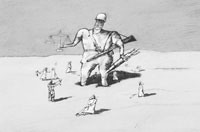
Closing ranks The establishment in Pakistan has for the most part defined the state's strategic interests in relation to India
By Aasim Sajjad Akhtar For some time now there has been talk -- both serious
and frivolous -- that a rift has opened up within the establishment over
the basic strategic vision of the state. It is said that the dramatic
escalation in violence targeted towards state installations and personnel
is a reflection of this fallout. Given the many implications of such a
rift, if indeed it does exist, it is necessary to 'historicise' the
problem and then consider possible emerging scenarios. The establishment in Pakistan -- and this is not a clique restricted only to military men -- has for the most part defined the state's strategic interests in relation to India. In attempting to establish some kind of parity with a much bigger and influential neighbour, the establishment has consistently emphasised the notion of 'strategic depth' to the west. This has meant simulating Pakistan's western border into Afghanistan's territory. At partition this made sense to those charting the state's strategic vision, not only because of the perceived Indian threat but also because a burgeoning Pakhtun nationalism was considered a menace that had to be contained. In any case, the point being made here is that the establishment has been conceiving, designing and implementing covert strategic interventions in Afghanistan since well before the start of global 'jihad' in the 1980s. However it was under the Zia regime and its patron, the
Reagan administration, that interventions in Afghanistan reached
altogether new proportions. Incidentally the cultivation of 'jihadi'
culture did not affect only south-west Asia but the entire Muslim world,
where a new Islamist politics -- obviously very different in each context
-- was allowed to take root ostensibly because this suited the Cold War
objectives of the American empire. It is now of course this carefully planned project of global 'jihad' that has come back to haunt the 'free world'. As the story goes, when Bush phoned Musharraf shortly after the 9/11 attacks, the Pakistani military was faced with the prospect of reversing its long-standing strategic policy vis-a-vis Afghanistan. And as is now well-known, while the Musharraf regime apparently did agree to rein in its 'jihadi' proteges, the evidence on the ground is far from convincing. As mentioned at the outset, the contradictions of the establishment's posture towards 'extremists' over the past six years or so are potentially a reflection of the emergence of factions within. On the one hand, there is the faction ready and willing to tow the American line and make a break with the past; while, on the other hand, stands the faction that is not willing to undo the relationships that have been cultivated over the past many decades. If one is to take this rift seriously, then there is a very real possibility that the faction resisting change is behind the violence that has paralysed many parts of the country in recent months. If it is not sponsoring the violence, then at the very least it has turned a blind eye to the activities of 'extremists'. In thinking about this hypothetical rift, it is worth debunking one of the major myths that is propagated far and wide by 'experts' and media people alike. It is said that the faction resisting change is ideologically committed to 'jihad', or something more vague like Islamic revolution, while the other faction is ideologically committed to 'enlightened moderation' or some variation of the mainstream liberal worldview. According to this 'ideological' narrative of the rift, the Pakistani military has systematically imbibed a commitment to Islamism since the Zia period, and there is now a straight fight between those who have taken forward this commitment to 'jihad' and those who have remained within the more professional, secular fold. In fact, even if there have been ideological ripples since the 1980s at the junior officer or jawan level, the top brass has always been ruthless in calculating its strategic vision, never bending to any hard and fast ideological principles. Even General Ziaul Haq instrumentalised 'jihad' to achieve clearly secular objectives. The establishment has sponsored 'Islam-pasand' political entities since as early as the 1970 elections, without ever becoming ideologically beholden to their politics. Indeed, the Pakistani military has viewed itself as a defender of Islam from its very inception, but this has been a strategic vision rather than an ideological one. Looked at in this way then, the 'rift' within has little do with ideology and more to do with the various factions' understanding of what is a strategically viable policy at this particular point in time. Insofar as there is a rift about strategic vision and even if this is giving rise to fallouts in the form of violence targeting the state, it would be premature to conclude that the military itself is in danger of fragmentation, if only because all parties to the rift continue to think in a cold, calculating fashion and are surely all aware that the unity of the military is imperative. Events in recent weeks suggest that the military is, to be sure, closing ranks. The assassination of Benazir Bhutto was quite clearly engineered by elements within the establishment. At no point in the immediate aftermath of the assassination did any faction of the establishment contradict the perspective of any other faction. The party line was to express remorse, but to consistently assert that Bhutto was responsible for her own death. Starting with the hosing down of the crime scene, it was clear that there was a cover-up of epic proportions. Perhaps more telling have been the new Chief of Army Staff's very public pronouncements that the military has no role to play in politics, and serving and retired military officers will be removed from civilian positions in due course. Hot on the heels of this image-building exercise has been the dramatic emergence of the Ex-Servicemen Association, which has made a handful of high-profile public statements to the effect that the military is washing its hands clean of Musharraf and company. It is worth bearing in mind that the establishment has insulated itself from challenges to its rule over this country for as long as it has, because it recognises the centrality of command and control. It is clear that Musharraf is slowly, but surely, being alienated from his core constituency, in large part because the military wants to recover its image of incorruptibility that is derived from its self-proclaimed role as guardian of the state. And the best way of doing this is to shift the blame for all that has happened in recent times to Musharraf while distancing itself from his person. In the final analysis, the establishment has too much to lose from allowing fragmentation within. It is quite possible that the rift is serious enough, in that it partially explains the orgy of violence that has beset Pakistan in recent months (after all, the 'extremists' have never operated autonomously of the state). However, it is difficult to imagine that the establishment itself will let things spiral completely out of control. If things were to deteriorate further, or, in other words, if 'extremists' start to demand more autonomy than they have exercised to date, it is more likely than not that the differences in strategic vision that exist now are quickly shunted aside in the interests of the institution itself.
Laws for would-be statesmen
By Kaleem Omar Politicians are a dime a dozen. With the February 18 elections looming (at least, one hopes they are looming), politicians are coming out of the woodwork. In the rural areas you can find them lurking behind every bush. I would have said lurking behind every tree, but thanks to the tender ministrations of our wonderful environmental protection agencies, trees, in this country, are becoming an increasingly rare commodity. If the EPAs go on the way they have been doing ever since they were set up, there may come a time when we won't have any trees left. So lurking behind every bush it will have to be -- unless, of course, the EPAs now even have their beady eyes on the bushes, though just why the EPAs would want to turn the whole country into a desert is anybody's guess. Be that as it may, there is no denying the fact that we have more than our fair share of politicians. Indeed, we have so many politicians -- a veritable horde, as they used to say in Mongolia in the old days -- that we could easily export a few thousand of them without making a visible dent in their number. Statesmen, however, are few and far between in this country. Mr Jinnah was a statesman. How many statesmen have we had since then? But if any of our current crop of politicians aspire to become statesmen, here are some laws they need to live by -- that is, if they want to be respected as being wise, honourable and fair-minded. Wisdom, however, doesn't grow on trees or even on bushes, nor does honour or fair-mindedness. Which probably explains why statesmen are so thin on the ground -- not just in this country, but in countries everywhere. George W Bush isn't a statesman. He is a Tudor monarch plus telephones. Like his father, he thinks being president of the United States means never having to say you're sorry. Tony Blair wasn't a statesman either. He was a US poodle plus telephones. Charles de Gaulle was a statesman. He granted Algeria independence, even though the majority of the French electorate was bitterly opposed to it. There were several attempts on De Gaulle's life by anti-independence factions in France, including rogue elements in the French army. Referring to the Algerian issue, De Gaulle once said, "In politics it is necessary either to betray one's country or the electorate. I prefer to betray the electorate." In an interview with the Italian journalist and author Oriana Fallaci in 1970, Henry Kissinger -- who was national security adviser in the Nixon administration at the time -- said, "Intelligence is not all that important in the exercise of power and is often, in point of fact, useless. Just as a leader doesn't need intelligence, a man in my job doesn't need too much of it either." Bush seems to be cut from the same cloth. Like Kissinger, he believes a leader doesn't need intelligence. It's not surprising, then, that Henry the K was Bush's first choice for chairmanship of a commission to investigate US intelligence failures in the days leading up to the events of 9/11. After the 9/11 attacks, Bush described the US hunt for the perpetrators as a "crusade". According to the American psychoanalyst Robert Lindner, "It is a characteristic of all movements and crusades that the psychopathic element rises to the top." This brings me to my list of laws for would-be statesmen. Marshall's First Law of the Legislature: Never let the facts get in the way of a carefully thought out bad decision. It is another matter that if a million believe a foolish thing, it is still a foolish thing. Calvin Coolidge's Comment: You don't have to explain something you never said. In Bush's case, however, he would have a very hard time explaining some of the things he's said over the years, such as these remarks in a speech at Bridgeport, Connecticut on April 9, 2002: "And so, in my State of the -- my State of the Union -- or state -- my speech to the nation, whatever you want to call it, speech to the nation -- I asked Americans to give 4,000 years -- 4,000 hours over the next -- the rest of your life -- of service to America. That's what I asked -- 4,000 hours." One can only be grateful for the fact that we won't have to listen to any more State of The Union addresses by him -- the one he gave last month having been his last. Adler's Rule: It is easier to fight for one's principles than to live up to them. No matter how dishonourable, every politician considers himself honourable. Heine's Law: One should forgive one's enemies, but not before they are hanged. When there was a military coup in an African country some years ago, the new ruler was asked by journalists what would happen to his predecessor. The new ruler replied, "He'll be given a fair trial and shot at dawn tomorrow." Wilson's Law of Politics: If you want to make enemies, try to change something. Abrouzek's Laws of Politics: (1) Don't worry about your enemies. It's your allies who will do you in. (2) If you want to curry favour with a politician, give him credit for something that someone else did. Lawrence's Law: A diplomat is someone who can tell you to go to hell in such a way that you will look forward to the trip. Shaw's Political Principle: A government that robs Peter to pay Paul can always depend on the support of Paul. Political Pollster's Rules: (1) When the polls are in your favour, flaunt them shamelessly. (2) When the polls are overwhelmingly unfavourable, (a) ridicule and dismiss them; or (b) stress the volatility of public opinion. Perot's Observation: The only thing most politicians stand for is re-election. It was said that Karl Rove, Bush's former chief political adviser, was not in favour of attacking Iraq in 2003. He reportedly wanted the attack to take place sometime in 2004, when it would have been of more help to Bush's in his re-election bid in November 2004. Evan's Law: Once you give up integrity, the rest is easy. Napoleon said, "Rascality has limits; stupidity has not."
Unfliching commitment Today even the media is not raising the issue of missing people the way it had been doing before it was issued warning by PEMRA.
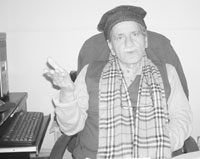
By Shahzada Irfan Ahmed Brigadier (r) Rao Abid Hamid has been associated with
the Human Rights Commission of Pakistan (HRCP) since 1994. Soon after
joining the organisation, he was made incharge of a programme launched in
Pakistan with the help of Penal Reforms International. Since then, he has
headed and coordinated several similar initiatives, aimed at solving the
problems of prisoners and checking human rights abuses. Rao Abid had come to Pakistan in 1947 from the other side of the divide against the advice of his father, who wanted him to stay back and leave for Pakistan with him later on. His father, unfortunately, could not come here and passed away in India. Rao Abid joined the Pakistan Army in 1956 and was commissioned as an officer in 1959. He retired from the military in 1990 and settled in Lahore. He also served as the principal of a leading English-medium school for a couple of years. The News on Sunday recently got a chance to interview him on issues related to the plight of missing people, condition of jail inmates in Pakistan, repatriation of prisoners between India and Pakistan, fate of Pakistanis jailed in foreign countries on different charges, state of human rights in Pakistan during the Musharraf era, etc. Excerpts follow: The News on Sunday: What is the stance of your organisation on the issue of missing people in the country? Do you think their plight will end in the near future? Rao Abid Hamid: First of all, I would like to clarify that the people you are talking are by no means missing; all of them have been kidnapped on the orders of the state in sheer violation of human rights. The missing people are those about whom there is no clue and no one has an idea where they have disappeared. Though I do not have the accurate figure, fears are that the number of these kidnapped people is more than 500. The Supreme Court of Pakistan had put the number of such people at 200 on the basis of details it had received. Also remember that not all of them were kidnapped for their alleged links with terrorist organisations; most of them are objects of political victimisation and some are even paying the price for displeasing influential people. As far as the prospects of their release are concerned,
I would say that there was some hope before President General (r) Pervez
Musharraf imposed the emergency on November 3 last year. The whole world
has seen how badly a young boy, who was protesting for the release of his
missing father, was beaten by the police in Islamabad recently. During the
scuffle, his shalwar came off his body. Today the situation is that the
superior courts have dumped their cases and nobody is even talking about
them. Even the media is not raising the issue the way it had been doing
before it was issued warnings by the Pakistan Electronic Media Regulatory
Authority (PEMRA). TNS: You get a chance to visit various jails of the country. In what condition do you find the inmates? RAH: I remember that the HRCP surveyed Pakistani prisons in 1994-95 and compiled a report based on the findings. I feel sad to say that since then nothing has improved. In fact, things have worsened. Before this government came into power, we could visit any prison at short notice. Sometimes, we would reach the gate of the prison that we wanted to visit and inform the superintendent about our intention. He would simply allow us inside and let us interact with prisoners freely. But today the government does not allow us to enter jail premises. If we try to seek permission from the Punjab Home Department for this purpose, no one even bothers to respond. Last year I got a chance to visit the Kot Lakhpat jail after making endless efforts, and found the prisoners there in a bad shape. Overall, our jails are so congested that the prisoners are packed liked sardines. Besides, they are undernourished and medical facilities are not available to them. I can only recall with sorrow that a few years ago the HRCP got permission, after repeated attempts, from a jail superintendent to deliver medicines to a prisoner who was suffering from some ailment. But the day we were supposed to deliver the medicines, we came to know that the said prisoner had passed away a day earlier. The parcel carrying those medicines is still lying with us at the HRCP office and keeps us reminding of this tragic incident. My observation is that many people have landed into jails only because our judicial system is flawed. If the culprits get due punishment, the aggrieved parties will never take the law into their hands. Especially in murder cases, the aggrieved parties tend to take revenge themselves, as they have little or no hope in the existing judicial system. Pakistan, unfortunately, is the country with the highest number of prisoners on death row in the world. TNS: You have figured in high profile cases related to repatriation of prisoners between India and Pakistan. What do you think were the major hurdles in the process? RAH: The foremost problem in such cases is that the respective countries do not own these prisoners. Even if they are willing to, in rare case, these prisoners are not given consular access by the country housing them. I have met such prisoners in both the countries and found most of them to be innocent. Many of them say that they were sent for espionage by their country for as low as Rs 1,000 per month, but once they were arrested their respective governments distanced themselves from them. Besides, the people crossing over to the other side of the border or the zero line are also sent to jails. There is an Indian prisoner named Bhola Bharat in the Kot Lakhpat jail, who was arrested when he crossed over the zero line while grazing cattle. I also know of an Indian prisoner in Pakistan who is totally deaf and mute. I regularly receive letters from prisoners who intentionally avoid mentioning my name. I think these prisoners fear that they would have to suffer in case they are found even communicating with an ex-army man. Many prisoners complain that there letters do not reach the recipients or reach them only after being scrutinised. TNS: Are you satisfied with the role of Pakistani diplomats in pleading cases of their countrymen languishing in foreign prisons? RAH: I am sorry to the say that on the whole they are playing only a dormant role. I have received letters from Pakistanis in Thai prisons, in which they have complained that no one comes to visit them. Five years ago Pakistan and Thailand were on the verge of a signing a treaty regarding repatriation of prisoners, but suddenly the process was stalled. Thailand has sentenced Pakistanis to terms extending even 30 to 40 years, as the country has intensified its fight against the menace of drugs. I believe that there is need for taking up this issue on an urgent basis, as many Pakistanis in prisons abroad can get relief due to timely interventions. TNS: Being an ex-army man, how do you feel about criticising certain policies of military governments? RAH: The feeling is very normal. I believe army men have equal responsibility towards making peace and improving the lot of the people of their country. That is why I am a part of the India-Pakistan Soldiers' Initiative (IPSI) for peace. Three years ago I visited India along with about 20 retired army officers on a peace mission and called on several Indian dignitaries, including top politicians. Here I would like to appreciate the fact that a large number of ex-army officers have repented over what they have done in the past. But here too, they lacked the courage to come forward and say all this openly in front of the people of Pakistan.
The new monetary policy recently announced by the State Bank of Pakistan SBP does not promise a lot to the masses
By Hussain H Zaidi "The risks to inflation outweigh the risks to
growth in the near future. To address these risks and confront the
emerging challenges, the State Bank of Pakistan (SBP) has decided to
tighten its monetary policy further," says the bank's Monetary Policy
Statement for January-June 2008. The SBP's decision to further tighten the
supply of money credit conditions in the economy is generating intense
debate. One the one hand, it has been described as a befitting response to
the increasing inflationary pressures in the economy; while, on the other
hand, it has been termed a bad decision that would result in slowdown of
the aggregate demand with all its attendant consequences. Before we take a look at the SBP's Monetary Policy Statement for the second half of the current fiscal year (January-June 2008), a few words on the role of the central bank in aggregate demand management seem in order. The central bank, the SBP in our case, manages the aggregate demand in the economy by tightening or softening the money supply and credit conditions. If inflation is on the rise, the central bank reduces the supply of money. As a result, credit conditions tighten and the market interest rate goes up. Increase in interest rate puts brakes on both consumption and investment demand. As the aggregate demand falls, prices also fall. Businesses respond by reducing output, thus cutting jobs. On the contrary, when the economy is faced with deficient aggregate demand, reflected by low prices and slowdown in business activity, the central bank increases money supply with a view to reducing the market interest rate. Fall in interest rate stimulates consumption and investment demand, leading to increase in output and employment. This is what has been done recently by the Federal Reserves, the United States' central bank, which has slashed interest rates to ward off recession. In a market economy, three major instruments available to the central bank are the open market operations, the discount rate and the reserve ratio requirement (RRR). The open market operations refer to the sale or purchase of government securities. Sales of government securities reduce, whereas purchases increase, money supply in the economy. The discount rate is the interest rate at which banks borrow from the central bank. Increase in the discount rate reduces bank reserves and consequently the supply of money. Reserve ratio is the minimum percentage of their total reserves that the commercial banks are required to keep with the central bank. A high reserve ratio results in reduced money supply in the economy. Coming to the SBP's new monetary policy, the discount rate has been raised by 50 basis points to 10.5 per cent, while the reserve ratio has been increased by 100 basis points for deposits up to one-year maturity (deposits of longer terms continue to be zero rated). The decision, according to the SBP, has been occasioned by both developments in the first half of the current financial year (July-December 2007) and outlook for the second half (January-June 2008). The former include 8.7 per cent core inflation, 8.8 per cent consumer price index (CPI) inflation, 12.2 per cent food inflation, and growth of money supply by 19.2 per cent, compared with the target of 13.7 per cent set for the entire financial year. Regarding the latter, the SBP is of the view that aggregate demand and inflationary pressures are likely to build up further, thus necessitating a tighter monetary policy. The new monetary policy, therefore, has been drawn up essentially to contain the increasing inflationary pressures in the economy by slowing down the aggregate demand through monetary contraction. In evaluating the aforementioned monetary policy, four questions arise: 1) does the policy set right objectives?; 2) was a tight monetary policy necessary to achieve those objectives?; 3) would the policy be sufficient to achieve the objectives?; and 4) what would be its effects on the economy? To begin with, inflation remains a fundamental macro-economic problem of Pakistan. Prices, especially of food items, are rising at an exorbitant rate ñ making the people with fixed incomes worse off, and discouraging savings and productive investment. Economic growth is a right objective for a developing country, but inflation-based growth -- the legacy of outgoing Prime Minister Shaukat Aziz, which unfortunately continues even after his departure -- is inherently destabilising. Hence, inflation needs to be contained if growth is to be stable. But this requires either a tight monetary or fiscal policy, or both. With a tight fiscal policy not forthcoming, a further tightening of the monetary policy was needed to curb inflationary pressures. Thus, the answer to the first two questions is in the affirmative. Now we come to the third question. To answer this question, one needs to look at the causes of inflation in the economy. The inflation is both demand-side and supply-side based. The demand for money is primarily transaction demand. With even nominal increase in the gross domestic product (GDP) and per capita income, the demand for money goes up. In case of a relatively loose monetary policy and easy credit conditions, the holding of money increases, thus exacerbating the demand-driven inflationary pressures. However, much of the inflation that we are facing is supply-side based, which monetary policy can be of little use in dealing with. Take, for instance, increase in food, especially wheat, prices. It will be incorrect to attribute food inflation to excessive aggregate demand. The major cause of food inflation is cartelisation -- the cartels create artificial shortages to increase prices. In case of wheat, the additional causes were its export and smuggling. Since international wheat prices were higher than the domestic ones, the commodity was either exported or smuggled, thus creating a shortage in the domestic market. Such supply-side based inflation needs strong government action to curb cartels, and check smuggling and, if necessary, exports. Hence, monetary policy by itself will not be sufficient to significantly reduce inflationary pressures; strong administrative measures are also needed. Finally, we come to the probable effects of the monetary contraction on the economy. First, the increase in discount rate and the cash reserve ratio will put upward pressure on market interest rates. Where will the market interest rate settle depends largely on how much the increase in the discount rate is passed on by the banks to their customers. Second, higher interest rates would reduce consumption and investment demand, resulting in a fall in output and employment. Third, increase in interest rates should encourage savings. However, one must be mindful of the fact that income, not interest rate, is a major determinant of savings. People with higher income are willing to save even at a low interest rate. Fall in inflation will increase the real incomes, but fall in employment will have the opposite effect. Fourth, increase in interest rate may push up foreign exchange value of the rupee. As the rupee appreciates, exports will become expensive and imports cheaper, thus the former will be discouraged and the latter encouraged. This will put further pressure on an already precarious current account position. Finally, as interest rate increases, the money holdings will decline and funds will be shifted to higher yield assets. This may result in a fall in the real sector investment and an increase in the portfolio investment. The magnitude of most of the above-mentioned effects is largely contingent upon how businesses respond to the increase in interest rates, which itself depends on the contribution of financial costs to the total cost of businesses. For businesses whose financial costs form a considerable part of their total costs, the impact will be higher. In sum, the new monetary policy has been occasioned by the need to contain galloping inflation and can be successful only if combined with other measures, such as promotion of competition and action against smuggling. The monetary contraction may adversely affect output and employment, but this is what disinflation entails! (Email: hussainhzaidi@yahoo.com)
The most viable option Conservation of energy offers the best solution to the ongoing power crisis in the country
By Shujauddin Qureshi The business community of the country has rejected
outright the government's recent proposal to observe two weekly holidays
-- on Saturday and Sunday -- to save energy. According to government
estimates, a five-day week would save about 828 megawatts of power, which
could be diverted to industrial and agricultural uses. Though it still is
a proposal, the traders and industrialists are not ready to support any
such suggestion, as they feels that they are already incurring huge losses
due to various factors. The business community has been decrying the increase in energy prices, the law and order situation and the overall increase in the cost of doing business. It argues, therefore, that such a measure would further deteriorate the situation. The traders and industrialists had earlier refused the government's orders to close their businesses at 8:00 pm in a bid to save electricity. Besides them, the common people had also rejected the early closure of business centres. A vast majority of Karachi's population believes that evenings are the most suitable time for shopping, as many people work in offices or factories during the day and reach their homes only in the evening after passing through heavy traffic in the rush hours. This means that they can take their families for shopping only at that time. "The Pakistani women prefer to go for shopping with their men family members in the evening, so early closure of business centres is not acceptable to us at any cost," said Mohammad Wajid, a government employee. Similarly, the recent proposal of two weekly holidays is also been rejected by a vast majority of the traders and industrialists in Karachi, as they argue that the business activities in the cosmopolitan have already been hampered by the frequent law and order problems and load-shedding. In short, the traders and industrialists believe that the closure of businesses for two days, instead of one, would further add to their miseries. All these proposals, the business community thinks, are futile efforts on part of the government. "The experiment of two weekly holidays had failed in the past, and it will affect productivity and exports of the country if it is again introduced," says Majyd Aziz, former president of the Karachi Chamber of Commerce and Industry (KCCI). Talking to The News on Sunday, he regrets the government is opting for an easy way out instead of seriously addressing the ongoing power crisis in the country. The government should increase the power generation capacity and improve infrastructure, rather than adopting short-term measures, Aziz suggests. He adds that there are many other ways to conserve energy, including plugging in the distribution losses and encouraging generation of the alternative energy sources like solar, biofuel, biogas and wind. Pakistan has become an energy-starved nation with the increasing demand for power in recent years. The energy sector in Pakistan comprises electricity, gas, petroleum and coal. With the increased pace of development and growth in population, the demand for energy has increased manifold. According to government data, the demand for all the energy resources, except oil, has increased in recent years. The Economic Survey 2006-07 indicated that during the last 10 years (1996-97 to 2005-06), the consumption of petroleum products has decreased by an average rate of 0.4 per cent per annum; whereas the consumption of gas, electricity and coal, on the other hand, has increased at an average rate of 7.8 per cent, 5.1 per cent and 8.8 per cent per annum, respectively. The lack of generation capacity, coupled with increasing demand, has created a crisis like situation in the country as far as electricity is concerned. The summer season last year was a miserable period for the entire country, particularly for the people of Karachi as they witnessed the worst-ever load-shedding and frequent power outages. The situation, however, improved with the change in weather for some time. But, the winter season did not bring any respite in load-shedding either, despite the fact that the consumption of power reduced drastically. The power supply to the Karachi Electric Supply Corporation (KESC) from Water and Power Development Authority (WAPDA) sources was reduced drastically, which forced the former to resort to load-shedding. Though the entire country suffered load-shedding, as WAPDA could not generate more power due to the shortage of water in rivers, the situation in Karachi was the worst -- the citizens suffered frequent and prolonged load-shedding, which not only hit their social activities but also affected the manufacturing sector. The recent spell of load-shedding is unexpected, and most of people think it is an artificial shortage of power because fans, air conditioners and refrigerators are not operational in this season. Hospitals, industries and commercial establishments are the worst affected by the current load-shedding, as power is often not available for these essential services. Public sector hospitals in certain parts of Karachi have had to suspend surgeries in operation theatres, because of the lack of power. One wonders why this is happening in winter, when the demand for power declines with reduction in the consumption of power for running air conditioners. The energy situation in the entire country is very serious, particularly since October last year. It is because of this reason that caretaker Prime Minister Mohammadmian Soomro has launched an energy conservation campaign by appealing to the nation to conserve energy as much as possible. The government has announced to distribute, free of cost, about 100,000 energy saver bulbs among charity organisations, hospitals and consumers who use less than 100 units per month under a pilot project of energy conservation. Under this plan, the Pakistan Electric Power Company (PEPCO) plans to distribute five million energy saver bulbs across the country. For this purpose, the government plans to seek a loan of six million dollars from the World Bank. Independent economists and business community leaders feel the government itself is not serious in energy conservation. Even though it had established National Energy Conservation Centre (ENERCON) under the Ministry of Environment way back in 1987, the centre has not yet played any major role in energy conservation in the country. "The government is making efforts, but on an ad hoc basis," comments Naim Qureshi, a senior energy expert and the editor of monthly Energy Update. He believes that the government should itself become a role model for energy conservation in the country. "It is commonly observed that street lights are often turned on even in the day time along major thoroughfares, as government departments themselves do not observe electricity conservation," Qureshi regrets. He says that energy conservation is not an easy task because there are many other factors -- like distribution losses, power theft and misuse of energy -- responsible for the energy crisis. According to government sources, the total installed capacity of electricity generation in the country is 19,440 megawatts. WAPDA, the KESC, the Karachi Nuclear Power Plant (KANUPP) and the Chashma Nuclear Power Plant are the four main public sector organisations involved in power generation, transmission and distribution in the country. In addition, the independent power providers (IPPs) are also involved in power generation. The total installed capacity of WAPDA stood at 11,363 megawatts during July-March 2006-07, which accounted for 58 per cent of the total installed capacity. Of this, hydel power accounts for 56.9 per cent or 6,463 megawatts and thermal power accounts for 43.1 percent or 4,900 megawatts. The total installed capacity of IPPs is 5,859 megawatts (30.1 per cent), the KESC's is 1,756 megawatts (nine per cent) and the KANUPP's is 462 megawatts (2.4 per cent). The number of electricity consumers in Pakistan has increased over the years, because of rapid extension of electric supply to villages and fast urbanisation. The number of consumers has increased to 16.7 million till March 2007, up from 15.9 million in 2005-06, showing an increase of five per cent over the last year and a growth of about 70 per cent since 1996-97, the official data indicates. According to government statistics, during the financial year 2006-07, the sector-wise consumption remained at 42.4 per cent for domestic consumers, 26.5 per cent for industrial consumers, 12.1 per cent for agriculture consumers and 6.2 per cent for commercial consumers. Beside electricity, the country is also facing an acute shortage of natural gas. As Pakistan has been self-sufficient in natural gas, the government has encouraged its use in automobiles. Due to the fast conversion of vehicles to compressed natural gas (CNG), Pakistan has become the second largest country in the world where vehicles are consuming natural gas as fuel. Leading industries like fertiliser and cement are the major consumers of natural gas. Though the government is working on at least two plans to import more gas in the country, the progress on Iran-Pakistan-India (IPI) gas pipeline and Turkmenistan-Afghanistan-Pakistan (TAP) gas pipeline projects is very slow. Due to opposition by the United States, India has lost its interest in the IPI project, whereas worsening law and order situation in Afghanistan is the major impediment to the TAP project. According to government estimates, after full utilisation of indigenous resource, including renewable and nuclear, there will be a demand-supply gap of about three million tonnes of oil equivalent (MTOE) in 2010, which will increase to almost 85 MTOE by 2030. To bridge this gap between demand and supply, the government will have to import more gas and oil in the country. The people of northern areas of the country have been suffering heavily during the current winter season, because of the load-shedding of gas. The consumption of gas also increased with mercury going below the freezing point in Lahore and Islamabad. Besides domestic consumers, the industries in Lahore and Islamabad have incurred huge losses due to the shortage of gas. Under the energy conservation programme, the government is encouraging use of solar geysers. The availability of such geysers, however, is a big question, as they are not easily available in the market. Moreover, the cost of solar geysers is three times more than that of gas geysers, so they are unaffordable for the poor and middle-income people. The government claims that solar geysers' cost can be recovered by the users within two-and-a-half years by saving on gas bills. The government is also trying to create awareness about efficient use of natural gas through the media, but when gas is not available in abundance the question of its conservation does not arise. For this purpose, ENERCON has been asked to launch different energy conservation campaigns, though the government as yet has not been successful in its efforts.
National Energy Conservation Policy (NECP) ENERCON had formulated the National Energy Conservation Policy (NECP) in November 2006 through an extensive consultative process involving all stakeholders. It is aimed to steer the country out of a difficult energy supply situation by promoting efficient use of energy resources. The NECP includes guidelines and actionable points to enhance end-use efficiency for various energy-consuming sectors of the economy and also for addressing various cross-sectoral issues that continue to retard promotion of energy conservation. The policy is consistent with existing energy and environment related national policies, strategies and action plans. The policy is meant to generate sufficient activity to promote energy conservation practices and effect energy savings of perceptible magnitude at the national level. The policy identifies key initiatives and instruments in the areas of legislation and regulatory framework; public awareness, training, education and making energy conservation an integral part of the related policies; institutional strengthening and capacity building; and public-private-civil society partnerships. The policy also suggests implementation and monitoring mechanism. The priority sectors as identified by ENERCON include: industry and power; agriculture; transport and building. Since its approval by the cabinet, no major progress has been made so far. In a recent step, the government has revived the role of ENERCON in its emergency conservation programme -- it will be the focal point for formulating, coordinating and monitoring all initiatives pertaining to energy conservation under the policy. -- SQ
IPPs have a large role to play in helping Pakistan overcome its energy crisis
By Nadeem Iqbal Faced with the worst-ever power crisis in Pakistan, 'energy at any cost' has become the buzz word in the corridors of the Ministry of Water and Power, the Private Power Infrastructure Board (PPIB) and the National Electric Power Regulatory Authority (NEPRA) -- the bodies responsible for making power policies, commissioning power projects and determining their tariff. An official of the PPIB confides to The News on Sunday
that since 1994, the experience of In the energy sector, the power policies issued in 1994 and 2002 are the most talked about documents. According to the PPIB, which was established in 1994 to facilitate the private sector in power generation, 15 IPPs were commissioned under the first power policy to produce more than 4,000 megawatts of electricity. Of them, two are supplying power to the Karachi Electric Supply Corporation (KESC), while the rest are supplying power to the Water and Power Development Authority (WAPDA). After that, the government kept on dragging its feet to bring more IPPs into the power generation sector. In October 2007, the PPIB approved four projects with the total capacity to produce 920 megawatts. Currently, the board is processing 64 projects with the total capacity to produce 17,000 megawatts. Caretaker Minister for Water and Power Tariq Hamid recently said IPPs were installing new power projects with the total capacity to produce 2,300 megawatts by 2009, in order to meet the current power shortage. Also, he added, 13 new private power projects with the total capacity to produce 3,120 megawatts would be commissioned by 2010. The country is facing a huge gap between power generation and its demand, which is in access of 4,000 megawatts in the peak hours of the peak months, as the demand for electricity surges to about 12,000 megawatts. Given the fast growing demand, the shortage is increasing rapidly. It is not yet clear if the government would be able to realise the targets it set for itself. Sources in the Ministry of Water and Power are of the view that the situation cannot be improved in the near future, because no new project is expected to start power generation before next year. When an official in the Ministry was asked by TNS why the government failed to anticipate this power shortage, he replied that it was mainly because of the delay in bringing in new IPPs in the field, though the investment in the power sector is quite lucrative. He also dispelled the impression that it was because of Nawaz Sharif's second government, when cases were filed against IPPs, that they have lost interest in investing in new power projects. On the contrary, he said, despite all the litigation, the experience of IPPs was good and they made huge profits. "That's why they are still staying in the Pakistani market," he added. Moreover, most IPPs are local investors and companies. The official referred to a document of the PPIB that says: "Environment for IPPs is not at all hostile. The initial turbulent period has passed. The misgivings and hostilities that occurred during the teething time and which were the results of inexperience on both sides of the fence -- IPPs and the government -- have now been overcome. Now there is a rapprochement between the government and the investors. The investors are very eagerly looking forward to invest in Pakistan. In fact, pursuant to the announcement of the Power Policy 2002, a very encouraging response has been received from the investors." A PPIB official told TNS that the main reason for the delay is that the board has been negotiating with IPPs to give concessionary tariff to the government. In the end, though the tariff remains more or less the same, there has been a new understanding that the government would pay the damages in case it failed to provide IPPs with raw material like gas. Similarly, the government will compensate them in tariff for the losses incurred because of the delay in processing their cases. Another interesting aspect is that the electricity cannot be stored; once it is produced, it has to be consumed. Therefore, under the new arrangements, if an IPP made the declaration of its availability, the government has to buy it whether it needs it or not. However, official sources believe that only bringing in new IPPs would not resolve the energy crisis -- it requires an efficient power generation, transmission and distribution system. Besides high line loses, the authorities are confronted with the problem of an inefficient transmission system: most IPPs are working in remote areas, far off from the cities where energy consumption is high. Regarding fixing of the power tariff, a source in NEPRA told TNS that the authority is struggling to remain independent. The NEPRA is an independent body only protecting the interests of the consumers, while the tariff is fixed by the government. The official predicts, therefore, that the tariff is going to go up.
Pakistan can substantially curtail its oil import bill, turn the wheel of economy, create thousands of new jobs -- and can in the process also alleviate poverty to some extent -- if it opts for the commercial exploitation and industrial use of its vast coal reserves. Pakistan's 'lignite' coal reserves, exceeding 184,656 million tonnes, are many times more than the total reserves of oil and natural gas put together. Despite being one of the biggest sources of fuel reserves, the indigenous coal largely remains untapped and unutilised for reasons best known to the authorities. However, former Sindh chief minister Dr Arbab Ghulam Rahim held the vested interests responsible for non-use of coal. Addressing in Karachi, on October 30 last year, he pleaded for an upfront tariff reasonable enough to attract investment in coal-based energy projects, shunning the negative approach where the quarters concerned were "prepared to offer over 13 cents on furnace oil and 10 to 12 cents for wind and sugar mills, but not willing to accept 7.0 to 9.5 cents for coal." Pakistan's biggest coalfield lies in Thar in Sindh, where the reserves are estimated to be more than 175,506 million tonnes. Seven other coal fields in Sindh have 8,617 million tonnes of coal reserves. These include Lakhra, Sonda-Thatta, Jherruck, Oagar, Indus East, Meting Jhimper and Badin with reserves of 1,328 million tonnes, 3,700 million tonnes, 1,323 million tonnes, 312 million tonnes, 1,777 million tonnes, 161 million tonnes and 16 million tonnes, respectively. Other major coalfields in the country contain reserves of more than 533 million tonnes. These include Khost-Sharig-Harnai, Sor-Range-Degari, Mach-Abagum, Duki and Pir Ismail Ziarat in Balochistan with reserves of 76 million tonnes, 34 million tonnes, 23 million tonnes and 12 million tones, respectively; Salt Range and Makerwal-Gullakhel in Punjab with reserves of 234 million tonnes and 22 million tones, respectively; and Hangu in the NWFP with reserves of 81 million tonnes. In addition to these major fields, there exist minor coal deposits at Badiuzai, Bahol, Bala Chaka, Bhalgor, Johan, Kachh, and Margot in Balochistan; Cherat in the NWFP; Choi in Punjab; and Khilla (near Muzaffarabad) and Kotli in Azad Jammu and Kashmir (AJK). -- Alauddin Masood
For future's sake The students in Pakistan are indoctrinated to the extent that they become alienated with the world in which they live
By Syed Nadir El-Edroos The education sector has historically received one of
the lowest degrees of importance in Pakistan. Because of the
disproportionately low resource allocation for and attention given to
education, its state at all the levels -- basic, primary, secondary and
tertiary -- remains far from ideal. The education sector comprises various
components or streams, which provide alternative but often inappropriate
services having no relevance to the context within which we live. Service
delivery in the sector is skewed to favour the objectives of the state,
private ventures, NGOs and donor agencies, while the interests of the
students are not being safeguarded. Since Pakistan's inception, education has been used as a tool for propagating national ideology. While this in itself may not be controversial, indoctrination seems to have overtaken other objectives. Over the past few years, reports have highlighted how the main debates surrounding education in the outgoing National Assembly revolved around whether a chapter on 'jihad' should be included in the curriculum or not. Also, the role of madaris (seminaries) as centres for imparting education has come under question in the recent past. Importantly, the curriculum taught in these religious institutions has garnered both national and international attention. The fact, however, remains that these institutions, whether fanning fundamentalism or adopting modern educational methods, remain primarily focussed on propagating Islamic ideology. At the other extreme, in the private sector, the plethora of institutions offering British qualifications have monopolised educational services for the upper middle class and beyond. Even though the texts and curriculum originate from the United Kingdom, private institutions also propagate patriotic and nationalistic ideologies consistent with the state's policies. Events of the past few years provide ample evidence to make us believe that education, as a tool of propagating a Pakistan-focussed ideology, has failed; the state remains fractured along provincial, sectarian and linguistic lines; education has failed to introduce democratic practices in the society; continued focus is being paid to the concentration of power rather than its distribution among its rightful claimants; the education system has perpetuated the view that civil and human rights are a privilege and not a right; education is not only creating but rather perpetuating inequality in the society; social and economic mobility is being controlled by a foreign-educated elite that can afford private education; and those studying in madaris are likely to function in socially-prescribed religious roles. While the conclusions drawn may seem to be convenient generalisations, they do provide an accurate summary of the reality. Educational institutions in both the public and the private sectors continue to focus on their own narrow self interests, rather than placing the student at the centre of attention. To begin with, the focus must shift from higher to basic education, because the focus on higher education is a throwback to the now discredited modernisation theory of development in vogue from the 1950s to the 1970s. "The social benefits from education are maximised at the lowest -- basic and primary -- levels," M Todaro notes. Scholarships offered by the Higher Education Commission (HEC) in Pakistan, like in many other developing countries, favour the urban elite that has certain advantages over others with lesser resources, including wider access to information, better proficiency in English, and availability of specialist tutoring to pass various tests. In many cases, the system does not allow for the successful vetting of applicants. Similarly, in many other cases, financially able students are awarded scholarships based on merit but not on need. Finally, a major criticism of the HEC is that it is not accessible to students -- like other state institutions, it remains a highly bureaucratic affair. Institutional arrangements dominate the HEC's interactions, thus it is more likely to hold talks with the administrations of universities rather than their student bodies. The same is true for lower levels of education. Unlike higher education, there is no national regulatory body to monitor institutions at the primary and secondary levels. State-run institutions are supposedly monitored by the local matriculation boards within whose precincts they are located, however inadequate resource allocation compromises the process. Private sector institutions, because of their financial clout and the fact that they offer foreign curriculum, are mostly able to bypass any scrutiny. However, at the same time, it is important to appreciate and recognise the role that various organisations are playing to improve the quality of education in the country. The criticism outlined above should not be extended uniformly, though it is valid in the case of most educational institutions that form the training ground for an entire generation of future political, financial, economic and social leaders of the country. By extension of this argument, one of the most valid reasons for the regularisation of madaris is that the society should be able to hold accountable future religious scholars, as they would shape our children's outlook in most areas of life. The discussion above outlines the real situation of the education sector and the self motivated interests of those who perpetuate the status quo. What is missing, however, in all the debate are the students. One of the major reasons that democratic traditions have not been established in our country is that our educational system does not equip the students to practice them. An average Pakistani student, therefore, lacks the courage to articulate freely his or her views. An educational system that cannot inculcate self confidence in students will never be able to encourage freethinking among them. Further, the divide between politics and students, which has been encouraged by the state for more than two decades, is being unravelled today. However, if the state fails to acknowledge this trend, chances are that student groups would resort to violent means rather than adopting a peaceful and constructive way to articulate their opinions. In 2007, the Inter Board Committee revised the status of certain O'Level subjects, including Additional Mathematics and Computer Studies. It unilaterally decided not to recognise these subjects for conversion. The fact that a government institution can make such decisions unilaterally and then not make itself available for explanation highlights the low priority that students receive in our educational system.
Understanding internal displacement
By Asad Jamal Title: Junubi Asia Mein Andruni Muhajrat Translators: Kalb-i-Ali Sheikh, Tanvir Iqbal and Amir Riaz Editors: Ataur Rehman Sheikh and Amir Riaz Publisher: Newline, Lahore Pages: 204 Price: Rs 150 There is a dearth of literature available in Urdu on the issues concerning internal displacement. The translation of Internal Displacement in South Asia -- a collection of essays edited by Paula Banerjee, Sabyasachi Basu Ray Chaudhury and Samir Kumar Das Gupta; and published in 2005 by Sage Publications -- into Urdu, entitled Junubi Asia Mein Andruni Muhajrat, therefore, is a welcome initiative that will go a long way in promoting greater understanding of the issues involved. The phenomenon of internal displacement, a kind of forced migration within national borders, is not new; however, understanding about it has increased only in recent years. According to some estimates, while the number of refugees declined from 1990 onwards, internal displacement increased sharply -- peaking in 2000 at 28.8 million in 32 countries. According to the Internal Displacement Monitoring Centre (IDMC), an international body monitoring conflict-induced internal displacement, there were more than 24.5 million internally displaced persons (IDPs) in 2007. This number mainly included people displaced by human rights violations or conflicts, and did not include figures from countries where lack of access to information is a major hurdle. Considering that no systematic and comprehensive study has been conducted on IDPs in South Asia, and only estimates and sketchy reports are available on them, the book under review is a good attempt to fill the vacuum. Displacement usually makes headlines when it takes place beyond national borders, as it then becomes an international problem. Subsequently, international humanitarian aid agencies that deal with refugees as opposed to IDPs -- such as the United Nations High Commission for Refugees (UNHCR) -- get immediately involved to ameliorate the suffering caused due to involuntary trans-border migration. However, there is a growing realisation that international organisations like the UN cannot entirely ignore IDPs. As a result, UNHCR's mandate in recent years has gradually been expanded to include protecting and providing humanitarian assistance to what it describes as other "people of concern", including IDPs. In this background, the UN in 1998 framed principles for the member states on how to treat IDPs; generally referred to as 'The United Nations' Guiding Principles on the Internally Displaced Persons'. These principles do not form part of a legally binding instrument for member states, but are based on established legal principles for safeguarding the human rights of the displaced people. "For the time being, they serve as a morally binding statement," says distinguished scholar Francis Deng. The principles, therefore, do not provide the same kind of institutional arrangements as for refugees (who involuntarily migrate by crossing internationally recognised state borders) under the UN Convention Relating to the Status of Refugees (1951) and the UNHCR; however, they are adequate for policy-related and legislative initiatives, both regionally and nationally. The case studies of IDPs in South Asia, included in the book under review, also discuss the relevance of the UN Guiding Principles. The various contributions try to grasp the extent and nature of internal displacement, and attribute it to mainly three causes -- conflict, development and natural disasters. The case studies included in the book are mostly from South Asian countries, but also include those from Myanmar (formerly Burma) and Afghanistan. The reason could be two fold: one, the geographic proximity and trans-border ethnic continuities of populations of these two countries; and two, the considerable impact of their internal conditions on countries of South Asia, especially in recent past. In Afghanistan's case, the much prolonged Soviet invasion and the following internal warfare, then the Taliban regime and the US-led multinational invasion in the aftermath of 9/11 incidents have all pushed Afghan masses into the worst kind of humanitarian crises. Food insecurity, ethnic massacres and disappearance of many young men make the Afghan situation most relevant for an effective implementation of these principles. The vulnerability of non-displaced population and attacks on the UN missions have made relief work even more difficult in the war-torn Afghanistan, as described by Dr Mussarat Qadeem in her essay. On the other hand, Myanmar is facing same kinds of obstacles because of the insurgencies and the ruling military-junta. But as Sabyasachi Basu Ray Chaudhury points out in the case of Myanmar, the difficulties are rooted in the larger process of decolonisation. While conflict ridden situations are causing large scale displacements in Afghanistan and Myanmar, in other countries of the region development, besides conflict, plays a significant role in causing internal displacement. This is best highlighted by Ataur Rehman Sheikh in his study on Pakistan, which discusses the consequences of initiating various mega projects in the country. The author also examines the case of people affected by the war between Pakistan and India over Kargil in 1999, and the resulting displacement along the Line of Control (LoC), elaborately showing how citizens get displaced and pushed to the margins. Similarly, Hirakud and Sardar Sarovar projects in India, as elaborated by Samir Das Gupta in his study on India, appropriately point to livelihood concerns of the uprooted people. Land acquisition, resettlement, rehabilitation, compensation and environmental depletion in all the cases have been either problematic or down on the priority list of the state. Discussing natural disasters, Ataur Rehman says that such calamities are dealt with following only an emergency relief approach, and there is a lack of "sustainable solution towards disaster mitigation and preparedness." It is worth pointing out that while the studies included in the book give significant attention to the people displaced by development projects in South Asia, the nearest that the description of IDPs comes to refer to the development-induced internally displaced people is by including "human-made disasters", which may at best be interpreted as indirect reference to development-induced displacement. Does this mean that the kind of state formation that is taking place in South Asia is dependent on the creation of exclusive spaces? The editors of the book answer this question in the introduction in the affirmative: "The elitist project of democracy in South Asia supports homogenised image of citizenry, thereby relegating difference to the margins." In a separate chapter dedicated to women IDPs in South Asia, Paula Banerjee describes how in the process of resettlement and rehabilitation, where men are controlling the resources, women are treated as sub-humans. Being different and economically weak is always a difficult proposition. The importance of the book cannot be overemphasised. However, there are few aspects that the editors of the Urdu version need to consider for the next edition. One is the omission of the introduction included in the original English version, which should be translated and included in the next edition, as it very clearly sets the context in which to understand the problems of IDPs. The translators and editors of the Urdu version also need to work more on translating exactly certain terms, abbreviation and acronyms. The other aspect is the unnecessary abridging of the original essays, at times at the cost of quality.
Five years on, the Freedom of Information Act no longer seems to be a priority of the government
By Wajeeha Bajwa When the Freedom of Information Ordinance (FIO) was
promulgated on October 26, 2002, there was an air of excitement and
optimism among the politically aware citizens of the country. In fact,
Pakistan became the first country in South Asia to have a law that allowed
its citizens to access records of federal government agencies. The FIO was
expected to usher in a new era of open access to information, enhanced
participation of citizens in governmental processes, elimination of
corruption, and strengthening of transparency and good governance. Despite the exemption of large amounts of information, the promulgation of FIO was no ordinary achievement, especially for a country like Pakistan that was under non-democratic rule at that time. The original FIO clearly outlined procedures, rules and responsibilities of the pertinent institutions in ensuring its effective execution. The Freedom of Information Rules were framed later in June 2004 to further facilitate the Ordinance's implementation. Rule 55 of the Rules of Business 1973 was also amended accordingly soon after. In the light of all these achievements, it is most unfortunate that five years on the FIO no longer seems to be a priority of the government. An independent evaluation conducted by the Center for Civic Education (CCE) between September and October last year focussed on the implementation efforts of federal government agencies. The CCE sent out information requests to 16 such agencies, but only four responded with the relevant data. The response time also varied between two weeks and five months. An analysis of the data shared by the respondents, especially the Cabinet Division, revealed that between October 2002 and December 2006 only 56 information requests were filed. Moreover, Ministry Yearbooks and relevant documents show that no separate funds were allocated specifically for the FIO's implementation. An overwhelming majority of Ministry Yearbooks did not even bear any mention of the FIO. Notwithstanding this, a few positive steps have been undertaken by certain ministries to ensure free access to information. The National Reconstruction Bureau (NRB), which has not received any information request since 2002, claims to promote 'good governance' and 'transparency' through using the media, and holding conferences, seminars, capacity building programmes and training events for the stakeholders. However, when the NRB was requested to share details of any steps taken by it specifically for the FIO's implementation since 2002, the bureau placed all the responsibility on the provincial governments under the Local Government Ordinance 2001 and absolved itself of all the blame. What is important for us to understand is that the failure of the FIO's proper implementation is because of the institutions that were entrusted with this responsibility, as well as the citizens of Pakistan who failed to effectively make use of the Ordinance. Moreover, the FIO has lacked parliamentary ownership and political will since its inception. It has not even been promulgated at the provincial level as yet, thereby excluding many important public agencies from the purview of accountability. Additionally, the government agency responsible for developing uniform rules for training designated officers, implementation, coordination, monitoring and reporting mechanisms has not undertaken any noticeable steps to operationalise itself as yet. Only since September 2006 has the Cabinet Division obliged all federal agencies to provide details on information requests received, rejected and processed. An exception is the Office of the Federal Ombudsman, which has incorporated a proper system of training designated officers. Other essential trainings in the facilitation of a FIO mindset have largely been non-governmental activities. In this context, it is interesting to know that a responding federal agency argued that since the designated officer was a senior official, no training was required to ensure effective execution of duties. An important factor responsible for the lack of implementation of the FIO is that no nationwide publicity campaign has been undertaken by the government to inform the public of its existence and of other related details. Translations into Urdu and other regional languages of the FIO, the rules and procedure for filing an application, locating the designated officer, and what to do in case of information rejection have once again been mostly NGO-initiated. A vast majority of FIO-related information available on the Internet is in English, with the exception of the Law and Justice Commission of Pakistan that has translated the relevant information into Urdu. This, however, is insufficient, as the Internet does not qualify as a national mass medium. In December, the CCE sent out letters to Pakistan's leading political parties informing them of the FIO's current status and inquiring about their stance on the issue. To determine whether its efforts to inform the political parties of this crucial issue had any effect, the Center analysed their manifestoes. This revealed that there is a direct reference to the provision of free access to information, in the context of a free media, in the manifestoes of the country's two leading political parties -- the Pakistan People's Party (PPP) and the Pakistan Muslim League-Nawaz (PML-N). However, neither the PPP nor the PML-N have mentioned the effective implementation of the FIO as a priority in their manifestoes. This, undoubtedly, is a disturbing finding for a country that is trying to establish a democratic foundation. Despite all this, the mere existence of such a law in Pakistan is an encouraging harbinger of democracy. It is hoped that along with the holding of fair and free general elections on February 18, the government will also renew its effort for transparent and accountable governance, by effectively facilitating the FIO's implementation.
(The writer works with the Center for Civic Education, Pakistan. Email: wajeeha@civiceducation.org)
|
|


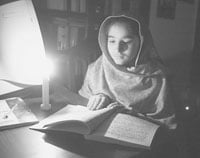
 government and independent power producers (IPPs) shows that when the
country has surplus energy, then it is the time for the accountability of
IPPs; but during the period of power shortage, the underhand kickbacks and
enhanced private investment take place. The present times are not
different, as the officials are anticipating that the ongoing energy
crisis is going to worsen in 2009. To counter this shortage, the
government would be more dependent on IPPs for power production, as
building dams requires huge investment and they also take years to be
commissioned.
government and independent power producers (IPPs) shows that when the
country has surplus energy, then it is the time for the accountability of
IPPs; but during the period of power shortage, the underhand kickbacks and
enhanced private investment take place. The present times are not
different, as the officials are anticipating that the ongoing energy
crisis is going to worsen in 2009. To counter this shortage, the
government would be more dependent on IPPs for power production, as
building dams requires huge investment and they also take years to be
commissioned.