


|
|
|
|
|
 |
 |
   |
analysis Newswatch review Give
credit where it’s due? ecology In
whose interests? firstperson Outlandishly
unpredictable
No way out By Shujauddin Qureshi The stock market in Pakistan has witnessed the worst-ever
crisis of its history during the last few months with no signs of recovery in
the near future. The key Karachi Stock Exchange (KSE)-100 index, which had
once crossed the highest-ever level of 15,000 points, has now plunged below
5,000 points and is declining further with every passing day. The share
prices of most of the active scrips have come down to their lowest ebb, thus
incurring huge monetary losses to the shareholders. According to stock
analysts, values of most of the leading blue chips have shrunk to one-fifth
of their earlier rates. As a result, many investors have become bankrupt. Two
of the members of the KSE have lost their membership during the ongoing
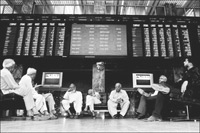
crisis and many of them have reached on the verge of bankruptcy. Pakistan is not the only country in the world to be hit by the current stock exchange crisis; many leading global bourses have also witnessed a historic recession. However, the situation in Pakistan is more precarious because of both foreign and domestic political and financial reasons. The main dilemma of the stock exchange in Pakistan is that about 30 percent of its portfolio comes from foreign investors, while the rest from local financial institutions, such as commercial banks, fund managers and retail investors. According to National Clearing Company of Pakistan Limited data, the offshore investors withdrew $474.813 million from January 1, 2008, to January 23, 2009, while the cumulative outflow of foreign investors surged to $97.663 million between January 1 and 23, 2009. It is true that the free flight of foreign portfolio has contributed mainly to the decline of the stock market in Pakistan, but many other factors have also been involved. In fact, the prospects of the stock market’s further growth dimmed after the assassination of twice-former Prime Minister Benazir Bhutto on December 27, 2007. However, it did improve for a brief period after the February 18, 2008, general elections and the formation of the coalition government in the Center. The KSE-100 index set new records during this period and achieved a major milestone by crossing the psychological barrier of 15,000 points for the first time in its history. It peaked at 15,737.32 points on April 20, 2008. But the stock market could not sustain its buoyancy for long and soon the situation started deteriorating again, especially after the Pakistan Muslim League-Nawaz (PML-N) parted its ways with the ruling coalition on May 13, 2008. Since then, the stock market is on the decline. By July 2008, the KSE-100 index dropped to one-third of its value, mainly due to the international financial crisis and political instability in the country. During that period, Pakistan also faced the worst-ever economic crisis of its history. The government had to approach the International Monetary Fund (IMF) for immediate assistance, because there were fears that the country might face default. This situation sent negative signals abroad, thus affecting foreign investment. Moreover, the government failed to come up with a privatisation plan to dispose of its assets. All these factors had a negative impact on the stock market. The declining trend at the bourses frustrated small investors and led to widespread protests by them. On July 17, 2008, hundreds of small investors and stock traders took law and order in their hands. Frustrated with continuous decline in the stock market, they shattered windows of and hurled stones at the KSE building. Though protests were also held in Lahore and Islamabad on the same day, they were mostly peaceful. On that day, the KSE-100 index lost 433.51 points and closed at 10,058.37 points, thus further angering the investors. The protesters were demanding closure of the trading at stock markets for a certain period. According to them, they had reached the verge of insolvency because of the continuous decline in the stock market for over two months. But the stock market’s administration and the watchdog Securities and Exchange Commission of Pakistan (SECP) brushed aside their demand, arguing that this would negatively affect the country’s credibility. However, when the situation went out of the control of regulators and the KSE-100 index declined further, the SECP finally imposed the price floor mechanism in the stock market – by freezing the index at 9,144 points on August 28, 2008, to prevent its further decline. "We have been demanding the closure of the stock market for long, but the government did not listen to us and allowed big brokers to manipulate the situation," complains Kausar Qaimkhani, president of the Pakistan Association of Small and Medium Investors. Talking to The News on Sunday, he says the price floor mechanism has actually increased the problems of small investors. "We were unable to sell our holdings even at lower prices. As a result, after lifting of the floor, many investors lost all their assets. Brokers are now demanding heavy interests on margin financing, which has further deteriorated the financial situation of investors," he informs. According to Qaimkhani, brokers are charging 70 to 80 percent interest for the period of price floor mechanism, despite the fact that most of the investors sold their shares at throwaway prices. "There seems to be no way out for small investors," he concedes. Although the floor was finally lifted on December 15, 2008, after its failure to protect further decline of the stock market, the situation has not changed a bit; in fact, it has worsened: since then, the KSE-100 index has lost two-thirds of its value and it is currently hovering at around 5,000 points. Brokers and market analysts are of the view that there is no immediate improvement in sight, because international recession still exists and foreign investors are shy to come to Pakistan because of terrorist threats. The overall economic situation in Pakistan is also worrisome, with surging inflation rate, falling currency value, and increasing import bill and cost of doing business. The banking sector is also facing a lot of problems with a lot of mergers and layoffs, particularly after increase in interest rates. Internationally, many banks have been closed down and leading banks like Citibank have fired thousands of employees. In Pakistan, at least three banks –KASB Bank, Atlas Bank and Mybank – have been put for sale and many more are in the process of selling their shares or merging with other banks. For example, Pakistan’s largest private sector bank – Muslim Commercial Bank (MCB) – has sold 15 percent of its shares to Maybank of Malaysia. To meet IMF conditionalities, the State Bank of Pakistan (SBP), on November 13, 2008, raised the discount (interest) rate by 200 basis points (2 percent) to 15 percent, insisting that the step would help contain inflation. But this step resulted in many other economic problems for the country. For example, it put the banking sector – which had been the major investor in the stock market – in trouble. Although Pakistan’s stock exchange crisis coincided with the financial crisis in the United States and elsewhere in the world, the economies of the so-called ‘emerging economies’ have been hit the worst by it. The bailout packages announced by the US and European Union countries have supported the economies of the West to some extent, but the situation in ‘emerging economies’ like Pakistan is going nowhere. Pakistan’s overall economic performance has also been poor, particularly after the last year’s foreign exchange crisis. The US dollar-Pakistani rupee exchange rate has now stabilised after settling at Rs80 per dollar. This has happened particularly after the reduction in international oil prices and approval of the IMF package, but the high rate of inflation and growing trade deficit – coupled with increase in the interest rates – may prolong the stock market crisis. "As soon as the interest rates were reduced, the market would recover to some extent," hopes Ahsan Mehnati, CEO of Shehzad Chamdia Securities. He is optimistic that the situation will improve soon, because some positive indicators have started emerging already. According to him, the country’s economic situation has improved, particularly after the IMF loan package, and the market is slowly recovering. As a matter of fact, the stock market reacted positively after the state-owned National Investment Trust (NIT) arranged Rs20 billion for buying selected scrips to support the crisis-hit market. The brokers, however, say the NIT invests not more than Rs300 million daily and it invests mostly in state-owned blue chips. Similarly, the SBP has also relaxed its rules by amending Prudential Regulations regarding Forced Sale Value adjustment against banks and non-performing loans of development financial institutions. The recent changes in rules have resulted in the restoration of investors’ confident. The KSE 100-index gained 167.38 points and closed at 5,139.93 points on January 28, 2009. "Now liquidity is available in the market, particularly after the NIT’s intervention," Mehnati says. Commercial banks have been the main investors in the stock market, because they have been investing their surplus liquidity due to higher yields. But when banks faced liquidity crunch themselves, after the increase in overall interest rates in the country by the SBP, most of them withdrew their money from the stock market. According to an estimate, the total exposure of banks in the fixed income funds reached Rs40-50 billion by the end of 2008, while it was almost Rs120 billion in April 2008.
Newswatch The gap between rich and poor nations is widening By Kaleem Omar There is a huge per capita income gap between rich and poor nations. Switzerland, the world’s richest nation in GDP per capita terms, has over 400 times the per capita income of Ethiopia, one of the world’s poorest countries. Japan’s GDP per capita, at $34,715, is 70 times higher than Pakistan’s, at $492. The gap lessens when one adjusts per capita income statistics for purchasing power parity (PPP), or what a dollar will buy in the respective economies. But even adjusted for purchasing power parity, Japan’s GDP per capita, at $23,480, is still 15 times higher than Pakistan’s, at $1,570. Moreover, the gap between rich and poor nations continues to widen. In 1939, the income of the average American worker was 16 times higher than the average Indian worker’s income. By 1969, it was 40 times higher. Today, it is 78 times higher. The emergence of a large middle class in India has made little difference to the overall picture. Caught in the nutcracker of low-income growth on the one hand and a burgeoning population on the other, India remains a very poor country. It has the largest concentration of impoverished people in the world, with some 350 million people living on less than a dollar a day and another 350 million that are not much better off. As co-authors Philip Kotler, Somkid Jatuspripitak and Suvit Maesincee note in their study The Marketing of Nations, there is also a large and often widening gap between the rich and poor within individual nations. This income gap is generally greater in less developed nations than in industrial nations. If we compare the share of national income that accrues to the poorest 40 percent of the country’s population with that of the richest 20 percent, we find that South Korea, Canada, Japan and Sweden have relatively lesser inequalities. Others like Malaysia, Tanzania, Chile, Costa Rica and Libya have moderate inequalities. Yet others like Brazil, Ecuador, Colombia, Jamaica, Mexico, Venezuela, Kenya, Sierra Leone, South Africa and Guatemala have drastic income inequality in their overall income distribution. Apart from struggling with poverty, many people in developing nations fight a constant battle against malnutrition, disease and poor health. In 1999, the average number of doctors per 100,000 people was only five in the least-developed countries (LDCs) compared with 220 in industrial countries. Every year, about 20 million people die from infectious and parasitic diseases. The infant mortality rate is 99 per 1,000 births in the LDCs, compared with about 74 in developing countries and only 11 in industrial countries. Average life expectancy is about 52 years in the LDCs, compared with 61 years in developing nations and 75 years in industrial nations. Malnutrition is another major problem in poor countries. About one billion people in poor countries still do not get enough food. In terms of per capita daily protein consumption, it is 97 grams per day in the United States, compared with 63 grams per day in Brazil and 43 grams per day in Ghana. Literacy levels in poor countries also remain low. Literacy rates in the less-developed and developing countries average only 45 percent and 64 percent of the population, respectively, in contrast with 99 percent for industrial countries. Most important is the interaction of all the above characteristics. They tend to reinforce and perpetuate the pervasive problems of poverty, ignorance and disease that restrict the lives of so many people in poor countries. In October 2000, the world population reached six billion, double the 1960 figure. The world population is projected to reach 7.2 billion in 2010, of which almost 5.9 billion will be living in poor countries. The population of what comprises today’s Pakistan (the former West Pakistan) was only 37 million at the time of the first post-independence national census in 1951. Today, Pakistan’s population is more than 160 million, more than four times the 1951 figure. This high rate of population growth lies at the heart of Pakistan’s economic problems. As the authors of The Marketing of Nations study note, the explosive birth rate found in many poor countries means that these nations have the burden of supporting millions of people younger than 15 (in Pakistan, for example, 40 percent of the population is under 15). Today, millions of children in poor countries are working in farms, factories, workshops, street corners and garbage dumps. Enhancing educational opportunities is a way to make schooling a real alternative for these children. However, the immediate challenge is: how will the poor countries build enough schools? And some years later, how will these countries provide enough jobs for young people entering the job market? Discussing the job shortage problem, the authors of the study note that technology improves productivity but may reduce the number of jobs. The growth in GDP and unemployment in many countries indicates that employment has consistently lagged behind economic growth. Developing countries have also experienced jobless growth. The labour force in developing countries continued to increase by 2.3 percent throughout the 1990s, requiring the creation of an additional 260 million jobs – a staggering task for which the economies of developing countries were simply not equipped. In Pakistan’s case, an estimated two million new jobseekers enter the job market each year. To create jobs in the large-scale manufacturing sector for so many jobseekers would be prohibitively expensive for a country of Pakistan’s means, given the fact that creating one job in large-scale manufacturing at today’s prices requires an investment of between Rs300,000 and Rs500,000. The answer to the problem lies in adopting social sector policies aimed at reducing the population growth rate to below two percent, and in creating more jobs in the agricultural sector, the small-manufacturing sector and the services sector, which create more jobs per dollar of investment than the capital-intensive large-manufacturing sector. But success in this endeavour depends, among other things, on continuity in policy – something that has often been lacking in Pakistan. The one-year balance sheet By Aasim Sajjad Akhtar Almost a year has passed since the general elections.
The relative optimism and hope that abound after the demise of General (r)
Pervez Musharraf’s ‘King’s Party’ has now given way, at least in
the media-dominated discourse, to disappointment and nihilism. Some
quarters are calling openly for mid-term elections, while others are
predicting a swift return to military rule. Amid the clamour, it is worth
dwelling briefly on the track record of the elected government in its
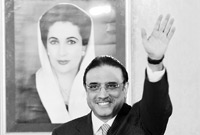
first year. Indeed some will point out that the elected regime has not in fact been in control for a year, and that the balance sheet should acknowledge that Pervez Musharraf did not depart the scene until August. I would extend this point even further: Pakistan’s political system is heavily skewed towards the permanent state apparatus over elected political leadership. The elected government still does not exercise effective power on many fronts, including defence / strategic / foreign policy. Then there is the fact that the elected government is not a uniform entity; the case in point is the simmering tension between the Punjab government and the federal government. Nonetheless, even having noted these caveats, one can still make some broad observations about the performance of the PPP-majority government. First, the democratic space has clearly increased. I do not mean to imply that the systemic impediments to democratisation have been removed, but only want to point out that the imperatives of an elected government include a reduced reliance on coercive measures. So, to take a rather obvious example, dissent is not subject to arbitrary repression as it was under the Musharraf dictatorship. Of course, this does not mean that the systematic brutality in Balochistan or in the shape of the so-called ‘war on terror’ in Pukhtoon areas is now a thing of the past. In these realms, the elected government plays a limited role; while the permanent state apparatus, particularly the military, remains the arbiter. However, where there are no immediate so-called ‘national security’ imperatives to consider, one can exercise democratic rights without fear of censure; rights that were simply absent in the last 18 months of the Musharraf era. There has been little progress in the sphere of legislation and public policy-making. This has to do with the fact, as I mentioned earlier, that the various political forces that comprise the coalition government have yet to establish consensus on power-sharing arrangements. This is evidenced by the fact that the MQM has only now joined the federal cabinet while the fate of the PML-Q remains unclear (in terms of whether it will throw in its lot with the PPP or the PML-N). As such, the primary tug-of-war is between the PPP and the PML-N, and the recent media banter about the Long March planned for March 9 indicates that there is no resolution yet in sight. This is not necessarily a problem per se insofar as the PML-N remains committed to the elected government completing its term. In other words, a lack of consensus in parliamentary democracy does not necessarily have to be equated to an existential threat to the parliamentary system itself. It is true that extra-parliamentary forces, such as the Jamaat-e-Islami and Tehrik-e-Insaf, have little interest in the current parliament, but the real problem is the lack of patience of the general public towards the elected regime. A case can easily be made that this lack of patience is in fact an impression generated by the urbanist discourse of the media, but by the same token it cannot be denied by those in government that working people face serious problems on almost all fronts. And this is why it is important to demonstrate – even if magical remedies to myriad problems are not possible – that the parliament is actually doing what it is supposed to do: make legislation. In a related vein, the elected government needs to now move beyond the refrain of ‘the military regime left us with all these problems’. True as this assertion may be, it is time for those entrusted with people’s votes to fulfil their mandate in the face of the (admittedly daunting) objective conditions that prevail. To be fair, one hears the refrain much less often now than a couple of months ago. Finally, and most importantly, the government seems to have handled the major potential disaster that it has been confronted with a reasonable degree of composure. The situation after the Mumbai attacks was genuinely grave, with hawks in the Indian political establishment and media calling for immediate reprisals. For the most part, our elected leadership has remained calm amid the jingoism, though it is also true that hawks on this side of the border have also been appeased with the typical resort to nationalistic slogans. It is on this point that the future of our weak democracy rests. On the one hand, the elected government can do what similarly weak elected governments have done in the past: go out of their way to reinforce the national security paradigm that is the source of the military establishment’s power. The end result of such appeasement has always been the demise of elected governments, including the most powerful in Pakistan’s history in 1977. On the other hand, from a position of relative weakness, the people’s representatives can move away slowly from the traditional hegemonic discourse and, thereby, insulate themselves from conspiracies in the near or distant future. Arguably, the space for such a perceptible shift is greater now than at any time in Pakistan’s history. If the two major parties within the current dispensation can agree even on this one point, if on nothing else, there is hope yet. This is not to suggest that the political system at large is not thoroughly obsolete: the use of state power for parochial gains is the rule rather than the exception; cynicism throughout society is widespread; and the crisis of identity has reached epic proportions. But until there is a viable transformative project inspired by popular participation, the barely functioning democracy that we have salvaged after a decade of military rule must be allowed to take its natural course. It is up to those who have garnered the people’s vote to not provide ready-made opportunities to the military establishment for undermining the fledgling system. caption President Asif Ali Zardari: Is he all-powerful?
The SBP’s guidelines on the credit card business have come as a gush of fresh air for the users By Shahzada Irfan Ahmed The State Bank of Pakistan (SBP) has finally issued
operational guidelines for the credit card business in Pakistan. The move
has been welcomed by thousands of credit card users who prior to this had
no choice but to accept whatever verdict the card-issuing institutions had
in store for them. There was a time when every other person one would meet
turned out to be a marketing representative of a bank’s credit card
department or a freelancer working on commission basis. These
representatives were so obsessed with the goal to achieve the ambitious
targets assigned to them that they would even get approved, in connivance
with their colleagues, the weakest of cases. The credit card business in particular and consumer financing in general got a boost when banks started focussing on launching these products at the cost of low-interest industrial and business loans. Consumers are ready to accept a banking product like credit card offered to them at interest rates as high as 30 percent. On the other hand, an industrial loan, even if it is offered at a single digit interest rate, is considered as unfeasible by the industry. In fact, the decision of the SBP has come at a time when it is needed the most. Everyone knows about the tactics adopted by commercial banks to recover outstanding amounts from their customers. In the absence of collateral, the recovery officers think the best way to pressurise people is to cause inconvenience to them or their family members and referees, or malign them in their office or the locality where they live. For this purpose, they have recruited roughnecks who are a paid handsome commission on the recoveries made by them. Much to the relief of the consumers, the SBP has taken notice of this practice and has tried to address the issue through the new guidelines. For example, it says: "Banks and development financial institutions (DFIs) must ensure that their recovery / collection officers should not resort to any verbal or physical harassment of the delinquent credit cardholders, their family members, referees and friends during recovery / collection efforts. Recovery / Collection officers should also not humiliate publicly or in private or intrude the privacy of the credit card holder’s family members, referees and friends." Similarly, it says all telephone calls and visits to credit cardholders for recovery of unpaid dues should be restricted to a convenient time and the same may be defined in bank’s / DFIs’ public policy, and should be properly communicated to customers at the time of issuance of credit cards. Mudassir Ahmed, 18, who is the younger brother of a credit card holder, agrees how important the above-stated guidelines are. Talking to The News on Sunday, he recalls how the recovery officers of a foreign bank operating in Pakistan mistreated him. "As soon as I opened the door, they dragged me to a car standing near our gate. They did not even introduce themselves. For a moment, I thought I had been kidnapped for ransom. It was only when the car stopped outside a bank’s branch that I realised what was going on," Ahmed says. The SBP has also suggested a code to check the unbridled marketing campaigns of credit card departments of banks, often causing disturbances to prospective customers. It says banks / DFIs should seek prior consent of their customers / accountholders for informing them on new products and services on telephone as and when introduced. In this regard, banks should maintain a ‘Don’t call list’ comprising the contact details of those customers who do not want to be contacted, the guidelines add. A Lahore-based head of a foreign bank’s credit card department tells TNS on condition of anonymity that there is no doubt that banks are using unfair means to harass defaulters. "But this is due to the fact that there is no other option. When you have property or other assets owned by the defaulter pledged with you, you can go for their auction. But in the case of credit cards, you have to follow the defaulter like his or her shadow," he admits. The banker thinks the SBP’s guidelines will be harmful to business, because they protect the defaulters on the whole. He adds that the SBP even provides indemnity to the referees, which to him is very strange. The guidelines about the complaint resolution mechanism are also relevant, but what needs to be kept in mind is that people opt only for those fora that are impartial and speedy in reaching a conclusion. It is because of this phenomenon that a large number of complainants are approaching consumer courts in Punjab, instead of the complaint sections of banks. Asif Nazir, who is registrar at a consumer court in Lahore, tells TNS that the court has decided several cases in favour of credit card consumers. Appeals against some of these cases are being heard in the superior courts as well, he adds. The court even restrained a bank from recovering transactions made on a credit card after its owner had lost it. Though the bank, according to the complainant, was informed about the loss of credit card, it is not acknowledging this fact and is constantly demanding the amount spent on purchase of goods after the loss of the card. If the signatures on purchase receipts do not match those of the cardholders, this can help them during the complaint resolution procedure. Even then, hardly any merchant bothers to verify these signatures. This callousness has been due to the fact that, regardless of the signatures being genuine or not, the liability lies with the cardholder and banks never listen to the aggrieved customer. Perhaps it is for this reason that the SBP has asked the merchants to be strict in this regard. Under the new guidelines, the central bank has emphasised the need for educating card merchants on the use of point of sale (POS) machine, genuineness of credit cards, signature verification, and their rights and responsibilities under the agreement. Hafiz Shahid, a credit card holder, tells TNS that a major reason behind disputes regarding the use of cards is the inability of many people to understand the complex conditions and rules devised by banks. He says there is hardly a person who reads these conditions before affixing his or her signatures. "I suggest that banks simplify their terms as well as train their staff, so that they can explain these terms and conditions to customers in a simple way," Shahid adds. Luckily, the SBP has taken this into consideration and suggested that banks / DFIS simplify credit card terms and conditions, and keep them clear and understandable both in English and Urdu. However, the point is that though the issuance of these guidelines is an important development, the seriousness in implementing the same in their true spirit is needed the most. It is hoped that this time round, they are not blown up in the air like what happened when the SBP asked banks to share their profits with their accountholders and comply with its several other directives.
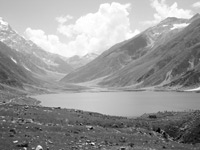
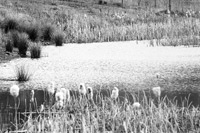
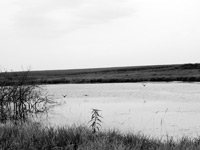
Wetlands connecting nations By Mohammad Niaz Current global environmental concerns have forced
nations to put environment on the world agenda in its different
manifestations, demanding instant decision-making, implementation and
fulfillment of the obligations conferred upon nations under various
conventions. By virtue of anthropogenic activities, biotic pressure from
wetlands-dependent communities, institutional and policy deficiencies, and
multifarious threats have been posed not only to the sanctity of the
environment, but also to its different biological and physical components
as a whole. This has caused gradual deterioration of the fragile
ecosystems in the world. The international community has come up with Multilateral Environmental Agreements to bind nations towards a common cause of ensuring the health of our environment in face of the burgeoning human population and technological development. In compliance with the international commitment to conserve its natural resources, the Government of Pakistan has declared 2009 as the ‘National Year of Environment’ to attract focus on the betterment of our degrading ecological entities and natural resources. Moreover, the government is committed to biodiversity conservation by supporting international agreements, such as the Ramsar Convention, the Bonn Convention on Migratory Species, and the Convention on International Trade in Endangered Species of Flora and Fauna (CITES). Pakistan also formulated the Wetlands Action Plan in 2000. Every year, the World Wetlands Day is celebrated on
February 2 to commemorate the historic event of signing of the first-ever
convention for ensuring and promoting conservation of wetlands and their
invaluable resources with an approach based on wise use and sustainable
utilisation. The theme for the World Wetlands Day 2009 is ‘Upstream-Downstream:
wetlands connect us all’, which signifies the significant role wetlands
play at the local, regional and international levels. For years, people throughout the world considered wetlands as wastelands, mainly due to the lack of awareness, as well as due to fulfilling their immediate human and livestock needs. In fact, wetlands are one of the most important and productive ecosystems in the world by virtue of their tangible and intangible benefits at regional and international levels. For conservation of wetlands in different countries, the world community has formed a platform popularly known as the Convention on Wetlands or the Ramsar Convention. Adopted in 1971, it is an intergovernmental treaty with 158 contracting parties by now and 1,828 designated Ramsar sites on the List of Wetlands of International Importance. Pakistan signed the Ramsar Convention in 1971 and ratified it in 1976. To fulfil its commitment under the convention, Pakistan has designated 19 wetlands on the List of Wetlands of International Importance. Generally, Pakistan supports 225 wetlands. The freshwater and marine wetlands of our country not only harbour unique biological diversity, but also serve as the main source of sustenance for over 13 million human beings. The Ramsar List was the outcome of the Article 2.1 of
the Convention on Wetlands. Wetlands included in the list acquire a
recognised status at the national level and are considered of significant
value not only for the country, or the countries, in which they are
located, but also for the entire humanity. By signing the Ramsar
Convention, the international community has joined hands and has come
closer to promoting international action and cooperation for safeguarding
wetlands. To bring much of the world’s wetland resource under the
umbrella of Ramsar status, the convention urges all states to make
significant efforts to implement the systematic approach for the
development of the list in each country as adopted under the strategic
framework. Given the intensive international focus on and importance of wetlands, they have become symbolic for connecting nations because of a number of shared indicators, such as: Many wetlands share water supplies from neighbouring countries through a watershed or river systems, thereby contributing to the development and recognition of the area as respective management practices are adopted. River Kabul originating from Afghanistan extends into Pakistan through the NWFP, thereby providing excellent staging grounds to the waterfowl; Because of the surface area, many wetlands span beyond international boundaries; The circulation of water in the atmosphere has global implications; Fish hatched in the wetlands of one country might be caught as adults in those of another, or on the high seas; During annual cycle, waterfowl migration being an international avian phenomenon occurs over thousands of kilometres to wetlands of many countries for using them as staging, wintering and breeding grounds during their winter and spring migration. This is because of the geographic location of our country between the great Rajhastan and Iranian deserts in the east and west; the barriers created by the Himalaya, Hindukush and Karakorum in the north; and by the Arabian Sea in the south. Waterfowl mainly migrate from Siberian regions into Pakistan using Flyway 4, also called the Green Route; and Because of the wetlands, the international community has been actively involved in evolving a set mechanism for provision of technical and financial support to the developing countries to help them use, manage and develop their wetlands wisely, and encourage them to include wetlands in national land-use planning. The 10th Conference of the Parties (COP-10) was held in Changwon, South Korea, from October 28-November 4. It brought together more than 2,100 participants from 158 parties, besides representatives of the World Fund for Nature (WWF), International Union for the Conservation of Nature (IUCN), United Nations agencies, and intergovernmental and non-governmental organisations (NGOs) for a common cause of wetland conservation. Wetlands provide multiple opportunities for development and social uplift of the areas in which they are found, through provision of alternatives, incentives, better management practices, capacity building programmes and associated research. Wetlands expose and introduce nations to the Ramsar community, by inspiring and building strong relationships among the people of different countries. Conserving wetlands not only represents committed people of a nation, but also different governments. Every nation is required to abide by the obligations of the convention by efficiently managing the existing Ramsar Sites and extending the network of wetlands in the region, which will help strengthen the bonds among them with international commitment towards effective conservation of wetlands. (The writer is forest officer in the NWFP Wildlife Department.)
In whose interests? Public policy is the blood that courses through democratic politics and institutions By Dr Arif Azad Of late, the word ‘public policy’ is being used
increasingly in Pakistan, by both the government and NGOs. Hardly a single
day passes when we do not hear about the announcement of a new policy or
about the demand for change in some existing policy. The need for a public
policy arises whenever a social problem starts affecting the majority of
people. For example, the Transplantation of Human Organs and Tissues
Ordinance was promulgated recently. The government, prompted by doctors,
acted to frame a policy to deal with the problem of organ selling and the
associated unethical practices. In this instance, though public did not
figure prominently in the policy formulation process, the policy
nonetheless was formulated in consultation with a few elite groups. It is clear that public policy is the blood that courses through democratic politics and institutions. Despite its increasing importance elsewhere in the world, the discipline of public policy has remained a fringe phenomenon in academia and research institutes in Pakistan. One reason to do with this has to be sought in the overemphasis on public administration and absorption of public policy in it as a sub-topic. This also says something about how our country is governed, where the public is administered by but not involved in the formulation of public policy. The explanation for the poverty of public policy as a serious discipline is embedded in this too. The study of public policy began to grow in the Western society with the exaltation of public in decision-making at the advent of mass democracy. Just as the policymaking process became complicated, because of the expanding range of governmental functions, pressure groups and lobbyists, the public policy process also gathered complexity. This led to the growth in policy research into how public policies are formulated in an intricate web of interest mediation in plural democratic societies. Likewise, in Pakistan, the poverty of policy studies is linked with the authoritarian character of the state, which renders policymaking an extremely closed shop. Under military regime, the policymaking becomes prone to the whims of military dictators, further reducing input into the policy formulation process. Thus, Pakistan can be cited as an example of a country where public is almost always absent from public policy. Here, perhaps, it is important to pitch our tent a while on how policy studies came into its own. This would provide a contrast to why there is poverty of policy studies in Pakistan due to non-representative rules. Until the 1060s, political scientists in the United States were largely concerned with the operation of government and its institutions. Political scientist focussed on how government operates and institutions work. With increasing role of the government in terms of rolling out policies and the corresponding clout of lobbying and pressure groups, increasing attention began to be focussed on how policies are made by institutions and the government in fine-tuned bargaining with outside interest groups. This led to a separate field of policy studies, which specifically devoted itself to the study of how public policy agenda is set, and how pressure groups and other policy advocacy groups include themselves in the policy process. In the US, in particular, the focus was homed in on the Great Society programme launched in the 1960s. In the Western Europe, the welfare state also gained deeper roots at the same time. As a result, the discipline of public policy gained a special place in political science discipline. In Pakistan, where decision-making process was always a closed one due to the military-bureaucratic complex, public policy has always remained a close shop as a whole until recently when NGOs began to influence the policy process. Moreover, the institutions that could have played filtering role in refining policy choices suffered diminution and collapse because of repeated military interventions. In India, the process of policy formulation, on the other hand, is more likely to be inclusive of wide array of interests mediated through established political system. Since the discipline of public policy was carved out of political science as a sub-discipline, the problem of definition has always dogged the discipline. As a starting point, the Collins dictionary defines policy as "a plan of action adopted or pursued". According to this definition, everyone – whether an institution or an individual – has a policy of some sort. Families have a policy as to how they are going to stay together as a family; departments have a number of policies ranging from human resource policy to policy on what time to start and finish. Likewise, the governments are always forced to adopt some form of a policy to deal with emerging problems. This leads us into very plausible definition of public policy as "whatever governments choose to do or not to do. And what different it makes", advanced by Dye. This definition places governmental actions or inactions at the heart of public policy. Significantly, this definition also encompasses governmental inactions as part of the public policy. By this definition, governmental inaction becomes an important policy instrument. For example, the studied inaction of the US government over the issue of racism and racial discrimination until the Civil Rights movement broke forth was part of public policy. The policy of inaction switched over to a policy of action by pressure exerted by the Civil Rights movement. Similarly, Pakistan’s government studied inaction on the issue of imposing agricultural tax is also part of its conscious policy. In this definition, inactions speak louder than actions as a policy. Dror also defines public policy "as a pattern of decisions and actions intended to address a perceived problem". In this definition, we sail very close to the origination of public policy as a discipline hived off from the study of government to its actions and decision-making processes. For example, a closer study of the Human Transplantation and Tissue Ordinance in Pakistan fits the elements of this definition. At the level of high politics, public policy can be explained in a broad brushed way in the definition of public policy "as a conscious awareness of choice between two main alternatives for steering societies". Broad brush ideological impulse informs public policy in this case. In recent history, the ascension to power of ideologically motivated leaders who lent spirit to the process of public policymaking lends weight to this definition. The election of Ronald Regan as president of the US shifted the direction of public policy in favour of small government, unbridled free market, and erosion of welfare entitlement in line with Regan’s rightist and conservative political convictions. Likewise in Britain, at the same time, public policy was being steered in the same direction by another free-marketeer: Margaret Thatcher, the prime minister of the conservative party government. This period saw diminution of the role of state, with a rash of high-profile privatisations and reduction of welfare entitlements. In our own case, religion has formed the basis of public policy in important areas of life. This is reflected in head of the state being always a Muslim and all laws passed being in line with Islam. Historically, this religious impulse behind public policy originated with the Objectives Resolutions that tied public policy formulation process to the primacy of religion in constitution. The oft-repeated assertion of Pakistan being an ideological state is a conscious choice of an alternative for steering the society. It seems to fall in line with Dror’s definition (here we are not talking about the downside of such a public policy and its effects on the country’s direction). From the above definitions current in public policy literature, it is plain that definitions of public policy are as many as is the complexity of the discipline. Though it is not possible to do justice to all definitions of public policy in such a short space, it is enough to say that public policy as a discipline is concerned with answering the following questions: What is the influence of the public on public decision leading to the formulation of public policy? What is the influence of interests groups and parties on public polices? What effects do institutions have on public decision and how successful or unsuccessful have been the public policies? In Pakistan, these issues need to be researched to entrench the basis of public policy as an academic discipline, which needs infusion of young and talented researchers. In this regard, it is heartening to see departments of public policy being set up in different public and private sector universities. (The writer is a public policy analyst who also teaches at the Foreign Trade Institute of Pakistan. Email: arif_azad6@hotmail.com) firstperson "Musharraf’s regime was the worst" By Raza Khan Dr Tahir Amin belongs to Multan. He did his PhD in
Political Science with majors in International Politics from the
Massachusetts Institute of Technology (MIT). The topic of his doctoral
dissertation was Ethno-Nationalist Movements in Pakistan: Domestic and
International Factors. Afterwards, he went to Harvard University for his
post-doctorate studies as a Fulbright Fellow and completed a research
project at the university’s Centre of International Studies on the topic
of Reactions of the Non-Western World to the Thesis of the Clash of
Civilization by Samuel Huntington. Earlier, Dr Amin did his Master’s in International Relations from Quaid-e-Azam University (QAU), Islamabad, and Carleton University, Ottawa, Canada. In 1979, he joined QAU as a Lecturer in the Department of International Relations. He has also taught as Visiting Faculty at Watson Institute of International Studies, Brown University, Providence, and Boston College, Boston, in the United States, as well as many other national and international universities and research institutes. From 1996 to 2000, Dr Amin held Iqbal’s Chair at University of Cambridge, United Kingdom. He has many research publications and articles to his credit, most of which are on Afghanistan, nationalism and internationalism, and Kashmir. He is also considered as an expert on Pakistan’s foreign policy. Currently, he is working as Chairperson of the Department of International Relations, QAU. The News on Sunday interviewed him recently. Excerpts follow: The News on Sunday: As an expert on ethno-nationalism, do you think secessionist movements still exist in Pakistan? Tahir Amin: Secessionist and ethnic sentiments have always existed in Pakistan, especially in Sindh and Balochistan. Moreover, in Sindh there has been the mohajir phenomenon. Meanwhile, Baloch nationalists once again became active during the Pervez Musharraf era. In the NWFP, there used to be a strong Pukhtoonistan movement, but currently it is inactive. TNS: What has been the raison d’etre of ethno-nationalist movements in Pakistan? TA: One of the central arguments of my research is that primarily state policy determines the course of ethno-nationalist movements. If it aims at redressing the grievances of smaller ethnic groups, then these movements become dormant. However, if the state uses force against these ethnic groups, then they begin to rise. In fact, Pakistan presents a unique case study of the rise and fall of ethno-nationalist movements. In the post-1971 era, there was a widespread feeling that Pakistan was going to disintegrate; there would be Azad Balochistan, Sindhudesh and Pukhtoonistan. Even many leading academics and policymakers shared this view, but this did not happen. I tried to solve this riddle in my doctoral work. My argument was that these ethno-nationalist movements rise and fall in response to a number of factors. State policy is the most significant among the domestic factors, though there are international and local factors too. Still, the fundamental determining factor is state policy. TNS: Do you mean to say state policy has been the underlying reason behind ethno-nationalist movements in Pakistan? TA: Yes. After the 1971 debacle, for two years the Zulfikar Ali Bhutto government followed the correct policy of empowering ethno-nationalist groups in Balochistan and the NWFP. As a result, interestingly, the assemblies of the two provinces presented resolutions that Urdu should be the official language instead of Pushto and Balochi. This is something very significant. In fact, whenever the Centre has shared power with ethno-nationalist groups, they have agreed to forego their identity for the sake of national integration. We should have learnt this lesson after the separation of the country’s eastern part. Pakistan broke primarily because we did not grant Bengalis their due rights. Their representative Awami League had won the 1971 elections and it should have been allowed to form the government, while the PPP should have been in the opposition. Had the election results been accepted, Pakistan would have never broken. The rest are all conspiracy theories. The oft-repeated explanation that India was responsible for the separation of East Pakistan is nonsense. External enemies and always plotting against you, but it is the state’s failure to recognise genuine political forces that leads to disaster. TNS: Then why are there apprehensions that Pakistan would fall apart? TA: When the state follows a destructive policy, such thinking emerges. Musharraf messed up with both foreign and domestic policies, besides reigniting the Baloch problem and patronising the MQM. In fact, I think Musharraf’s regime was the worst in Pakistan’s history, because it has again revived the fears of Pakistan’s disintegration. If you look at Pakistan’s history from a political scientist’s perspective, then the consequences of military regimes are evident with mathematical accuracy. The Ayub regime led to the genesis of Bangladesh; the Yahya regime presided over the disintegration of Pakistan; the Zia regime encouraged all kinds of negative trends; and the Musharraf regime revived the fears of the country’s disintegration. If this country has to survive, it could be only through continuous democracy. The fears today are genuine, because if you look at FATA the writ of the state is being briskly eroded because of the rise of the Taliban. The state is responsible for mismanaging things. In Balochistan, I genuinely believe it is due less to Indian machinations and other factors and more to the highly myopic policies of Musharraf like the killing of Nawab Akbar Khan Bugti. I have personally met Bugti and can tell you that he was a person with whom Pakistan could deal. All tribal chiefs, no matter what they say, are blackmailers par excellence; they have a price tag. It was the task of the state to keep sharing power with them until there was a long-term solution to the Balochistan problem. Instead, the state aggravated the problem. In short, Pakistan’s contemporary challenges have to be seen in the perspective of polices followed during Musharraf’s regime. TNS: How would you explain the MQM? TA: Musharraf patronised the MQM while it was on the decline as a natural consequence of its fascist orientation. The organisation was created by the Zia regime, and it thrives on the support extended by the alienated middle class of Karachi and some other big cities in Sindh. TNS: The ANP has been recently accused by certain quarters (in particular, the JUI-F and Jamaat-e-Islami) of getting close to the US and conspiring to break up Pakistan. Do you see any truth in these allegations? TA: I think these allegations are not right. As long as a democratic setup is in place in the NWFP, there is little fear. We may be making mistakes, but if democracy continues, then there is no fear. If the current government does not perform, it would be replaced by another democratic government. However, the most important thing is the continuation of the democratic setup, which is key to the survival of the state. Often, people with different ideological leanings contest whether Pakistan should be a liberal, a Marxist or an Islamic state, and then start tracing the country’s history from their perspective only. However, we should realise that a shared vision of Pakistan is possible. If there were no Pakistan, then where would the adherents of these ideologies go? We have to look at the shared values that exist among various traditions. Even an Islamist would agree that there should be a democratic and pluralistic political system. If there is continuity of democratic experience, then there is hope that we may be able to establish a viable state in Pakistan. TNS: Do you agree that extremists and terrorists have brought the country on the verge of collapse? TA: There is no doubt that they have emerged as a serious threat, mainly due to the wrong foreign policy pursued by successive regimes and governments. There has to be a line between the interests of external powers and our own. If you allow US drones to violate your sovereignty day in and day out, this represents a failure of the foreign policy. Unfortunately, Zardari’s regime has also been following the same policy. Though it is a democratically elected setup, it is collaborating with the US. We have very serious challenges to the national integrity that need radical responses. After 1971, irrespective of whether we like him or not, Bhutto made some radical changes; for example, he restructured the political system by framing the 1973 Constitution. There is a need to take such radical steps now, because Pakistan is facing many threats and challenges. There is a need to talk to the US in clear terms. The government should act in the interest of its people and not other powers. (The author is a journalist and research scholar. Email: razapkhan@yahoo.com)
The ongoing stock exchange crisis stems from the fact that long-term reforms were ignored for short-term gains of a few By Huzaima Bukhari and Dr Ikramul Haq Highly volatile, badly managed and criminally
manoeuvered by a few – this is how the country’s largest stock market
can best be described at the moment. The Karachi Stock Exchange (KSE) –
once rated as one of the most rewarding and profitable capital markets in
the world – is now in doldrums. In fact, it is facing the worst-ever
crisis of its history – just like the rest of the country – for the
obvious reason that long-term reforms were ignored for short-term gains of
a few who enjoyed power and resources. A few influential people are to be blamed for the problems that this institution has faced from time to time at the expense of small investors. Some unscrupulous elements played havoc with the KSE, as well as with the stock exchanges in Lahore and Islamabad. Unfortunately, the Securities and Exchange Commission of Pakistan (SECP), instead of playing its supervisory and statutory role as a regulator, only extended further support to these elements. The KSE began with a 50-share index. As the market grew, a representative index was needed; and on November 1, 1991, the KSE-100 index was introduced. Since then, it is the commonly accepted measure of the stock exchange. The KSE-100 is a capital-weighted index and consists of 100 companies representing about 86 percent of the exchange’s market capitalisation. In 1995, a need was felt for an all-share index to reconfirm the KSE-100 index and also to provide the basis of index trading in future. On August 29, 1995, the KSE’s all share-index was finalised, while it was introduced on September 18 the same year. The KSE also introduced KSE-30 index, which is calculated using the free float market capitalisation methodology. The primary objective of the KSE-30 index has been to provide such a benchmark for the stock price performance that it can be compared over a period of time. In particular, it has been designed to give investors an insight into how large company’s shares are performing. During its glorious time, the KSE was considered as the biggest and most liquid. It was declared as the Best Performing Stock Market of the World in 2002. On December 31, 2008, 653 companies were listed at the KSE having listed capital of Rs750.48 billion ($9.50 billion). On the last day of 2008, the KSE-100 index closed at 5,865 points, while it was over 14,000 exactly a year ago. At the time of writing this piece, the KSE-100 index has already plunged to 4,929 points. The story of the rise and fall of the KSE is both baffling and painful. It unveils apathy, greed and irresponsibility, which have collectively destroyed our many well-established and high-performing institutions over a period of time. In fact, the country has a sad history of going backwards after progressing; instead of strengthening institutions, we are deliberately destroying them. A cursory look at the website of the KSE (www.kse.com) shows that remarkable progress was achieved in the first five decades (1950-2000) by even international standards. But what happened from 2001 to 2008 is a story of hijacking of the market by a few individuals, who rose from the level of ordinary brokers to that of bankers and what not. The people in power were their protectors and promoters. Acting as fund managers of the mighty, they asked their masters to make the SECP their handmaid. As expected, this was readily done. How did we destroy a flourishing entity that in 1950 had only 15 listed companies, but with the passage of time kept on growing at a remarkable pace, achieving the status of one of the best-performing capital markets in the world. How was this great achievement lost? There are host of causes and explanations, but the most decisive factor was undoubtedly manipulation of the market by the vested interest enjoying political patronage. The great swings – both upwards and downwards – of hundreds of points in a day were neither based on performance of the companies nor the market sentiments or any rational analysis; these were, in fact, a result of highly artful manipulations by the market’s big players. The stock market fell victim to criminal culpability of the rich and greedy, mighty and influential, and their patrons sitting in the corridors of power. From January to March 2005, a major scandal took place in Pakistan’s stock markets. The task force that investigated the matter identified that "… wearing several hats simultaneously, of broker, of Badla/COT provider, of mutual fund and investment bank, brokers and their staff frequently conduct trades between their own accounts and that of their clients, thereby creating opportunities for market abuse. Not only is there apparently no adequate control over this activity, there is a clear conflict of interest in a broker transacting business without proper disclosure of his involvement or ensuring best prices for the client. Though the SECP finalised and notified proprietary trading rules after due consultation with the exchanges, these rules provide an excuse for brokers to advise their clients that they may be disadvantaged if their orders are aggregated with house’s orders. Thus, the rules provide little protection to investors because they fail to protect a client when trades are aggregated." In addition to a comprehensive report by the task force, the testimony of Dr Tariq Hassan – who was removed unceremoniously from the post of SECP Chairperson – before the Select Committee of the Parliament unveiled the faces behind the stock exchange crash of 2005. However, the matter was hushed up as usual to protect the rich and mighty. Since the crime went unpunished, the market’s decline started: the offenders got a free hand to fleece the small investors without any fear. This, ultimately, culminated in total disaster. Total market floor was imposed on August 28, 2008, but it was lifted on December 15 the same year and since then there is complete chaos. The analysts who regularly appear in talk shows on TV channels claim that the activities at the capital markets have been affected by the lack of interest, shaken confidence, default of investors and, more importantly, the default of some of the brokerage houses. All these issues need to be addressed on an urgent basis, they suggest. However, none of them explains why the market has been behaving in the most erratic manner since 2001 without any plausible explanation, and who made money at whose expense during the so-called ‘boom period’. The self-destructive, suicidal path of violating all rules and regulations has led to the present state of affairs. Instead of taking collective responsibility, the market players are now engaged in blame game. The critical question that nobody raises or answers is: why were the culprits behind the manipulations from 2000 to 2006 not exposed and brought to justice? On July 6, 2006, Dr Hassan issued a white paper on the March 2005 stock exchange crash, in which he claimed that since he had reached close to a "few big fish"; he was shown the door. (The writers, tax advisers and authors of many books, are visiting professors at LUMS.) For comments and feedback: Email: editorpe@gmail.com |
|