


|
|
|
|
 |
 |
   |
decision Election
time Taal
Matol policy Unholy
war RIPPLE EFFECT
You are hired – again! The government compensates the victims of a political decision by reinstating the 7,700 former employees of the federal government sacked during 1996-1998
By Shahzada Irfan Ahmed The recent decision taken by the government of Pakistan to
reinstate the 7,700 former employees of the federal government has received a
mixed response from different quarters. These employees were recruited during
the two prime ministerial terms of late Benazir Bhutto but were subsequently
sacked by the Nawaz Sharif government. As per the decision, approved by the federal cabinet, these employees would receive arrears of three years in three equal instalments and would be promoted to a higher scale. The payment arrears would cost the government around Rs7 billion. The PPP circles have termed the decision a victory for those who became victims of political victimisation during the period ranging from 1996 to 1998. Their objection was that all these employees were sacked in just one go by the PML-N government without following any legal procedure. They stress that the reinstatement decision must materialise irrespective of the financial costs to the government. The grant of a right to a citizen is more important than anything else, they add. On the other hand there are those who have strongly challenged the rationale behind the decision and called it sheer violation of merit. They also question the logic of putting such a huge burden on the national exchequer and inducting staff in departments and corporations already reeling under the pressure of over-employment. Another objection is that many such employees had exhausted all legal options and even the Supreme Court of Pakistan (SCP) had termed their removal in accordance with the law. The employees to be reinstated belong mostly to organisation like Oil and Gas Development Corporation Limited (OGDC), Pakistan International Airlines (PIA), Civil Aviation Authority (CAA), Pakistan State Oil (PSO), Intelligence Bureau (IB), Pakistan Telecommunication Company Limited (PTCL), Pakistan National Shipping Corporation (PNSC) and the Associated Press of Pakistan Corporation (APPC). The federal bureaucracy is apparently concerned by the decision as it thinks the reinstated employees would get seniority without having the basic knowledge of how to run the affairs of their respective departments. A grade 18 officer in a federal department tells TNS on conditions of anonymity that many of the sacked employees did not have the basic qualifications required for the jobs they were hired for. He says "all of us have seen how the PM task force for employment was working over the last couple of months. They were recommending candidates of their choice only and the whole recruitment process was just a sham. That's why PM Gilani has disbanded it altogether." His point is that if such irregularities are occurring at this time then how can one say similar violations did not take place in the 1990s. The now defunct task force on employment was created last year in compliance with an executive order issued by the Prime Minister Yousaf Raza Gilani. Until this week there was total ban on employments and only the jobs advertised by the task force were to be filled through a long-drawn selection process. However, the force came under severe criticism for violating merit and allegedly recommending candidates even before the announcement of written results and holding of interviews. The list of 240 candidates recommended this way for jobs in Public Works Department was even published by The News. Lawyer Naseeruddin Khan Nayyar, former member Punjab Bar Council, tells TNS that the employments in question were political and cancelled politically. Even the reinstatement that the government is talking about is political, he adds. He says this game will continue till the process of inducting people into government service is made transparent. "Almost all the jobs in question were neither advertised nor a proper mechanism devised to fill them. There were generalised offers and the MNAs and MPAs were asked to give the list of their nominees for the posts," he adds. Nayyar says he is not against the right of people to have secure jobs but what needs to be ensured is that these jobs are secured on merit. He says it is not just the PPP, all other parties that have enjoyed power since 1985 have resorted to these tactics. It was General Zia who first gave jobs quota to the elected representatives. He says the PML-N government should have examined the employees on a case-to-case basis before sacking them and the same process should have been adopted for the reinstatement of deserving candidates only. "En bloc induction, en bloc removal and en bloc reinstatement are totally wrong," he adds. Nayyar says it's not very difficult to put a transparent recruitment system in place. The inductions in the lower judiciary, army and that done in superior services through the federal and provincial services commissions are transparent to a great extent, he says. Even the results of examinations conducted by different secondary and intermediate boards are undisputed, he adds. Therefore, he says, there is an urgent need to make recruitment processes transparent. Otherwise, en block sacking of employees inducting by outgoing governments would continue. A suggestion in this regard is that the government in power must give representation to opposition parties and individuals known for their integrity in bodies overseeing recruitments in government sector, he adds. Farooq Tariq, spokesperson of Pakistan Labour Party, thinks the PPP should have restored all the government employees sacked so far. By deciding to restore only those hired by its government in 1990s the PPP can be criticised for showing discrimination. However, he says, the reinstatement is a good step but its benefits should reach a much larger group of people. Federal Minister for Inter-Provincial Coordination Mian Raza Rabbani, while speaking in the Senate, rejects allegations that these employees were recruited by PPP in violation of merit. He says most of those being reinstated were recruited in lower ranks regardless of their political affiliations. According to Rabbani, even the National Accountability Bureau (NAB) could not prove allegations of any irregularities during the recruitment process, by the PPP leadership. PPP's Central Executive Committee member and Incharge People's Labour Bureau Chaudhry Manzoor Ahmed says the government has simply reverted a non-constitutional step and nothing else. It was the constitutional right of the wrongly removed employees to get restored without delay. He says those who are criticisng this step must question the former rulers as to why had they made thousands of government employees to axe. "Were they not Pakistanis and belonged to some other land. Wasn't the government that sacked them also responsible for providing sustenance to its citizens," he questions. Manzoor disagrees with the assertion that this reinstatement would cost heavily to the national exchequer and that the one scale promotion of the reinstaed employees would harm the working of the concerned departments. If loan write-offs worth Rs 2.5 billion, Rs 28 billion bailout package for the stock market and hiring of consultants at MP 1, 2 or 3 scales are justified then why cannot this cost be beared. "Believe me you most of these sacked employees were low-ranking ones like drivers, peons, helpers etc," he adds. Manzoor tells TNS that PPP is setting a precedent that others must follow. "We are regularising all the contract employees and daily wagers recruited by the previous governments and not discriminating against any one."
Politics gets hot as Senate elections and long march draw near
By Nadeem Iqbal A majority in Senate is both a dream and a nightmare for
the Pakistan People's Party (PPP). In the thirty years of its parliamentary
history, at least on two different occasions, it came close to securing a
majority in the upper house of the parliament when the PPP-led governments
were dismissed. This time around, also, things are no different. With the lawyers' long march actively supported by PML-N is scheduled for March 9, just two days before the day when half of the Senate's strength, i.e. 50 members, complete their term. The elections for these seats will then be held which the PPP-led coalition government is expected to win with a majority share for the PPP. The feeling among PPP quarters is that a political crisis is being deliberately created to prevent it from consolidating its grip on the government. The media quoted President Asif Ali Zardari as saying the opposition has unleashed a malicious propaganda against the government on the eve of the Senate elections but "we will defeat all conspiracies hatched against the democratic government." Senator Babar Awan, Federal Minister for Parliamentary Affairs, downplayed the lawyers' long march dubbing it "mere fireworks". There are reports that the Senate elections would be held on March 4. Although it is not clear if the elections for the vacant seats could be held before the completion of the term of the outgoing senators, as the Elections Commission's notification issued on Jan 24 put March 11 as the date of expiry of the term of 50 senators. Zafar Iqbal Jhagra, PML-N secretary general, does not buy PPP's argument. Talking to TNS, he said lawyers march and Senate elections are two different issues. Jhagra, who is also one of the senators completing their term in March this year, does not rule out continuation of an already existent understanding between PPP and PML-N in Senate elections. It seems PML-N is not much concerned about the outcome of the forthcoming Senate elections. Its eyes are set on the 'better' outcome in the hotly speculated, mid term election or next elections. Responding to a question on a possible alliance with the PML-Q, he said his party would not sacrifice its principles for the sake of some upper house seats. "We have not forgotten the history and still remember the treatment meted out to our workers 10 years ago," Jhagra added. The last time the PPP lost an opportunity to win Senate elections was on March 14, 1991. After PPP's ouster, PML-led Islami Jamhoori Ittehad (IJI) won 30 out of 39 vacant seats. Similarly, on March 12, 1997 PML-N won half of 46 seats. The Senate -- a permanent legislature created under 1973 constitution -- members' term is six years, one-half of whom retire every three years. The original 45 membership of the Senate was increased to 63 in 1977 and to 87 in 1985. The government of Gen. Pervez Musharraf increased the membership to 100 in 2002. The Election Commission of Pakistan has already issued notifications announcing 50 vacancies and appointing returning officers for the Senate elections. However, no election date has been announced as yet. Senate elections are held in accordance with the system of proportional representation by means of a single transferable vote through electoral colleges which are the provincial assemblies. Prominent among those who are completing their term include Mushahid Hussain, Chairman Senate Muhammad Mian Soomro and Nisar Memon from PML-Q; Enver Baig and Muhammad Farooq H Naek and Attorney General Sardar Latif Khosa of PPPP. Those who are all set to land in the Senate include Rehman Malik, Advisor on Interior, Shaukat Tareen, Advisor on Finance, and Dr Asim Hussian Advisor on Petroleum. PPP has been in a comfortable alliance with other parties in NWFP, Sindh and Balochistan. Nevertheless, an interesting situation is arising within the PPP particularly after PM Yousaf Raza Gilani was believed to have taken certain independent decisions including the removal of his principal secretary, his media advisor, security affairs advisor and disbanding the Task Force on Employment in addition to repeated reshuffles in the top bureaucracy. These measures have enhanced the image of the prime minister compared to the president who is morally on the backfoot, especially after going back on the promise of restoring judges. Clipping the powers of the president after seventeenth amendment is abolished will have its implications on the PM-President relations. Awarding of tickets for Senate could also broaden the existing gulf within PPP. Over 300 people have already applied for the Senate ticket to PPP. Benazir Bhutto mostly preferred to grant the tickets to party leaders and workers, with hardly a murmur of protest raised by the party members. She used to consult senior party leaders before making a decision and accommodated comments from experts outside the party. However, now the President's spokesman has said President Zardari will be making the decision. There is an impression within and outside the party that the president will only oblige his friends. In the NWFP, the evolving formula seems to be that PPP and ANP get five each while JUI-F will get one. We are brothers, aren't we?
By Shoaib Hashmi So like everyone else you've been following the news. Ever
since the siege of Mumbai, a few weeks ago, our neighbours and we have been
at the old game of blames and threats and counter-threats, alternately
heating up and cooling down and then heating up again. Threats of 'surgical
strikes' and all out war between two age old enemies, and both nuclear
powers, are to be taken seriously. And we were. But there is another aspect to it. Two weeks ago twenty five people, members of the Human Rights Commissions of Pakistan, and SAFMA the South Asia Free Media Association, and a host of others including all the political parties got together; crossed over on foot at the Wagah Atari border, took a taxi to Amritsar and then flew to Delhi. They divided themselves up into groups of five or six, and met everyone from the Foreign Secretary who was the High Commissioner in Islamabad before this and everyone knew, to all the media and all the political parties, whom they met in-camera as the discussion was supposed to be free and frank. As usual someone leaked a distorted version of one of these meetings, but it didn't matter and the whole enterprise was a triumph. They were welcomed at every opportunity and the upshot was their hosts started girding up their loins for a return trip to Pakistan. They came back much chuffed after four days, and then yesterday they followed it up with a rally right in Lahore of all the peace people. Quite unexpectedly a few thousand people turned up, many of them young people who were not afraid to be seen carrying placards saying "India and Pakistan are Brothers!" So it is the old game again with the Foreign Offices vying with each other to make their statements tougher than the other one while the people are all for friendship. One would have thought sixty-one years was a long enough time for someone to learn what is what; but no one seems to have. The friendship thing was going great guns with both governments falling over each other to make gestures, and then suddenly ten, or maybe twenty people, got it into their heads to hold Mumbai to ransom. Overnight the question everyone was asking was, when will we start a war and will we use the big bomb? And then twenty-five people decided to go to India and came back to find we were actually brothers. No one knows who the terrorists of Mumbai were, and each day the two governments throw the ball into the other's court, and then the Yanks and the Brits join in admonishing each country in turn to pull up their socks. Only the media are having a high time blazoning each contrary statement in the headlines. And maybe only the people have the right idea, we'll go along with whatever anyone says, and then we'll take our placards with "India Pakistan are Brothers" and bring the traffic to a dead stop for a few hours.
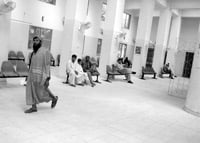
Who is regulating it all? How fair is the Punjab government's decision to impose a ban on students of private medical colleges from doing a house job in government hospitals? By Alefia T Hussain For the most of last month or so, Punjab's young doctors
have been bothered by one subject: ban on the students of private medical
colleges from acquiring house jobs in government hospitals. The Punjab
government issued a notification in November 2008 while the ban was
implemented from January 2009. Additional Secretary (Technical) Health Department Mushtaq Sulehria reportedly said on Nov 17, 2008, the Punjab government imposed a ban on students of private medical colleges, both local and foreign, from acquiring training in government hospitals in the form of house jobs and internships. The decision is based on the belief that private graduates are often negligent and incompetent in their treatment of patients, he said. The abrupt change in the policy has irked hundreds of young doctors across Punjab. In protest, they blocked Lahore's Jail Road for around five hours on Jan 20, 2009, and according to the Services Hospital Medical Superintendent Muhammad Javed, smashed computers in the Emergency Department of the hospital. On Jan 21, the police arrested around 30 doctors from various hospitals of the provincial capital to backfire the strike call by Young Doctor's Association (Dr Hamid Butt group). The arrests created ripples in other cities of Punjab, too, where doctors demonstrated outside hospitals and on the streets, and affected smooth functioning of the OPD and the emergency wards in particular. Amid the cacophony of protest and anger, some pertinent points have been left out. How do we protect our young medical college graduates? Whose responsibility is to ensure that they get a house job on merit? Who is regulating it all? House job is the most critical year for a graduating medical student. Pakistan Medical and Dental Council does not grant permanent registration to those who do not complete a year-long house job in a PMDC-recognised teaching hospital or tertiary care centre. Simply, a graduate cannot legally practice as a clinical doctor without completing a house job. Additionally, house job is of crucial importance since it creates the basic instincts of a doctor in telling the sick apart from the very sick, said Dr. Faisal Sultan, CEO Shaukat Khanum Memorial Hospital. "It is also the transition from a somewhat theoretical phase of education to the practical one." Accepted, house job is important. But why this rush to the government hospitals? "The desire of private college graduates to get house jobs in the government sector suggests that the clinical milieu at their own facilities lacks in some way," he said. Prof Dr Yasmin Rashid of Pakistan Medical Association gives two reasons: One, the private candidates do not have sufficient house job slots in hospitals attached to private medical colleges, and two, the training is better in public sector hospitals as they're exposed to a large variety and number of patients attending these hospitals. Out of a total of 35 PMDC-recognised medical colleges in Punjab, 21 are private, the rest, anyone's guess, are public. The astonishing fact is that most private sector colleges are not allied with teaching hospitals. Dr Salman Kazmi of the Young Doctors' Association adds another dimension to the debate by saying that "private institutes do not offer house jobs as it dent their profits -- trainees, who must be paid, cannot contribute much to the clinical management of a patient." Defending the government-imposed restriction on private candidates, Dr Javed Akram said the government hospitals have to give priority to those graduating from government medical colleges. "The private medical colleges must set up post-graduation training opportunities for their students. PMDC, as a regulatory body, must monitor colleges mushrooming in the private sector; and regulate that their number of students matches the number of house job seats available." "Monitor" and "regulate" are the two words that stand out. Pakistan Medical and Dental Council (PMDC) has been entrusted with the regulatory and statutory functions since 1962. Its main task is to establish a uniform minimum standard of the basic and the higher education in medicine. Dr Sibtul Hasnain, President PMDC, while talking to TNS explained that though the Council is responsible for the setting up of private colleges it cannot be held responsible for the "will" of the students. "Almost all the graduates, from private and public medical colleges, want to do house job at a reputable government hospital. Students from small towns want to move to big city to avail better opportunities. Now, PMDC cannot control the students' movement or ensure each gets a slot of his liking." So, what can be done to protect the cause of the private students? "Irrespective of why and how we landed here, this is our situation to fix," asserts Dr Sultan. "The immediate need is to get all the graduates into good programmes. A weighted quota system could be devised for entry into government sector house jobs that allows all graduates in the province to compete in." He further adds that in the longer term, we need to assess which of the private colleges have adequate clinical training facilities that could be improved and their experience brought on par with the best available. Those that don't should not be producing medical graduates in the first place." The case rests with PMDC as a charter granting body. But will it own up? It's a jigsaw.
An HRCP fact-finding mission investigates a blasphemy case in South Punjab
By Waqar Gillani On Jan 27, midnight, Shahbaz Qasim, son of a retired
schoolteacher and JD activist Maulana Noor Elahi Kulachi, reportedly knocked
at the door of Mohammad Saeed, Imam Gulzar-e-Madina mosque in Chak 172/TDA
near Layyah, asking him to come out. Shahbaz was accompanied by the local
press and a handful of people. He later made a speech on the nearby road on
how two villagers, Safdar and Liaqat, had seen derogatory graffiti in the
washroom of one of the village mosques which could not have been the action
of a Muslim. The following day, they managed to register an FIR (number
46/09) in Kot Sultan police station implicating students of grades 9 and 10
Tahir Imran (16), Tahir Mahmood (14), Naseeb Ahmad (14), Muhammad Irfan (14),
and a teacher Mubashar Ahmad (45) in the case. The arrested persons were sent
on judicial remand by the local court on Feb 4. Before the remand, they were
in police custody with Superintendent Police Pervez Tareen, incharge of the
investigative team. The accused have been charged of blasphemy under Section 295 C of Pakistan Penal Code (death penalty) over an incident with surprisingly no eyewitness account. The accused children, belonging to the Ahmedi community, who were earlier stopped from offering prayers in the local mosque and mixing with other Muslims were believed to be the perpetrators of the crime. The local Ahmedi community is facing a social boycott since the incident, especially by some members of the defunct Sipah-e-Sahaba Pakistan (SSP), recently banned Jamaatud Dawa (JD), and Majlis-e-Tahafuz-e-Khatam-e-Nabuwat. An anti-Ahmedi movement in the whole district after the blasphemy case openly threatens the lives of Ahmedis in the area and there have been many protests in the area. The police remain mum on these protests because those waging them enjoy the support of Iqbal Hussain Shah, uncle of Pir Saqlain Shah, MNA of the constituency. Iqbal Shah, reportedly, telephoned the police to lodge the First Information report (FIR) of the incident on Jan 28. Iqbal Shah, now, has also become the convenor of a newly-formed committee of various religious and local organisations to take up this issue. "This is not the act of a Muslim and we will not tolerate it at any cost," Kulachi aides told TNS and a fact finding team of Human Rights Commission of Pakistan (HRCP) who went there to investigate the matter. The Imam of the local mosque Maulvi Saeed told TNS that writing graffiti on toilet walls is a norm here and people write each other's names. He was asked by some villagers to stop people from writing names on the toilet walls which he did. Maulvi Saeed believes there is no eye witness of the incident. "When I saw the graffiti next day, it had almost been erased." Maulvi Saeed alleges he was forced by Shahbaz and his aides to remain absent from the scene when police was visiting the mosque where the incident took place. On Jan 27, according to him, he was asked by Shahbaz to come out of his home when the latter asked the press to take his pictures, leaving him ignorant of the whole situation. It was only later that he was informed of the "blasphemy." Station House Officer (SHO) Khalid Rauf told TNS that Iqbal Hussain telephoned him to visit the place and lodge the case. "I visited the place and saw the almost erased graffiti but there is no eyewitness account of who wrote it." According to him, Maulvi Kulachi was the first person on whose complaint the FIR was registered. To the question why police was unable to handle the protestors, he expressed his helplessness. He guaranteed that SP Investigations would probe into the matter and justice would be assured. District President PPP and Naib Nazim of the concerned Union Council Abdul Majeed Bhutta affirmed that the complainants are making a hill out of molehill. "In my personal view, it is overplayed." In 2004, an amendment was made in Criminal Procedural Code (CrPC) Section 295-C of the constitution according to which the police is bound to thoroughly investigate blasphemy accusations before levelling criminal charges. The aim of the amendment was to reduce the scope of the blasphemy laws which are still widely and frequently abused and often result in death penalties. But this did not happen in this case. Former federal minister law minister Dr Khalid Ranjha said there is no harm in having blasphemy law but urged the need to stop its blatant misuse. "Blasphemy laws are almost everywhere in the world," he said, "what we need to do is to stop the misuse of these laws." Police is bound to have a detailed investigation of the case before registering but, unfortunately, they do not, he maintained. He said people settle personal scores and give false testimony on these sensitive matters. He said if the state and police submit itself before propaganda and allows mobs to provoke the matter then there is no writ of the state and protection of citizens. He urged the state to handle these cases properly. "If police believes that they have to submit before the mob, then anyone who can collect some hundred people can sit before the police station or court and manoeuvre a case in his or her favour." He stressed the need to maintain the writ of the state to give justice to the accused. As many as 58 cases of blasphemy cases were reported in 2008, according to the report collected by Nadeeem Anthony, a council member of HRCP. "While, in 2009 (till the filing of the report) six blasphemy cases have been reported in the press," he said.
Our very own serial killers
By Omar R. Quraishi The picture that you will find accompanying this week's
column was sent to me by a reader. He says he is from Swat and knows someone
who took this and wanted it published in a newspaper. (And given the number
of such beheadings that have taken place there it was only a matter of time
that someone would actually take a picture and send it to the media). The
reason for publishing something like this would be to probably stir people
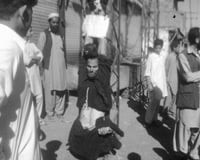
revulsion and hatred for those who are involved in such atrocities. The man who sent me the picture also sent a couple of others showing similar scenes. Those pictures were far gorier and probably could not be published – much less seen. However, if you notice this particular picture, you will find that there are ordinary people (and by that I mean men and boys because women and girls apparently are no longer to be found on the streets of Swat) walking by this beheaded body of the man. The body is hanging upside down from the side of an electricity pole and I am told that this was taken in Matta. Some readers may feel disoriented but that is because the poor man's head has been placed between his feet, on his groin as if to further desecrate his dead body. The fear among the local population is such that no one dare even take down the body and give it a proper burial. One cannot even imagine the psychological damage that such wanton acts must be having on the local people especially children who are growing up witnessing this monstrosity. These are the kind of images I would have expected to see in a museum for serial killers in the US, since America is often considered to be the land where the term originated and which, for some reason, has had the most recorded cases of serial murders. But it seems that Fazlullah and his men – one should actually them beasts or, as a letter-writer recently said in this newspaper, "handmaidens of the Devil" – have outdone any serial killer that ever lived. Three of the most notorious serial killers in history ought to be mentioned here for our Taliban may well be on their way to outdo them. The first is Liu Peng Li, recorded by Chinese historian to be a cousin of Emperor Jing of the Han Dynasty (156-141 BC). Liu was made king of a local region and was known to be "arrogant and cruel." It is said that he and dozens of his slaves (most of whom were criminals hiding from the law) would go out on what were called 'marauding expeditions.' During such 'expeditions' people were murdered for 'pleasure' and their belongings were looted by Liu and his slaves. Since this happened so many centuries ago, the exact number of victims is uncertain. Chinese historians say that Liu and his horde of slaves killed at least a hundred people. The killings caused much fear in the local population and people either shifted to safer provinces or simply stopped going out of the house. Liu stopped only when the son of one of the victim's complained to Emperor Jing who banished Liu to another county. Next we have Gilles de Rais (1404-1440), who was a French nobleman and soldier and even served alongside Joan of Arc. The number of his victims is between 80-200 – most of them being children who were raped after being inflicted with mortal blows. Rais was finally caught and executed for his crimes. During the course of his trial – conducted by an ecclesiastical court – that he preyed upon chidren who came to his castle in search of food. According to a Wikipedia entry the transcript of the prosecution included testimony from many parents of the missing children and contained descriptions of murders so graphic that some portions were ordered to be excluded from the record. However, some portions survived including the testimony of one of de Rais's accomplices. A 2003 biography of the serial-killer by French writer and playwright Jean Benedetti documents morbid details of his crimes (almost as much as the picture from Matta). It says that a child would not be killed immediately but gradually and only after first being pampered and dressed in the finest of clothes and given a good meal. Only after that would the child learn of the fate awaiting him\her. The biographer says that this was a particular source of pleasure for de Rais. The biography also quotes the killer's own confession at the trial where he said that when the children were dead he would have their bodies cut open and 'delight' at the sight of their inner organs or that when a child lay dying he would sit on its stomach and laugh, while watching it die. The third and the last is Hungarian aristocrat Elizabeth Bathory (1560-1614) whose exact number of murders is not known but historians believe it to be in hundreds. A countess, Bathory was accused of torturing and killing hundreds of girls and young women in her castle in present-day Slovakia. She was accused of killing over 600 victims but was convicted for only 80 murders. A legend relates that she would bathe in the blood of her victims – in an attempt to ward off aging. One wonders, a few decades into the future, or perhaps in the next century, what will wikipedia have on serial killers from this part of the world. The writer is Editorial Pages Editor of The News. Email: omarq@cyber.net.pk
|
|