


|
|
|
|
 |
 |
|
travel Slave labour or
routine ride?
In Paris with two pairs of socks An account of the first day of a four-day sojourn in the city of love By Asif Khan Was I ready for the ultimate visual experience ever, which
only a few of us get in their lifetime or only imagine? Well I guess I was
lucky enough to have experienced it, finally making it through all the fuss
of the visa, to land in Paris. Now this was the city of love hmm… Well
that's the image I had of the magnificent city: streets filled with joy,
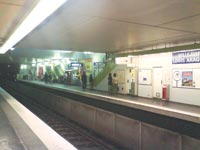
laughter and love for every one. Wow I am in Paris. My stay in the city of love was only to be for four days thanks to my host who had worked out a place for me to rest for three nights. I was alone -- no guide, not even the language on my side. The first step was to know how the local transport system worked. Well, to my relief, there was an underground Metro system that linked all the known areas through different coloured lines. Things became easier after I got hold of a little metro map of Paris. Things were clearing up and I could figure out my next destination. No more being the all-enlightened being, connected to all things around, including the earth, I had to put on my logic cap. I was to plan four days in advance, to see as much I could, with only a hundred euros and a four-day metro pass in my pocket. With a fresh pair of Pakistani socks and the other pair just washed, placed out on the ledge to dry for the next day, blue pairs if you must know and thick to keep out the cold in my high-tops, I thought I was well-equipped and ready to enjoy the bliss of winter. Finally pushing off into this huge wilderness of buildings and people, I came down from the fourth floor, got out of the apartment building and walked a few steps across to a metro station to get to my first connection, named 'Stalingrad'. I walked a floor down in this interesting, tiled-tunnel with posters all around and the ground smooth and straight but a bit grey, morbid with the white light, cold. I wasn't going to let this take the better of me. Walked deeper into the tunnel and came to an interesting small gate to put the metro pass in and to allow only one individual to pass. Hmm… good, now all I had to do was to follow the pink
coloured line heading towards 'Villejuif Louis Aragon' on the metro map. As I
was waiting for the metro with the tracks in front of me, gushes of cold and
warm winds passed through the dark tunnel. Looking up I could see a digital
timer letting every one know how long the metro would take to arrive -- 2 min
and 15 seconds. Amazing. The concept of time in seconds as well, something I
am not used to. Huge posters all around -- of events, advertising and people
waiting, a homeless person in one discreet corner curled up, hiding himself
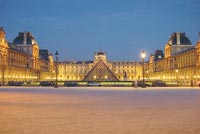
from the cold. Strange. One could feel the metro approaching with the sound of metal grinding against the tracks to reveal the size of what was heading this way. No time at all. The metro had come to a stop with the electronic gates opening and with people streaming out and in to this huge metal belly. People packed in the metro looking at each other with no expression, almost lifeless, passively waiting for their stops. A muttering of 'Pardon' would be heard from all across the car while people would try to squeeze in and out of any space available. After several stations, I arrived at my final destination at the Louvre museum where I was to spend three or four days enjoying the world heritage carefully preserved and studied in an ideal situation. Looking for the exit sign I walked out of the underground metro station. A river on the left side and across the river the biggest Castle ever seen caught me by surprise. The scale threw me off balance as I looked across. I thought I should take a walk to the opposite side, looking at tourist shopping spots where old books were sold as long as one would be wise enough not to fall into the trap. I just started walking aimlessly. The pleasure in taking steps on these fascinating grey stones laid out evenly as far as the street stretched or the eyes could see. The magnificent buildings. The clouds scattered just to let enough sunlight through, similar to a stage setting. Breathtaking. I moved at a slow pace and it seemed like there was something wrong with every one moving so fast. I later discovered that people were extremely time-conscious or fighting the cold as the chill hadn't yet gotten to my bones. I walked and walked for miles, loving every moment. Every thing was well thought-out. The entrance to the subway was designed by an artist. The footpaths would have manholes that would be very difficult to trip on. To top it all, there were washrooms placed on the sidewalks. A washroom literally meant that after one used it, the door would close and there would be a sound of gushing water where everything was washed clean. Several hours passed by. No sense of time. Only my feet were killing me from excessive walking. I forgot to visit the museum that day. Thinking of getting back and walking the four flights of steps meant I could fall into bed. The socks I had placed out of the window were fairly stiff; I think the water froze. Next thing to do was dry them in the micro and then the heavy ironing to prepare for the next day out.
Cycle rickshaws are plying on the roads in many districts of South Punjab like there was no ban, ever By Aoun Sahi In a recent trip to Bahawalpur and Rahim Yar Khan, to my utter surprise, I found that cycle-rickshaw is still the most popular mode of transportation. It is true that of all forms of labour, cycle rickshaw has attracted the most attention, often believed to be an 'inhuman' occupation. There was a time, not too long ago, when these rickshaws
were banned by an order of the federal government. But there they were,
plying on the roads in many districts of South Punjab like there was no ban,
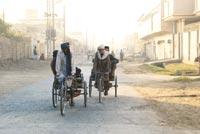
ever. A chat with some of these rickshaw walas gave some insights into the lack of employment opportunities in the area. They did not seem to find any problem riding those rickshaws and made these views known because they do not want another ban. They claimed driving it was certainly not more strenuous than other forms of physical labour, like working in construction sites, or as a coolies etc. In fact, they said, it was a more civilised alternative for them. Cycle rickshaw certainly does provide a legitimate source of livelihood to hundreds of poor families. In Ahmadpur Sharqia alone, one of the tehsil headquarters of Bahawalpur district, more than 250 cycle-rickshaws run in the city. Every second street crossing of the city was filled up with dozens of them. Watching the cycle rickshaws in the streets was a captivating sight but once I decided to experience it for myself, on Yousaf's rickshaw, I felt guilty. I thought as if I was the master and the driver my slave. For Yousaf it was routine work. When I shared my thoughts with him, he laughed saying, "Sahib jee, it is my job and it enables me to avoid slavery. Look, I earn money for my family by ridding cycle-rickshaw and if I wasn't doing this I might be working as a bonded labourer with some landlord." While the cycle rickshaws normally seem fit for one or maximum two passengers, I often saw entire families -- parents with four or five kids -- on the back seat. If you thought the passengers could not carry much luggage with them on the rickshaw, think again. Not only do they take their handbags full of different grocery items, they also carry heavier goods like TV sets, furniture and sewing machines. On a closer look, these rickshaws make you think about the strength and the misery of these cyclists. It does not matter how weighty is the bicycle; the 'strong' legs of the cyclists are forced to move the machine at a good speed. At the same time, they pose to be extremely energetic, ready to take the passenger wherever he wants. Most of the roads and streets of this area are paved which makes their task relatively easier but there are still many unpaved and sandy streets in Ahmadpur. I thought most of the cycle-rickshaw walas wouldn't be happy with their job. I interviewed at least 10 of them, to make sure I was right. Surprisingly none of them expressed any complaints. "I have been riding cycle-rickshaw for the last one year and never found it a tough job. I am more than happy with my work," said Rafique, a 55 years old cyclist. "I can drag this with two passengers on the back seat for more than 10 kilometres without stopping." Ismail Malik, a 28-year-old resident of Ahmadpur, said they would never complain to anybody about their profession. Because, as it is, there are minimal employment opportunities in southern Punjab and they are afraid if they complained the government could once again ban cycle-rickshaws in Pakistan. "This is the rebirth of cycle-rickshaw in our area. In the early 1990s, the then Prime Minister Nawaz Sharif linked one man pulling another man's weight to slavery and banned it. He barred the cycle-rickshaws under a package by providing loans to owners and drivers of cycle-rickshaws to purchase auto-rickshaws and repay loans in easy instalments. But, the facility was never availed by these poor rickshaw walas. In fact, influential people of the area benefited from the scheme. While all that the cycle-rickshaw walas got was unemployment," said Malik. In July, 2004 Justice Malik Farrukh Mahmood of the Lahore High Court (Bahawalpur bench) ordered the lifting of the ban on cycle-rickshaws. The order was issued on a writ petition of Arif Husain who had challenged the orders of former prime minister to ban the cycle-rickshaws. In his judgement, the judge termed the ban a conflict with Article 18 (freedom of trade, business or profession) and Article 25 (equality of citizens) of the constitution. The judge further mentioned that presently the cycle-rickshaws were also being run in one of the states of the US and there was no legal justification for its ban. That is how cycle-rickshaw came back. |
|