


|
|
|
|
 |
 |
   |
interview Inside
the magical world Zia
Mohyeddin column
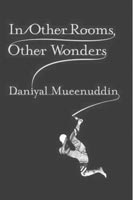
Wonders in other rooms For a debut novel, from a country that in this age is known more for its militancy and less for its literature, to be snapped up at the recently held Jaipur Literature Festival within hours is a remarkable feat. So who is the person behind the stunning debut novel In Other Rooms, Other Wonders. And here we come across a paradox that is Daniyal
Mueenuddin. He's not your typical landowner, who grows mangoes and other
agricultural products on a farm in Punjab. He's not your typical lawyer
either, despite having attended the prestigious Yale Law School and having
practised law for a few years. For now, Daniyal is the next best thing after
sliced bread in the world of South Asian literature. After the now-forgotten
novel about rural Pakistan, The Murder of Aziz Khan, In Other Rooms, Other
Wonders is well-deserving of the heaps of praise it has garnered in the past
six months alone for its colourful characters that belong to the rural areas
and spins tales that leave the reader longing for more once the last page has
been turned. So despite the intense media focus and the plethora of authors who want to meet this bright young author, Daniyal and I manage to sit down for an interview, surrounded by trees in full bloom in a chic cafe in Jaipur's Diggi Palace, as the noises from the literature festival going on around us blur in the near distance. "How did it all start?" I ask curiously, considering the number of hats he has donned in the past. Daniyal says he started his writing career by penning poetry, but after seven years of writing, during which he lived on his farm in Mueenabad, he realised the poems were good, but not great. The poetry also kept getting longer, and became more narrative, hence the logical conclusion that Daniyal turned to writing a book and along came the short stories. So how does someone come out of nowhere and get published in the prestigious journal New Yorker? "Well, I've had a short story published earlier in Zoetrope, and someone from Penguin emailed me, asking if I could send them more stories. I did, and the next thing you know they wanted to publish my book. I then met my agent Bill Clegg, who's fantastic. He told me to sit tight and then I didn't hear from him for a while. Then I was back on my farm in Mueenabad, when I get an email with the subject title "New Yorker accepts story." I called my wife and told her to open the e-mail because I couldn't look at it myself! It was just a two-line e-mail saying the short story had been accepted." Following the acceptance, an unheard of feat for a Pakistani author, Daniyal walked around his farm 'in a cloud' for the next three days, and then went through the inevitable process of self-doubt. "I kept saying to myself that oh no, they've made a terrible mistake! But then they accepted the next story and I felt a little better." Many of his stories centre around characters based in rural Pakistan -- why did he choose them as a subject? "Well, it's part of what I know, and I loved writing about and I love living there (in interior Punjab). Also, not all of the characters in the stories are from the rural areas." Earlier that day, Daniyal, in a discussion at the Jaipur Literature Festival, had been talking about the insecurity of living in Pakistan. I press him on it, and he says, "I'll live here as long as I don't feel my life is in danger." So how does a farmer/writer spend his time on a farm? "It's the same routine, I wake up at six am, write some letters, meet my managers, write till two pm, and then after lunch, I do the books or go around the farm. I read, have dinner and go to bed." So who are you inspired by as an author? "Well, War and Peace is one of my favourite books, which I keep going back to, I've read that and Anna Karenina about ten times each at least. I've also read and re-read all of Chekhov's work, and Ulysses is another favourite." So now that the book's been published, what's next? "Well, I've started work on my novel, which is a love triangle, and one of the characters is similar to the woman in my short story Paris." And what future does he see for English fiction writers in Pakistan? "It's really just a question of who shows up where and the question of luck. Who knows, right now there could be a guy in Lahore writing the greatest novel ever." After seeing the advance copies of Daniyal's book selling like hot cakes in Jaipur and having read the book and been amazed at its simplicity yet brilliance, there is little doubt that Daniyal's here to stay, and could very well be that person who very well might write the greatest novel ever.
Huma Imtiaz works as a correspondent for Geo News. She can be reached at huma.imtiaz@gmail.com Inside the magical world Wonderful tales of crooked electricians and conniving servants
In Other Rooms, Other Wonders By Daniyal Mueenuddin Publisher: W.W. Norton & Co, 2009 Price: Rs 720 Pages: 224 "Har qatal di ik jar Zan zameen zar" (Three things for which we kill,women, land, gold.)
And it is with this Punjabi proverb that Daniyal Mueenuddin's debut book, a collection of short stories, In Other Rooms, Other Wonders begins. It is perhaps, a fitting clue to what the subject of the short stories that await the reader is to be, but also signals how earthy and Pakistani this book is. As a reader, a problem, that one has so often with Pakistani and Indian writers who pen their work in English is the inevitable trap of clichés that they fall into. When describing a scene, especially if it has an element of poverty in it, they somehow manage to pass a judgement on the character and his/her surroundings from their pedestal and not let the reader make that decision. And this is perhaps why Daniyal Mueenuddin's debut book is a departure from what one usually expects from many Pakistani fiction writers. Firstly, it is perhaps one of the very few books that comprises mainly of the unique characters that one finds in this country, especially in rural Punjab. The only other book written in English by a Pakistani author that has successfully managed to do the same is Zulfiqar Ghose's stunning novel The Murder of Aziz Khan. But where Ghose's book centered around only two families and their problems, Daniyal's book is a cornucopia of vivid characters, some rich, some poor, some educated, some not-but all these characters have lives that would make one burn with jealousy at the richness of their experiences. Secondly, In Other Rooms, Other Wonders has a very matter-of-fact tone -- while one does have sympathy for some of the characters, there are no attempts made to unnecessarily portray them as the underdogs of this world, who must be made objects of pity. The eight short stories are interwoven- each character is linked to a Mr. K.K. Harouni, a retired civil servant, and is part of the Harouni household in some way or the other. But where K.K. Harouni's life itself is only touched upon in detail in one short story, it is the lives of the people around him that are far more entertaining a read. There is the crooked electrician, Nawabdin, whose story starts off the book and sets the tone for what the reader should expect next: stories about rural Punjab; characters, whose lives are defined by meeting their daily needs; and then the women, mostly ambitious and calculating, whether it is Saleema with her quest for love, or Husna, with her drive to make her position and presence felt in the K.K. Harouni household. The female characters in the book attempt to illustrate how women, in many a family, are the soul around whom the house revolves, whether it is a maid, or a girl like Sonya, in the short story A Spoiled Man. Secondary to them are the men they meet, whether it is Rezak, the caretaker in A Spoiled Man, or K.K. Harouni and Chauhdry Jaglani, whose lives are changed forever after in their middle to old age by the women they meet. A change in tone and subject is felt in the short story About a Burning Girl, which deals primarily with the justice system in Pakistan and domestic violence. The description of the judge's reader is particularly memorable and shines a spotlight on the characters that are deeply involved in the investigation and settlement of cases: "He is a man of secret powers, and a mover of great events. This is the bacillus my wife sent to resolve Khadim's case as she wanted it resolved. Mightier men than I fear him." Our Lady of Paris, which was Mueenuddin's first short story that was published in a foreign journal, is a story that many urban Pakistanis who went abroad to study might identify with; the problems one encounters when trying to introduce their not-Pakistani girlfriends/prospective wives to their parents, no matter how liberal they might be. The short story, Lily, which is also the last one Mueenuddin penned before he finished the book, is strikingly different from the rest of the short stories. Lily's character belongs to the tiny crust of society that is 'upper class', yet her life is fraught with perhaps as many issues, perhaps not all that serious as compared to a crooked electrician and a judge, but important nevertheless. From trying to escape the clutches of one's social life to rolling a joint, Lily's life and personality make one wish, if in vain, that all the characters one sees in glossy magazines had lives as interesting, so one might be able to understand their reasons for wanting to be part of the in crowd. There is a little bit of self-biography in the book; Daniyal is a landowner in rural Punjab, and has lived there with brief hiatuses for many years now. One can only imagine the characters he must have come across, to have produced such short stories. He must be commended highly for this strong body of work, and with the amounts of praise pouring in from all quarters, it seems he has managed this book to be highly acclaimed, and also raised expectations for his next novel. In Other Rooms, Other Wonders is a worthy addition to one's bookshelf, and a thought-provoking look at life in Pakistan, whether viewed from a Pakistani's eyes, or a foreigner's. -- Huma Imtiaz
A poem does not mean it It is not often that you come across such superb poetry as: "For most of us, there is only unattended Moment, the moment in and out of time Or the waterfall, or music heard so deeply That it is not heard at all, but you are the music While the music lasts..." Unlike other poets Eliot does not try to provide arresting imagery or references to sensual pleasures. Precision is what he is after. He makes it quite clear when he says, "To write poetry which should be essentially poetry, with nothing poetic about it, poetry standing naked in its bare bones, or poetry so transparent that we should not see the poetry, but that which we are meant to see through the poetry, poetry so transparent that in reading it we are intent on what the poem points at, and not on the poetry, this seems to me the thing to try for..." We may not be able to see that which we are meant to see through poetry, because of the density of quotations, symbols and references (which range form Greek mythology to Dante's Inferno, to Shakespeare's characters and Catholic scriptures), but Eliot's poetry still communicates something to us before it is understood. I maintain that it is not important for the reader to have an explicit intellectual knowledge of the various symbols, and a logical account of their relationships, to appreciate The Waste Land, one of Eliot's monumental works. The impression you receive when you first read The Waste Land is that it is a realm in which people have lost their knowledge of good and evil, that they cannot rouse themselves from the death-in-life -the basic theme of the poem - and that without faith, life is, in reality, death. "... Son of man, You cannot say or guess, for you know only A heap of broken images, where the sun beats And the dead tree gives no shelter, the cricket no relief And the dry stone no sound of water..." The sterility and unreality of the modern world is vividly portrayed throughout the poem. Life has lost its meaning; history has no meaning. It is a world in which there is spiritual emptiness; the people see nothing, know nothing. The subtlety with which Eliot takes an item from one context and shifts it to another gives the poem not just a new energy but a powerful meaning. Eliot's philosophy was that "so far as we are human, what we do must be either evil or good; so far as we do evil or good we are human, and it is better, in a paradoxical way, to do evil than to do nothing: at least we exist". Good prose depends on clear meaning but not good poetry which goes beyond meaning. Poetry depends for its magic on the associations and sounds of words. There are so many excellent poems that I am unable to comprehend fully and yet they move me. It is something to do with what I call 'stirrings'. Let me give you an example:
"And yet out of eternity, a thread Separated itself on the blackness A horizontal thread That fumes a little with pallor upon the dark"
D.H Lawrence The lines are from The Ship of Death, a poem in which Lawrence talks of apples falling like great drops of dew so that they can make an exit from themselves. I know that the poet wants me to build a ship of death because the voyage of oblivion awaits me, but in writing the above lines does he mean what I think the means? The image of a thread fuming with pallor haunts me. It matters not whether a thread can fume (with or without pallor). The lines send a tingling sensation down my spine. Archibald McLeish was right when he said that "a poem does not mean, it is." It is said that only a poet treats words as though he were present at their creation. Take this line of T.S.Eliot: "Stone, bronze, stone, steel, stone, oakleaves, horses' hooves," a line which evokes, in an extraordinary way, the sound and movement of horses going over paving stones. But is it only a poet who treats words as though he were present at their creation? Let us consider the line: "Stone, bronze, stone, steel..." Unless the line is read by a trained actor (who knows how and when to inflect properly) you would not be able to imagine that horses were going over paving stones. The poet is seldom able to do it himself. And Mr. Eliot was not the best reader of his own work. When you listen to the great Gielgud speak Shakespeare you soon begin to feel that he has written all the words himself. The actor, the interpreter is also the one who uses words as though he were present at the time of their creation. It is he who makes "the common word exact without vulgarity, the formal word precise but not pedantic." Why else would the Greek dramatists coach and drill and feed, and pay - for an entire year - their leading actors before they allowed them to appear in the drama competitions that were held annually to honour Dionysus Sophocles and Euripides, and God knows how many other dramatists, were represented in these festivals. They had to make sure that their words were spoken meticulously so that every syllable was uttered precisely in unison. When I listen to poetry it is primarily the reader's voice which shapes my feelings. Words assume the colour he assigns them. Sometimes a reader does not embrace the operative (emotive) word and that gives me a tingling sensation like the anticipation of sitting in front of a log fire when I have been walking in the cold. The word not emphasised hovers round the corner and when it is uttered it assumes a recondite meaning. The late Alan Badell spoke poetry beautifully. He was an excellent Romeo for while he made you aware of some of the finest love poetry ever written, he avoided the hackneyed method of giving weight to words other actors stressed and milked. His voice was rich and smooth and had that graininess which made me want to shut my eyes and listen to him, even though he was a very personable actor to watch. In the balcony scene, after he had already created a shimmering aura of 'rich jewels in an Ethiop's ear', he languidly leaned against a pillar and said, softly, "I am no pilot; yet were thou as far as that vast shore washed with the farthest sea, I should adventure for sure merchandise". He just caressed it, and this humdrum word acquired a unique and imaginative particularity which sent goose-pimples all over me. |
|