


|
|
|
|
 |
 |
  |
At home with the
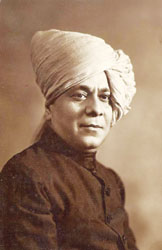
wanderer Pakistan’s best-selling author Mustansar Hussain Tarrar has always loved to take people to journeys — real and imagined. Here the vagabond-intellectual talks fact and fantasy, and how he intends to penetrate the Iron Curtain a third time in his forthcoming novel By Arif Waqar Moscow is a major setting in the forthcoming novel of Mustansar Hussain Tarrar, but the place is not new to him. Tarrar’s first visit to Moscow was at the age of 18, in 1957, though it was very different from the visits of Faiz, Krishan Chandar, Sajjad Zaheer and other comrades. arts Documenting
music Defending
the defenders
Interview Moscow is a major setting in the
forthcoming novel of Mustansar Hussain Tarrar, but the place is not new to
him. Tarrar’s first visit to Moscow was Excerpt
from the novel The time is early 1990s. Russia is
passing through another revolution: Capitalism is back with a vengeance. The
statues of Lenin are being removed from the public places and stored into
dungeons. Zaheerudin, an enterprising Pakistani worker who has seen good
times in Russia, has now been jobless for quite some time. At long last he
is offered a job, but would he accept it?
I am not an
environmentalist (I call myself a realist!) but feel sorry for the fate of
trees, especially on the opening of art exhibitions during the chilly
winters in Lahore, where wood is burnt to make bonfire and warm the
visitors. But trees are also used to make paper and looking at some of the
works, one wishes the trees were not cut, pulped and converted into sheets
of paper. Muzzamil Ruheel’s work
does not fall into that category. Exhibited at Rohtas 2, Lahore from Feb
6-13, 2012, the solo show titled “It’s Only Words”, comprised works
based on calligraphy, suggesting a range of concerns. Fascination with
calligraphy is common among our artists, both for religious reasons as
well as for reverting to indigenous aesthetic conventions. In the past,
calligraphy was promoted for obvious political reasons. This not only
ruined the standard of calligraphy but also discredited the artists who
genuinely refer to this aspect of our traditional art practice. The case of calligraphy
is an apt example of how state’s intervention transforms the course of a
normal visual expression. After the Zia era, there was considerable
decline in the popularity and practice of calligraphy in Pakistan. This
was unfortunate since the act of writing beautifully has been a custom in
the Muslim societies. This continued on various levels till the advent of
computer and its wide usage for composing newspapers, magazines and books
diffused its scope and rendered the job of scribers redundant. It’s interesting how
individual painters in our context have been appropriating this
traditional feature to create works of modern and contemporary art, like
A. J. Shemza, Shakir Ali and Zahoorul Akhlaq. They exploited the formal
dimension of the text, often transforming it into mere shapes. In
comparison, Sadequain, Hanif Ramay and Gulgee focused more on the
re-interpretation of calligraphy, keeping close to readable script with
variation in the compositions and colours. Colour, being a modern tool,
acquires a specific significance because historically and conventionally
calligraphic texts were written in singular, black ink. In this respect, the
work of Ruheel appears to be an attempt at compromising the conventional
practice with the demands of modern day sensibility. In his work, what
seems to be a sacred text on the first glance is in reality the
deconstruction (literally) of phrases one hears on the news about acts of
terrorism and bomb explosions (even though viewing the work, one is unable
to form the link or it does not feel necessary either). Ruheel divides
these lines into words and separates them further into individual letters,
for composing them in a range of shapes. These letters, intertwined, form
a few images from art history, for example, the skull by Damien Hirst, an
image of blast by Roy Lichtenstein, monster as well as Takashi
Murakami’s camouflage patterns made for Louis Vuitton. In addition to these
works, which address the notion of Pop in art, thirty pieces on paper, of
identical size and black colour (except one in red) were installed as one
work, which allude to the thirty volumes of Quran. This reading is
accentuated due to the choice of scale that resembles the usual volumes (separah)
of the holy book, which are read in homes or at community gatherings. The work reflects
Ruheel’s response to the tradition of calligraphy, by bringing (or
pulling) it into the world of art; an endeavour that also holds a certain
kind of reaction to the religious elements in our midst. Apart from the
link with the Quranic format, the news about our modern day calamities are
also related to matters of faith, since these illustrate how religion has
been understood and applied by certain individuals and organisations. So
the work could be comprehended in connection with religion that appears in
more than one manifestation — in the practice of calligraphy, as well as
the extremist activities carried out in the name of faith. Or this can be
understood as attempts in infusing aesthetical ingredients in the realm of
faith. By pure chance, similar
exercises in beautifying the sacred substance were experienced a day
before the opening of Muzzamil Ruheel’s exhibition at Rohtas 2. On Feb
5, Eid Milad-un-Nabi, marking the birth of Prophet Muhammad pbuh was
celebrated and, as per custom, the streets were decorated with all sorts
of colourful buntings, banners and tents etc. This included making of
small scenes with painted dust, models of holy structures in various
materials, and toys arranged on the roadsides. It would be relevant to
study the origin of this practice but, each year, one is amused with the
variety of pictorial approaches used in these temporary constructions.
Children who are otherwise not trained in art produced these pieces which,
if de-contextualised, could be interpreted as ‘installations’. It would be misleading
to do so because these are fabricated to satiate sheer devotional
sentiment. But one must remember that some of the great works of art were
also created on the basis of religious needs, and not for the purposes of
art. These ‘objects’ possess an aesthetic value, but more than that
these signify a deep desire in human beings: to imbibe element of beauty
(or art, even if one is not consciously implying the word) in the matter
of faith. An exercise that was evident in the work of Ruheel too. But one
has to admit that the children and their adult supporters are more
enterprising. In one of these decorations (which lasted for a few hours
only, alas!) model of Faisal Mosque and Kaa’ba with cut-outs of pilgrims
were placed next to a toy in western outfits along with trucks, cars and
fighters aeroplanes pressed in coloured sand; thus portraying the totality
of our composite culture. Looking at these random
examples in popular pictorial expression, one ponders upon the concept of
Pop art in our situation. Pop, originally a reaction to high art, was an
attempt to bridge the gap between reality and art but now, with its
acceptance as one of the major movement in art, has become an emblem of
high Art; perhaps demanding our artists to search further for new
definitions and manifestations of pop in a different context. A reality
that will be easily explored if one extends the concept of the visual art
or popular art to people and streets where it actually belongs, and not
only on the day of Milad-un-Nabi!
It is essential to have a body of literature on music that provides a perspective to the musical activity and practice of the various genres. It helps in crystallising and consolidating the material available into a certain order, and then helps in developing the principles and canons for a more intelligent understanding of music. There is hardly any
sizeable body of literature available in Pakistan about the 65-year-old
uninterrupted musical activity. The music is created, listened to and then
lost in thin air, with the music and the musicians only left as golden
memories. With the passage of time, these memories are greatly romanced
with incredible stories attached to the adverse circumstances that the
musician faced and the magical effect of music with supernatural qualities
attached to it. There is hardly any solid analysis and criticism of music
and musicians, and so it has remained more so in Pakistan. While in India,
from time to time, a book is published which may not be great work of
scholarship but adds to the body of literature available on the subject
and may expose some new dimension, seeming to be trivial on the surface. One such book is ‘Eminent Indians: Musicians’ by M.L. Ahuja, who is associated with book publication and distribution and is a winner of the Janseva Sadbhavana Award. It is unwittingly focused on the changing nature of music from high classicism to its more popular and diluted variety. Usually there is a tendency among musicians, especially the ones associated with classical music, to stress on the purity of raag or the style which usually makes them very exclusionist and closes their ears to anything else around them. This dismissive attitude has been the reason of drying up of quite a few classical traditions but some have kept their ears open. During the days of the founders of the kheyal gharanas in the mid 19th century the centre of music patronage was shifting from the princely states to the new commercial centres like Maharashtra. For the new emerging classes and sections of the population adjustments in music forms had to be made without compromising on quality. About this period of music in the subcontinent, not enough emphasis has been laid. The new emerging classes, basically mercantile in nature, congregated in the new developing urban centres of Calcutta (Kolkata), Bombay (Mumbai) and Madras (Chenai). Incidentally also the centres where new form of popular entertainment was taking shape in theatre — popularly known as the Parsi Theatre, owned mostly by the Parsis who had become rich in the new order that was taking shape with the consolidation of colonial rule in the Indian subcontinent. It is difficult to say exactly who the leading vocalists of the time were, and what changes were being ushered in by the changing expectations from the audiences that were paying in monetary terms for their music. The new emerging mercantile bourgeoisie also patronised music by valuing it through the monetisation of the economy. One hears of Gauhar Jan also associated with Wajid Ali Shah while he was incarcerated in Matya Burj in the vicinity of Calcutta. But some information can be also gleaned from the lives of leading ustads like Alladia Khan and Abdul Karim Khan who two-timed for patronage due to the vagaries of time. Both in their long and illustrious careers moved from royal and aristocratic patronage of the princely states to that of the new mercantile classes situated in Maharashtra/ Bombay, and both also had links with the theatre of the time. All this has not been documented in any serious way by a musicologist and the impact it had on the changing taste of music. There maybe some documentation though. Rambhau popularly known as Sawai Gandharva did not complete his musical education as, against the wishes of his teacher, he joined a drama company and became popular as a singer in Marathi theatre. He worked for Govindrao Tembe’s company Shivraj Natak Mandali for some time, becoming famous for playing female roles. Although he became a well-known classical vocalist, his most enduring legacy is that he trained great artistes who would carry on the name of the Kirana Gharana. Another vocalist who lived over this change was Bal Gandharva. He symbolised the golden era of the Marathi stage, specialised in playing female roles, as his acting was considered so flawless that it did not betray the secret of his being a man. His father sang devotional Marathi songs. Initially, he learnt classical music from Mehboob Khan but since his family could not afford to educate him, he roamed around, developed a passion for the stage plays that he saw in that period and at the age of 15 joined the Kirloskar’s Sangeet Natak Mandali. His fame spread far and wide and non-Marathi speaking people were attracted to his plays. He then formed the Gandharva Natak Mandali and staged a number of plays in other languages as well. In some plays especially Kanhopatra, the devotional songs became so popular that he started to sing devotional songs on demand irrespective of the play. The company gradually suffered a decline also because several women had courageously decided to break the taboo and started to act on stage. His principal mentor, Bhaskarbuva Bakhale, advised him not to go too much into the technicalities of classical music and to sing what was sweet and soulful according to the situation embedded in the song. He also recorded a repertoire in Marathi Natya Sangeet originally as part of a Marathi play and but gradually was played as a concert item, which highlighted the popular taste during his lifetime. He is now remembered primarily as a classical vocalist. The lives of later musicians also a product of this changing taste and adjustment like Subbulakshami, Kundan Lal Saigol, Lata Mangeshkar, Ravi Shanker and Amjad Ali Khan is more documented.
Dear All, One of the consequences
of being both a news junkie and a couch potato who loves to watch tv and
is interested in what is going on in Pakistan is that I watch a lot of
‘discussion’ shows on the Pakistani channels. This is a fascinating
process because while some of these are actually discussions, most are
usually shouting matches in which opposing politicians become very rude
and the compere is fairly offensive (and un-informed) too. But what I find
truly surreal are the shows in which one person (the so-called compere)
appears on the screen and expounds on various conspiracy theories at
length, and sometimes has a lone guest on the show who basically agrees
with and reinforces all the compere’s conspiracy theories. Usually the conspiracy
theorist’s friend will be somebody like Sheikh Rasheed Ahmed or General
Hameed Gul —who neither hold elected office nor officially represent any
significant group. Both will generally make the most of their airtime by
expounding a suspiciously GHQ-centric point of view, maligning politicians
generally, attacking the government specifically and of course protesting
their own democratic and patriotic credentials (you understand why I used
the word surreal). A recent theme in such
programmes has been the emphasis on ‘protecting the Pakistan army’
from any criticism or attacks upon its august character. I found this to
be a fascinating twist in the whole story; a wonderful ironic role
reversal. Most countries expect their army to protect the country, but
here the country is being asked to protect the army. This is a variation on
the old fauji narrative that the army is the only worthwhile aspect of
Pakistan therefore the function of the country is essentially to feed and
cherish this, the only ‘viable’ and wholly noble institution the
country has. This narrative is spun
by claiming that ‘enemies of Pakistan and Islam’ are trying to malign
and destroy the Army and this is all part of a sinister plot to eliminate
Pakistan’s nuclear programme. But this new twist on an old narrative —
how we must defend the so-called defenders — is gaining momentum in a
suspiciously accelerated manner. Not only is the former
ISI chief General Hameed Gul increasing his profile through his
association with the recently formed Difa-e-Pakistan council (a platform
for Zia-ites and other religious rightists with defence links) but also we
see more bizarre events like the formation of an association of ex-service
men whose aim will be to defend the attacks on the reputation of the ISI.
This actually happened: more than a hundred retired army officers (mostly
Generals) recently got together in a luxury hotel and resolved to do this,
but who paid for the hotel and who will pay the group’s expenses is not
really clear. Getting one’s message
across is not cheap yet all these forums seem to have few problems with
funding — which force some to assume that the defenders have enough
money to effectively create forums which tell everybody that they must be
defended. Money can buy you airtime, column inches, and, most crucially,
journalists. In the 1980s ISPR would pay journalists four times what the
leading English paper would then pay for using an article. They would pay
four-fold the money for an article to be used in some obscure army journal
that probably nobody had heard of and nobody read. Was this done in the
interests of publishing and information? No, it was obviously a form of
patronage and influence. The current trend is, of
course, to form associations and think tanks. The think tank way of
peddling influence is something right-wingers and devious Big Business
interests have turned into something of a fine art in the US and Europe.
It facilitates patronage in the guise of research and intellectual
enterprise, the idea being that this way you can put your friends and
ideological allies on your payroll and still maintain a facade of
scholarship and political research. Hmm. Progressive journalists
often criticise the amount of money that goes into Pakistan’s defence
budget, but now perhaps we should also keep an eye on the budget being
allocated to the art and craft of defending the Defenders.... Best
Wishes, Umber
Khairi |
|
 at the age of 18, in 1957,
though it was very different from the visits of Faiz, Krishan Chandar,
Sajjad Zaheer and other comrades.
at the age of 18, in 1957,
though it was very different from the visits of Faiz, Krishan Chandar,
Sajjad Zaheer and other comrades.