


|
|
|
|
 |
 |
   |
Centres
of alternative power Lying in
coal storage Part of
the nuclear family The
capacity is immense but… Winds of
change Energising
waste Let there be
light "Academia, industry and power sector
need more coordination" By Waqar Gillani The News on Sunday: What is PEPCO's take on the persistent bad spell of power generation in Pakistan? Tahir Basharat Cheema: The power sector and energy issue have not been given importance by successive governments which have been depending on private and hydel power generation sources. Wapda was not allowed in the past to have public sector power plants. "This organisation should have been set
up 25 years ago" By Shaiq Hussain The News on Sunday: Despite the acute energy shortage, Pakistan has not exploited the vast potential of environment-friendly alternative energy resources. What is your take? Arif Alauddin: Actually there are many steps between the potential and its realisation. When you go to the private sector for investment, [you find that] unfortunately, the enemies of Pakistan have created a very negative perception about this country: They propagate that it's a high risk area; the government has no money to return; you have to face institutions like NAB; Pakistani people have no engineering skills etc. AEDB is trying its best to do away with these false perceptions. But the process of rectification should have started much earlier.
Editorial With hours of loadshedding a normal day's routine even
in winters, it is easy to see that Pakistan today is an energy-deficient
country. It was about time we did a Special Report on alternative sources
of energy. Alternatives, generally speaking, would mean renewable and environment-friendly sources of energy. Not for us though. We, in Pakistan, had excessively relied on hydel and thermal sources all along till a point came where these conventional sources started depleting. The rivers started dying out and cheap hydropower became a myth. Thermal power became costly in every sense of the term. As we said, about time Pakistan looked for alternatives. Or has the time already passed? Alternative for us means coal of which we have more than plenty but the resource has stayed untapped. Alternative for us means nuclear energy, for which we have the necessary wherewithal but there are strings of international politics attached. Other alternatives, of course are biofuel, solar, wind and biomass etc. The potential statistics are staggering, be it coal or wind or solar energy. But there is a huge gap between the potential and actual generation. And that is what needs to be analysed if the country is serious about managing its power needs. It turns out that as a country, like in many other fields, we failed here too. Political ad hocism prevented a sound energy policy from being formulated and implemented. This lack of vision on the part of the leaders that governed this country is unforgivable. Have we learnt our lesson? Today, we have an institution called Alternative Energy Development Board whose chief executive officer tells us this board ought to have been constituted 25 years ago. He is absolutely right. But it is time to look for more creative solutions to the problem and understand our limitations and weaknesses. Of course, we do need a conducive environment for investment but it is not just law and order that is preventing it from coming. We need good quality research in our universities, we need good technicians, reliable local industry and finally better coordination between them. We need local entrepreneurs or small power producers to invest and generate power locally and sell it too. The existing system caters only for large power generators and is too centralised. The stories below highlight the potential and problems in coal, wind, biofuel, solar and nuclear energy. These are the alternatives we must explore and invest in for our future generations.
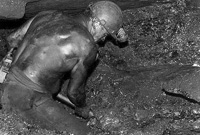
Would you believe that the Thar coal reserves are sufficient to meet the fuel requirements of the country for centuries By Shujauddin Qureshi Coal, which is fortunately available in abundance in Pakistan, can be an alternate source of energy. According to the Sindh government statistics, more than
9100 square kilometres area of Thar desert contains an 175.506 billion
tonnes of coal -- and these deposits are sufficient to meet the fuel
requirements of the country for centuries. Another estimate by Pakistan
Economy Watch suggests the Thar coal reserves are worth 25 trillion US
dollars and just 2 percent usage of Thar coal can produce 20,000 megawatts
(MW) of electricity for the next 40 years, without any single second of
loadshedding. In Pakistan, the share of coal in energy generation during decades declined from 68 percent to 35 in 1958 and to 5 percent in 2002. Coal is the main fuel for electricity generation in most of the developed and developing countries. For example, according to data compiled by World Coal Institute, London in October 2006 it was 52.2 percent in the US, 52.2 percent in Germany, 77.5 percent in China, 70.1 percent in India, 92.2 percent in South Africa and 76.9 percent in Australia. A Memorandum of Understanding (MoU) has been signed between Oracle Coalfields, a UK-based company engaged in coal drilling, exploration, mining and production and Karachi Electric Supply Company (KESC) to set up a major coal-fired power plant at mine-mouth fuelled by coal to be mined at Thar Coalfields in Thar. Karachi is already facing a power shortage of 600-800MW. Although the MoU would take some time to actually materialise, the news has provided a ray of hope for tapping the huge reservoirs of coals in the Thar desert, which were actually discovered more than a decade ago. In 1992, the Geological Survey of Pakistan (GSP) announced discovery of the largest sub-surface deposits of coal in the world in Tharparkar district in south-eastern part of Sindh province during the research programme, assisted by United States Geological Survey (USGS). The second government of late Benazir Bhutto had announced the Energy Policy 1994 in which emphasis was given on private sector power generation including coal power projects. In response to that policy a number of international companies expressed their interests in setting up coal-fired power projects. A Hong Kong-based power company Hongpak United Power Generation along with other foreign investors signed an MoU with te Pakistan government early in 2005 and then Prime Minister (late) Benazir Bhutto performed the groundbreaking ceremony of an open-pit coal mine and a power plant of 1320MW near Islamkot (Tharparkar district) in January 1995. Total investment for that project committed at that time was 2 billion dollars. Similarly, the same government of Pakistan People's Party (PPP) also signed another MoU with Hong Kong-based tycoon Gordon Wu to develop the huge power plant at Keti Bander, in Thatta district about 90km east of Karachi. His Consolidated Electric Power Asia Ltd (CEPA) had planned to set up total 5,280MW coal-based power plant at an estimated cost of $6 billion and the groundbreaking ceremony of the first power plant of 1,320MW was also performed by the late prime minister in the same year. The company had pledged to develop Thar coal and for that purpose 500 million dollars were earmarked for conducting the initial study. However, after the removal of Benazir Bhutto government, the next government of Mian Nawaz Sharif scrapped all the power projects including the coal development projects on political grounds, ignoring the future energy needs of the country. The prolonged row of Pakistan Muslim League-Nawaz government with IPPs over power rates discouraged the foreign investors to further invest in Pakistan's power sector. Had all those projects been materialised, the country could have not faced such an acute problem of power outage these days. According to President Pakistan Economy Watch, Dr Murtaza Mughal, a single Thar coal reserve is worth more than the oil reserves of both Saudia Arabia and Iran that comes to approximately 375 billion barrels. The previous government of General Pervez Musharraf also took some initiatives to develop Thar coal fields and use the indigenous coal for power generation. In 2004, a Chinese company, Shenhua Energy group, started some spade work and signed an MoU to invest 1.5 million dollar in Thar Integrated Coal Project, which included generation of 600MW power through two units of 300MW each, but due to the adamant attitude of Wapda and National Electric Power Regulatory Authority (Nepra) on fixation of power rates, the Chinese company quit. The Chinese company had initially demanded 5.7 cents per unit but the government did not accept those rates, even though it was paying much more to the independent power producers (IPPs), which are producing power from imported fuel. After a delay of three years, the Shaukat Aziz government, in 2007, again asked the Chinese company to start the work in Thar. However, this time the Shenhua Energy group demanded 6.5 cents per unit because of increasing cost and security risks. The present government, faced with the worst-ever power crisis, has also initiated projects for developing Thar coalfield. However, this time, the tussle between provincial and federal governments over the control of coal reserves delayed the process at initial stage. The bureaucracy at the centre wanted entire control over coal, therefore, the federal government announced the setting up of Thar Coal Authority by abolishing the Sindh Coal Authority (SCA), which was established in 1995 as a statutory provincial body. This resulted in widespread agitation in the province. The federal authorities had to reverse their orders due to the protests at Sindh government level. Later, the Sindh Coal and Energy Board (SCEB) was established under the chairmanship of the Sindh chief minister. Although some other projects of coal-fired power projects are in the pipeline, experts emphasise that more local investors should be encouraged to invest in power generation through indigenous coal for permanent solution of energy crisis.
The capacity is immense but… By Waqar Gillani Nuclear power is one of the main sources of power generation in developed countries across the globe after thermal and coal sources. According to the information gathered by TNS from the
Power Reactor Information System (PRIS) of the International Atomic Energy
Agency (IAEA) – which prepares detailed annual report on status of
nuclear power plants in the world – there are 437 nuclear power plants
(reactors) in operation with a total capacity of 370 Gigawatt (370,187
Megawatt) in 29 countries of the world. The list includes Pakistan. Five
out of these 437 nuclear power reactors are facing long term shutdown.
Moreover, 56 nuclear power reactors are under construction including one
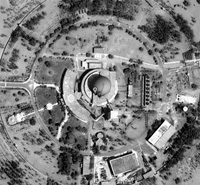
in Pakistan. United States of America is on the top with 104 nuclear rectors; France stands second with 59 plants and Japan runs 54 nuclear power houses. India has set up 18 nuclear power plants since 1969. There are five under-construction nuclear power plants in India which are scheduled to be in operation in the next ten years. Pakistan has only two nuclear power plants; one in Mianwali (Punjab) and the other in Karachi (Sindh). KANUPP (Karachi Nuclear Power Plant) is a single unit with a total gross capacity of 137 Mega Watts. It has been in commercial operation since 1972. KANUPP is part of Karachi Nuclear Power Complex (KNPC) and is owned and operated by PAEC. The construction of Chashma Nuclear Power Plant Unit-1 (CHASNUPP-1), the second nuclear power plant in Pakistan, was started in 1992 with the help of People's Republic of China. Its commercial operation started in September 2000. The construction of Chashma Nuclear Power Project Unit-2 (CHASNUPP-2) has just started after the ground breaking ceremony held on April 8, 2005. CHASNUPP-1 (Chashma Nuclear Power Plant) is a two-loop PWR plant with gross output of 325 MW and life span of 40 years. According to a Pakistan government official dealing with energy sector, under the state's new energy security plan, the PAEC has been assigned the task to generate 8,800MW additional nuclear power by 2030. The PAEC has further set up an Applied Systems Analysis Group (ASAG) within its ambit, to do research on energy, electricity and nuclear power planning for Pakistan and analysis of related economic, financial and environmental issues. A Pakistan Atomic Energy Commission (PAEC) official, talking to TNS says, the commission is studying the scope and it will be up to the political will, how speedily it wants to implement this vision of fully utilising nuclear power to generate electricity. "No doubt, it needs huge investment," the official says, while giving an estimated figure of US$ 3,000 per Kilowatt for the installation of a nuclear power plant. However, the running cost of the plant will be comparatively very low after one installation, he mentions. Water and Power Development Authority (Wapda) experts also believe that the coal and nuclear sources are the future of power in Pakistan and the state should pay attention to these sources very seriously. Pakistan's nuclear share in country's overall electricity generation is only 1.91 percent, according to the IAEA figures of 2008. Pakistan's total power production is 91,294GW and nuclear power share is 1,739GW. India stands second from bottom-to-top with two percent share in the nuclear power generation. While France has 76.18 percent nuclear share in its total power generation capacity; Lithuania's nuclear power reactors share 72.89 percent of its total electricity production; Slovakia has 56.42 percent share and Belgium has 53.76 percent of electricity generation through nuclear rectors. Prof Dr Ch Jamil Anwar, who is heading the School of Physical Sciences (SPS) of the Punjab University, say, unfortunately, there have not been any work on the serious issue of energy crisis in Pakistan. "We have not been thinking of alternates like nuclear power for the past several years but keeping in view the changing weathers of the world, I believe, that only coal and nuclear will be the main source of power generation in future," he says. "Almost 40 percent of electricity of the world is being produced by coal and 16 percent through nuclear technology and then comes hydel source. The rest of the sources like wind and solar etc. are not that dependable." Scientists also believe that nuclear power can be cheaper than hydel electricity. Once it is installed it will have only running cost and will rarely need any big maintenance. In the history of nuclear power generation, the Chernobyl disaster is the only one major nuclear reactor accident that occurred in 1986 at the Chernobyl Nuclear Power Plant in Ukraine (then part of the Soviet Union), says M Akhtar Shahid, visiting faculty member and former professor of nuclear physics in Government College University Lahore (GCUL). "Nobody in Pakistan has paid much attention to this important source of energy," he says. Shahid urges Pakistan government to seek cooperation from Japan and Germany to get this technology. "France also sells this technology," he mentions. He says nuclear plants are durable. In Pakistan, the first nuclear power reactor was set up in the 1960s and it is still functioning." he maintains. Waheedul Zaman, junior researcher of the SPS, says that Pakistan is the country having one of the best uranium in the world. "We should speedily convert it to nuclear power." Email: vaqargillani@gmail.com
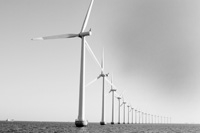
Case study of a model windmill farm recently set up near Chakwal By Jawwad Rizvi The Alternate Energy Development Board (AEDB), after
identifying the wind power generation potential in the costal area of
Sindh, has found about 165 kilometre-long wind energy corridor in Punjab
which may generate 1000MW of energy. It starts from the famous tourist
resort of Kallar Kahar and ends in the valley of Soon Sakesar. Following the finding of the AEDB, a Chinese company SUNEC Wind Power Generation (Pvt) Ltd has successfully established a model wind power generating farm by installing four windmills in Pochal Khurd, some 20 kilometres away from Kallar Kahar. It is situated at the 2863 feet high mountain range, which is the second highest in Punjab after Murree. The cost of energy generated through windmills is cheaper than thermal energy, and it is environment-friendly. But the cost of generating one mega watt of wind energy is relatively costlier than hydel power. On the brighter side, dam construction takes too long as compared to wind energy generating farms that can be installed quickly. A 50 megawatt power generating wind farm could easily be installed within 6 to 8 months time -- if the government facilitates the interested parties. The one time cost to establish a production unit to produce one mega watt wind power is almost $1.6 million as compared to the hydel cost of almost one million US dollar. This energy will cost not more than Rs3 per unit to consumers who are currently paying up to Rs12 per unit. The maintenance cost of wind power is dirt-cheap too. In Pakistan, we have currently been using almost 65 percent thermal power, 33.5 percent hydel power and almost 1.5 percent atomic power. On the other hand, the country has potential to produce some 100,000 megawatt of wind power. The AEDB identified 72 wind corridors in the country out of which the Board certified four sites -- Gharo, Keti Bandar, Khutileum and Jhimpir in coastal belt of Sindh. A Turkish company in Jhimpir is already producing 50 megawatt of cheap power. If the potential of 100,000 megawatt wind power is utilised, there would be no energy shortage in Pakistan for at least the next 35 years. The government departments concerned have been discouraging the parties interested to invest in wind power projects. Generally, the lying down of transmission line, issuance and approval of Letter of Indent (LOI), environmental study, electrical study and other procedural documents are approved with undue delay. The cost increases: consultants charge up to $100,000 for electrical study and Rs2 million for environmental study. Additionally, AEDB charges $20,000 legal fee from the interested parties to make power purchase agreement. SUNTEC Wind Power Generation Pakistan Director Najib Ahmed Sharif said the company was facing problems in installing and running the project, and they were unable to transfer the power generated from the farm to the PEPCO system due to loadshedding. "One turbine was damaged due to loadshedding and the company again imported it from China," he said. "Similarly, undue delay in the approval of projects by the different departments has also been hurting investors who want to make investment in Pakistan," Sharif added. According to a survey, the salt range has potential of wind power generation that needs government attention.
Energy experts believe biomass like rice husk, cotton stalks and other crop residues can be used to generate enough electricity By Shahzada Irfan Ahmed The use of biofuel as an alternative source of energy
has increased in many developed countries over the years, while the less
developed are trying to follow the example. The most common practice is
extraction of ethanol from products like corn, sugarcane etc and mixing it
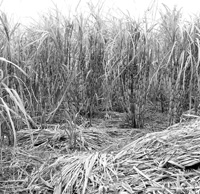
with gasoline in different proportions. The popularity of this phenomenon can be gauged from the fact that in 2009 alone, the US produced 10.5 billion gallons of ethanol from corn. This amount is equivalent to seven billion gallons of gasoline in terms of efficiency. Pakistan is a country with a lot of potential to generate biofuel, but so far the policy-makers have not made a major breakthrough in this direction. Energy experts believe that biomass like rice husk, cotton stalks and other crop residues can be used to generate enough electricity in Pakistan. But so far, they think, only scattered initiatives have been taken by the government and some NGOs on an experimental basis in some parts of the country. Dr Shaheen Rafi Khan, a research fellow at the Sustainable Development Policy Institute (SDPI), tells TNS the government and Pakistan State Oil (PSO) have started Jatropha plantation near Karachi for this purpose. He says this non-edible plant is a source of alternative fuel or bio-diesel. Khan says, however, there is a serious debate about risks to food security due to use of main crops as a source of energy. He says the exorbitant rise in the global prices of food products, a couple of years back, was for this very reason. About the prospects of energy production from sugarcane, he says though the potential is great, the policy is not suitable for farmers. They do not stand a chance to benefit much even if the government gives incentives to sugar mills to produce ethanol. Khan says the policy would likely encourage farmers to start cultivating sugarcane at the cost of cash crops like wheat. He says production of ethanol from corn could be a viable option provided the strong petroleum lobby does not resist it. Pakistan Sugar Mills Association (PSMA) Punjab Zone Chairman, Javed Kayani tells TNS the association has given presentations to the government on how the sugar industry can help generate around 2000MW electricity for the country -- "Pakistan imports 1.6 million tonnes of petroleum products every year. A lot of which is used in producing electricity". He says the government had approved blending of 10 percent ethanol with gasoline, but so far the issue of tariff could not be resolved; "The product thus formed is called E-10". He says the government has approved tariff of 8 cent per unit whereas the demand of the industry is 11 cent -- "If the government can pay 25 cents per unit to Rental Power Projects (RPPs) and 20 cents to the plants producing electricity from furnace, it should have no problem with approving the demanded rate". The PSMA Punjab Chairman suggests the government must gradually increase the approved ethanol blending ratio to 25 percent. By using E-25 the government will be able to save foreign exchange spent on import of 400,000 tonnes of petroleum products. He says the country's sugar industry has the capacity to produce that much ethanol easily. The idea to introduce E-25 is not far-fetched as many countries are blending ethanol in larger ratios. For example, he says, the fuel used in South Dakota, US, has 85 percent ethanol content in it. The prospects of producing energy from animal excreta are also there. The Alternative Energy Development Board (AEDB), Pakistan has also launched Landhi Cattle Colony Biogas Project which has the capacity of generating up to 50MW of electricity from dung cakes.
"The foremost challenge is India" -- Asif Ezdi Former member of the Pakistan Foreign service The News on Sunday: What in your view are the cornerstones of Pakistan's foreign policy? Is it only security-driven or do economics and development also play a part in policy formulations? Asif Ezdi: The two foremost goals of Pakistan's foreign
policy are to safeguard and strengthen national security and to promote
the country's economic interests. These goals are not very different from
those of other countries of the world. How a country seeks to achieve them
is The foremost external challenge that we have been facing since Independence is the threat from India. This has been a constant despite the radical changes on the geopolitical landscape over this period, such as the end of the Cold War, the collapse of the Soviet Union and globalisation. There have been three wars with India, one of which resulted in Pakistan's dismemberment. Besides, there were also several near-war situations in 1986-87, 1999 and 2002. Neutralising and managing this threat will remain a cornerstone of our foreign policy. But national security requires not only a credible deterrent capacity but also economic strength and resilience. We need a stable, peaceful and secure regional and international environment in which the country can achieve economic and social development. TNS: Who is taking decisions on foreign policy? Is the foreign office working for the political government or the military establishment? AE: Policy decisions on all matters are the responsibility of the political government and of the competent ministries. But because of the history of successive periods of army rule in Pakistan, the military came to have a lot of say in foreign policy. This is not compatible with a democratic system. TNS: Do you see a discord between the political government and the military establishment on Pakistan's policy vis-à-vis India and United States? AE: I would put it differently. There are two problems. First, Zardari has assumed decision-making power over matters that under the constitution lie with the prime minister who is the head of government. Second, Zardari decides on these matters, including policy towards India and US, not through the established institutions that exist for this purpose but in consultation with a small circle of close personal friends. This means that the views of the foreign ministry and the defence establishment on vital foreign and security policy issues are often not sought or taken into account. The result is the kind of muddle we saw following the terrorist attacks in Bombay and over the Kerry-Lugar Act. This is not good governance. The mess over the handling of the Kerry-Lugar Act was caused by the fact that the foreign ministry and the defence establishment were deliberately bypassed by Zardari, while the prime minister abdicated his responsibility and left matters to Zardari. There was also plenty of incompetence in evidence. We have an embassy in Washington and a very well-paid lobbyist there. They seem to have been either in the dark about the discussions on the Act in Washington or they failed to inform Islamabad. So we had the spectacle of the government first acclaiming the Act, then declaring it to be unsatisfactory and then once again saying that it is an excellent piece of legislation, all in quick succession, although not a comma in the law was changed. The whole episode reflects poorly on the government. TNS: There is a view that the nascent political setup must not meddle in foreign policy issues and concentrate on strengthening the political institutions instead. Is it possible to separate foreign policy from the situation internally? AE: Foreign policy is as much a responsibility of the political government as domestic policy is. The government cannot surrender this task to an unelected institution. But sound decision-making requires that the government should give due consideration to the views and inputs of all concerned institutions. The present government has often not done so. TNS: How do you view Pakistan's relations with US and India? AE: Pakistan's relations with US have gone through ups and downs, depending on what role Pakistan can play in Washington's pursuit of its global and regional policy goals. At present, these relations are not bad at all. This is because of US involvement in Afghanistan. TheUS needs Pakistan's cooperation to win this war, which is a matter of the highest priority for Washington. That is why it has been willing to provide economic assistance. Obama has also offered a long-term strategic partnership of great potential to Pakistan. As long as this war is going on, Pakistan has a certain importance for the US. We must use this temporary leverage to gain some long-term advantage. The government should be pressing Washington for a deal on civilian nuclear cooperation of the kind Bush gave to India. As regards our relations with India, I am not very optimistic. India is not willing to give the Kashmiri people their right to self-determination. Moreover, India now aspires to playing the role of a global power. For this purpose, it seeks first to dominate its neighbours. Unless India changes this attitude, I do not see much chance of a normal good-neighbourly relationship between Pakistan and India. That is an unfortunate fact of life but it is not tragic. Pakistan has the strength and resilience to hold its ground. We are also a country with great economic potential if the country's human resources are properly harnessed. TNS: Do you think Pakistan's foreign policy is US and India-centric? Is it sufficiently focused on China and the Muslim world? AE: The US is a superpower with a global presence and reach. It has recently been taking a heightened interest in South Asia. Today, it is also engaged in a difficult war in our immediate neighbourhood. Our ties with Washington are therefore very important for us. India is a large neighbour with regional and global ambitions. Managing our relations with Delhi to moderate its hostility is a matter of high priority. That does not make our policy US-centric or India-centric. It is also not correct to say that we have not focused sufficiently on China and the Muslim world. Our relationship with China has been a keystone of our foreign policy. It is a very important factor for the stability of South Asia and will remain so. During his visit to China last year, the US president also indirectly acknowledged China's stabilising role in our region. Pakistan's relations with the Muslim world, which are founded in our common faith, have been close. There is considerable potential for the expansion of our economic ties that needs to be tapped, especially investment by the Gulf States.
-- TNS interview
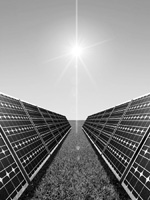
The potential for utilising solar energy in Pakistan has not been exploited so far By Aziz Omar The current major sources of energy or electricity
generation in the world are fossil fuels, hydel power and nuclear. Except
for the third, both the other sources are in fact tapping into the energy
from the Sun that has been stored in them either over millennia or in a
matter of a few days. Though the energy output of the Sun is virtually
limitless for the planet's needs, the sources being largely exploited in
order to consume it are limited either by their quantities or resource
management. Secondly a major chunk of the "solar energy" is
compromised in the process as it has to go through several natural and
man-made stages before reaching the end consumer. Hence in this context, the case of harnessing the Sun's energy directly becomes a very prudent option, especially in the case of a conventionally energy-deficient country such as Pakistan. The potential for utilising solar energy in Pakistan has been estimated to be at an average of 5 kilowatt hours from 1 square metre area on a daily basis, with up to 7KWH in areas of Sindh and Balochistan. This means that if one could, with 100 percent efficiency, capture the solar energy in an area roughly the size of a small blackboard for an entire day, one could run a 1 tonne AC unit for about 3-4 hours. However, according to Navid Hassan Bukhari, Director of Solar projects at the Alternate Energy Development Board (AEDB) the actual efficiency of trapping solar energy is only 30-40 percent. Hence in peak sunlit conditions, say a one square metre panel of photovoltaic cells will be able to power a load totalling only 250-300 watts. For the past couple of years, AEDB has been involved in undertaking projects of providing Solar Home-based Systems (SHS) to hundreds of households in villages primarily scattered across Sindh. Around 3000 villages, each with about 66 houses, have been provided these SHS capable of powering loads ranging from 40-120 watts, meaning that around a few fluorescent lamps, a 12 volt DC fan and a small television set can be operated. The cost of a typical 40W SHS comes to around Rs60,000 with the amount being recovered from the household over the life of the product, i.e. 25 years. The provision or repair and maintenance services are also arranged for at the village level by training local technicians. The total cost providing such SHS up till now has come to around Rs195 million. However, Bukhari claims that this amount was not at their disposal but was mainly paid off to private companies whose solar power units were installed in the villages. Further, he claims that even though large-scale generation of electricity by establishing photovoltaic or thermal solar plants is more feasible, these were not included in the scope of the rural electrification project by the government. The only scenario that has recently emerged is that of the State Bank's financing facility for companies for setting up renewable energy power plants of up to 10 megawatt generating capacity. "Though AEDB has been designated as regulatory authority in this context, several companies have approached and presented their credentials but none have actually seriously followed through yet in availing this facility," expressed Bhukari. He further added that the cost of generating 1 megawatt of electricity via solar means comes to around $1.5 million. However, this financing facility introduced in December last year, has a limited window of opportunity as it is only valid until June 2012. The nascent Diamer-Bhasha being planned by Wapda on River Indus at the border of NWFP and the Northern Areas is being purported to cost about $12.6 billion. The 4,500MW generating capacity is expected to be achievable by constructing a reservoir lake covering 200 square kilometres. Even with current prices of imported solar panels (as local production is virtually non-existent) a solar powered electricity producing plant with a similar output as that of the Diamer-Bhasha dam would cost about half as much and would only cover 15 square kilometers. Apart from the obvious cost savings, this translates into saving tens of thousands of acres of pristine forests from being gobbled up by the rising waters of the reservoir lake, not to mention the prevention of the displacement of 28,000 people and the destruction of 50,000-year-old rock carvings. Solar energy powered plants can be set up in many areas of Balochistan and Sindh where there is abundant sunlight and yet minimal foliage and human settlements that could be threatened. With such a vast potential of exploiting solar energy directly for producing clean electricity exists in Pakistan, no efforts are being undertaken in a concrete and timely manner. If large-scale local production of photovoltaic solar panels can commence and be expedited, it will significantly alleviate our energy woes. If the country's rulers wish to remain in the dark then it is only up to the people to part the clouds and let in the light.
"Academia, industry and power sector need more coordination" -- Engineer Tahir Basharat Cheema, Director General Pakistan Electric Power Company By Waqar Gillani The News on Sunday: What is PEPCO's take on the persistent bad spell of power generation in Pakistan? Tahir Basharat Cheema: The power sector and energy issue have not been given importance by successive governments which have been depending on private and hydel power generation sources. Wapda was not allowed in the past to have public sector power plants. The thermal power stations of Wapda have not been
closed. But they are old models – the oldest one is from 1954 and the
most recent one is from 1992. Half of them need replacement. Governments,
instead of focusing on the public sector, decided to depend on private
sector. Now, they have realized their mistake and new plans are underway
which include replacement of public sector plants with advanced technology
and equipment. Guddu power plant is one example. The plan for new power plants in public sector is also in the offing. We are working on it. TNS: Why did the government fail to meet the promised end to loadshedding by December 31, 2009? TBC: In 2009, there was a target for bringing in 2,250MW through rental power plants (RPPs), 1675MW through new Independent Power Plants (IPPs) and more than 500MW through Wapda's own thermal units' improvements. Wapda improved its capacity, while most of the IPPs failed to come because of security concern etc. As for RPPs, they became controversial. Resultantly, the government failed to meet the promised deadline. There is no water in the rivers and this is causing loadshedding in winter. Wapda's hydel power capacity is 6,444MW power. However, we are able to generate only 825MW in these winter days because of water shortage which means a straight reduction of more than 5,500MW. Overall demand in winter is up to 13,000MW against the total generation of up to 9,000MW resulting in 4,000MW deficit causing power outages. TNS: Is there any chance of survival with alternate sources of power? TBC: Frankly, there is no survival with alternative sources of power. We need base-load plants. Base-load plants are machines running round the clock in full capacity. The other type is of peaking-plants to meet the peak hour demands. In late 1990s, the IPPs were never brought as base-load plants but peaking-plants. There are international trends of Time of Use (ToU) tariff that means different rates of power in peak time for peaking-plants and different rates for base-load plants. In Pakistan, our peak load times are morning (school and office time), and two to three hours at noon, and four to five hours at night. In this situation, only hydel energy is sustaining us. Even the current base-load plants cannot support the current peak demand. That is why we are also urging the IPPs to shift their peaking plants to base-load plants to meet the demand. How can we go for alternatives when we cannot even meet the base-load demand? The first requirement is to shift the plants from oil to gas and coal but it is also difficult, specially, to go for coal. The alternative sources are mainly wind, solar, bio-mass, and nuclear and coal energy sources. TNS: Why can't alternative sources be base-load operations? TBC: Though Pakistan has good wind corridors and it can be a good source of power, wind is not permanent. The operation can be successful when wind is on peak. Solar energy is also not a permanent solution. Biomass has very low potential. But yes, nuclear energy is base load operation. And Pakistan Atomic Energy Commission (PAEC) is working on it. New projects are underway. Our survival lies in developing the coal and nuclear energy sources. TNS: What is the role of Private Power and Infrastructure Board, AEDB and other research centres like universities in developing the alternative sources of power in Pakistan? TBC: PPIB does not work for alternatives. It is supposed to enhance the thermal power capacity through private sector. It runs one-window-operation and hands over the project to the PEPCO. AEDB's working, except in 2009, has been lackluster. Some work has been done in 2009 and now the government has given the board a target of generating up to 5,000MW power through alternate sources in the next five years. Besides this, AEDB was also supposed to work with the private sector as a facilitator. And nothing was being done at the public sector level. On the universities' part, allow me to say as a professional that our universities are very weak in research and development. Academia, industry and power sector need more coordination. TNS: How can the electricity generated through alternate sources be distributed? Will this be through national distribution system of WAPDA/PEPCO? And what are some of the issues of distribution? TBC: Though the distribution of the power is possible only through national grid but this needs new policy framing and legislations. Such legislations have been made in Germany and other European countries. Moreover, new rules are also required for such small scale distributions like "import-expert" mechanism. This small scale level produced energy will be quite expensive because of its pricing mechanism after the distribution cost. Ultimately the government will have to give subsidy against such higher prices of low scale projects. Moreover, all these private producers of small scale electricity want profit from their business. It means selling that electricity on higher price than the PEPCO rates. Can consumers afford it?
"This organisation should have been set up 25 years ago" Arif Alauddin, Chief Executive Officer, Alternative Energy Development Board By Shaiq Hussain The News on Sunday: Despite the acute energy shortage, Pakistan has not exploited the vast potential of environment-friendly alternative energy resources. What is your take? Arif Alauddin: Actually there are many steps
between the potential and its realisation. When you go to the private
sector for investment, [you find that] unfortunately, the enemies of
Pakistan have created a very negative perception about this country: They
propagate that it's a high risk area; the government has no money to
return; you have to face institutions like NAB; Pakistani people have no
engineering skills etc. AEDB is trying its best to do away with these
false perceptions. But the process of rectification should have started
much earlier. Then the bank interest rates in Pakistan are higher than any other country. Foreigners are reluctant to come to this country because of security risks and the negative propaganda in this regard. TNS: What role do you foresee for AEDB in the enhancement of power generating capacity of the country? AA: a single person or an institution will not resolve the grave energy crisis this country is confronting. Energy crisis is not only of electricity but also of gas and oil. Even if we single out electricity, only 60 percent of people in this country have this facility and around 30 thousand villages are devoid of power. If you have to electrify them, you need to opt for renewable energy, as [the national] grid cannot be expanded till there. Hence, we can contribute to end this crisis but can't solve this problem alone. TNS: What does the alternative or renewable energy constitute? AA: Alternative energy is an umbrella term that refers to any source of usable energy that intends to replace fuel sources without the undesired consequences of the replaced fuels. Renewable energy is energy generated from natural resources such as sunlight, wind, rain, tides and geothermal heat, which are renewable. Renewable energy is the alternative of the fossil fuels, I mean oil, coal and natural gas. TNS: AEDB was established years ago with ambitious targets but your critics say that not a single watt has been added to the national grid despite the goal of developing 100MW and 700MW of wind power by 2005 and 2007 respectively? AA: Our organisation has been assigned the task to facilitate and encourage the people for exploitation of the renewable energy resources into this country. We are here to facilitate and encourage the private sector for this purpose. There might have been some shortcomings in the past but we also have to see whether the expectations from AEDB are realistic. This organisation should have been set up 25 years ago if the nation was to benefit from it today. Despite so much delay, I would say that only after a few years from now, AEDB will help Pakistan achieve complete autonomy in the energy sector. Unrealistic targets set in the past could not have been achieved and someone might have done that to save his job. You are asking me how many more years will it take to reach that destination but look, in this country, there are government institutions like the Met office which is unable to tell us how much wind Pakistan has despite its creation 60 years ago. It has no such data at all. Another important thing is the lack of awareness about renewable energy among the policy-makers. Generally, they believe that wind is expensive; what to talk of solar energy. But you see what happened to the rental power projects; renewable energy is only half its cost. It means we need to not only educate the people but also the decision-makers. Another hurdle is lobbying by different sectors. There may be some people lobbying for nuclear sector saying that it's the cure of all our energy deficiency-related problems; some would talk about gas and oil drilling in this regard. To some extent such lobbying is natural and I don't mean that they are working out of nefarious designs but still it brings in hard competition. TNS: What are the constraints that your organisation is facing? It is reported time and again that Pakistan having a long coastline has the potential to churn out over 50,000 megawatts of electricity from wind, but at present it hardly produces 100 megawatts. AA: We don't have insurmountable constraints and what we only need from the people of this country, its government, the media and the policy-makers is to understand the difference between short-, medium- and long term goals. We want immediate results; we simply ask AEDB that how many months it would take to bring electricity to all the villages and towns of this country? Even if we have the much required wind data, the land, the finances, we still need two years to reap the first megawatt from any project. The people need to understand this and their expectations must be realistic; otherwise someone would simply come up with a lie that it will take only a few months to electrify the whole country to save his job or office. The truth is that you need to be patient.
|
|