



|
|
|
|
 |
 |
  
|
adventure Bearly
there
This
madness must be averted
adventure It’s 5,895 meters high,
it’s majestic, it’s Africa’s highest mountain — it’s Kilimanjaro. I
felt a mix of joy and exhaustion on the Uhuru peak, the highest point on
Kilimanjaro on September 26, 2011 — we were on the top, breathless after
the long hike but mesmerised by the views all around us; clear blue sky,
glaciers and barren valleys… The wonderful experience of hiking Kilimanjaro
overpowered us. Ours was a small but
diverse group of five tourists: an American from New York, an English couple
from Birmingham, a Brazilian studying in the UK, and me, a Pakistani living
in London. To hike up to the 5,895 meters (19,341 feet), we had to brave the
high altitude, suffer freezing nights, and endure scorching days. Of the
different routes to the summit, we followed a variant of the Rongai route. The hike had its contrasts
— one day we were filled with dust and next day soaked in rain water. Kili challenges most
people, particularly the urbanites who think the hike is too easy or those,
who, like me, have a ‘less-than-great’ sleeping bag in the freezing
nights at 4000 meters high. Yet, Kili is kind. Unlike
most other peaks of similar height, Kili allows hikers to reach its summit
without any technical climbing or life-threatening risks. So, what’s the secret to
successfully hike Kili? Apparently, “pollaepollae” to put it in Swahili,
meaning “slowly slowly”, our porters told us. Kili was not going anywhere
and we were in no rush either. By hiking at a slow pace, we stayed calm, did
not exhaust ourselves — and acclimatised better. After spending four days
hiking up to a place called the School Hut, we started the ascent to summit
past midnight. It was so cold that the water froze inside my hydration pouch
and blood seemed to freeze in my limbs. The altitude, the darkness, the steep
slopes, and the long hike all got together to make our life difficult. Soon
we were dragging our feet in a dazed state. Every step made us breathless.
Every metre was a struggle. Our guide calmly told us there was nothing to
worry because, “This is normal on Kili”. I noticed that most of the
hikers looked like zombies though some looked zombier than the others! Those
who looked the zombiest had to give up and in a few cases were rushed down on
stretchers. If being a professional
means being good at what you do, the Kili porters were indeed professionals.
They were polite — and surprisingly some were females too. Some of them
spoke English. I saw one walking up the mountain carrying a stretcher that,
he said, weighed 50 kg. Now that’s a lot of kilos for one man to carry at
above 3000 meters. Well-trained and
experienced, the Kili porters knew all the right things to do at the right
time. When we were exhausted, they cheered us up with a song; when the water
froze in our hydration pouches, they pulled water bottles from their packs;
when we were thinking of having a picture, they readily took one for us; and
when we seemed set to reach the summit, they pulled out Pringles and Red Bull
to celebrate. What more can you ask for? I turned vegetarian during
the hike. It was good for faith and stomach. But I was the only vegetarian in
the group and it made cooking a bit difficult for our cook. One of our
porters who suspected I craved for halal meat introduced me to the cook —
who had a distinct Muslim name. He told me, with a generous use of
‘inshallah’ and ‘mashallah’, that he buys meat from Muslim butchers
in Arusha town, therefore, it is ‘halal’ by default. Satisfied, henceforth, I
ate everything that was on offer. Most of the meals were tasty but there were
some unusual dishes as well, such as banana and beef stew, not a combination
I had come across ever before. It is a long and tiring
five hours hike from Kibo Hut (4703 meters) to Stella Point (5745 meters)
before you make the final ascent to the summit. But on the way back, you can
come down in just about half an hour. This is how it works. Kili is covered with scree
from Stella Point to Kibo Hut. As soon as we walked down the steepest part, a
porter grabbed each Most other hikes, including
some of those that are longer, such as the one to the Everest base camp, tend
to cost less than the Kili hike. This is surprising because Tanzania is even
poorer than Pakistan, labour and food is cheap and the mountain is free. Our
guide explained to me that a significant chunk goes to a foreign company that
sells the package to westerners and the national park which levies a
seemingly exorbitant fee. For the porters, despite the hard work, the money
they make on Kili remains much better than what other professions offer. I
asked our guide if Tanzanians could earn more by dropping the prices. He
laughed it off, and told me the national park jacked up its prices because it
gets more hikers than there is space in the camps. He added that even with
the record high prices, hikers just keep on coming. So, it’s
‘pollaepollae’ for the Kili tourist and ‘hakunamatata’ for the Kili
tourism! As we were finishing the
hike and getting back into the bus to Arusha, the lasting feeling I had was
that a hiker trades in money for happiness at Kili — and that’s not such
a bad bargain.
Bearly
there Bear trade is common in
Chilas (Diamir District). Usually, gypsies from the plains buy the cubs
through Pathan middlemen and train them for ‘reech tamasha’, a sort of
bear dance. Some cubs are also used for bear-baiting, where a hapless bear is
tied with a rope and three or four blood thirsty hounds are let loose on it.
The fight mostly ends up with severe injuries to the bear. This sport, if we
may call it one, is common among Punjabi landlords who enjoy betting. The Himalayan black bear is
found in Neelum Valley of Azad Jammu Kashmir, lower parts of Kaghan Valley in
Hazara district, deodar forests of Dir and lower Chitral, Diamir (Chilas)
Indus Kohistan. It is considered bad tempered, extremely excitable,
shortsighted and usually dashes off if it sees or hears a human. If cornered,
it attacks without provocation, impelled not by bravery but by fright and a
desire to get away. Rising on its hind quarters, it will maul the victim’s
face and eyes. Otherwise, black bears are known for their cowardice. The only known case of bear
attack that occurred in Pakistan was in Thurli Valley of Chilas in 1994. The
victim, Furqan, lost both his eyes when he almost stepped on a sleeping bear. In 1866, G.W. Leitner,
while rambling in the wild territories of Chilas, noted a curious incident
told to him by Mullah Lal Mohammad. He was escorted to Chilas as a prisoner
when, at dusk, they saw a company of bears tearing up the grass and making
bundles of it which they hugged. “Other bears wrapped their heads in grass,
and some stood on their hind-paws, holding a stick in their forepaws and
dancing to the sound of the howls of the others. They then arranged
themselves in rows at each end of which was a young bear and were supposed to
be ‘celebrating a marriage’.” Kenneth Anderson in his
book ‘Snakes and other jungle creatures’ describes the feeding habits of
black bears as: “It behaves like a clown while digging for roots or
burrowing into the nest of white ants. It emits sounds that resemble anything
from bug-pipe being inflated to the droning of the airplane, from buzzing of
angry wasp to the huffing of a black smith bellows. He will twist and control
his body into all shapes provided he can get at those tasty roots…” The two descriptions have
great similarities. What G.W. Leitner had recorded was in fact not a marriage
ceremony as was commonly believed in Chilas and Gilgit at that time. It was
simple dinner time for a family of black bears, as they forage usually at
dusk or soon afterwards. The rest was imaginative speculation by a frustrated
prisoner called Mullah Lal Mohammad. Himalayan black bears mate
in October before they hibernate. Cubs are born in February, usually one or
two in a litter. They stay with the mother for three years and are known to
live up to 30 years. It is in the months from February to August that a
she-bear often becomes vulnerable to hunters’ greed. She is killed and her
babies sold for a few thousand rupees. During August 2010, massive
floods in Indus washed away bridges along the Karakoram Highway, bringing
life in Chilas to a standstill. Rain and flash floods played havoc in the
valley. But the situation provided me an opportunity to interact with more
people than is usually possible. I was appalled to find the scale of bear
trade in this district. According to Raj Hans, a
contractor with the education department, a full grown bear was trapped
inside a cave in June that year. He said, “It was kept without food and
water for three days while the middlemen were busy in settling deals. The
wildlife department in Gilgit meanwhile got the news and had the poor
creature released. Similarly, a few years ago a bear was trapped inside a
cave and was shot dead. Its pelt was taken away by a colonel in the army. Fat
was removed and sold in the market. The buyer was a hakeem who paid them
well.” My guide Hameedullah told
me that a baby bear was sold for Rs.21,000 in 2005. It was caught in Thore
valley after the she-bear was shot dead as it refused to part with the cubs
and sheltered them behind her. Likewise, Badar Jameel, a Gujjar from Thurli
valley, said a bear cub was caught from a mulberry tree in May 2007 and sold
for Rs.20,000. And in Tangir, a cub was sold for an undisclosed amount in
June this year. According to the 1993
Survey of WWF, 1607 captive bears were in possession of nomadic gypsies —
and about 115 cubs are sold annually. Bears don’t attack
humans. Raj Hans, son of Abdul Quddus, said last year in the Gaisbala valley,
“an eight-year-old boy spotted a bear on a mulberry tree near their
village.” He ran to inform the villagers, but meanwhile the bear slipped
away. The boy remembered that he had often seen a bear moving up a particular
hill which had a number of caves. He climbed to the cave and shouted that it
was there. The bear rushed out, brushed passed the child and disappeared in
the thick undergrowth. “Sahib, it did not touch the child deliberately. Had
there been a man, it would have surely attacked it,” he told me and I
agreed with him. This bear probably had
parental instincts which prevented it from causing any harm to the small boy.
And it is precisely this instinct which is lacking in humans who sell
orphaned bear cubs for a few thousand rupees! While travelling to the
Tangir valley to assess the damage caused by the 2010 floods, Sibtain Ahmad,
deputy commissioner of Chilas, said the growing population that is
encroaching on bear habitats is the primary reason for bear killings. He
believed mostly this animal falls prey to the guns when they raid maize crops
in September or are caught up on mulberry trees in May. Besides, bear trade,
he said, ‘Itch-me’ (in Shina language ‘itch’ means bear and ‘me’
fat) is another reason why bears are hunted and killed. Bear fat is used in
traditional medicines to cure asthma and other ills. Ahmad recalled that
‘itch-me’ was freely available in apothecary shops in Gilgit when he was
a teenager. The next day, I was in the
Chilas town looking for bear fat. We visited the Saeed Pansari shop where the
product was available for Rs.2000 per tola. Then my guide Hameedullah took me
to the Ajmal Pansari Store where Hakim Shafauddin said that it was
out-of-stock. Instead he offered to sell me a bear cub for Rs.50,000. My friends — Feryal Gohar
and Salman Rashid — called to chip in the money to rescue the orphaned cub
from the traders. Hakim Shafauddin took us on
a wild goose chase to the end of Khenar valley. A group of Sawatis told us
that a cub was kept in a mountain hut, two days walk from that place. The
mother-bear was killed while the second cub escaped and could be heard crying
for the mother. I suspected that they took me (wearing jeans) to be someone
from wildlife department and shied away. It was raining and we had a narrow
escape on the way back as a hill torrent hit the valley. Re-crossing the
Thalpan suspension bridge over Indus in complete darkness was a nightmare.
The mighty Indus was roaring in fury. The same night, this bridge was washed
away and flash flood in Kehnar valley caused 11 deaths with great loss of
property. Cries were heard. Nature had struck back. The
writer is an animal rights activist and can be reached at dr.raheal@gmail.com
This
madness must be averted The mosque of Wazir Khan
(built during the reign of Shah Jehan) inside Delhi Gate in old Lahore is
without doubt the most priceless piece of Mughal art and architecture in the
city. Anyone who has studied its decorative tile work critically places it in
terms of sheer aesthetic beauty miles above the more famous and celebrated
Blue Mosque of Istanbul. Indeed, it will not be
incorrect to say that together with the contemporaneous Shah Jehan Mosque of
Thatta, it is a superlative of Mughal art. Masood Khan of Aga Khan Cultural
Services Pakistan (AKCSP) says, the tile work seen in both mosques reached
its state of perfection in Shah Jehan’s period, was used to great advantage
and then faded out of the artists’ vocabulary. The mosque of Wazir Khan
has long been under threat from encroachment, particularly along the south
wall. As well as that at least two minarets are leaning outward. Recently the
floor of the courtyard was beginning to sink. Masood Khan, in charge of the
AKCSP walled city restoration project, who carried out a detailed study of
the mosque, says that the threat was mainly because of extremely poor
drainage under and around the structure. This is largely because of haphazard
and unplanned building all around the mosque. In April 2011, the
Department of Archaeology and the Auqaf Department ganged up to add to the
destruction of this unique piece of national heritage. After due paperwork,
Rs33 million was made available as destruction funds. At that time it was
planned that the mosque will be ‘renovated’ with modern cement. Thanks to
intervention from AKCSP, the madness was averted. With no expertise in
conservation (Ketas temple in the Salt Range is a premium example of official
hack jobs), the so-called experts of both departments are hard at work to
demolish Wazir Khan’s mosque. The work proceeds even as you read these
lines. Teams of daily wage earning
labourers armed with chisel and hammer are pounding away at various parts of
the mosque. Six inch-thick coats of 370 year-old lime mortar has been hack
off the parapet walls, roofs and the paving of the courtyard uprooted. Not
one of the luminaries of both departments recognises that the pounding of the
hammers is causing structural damage to the building. No one takes any notice
of the damage already inflicted upon the priceless tile work. Just witnessing
the work in progress gives the impression that the mosque is being
demolished. Over the past couple of
decades we have seen that the Department of Archaeology both at the federal
and the provincial level is singularly incapable of understanding the word
‘conservation’. We have dozens of monuments that fell prey to their
ignorance and ineptitude. The exquisitely beautiful baradari of Raja Todar
Mal near Chunian was destroyed by treasure hunters in the early years of the
last decade. The inn at Sarai Chhimba (25 km south of Thokar Niaz Beg on N-5)
has been converted into a village and people are destroying that Akbari
monument as they please. But the Department of Archaeology sleeps because
there is no money to be made by saving such monuments. As someone enriched
himself plastering Ketas with slabs of marble, there is more money to be made
by destroying Wazir Khan. Postscript. Nearly 20 years
ago, this remarkable piece of heritage was placed on the tentative World
Heritage List. But because the Department of Archaeology is so incompetent
that they cannot even fill out the requisite paperwork, Wazir Khan’s Mosque
remains unlisted. Shame on us. |
|
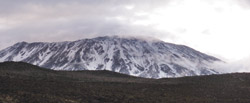

 of us by one arm and started running downhill as if we were skiing. The slope
was littered with rocks and a fall was bound to hurt. In the beginning we
were fearful of what was happening but the porters knew what they were doing
and soon our fear gave way to fun. Despite being tired, we went with the flow
and were glad to get back to our camp well in time.
of us by one arm and started running downhill as if we were skiing. The slope
was littered with rocks and a fall was bound to hurt. In the beginning we
were fearful of what was happening but the porters knew what they were doing
and soon our fear gave way to fun. Despite being tired, we went with the flow
and were glad to get back to our camp well in time.

