


|
|
|
|
|
 |
 |
   |
analysis interview Culture
and developments tourism Solid
import issue Caution on
corruption By Aimal Khan Since the launch of Operation Rah-e-Rast, nearly two months ago, the internally displaced persons (IDP) from these areas are still unsure about its future and the consequences that await them. Although the government has announced July 13 as the date for their return, the unease is far from over. It seems the government is, once again, trying to divert public's attention from the issue to another non-issue -- the proposal of new provinces.
Getting down to business A no-holds barred debate on the Seraiki province issue is crucial at the present time because it will also clarify just how meaningful a change has taken place in the state's posture towards jihadi groups By Aasim Sajjad Akhtar Virtually out of nowhere the 'Seraiki province' debate
has emerged to threaten the 'war on terror' as the country's preeminent
news item. It would be tempting to claim that the issue has erupted onto
TV screens and front pages because of the diligent efforts of Seraiki
political and cultural activists who have over the years called attention
to the needs and aspirations of what is one of the truly indigenous
ethno-linguistic groups of the Indus Valley. But the relatively shallow
level of debate that is taking place at present is an indicator that the
seriousness of those who have struggled for recognition of Seraiki rights
is not matched by many who are posing as the biggest guardians of the
Seraiki nation (or, for that matter, those who are arguing for the 'unity'
of the Pakistan nation). Some have argued that the Seraiki province issue has been hyped by the media – at the establishment's prodding – to distract from the insidious attempts being made to rehabilitate jihadi organizations in the Seraiki belt. It is a well-known fact that outside of the Pakhtun areas it is in districts such as Bahawalpur and DG Khan that the establishment has created safe havens for militants; indeed the majority of recruits to the Kashmir jihad come from the Seraiki belt. With the international spotlight on the Pakhtun areas, it is said that the Seraiki belt is fast becoming a new stomping ground for 'good' jihadis. Only in months and years to come will we be able to establish whether or not such reorganization is taking place and, whether it is happening at the behest of the infamous agencies. I believe it is essential to rescue the question of a Seraiki province (and the broader debates over the structure of the state and ethno-linguistic rights) from media conspiracies and the like. In short, the debate that is taking place in the public sphere at the present time needs desperately to be deepened. As it turns out such an intellectual (and political) exercise illuminates the substantial correlation between (the denial of) ethno-linguistic rights and (the flourishing of) political Islam. There are myriad reasons why there should be a Seraiki
province in Pakistan, political, economic and cultural. I would like to
focus on what I believe to be the crux of the matter, which has to do with
the identity of the Pakistani state. In general terms the Pakistani state
has been subject to a crisis of identity since its very inception, a fact
summed up by Ghaffar Khan's proclamation on the stroke of independence: 'I
have been a Pakhtun for 5000 years, a Muslim for 1000 years and subject to
the rule of the Sikhs and the British over the past 200 years. What does
Pakistan mean to me?' The Bengalis left in 1971, the Baloch have been crying bloody murder ever since (or depending on how one traces the genealogy of the Baloch nationalist movement, since 1948). And now many Pakhtuns believe that they are becoming the victims of ethnic genocide. Meanwhile the official identity that the state of Pakistan – and by the state I mean the permanent security apparatus and dominant social classes that have been allied to it since the time of the British – has flourished in selected pockets of society, including the urban elite, the rich hydraulic plains of central Punjab, and the specially created communities of socially excluded youth who have been the cannon fodder of the jihadi machine. Islam and Urdu as official ideology have meant
different things to these vastly different constituencies. The elite has
been keen to get on with its business of looting and pillaging, the rich
peasantry of central Punjab coopted into a unique carryover of the
colonial project, and kids trained to be jihadis content to leave this
world in the knowledge that the gates of heaven will open up for them. The
state is now finding that these highly fragmented constituencies In short a meaningful debate over the proposed Seraiki province is a debate over the meaning of Pakistan itself. Those who have gotten us to where we are today continue to insist that the Baloch, Pakhtuns, Sindhis, let alone Seraikis, should simply forget their distinctive cultural heritage and their attendant economic and political entitlements. Instead, everyone should commit their heart and soul to 'Pakistaniat', an obsolete jumble of a concept that is encompassed by that hair-raising slogan of 'greater national interest'. It is a measure of how cultural lifeless this construct is that its primary symbols are the atom bomb, Kashmir and India-fixation. The case for a Seraiki province cannot be diverted by
invoking the colonial project of a Bahawalpur state or by calling
attention to geographical, financial and administrative complexities.
These are matters that can be dealt with if the requisite political will
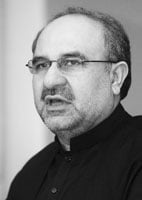
exists. I am not convinced that individuals such as Muhammad Ali Durrani
possess the political will to take on the establishment and its cherished
official state ideology. A no-holds barred debate on the Seraiki province issue is crucial at the present time because, among other things, it will also clarify just how meaningful a change has taken place in the state's posture towards jihadi groups. I have emphasized in the past that the struggle against millenarian radicalism in this society must be waged on the political front, and indiscriminate use of force serves only to reinforce the epic narratives of jihad. Even if the state is not rehabilitating jihadis in the Seraiki belt, there is no doubt that Seraiki youth have been amongst the most recruited to jihad over the past couple of decades. Offering them an alternative politics (and culture) that is expansive, based on mutual respect of other ethno-national groups in the country, and which promises them a share in the growth and development of state and society, is the best way to undermine the potency of jihadi ideology. One fears, however, that the state remains committed to the same destructive ideology that it always has been, a strategy sure to take us closer and closer to the abyss. A Seraiki province, no matter what the ideologues of the state say, will take us a step closer to genuine reconciliation and a Pakistan that actually works for everyone.
Activist to the core I am very hopeful about peace because there is no other way By Zaman Khan In 2002, Dr Sandeep Pandey was awarded the Ramon
Magsaysay Award for emerging leaders. At 37, he was also the youngest
Indian to have received the award. He did not accept the award money.
Critical of the US government, he had participated in a demonstration
against the US outside the US embassy. The attack on Iraq had not taken
place by then; there was a demonstration of peace activists outside the US
embassy, Manila and he participated in it. He recalls, "I was
challenged through a local newspaper that if I am against US government's
policies, I should return the fifty thousand dollars to US embassy before
I go back to India. I accepted that challenge and returned that money
because it belonged to the Ford Foundation." A renowned social activist from India, Pandey received his PhD in Mechanical Engineering at the University of California, Berkeley. He founded Asha Parivar, a people's movement, that focuses on strengthening democracy at the grassroots. His work at Asha Parivar is focused on the Right to Information and other forms of citizen participation in removing corruption and improving the efficiency of governance. He leads National Alliance of People's Movements (NAPM), the largest network of grass root people's movements in India. He has served as an adviser to the Indian government's Central Advisory Board for Education (CABE). Pandey who led an Indo-Pakistan peace march from New Delhi to Multan in 2005 is married to a social activist Arundati Guru. He was inspired by Gandhi. Some of his close relatives took part in the freedom struggle. Although he travels a lot in India and abroad, he is based in Lucknow. A frequent visitor to Pakistan, this was his seventh visit. He visited Karachi, where he attended a function in memory of great peace activist Nirmala Deshpande. He also visited Hyderabad and met fisher folk and then came to Lahore. He is concerned about the fate of fishermen lodged in jails in both countries. According to him, there were 572 Indian fishermen in Pakistani jails while there were 172 Pakistani fishermen in Indian jails. Excerpts of an interview with him in Lahore as follows:
The News on Sunday: How did a mechanical engineer become a social activist? Sandeep Pandey: I read Mahatma Gandhi's autobiography when I was a student at Warnasi and was inspired to follow him. Engineering was not my prime interest; I went into it because most of the middle class Indians would go for such courses and careers to have a sense of security and guarantee of getting job. Since I was interested in what Gandhi did and the way he lived and I also wanted to closely work with the poor people, as an engineer I would not have got that opportunity. So as soon as I had that freedom to start working with the common people I did. TNS: Would you like to tell us about 'Asha Parivar'? SP: Asha Privar is a people's movement, different from an NGO or a trade union or a political party. Common people are involved in it and we let the people decide how they would like to proceed: what are the issues they would like to take up; what are the ways they would like to adopt to accesses their rights. We mostly work in the peaceful democratic framework of our constitution and use the legal and constitutional framework to struggle for people's rights and people themselves take the lead. Ours is only a supporting role. We don't decide the agenda. TNS: Would you like to tell us about the National Alliance of People's Movement (NAPM)? SP: It is an alliance of all people's movements, from all over India. We are involved in the struggles of basic rights of the people at 'Punchiat' level, communal harmony movement, the nuclear disarmament movement and peace movement, India Pakistan peace movement, struggle of fisherfolk, struggle against multi-national corporations that are trying to capitalise on the natural resources of our country and trying to capture market in an illegal manner. There are other people who are struggling for big dams. There are people who are struggling against the Special Economic Zones; people in Nadnigram and Sunghour or fought against the attempts of their government to take their land. So all such people's movement have come together under this umbrella. TNS: What brought you to Pakistan? SP: After the nuclear tests carried out by Pakistan and India, we realised it could create a potentially destructive situation in the subcontinent. And then there is the huge defense budget of India which takes away important national resources from the people; it is more than our education/health budgets combined. We were concerned that this arms race would impoverish people. We wanted to intervene and say that this arms race must stop; these dangerous weapons should not be built and the people should be allowed to meet each other because that is their strongest wish. The money we are wasting in the name of defense should be spent on the development of the people. Since it impacted the lives of the common people on both sides, we decided to take up this issue and also to save this continent from destruction. We have an objective of creating visa free and peaceful South Asia. TNS: Would you agree with me that the peace movement between India and Pakistan has not involved people at large. You may like to call it a people's movement, but it is, at best, an elite club? SP: No, you must realise that movements, especially against the establishment, very rarely involve masses. Even if you look at the freedom movement of India, it was only a handful of people who were leading it. Gandhi, of course, tried to involve the masses. TNS: That is what I am trying to point out that the people are not involved in it? SP: But what I want to point out is the role of the catalyst is always played by a handful of people. When opportunity comes, when the atmosphere is conducive, then common people get involved. TNS: Isn't it true that when the both governments want peace process, it is on and when they don't it is off? SP: It is true. TNS: How do you propose to take it out of the shackles of the administration? SP: The unfortunate thing is that they are in the decision making power. I would like to point out when Musharraf met Manmohan Singh in Delhi, they were talking our language; the language of peace activists. So we have a role in setting the agenda. And our leaders would be ultimately forced to take up these issues. If you would remember, Manmohan Singh was talking about the borders of Kashmir, about making borders irrelevant, something that we want. That is our victory. We made our leaders talk the language of peace. It is a different matter that vested interest did not allow the peace process to go ahead. TNS: Tell us your future plans? SP: In November-December we might have a conference in Hyderabad Sindh, the Rajasthan-Sindh Conference in which we plan to bring more than hundred people from India. We want to hold another peace march from Bombay to Multan. TNS: How optimistic are you about the Indo-Pak peace? SP: I am very hopeful because there is no other way. In the age of globalisation when economic cooperation has become important and borders are becoming irrelevant, like in Europe, we are hoping for a similar situation in South Asia and ultimately in the world. TNS: How would you comment on the recent elections in India; the defeat of the Left etc? SP: One good thing is that there is stability. Otherwise there would have been lot of horse-trading, things that we saw at the time of the nuclear deal. When the governments come with comfortable majority they tend to become autocratic, so the check and balances are not there. Like the influence of the Left was there last time. That is unfortunate but we hope that this government would learn some lessons from past. They have seen a lot of resistance against the land acquisition processes in these projects. I hope they would not adopt that kind of policies. And they would work further for the benefit of the common people; they acted upon this 'Rozgar Guarantee Act.' They have waived loans to farmers, they have implemented Right to Information. Now they are going to bring Right to Food Act. So we hope they will bring more pro-poor, common people legislations and would desist from taking anti-people decisions. TNS: There is a general feeling among the farmers and common people here that India has stopped Pakistan's water and ultimately the common man will face its consequences. How do you look at it? SP: The problem is that the natural resources are limited and the kind of development model that we have adopted has consumed a lot of resources. So, ultimately, it is a struggle of resource-sharing and this struggle is going on all over the world between the poor and the rich. In India you see how the government is acquiring land in different projects and the people are fighting this land acquisition processes. Similar is the issue of water; people want to share it and there is dispute. There is dispute between Karnataka and Tamil Nadu within our own country. So this dispute between India and Pakistan on water will have to be resolved politically through dialogue, so that this water can be shared, to fulfill the needs of the people on both sides. There is no other possible way to do it. TNS: Did you feel or experience any harassment here? SP: Not at all. In my seven visits to Pakistan I have never faced any problem except that the Pakistani government gives visas with great difficulty. TNS: After the Mumbai attacks, Pakistan and India are again resuming dialogue. Are you hopeful? SP: Very hopeful because there is no other way. TNS: What is the post-Mumbai situation in India? SP: The government initially had taken a very tough stand against the Pakistani government because it believed that the attack was launched from Pakistan, and even the initial response from the Pakistani side was very good. Pakistan was willing to send its ISI Chief. Later when Pakistan went into a state of denial. It even said that Kasab was not a Pakistani or he was arrested two years ago in Nepal. Such things annoyed the Indian government and the people also because it was all clear the attack was launched from Pakistan. So it appeared that Pakistani government was not able to accept the responsibility. Later, Hafiz Saeed's release has also not gone down very well with the Indian media and the government. There is in a feeling that the Pakistani government is not serious in taking action against terrorists. But on the other hand India must realise that the Pakistani government is not as autonomous as the Indian government. The military and the intelligence agencies dominate the government here. Unless the military and the ISI also agree to take action against the terrorists, which initially they were not doing. Now they have started action against the Taliban. Until this happens we will not see much progress in the peace process. Ithink the Indian government should adopt an attitude that should help the Pakistani government. It should help to facilitate the processes so that democracy in Pakistan is strengthened. TNS: This could be only possible when there is no tension between India and Pakistan. SP: That is what I am saying that India should help in this process -- by ending its enmity with the Pakistani government. I think it should work closely with the Pakistani government if it is serious about eliminating terrorists. For that then the army in Pakistan has to agree. We have often seen that the army is not very favorable to peace with India. For example the last war was initiated by Musharraf without the knowledge of Nawaz Sharif. Even though, later Musharraf played a very positive role in the peace process with India. If it can be guaranteed that army will not interfere in the civilian process then I think the government of Pakistan will also be in a position to take strong decisions. TNS: How do the intellectuals in India see military operations against religious extremists in Pakistan? SP: Initially there was lot of resentment against Pakistan but now I think people realise that war is not a solution. They are now satisfied that the Pakistani government and military is taking action against the terrorists. The US interference is not good in the long term because they keep on influencing our decisions. Then there will never be peace in this region because US has strategic interests. The US government's interference is accompanied by sale of arms and military exercises. So when you militarise the governments and the societies then peace is very fragile. TNS: In the Pakistani press, a lot of accusations are being made against the Indian government, that it is supplying arms in Balochistan and at certain other places. How do you look at it? SP: It is a cause of concern. The press in Pakistan also reported that the attack on Sri Lankan team was masterminded by India. But otherwise there is not much news about RAWs interference in the affairs here. TNS: Now Pakistan is openly accusing India of involvement in Balochistan. SP: Yes, in Balochistan they are saying that RAW is interfering and also Baitullah Mahsud is receiving help from India and India has opened 20 consulates on the borders with Afghanistan. So this is a definitely a cause of concern, and if Indian government is interfering through RAW, it shows that they would never be serious about the peace process and there can never be genuine peace. I think that the role of intelligence agencies have to be reduced and the two governments should agree that the role of RAW and ISI should be truncated and these agencies must also come under the elected governments' mandate. They should not independently take actions. We have been told that some times the governments want to do some thing but these intelligence agencies do not allow them to do. So the role of army and intelligence here and the role of intelligence in India is obstructionist. And the governments have to see how these bodies are brought under the rule of the elected governments.
A lot more needs to be done to make cultural factors the focal point of all strategies for development By Nadeem Omar Culture and development are intimately linked together
in an increasingly globalised world, where development or its lack, is
seen both as cause and solution of domestic social and cultural problems
of global proportions. The strategic deployment of development and
reconstruction plans in the border regions of Pakistan and Afghanistan, to
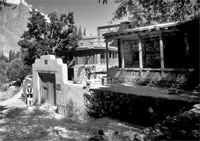
break the fundamentalist's hold on cultural A textbook example of relationship between culture and development is the relative success of Aga Khan Rural Support Program, a non-sectarian development project in Northern Pakistan, especially in Ismaili dominated regions, attributed largely to a mutual fit between development agenda and the cultural and religious organisations. Irrespective of the geo politics of development, common to both cases is the emphasis placed on culture as a means of human growth and empowerment and the recognition that in order to achieve sustainable development, and international peace, economic, financial and social reforms have to be addressed from a cultural perspective. The consensus on the cultural dimensions of development in the international development sector has been slow to emerge, largely out of experience of administering development in the Third World as well as with interactions between development practitioners and academicians in the field of anthropology, economics and sociology. Central to the culture in development approach is the emphasis placed on culture as a means of human growth and empowerment and the recognition that in order to achieve a sustainable development, and international peace, economic, financial and social reforms have to be addressed from a cultural perspective. Culture and development are linked in a number of different ways, and the connections relate both to the ends and the means of development. In the current global policy thinking, culture is not merely a means of promoting material progress but constitutes as the very basis of human development. Understood, as comprising of norms, tradition and values of a society, culture plays a critical role in economic performance and business behavior. Weberian analysis of the role of values in the emergence of capitalism is of considerable interest in the contemporary world, particularly in the light of the recent success of market economies in non-Protestant and even non-Christian societies. While culture is regarded as the means and instrument of development, the notion of development, following Amrata Sen, is based on substantive expansion of freedom. It is not only the growth of GNP, but the enhancement of freedom and well being of people in a broad, holistic sense to include universal, physical, mental and social growth. Appended to this approach is the idea that fostering respect for diversity and cultural pluralism is of crucial importance in the context of global and national culture, as the rapid spread of mass culture and its hegemonic tendencies are threatening the survival of traditional values and the interests of minorities. The need for respect for all cultures is particularly urgent at a time in which the uneasy acceptance of global culture and reactions against the alienating effects of large-scale modern technologies are reflected in the fast spread of religious fundamentalism and social intolerance. Although the connections between cultural values and economic performance have been made in cultural theory as well as development economics, it remains debatable which set of values would work under what conditions. As in case of countries like Japan, China and India with fast economic growth, the relative merits of Confucian, Buddhist and Hindu values in shaping economic behavior are being debated. Unfortunately, we lack informed debates on mainstreaming culture in development programmes and investments in the government and the non-government sector in Pakistan. The development sector in Pakistan is fairly cognizant of the importance of culture in development planning, yet the awareness of linkages remains at a level of project intervention in select areas rather than providing an overarching framework to restructure the development discourses. Organisation like UNESCO, which have from its very inception stressed the connection between culture and development have invested only in limited range of cultural arenas such as cultural tourism in Pakistan where as much more needs to be done to make cultural factors the focal point of all strategies for development.
Bombed out industry Be it Peshawar, Swat or Malakand, the entire NWFP -- once renowned for its rich heritage and habitat, abundant ecosystem and a thriving tourism industry -- is now destroyed beyond recognition with no hope of it returning to its pristine glory
By Adil Zareef Swat's premier Pamir hotel chain initiated by renowned entrepreneur Late Haji Aziz ur Rehman is history, like so many other historic and cherished landmarks. The Pamir hotel chain began in 1981 with its first state-of-the-art, 60-room, five-storey, fully air-conditioned building with a covered area of 40,000 sq ft. The imposing Pamir Hotel in Mingora city was novel as it was the first private business venture that invested in expensive imported fittings: a Hitachi, Japanese, AC plant; a Swiss Shelder built-in lift; bathroom sanitary ware from Toto, Japan. This 4-star hotel was the most prolific in the entire Malakand division. Owing to the booming tourist industry at that time, the management extended the Pamir chain to Maidam and Kalam, catering to the ever-increasing tourists. Swat was a tourist haven up to the year 1994 when,
during Benazir Bhutto's government, the TNSM spearheaded by Sufi Mohammad
brought the tourism industry to a halt. The rise of Taliban led by Mullah
Fazlullah culminated in the total obliteration of not only the flourishing
tourism industry, but also the decimation of the entire infrastructure of
the once idyllic holiday resort. Swat will never be the same as it has been through history, reminding visitors of the destruction of the peaceful Kabul of yore -- now the epicentre of extremism and bombardments, destroying to smithereens whatever was beautiful, green or worthwhile. Such is the quirk of fate -- or, one may say, the fate of the helpless victims of the 'imposed conflict'. Be it Kabul, Peshawar, Swat and Malakand or the entire NWFP, once renowned for its rich heritage and habitat, abundant ecosystem or a thriving tourism industry, is now destroyed beyond recognition with no hope of it returning to its pristine past. Destruction of Pamir Hotel is just a small example of how the thriving tourism industry, besides its infrastructure, economy, livelihood and society as a whole has been wiped out with the ill conceived global politics, destroying the very foundation of the region's sustainable survival. As luck would have it, the rise of Sufi Mohammad's TNSM, beginning in 1994, resulted in the decline of the tourist industry in the entire Malakand division. The tourism industry incurred incalculable losses running into billions. Thus, from being a premier hotel of its time, Pamir ran out of business. Sensing the demise of tourism, the Kalam and Maidam outlets were shut down. Despite the odds, the management's entrepreneurship instincts skillfully turned the Mingora Pamir Hotel into Pamir Campus, beginning 'The Educators' project under the Beacon House School system, spreading branches throughout Malakand. But the rise of Taliban bombed out the Timargara branch in June 2008, the Buner branch was shut down and Thana school is under military occupation. Despite the desperate security situation, Mingora Educators successfully navigated it through the tough economic crises and contributed to the socio economic development of the region and turning into a leading school system. With the rise of Taliban, the education sector too, besides other industries, was hit hard. Swat, once a jewel of the entire Malakand division was relegated to becoming a disaster zone. The final round of military action and curfew was
imposed in the entire Swat district on May 4, 2009..With the sudden surge
in Taliban-government confrontation, the school was shut down as FSc exams
were in progress. The management vacated the premises and moved out to
Peshawar, waiting for the operation to succeed and to restore peace. The
local newspaper Mashriq reported on May 22, 2009, about Pamir Campus
building being hit by phosphorus missiles fired by Cobra gunship
helicopters. Recently, when the government announced ceasefire in Mingora urging the local residents to return home, the horror of the collateral damage dawned on its residents. "As we returned, we discovered whole-scale destruction of the infrastructure as well as the livelihoods of millions of people that will take generations to rebuild," laments an obviously distressed Anwar Iqbal, director of Pamir Campus. "Two storeys have been totally gutted, and the entire building shelled with craters and pockmarked with missiles and mortars. How does the government expect us to rebuild all this on our own? Who will assess and give us compensation worth billions?" Destruction of Pamir Campus offers a snapshot of the devastation of Malakand division -- the denouement of the flawed policies of the successive governments since Swat State was annexed to Pakistan in 1969. "Swat has been used as a cannon fodder for the strategic depth policy of Pakistani state as its orchards, verdant fields and lush forests have been denuded, its ecosystem and future vandalized," rues Khurshid Khan of Environment Protection Society, based in Swat. A once prosperous Society is now a hapless victim of the violent jihad and ruthless military operation destroying tranquility and peace, predating the Glorious Gandhara period. Pity is, nobody shall be held accountable for the whole-scale genocide and devastation of a peaceful society. The vultures of death and destruction have neither been nabbed nor eliminated.
Pakistan lacks an effective import tariff policy. A solid criterion using tariffs as an instrument of protection needs to be evolved By Hussain H. Zaidi Traditionally, import tariffs (also referred to as customs duties) have been the most important barrier to international trade. Although the creation of World Trade Organization (WTO) on January 1, 1995 decreased import tariffs all over the world they are still an effective means of protecting the domestic industry. For developing countries like Pakistan, where direct tax culture has not flourished, import tariffs together with sales tax (indirect taxes) are also the major source of public revenue. Import tariffs may be classified into ad valorem and
specific, most favoured nation (MFN) and Specific tariffs on the other hand are imposed according to the weight or volume of an import consignment. Specific tariffs are generally used, though not confined to, for agricultural products. Such tariffs do not automatically respond to change in international prices and therefore have to be adjusted from time to time. The distinction between ad valorem and specific tariffs is important, because the former makes for a more predictable import regime than the latter, which has to be varied as per change in international prices. Countries sometimes may levy both specific and ad valorem tariffs -- called compound tariffs on imports. MFN or general tariffs are applied to imports from all trading partners without discrimination, whereas preferential tariffs provide more favourable treatment to imports from certain countries, generally with which a country has a free trade agreement (FTA). Bound tariffs are those which a country has submitted in its schedule of commitments in the WTO or a bilateral FTA and normally they cannot be increased. Applied tariffs are the tariffs which a country actually levies on imports and are contained in its customs tariffs schedule. Applied tariffs may be revised; however they cannot exceed bound tariffs. Coming to Pakistan, over the years applied tariffs have been reduced as the country moved from import-substitution to export-led growth strategy. For instance, in 1988-99 average applied tariffs (including both agricultural and industrial products) were 64.8 percent, which were reduced to 51 percent in 1995-96, 17 percent in 2004-05 and 14.5 percent in 2005-06. Average tariffs on industrial and agricultural products were reduced from 66 percent to 10.4 percent and 57.2 percent to 15.6 percent respectively during this period (1988-99 to 2005-06). In 2006-07, the average tariff was raised to 15 percent. At present average applied tariff is 14.1 percent and that for agricultural products is 15.8 percent and for industrial products is 13.8 percent However, bound tariffs continue to be high. Average bound MFN tariff is 59.9 percent, that for agricultural products 95.6 percent and for industrial products 54.6 percent. Importantly, tariff on nearly 99 percent of tariff lines are bound in the WTO, which means they cannot be raised beyond their bound levels. Such high percentage of tariff binding confers a lot of predictability on Pakistan's tariff regime. Unbound items mainly relate to the auto sector, alcoholic beverages, fruits and vegetables and meat products. The import tariff regime is governed by the Customs Act, 1969. Under Section 19 of the Act, the federal government is authorised to grant tariff exemptions or concessions in certain cases in the form of Statutory Regulatory Orders (SROs). The issuance of SROs calls into question the transparency of the tariff regime. However, as noted by the WTO Secretariat in Pakistan's Trade Policy Review 2008, the number of such SROs has come down from 35 in 2001-02 to 14 in 2007-08 and only three or four SROs are used regularly. As regards tariff distribution, in 2008-09, out of total number of 6,793 tariff lines, 414 are duty free, 2,337 (the highest number) carry duty of 5 percent, 2,210 duty of more than 5 percent but less than 25 percent, 1,089 duty of 25 percent, while 698 tariff lines carry duty of more than 25 percent. These tariff lines cover a wide variety of sectors including beverages, metals, textiles, clothing, chemicals, and electrical and non-electrical machinery. The auto sector remains a highly protected sector with tariff peaks up to 100 percent. In most of the cases, duties on capital goods and raw materials are lower than on consumer/final goods to facilitate investment and industrial development. Specific duties are levied on 45 tariff lines relating to agricultural products and there are no compound or composite tariffs. Section 18 (3) of the Customs Act authorises the federal government to impose "regulatory duties" up to 100 percent of the value of imported goods under "certain peculiar and compelling circumstances". Under Section 18A, "special customs duty on imports may also be levied provided like domestically produced goods are subject to equivalent excise duty. The above paragraphs bring out some salient features of Pakistan's import tariff regime. One, there is a big gap between applied and bound tariffs. While average applied tariffs are 14.1 percent, average bound tariffs are 59.9 percent. The gap gives the government the flexibility to decrease or increase applied tariffs to increase revenue (revenue effect) or curtail imports (balance of payment effect). However, this flexibility is at the cost of the predictability of the import tariff regime. Two, on the whole Pakistan maintains low tariffs as only 10% of tariff lines have tariffs exceeding 25 percent. Three, though tariffs have been bound rather high, the fact that binding covers nearly 99 percent of tariff lines, makes for predictability in the import tariff regime. Finally, Pakistan lacks an effective import tariff policy. Generally, tariffs are revised at the time of annual budget with a view to generating revenue or containing trade deficit. However, a solid criterion using tariffs as an instrument of protection has not been evolved. Countries do need to protect one industry or another but protection has to be on the basis of some objective criteria. In case of Pakistan, identical tariff treatment is accorded to both import-substitution and export-oriented industry, low value-added and high value-added industry, low-tech and high-tech industry, and labour-intensive and capital-intensive industry. Only those industries need to be protected which are new and have the potential to grow. Priority needs to be given to those industries which are labour intensive and produce value-added products. Protecting an industry with little growth potential mainly for political considerations means perpetuating a culture of non-competitiveness as well as allocative inefficiency.
Email: hussainhzaidi@gmail.com
Muddy waters of politics Transformative endeavours that can reverse the decay and the rot set in our state structure and centre-province relationship are the need of the hour By Raza Narejo Enormous space in print media and on news channels has been devoted to the water controversy that surfaced after a statement was attributed to President Asif Zardari about diverting waters from Taunsa-Panjnad canal to Sindh. The issue which has dominated the political arena since
the inception of the country but sharpened during the Zia era is very
close to the heart of all and sundry either from Sindh. Dates of water
accords, their effects on respective provinces with figures and facts are
being profusely written about and alluded to in newspapers, TV channels,
among political circles, farming communities, civil society groups and
technocrats. On both sides of the divide -- Sindh and Punjab -- there is a
plethora of arguments and counter arguments to defend their respective
positions. Without determination to resolve the issue, each government
from federal to provincial has used this issue for politicking and self
aggrandisement rather that addressing the woes of masses. Apart from
techno-centric argumentation revolving around this issue, we have to dig
deep as to how politics of water has emerged implying emotions, history,
ethnic dimension, centre-province relations and domineering role of Punjab
in state decision-making processes. How have the rulers manipulated and
manoeuvred the water issue to gain their eroding political legitimacy? To
what extent have the provisions laid down for the management and
distribution of huge water projects (dams) been enforced in letter and
spirit? How has water planning and management been tilted towards Punjab
by neglecting the other provinces? Without understanding the formation of 'water politics' and its multiple dimensions, we can never justly approach the issue of water. Figures, facts and accords are not divested of history and politics. All these things are taking place in a certain socio-political context and the interpretation of figures and facts can never be construed as ultimate truth until and unless the complex nature of politics and history are taken into account. Since the 50s and the 60s when IMF and the World Bank initiated their capitalist forays into decadent economies of the third world in general and Pakistan in particular in connivance with ruling elites, mega development projects were designed in a manner that can benefit Punjab. Punjab was over-represented in each federal entity and that trend is replicated in multinationals, corporations, media and NGOs in the present circumstances. Non representative governments, bureaucracy dominated by Punjab and ideologues of patriotism defending, protecting, entrenching, deepening and promoting the interest of Punjab laid the basis of endless attrition among provinces. Authoritarian, centrist and unitary mode of decision making at federal level in political and bureaucratic arena has not been reformed even when political leaders from Bengal, Sindh and NWFP kept agitating against this structural anomaly. It has always fallen on deaf ears. In this backdrop, our master in Khakis and ideologues accused the people raising such voices as enemy of state. Till now this trend is so entrenched in the minds and hearts of the patrons of patriotism and ideology that such voices are always painted with the stroke of being unpatriotic. After the dismemberment when Mr Bhutto had the opportunity to reform the inherently biased, despotic and hegemonic nature of institutions to create the aura of inclusion, he not only continued with same structural flaws in our socio-political institutions and decision-making processes but also adopted the policy to appease Punjab to enhance his own political stakes in the province. So the single opportunity that emerged from the crises also waned at the altar of the self-centred and hegemonic tendencies of politicians wielding power. Bhutto era that dawned political change in behaviour and attitudes of the people could not make a dent in dispensation of state institutions that was the need of the hour. In a bicameral system, national assembly has an effective and categorical role in decision making where the number of MNAs from the three provinces is less than it is from Punjab. Senate where the principle of proportionate or equivalent representation of all provinces is upheld is stripped of powers to strike some balance. Federal legislative lists empowers the centre to dispense with all financial and developmental issues without giving a semblance of power to the provinces. The concurrent list that delegates some powers to the province has yet to see the daylight. Whatever may have gone wrong with the democratic government, the people have been heard in one way or the other. Further political system and culture could have refined and strengthened through evolutionary process that has been disrupted by our self-serving and self-righteous general in the name of prime national interest. Usurpation of peoples' power by Zia dashed the hopes of people for change in the structural imbalances accumulated in the state institutions over the decades. He recklessly and ruthlessly held the reins of power for 11-odd years. He played havoc with everything that gave hope of a just and transformed federation that would fairly deal with provinces. His myopic, authoritarian and obscurantist approach reflected in each and every aspect of the national life. To obstruct the onslaught of democratic forces against military regime he added new dimensions like sectarianism, ethnicity, theological reinterpretation of religion in state affairs and tempering with constitution. Muddy waters of politics in Pakistan became messier than before to sail through. Apart from disastrous trends in our polity, Zia tried to forcibly impose the Kalabagh Dam that was resisted by three small provinces but Sindh remained at the forefront. It was part of his insidious designs to teach lessons to people of Sindh for taking active part in the Movement for Restoration of Democracy (MRD). He adopted cavalier and highhanded tools to muffle voices of vociferous Sindhis by introducing controversial projects like Kalabagh Dam. The people of Sindh perceived this threat not only from the army general but also from the Punjabi-dominated military institution that was perceptibly the saviour of Punjabi interests. This dealt a severe blow to any possibility of provincial harmony. Since the separatist movement of Bengal army was characterised as Punjabi army and with every passing day, particularly during the Zia era, military has strengthened this concept by unleashing powers against Sindhis and the Baloch. The people of Sindh believe the democratic interregnum of Benazir and Nawaz would not change the attrition set in by authoritarian governments. Whether it is a common observer or a scholar, everyone would agree that the so-called democratic government worked under the tutelage of army and they utterly failed to address the rot gnawing the very basis of federation. They could not inspire the confidence of the small provinces, particularly Sindh, give a level-playing field or provide an atmosphere of fair-play to them. Thus over-centralisation of state, presumably manipulated by one province, has made the people of Sindh apprehensive and skeptical. Skepticism is the political response by Sindh whenever any decision regarding the province takes place at the federal level. Again, the Musharaf regime also used arm twisting and muscle flexing techniques to deal with Sindh and Balochistan. Through a corrupt lot the former army general tried to sell the idea of Kalabagh Dam and began coercive consultations at district level but voices of dissent were raised even in manufactured consultative gatherings. Present government has changed its positions on weekly basis, sometimes rolling back the project of Kalabagh Dam and sometimes retaining this plank to strike a balance in point scoring with the competing party in Punjab. Incoherent and inconsistent approach of this government has let down the people of Sindh. In this gamut of affairs, authoritarian and centrist tendencies have laid the basis of chauvinistic, reductionist and parochial politics where the agenda of people stand nowhere. The formation of this politics over the decades has led to a deep-rooted mistrust that is reflected in the persistent protest against unfair water distribution and water related projects. Any attempt by the federal government to bring about a new arrangement will never inspire confidence in Sindh until and unless the entire state structure, institutional dispensation and modes of decision making are not transformed. Transformative endeavours are the need of the hour that can reverse the decay and rot set in our state structure and centre-province relationship. Leadership of all mainstream political parties must put heads together to chalk out roadmap for transformation that can build the trust of people in state institutions and decision making process otherwise each step will meet the same fate what we have observed in the past and keep observing in our routine affairs. Chaotic diversity of political perspectives does not allow any decision, agenda or scheme to put forward a consensus building process. Antagonistic opinions could be translated in meaningful actions once the state carves out new ways of doing things. Only reviewing and redesigning exercise of water distribution will go into vain. Mistrust and skepticism are so deep seated that it will require reconstitution and overhaul of state institutions. Any effort falling short of this will never serve the cause to ameliorate the situation. All parties should come forward to play their role to detach federation from the gruesome baggage of past and show a strong commitment and dedication towards the transformation of state institutions. Caution on corruption Corruption can be resolved by involving society and bringing about a system to eliminate it through citizen action By Dr Noman Ahmed Bungling of gifts received by a former prime minister
and an ex-president has recently hit headlines. In the second week of
October 1999, the retired general had announced his personal assets in the
papers with a voluntary pledge that they could be verified when he would
leave the office. But limitations of time, space and conditions at the
time of his departure perhaps did not permit our Transparency International – Pakistan Chapter has recently released estimates about the status of corruption in some of the vital public domains. It has been worked out that tax evasion has reached to a whooping figure of Rs218 billion which comprise about a fifth of the total revenue targets. The loan default from premier banks has been largely concentrated within the politically powerful clans that control our national destiny through national and provincial elected houses. Procurement of goods and services is largely done in violation of standard operating procedures. And much of these chronic maladies are not taken into account by the national and international managers of our economy and statecraft. The strategic role in the ongoing war on terror and its subsidiary conflicts has apparently made Pakistani authorities to look the other way from taking action across these fundamental tenets of good governance. But the common citizens have their own barometers of gauging corruption. It will, certainly be an eye-opener for those in the seat of power to lend an ear to concerns that abound in our society. A driver who works for a mid level government officer has a story to tell: "My boss is in government service for twenty years", he opens up. "He has risen through the ranks by using his wit, faculties and astuteness on all counts. He used to have a small rickety government staff car. Now, I am only one of the four drivers that he controls. His present pool of vehicles comprises brand new sedans of choice colours and models," he concluded. This fable is oft-repeated in the secretariats, autonomous bodies and even cash strapped government institutions. Some argue that it began to 'liberalise" during the previous regime. Others think that the present coterie is taking the relay race to new frontiers. The spiralling number of green number plate vehicles is only one indication of the relaxation of allocation and procurement procedures of establishment expenditures. All and sundry observe that these benefits are not confined to officer cadres alone. In many cases, ad-hoc employees, advisors and assistants of sorts also benefit from the laissez faire transport policy adopted and promoted. The babus from the concerned departments reveal that operational costs are another regular avenue of generating unwarranted benefits. The routine log books are seldom checked, and the users are not questioned about the reckless use of vehicles. Brand new vehicles get worn out within matter of months only to be replaced by new ones. According to a report filed by Ansar Abbasi, a minister presented an incredibly high fuel bill for his official car. It was later alleged, that the said fuel was used in more vehicles in violation of rules. Frequent visitors to government offices keep track of these malpractices but are helpless. A passerby lamented, "Ordinary folks spend about a third of their income on commuting in sub-human conditions, while the motorcades and siren processions are constantly rising." The menace of corruption has engulfed even the benign sectors such as education. It is a well known fact that the system of board examinations has collapsed to a great extent. Scandals unearthed by a media channel about clandestine cheating centres in some parts of Karachi were only a sample of a wider trend. A school teacher, who spoke on the condition of anonymity with this scribe, outlined many inter related reasons for the rise in cheating practices. Pupils become easy prey to the influence of student wings of political parties that offer guaranteed success in examination for their sympathizers and recruits. This also branches out and spread to others also, who later drift in favour of the respective gangs. Youth, distracted and directionless, consider the easy way as most suitable. Thus brandishing a gun becomes simpler than to spending sleepless nights to study the subjects. The participation factor cannot be ruled out; the facilitators of academic corruption are present in all the echelons of institutions. As a Jang report informed, the culprits in the secondary school certificate examination of Karachi Board are yet to be prosecuted, thanks to the audacity of the ex-army chairperson of the board. The poor official who helped unveil this nest of corruption has been allegedly shown the door. When orders of higher authorities in curbing corruption can be flouted, one can keep the fingers crossed. Feeling helpless is not the answer to this rising menace. Corruption can be fought in a strategic manner by adopting certain steps. The foremost is the identification of corrupt practices. Our media is doing a meticulous job in this respect. The common people must assist the rightful journalists to identify malpractices. However, caution needs to be applied to differentiate facts from hearsay. Existing institutional framework may be approached to seek redressal of grievances pertinent to corrupt practices. It may be pointed out that the proactive citizen's action has almost always brought useful results. The example of Citizen Police Liaison Committee can be quoted which has become a replicable model. We must try to start with steps at the grassroots level, unconcerned about results but in line with civic duty.
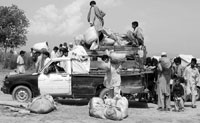
With the attention on facilities in the camps, little thought is being given to the looming danger -- the return and rehabilitation of IDPs
By Aimal Khan Since the launch of Operation Rah-e-Rast, nearly two
months ago, the internally displaced persons (IDP) from these areas are
still unsure about its future and the consequences that await them.
Although the government has announced July 13 as the date for their
return, the unease is far from over. It seems the government is, once
again, trying to divert public's attention from the issue to another
non-issue -- the proposal of new provinces. The operation which was suppose to end soon has now extended to southern districts of NWFP -- Bannu, Hangu and in tribal agencies of Bajaur, Mohmand and South Waziristan. Analysts and retired Army officials are questioning the counter-insurgency strategy. They are also talking about the serious backlash of the prolongation of the operation and its extension to the new areas. The media is now demanding free access to conflict zones for objective reporting. Since the media is the main source of bringing the real picture to the masses, the conditions in which these IDPs are surviving, this objectivity is indispensable. Despite mass appeal for aid and international community's funding, the repatriation and rehabilitation of the IDPs is becoming a big challenge. However, international donors' response to the UN appeals for aid has been very discouraging. Even the US officials have criticised its allies for not doing enough for Pakistani IDPs. The United Nation's initial global appeal for $543 million for the then 1.5 million people displaced by clashes between security forces and the Taliban in Swat and other districts of Malakand division has, so far, received some 36% of the pledged amount. The UN is considering revising the appeal as the number of IDPs has swallowed from 1.5 at time of flash appeal to 2.5 million, expected to increase further. The Pakistani government will require another $2 billion to $2.5 billon for long term rehabilitation of the IDPs. The availability of relief aid is another story. Then there are those who are reluctant to go back the reason being uncertainty about the future of Taliban leadership. Also, the approaching monsoon season is expected to further worsen the situation back home. Some of the families are returning either to evade the harsh weather or looking after their houses and businesses which they left behind. Their means of livelihood suffered due to heavy damages to commercial buildings, disruption of routine business activities and the perished crops which means no vegetable, fruits and even live stock. A lot needs to be done for creating conducive environment for the return of IDPs. Beside putting in place the civil administration and repairing the basic utilities such as water, electricity and telephone, the means of livelihood also need to be restored. The civil administration, it seems, is reluctant to resume its duties and the under-staff police force is restricted to their police stations due to curfew and the ever-looming security threat. There is a need for a comprehensive rehabilitation and resettlement plan for the early return of the IDPs. It cannot be done without proper assessment of the private and public damages before and during operation and devising a return and rehabilitation plan with IDPs' consultation. No data is available to ascertain civilian casualties but individual interviews and horrible stories narrated by the IDPs revealed its intensity and magnitude. "No proper count of civilian casualties has been issued and they appear to be higher than the figures mentioned by the ISPR" reported HRCP recently. Briefing the member states about the humanitarian situation in Pakistan on June 18, the UN Emergency Relief Coordinator (ERC) called for respect of International Humanitarian Law (IHL). He emphasised the need for principled conduct by parties, avoiding the use of heavy weapons near civilians, ensuring civilian protection and allowing freedom of movement. Unfortunately, due to use of excessive force, the security forces are facing problems in winning the confidence of the people and if the counterinsurgency strategy is not corrected and revised it will further enrage the people from the conflict-hit areas and widen the trust deficit.
The writer is a political commentator and associated with Sungi Development Foundation.
Home|Daily Jang|The News|Sales & Advt|Contact Us| |
|
 are fast coming into contradiction with one another. Yet those who have
consistently argued for a decentralized multi-national state in which
diversity is celebrated and political process emphasized continue to be
marginalized, even hunted down on the pretext of being 'anti-state'.
are fast coming into contradiction with one another. Yet those who have
consistently argued for a decentralized multi-national state in which
diversity is celebrated and political process emphasized continue to be
marginalized, even hunted down on the pretext of being 'anti-state'.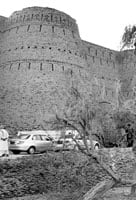

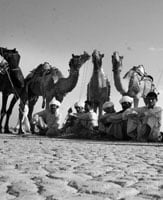
 productions and regional economy, offers one of more dramatic
illustrations of this relationship.
productions and regional economy, offers one of more dramatic
illustrations of this relationship.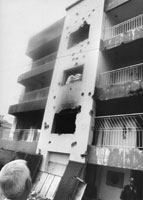
 preferential, applied and bound. Ad valorem tariffs are levied as a
percentage of the value of an import product. For instance, if the value
of an import consignment is Rs10 million, 50 percent ad valorem tariff
will raise the price to Rs15 million. Ad valorem tariffs have an inbuilt
mechanism of reflecting changes in international prices of goods: if world
prices increase post ad valorem tariff price also goes up and vice versa.
For instance, if the value of the import consignment rises to Rs15
million, the 50 percent ad valorem tariff will raise the price to Rs22.5
million.
preferential, applied and bound. Ad valorem tariffs are levied as a
percentage of the value of an import product. For instance, if the value
of an import consignment is Rs10 million, 50 percent ad valorem tariff
will raise the price to Rs15 million. Ad valorem tariffs have an inbuilt
mechanism of reflecting changes in international prices of goods: if world
prices increase post ad valorem tariff price also goes up and vice versa.
For instance, if the value of the import consignment rises to Rs15
million, the 50 percent ad valorem tariff will raise the price to Rs22.5
million.
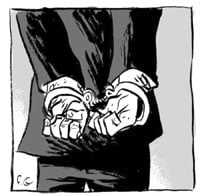 former commando leader to fulfil his promise. It will only be civilized if
these esteemed leaders come up with a gentlemanly reply on these counts.
Otherwise, life with corruption in Pakistan will go on.
former commando leader to fulfil his promise. It will only be civilized if
these esteemed leaders come up with a gentlemanly reply on these counts.
Otherwise, life with corruption in Pakistan will go on.