


|
|
|
|
|
 |
 |
   |
decision MOOD STREET Town talk life Cut cost,
live smart RESPONSES
TO LAST WEEK'S 1. State Bank of Pakistan 2. Income Tax Office 3. AG Office 4. LTR Office 5. Design Block of National College of Arts 6. Punjab Architecture Department
Most of the real estate
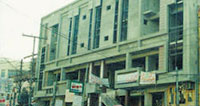
agents and investors in the city are in a state of shock for the last On the other hand, the conservationists, opponents of 'Dubai-style' development, environmentalists and conscious people belonging to different professions have heaved a sigh of relief. Some people living in the immediate neighbourhood of such mammoth structures also talked to this scribe. About the influential builders, they said only the superior courts could put these 'genies' back into the bottle. The said order came during the hearing of a petition by Farooq Hamid, a resident of Gulberg, against the construction of Boulevard Heights, a multi-storey building in Gulberg. Farooq's point was that the building was not following the relevant building bylaws. The petition had been filed through his counsel Syed Mansoor Ali Shah, Advocate Supreme Court (ASC) who contested that the petitioner's house was severely damaged due to the construction of the building in question. The court also ordered formation of a three-member commission to look into the matter in detail and come out with suggestions. The commission has started its work and is being headed by Justice (retd) Riaz Kiyani, and consists of a nominee of the UET vice-chancellor and Kamil Khan Mumtaz, an architect from the private sector. Though the petition was initially against a single construction, certain revelations during the hearing gave it the shape of public interest litigation and the interim order was ordered against all the high-rise buildings, says Mansoor. He tells TNS the very fact that the concerned departments, authorities and government(s) lacked the capacity as well as manpower to check illegal construction called for this general order. About these (government
sector) entities, the Supreme Court order says: "The height of Another ambiguity that surfaced during court proceedings was that district and town governments as well as LDA were not fully aware whether a particular area fell in their jurisdiction or not. Similarly, the town nazims told the court that they did not have any qualified engineers available with them to access the structural stability of high-rise buildings nor they had the authority to appoint any such persons in their areas. A real estate adviser in Garden Town area tells TNS that though the order is in greater public interest, the small investors should be protected. "Those who have booked flats or offices in under-constructed or constructed high-rises don't know that the buildings are illegal," he says on condition of anonymity. People take the inaction of concerned departments against illegal buildings as a tacit approval on their part and start investing in such projects," he adds. He says it's an open secret as to why the town administrations have given free hand to such developers. "An overwhelming majority of Lahore's town nazims are themselves real estate developers and in many cases themselves the prime beneficiaries. Passing of 55 high-rise plans in the already congested Shah Alam Gate area shows how supportive they are of this business," he adds. The Supreme Court order reads that approval has even been given to build multi-storey buildings on five-marla plots. Town administrations have mostly been helpless in situations where municipal laws have been violated with gross impunity. But this time round the local governments do not have the excuse that the district police does not cooperate with them. The court has even asked the Capital City Police Officer (CCPO) Lahore to order the Station House Officers (SHOs) to ensure the implementation of this ban in their respective areas. SP Security Lahore Husain Habib tells TNS that though the order has been communicated to the SHOs, they are waiting for instructions from the commission formed by the Supreme Court. "We can't act on our own, but only according to these instructions given by the commission," he adds. Similar is the response of Mansoor Qadir, District Officer Co-ordination, Lahore. He tells TNS that the commission's report and instructions are being awaited in order to devise an action plan. "Once they are with us, we will take the required steps. If the commission asks for demolition of illegal structures, we will have no qualms in taking that recourse," he adds. Qadir tells TNS that illegal structures cannot be built without the connivance of government employees in the concerned departments. Such people must be dealt with strictly, he adds. The petitioner's counsel Syed Mansoor Ali Shah Advocate tells TNS that there are great hopes that haphazard construction in the city would now come to an end. "The court is hearing the case every Thursday," he adds. Mansoor says it's a pity that developers think it's enough to have a No Objection Certificate (NOC) from neighbours to go ahead with such commercial activity. "The neighbours normally have no objection as they also get an NOC on reciprocal basis and the price of their land multiplies. The problem, however, is for hundreds and thousands of people disturbed by such constructions," he adds. "Environment Impact Assessment (EIA) of such projects should be done according to international standards. Under the law of the country, all projects costing above Rs 5 crore shall not be started without carrying out an EIA but nobody bothers," says Mansoor. According to him the court has however allowed those developers to carry on with their construction who have digged huge pits in the ground. "If they don't complete the lining, water may seep into neighbours' house and cause major damage. But to avail this option, they would have to get approval from the worthy commission," he adds.
Young men can be seen whizzing past traffic on their motorbikes, making way through the maze, often defying the government ban on one wheeling. There is something among young people that makes them test their limits. Like young men, boys are also stuntmen in their own way. That is what they want to become when they grow up... just ask them. They all see themselves as performing great feats which require a lot of physical courage. We are surprised when they utter their desire to become one. But why? Most of the stories for children celebrate courage and bravery as great virtues in men. The story of 'Saint George' who spent his life fighting evil one after the other and restoring good wherever he went, then the 'Dutch boy' who braved the sea waves and kept the hole in the wall covered, saving the city from havoc the sea storm could have wreaked, and 'Peter and the Wolf', the story from Germany, where Peter transgresses his limits set by his guardian and performs a great feat of catching the wolf -- all show that man places great value in courage. If the act is for the larger good of the people, it's worth more celebration. Our children are growing up with these stories. The stories I heard in my childhood were mostly from the subcontinent. They were stories of treachery with good triumphing over evil in the end. The message that most of the stories conveyed was to stay vigilant to save ourselves from the beasts out there. It called for sagacity on our part, I would say. The most popular story among us children was of Hathil, Kandil, Payal and Tun Mun. They were four goat brothers who lived in a hut with their father and mother. Their mother had warned them of the beasts outside. The story goes like this: Whenever a beast knocks on their door, they say to him, "Hathil will hold your hands, Kandil will hold your ears, payal your feet, Tun Mun your tail, Amma will light the fire and father will throw you in it and you will burn to ashes." Hearing this the beast would go back and not dare to attack. The children seemed clever and we loved them. The story of the goat brothers popular with the little children these days is of the 'Billy Goats Gruff' who dare to cross the forbidden bridge under which lives an evil goblin. Though the younger goats trick the goblin, the big brother in the end sums up courage and throws the goblin off the bridge for good, freeing the bridge of its menace, thus opening ways for people living on both sides of the bridge. Another story that we heard as children was of the old woman who meets a lion on her way to her daughter's home. The lion wants to eat her. She tells him he can eat her on her return home. On her way back she gets into a 'Dugduggi' and keeps saying, 'chal dugduggi tamak tum, kahan buriah kahan tum' and thus reaches home safely, hoodwinking the lion -- a story of averting danger with wisdom. The stories from the subcontinent of 'Podna Podni' or 'the water melon' who make a cart and go to the king's palace and stand upto him to get their cattle, are few. The main stories are the likes of 'Toteya man Moteya' from Punjab where there are warnings to save ourselves from danger, deception and to decipher between good and evil. I infer that the stories in the east are about how to protect ourselves from the beasts around us and rarely about standing before them and fighting them. Most of us are like that which seems sensible and acceptable. There is one in a million who has the extraordinary courage to challenge the beasts but once in a while we do witness one. Imran Khan has acted contrary to the wisdom of the east which is to stay clear of dangers. He has stood up against those he calls beasts and is out there to fight them. Time will tell how much he succeeds in his fight but the fact that there is someone who has the courage to announce such a thing, is amazing and new in many respects certainly. This year people from different walks of life have come forward to register their protests. Lawyers have taken to streets, teachers are holding protest demonstrations for their rights. Government's announcement to hire 26,000 teachers aside, teachers who were given moveovers have not been passed on the benefits even after seven years. Such are the issues the government needs to attend to on priority or it will see more protests in future. We can start a thing but how it will end cannot be predicted. Only time will tell. Year 2007 looks like a volatile year for Pakistan, may I say. • An exhibition 'Trade Union' held by art critics, features paintings, drawings, prints and sculptures of artists. The venue is National College of Arts. The gallery remains open from 9am to 5pm. The exhibition will remain open till Saturday, June 9. It exhibits portraits of Abdul Rahman Chughtai, Sadequain, Ali Imam, Moyen Najmi, Jamil Naqsh, Ijaz ul Hassan, Colin David, Gulgee, Salima Hashmi, Wahab Jaffer, Zahoorul Akhlaq, Laila Shahzada, Bashir Mirza, Saeed Akhtar, Kaleem Khan, Akram Dost Baloch, Rahat Naveed Masud and Afshar Malik.
Socialising has not remained as easy as it used to be. "I remember going to my uncle's house at least once a week when we were in school. Our houses were at seven to ten minutes drive," says Rabya an MA student. "But now things have changed so much. You see there is so much traffic that it consumes so much petrol." Saba got married a month
back. According to her, after her marriage, it is so hard even to "Gone are the times when we used to visit our relatives every other day," laments 48 years old Sajida. A mother of four children Sajida lives with one of her two sons. "My children hardly ever go to each others' houses because of their busy schedule and tough lifestyle. When we were young we did not care about going to someone's house or receiving guests at our house because in such matters money was not a hassle." Sajida's daughter, a widow, works in a bank. "Even though I grew up with my siblings there are many differences now. They don't like their children to mingle with mine because of the difference in our status. I think one should always socialise with people of similar social standing even if they are your siblings." She says her brothers hardly ever visit her and she is not comfortable going to their houses. Going out to friends' homes was considered one of the best things about school time and one of the few options for students to socialise. Even that has not remained as simple as it used to be. Hajra is an O' Level student. She prefers to meet her friends at home rather than going out with them. "You can't afford to go out every other day. In the limited pocket money that I get I prefer to invite my friends to over to my place instead of dining out," she says. "But that has ostracised me from my group because the rest of them can go out to cafes every other day." Sidra, Hajra's class fellow, says, "All girls and boys talk to each other is about branded clothes and cars and restaurants. People of our age can socialise with family or with class-fellows. But my classmates usually throw grand get togethers and birthday parties. I am not allowed to go out with my friends more than twice a week because my parents say I will also have to invite them to my house." Saira's eight year old son goes to an expensive school. She says that when all her son's class fellows bring McDonald's to lunch her son feels left out. "If your children want to socialise, like going to birthday parties, they have to take expensive present to save their nose. It is so frustrating because you don't agree with it but you have to do it for your children." Hammad, a law student, agrees that today's economic pressure has made socialising very difficult. He says that when there is only one family member earning and the rest of them dependent on him who has the money or time for socialising. "If I have to go and see my friend who lives say at a twenty minutes drive from my house I will think of all the other things I can do on my way." Ahmed says that the worst part about going to someone's house is that Lahore has expanded so much and houses are so far away you have to think about time and money it takes to go to someone's house. "I like to invite my friends over but my mother gets very angry. I think that every day interaction has only remained in smaller areas where houses are close and people know each other for long. In the upper class urban life socialising only means parties and dining out." Cut cost, live smartIn the wake of increasing electricity failures, power generators that run on gas are becoming popular -- saving 60-70 per cent of electricity cost Interruptions in power supply and load-shedding has led people to develop other ways of power generations which are not only an alternate for electricity but have substituted electricity wherever they are being used. The new power generators
have not only gained popularity at commercial level they are "The harsh weather and unpredictable power outages forced me to buy gas power generator," says Sheikh Munir Ahmed, a businessman and resident of Baghbanpura, Lahore. "Electricity supplied by Wapda is costly while gas power generator meant for domestic use cuts my electricity cost by 50 per cent. Now, I am not worried over loadshedding as I have my own power generation system. It is a matter of great concern that the demand of electricity is increasing day by day as all our industries and home appliances run on it. Still proper steps are not being taken by quarters concerned." "Humid weather in summers is another factor why there should be an alternate arrangement for power generation," says another resident of Johar Town, Mushtaq Ahmed, a cloth merchant. "I bought gas power generator with the capacity of 5KV for Rs 45,000 last year for my shop. I run an air conditioner of 1.5 tonne and 6 to 8 bulbs besides two fans on this generator. This costs me 40 per cent less than what I used to pay to Wapda for using electricity." While it is a source of cheaper electricity the main facility is that it stands by in emergency. "I have sold 40 per cent more gas power generators this year than I sold last year as people prefer to buy gas power generators because a user of gas power generator can save 70 per cent money as compared to when one is using Wapda's electricity," says a dealer of generators Sheikh Tariq Amin while talking to TNS. "I deal in various kinds of generators. Most of them run on diesel but some buyers convert them into CNG with a kit," he maintains. The conversion is done here. "We convert different generators into gas generators." Dr. Riaz Mirza, Head of the Mechanical department of the University of Engineering Lahore, says CNG generator is pollution free and creates less noise than diesel generator. He denies giving further information and says that if he says something his high-ups will criticise him and referred to another official. Muhammad Nawaz, mechanical engineer from UET tells TNS that 95 per cent industry in our country runs on self power generation resources as Wapda's electricity rate is very high. Similarly, the domestic use of gas power generators is increasing. The capacity of generators varies according to its size and brand. The trend of CNG power generation has increased in the last three years so its production is very meagre while the production of diesel generators is high. "A generator that runs on diesel can be converted into gas generator by installing a gas kit on it and this method is better than a generator manufactured only for gas," says Muhammad Nawaz. He says we can save 70 per cent money by using gas power generators at domestic and commercial level. "We buy electricity from Wapda at the rate of Rs 6.80 to Rs 7:15 per kilowatt (commercial rates) while we get gas at Rs 2.75 per cubic feet. In this way we can produce three units of electricity with gas in the cost that comes on Wapda's one unit of electricity," he says. RESPONSES TO LAST WEEK'SQUESTION TOP 10 Top ten ugly buildings in
Lahore
1. State Bank of Pakistan 2. Income Tax Office 3. AG Office 4. LTR Office 5. Design Block of National College of Arts 6. Punjab Architecture Department 7. Punjab Public Library 8. Additions in Lahore Secretariate 9. LDA Complex 10. Custom House To enlist by popular vote the 'top ten' for next week, send in your emails on top ten 'Top ten Chai Khokhas in Lahore'. Please email at shehrtns@gmail.com
|
|
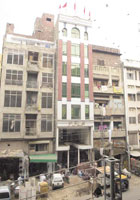 couple of weeks. The Supreme Court order seeking ban on construction of every
single high-rise building in Lahore till further orders has come as a bolt
from the blue. The common fear is that if such constructions are stopped and
illegal structures demolished billions of rupees invested in the real state
would go down the drain.
couple of weeks. The Supreme Court order seeking ban on construction of every
single high-rise building in Lahore till further orders has come as a bolt
from the blue. The common fear is that if such constructions are stopped and
illegal structures demolished billions of rupees invested in the real state
would go down the drain.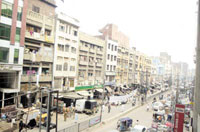 callousness and disregard for human lives and properties shown by them was
evident, inter alia, from the fact that not even a single structure engineer
was available with the LDA who could have checked, supervised or ensured the
structural disability of these structures."
callousness and disregard for human lives and properties shown by them was
evident, inter alia, from the fact that not even a single structure engineer
was available with the LDA who could have checked, supervised or ensured the
structural disability of these structures."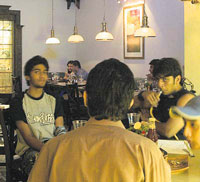 go to her friends' houses now because "they expect you to wear new and
good clothes every time you go to their house. It's like you invite them to
your place and they will invite you back. And, of course, when you go to
someone's house you have to take something for them. It is such a hassle, so
I prefer to stay back and spend time with my husband." She thinks that
now meeting people has become difficult because we always want to impress
each other and while doing that we forget how much we can afford.
go to her friends' houses now because "they expect you to wear new and
good clothes every time you go to their house. It's like you invite them to
your place and they will invite you back. And, of course, when you go to
someone's house you have to take something for them. It is such a hassle, so
I prefer to stay back and spend time with my husband." She thinks that
now meeting people has become difficult because we always want to impress
each other and while doing that we forget how much we can afford.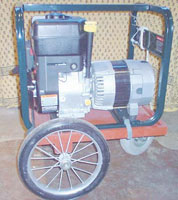 also being used at domestic level. Global warming has turned the weather
harsher, forcing people to arrange for alternate sources of power generation
to meet the electricity demand. Electricity has become lifeline for people as
all our electronic gadgets run on it. Majority of the people in the country
cannot afford such an alternative, still a number of people can.
also being used at domestic level. Global warming has turned the weather
harsher, forcing people to arrange for alternate sources of power generation
to meet the electricity demand. Electricity has become lifeline for people as
all our electronic gadgets run on it. Majority of the people in the country
cannot afford such an alternative, still a number of people can.