budget
In the name of the poor
The agriculture accounts for 25 percent of the GDP but contributes almost nil to the national exchequer
By Adnan Adil
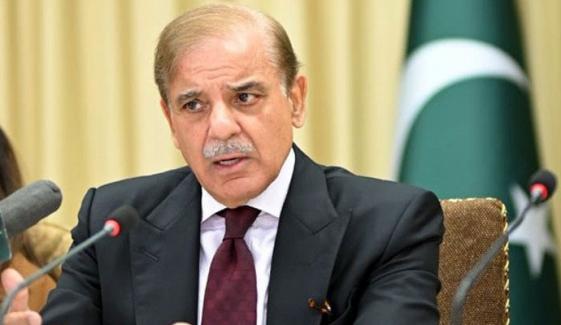
As they say, patriotism is the last refuge of the scoundrel so is the mention of the poor people by our moneyed classes and the vested interests in this country. Those who are rolling into millions and billions are crying against the budget 2010 in the name of the poor. The fact is the budget, despite its shortcomings, contains such proposals which will end up transferring at least Rs200 billion to the poor and low-income sections of the society.

Punjab versus the rest
The appeal of radical ethnic-nationalism is growing on each of Pakistan's peripheries
By Aasim Sajjad Akhtar
Many people argue, myself included, that there is more to Pakistan than 'Punjab versus the rest' and that such representations, while containing elements of truth, are often quite misleading. Unfortunately, the notion that Punjab is Pakistan and that everyone and everywhere else is basically just an appendage remains compelling because of the way public discourse magnifies the Punjabi experience and marginalises everyone else. The unfolding series of events in Hunza, Mekran, and Badin/Thatta in the recent past underlines that -- if I may invoke the oft-employed academic binary of 'core-periphery' -- Punjab is indeed the core and the rest on the periphery of Pakistan's map, politics, economics, and public consciousness.

firstperson
Finding the way out
By Ahmad Rafay Alam
Nobel laureate Elinor Ostrom, the first women to be awarded the Nobel memorial prize for economic sciences, has studied how self-organisation and management at the local level works to keep common resources. Born in Los Angeles in 1933, Ostrom experienced the value of sustainability in an era of economic depression. She recently spoke about the need for polycentrocity in governance. Ahmad Rafay Alam, who was a guest of the Swedish Institute at the 5th Annual Rework the World Conference held in Leksand, Sweden, had the chance to have a brief sit-down and asked her about her ideas of decentralisation, the environment, sharing common resources, and her optimism for change.

A matter of perception
Transparency International's recent report on Pakistan has called into question the transparency credentials of TI itself
By Ather Naqvi
The National Corruption Perception Survey 2009, released by Transparency International (TI) on June 1, has raised some questions about the credibility of the survey itself. The foremost objection raised about the report is that it has based its findings on the perception of the people it surveyed rather than on verifiable data and facts and figures. The method of the collection of data has also been called into question.

expenditure
After the budget
Defence and debt-servicing expenditure together account for about 66 percent of current expenditure
By Hussain H. Zaidi
The budget is also a political document, which is used to reward, appease or penalise certain constituencies. Both the economic and political aspects of the budget are determined by the constraints within which every government works. The same is true of the budget for the fiscal year 2010-11 (FY11).

Local innovations
Yunus offers many anecdotes to illustrate how he has converted skeptics to his ideology
Building Social Business
By Muhammad Yunus
Price Rs: 1,795
Publisher: Public Affairs
By Jazib Zahir
Muhammad Yunus has become synonymous with social innovation as the pioneer of microfinance in Bangladesh. While his efforts have already been recognised by a Nobel Peace Prize, few realise that his achievements extend beyond small loans designed to make the poor self-sufficient.

From state to non-state actors
The government needs to reconsider the role the state has played in the persecution of minorities
By Saira Yamin
The gruesome massacre of close to a hundred Ahmadi worshippers in Lahore on May 28, 2010 was a tragic moment in Pakistan's history. And it must not be forgotten. It is after all, a reflection of the culture of widespread impunity that pervades the country, holding everyone hostage. The Taliban's possible involvement in the attack, however, does not absolve the government of its responsibility to provide security to all its citizens, regardless of their religious background. The government may find it expedient to point fingers at the increasingly unpopular Taliban, but it needs to reconsider the role the state has played in the persecution of minorities in the country, and especially in ostracising the Ahmadi community.

aman ki asha
Joint narratives, common ground
June 10, 2010
Dear Beena,
I can live with "Indian Administered Kashmir" and "Pakistan Administered Kashmir". I'll have to think about "militant" for "terrorist", partly because then that might let off the hook homegrown Indians responsible for terrorism. And I will likely have to disagree about India's interference in 1971 being nothing but a hostile act. I mean, it was hostile, necessarily so. But I believe it had to happen. I think peoples have aspirations, naturally so, and (West) Pakistan was actively and brutally suppressing the East's aspirations in 1971. There was a moral obligation to step in to stop the slaughter, just as there was a moral obligation to stop the slaughter in Rwanda in 1994 -- it's another matter that nobody stepped up to fulfill that particular obligation.

trade
Six decades after separation
A lowering of barriers to formal trade will not only result in formalisation of current informal trade but also encourage hitherto unengaged players
By Pradeep S. Mehta and
Dr. Abid Qaiyum Suleri
If a person completely unaware of sub-continental history was to read about current Indo-Pak relations, he would probably never guess that barely sixty years back the combination of the two was spoken of as one country. Cultural, linguistic and religious ties which have bound together their peoples for centuries have been rendered impotent in the period that has followed independence from British rule. Sanity has given way to the blinding effect of communal differences and turf battles which have spawned continuous cross-border tensions between the nuclear-armed neighbours and intermittent terrorist activities.

Together we can!
Following is the text of a speech made by Vineet Jain, Managing Director, Times of India at the Aman Ki Asha business summit
Ladies and gentlemen, a warm welcome to the Aman Ki Asha business summit. Especially to our guests from across the border who have braved uncertainties over visas to the very last moment to be here.
On Jan first this year, civil societies of India and Pakistan represented by the leading media groups of two countries. The Jang group and the Times of India joined hands to start the unique movement. Many call it audacious, even fool hardy, but today five months on the movement has acquired shape and its goals don't look that impossible to achieve.


budget

In the name of the poor

The agriculture accounts for 25 percent of the GDP but contributes almost nil to the national exchequer

By Adnan Adil

As they say, patriotism is the last refuge of the scoundrel so is the mention of the poor people by our moneyed classes and the vested interests in this country. Those who are rolling into millions and billions are crying against the budget 2010 in the name of the poor. The fact is the budget, despite its shortcomings, contains such proposals which will end up transferring at least Rs200 billion to the poor and low-income sections of the society.

Before going into details of these welfare aspects of the budget, let us have a look at the criticism and hullabaloo raised by certain political parties and the vested interests as represented by their spokesmen in the media. One major controversy revolves around the Value Added Tax (VAT) though the tax may only have an indirect impact on the average man, and that too on with a high purchasing power. A detailed debate could be seen in the TNS Special Report. The urban trading classes, the electronic media heavily dependent on big businesses and the political parties, the PML-N and the MQM, having close nexus with the businesses are opposing the VAT using the poor's name. The issue is that the Value Added Tax will broaden the tax net and lead towards documentation of the economy, thus slashing the tax evasion by the business class that has visibly thrived at the cost of the low-income people.

Similarly, a capital gain tax on the stock market investors is not going to have any direct bearing on the 80 percent low-income population. The fat cats of the capital market are making a hue and cry only because they will get caught into the tax net. In fact, the major concern of the more than two-thirds of the country's population is employment and the prices of essential food items including sugar, oil, ghee, vegetables, and pulses.

What the government did

The take-home salaries of the government employees have been increased by nearly 25 percent -- technically described as 50 percent hike in the basic salaries; the pensioners have received a raise of 15-20 percent; the limit of the exempted income from income tax has been enhanced up to Rs25,000 per month, an additional 10 percent of the total federal revenues has been transferred to the four provinces, thus substantially increasing the share of the federating units in the national kitty; Rs50 billion has been allocated for the poor and the needy under the Benazir Income Support Programme; Rs5 billion has been spared to be given to the unemployed youth in the backward regions of the country. A 10 percent reduction has been made in the excise duty on imported edible oil. These are positive features of the Budget 2010 because these steps will directly benefit the poor and the lower middle classes. These budgetary measures will transfer at least Rs200 billion to the poor and the low-income classes. No rich person is a direct beneficiary of these actions.

What the federal

government could not do

There are at least two major areas where the government failed to take any initiative: one is the privatisation of the public enterprises running into mammoth deficits. These include the Pakistan Steel, the Railways, and the PIA among others. The government would spend at least Rs280 billion from the tax-payers hard-earned money to meet the deficit of these white elephants. It may not be practical to get rid of these in one go, but the government could move in that direction in a gradual manner and thus reducing its burden. The money saved in this manner could be used in providing more tax relief to the low-income people. For example, taxes on the imported edible oil or sugar may further be reduced.

The expenses on the federal civil administration are another area where the government lacked courage. When more than 50 subjects of the Concurrent Lists have been completely transferred to the provinces, it is but logical that the expenses on the administration related to these subjects should also be curtailed at the Centre. It makes little sense to keep doling out money on the machinery that has lost its raison d'etre. However, a case can be made out that a transition phase is under way and the federal government cannot cut down its apparatus forthwith. Still, the gradual reduction in the federal state bureaucracy should have been reflected in the budget. The billions of rupees thus saved could be put into some urgent and crucial development projects or check inflation that hits the poor more than anyone else.

What does the

provincial government need to do?

Two major areas of investment and hiding their riches for the moneyed people include the urban real estate and the agriculture income. The prices of the real state in major cities have risen 500 to over 1000 percent in the last decade; the housing societies cropped up like mushrooms but they are exempt from the capital gain tax.

Keeping in view, the low tax-GDP ratio and high theft of direct taxes, the government needs to tax the real estate heavily because a large chunk of the stolen income goes into this sector. Moreover, big landlords' income, which runs into millions per year through orchards or cash crops, including tobacco, sugarcane and cotton, need to be taxed heavily by the provincial governments because under the Constitution the federal government cannot impose levies on the income from the land. The agriculture accounts for 25 percent of the GDP but contributes almost nil to the national exchequer.

If the main political parties, the PPP and PML-N, are sincere in providing relief to the low-income people, they should jointly move to amend the constitution to bring the big landlords under the income tax net. If they can't do this, the provincial governments, or at least the Punjab government run by the PML-N, should impose heavy taxes on the landed gentry's income.


Punjab versus the rest

The appeal of radical ethnic-nationalism is growing on each of Pakistan's peripheries

By Aasim Sajjad Akhtar

Many people argue, myself included, that there is more to Pakistan than 'Punjab versus the rest' and that such representations, while containing elements of truth, are often quite misleading. Unfortunately, the notion that Punjab is Pakistan and that everyone and everywhere else is basically just an appendage remains compelling because of the way public discourse magnifies the Punjabi experience and marginalises everyone else. The unfolding series of events in Hunza, Mekran, and Badin/Thatta in the recent past underlines that -- if I may invoke the oft-employed academic binary of 'core-periphery' -- Punjab is indeed the core and the rest on the periphery of Pakistan's map, politics, economics, and public consciousness.

First, it is important to consider the geography of the country. The three regions that I have listed above are in the northern, south-western and south-eastern ends of the country respectively; they are bonafide geographic peripheries. Punjab, in contrast, is front and centre. People from these peripheries often move towards the centre in the hope of securing a better life, not necessarily because they want to but because Punjab is the financial, political, and cultural heartland of the Pakistani state.

Culturally, a significant segment of influential Punjabis are at home with Urdu and North Indian 'official' culture. In contrast, even the educated elite on the peripheries espouse a much closer relationship to their mother tongues and vernacular culture. More generally, most non-Punjabis are more familiar with Punjabi than Punjabis are familiar with Burushuski, Balochi, or Sindhi.

In recent times, tremendous destruction has taken place in Hunza, Mekran and Badin/Thatta. In Mekran, the devastation caused by Cyclone Phet followed on the heels of a full-blooded military operation in Dasht. Media coverage of the military operation was totally non-existent, while the natural calamities in all three regions found only limited space and airtime on news pages and cable TV channels.

The scale of the problems faced by the people of Hunza, Mekran, and Badin/Thatta is monumental. Thousands of homes have been washed away, large numbers of people remain missing, livelihoods have been destroyed and eco-systems permanently altered. There is no question that the state is responsible for taking on the challenge of rehabilitation, but the lack of responsibility of those who inform public opinion is mind-boggling. As such it is hardly surprising that those hailing from these peripheries but currently residing in the core are seething with anger and becoming ever more convinced that Pakistan is little more than 'Punjab versus the rest'.

Thankfully, many non-Punjabis living in the 'belly of the beast' come into contact with enough decent Punjabis and understand that the problem is primarily in how information is disseminated (or withheld) within Punjab. It is no coincidence that dominant nations and regions throughout history have remained dominant by creating and sustaining a discourse to match; this is the only way to keep even the relatively weak segments of the dominant society on board. An apt case-in-point is the United States, the world's dominant power, a country whose citizens are extremely ignorant about the rest of the world and thereby remain faithful to the notion that America's international conduct is really contributing to the greater common good.

Nevertheless, there is only so much leeway that those on the periphery are willing to give. Or perhaps it would be more accurate to say that those who do not believe in the simply binary of 'Punjab versus the rest' will not be able to hold out indefinitely in the face of the more jingoistic and compelling rhetoric of the ultra-nationalists. It is an indisputable fact that the appeal of radical ethnic-nationalism is growing on each of Pakistan's peripheries. This appeal will intensify more and more with each Attabad, Dasht operation and Cyclone Phet that is ignored by the Punjabi heartland.

To a large extent the rapid spread of information technologies and the dominance of a few corporate media houses have exacerbated the problem manifold. The media chooses what to make into news and what to relegate into oblivion. It is virtually impossible to offer a corrective to the mainstream because the means to disseminate alternative information simply do not exist.

This is why it is so important for Punjabis that understand the gravity of the situation to personally (and eventually collectively) take up issues in the core that are often left out on the periphery. Even if the media does not pay attention, there is the school, the workplace, even the home. The Italian thinker Antonio Gramsci noted that it is in these social spaces that the dominant worldview is fashioned and sustained. When this dominant worldview is accepted as being 'normal', the social order becomes hegemonic.

But all sites of hegemony are potentially also sites of counter-hegemony. In other words only if and when homes, schools and workplaces in Punjab own the crises of Hunza, Mekran and Badin/Thatta as their own will the simplistic binary of 'Punjab versus the rest' be debunked conclusively. This will take a long time, if it happens at all. For the time being, the media dictates the public agenda, and most of us, particularly in urban areas, tow the line.

In the short-run then, the nationalist narratives that have become so popular on the peripheries will continue to gain credence. This means that those of us in the core committed to undoing the core-periphery relation in its entirety will be considered complicit simply because we reside in the 'belly of the beast'. This is a fact of life, something that has to be lived with, just like the people of Hunza, Mekran and Badin/Thatta have to suffer the indignities that come with being on the margins of the state. Doubtless those on the periphery still have it worse, and it is up to us in the core regions to get rid of the chip on our shoulders, call a spade a spade and go to work on our own society. I am not sure that there are enough of us ready to take on this extremely difficult task but I am just as sure that if we do not then the forces of fragmentation will become ever more powerful and the politics of hate ever more entrenched.


firstperson

Finding the way out

By Ahmad Rafay Alam

Nobel laureate Elinor Ostrom, the first women to be awarded the Nobel memorial prize for economic sciences, has studied how self-organisation and management at the local level works to keep common resources. Born in Los Angeles in 1933, Ostrom experienced the value of sustainability in an era of economic depression. She recently spoke about the need for polycentrocity in governance. Ahmad Rafay Alam, who was a guest of the Swedish Institute at the 5th Annual Rework the World Conference held in Leksand, Sweden, had the chance to have a brief sit-down and asked her about her ideas of decentralisation, the environment, sharing common resources, and her optimism for change.

The News on Sunday: What do you think of the work of Jane Jacobs, The Economy of Cities, which also talks about a sort of decentralisation and the "freeing up" of capital?

Elinor Ostrom: I don't like the term "decentralisation". Yes, I'm trying to get rid of centralisation, but sometimes people think if you can just take a government and break it up and create these units -- it's frequently not very successful. There's been lots of efforts, but they're doing it in a tight mould. And part of the reason for the term "polycentricity" is to get away from the notion that it's the government that designs these new things. [Jane Jacobs'] book, Death and Life of Great American Cities, is something I have read, have all my students read. Her later book, The Economy of Cities, is also a very important contribution.

TNS: Drawing your attention to India and Pakistan, and the fact that they are politically at loggerheads on how to divide the resource of the Indus Basin. What would you say to the governments of India and Pakistan when they try to divide a resource like the Indus Basin?

EO: This is a crucial problem with rivers. I've had one of my students study the Rhine for a very long time. It is slowly and surely getting into much better shape, and in that case, private action did an awful lot. We have a lot of rivers in the [United] States that are inter-state within the US. We're trying to create river commissions. Some of them have done pretty good work. Some of them have figured out how to allocate rights to the flow in a way that there isn't straight conflict. We've done a terrible, terrible job with the Colorado River. One has to think about how we jointly produce and we jointly get power out of [dams] and how we jointly get enterprises out of it and how we jointly involve villages at multiple scales. We don't have to say that you get X and I get Y -- we jointly do things.

We have an easier thing to divide up and get an income out of that. Then we are going to need a formula for the income division. But dividing the water, as such, is usually much more difficult… I mean, how do we get some hydro projects along the way that aren't giants.

One of the problems, you know, in parts of India and parts of Pakistan is the huge dams. We've created these dams and flooded all this agriculture land -- and people who are really harmed are farmers.

TNS: You've spoken about the centrality of governance at the global and national level. What does this mean?

EO: We have the sense that unless The Global makes The Decision we can't do anything and that I'm strongly opposed to. So our thought that we can't work on global change issues until the leaders agree is... No, my goodness, there's all sorts of stuff we can do. There's a new article of the proceedings of the National Academy of Science showing seventeen things that people can do in their households. If you have a household with a hot water heater -- and I realise that not all households have hot water heaters -- in Sweden and the US, we heat the water too hot. I'm not talking about huge money, I'm talking about recognising what I'm doing and my impact on the environment and then we need to get people to work together and create networks of ways of working so that we're getting more energy from groups and networks and windmills. There's just huge amounts we can do. And then some of what we need to be doing is sponsoring the green firms in the developing world. But how do we try to get more innovation and activities and entrepreneurship in creating green energy -- recycling the water. All of them.

TNS: But, do you believe that it's on the local level that the pollution and climate...

EO: No, I don't like local versus global. It's simplifying a complex world into "it's-all-one-or-it's-all-another". We need to be thinking about how we can get together, so if -- and I haven't studied any local in Pakistan, but I have in Nepal and worked with Arun Aggarwal in India -- we look at some of the recent work in Himachal Pradesh and Nepal and you will find that, in some of them, they have a long tradition of working together and the forests are in much better shape. They have a biologically complex environment and then it's about how to collect some of those associations so that the associations meet at least once a year and learn about things that they have done and then connect them to the universities so that the universities are getting better feedback from the field and vice versa and then affecting national politics. So, I don't see it just in one place. If you think about what you might have eaten on the dining room table over the last week, did it all come from your local village?

TNS: Probably not.

EO: Yes, well, you can think of governance on multiple scales. Don't have this terribly simple view of hierarchy only. And that's what we have to realise -- that we have complex arrangements of group works, like groups working on rivers that might not be national government but then are working effectively with the national government of two countries.

TNS: What are your hopes to take from this conference?

EO: Well, this is very encouraging, seeing all these young people working and bringing ideas. I'm going away buoyed and excited and I'm going to be trying to be taking away a number of things and documenting them so I can take them back and introduce them in my teaching so that my students are much more aware of some of these activities. We've been doing and are interested in groups that are self-organised to deal with water and forestry and earlier urban problems. But not so much on how do we change the world but how do we understand it. I think that now I'm going to be introducing a little bit more on change. Starting from today.


A matter of perception

Transparency International's recent report on Pakistan has called into question the transparency credentials of TI itself

By Ather Naqvi

The National Corruption Perception Survey 2009, released by Transparency International (TI) on June 1, has raised some questions about the credibility of the survey itself. The foremost objection raised about the report is that it has based its findings on the perception of the people it surveyed rather than on verifiable data and facts and figures. The method of the collection of data has also been called into question.

The report says that it "focuses on ten departments of the government where the average man faces the highest levels of corruption". It points out that "the total number of households to be contacted was 4,000." Initially, 3,000 respondents were to be selected from urban areas and 1,000 respondents from the rural areas, "however, keeping in view the magnitude of the issue, the base increased from 4,000 to 5,200; 800 urban households in each province and 500 rural households in each province."

While few would disagree with the perception that corruption is rampant in some institutions of the state such as police, one would take the claim with a pinch of salt that 70 percent of those surveyed think that the current government is more corrupt than the previous one. Another rather controversial finding of the document is Khyber Pakhtunkhwa is more corrupt than Punjab.

Experts and politicians believe that Transparency International should show a sense of responsibility and not present mere perceptions as solid facts. The report admits that "the Random Sampling approach was adopted" to collect data and "the selection of a particular locality was based on the researcher's past experience and knowledge."

Asad Sayeed, an independent economist, says that although "the report's data is based on both actuals and perceptions, the results based on perceptions are the dominant part of the report." Sayeed believes the perception of the people may change according to the times in which they live and is not often related to facts. "The perception of the people varies in different situations and people are greatly influenced by the broader environment. For example if there is a war on terror going on or there is an economic downturn, perception would be strong and negative. Similarly, if there is an economic upturn people will have positive perception about things. So, timing matters."

Sayeed points at the role of the media in shaping people's perception. "Media's role is very important in this regard as it influences people's perception and we know some media outlets are perhaps able to influence perceptions in a big way. So, in the same way, lots of data in the report is mere allegations."

He compares surveys done in this part of the world with those undertaken elsewhere in the world. "In the developed world surveys are based on actuals, that is they are detailed and authentic with the only difference that they do not have the spicy content to make big headlines as this survey does."

S Akbar Zaidi, a political economist, is a little hesitant to dismiss the survey right away. "These surveys are not done on pure scientific lines. So, we may term them as unrepresentative but we cannot say that they are fake."

Zaidi agrees with the view that "it is more difficult to do surveys under a military regime and say things openly while one can do exactly that in a democratic system rather easily," he says adding, "I think perceptions are more important for the TI officials here than the actual data; sometimes they are." He thinks both corruption and people's perception about it has increased simultaneously over a period of time. "As regards the actual carrying out of the survey, anyone who is properly trained can do a good survey."

But is it fair to call such a survey a representative one? Asad Sayeed disagrees. "This survey is not a representative one. The people surveyed are mostly male (87 percent), illiterate people's representation is very low, and mostly people from upper-middle income have been approached. The survey is largely urban based, ignoring the rural majority. In Khyber Pakhtukhwa, for instance, they have mainly covered four districts: Peshawar, Mansehra, Haripur, and Abbotabad where the opposition is in the driving seat. In Punjab, they have talked to people in mostly urban areas, including Lahore, Gujranwala, and Daska." Sayeed wonders "how the international chapter of the Transparency International has allowed the Pakistan chapter to conduct such an extremely unrepresentative survey."

Those who are on the receiving end of the survey are obviously not pleased. Bashir Ahmed Bilour, a senior minister of the Khyber Pakhtunkhwa province, outrightly rejects the survey, "The survey is very general in nature and does not give specific details about the nature of corruption and the corrupt government departments." Bilour points out that the Khyber Pakhtunkhwa government has always made sure that the principles of transparency are not compromised. "Despite the fact that there is a war on terror going on in our country and we are facing an insurgency, we have made sure that we post record of every single penny that we get or spend on our website. The findings of the report seem politically motivated and will give a bad impression to the donors."

Syed Adil Gilani, Chairman Transparency International Pakistan, negates the view that the perception-factor of the survey is the weakest link or that it is not representative, "It is in the nature of surveys that they are based on perception. It is the same the world over," he says. "The survey covers (both) urban as well as rural areas because there are rural areas close to every big city. So, it is a 50/50 ratio."

What about the criticism that TI is more critical of democratic governments? Giving an example from the TI corruption report of 2006, Gilani tries to prove that previous surveys were critical of the military regime. "As per the NCPS 2006, TI Pakistan was the only NGO which declared the military government of Musharraf from 2003-2006 as the most corrupt."

Gilani brushes aside the criticism that Khyber Pakhtunkwa has been targeted in any way. "In 2006 report, Punjab was found to be the most corrupt province." He claims the survey has been handled by people trained in their field, "The survey report has been prepared by the IBA on the questionnaire designed by TI Pakistan. Students from four universities were adequately trained to collect information from the respondents on the 24 page questionnaire. They are more reliable than commercial employees of consultants."


expenditure

After the budget

Defence and debt-servicing expenditure together account for about 66 percent of current expenditure

By Hussain H. Zaidi

The budget is also a political document, which is used to reward, appease or penalise certain constituencies. Both the economic and political aspects of the budget are determined by the constraints within which every government works. The same is true of the budget for the fiscal year 2010-11 (FY11).

In case of Pakistan, the three perennial constraints which every government has to face while budgeting are the massive public debt, the need to maintain a huge military establishment, and the lack of tax culture together with the absence of the political will to bring some holy cows (agriculture income for instance) within the tax net. The first two constraints dictate that a large portion of the public expenditure is invariably allocated to debt-servicing and defence, while the third constraint ensures that the public revenue, particularly from direct taxes, lags behind increase in government expenditure and growth of GDP. The result is not only increase in fiscal deficit but also misallocation of resources.

There is an additional constraint in the shape of the current International Monetary Fund (IMF) programme, which puts economic stability before growth through restrictive fiscal and monetary policies.

The federal government will be spending Rs2.76 trillion during FY11. Whereas the current expenditure of Rs1.99 trillion accounts for 72 percent of the total expenditure, the Rs766 billion development expenditure constitutes only 28 percent of the total expenditure. A developing country like Pakistan needs to spend far more on development projects. But the above mentioned two constraints do not allow the Pakistan government to do so. An amount of Rs873 billion -- which makes up 44 per cent of the current expenditure--will be spent on debt servicing, and Rs442 billion -- which constitutes 22 percent of current expenditure -- will be spent on defence products and services. The proposed defence spending for FY11 is 29 per cent higher than the outgoing fiscal year's budgetary allocation of Rs343 billion and 17 percent higher than the actual spending of Rs378 billion. As in the past, this fiscal year as well, actual defence spending may go up primarily due to fight against terrorism.

Thus, defence and debt-servicing expenditure together account for about 66 percent of current expenditure and 48 percent of total expenditure. Debt repayment is an obligation that the Pakistan government owes to foreign countries and institutions as well as its own nationals. The massive military expenditure, on the other hand, is rooted in the country's political system which is dominated by the armed forces no matter which party is in power or what robe -- democratic or despotic -- the government puts on. The Pakistan government's discretion regarding allocation of resources starts only after meeting expenditure on these two heads. At present, the armed forces are engaged in putting down insurgency in the northwestern part of the country and therefore it is understandable that a sizeable part of the national pie is allocated to supporting that effort.

Scarcity of resources necessitates a trade-off among competing needs. If a country spends too much on producing or procuring defence goods and services, it will have too little to spend on civilian goods and services. Hence, not surprisingly governments, in Pakistan have been making meager allocation to health and education -- the two capital indicators of human resource development (HRD). The FY11 budget allocates Rs55 billion to the education sector and Rs24 billion to the health sector. Collectively, allocations for both health and education (Rs79 billion) account for less than 3 per cent of the total expenditure, which is well below the desired level. Poverty alleviation and employment generation are among the basic policy objectives of the government, which require substantial investment in human capital development. Meager budgetary allocation for health and education will impede the attainment of this objective.

Expenditure is one side of the budget, whose other side is revenue. Targeted tax revenue for FY11 is Rs1. 78 trillion out of which Rs1.67 trillion will be collected by the FBR including direct taxes of Rs657.7 billion and indirect taxes of Rs1.12 trillion. The revenue target envisages 20 percent growth in estimated revenue receipts of 1.48 trillion in the outgoing fiscal year. The fiscal deficit of Rs685 billion, 4.0 percent of GDP, would be met partly through domestic resources (Rs499 billion) and partly through external financing (Rs186 billion).

The 4.0 percent fiscal deficit will be 1 percentage point lower than that for the outgoing fiscal year's 5 per cent (projected). Although during last couple of years fiscal deficit has been substantially reduced from 7.6 percent of GDP during FY08, the same has been done by curtailing developmental expenditure (from Rs646 billion to Rs490 billion in FY10), rather than by increasing tax-GDP ratio, which remains 9 percent of GDP. As the State Bank of Pakistan (SBP) has noted in one of its reports, a sharp cut in development spending is neither sustainable nor desirable, because the government is required to increase spending on human capital development and widening the social safety net as an effective antidote to extremism. In FY11 as well, developmental spending may have to be slashed as the government is counting on highly uncertain external receipts of Rs386.6 billion for budgetary support.

In order to contain the public expenditure, the government has decided to reduce subsidies to Rs125.68 billion from Rs229 billion revised estimates of the outgoing fiscal year as well as introduce additional taxation measures of Rs133 billion. The GST will be increased by 1 percentage point (from 16 to 17 percent) until October 1, 2010 when it will be replaced with value added tax at flat rate of 15 percent. The GST is estimated to yield Rs675 billion compared with Rs540 billion during the outgoing fiscal year. The subsidy on oil has already been done away with. While the cut in subsidies and increase in taxes will help reduce fiscal deficit, it will add to inflationary pressures in the economy.

This will tell upon both consumers and businesses and may impede other objectives of the government, such as reducing current account deficit, increasing productivity of the economy and raising the level of savings. Productivity of the economy will go down as resources will be diverted to speculative or non-productive activities such as investment in real estate. Surge in prices of inputs will push up the cost of production and thus drive up the final price of exportable goods making exports less competitive in the international market. Savings will be discouraged partly due to reduction in real incomes, the single most important factor behind savings, and partly due to increased consumer spending in anticipation that prices will go up further. Finally, increased inflation will have enormous social cost in that it will hit hardest the salaried class and the poorer sections of society.

The budget provides for 50 percent increase in salaries of government employees and 15-20 per cent hike in pensions. If the purpose was to mitigate the problems of the masses, then the salary and pension increase would not deliver the goods unless inflation was brought down significantly; rather it might aggravate their problem. The reason is simple: In the absence of substantial increase in output or price control, any increase in salaries and pensions is likely to be offset by a proportionate, if not greater, increase in prices leading to the familiar wage-price spiral phenomenon. The result will be that the real incomes will further come down, which will hit hard the poorer section of society. Thus increase in wages should be accompanied by price control of basic commodities and services like transport by keeping an eye on cartels and artificial shortages.

Email: hussainhzaidi@gmail.com


Local innovations

Yunus offers many anecdotes to illustrate how he has converted skeptics to his ideology


Building Social Business

By Muhammad Yunus

Price Rs: 1,795

Publisher: Public Affairs

By Jazib Zahir

Muhammad Yunus has become synonymous with social innovation as the pioneer of microfinance in Bangladesh. While his efforts have already been recognised by a Nobel Peace Prize, few realise that his achievements extend beyond small loans designed to make the poor self-sufficient.

This new book is a wonderful account of how he has extended his Grameen empire to everything from providing clean water to designer shoes to the poorest people of his nation. Along the way, he has involved some of the world's most prominent multinationals and inspired many like-minded people.

Muhammad Yunus has already published several books that have focused on his life-story and personal mission. His newest one is very different in that it is almost presented as a university lecture. Yunus proposes that social business be recognised as a distinct business model. To this end, he kicks off the text by defining the enterprise as one whose success is measured by how much social benefit it disseminates. He then explains how such a set-up would be regulated and financial incentives defined.

The idea that a business could operate by offering just a one percent return to its shareholders may seem ludicrous. But if anyone can offer a compelling argument that it will work, it is the man whose life revolves around it. Yunus offers many anecdotes to illustrate how he has converted skeptics to his ideology. This is done by devoting the entire chapters to his various social endeavours and explaining how they generated sustainable funding.

The first illustration of Grameen Danone is a rich study in the introduction of nutritious yogurt to the Bangladeshi masses. Students of business and commerce will easily relate to the familiar challenges of pricing, marketing, and retailing. Yunus is able to drive home the point that a social business is like any other business in the kinds of teething and scaling issues it faces. He does an excellent job of explaining the source of the idea, the challenge of collaborating with a for-profit multinational and surmounting the inevitable hurdles. He extends this analysis to other social ventures he has championed in collaboration with the likes of Intel and Adidas.

Perhaps the most compelling message Yunus is able to deliver is that everyone of us has the potential to pioneer a social business irrespective of our sphere of specialisation. He gives examples of how scientists, doctors, and artists can all make a difference. He has even proposed a tangible checklist to walk through when planning out a social business and provides invaluable tips on how to start small and generate the seed capital needed for such an enterprise to succeed.

The conclusion discusses how his message is gradually spreading around the world. He talks about creative laboratories associated with universities that are prioritising technologies and business models that will serve the poor. He ends on a rhetorical note of reminding us that there are 3 billion people at the bottom of our pyramid and we should all dream of giving them a better life.

There was always the danger that a book about such a sober and academic topic would degenerate into a dry textbook. But Yunus does a fair job of sustaining interest through the liberal use of anecdotes. He describes how he was introduced to the CEOs of major corporations and how he was able to transform their incredulity into a commitment to a partnership through a mix of acumen and serendipity. These touches add a human element to the narrative that stands out among the swathes of factual material. The paragraphs are short and punchy and Yunus abstains from meandering too much from his main point. At just about 200 pages, it's just the right size to be digested in a few sittings.

If the book has a flaw it is that there is a fair amount of repetition. The key point of how all businesses benefit by starting small is hammered home repeatedly. Several of the illustrations also sound eerily similar, as if the writer is trying to convince us that all social businesses follow a basic formula that can be replicated repeatedly. While that thesis sounds elegant and will thrill academics, it is not particularly plausible and will likely extract doubts from probing readers.

But you can't help feeling inspired by a man who has repeatedly demonstrated a spirit of sacrifice and entrepreneurship. His message is sincere and the tone is never boastful. You will come away from the text believing that many of the technical and economic shortcomings of Pakistan can be alleviated by a similar sense of commitment and strategic collaboration with partners. The book should be required reading for students of business and economics. The alternative models of shareholder value will broaden their horizons and start them on a path towards more active involvement with social businesses.


From state to non-state actors

The government needs to reconsider the role the state has played in the persecution of minorities

By Saira Yamin

The gruesome massacre of close to a hundred Ahmadi worshippers in Lahore on May 28, 2010 was a tragic moment in Pakistan's history. And it must not be forgotten. It is after all, a reflection of the culture of widespread impunity that pervades the country, holding everyone hostage. The Taliban's possible involvement in the attack, however, does not absolve the government of its responsibility to provide security to all its citizens, regardless of their religious background. The government may find it expedient to point fingers at the increasingly unpopular Taliban, but it needs to reconsider the role the state has played in the persecution of minorities in the country, and especially in ostracising the Ahmadi community.

For instance, recently on a visit to the Pakistani Consulate General in New York City to renew a passport, I was reminded of the institutionalised intolerance against the Ahmadis. As most Pakistani citizens are aware, acquiring a passport or a national identity card requires one to endorse the following undertaking in accordance with the 1974 Constitutional amendment which declares Ahmadis non-Muslim: "I am a Muslim and believe in the absolute and unqualified finality of the Prophet Muhammad (Peace Be Upon Him) the last of the Prophets. I do not recognise any person who claims to be a prophet in any sense of the word or of any description whatsoever after Muhammad (Peace Be Upon Him) or recognise such a claimant as prophet or religious reformer as a Muslim. I consider Mirza Ghulam Ahmed Qadiani to be an imposter nabi and also consider his followers, whether belonging to the Lahori or Qadiani group to be non Muslims."

I signed the undertaking, although I cringed at my involuntary participation, for the umpteenth time in religious bigotry perpetuated by the state. To add insult to injury, the 1974 Constitutional amendment, commonly known as anti-Ahmadi laws, bar the minority community who consider themselves part of the Islamic Ummah, from calling themselves Muslim.

Blasphemy legislation in Pakistan's penal code also provides an institutionalised mechanism hurting religious minorities. The draconian blasphemy laws are a legacy of the Zia years, introduced under the amendments to the Constitution of Pakistan, specifically the Eighth Amendment Act of 1985. In 1986, section 296-C was inserted therein, making the death sentence mandatory for anyone defiling the name of Prophet Muhammad (Peace Be Upon Him) and life imprisonment for defiling the Quran. The ambiguous nature of blasphemy laws in Pakistan has contributed to the victimisation of religious minorities, including the Ahmadi, Christians, and others, as well as vulnerable Muslims, to settle personal scores. The justice and security sectors in particular, have reportedly abused the blasphemy laws to unfairly incarcerate and exploit the Ahmadi community.

The Ahmadi represent a very small section of Pakistani society, approximately 1.5 million among a population of over 180 million. By some estimates, the Ahmadi population in Pakistan may be just a little over half a million. Now consider the fact that between 1984-2004, out of 964 people charged with and convicted of blasphemy, 340 (more than a third), were Ahmadis, clearly pointing towards the systemic bias against a religious sect. In addition to stifling their religious freedom, the Ahmadis' right of political participation as equal citizens of Pakistan is also curtailed, by the requirement to vote under separate voter lists. Ahmadis have also been prohibited from holding conferences or gatherings since 1984 under section 2.C of the Constitution.

Given the institutional context of the prejudice against the Ahmadis, it is not surprising that the Taliban and other extremist groups, as well as ordinary Pakistanis, feel free to perpetuate atrocities against them, including the use of violence, leading to the loss of innocent lives, on the basis of their religious ideology. Friday indeed was a sad day for Pakistan. Mr. Jinnah, the great founder of the country, in his famous address to the Constituent Assembly of Pakistan on August 11, 1947, not stated: "You are free; you are free to go to your temples, you are free to go to your mosques or to any other place of worship in this State of Pakistan. You may belong to any religion or caste or creed -- that has nothing to do with the business of the State". Alas, the state of affairs in the country, envisioned on the basis of liberal ideals, may possibly make our Quaid-i-Azam, turn in his grave every day.

The author is a doctoral candidate at the Institute for Conflict Analysis and Resolution at George Mason University, Va, USA. She is also faculty at the Department of Defence and Strategic Studies, Quaid-e-Azam University, Islamabad


aman ki asha

Joint narratives, common ground

June 10, 2010

Dear Beena,

I can live with "Indian Administered Kashmir" and "Pakistan Administered Kashmir". I'll have to think about "militant" for "terrorist", partly because then that might let off the hook homegrown Indians responsible for terrorism. And I will likely have to disagree about India's interference in 1971 being nothing but a hostile act. I mean, it was hostile, necessarily so. But I believe it had to happen. I think peoples have aspirations, naturally so, and (West) Pakistan was actively and brutally suppressing the East's aspirations in 1971. There was a moral obligation to step in to stop the slaughter, just as there was a moral obligation to stop the slaughter in Rwanda in 1994 -- it's another matter that nobody stepped up to fulfill that particular obligation.

Still, I will make sure to read Ishrat Firdousi's book.

I did read Mubashir Hasan's oped, especially the last paragraph listing what he believed J&K leaders would agree to. A startling list, as you say. Yet an optimistic one that gives me hope because someone as thoughtful as Dr Hasan writes of it. What prevents our two governments from, as he suggests, "jointly approaching the leaders of J&K to resolve the issue"? The benefits, if he is right, seem clear and impossible to argue over.

Yes, it's necessary to find ways to move forward. I've had plenty of comments and discussion about our conversation on my blog, and the most recent one says just that too.

I think your mention of something like Firdousi's book for India and Pakistan is worth pursuing, as a start. Take one of our wars and put together narratives about it from both sides. I mean, there are some episodes that have contentious histories when seen by different people on the Indian side alone -- Kargil and the Laungewala battle are examples -- so what would it be like to juxtapose Pakistani narratives with India ones?

So what about it? As one takeaway from these weeks of conversation, shall we attempt this project? Narratives about 1971, let's say. I think two others came up as well: a joint war memorial and a joint pitch to keep Kasab alive.

Let me know which one you think we should take up. In the long run, of course, all three. But if I had to choose, I might start with the war narratives, a joint history of 1971. The reason: We'd have to locate soldiers and officers who fought then, and as you can imagine there's an urgency about doing that.

always,

dilip

June 11, 2010

Dear Dilip,

My turn to head for the hills -- a few days respite from the Karachi heat and humidity. How nice it would be if we could visit the Indian hill stations, and you could visit our's -- not possible unless our countries agree to tourist visas for us.

Given Dr Mubashir Hasan's comments about what Kashmiri leaders are likely to agree to, and ex-foreign minister Khursheed Kasuri's revelations that an agreement on Kashmir was reached but not signed, you'd think there'd be more forward movement on Kashmir. Vested interests on both sides actively work to prevent this.

I was on (internet) chat with a respected journalist in Srinagar recently. He's not optimistic. The feeling in Kashmir, he said, was that India is prevaricating, using 'dialogue' to retain the status quo (incidentally, in this age of internet, what is New Delhi's justification for not allowing cell phone calls from Indian-administered Kashmir to Pakistan?)

Do you, like most Indians, think that if the Kashmiris just stopped agitating, all will be well -- a question raised by Yasmin Qureshi in 'Democracy under the barrel of a gun: the Fate of Kashmir' (Counterpunch, June 9 2010, http://bit.ly/aasNXJ). She describes confronting her own discomfort with the Kashmir issue after visiting Palestine in 2007: why did she feel comfortable expressing solidarity with the Palestinians but, as an Indian Muslim, feel 'unsure about Kashmir'?

She realised during her first visit to Kashmir last year that Kashmiris don't see themselves as Indians. A former militant who has given up arms and works on documenting the missing (over 10,000) and torture cases told her, "We don't need an armed struggle anymore. The civil society has taken on the resistance through non-violent actions like strikes and protests. The last twenty years of oppression, torture and humiliation has given rise to a more mature, sustained and united resistance movement." Thousands now show up for peaceful protests when there are reported rapes or disappearances. They see the Indian presence in the state as occupation, with 700,000 soldiers posted there (about a third of the combined 250,000 in Iraq and Afghanistan), she writes.

Kashmir, she concludes, "is not the only place where India is exercising its might. As the war against the poor tribals in eastern and central India escalates, the question is how long India, proud to call itself the world's largest democracy, will continue oppressing its own people?"

It was interesting how her perceptions changed, from discomfort with Kashmir to an understanding of the issue in a wider political context. She says no Indian paper will publish her article, not even Tehelka.

The issue of oppressing our own people can be, and is, raised in Pakistan too. We got rid of the British but continue to use their methods and laws to oppress our own people -- in former East Pakistan, in Balochistan, and elsewhere. M. Ilyas Khan reported recently about two disappearances in Azad Jammu & Kashmir, two men whisked away by Pakistan's intelligence agencies (BBC website, http://bit.ly/dx4h75) It is hazardous for local journalists to investigate such incidents, and few local newspapers or channels will take a stand on such incidents.

I won't even quibble with you on India's motives for stepping in during the war in East Pakistan. It is well accepted in Pakistan that the army's actions were brutal -- but whenever that comes up, so do the Mukti Bahini's massacres of civilians. The war narrative idea would make it clear, like Firdausi's book did, that both sides stooped to inhuman behaviour. Nothing's as black and white as it's made out to be.

By the way, calling terrorists militants doesn't have to mean letting them 'get away with it' especially if their criminal actions -- violence, murder of innocent civilians, destruction of public and private property -- are stripped of political or religious ideologies and treated as crimes.

Well, this is already longer than I'd intended. More next time

Beena


trade

Six decades after separation

A lowering of barriers to formal trade will not only result in formalisation of current informal trade but also encourage hitherto unengaged players

By Pradeep S. Mehta and

Dr. Abid Qaiyum Suleri

If a person completely unaware of sub-continental history was to read about current Indo-Pak relations, he would probably never guess that barely sixty years back the combination of the two was spoken of as one country. Cultural, linguistic and religious ties which have bound together their peoples for centuries have been rendered impotent in the period that has followed independence from British rule. Sanity has given way to the blinding effect of communal differences and turf battles which have spawned continuous cross-border tensions between the nuclear-armed neighbours and intermittent terrorist activities.

Given this rather unsettling history of Indo-Pak relations, the 'Aman ki Asha' initiative to improve ties by building better business and cultural relations represents a gust of fresh air. The potential of this initiative to generate a peace dividend through trade and investment facilitation across the border has been fairly revealed by the two day meet organised a few weeks ago by CII in cooperation with the Times Group, the Jang Group of Pakistan and the Pakistan–India CEOs Business Forum. Cooperation in the pursuit of self interest and profits could be the ideal salve for long strained relations because of the immense clout that business lobbies wield with their governments.

Trade between India and Pakistan has always been a sorry tale of intermittent progress being blunted by subsequent regress. Annual trade volumes leapfrogged from $251 million to $2.3 billion over 2000-01 to 2007-08. But the 26/11 terror attack on Mumbai took the wind out of the sails of this upward trend and squashed the resulting peace and economic dividends thus earned. 2008-09, therefore, saw a 19 percent drop in bilateral trade to $1.81 billion.

However, it is important to assume a positive attitude and treat such regress as only a temporary setback as the future though uncertain is shaped significantly by the trinity of hope, foresight and planned action. This is especially true in the case of Indo-Pak relations as there is much to gain: according to some estimates, trade between the two nations can reach $10 billion. It should be noted that informal trade between the two countries has been estimated by different sources as ranging from $0.5-$3 billion. Such informal trade is obviously undertaken at great risk to involved agents and involves a sacrifice in profit margins born out of measures to escape the official ban on such trade. This restricted trade regime also deprives consumers of their right to choose. A lowering of barriers to formal trade will not only result in formalisation of current informal trade but also encourage hitherto unengaged players to access markets and sources of supply across the border.

There are some obvious means to effect the lowering of the mentioned barriers. Pakistan can replace the lengthy positive list for India's importable items with a negative list to enable trade in newly emerging products. Likewise, India can reduce its non tariff trade barriers towards Pakistan. Easing of visa requirements to facilitate more effective exchange of human capital and business travel; and the scrapping of visas restricting stays to a single city and the associated requirement of reporting to police stations are other obvious measures. Flexibility in mode of travel as well as port of entry is another desirable step not only to enhance trade ties, but also to improve people-to-people relations. Roaming facilities to link the mobile networks of both countries would enable business travellers to keep in touch with developments at home and thus make such visits less stressful and more effective.

The exploitation of other potential avenues for economic cooperation requires more careful planning and coordination between the two countries. Textiles features in the top three exports of both countries to each other paving the way for potentially beneficial collaboration in terms of research and development and integrated sourcing. A partnership will boost quality of exports and enable these countries to enhance shares in markets in both EU and US.

The challenge of enhancing food security suggests another such avenue. According to estimates of Food Security Risk Index by Britain based Maplecroft, Pakistan is ranked 11 with a tag of 'extreme risk' and India at 25 with a label of 'high risk'. SDPI, SDC and WFP recent report, "State of Food Insecurity in Pakistan" estimates 48.6 percent people in Pakistan are food insecure. In spite of large areas under wheat and rice cultivation, India and Pakistan are worse off than China because of significantly lower yields. Technological cooperation between the apex agricultural organisations of both countries might provide a viable solution in this regard. Both the countries can rely on food imports from each other in the time of need, rather than importing from third country. Food import from neighbouring country would not only be quicker but cheaper as well.

Another area of potential cooperation could be in the education sector and facilitate broadening of the human capital base in these two countries which are still marked by low average education levels and inadequate leveraging of human productive potentials. Such cooperation can take the form of student exchanges which can pave the way for closer relations in other fields such as culture and business and lower the risk of miscommunication between the citizens of these countries. Mutual recognition of academic degrees would not only help in human resource development but would also open up the doors for trade in other services such as health, engineering, and financial sectors.

However, the harvesting of potential in all its mentioned forms is crucially dependent on improvements in cross-border connectivity: efforts to bring a formal direct land route between the countries into operation; improvement in flight connectivity between major Indian and Pakistani cities; and enhancement of the capacity of the Wagah border to support large volumes of trade.

As discussed, the potential benefit from plucking the low hanging fruits of economic and related cooperation between India and Pakistan as well as planned economic coordination is immense. The meeting of minds facilitated by the Aman Ki Aasha initiative promises to generate the necessary goodwill and exchange of ideas that can fast track such economic alliances. This is reflected amply by the enthusiasm of business communities at the recent meeting. The lethargy and animosity of the past six decades calls for sustained efforts by business leaders to continue building bridges of mutual interest and cement budding alliances.

Pradeep S. Mehta is the Secretary General of CUTS International; Dr. Abid Qaiyum Suleri is the Executive Director of Sustainable Development Policy Institute.


Together we can!

Following is the text of a speech made by Vineet Jain, Managing Director, Times of India at the Aman Ki Asha business summit

Ladies and gentlemen, a warm welcome to the Aman Ki Asha business summit. Especially to our guests from across the border who have braved uncertainties over visas to the very last moment to be here.

On Jan first this year, civil societies of India and Pakistan represented by the leading media groups of two countries. The Jang group and the Times of India joined hands to start the unique movement. Many call it audacious, even fool hardy, but today five months on the movement has acquired shape and its goals don't look that impossible to achieve.

As the name suggest, Aman Ki Asha is a movement for peace, it has dared to look beyond the conventional wisdom on both sides of the 60 year old political boundary. It has sought to understand the ancient bonds that tie together the people of our two great nations and aims to forge new ones that would realize our shared dream of peace and prosperity in the region, if not for us, certainly for our children.

The movement does not ignore in any way or trivialize the very grave areas of difference that exist between the two neighbors, it just recognizes that we can't remain hostage to those differences forever. It seeks to take the relationship beyond the -- of politics and -- if violence.

Recent interaction between the prime ministers of the two nations and the impending visits between the home and foreign ministers of India and Pakistan hold up hope. Aman Ki Asha has three main plants: culture, conflict resolution and commerce. We started our movement with cultural exchange, perhaps it was easier to start such an ambitious campaign with an area which has already brought so much joy and pleasure to the people of both our countries. But even so we were absolutely overwhelmed by the response when top artists from the two countries shared a common stage. It was not just appreciation but an out pouring of popular emotion. Over the first quarter of this year we held music festivals over various Indian cities, bringing to the people the experience of the best from Pakistan and India. This was followed by a food festival, again spanning several Indian cities.

Over the last month the dialogue has broadened to cover the main areas of conflict between the two nations through an editor's meeting in Karachi and a strategic meeting in Lahore. Both summits were attended by some of the best minds of both countries to discuss mutual problems and possibilities with rare frankness. Over the past few weeks, Jang and the Times of India have taken the main ideas thrown up at these two meetings to our readers. We believe it is vital to engage civil society in our movement because we draw our hope from the good will among the ordinary people for each other. In fact, we wish to involve them in drawing up a possible peace map. Peace, after all, is too important an issue to be left entirely to governments.

Today we embark upon what I believe is the most important stage of this project and the only guarantee of peace commerce. The lessons of history are clear, to make peace happen we need to put the money where the mouth is, or should I say where the Olive branch is. History has repeatedly shown that peace is a prerequisite for prosperity. It is only when two hostile countries develop an economic stake in each other does peace become imperative and war a non-option. Look at China's or Japan's relationship with the U.S, the forces of commerce and economics have compelled thee former foes to change their posture towards each other, paving the way for ever increasing people to people interaction and a more peaceful relationship. There have been occasions in the past where Washington has been keen on imposing sanctions against China for its human rights violations but American business has lobbied hard to prevent this from happening. Whether this was a good or bad thing from a human rights perspective is a separate issue.

The point I am seeking to make is that a time comes when business ties between two countries become so strong that they act as a check against governments initiating hostile actions. For India and Pakistan to have lasting peace we too must build ourselves a solid back drop of commerce. Aman Ki Asha business summit is a bold attempt at kick starting a dialogue between the business communities of the two countries. The various sessions planned over the next few days will show that huge untapped potential for economic cooperation between our respective industries. Realizing this potential may sometimes involve changes in the policy framework. Wherever there is a case for change, this meet should identify them and put pressure on the governments and see it carried out. However in many cases a lot of progress can be made even within a tight policy regime. All that is required is some minor tweaking of rules and regulations that act as barriers and hindrances to trade. Here again this summit should pinpoint the most troublesome democratic hurdles and compel the governments to address them.

In short, ladies and gentlemen it is up to all of us to cease the moment. In next two days are crucial, I do hope we will all look back at them as a start of a new chapter in the history of our two great nations. I wish you to the very best for this noble project, thank you.


  Home|Daily Jang|The News|Sales & Advt|Contact Us|

BACK ISSUES