



|
|
|
|
 |
 |
   |
kidney day The
moment of truth Taal
Matol interview Return of the
natives RIPPLE EFFECT
A new ordinance that prohibits commercial dealing in human organs is in place but a lot more needs to be done By Shahzada Irfan Ahmed Pakistan observed World Kidney Day on March 13, with the theme 'Amazing Kidneys' to inform every individual about the significance of their two kidneys which form multiple functions in the human body and are vital for survival. At the same time it was a moment of contemplation for the government, doctors, patients and other sectors of the society to realise that around 15,000 Pakistanis suffer with different level kidney failure every year. This number adds to the already existing kidney patients suffering for want of proper and affordable treatment opportunities and complexities involved in carrying out kidney transplants. World Kidney Day is being
observed every year since 2006. It is different this time for the reason that
it is the first one after the promulgation of The Transplantation of Human
Organs and Human Tissue Ordinance 2007. The legislation that should have been
passed much earlier was expedited on the The situation today is that there is a complete ban on carrying out transplant operations on foreigners in Pakistan and non-related transplants among locals except under certain conditions. Another salient feature of the said legislation is that it allows cadaver transplants (removal of dead persons' organs and their placement in patients' bodies.) The law also prohibits and provides punishments for commercial dealings in human organs. Though these steps have been taken to root out malpractices that have brought a bad name to the country and earned it the name of 'Kidney Bazaar', the situation on the ground is a bit different. The instant halt to non-related transplants in the absence of donors' bank has created many difficulties for advance-stage renal patients. Similarly, the law that appears to be good on paper is not easy to implement and needs several timely interventions to make it effective. A urologist in Lahore General Hospital (LGH) tells TNS on condition of anonymity that a 10 year-old boy is in miserable condition just for the reason that his potential donor has decided against donating his kidney, for the fear of arrest. The boy's close relatives also wanted to donate their kidneys but couldn't as their blood groups did not match or, if they did, they were patients of hypertension or diabetes, he says. The urologist says that instead of implementing the law overnight, the government must think about phasing out the issue gradually. He tells TNS that the government should have run mass campaigns asking people to register for cadaver transplantations or voluntary transplants during their lifetime. But instead of that, he says, they focused only on massive ad campaigns projecting the jobs they had performed during their rule. The urologist thinks he does not consider monetary compensation to the donor unethical. In fact, he says, it's their exploitation at the hands of middlemen and some greedy surgeons who give them only a fraction of what they put in their own pockets. He says there are countries where a donor has to have life or heath insurance and the state takes the responsibility of their post-operative care. The slow pace at which the government is following the law is evident from the fact the first non-related cadaver transplant in Pakistan took place more than full four months after the promulgation of the ordinance. Sindh Institute for Urology & Transplant's (SIUT) director, Adibul Hasan Rizvi tells TNS that the operation involved the kidneys of a recently deceased doctor named Abdul Razzak Memon. He says Dr Memon's family knew about his will and had no objection to retrieval of his kidneys and their placement in two patients' bodies. It is worth mentioning here that SIUT played a great role in bringing about this legislation and removing the anomalies that existed in its initial draft. The institute boasts of having carried out thousands of free transplants based on voluntary donations alone. It even has bio and medical ethics wings that are always looking out for unwanted practices in the medical profession. Dr Nawaz Chughtai, professor of Urology at King Edward Medical University (KEMU), tells TNS that it is incorrect that non-related transplants will not be allowed at any cost. The new law calls for formation of evaluation and monitoring committees comprising top professionals to regulate this practice. These bodies will have to ascertain that a non-related transplant is being carried out only when all other options have been exhausted and there is severe threat to a patient's life. He says permission for non-related kidney transplant will only be allowed by the monitoring committee after satisfying that such a donation has been done on a truly voluntary basis. Besides, he says, evaluation committees are being established for every recognised medical institution and hospital in Pakistan where at least 25 transplants are carried out annually. Only these hospitals will be allowed to carry out kidney transplants. Similarly, Chughtai says, a high-profile monitoring body is also to be formed, and tasked with inspecting hospitals where transplants are being carried out. Dr Muneeb Razzaq, director of Razzaq Hospital in Lahore, tells TNS that there are two prevailing modes of kidney transplantation. One involves cadaver donations and altruistic donations from live related donors just to save the life of the patient, where as the other involves donations from live unrelated donors against monetary consideration. It's the first option that we must go for and totally curb the second one keeping in view the fact that this has led to exploitation of the poor for long. He adds that there are fears that after the clampdown, the practice of buying and selling kidneys will flourish in the black market. To avoid this situation, concerted efforts will have to be made on achieving the desired results of the recent legislation -- that of making kidneys available at such a large scale that they lose the price tag they carry. For this, he says, a mass awareness campaign needs to be run at national level asking potential donors to register themselves. Dr Muneeb says that cadaver transplants are not as easy as they appear theoretically. "In our country it is very difficult to convince relatives of a patient that he is clinically dead and seek their permission to remove his body parts. There is a dire need to build trust among them which is possible only through education." The Murree Declaration, signed between Pakistan's strongest and most popular parties, is the nucleus that integrates the people's priorities rather than the Establishment's By Adnan Rehmat Pakistan's Feb 2008
parliamentary elections are remarkable in many ways. They have become a The elections are remarkable because this was the first instance in the country's 60-year history that citizens actually voted out an incumbent government. In the seven general elections that have been held before this year (in 1970, 1977, 1985, 1988, 1990, 1993, 1997) citizens have voted to elect governments all seven times but never had the chance to vote out governments because none of them completed their terms. The only exception was in 1977 when the Pakistan Peoples Party led by Zulfikar Ali Bhutto was returned to power in 1977, which anyways came a cropper because along came the wily General Ziaul Haq. The February elections are also unique in that their outcome so aptly summed up not just the main problems of the country but also the solutions to them. The results showed that Pakistan has had enough of the policies of Pervez Musharraf -- the domestic policies as articulated by the dull and dreary Pakistan Muslim League-Q and the foreign policies as personally chiseled and championed by the general (first as the direct military ruler then as the General-President hybrid) with the 'war against terrorism' as its central plank. Such was the popular vehemence -- which eluded only the government -- that the voters instead of bringing back the incumbents with a two-thirds majority actually threw out two-thirds of the federal cabinet! Talk about a near-universal disapproval and indictment of policies that failed. But there is more than a
disappointed and dispossessed citizenry taking the ultimate revenge by All this means that if PPP wants political stability at the Centre, it will have to not just NOT disturb Nawaz Sharif's Pakistan Muslim League-N in Punjab but actually actively support it. Likewise, if PPP does not support Awami National Party in the North West Frontier Province, it cannot have the beefed up presence of Asfandyar Wali's party in the National Assembly breathing down its neck and contributing to the political ruckus that will surely be encouraged, in due course of time, by the Establishment. And in Balochistan, with the nationalists boycotting polls, the ascendancy of Musharraf-backed and voter-rejected King's party has been laid bare for what it's worth: an anomaly. It is again the hitherto opposition parties that are set to form a government in the country's largest province. Without consensus and plurality, the province will not heal and the voters have cleverly arranged for a premium on a coalition rather than an artificial homogeneity manufactured by the Establishment. The Murree Declaration, signed between Pakistan's strongest and most popular parties is the nucleus of what's emerging as a more inclusive polity that integrates the people's priorities rather than the Establishment's. The Declaration is the first practical step towards implementation of the Charter of Democracy signed between Benazir Bhutto and Nawaz Sharif that aims to restore the people's direct participation in policymaking. It also manifests the changing reality of Pakistan -- the transition from a security state to a welfare state albeit the very first steps on a journey that may take a long, long while to complete. But the first litmus test has been passed: the calculated but confident jump from people's expectations to formulation of the political rules of the game that will define whether these first steps of the journey are the beginning of the end or the end of the beginning. The politics of consensus, which is the mandate of the Feb elections, has started to crystallize: the leading parties have decided to restore the judges controversially sacked by Musharraf in his capacity as the army chief and Sharif's party will join the federal cabinet and take joint responsibility, along with the PPP led by Asif Zardari, for all actions of the coalition government. The spirit of compromise is shaping up into a common minimum programme that should serve the people well both in the governance measures on the horizon that will make life easier for the citizens in some respects (for example, justice), and harsher in others (such as raising energy prices). Instead of shouting the government down, the main parties will actually be lending a helpful hand in adopting medium-to-long term benefits rather than short-term advantages that was the hallmark of PML-Q. There is little doubt that, as manifested in the results of the elections, the solution to Pakistan's myriad problems lies in political pluralisms and consensus governance. Whether it be the role of military in politics, the attitudes of political parties and mindsets of politicians, the conscious energy driving the civil society, the super-sharp emphasis on rule of law by the lawyers' fraternity, the defiance of Murphy's law by judges and their burgeoning conscience, the slow-burning rage in Balochistan, the disempowerment and dispassion of the tribal areas, the inability of the armed forces to effectively counter bloody militancy and the spectre of terrorism - these are political issues that require political solutions. If nine years of dabbling in politics and exercise of unfettered powers has not equipped Musharraf and the forces that until recently supported him (and don't want now to be caught in his presence in the public eye), then the time is ripe for national healing. The immense goodwill that still exists despite efforts by the powers-that-be to once again scuttle a herculean effort at national healing even one month after the passage of people's triumph at the hustings means hope is stronger than despair. And that the critical mass has been achieved, which can ensure that the battle between the bullet and the ballot is all but over. And it's not dictatorship that is winning but that the people are enlarging their ownership in the state's affairs. Someone's overstretch is wearing thin; this is the moment of truth for the general (once a general, always a general) in his labyrinth. By Shoaib Hashmi Remember the old phrase, "The older a man gets, the better the swimmer he was as a youth!" But I assure you I don't need the crutch of an adage to impress you, I have oodles of trophies and certificates, not to mention wads of sexy half nude pictures from olden times. It is a good and healthy life with many fringe benefits -- and then you have to pay for it the rest of your life! By the time you are thirty-five, your sinuses are shot and any change of season, especially spring, is a misery. Your muscles are stiff from all that silly exercise in youth, and most crucial of all, you have slightly impaired hearing with all that water beating on your eardrums, or something. Notice I choose my words carefully I said 'slightly' impaired hearing. I did not say stone deaf. And it is an all important
distinction; ask me I have had to live with it for half a century. It is a For instance, if they are with a blind person they wouldn't dream of sticking their leg out in front of him, and when he trips no one would dream of shouting at him, " Why don't you go get a pair of new eyes?" Or if they are with someone with a broken hipbone, no one would dream of dragging him out of his wheelchair or accuse him of taking up too much space in a lift! Not so with partially impaired deafness! Any one of you uncouth buggers who realises that he is up against me with a hearing problem will immediately start whispering. And if I say 'Beg your pardon' will whisper even softer. And if this goes on for a bit, and they can see I am getting all tense and flustered they will lose their cool and all sense of decency and yell, " Why don't you get your ears cleared?" My affliction is not because I never wash behind my ears and there are oodles of wax cluttering my eardrums, you fool! And it is not my ears that are shut, it is your mouth that is not open! But no! Impaired hearing does not invoke sympathy, or common decency or even politeness, it arouses hostility and bad tamper and downright rudeness! It is not even as if it is all my fault. It is yours because you do not really know how to talk, you mumble and slur your words and drool while talking and in any case speak with your mouth shut! I am not making things up. I learnt it at drama school. Most people don't speak with their mouths open and distinctly, and they are a pain in the 'darfuntni'! And yet on second thought, perhaps it is my fault. What I have is not deafness but a wishy washy, slightly impaired hearing. Which reminds me that I have another affliction, which is diabetes, but it is not proper diabetes just the other namby pamby type called 'Type B' or maybe 'Type 2', I can never remember which. With proper diabetes it might have been different but here with this one I have spent decades trying to tell my family and friends that it is a genetic condition. IT IS NOT MY FAULT
Husain Haqqani is back in
Pakistan as well as on our television screens. Contrary to common perception,
that he is here to become an advisor to the next government, he likes to be
introduced as an academic. "I'm much happier being a Professor at Boston
University," he clarifies at the outset. Director of Center for
International Relations at Boston University and a senior fellow at Hudson Excerpts of an interview with analyst Haqqani follow: The News on Sunday: In one of your recent articles, you've explained the term 'Pakistani establishment' in which apart from military and intelligence agencies, you have included civil servants, executives of multinational corporations, bankers, beneficiaries of World Bank etc. Do you think the establishment in Pakistan is ready to create space for political forces? Husain Haqqani: An over-extended and domineering establishment never yields space. Space has to be taken from it. I think the political forces in Pakistan have now created circumstances in which they are ready to get more space. Furthermore, there are cracks within the Pakistani establishment. The military as an institution has realised that its primary responsibility of national security simply cannot be fulfilled by just having the establishment on its side. They need the people behind them. That is why the military's decision to back away from politics is going to weaken the establishment which has always fired its political shots from the shoulders of the military. The civilian segment of the establishment has always framed its interests in terms of national security. Pakistan is the only country in the world where alleged corruption of politicians has been treated as a national security problem. Elsewhere the problem of civilian corruption is dealt with within the legal and political framework of the country. Only in Pakistan do international bankers like Shaukat Aziz come into power afterx military coup claiming "I'm going to clean up corruption and strengthen the economy etc," without any political mandate and popular support. I think that the army's decision to focus only on its professional tasks will diminish this pattern of manipulation, expanding political space. TNS: Considering its huge influence and vested interest in this system, how much power is the military going to relinquish and how? HH: The military has a significant role in helping determine national security policy. In any country, the professional military makes inputs and helps the civilians decide the priorities for national security. But the military is never trained to do big picture political analysis. They are trained in tactical matters and in military strategy. I think the military will gradually move in that direction. Of course given Pakistan's recent history and the residual impact of the military's deep involvement in politics, there will still be some people in uniform who will continue to think politically. But the global environment -- in which Myanmar and Pakistan are the only two countries run by men in uniform until a few weeks ago -- is making the Pakistani military rethink its role. The military's standing in the eyes of the public, especially after Gen Musharraf's rule, is also affecting the process of rethinking. The army does not want to be blamed for what are non-professional, political decisions of one man and his friends even if he was army chief for almost a decade. I think there's going to be a gradual withdrawal of the military from politics. But the days when the military had an opinion on everything and that opinion prevailed are now over. TNS: What kind of US engagement in Pakistan do you foresee in future vis-a-vis the war on terror? HH: The United States has made critical blunders in dealing with Pakistan since the 1950s. I have written extensively about this in my book 'Pakistan Between Mosque and Military' and in several articles. I have explained that the US military in particular has always seen Pakistan as a country with whom they can engage on a short term or quid pro quo basis. Pakistan provides something useful -- intelligence bases during the 1960s, a launching pad for the Jihad in Afghanistan during the 1980s -- and the US gives political support and aid in return. But many Americans now realise that because of this short-term approach a lot of distortions have taken place within Pakistan's politics regarding Pakistan's strategic direction. It is important for the US to help make Pakistan a stable democracy and a stable country in the region and become a strategic partner that Pakistan can rely upon and vice-versa. There is also re-evaluation on the Pakistani side about wanting a long term strategic partnership with the US rather than the short-term quid pro quo relationship that has been pursued in the past. The US cannot successfully fight terrorism with a tactical approach. And Pakistani authorities need to go beyond compliance with demands of making a few arrests or bombing specific locations. Pakistan needs to fight terrorism for Pakistan's sake and the US needs to assure Pakistan of a strategic partnership that will last over time. The US reevaluation will become very serious after the Nov presidential elections and especially if the Democrats get elected. Pakistan needs to sort out the problem of terrorism within the context of Pakistan's own integrity and stability and both the US and Pakistan need to take the long-term view. US needs to go beyond supporting dictatorship in gratitude for operational support in the war against terror and Pakistan's rulers must have a strategic plan to deal with what is becoming a threat to Pakistan rather than looking upon this as America's war being fought under a subcontract. TNS: So we have better chances of democracy flourishing in Pakistan? HH: We certainly have one of the best chances for democracy than we have had in a long time. There are a lot of responsibilities on the politicians. We have to make sure that political bickering does not become too important and that politics and policy-making both receive attention. It is important to keep an eye on the major strategic issues. Similarly the military has to realise that it cannot have relations with the United States that is only aid-driven. The aid comes and then stops. A long term strategic partnership with the United States, and friendship with China and Saudi Arabia must also be balanced with good relations with Pakistan's immediate neighbours. Pakistan needs to disentangle from the many misadventures in the region which have had what is known as 'blowback' -- consequences of policies that had not been foreseen. For example when Pakistan supported the Mujahideen in Afghanistan and Kashmir, it was not visualised that some of the militants will end up attacking Pakistani targets some day. I think the time has now come to stabilise the state, strengthen it, and shut down all non-state actors who have tremendous firepower. TNS: People have been saying that militancy is going to end the day Musharraf goes. What is your assessment? Will a democratic government taking over automatically bring an end to these terrorist attacks within the country? HH: I don't think that it will happen automatically. However, the return to democracy will certainly facilitate the end of terrorism. You must understand that at the moment the relationship between the state and the people of Pakistan is not good. So many people have all sorts of grievances against the state. Most Pakistanis do not see the war against terrorism as their war. Once the representative institutions are in place and the elected representatives have the means to talk to the people with grievances against the state, the nation's attitude will be different. A democratic government will be more interested in ending terrorism for the sake of Pakistan, rather than to consolidate its power as Gen Musharraf has done. Therefore the tendency to calibrate terrorism to acquire political ends is not going to be the case. The elected government won't be doing something just because some US officials are about to visit or we are being criticised in the western media. Whether the government talks to the tribal people with grievances against the state or take action against those linked to international networks, all decisions will be aimed at solving the problem not just enhancing the political viability of a ruler lacking in legitimacy. Pakistanis have to share the realisation that terrorism is a Pakistani problem, and we really have to put the genie of militancy back into the bottle. TNS: On a slightly different note, how do you look at the lawyers' movement and how it has progressed in the last one year? HH: I think the lawyers' movement was an important movement by civil society to challenge authoritarian rule. These people said they will not accept the right of one man to dismiss the entire Supreme Court and this energised public opinion. That said, it is important to understand that civil society must move in conjunction with the political parties that receive the votes of the people and that they cannot be totally independent and they should try to see themselves as partners of the political parties. I think the lawyers' movement will definitely help advance the concept of rule of law and the supremacy of the constitution and the ideal of an independent judiciary. TNS: You have worked as advisor to both PML-N and PPP governments in the past. What do you think will keep this coalition going, if at all? HH: When I worked with Mr Nawaz Sharif, he had just started his political career. He was just coming out of the shadows of having been a protege of the establishment. I believe he has grown immensely over the years. On the other hand the Pakistan People's Party has been an object of persecution by the establishment for many years. Mr Sharif has learnt lessons from his circumstances and the PPP has a long history of struggle to protect. What binds the two parties together is the realisation that they and the people of Pakistan would be better off in a democratic system rather than under establishment manipulated politics. I think the two parties are going to remain united to change the establishment dominated politics of Pakistan. Once that is done, they are different political parties and will work in different ways. But till such time that constitutional issues are resolved and the rules of the game of Pakistan's politics are clearly identified the two parties will work together and give strength to each other. TNS: This may not necessarily mean they stay together for the next five years? HH: It would be for as long as the two parties feel that they need to clarify the rules of the game. I don't think it is about time. It could be for ten or twenty years or a lot less. It has happened in many countries in Latin America and East Asia. There the political rivals realised that their bickering does not enable the country to have a stable political order and that sometimes invisible hands manipulate them into conflict to retain control over power. Once the political parties agree on the rules of the game, they can play the game of politics in which they can disagree with each other. This is a moment when Pakistan is so overwhelmingly controlled by the establishment and the political forces have borne the brunt of so much repression that it is important for them to work together. I find that realisation throughout the PML and throughout the PPP. TNS: What brings you here and will we be seeing more of you in Pakistan? HH: I am a Pakistani, my heart is in Pakistan and so is my family. A lot of my research is about Pakistan. I identify closely with the leaders of the Pakistan People's Party. You will definitely see more of me. Concerns about repression from Gen Musharraf's dictatorship led to my choice of not returning home too frequently. But this is my home. My wife, Farahnaz Ispahani, recently gave up a one hundred thousand dollars a year job in the US to return and become an MNA because of our strong commitment to our homeland. Her grandfather, M.A.H. Ispahani was a close associate of Quaid-e-Azam and Pakistan's first ambassador to the United States. Whether we live in Pakistan or abroad we remain committed to Pakistan. Right now, I am just one of the many Pakistanis living abroad to pursue a living and a career.
Twenty-three victims of human trafficking returning from private jails in Iran are a reminder of the permanent and complex nature of the issue By Adeel Pathan "I am very happy to return. But I feel really sad about what I had to undergo to earn better wages," said one of the twenty-three people who became the latest victims of human trafficking. They were taken to Chabahar in Iran without any legal or illegal documents and were released after a year in captivity on March 7, 2008. Poor families of Hala town
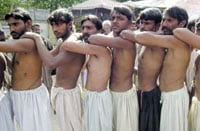
of Matiari district, close to Hyderabad in Sindh, had packed their They were not aware of the fact that they would be forced to work in banana and vegetable fields in the bordering areas of Iran and undergo immense hardships. The dream to earn Rs 7,000 per month, free daily meals and benefit of medical facilities in Iran were the main reasons that the decision was taken to move out of the country for a better life. Achar, who worked in a local hotel at Hala town till his departure to Iran, said while talking to TNS that he was told he would earn better wages in Iran but after he went there, things worsened as he did even get proper food. "I didn't have a passport but we entered into Iran and were transported to a nearby village close to the border. I was not allowed to talk to my relatives back home and was directed to work without breaks and stay indoors, otherwise I would be caught as illegal immigrant," Achar said. There was a celebration in Hala town and sweets were distributed after news was aired about their release from Iran. The story regarding their detention and captivity under bondage was disclosed on Feb 26, 2008 outside the Hyderabad Press Club when two victims of human trafficking who had been taken to Iran appealed during a protest demonstration to the authorities concerned. Mohammed Saleh Sheikh of Matli (District Badin) and Pir Bux Solangi of Hala (District Matiari) who escaped from a private jail in Iran told that Mohammed Umar Makrani, a landlord, had taken them along with their families to Iran offering them better jobs. "We were offered Rs.7,000 per month as salary. Therefore we accepted the proposal." They informed newsmen that they did not have to pay any money to Umar Makrani who pretended to be a landlord and took them to Iran. This revelation pushed the authorities to come into action and Federal Investigation Agency (FIA) started probing into the matter after lodging a case on March 1, 2008 and arrested two persons associated with human trafficking. Anwar along with his father, brother and other family members (a total of 14) were trafficked to Iran. He said his family went because they thought they would earn better wages. "Sometimes they provided us with food, at other times they didn't." He added that women were asked to work inside houses. Those who have returned include Hashim, Gul Hassan, Ahmed, Anwar, Asghar, Dayim, Achar, Long, Panhon, Hajan, Achar, Haji, Gul Pari, Sohni, Zulekha, Moomal, Ameer Bano, Zameer Bano, Dilbar, Deedar, Zakir, Sabir and Sherbano. "Soon after the arrests, we have accelerated the efforts for the release of more people from private jails in Iran as they had not been kidnapped but went of their free-will," said Basheer Bhutto, deputy director, FIA in Hyderabad. "We take action once the information is available or provided to us. Since this (human trafficking) took place illegally and without proper routes, therefore it is difficult to act before the information arrives from any source or a victim's relatives," added Bhutto Basheer Bhutto pointed out that such culprits do not use the actual checkposts to enter into Iran as the border between Iran and Pakistan runs into hundreds of kilometres. "Therefore it is difficult to stop such human trafficking." Zia Awan, president Lawyers for Human Rights and Legal Aid (LHRLA), told TNS that this particular case of bondage in Iran is human smuggling because the victims of human trafficking are usually women and children who were taken towards gulf countries. "No importance has been given to this problem in our country," he said, and added that human smuggling is a heinous form of crime. There is a need for looking into all dimensions of this issue while a law in this respect is also under preparation, he told. Awan, a Supreme Court lawyer, who attended a conference about human trafficking in UAE recently informed TNS that labourers were living in inhuman conditions in the labour camps of gulf countries. He emphasised on the role of embassies in this regard. "There is a need of a comprehensive policy to stop human smuggling. Avenues of jobs should be opened within the country," said Awan. These persons have been released on the pressure of the government and its allied agencies. There are thousands of such people who are still stuck abroad. Immediate efforts should be made for the release of people who are still under detention in Iran.
RIPPLE
EFFECT By Omar R. Quraishi When one is a reporter one gets to attend many a seminar and/or a conference. In the beginning it may seem a pleasant experience -- what with the air-conditioning and promise of a free lunch and so on -- but soon becomes tiresome and monotonous. The same speakers meeting over and over again, talking about the same things, finding the same faults with the system or whatever is under scrutiny, and coming up with the same (almost banal) recommendations. If ever there was a case of 'been-there-done-that' this would be it. The point is that more often than not attending such a seminar or a conference is a waste of one's time -- they usually start late, end late, people in this country have no idea how to ask a question (most end up giving everybody else a long lecture) and moderators have no idea how to conduct a conference, especially the Q&A session and keep it within the scheduled time. Even more importantly, you never really learn anything new by attending them. There are, however, exceptions to this rule. Not that one does this often now, but recently I happened to attend a focused seminar for school-children in Karachi where they had the chance to take part in an interactive dialogue on the issue of violence. Invited as someone representing the media, I had to face around 30-35 schoolchildren (presumably from the 10-17 age group) and tried and answered their questions regarding violence and the media. The seminar, of which I attended only one small session, was hosted by the Children's Museum for Peace and Human Rights (the museum, its major-domo Zulfiqar Ali told me afterward, is an ambitious project and will begin construction in April) at Karachi's Goethe-Institute. It started on time and was moderated well enough so that all speakers stuck to their time limits. My session came after the audience had had a brief session on the possible manifestations and causes of violence. One of the schoolchildren had mentioned something to the effect that the media has a role in encouraging violence. This was, I thought, a good peg to start the discussion with. The student asked that why did TV channels in Pakistan show graphic footage of bomb blasts and other acts of violence when this was not the done thing in the west. He wasn't the only one -- several other students, including one teacher -- who argued that violence was somehow facilitated by its media coverage or at the very least that such coverage, if done without any limits, was bad for society in general and for children in particular. This would bring one to a couple of very important questions: What is the role of the media? Is it to reflect reality or is it to influence reality? Should it be provide news and information that people want to listen or read or that they need to listen/read? What is the media to do if the country where it is located experiences a brutal and wanton act of violence every day or every other day? Should a TV channel become like PTV and block out all such information or should they have a policy of reporting all such events in detail? One teacher seemed to yearn for the days of PTV saying that at least during that time children were not exposed to the many ways in which violence could be perpetrated. To this, however, one argued that even if a child were to not read newspapers and barred from watching TV would his mind and character remain impervious to the violence taking place in his community and society? Of course, children need to be shielded from the effects of violence that they see on television but that should not mean censorship -- it was kind of shocking that a teacher was advocating this -- though as she made her point, I could see at least two girls in the audience expressing vigorous disagreement by repeatedly moving their heads sideways. In any case, as Nosheen Ali, a Ph.D. student at Cornell University and also in attendance at the seminar, said after the session, just because PTV did not show violence or was able to censor content relating to it, did not mean that in the old days there was no violence. Also, one recurring theme throughout the exchange with the schoolchildren and their accompanying teachers was that why do TV channels show so much violence. To that, I asked the audience a simple question. Suppose you had a choice of watching two TV channels covering a suicide bombing. One has a news presenter reading out a story on the blast while the other shows live footage from the scene of the blast. Which one would you choose to watch? All of the people in the room raised their hands at the second option. Apparently without even realising it, the audience had answered the question itself. Why hold the media to a higher standard than the rest of society? Why not accept/realise the fact that the media too needs to make money? Of course there has to be responsibility but to blame the media for violence or for encouraging it, or even for desensitising society is to having unreasonable and uninformed expectations of the media -- the presumption being that it must bear an extra burden for responsibility because of the inherent nature of its function. Why cannot people learn to accept the fact that most of them and their peers like, in fact want, to see the graphic, the lurid and the sensational and that there is nothing wrong really if TV channels and newspapers want to feed this demand -- of course keeping within the boundaries of a culture's sense of decency and propriety and after building safeguards to regulate the watching of such footage by children. Postscript: The Children's Museum for Peace and Human Rights is a very good initiative and one must commend the work of people like Zulfiqar Ali and Rumana Husain, head of its outreach section. It is good to see at least some people working to educate children on violence, how to deal with its consequences and how to not to use it as a way of deciding disputes. For further information visit their website at www.cmphr.org The
writer is Op-ed Pages Editor of The News. Email:
omarq@cyber.net.pk
|
|
 order of Chief Justice of Pakistan, Iftikhar Muhammad Chaudhry. The CJP had
reprimanded the government for delaying on this count and given it a
three-month deadline to come up with a law to check exploitation of the poor
who were compelled to sell their kidneys to affluent recipients. Most of
these recipients used to be foreigners who would come here to get their
ailing kidneys replaced with healthy ones.
order of Chief Justice of Pakistan, Iftikhar Muhammad Chaudhry. The CJP had
reprimanded the government for delaying on this count and given it a
three-month deadline to come up with a law to check exploitation of the poor
who were compelled to sell their kidneys to affluent recipients. Most of
these recipients used to be foreigners who would come here to get their
ailing kidneys replaced with healthy ones.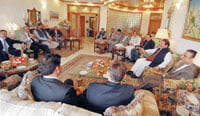 landmark not least because no participating party formally protested at their
being sufficiently rigged as to make the results unacceptable to them (even
members of the small but influential parties of the All Pakistan Democratic
Movement, which boycotted the polls, have come to accept them as
representative and a turning point in national political history). Or even
that the high political price of the elections was Benazir Bhutto's shocking
assassination.
landmark not least because no participating party formally protested at their
being sufficiently rigged as to make the results unacceptable to them (even
members of the small but influential parties of the All Pakistan Democratic
Movement, which boycotted the polls, have come to accept them as
representative and a turning point in national political history). Or even
that the high political price of the elections was Benazir Bhutto's shocking
assassination.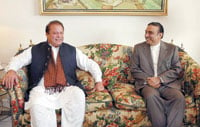 winning the political battle at the hustings at work here. The voters also
threw up solutions that have eluded the national polity so far: politics of
plurality and governance of consensus. To ensure that they are not trapped in
a cycle of incestuous vendetta and loathing, the voters have made sure that
no single party has emerged at either the national and provincial levels to
form a government on its own and get away with murder as the last government
did. The only exception is Sindh but here too appearances can be deceptive as
Pakistan Peoples Party has the mandate to represent rural Sindh while
Muttahida Qaumi Movement has virtually swept mainstream urban province as its
choice of representation.
winning the political battle at the hustings at work here. The voters also
threw up solutions that have eluded the national polity so far: politics of
plurality and governance of consensus. To ensure that they are not trapped in
a cycle of incestuous vendetta and loathing, the voters have made sure that
no single party has emerged at either the national and provincial levels to
form a government on its own and get away with murder as the last government
did. The only exception is Sindh but here too appearances can be deceptive as
Pakistan Peoples Party has the mandate to represent rural Sindh while
Muttahida Qaumi Movement has virtually swept mainstream urban province as its
choice of representation.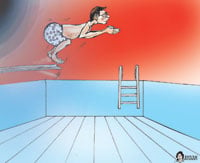 common enough affliction, but I have to get it off my chest and tell you all
about it. You see normally people are nice and polite and considerate, and if
they are together with someone with a common affliction they will go out of
their way to be considerate.
common enough affliction, but I have to get it off my chest and tell you all
about it. You see normally people are nice and polite and considerate, and if
they are together with someone with a common affliction they will go out of
their way to be considerate.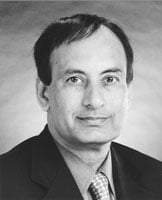 Institute in Washington DC, Haqqani has worked as a journalist, diplomat and
former advisor to Pakistani prime ministers. He has maintained close
connections with the Bhutto family for the last ten years; Benazir Bhutto in
her recent book 'Reconciliation' acknowledges him as a 'loyal friend.' So
will he be speaking as a PPP spokesperson in this interview? "No, I am
not in the PPP formally. I don't have any official position within the
party," he states categorically.
Institute in Washington DC, Haqqani has worked as a journalist, diplomat and
former advisor to Pakistani prime ministers. He has maintained close
connections with the Bhutto family for the last ten years; Benazir Bhutto in
her recent book 'Reconciliation' acknowledges him as a 'loyal friend.' So
will he be speaking as a PPP spokesperson in this interview? "No, I am
not in the PPP formally. I don't have any official position within the
party," he states categorically.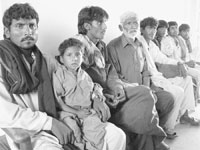 belongings and left for Iran to earn better wages in order to support their
families.
belongings and left for Iran to earn better wages in order to support their
families.