


|
|
|
|
|
 |
 |
   |
analysis
Need
of the hour conomy More
than a label A
longing for peace business The real
casualty analysis Imperial hubris As the United States has completed five years of Iraq's occupation, let us take a stock of the events that have transpired meanwhile
By Aasim Sajjad Akhtar In the wee hours of March 20, 2003, American jets
unloaded thousands of tonnes of bombs over Baghdad and other urban centres
in Iraq. A few weeks later, American troops stormed the Iraqi capital and
dramatically brought the Saddam Hussein era to an end. At the time
imperialist ideologues were boasting that the initial 'successes' heralded
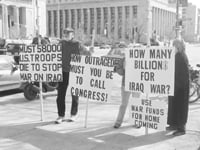
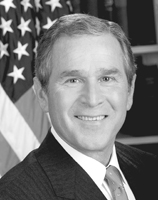
a new era in Iraq of 'democracy' and 'freedom'. In the five years that have passed since the beginning of the Iraq war, triumphant pronouncements have given way to defensive ramblings about the righteousness of the American cause, and claims that, at the very least, Iraq is better off without Saddam Hussein. Bush, Cheney, Rice and other mouthpieces of the administration conveniently ignore the death of hundreds of thousands of Iraqis, the catastrophic security situation in the country, the emergence of sectarian divisions unlike anything the region has ever seen before and the rapid slide of a large number of Iraqis into destitution. Meanwhile, of course, the pillaging of Iraq's prized oil resources -- the real reason for the invasion -- continues unabated, notwithstanding sabotage attacks that take place on a regular basis. Indeed, new laws have been concocted to allow foreigners (read American multinational oil companies and their subsidiaries) to own and/or control Iraq's oil, ratified by the so-called 'elected' Iraqi legislature. So the charade that is America's 'democratic mission' in Iraq carries on with no end in sight. Nonetheless things have not gone according to plan, mainly because of the heroic resistance of the Iraqi people (and here I am referring not only to those physically fighting the occupation, but all those who are resisting it in some way, shape or form). But then things never go according to plan for a colonial army that brutalises the native population, all the while claiming that it is there for its benefit. The situation is hardly different in Afghanistan, the other front of the so-called 'war on terror' where almost seven years after the American invasion only Kabul and its surroundings are in effective control of the occupying force (and its stooge Karzai). Meanwhile the other major battleground in the wider region, the occupied Palestinian territories, continues to be subject to the genocidal incursions of the Israeli Defence Forces, under American patronage, of course. Despite all the carnage, and even though George W
Bush's approval ratings are now lower than any other president in American
history, the Republican candidate in the forthcoming US presidential
election, John McCain, stands a fairly good chance of making it to the
White House. So, on the whole, the Republican Party could care less about
what the ratings say. In any case, it is worth bearing in mind that the
Republican Party is committed to 'The Project for a New American Century',
in which America will promote the ideals of 'democracy' and 'freedom'
worldwide by waging In other words, in the near future it can be expected that the behemoth that is the US military will spread its tentacles even further into the rest of the world than it already has. The reasons for military expansionism extend beyond the obvious. The United States' pre-eminent position in the post-WWII period has been a function of its military and economic superiority over the rest of the world. The US enjoyed productive and financial dominance until around the 1970s, by which time Japan and to a lesser extent Germany had overtaken it in terms of productive efficiency. After the oil shocks of the 1970s, the US retained its position at the top of the world's economic tree because it was the financial centre of the world, and the US dollar was the default world currency. In the intervening period, the US trade deficit with the rest of the world has soared, with consumer imports increasing dramatically. As such America's is an economy driven by consumption and not by any productive edge that it enjoys over the rest of the world (with the exception of certain important industries). Because the US dollar is the world's default currency, America's consumption binge has effectively been funded by everyone else. In recent times, however, the financial dominance of the US has also been challenged as China and the European Union become bigger players in global financial markets. The Euro, in particular, is posing a serious problem to the US dollar's status as the world default currency. Notwithstanding the many generalisations being made here, the long and short of this brief digression is that, in due course, US hegemony over the rest of the world will be limited to its military superiority. A declining superpower is always more likely to employ coercive means, especially given how powerful the military-industrial complex is in the United States. All told, the hope that the United States will act more responsibly in years to come is futile. Of course if there is a change of guard and the Democratic Party comes to power following the presidential election in November, some changes can be expected. But they are not likely to be very substantive and one can rest assured that the new president will broadly consolidate the empire-building policies of his/her predecessor. This, of course, is bad news for the rest of the world. But there is also a sense that the all-powerful United States can and will be challenged, and that the most destructive imperialist power the world has ever known, while not finished quite yet, will not be able to maintain its supremacy into the indefinite future. Having said this, imperialism of the capitalist sort will not disappear with the demise of the United States. It is not dependent on the existence of superpower states; as is becoming increasingly clear, it exists in the form of multinational organisations of various kinds. And so, as has been the case throughout history, the burden of resistance on the most oppressed will grow even more acute with time. There is little doubt that Marx was right when he suggested that the history of settled society is the history of class struggle. As the first decade of the 21st century nears its end, all thinking human beings are confronted with the choice of which side of the class divide they wish to stand on. And choose all of us must because there can be no sitting on the fence. Newswatch India has no moral or legal case on Kashmir
By Kaleem Omar The leadership of the incoming coalition government in Islamabad needs to be remember that pragmatism is one thing, but abandoning one's moral position on an issue is quite another. We know all the pragmatic arguments. We know that Pakistan cannot take Indian-occupied Kashmir by force, nor can we take it through what the Indian government has sometimes chosen to call a "low-intensity proxy war" -- New Delhi's misleading description of the freedom struggle that Kashmiri Muslims have been waging against the Indian Army since 1947, and, more particularly, since December 1989. But our recognition of this pragmatic reality does not mean that Pakistan should give up its moral position on Indian-occupied Kashmir, on the pretext that the dispute should be left to "future generations to solve" and that we should, meanwhile, concentrate on things like increasing the frequency of the Srinagar-Muzaffarabad bus service. More than 70,000 Kashmiri Muslims in Indian-occupied Kashmir have not given their lives, in the years since 1989, for the sake of a bus service. They have given their lives for the sake of the right of self-determination for the people of the beleaguered state. That right was to be expressed through a free and fair plebiscite under UN auspices -- a position that India itself had agreed to in the United Nations back in 1949 and one that New Delhi had reiterated on several subsequent occasions in the form of solemn promises made by then-Indian Prime Minister Jawaharlal Nehru in the parliament. India has gone back on all those solemn promises and has repeatedly refused to hold a plebiscite in Indian-occupied Kashmir because it knows, in its heart of hearts, that in any free and fair plebiscite, most of the Muslims of the state (who constitute 80 per cent of the total population) would vote to join Pakistan. The hollowness of the Indian claim that the Kashmiri Muslims want to be a part of India was exposed long ago, as was the Indian-sponsored red herring about the so-called 'third option' (that, literally, means an independent Kashmir). Central to this whole issue is a very simple question: why should Kashmir be the only exception to the partition formula that was agreed by the Indian Congress Party, the All India Muslim League and the British colonial power back in 1947? The basic parameters of that formula, of course, were that all Hindu-majority provinces of the subcontinent would become part of an independent India and all Muslim-majority provinces would become part of the new state of Pakistan. In the case of the princely states, the formula stated that while they were technically free to opt for independence, it was "expected" by the parties to the partition agreement that they would opt to join either India or Pakistan. Implicit in this formula was the proposition that the Hindu-majority princely states would join India and the Muslim-majority princely states would join Pakistan. And that, in fact, was exactly what happened, with the sole exception of Kashmir. When the ruler of the princely state of Hyderabad (which had a Muslim ruler and a Hindu-majority population) opted for independence in 1949, New Delhi promptly ordered the Indian Army to invade and occupy the state, paving the way for Hyderabad to be absorbed into India. The situation in Kashmir was the exact opposite of this. Kashmir had a Hindu-ruler, but an overwhelmingly Muslim-majority population. In Kashmir's case, India's Nehru government connived with the Hindu ruler of the state and Lord Mounbatten (the last viceroy of British India) to forge a back-dated 'instrument of accession' to India and had used the forged document as an excuse to send India Army troops to occupy the state. And there the troops have stayed to this day, their numbers swelling over the years to 700,000 today -- making Indian-occupied Kashmir (which now has a population of about eight million) a territory with the world's highest ratio of troops-to-population. Munir Akram, Pakistan's permanent representative to the United Nations, put it well when he said in a statement at a conference at the UN headquarters in New York on October 4, 2002, that India, "misusing the rationale of the anti-terrorist campaign, has deployed one million troops on Pakistan's border and along the Line of Control in Kashmir. It has repeatedly threatened to use force against Pakistan. It refuses mutual de-escalation of forces; it refuses bilateral dialogue; it refuses third party mediation; it refuses the secretary-general's good offices; and it refuses to end its military repression of the people of Jammu and Kashmir, and justifies this by denigrating the noble Kashmiri freedom struggle as 'cross-border terrorism'." Kashmir remains the only unfinished business of partition. The only exceptions to the agreed partition formula of 1947 were the provinces of Punjab and Bengal, which had clearly defined Hindu and Muslim majority areas (and also a large Sikh population in the case of Punjab) and which, it was, therefore, agreed, would be partitioned, with East Punjab and West Bengal going to India, and West Punjab and East Pakistan becoming part of Pakistan. That the Radcliffe Boundary Commission Award gave some Muslim-majority parts of Punjab, in particular the key Gurdaspur district, to India instead of Pakistan is another story. That story has less to do with the validity of India's highly dubious claim to the Gurdaspur district and more to do with the fact that Mountbatten connived with Jawaharlal Nehru to influence Sir Cyril Radcliffe, the head of the Boundary Commission, to change the Award at the last minute in India's favour by altering the Zera line and giving the Gurdaspur district to India, thus providing it with a land route to Kashmir. Mountbatten's and Nehru's chicanery in this matter was confirmed by no less a person than Christopher Beaumont, secretary to the Boundary Commission. In a lengthy interview with the Daily Telegraph in 1992, he said that Mountbatten had invited Radcliffe to lunch at the Viceroy's Lodge two days before the Award was due to be announced and had persuaded him to change the Zera line in India's favour. Beaumont said that Radcliffe had come back to his quarters after the lunch "looking very disturbed" and that the same night the Zera line on the Boundary Award map had been changed.
firstperson A call for joint US-Pak strategy We are at a stage right now where the notion of a single superpower has virtually no meaning whatsoever
By Raza Khan Dr Harlan Ullman is senior adviser at the Center for
Strategic and International Studies (CSIS). He also writes for the
Washington Times newspaper, and is a frequent commentator in the American
and international media. A graduate of the United States Naval Academy, Dr
Harlan Ullman did his PhD in International Affairs, Finance and Economics.
He has been an academic, businessman, and an adviser to the most senior
levels of government and the private sector. His expertise spans national
security, foreign policy, defence, economics and finance. He is also the
principal author of the doctrine of 'Shock and Awe', since adopted by the
Pentagon. In one of his books, entitled Unfinished Business: Afghanistan, the Middle East and Beyond (Kensington, 2002), Dr Harlan Ullman predicted the unfolding of events from Iraq to North Korea. In his most recent book, entitled Finishing Business: Ten Steps to Defeat Global Terror (2004), he warns that the US is mistakenly fighting a war it does not understand; also, the country is waging the 'war on terror' with flawed objectives in the wrong places, against the wrong people and with the wrong tools. The News on Sunday got a chance to interview Dr Harlan Ullman during his recent visit to Pakistan. Excerpts follow:
The News on Sunday: Would you like to tell us about your current visit to Pakistan? Harlan Ullman: I am here for basically two reasons. First, for the last five years, I am on the board of advisers of the North Atlantic Treaty Organisation (Nato), the supreme Allied Command in Europe, with principal responsibility for Afghanistan; therefore, I have become inevitably involved with the country. Second, I am here to offer my condolences at Benazir Bhutto's death, as we were good friends for many years. TNS: How important this part of the world is for the United States? HU: I believe this part of the world is really the centre of gravity in terms of how the United States is waging its geo-strategic war. I am afraid that the 'war on terror' is not going as well as it should go. Since the US engaged in Iraq, its reputation abroad has taken a nose-dive. What we need in this region is a joint US-Pakistan strategy or policy dealing with these instabilities. We need to come up with a plan that not only has a military-intelligence and law-enforcement aspect to it in terms of what Pakistan needs, but also an economic development aspect. TNS: What are your views on the global 'war on terror'? HU: I am concerned because in the US we have become fixated on the global 'war on terror'. We have induced friends and allies to be part of the war. The global 'war on terror', in my judgement, is a wrong term to use -- this is not a global 'war on terror'; in fact, what we are dealing with are causes and their effects. I would agree that the causes are much more profound that the effects. We have to deal with what I would like to call two revolutions that have been ongoing in the Muslim and Arab worlds for quite some time. In both the revolutions, the old is pitted against the new. In the Arab world -- whether it is Saudi Arab or Egypt -- the old represents the autocracy that wants to maintain its hold on power; while the new wants to bring about positive changes in the system with regard to various human rights. On the other side of the coin, in the Muslim World, you have the old who want to take the world back to the much more fundamentalist-conservative perspective; and the new who want modernisation. Then you have in this part of the world not only oil, but also a nexus between oil and nuclear weapons or terrorism. This results in a sort of instability that has global implications. One of the things that we need to understand about the global 'war on terror' is that those who want to seize power no longer need armed forces. Since our major focus has been on military force, the problem has been that how you can use military force against non-military threats. So, in short, the situation is quite precarious. Having said that, now we have entered an interesting phase in international politics. I think that we are at a stage right now where the notion of a single superpower has virtually no meaning whatsoever. Even at present we have emerging powers like China, India and, of course, Russia. The economies of these countries are growing and they are increasing their influence at the global level. These countries also represent vast opportunities -- as markets are growing, there is a chance for economic prosperity. At the same time, however, each of these countries needs to overcome a number of obstacles -- for example, demographic issues in Russia, and sub-poverty level of people in China and India. By employing a rational approach, we can address most of these and similar issues. In this context, American policy-makers would be well-advised to shift from what can be seen as unilateral activism and bilateral relations to introducing a global system that is based on the principles of peace, partnership and prosperity. TNS: Can you please elaborate on this a bit more? HU: All the global organisations that we now have had stemmed from the debris, first of the Second World War and then of the Cold War. In short, these were designed for a different world -- they really do not have the mechanisms that are needed to meet the challenges of the current world. To put it simply, during the Cold War there was a conflict between the East and the West, and both the sides had the capacity to destroy the other. But I think that the real danger nowadays is 'strategic disruption'. The enemy, howsoever you define it, is an enemy. So the radicals and the fundamentalists, who really want to seize power, have decided that it is a lot better not to have a large standing army -- the same purpose can be achieved by disrupting the enemy's society. TNS: What are your views on the 9/11 attacks on the United States and Osama bin Laden's involvement in them? HU: As far as events of the 9/11 are concerned, I do not think Osama bin Laden had the slightest clue of what was going to happen after them. He had no idea that the Twin Towers would collapse and the American response would be so swift. TNS: How do you see the world's future? HU: There are many shared interests, irrespective of the clash of political ideologies and cultures, in the world right now. It seems important to me that these shared interests are identified as the bedrock of future international politics. The question is how do we go about this? We now have a series of independent alliances and regional arrangements, most important among them being Nato. It seems to me that Nato provides in Europe the framework for a much larger global series of relationships -- not on military basis alone, but also on non-military basis to deal with those disruptive issues that are really important for various societies. I think that transforming these networks -- for instance, the Shanghai Cooperation Organisation (SCO) -- into a kind of an anti-terrorist cooperation is the one way you can expand their reach to cater to a lot of these shared interests. In short, we have these organisations around the World but they have not yet been brought together in any meaningful way. Therefore, they need to be used for achieving the shared interests and the opportunity to prevent disruption in whatever form seems to be very real. The problem, however, is of leadership. The United States is stuck up in war in Iraq and it will be consumed in war in Afghanistan. There is no clear way out, no matter what the potential presidential nominees say about withdrawing troops from these countries. I think what has to happen is that leaders of goodwill have to stand up above parochial interests and realise that the common good exists for everyone in terms of what happens everywhere and not just where we live. If this transformation can be made intellectually, strategically and politically, we would find ourselves in a world that is dynamic, prosperous and a good place to live. And if we do not avail this opportunity, then I can guarantee that our future generations will regret that we never seized the moment. TNS: You are calling for winning the hearts and minds of the people of Afghanistan, while the Taliban are not ready to accept anything short of complete withdrawal of foreign troops? HU: Let me be blunt! The problem with Afghanistan is that the US does not have a strategy to deal with its problems. In fact, the US has not been able to bring the required resources there. We (the Afghan people, Nato, the US and Pakistan) can either win or lose in Afghanistan in my judgement, but we need to focus on the civil sector that we have not been doing adequately till now. By the civil sector, I mean the need for putting in place a legal and judicial system. We need to train the police force, work against corruption, create jobs and develop infrastructure there. Afghanistan had one of the finest irrigation systems in the world till 1979, when the USSR played havoc with it. Later, the Taliban also destroyed it. I have driven the Bush administration into trying to think through this, but it is fixated just on Iran and the global 'war on terror'. I fail to understand that if the US is prepared to talk to the Iraqi tribesmen, why is it not prepared to negotiate with the Taliban -- simply because we make no real distinction at the highest level between the Taliban and al-Qaeda; which is a profound strategic error. TNS: American policies with regard to India and Pakistan have not been uniform, despite the fact that the latter is a long-time ally? HU: I do agree. Though US policies regarding India make good sense, the country is ignoring a very important partner in Pakistan.
Need of the hour Access to clean drinking water has become a major political issue across the globe
By Rehan Khan As the world celebrated the World Water Day yesterday
(March 22), the debate about the country's depleting water resources is
heating up. Water is a cross-cutting area, affecting every aspect of human
well-being and prosperity. Critical to basic human health, the
availability of water is a pre requisite for the production of food,
raising of livestock, slaking of thirst, prevention of diseases, and
provision of good hygiene and sanitation. It is common knowledge that
Pakistan is an agricultural country. In order to sustain the food
requirements of about 165 million Pakistanis, a well-managed water
conservation plan needs to be implemented at the national level. Failure
to do so will result Water issues in Pakistan and other developing countries present special management challenges. Inadequate supply of drinking water, lack of sanitation facilities, water pollution, floods, siltation of river systems, and management of rivers and large dams are some of the major hindrances in the way of improving the quality of life of the common people. In the national context, the viscosity of these problems thickens due to the prevailing economic, social, political and environmental disparities. For example, extreme poverty in most rural areas limits access to quality water services in Pakistan. Such disparities, therefore, need to be considered while analysing water-related problems of the country. The gravity of the problem becomes obvious when we consider that about one billion of the world's people do not have access to adequate water supply and about two billion do not have access to adequate sanitation facilities. What is even more alarming is that a vast majority of these people lives in developing countries. Water is required mainly for drinking, sanitation and hygiene purposes by human beings. These minimum needs total to about 13 gallons of water per day for every person on the planet. Let me cite the example of Murree here! The growth of the tourism industry and a boom in the construction sector have had an adverse effect on the local environment. Throughout the year, the melting ice from the nearby mountains flows down to a spring near Company Bagh. According to a rough estimate, a whopping 45,690 gallons of this natural resource is lost every month, enough to meet a single day's requirement of a village with a population of more than 3,500 residents. This fresh water runs down the mountains towards the Korangi river, which in turn feeds the Soan river and ultimately, just before Kalabagh, falls into the Sindh river near Marri Indus. Increased urbanisation has choked the natural flow of water and is cutting off the source for the Indus Water Basin. It is an unimaginable sin to not conserve the water originating from these natural springs. It was reported in 2000 that 55 countries, with a combined population of over one billion, did not match the 13 gallons of water per day requirement for every individual. This wasted water means a shortage of drinking water facilities. As a result, most of the people living in the rural areas use open bodies of water for drinking purposes. Exposed, these water bodies are breeding grounds for mosquitoes and many tropical diseases like schistosomiasis, which affect the urinary and intestinal systems. This, in turn, erodes the public health and reduces human productivity. In today's world, a country's economic development is linked directly with the awareness level of its population about the conservation of natural resources. It is high time that the conservation of natural resources is taken up seriously in Pakistan also, by educating the public at large on these issues. Only then will the government be able to initiate any positive efforts in this regard. The biggest challenge Pakistan faces currently is the threat of the multi-headed hydra of water pollution, irrigation, deforestation, construction of dams and tackling of floods. In particular, the mushroom growth of housing societies has resulted in uncontrolled deforestation throughout the country. This appendage to the main problem is in itself a cause for huge environmental debt. Most developing countries have acknowledged the importance of this issue and are well on track to conserve their natural resources wherever possible -- be it through small dams or well-planned infrastructure that checks excessive loss of water. The disputes over water are also creating disharmony among the country's four provinces, with some analysts fearing that this may lead to Pakistan's disintegration. For instance, renowned Sindhi nationalist leader and Awami Tehrik chief Rasul Bux Palijo has been urging the United Nations to intervene to help Sindh get its due share of water. Palijo has also led a 200-kilometer long march to draw the world's attention to the water crisis in Sindh and speaks openly about the hegemony of Punjab. Similarly, the NWFP requires 1,900 megawatts of electricity annually; whereas the province currently is only being provided 1,400 megawatts of electricity annually. The ongoing power shortage is due to the absence of any conservation strategy, resulting in losses of billions of rupees to the national exchequer. Sadly, the people of Pakistan are faced with power and water shortages now that the summer season is just around the corner. The claim by government officials that the Mangla and Tarbela dams will be replenished once the water melts from the mountains and glaciers has proved to be hollow. Perhaps a better idea is to take strategic decisions aimed at conservation of water, rather than merely relying on the melting of ice. In conclusion, global patterns in population growth, economic development, industrialisation and urbanisation, among other factors, are pushing all of humanity towards a period marked by unprecedented water shortage, poorer water quality and greater sanitation challenges. By 2050, one out of every four people in the world will be living in a country experiencing chronic or recurring water shortages. The solution to this problem lies in responding to these very challenges immediately, especially through the conservation of precious water resources. (Email: rehankhan82@gmail.com)
economy Challenges galore In view of the country's recent fiscal policy failures, a lot of problems await the new government
By Huzaima Bukhari and Dr Ikramul Haq The increasing revenue, trade and current account
deficits are forcing the country to rely more and more on external and, in
particular, internal borrowing. The new government is going to inherit
this excruciating and agonising legacy from the so-called economic
'experts', who, through jugglery of figures, portrayed the last few years
as the 'golden' period of economic growth in Pakistan. In fact, the
persistence of large trade and fiscal deficits has been the major cause of
increasing public debt in the last few years, a fact admitted even by the
Economic Survey documents released annually by the Ministry of Finance. The country's economy witnessed a huge trade deficit of $ 12.43 billion in the first eight months of the current financial year (July 2007-February 2008), with imports amounting to $ 24.14 billion and exports only to $ 11.707 billion, according to the Federal Bureau of Statistics (FBS). A huge trade deficit throughout the year, with imports more than twice the exports, will pose a big challenge for the new coalition government. It is now being suggested in the media that the fiscal deficit in the current financial year ending on June 30, 2008, may amount to more than six per cent of the gross domestic product (GDP). The country's trade deficit is increasing with each passing day. According to statistics released by the FBS on March 11, 2008, the country's imports amounted to $ 3.659 billion in February 2008 against exports of only $ 1.554 billion, showing a trade gap of $ 2.104 billion in one month alone. The State Bank of Pakistan has also expressed concern at the burgeoning gap between exports and imports that would ultimately further worsen the current account position. As stated above, the country's imports were more than double its exports in the first eight months of the current financial year. This means that the trade deficit in this period ($ 12.43 billion) increased by 39.05 percent over the corresponding period ($ 8.942 billion) of the last financial year (2006-07). In the same period, the country's exports increased to $ 11.707 billion against $ 10.854 billion in the corresponding period of the last financial year, registering a slow growth of 7.86 per cent. On the other hand, the country's imports increased by 21.95 per cent to $ 24.141 billion against $ 19.796 billion. In February 2008, the country's exports grew by 5.31 per cent to $ 1.554 billion against $ 1.476 billion in January this year. The last government, relying heavily on import-based taxation, faced a serious problem in meeting the huge current account deficit, though an unprecedented increase in import of luxury goods enhanced the country's tax revenues to a record Rs 843 billon in the last financial year. This record revenue collection was coupled with a huge fiscal deficit of Rs 373 billion, mainly due to the last government's inability to balance productive and non-productive expenditure. It is an established fact that no serious effort was made by the last government to use taxation as a catalyst for economic and industrial growth; the only emphasis was on showing higher figures of collection through inequitable and regressive taxation, which ultimately proved to be counter-productive for the country. The collection of taxes at source and import stage at exorbitant rates testified to a myopic outlook that resulted into shifting of entire burden on the consumers. Due to loop-sided policies of and regressive tax measures adopted by the last government, new industrial activity in the country almost came to a halt. Tragically, despite these illogical policies and unjust withholding taxes, the Federal Bureau of Revenue (FBR) miserably failed to improve the tax-GDP ratio, which has remained around 10 per cent since 1992. On the other hand, the burden of ever-increasing presumptive taxes (which are nothing but indirect taxes), levied under the garb of income tax, shifted incidence of taxation from income earners to consumers and clients; while on the other, they distorted the whole tax system. The presumptive taxes were first levied in financial year 1991-92, when the fiscal deficit was only Rs 80 billion. By financial year 2006-07, this deficit rose to Rs 373 billion, proving beyond any doubt that irrational taxation did not solve our financial problems, rather it forced us to borrow more money from external and, in particular, internal sources. Irrational tax measures have always played a decisive role in retarding economic growth. An analysis of amendments introduced to tax codes in the last five years shows that the time-honoured canons of fiscal laws -- stability, simplification, flexibility and fairness -- have been grossly violated, only in order to show higher figures of collection to foreign donors. The big commercial importers (who do not want to pay taxes) and powerful contractors (who get contracts by bribing officials) are passing on their tax burden to ordinary people, courtesy presumptive taxation that helped increase the revenue to a record Rs 843 billion in financial year 2006-07. The policy-makers conveniently ignored that this increase was at the cost of poor consumers, as the mighty sections managed to pass on their burden through indirect taxation. The right to levy taxes on goods and services always vests with federating units within their territorial jurisdictions (Canada, the United States and India are notable examples). In utter violation of this principle, the federal government in Pakistan levies indirect taxes under the garb of income tax. This is one of the worst examples of federal high-handedness, where the victims are the poor people of the less-privileged provinces. The constitutional responsibility of distributive justice and social equality was altered, just to show higher collection of taxes. The presumptive taxes on goods, contracts and services are violative of the 1973 Constitution. In Finance Act, 2006, receipts like rental income and interest on deposits and government bonds were also taxed on presumptive basis. The new government needs to analyse all these changes and distribute taxation rights among the federating units equitably. During the Musharraf-Aziz era, the scope of presumptive taxes was enhanced manifold to extend benefits to the rich and make the poor's life even more miserable. The rich and the mighty, who do not pay taxes, are the real culprits. The new government should do away with the exemptions and concessions in our tax laws and there should be a level playing field for all. The new finance minister will have to deal with a tax machinery that is not only corrupt but is also inefficient, incompetent and ill-equipped to increase the revenue. In short, radical efforts are needed to revamp the entire tax apparatus; improve both structural and financial conditions of the tax machinery; make the FBR a service-oriented organisation aimed at solving people's tax problems by providing them proper guidance; abolish irrational, harsh and unjust tax measures; and broaden the tax base. Pakistan is capable of eliminating its fiscal deficit within a couple of years, provided a comprehensive programme, a well-designed work plan, a scientific approach and a multi-dimensional strategy are adopted for tax reforms and resource mobilisation. It is hoped that the new government will reverse the irrational and anti-people policies of the last government, due to which the people of Pakistan have already suffered a lot. For sustainable economic growth, a fair and equitable tax system is the need of the hour.
More than a label Pakistan is currently ranked twelfth on the list of failed states, while only two years ago it was ranked thirty-fourth
By Syed Nadir El-Edroos In the recent past, Pakistan has not been doing well
with regard to human development indicators. After a brief period of
supposed growth and increase in foreign investment, things have changed
for the worst and most human development indicators are now showing a
uniform negative trend across the board. There, however, is at least one area in which Pakistan has improved its position by leaps and bounds over the years -- the Fund for Peace Index attempts to measure failed states: in 2005, Pakistan was ranked thirty-fourth on the list; in 2006, the country jumped to ninth position; and in 2007, it took a few steps back to twelfth position. This 'improvement' in Pakistan's ranking was mainly due to the chaos in some other countries, rather than a result of any effort on the government's part. It is easy to link a state's failure with the lack of security. However, both in terms of theory and in terms of measurement of the failed states index, many other reasons also contribute to a state's failure. In fact, a state may be said to fail for up to 12 reasons according to the Fund for Peace Index. These include chronic and sustained human flight (for example, displacement in the tribal areas, Balochistan and Swat), uneven economic development along group lines (for instance, skewed growth in elite enclaves) and progressive deterioration of public services (like load-shedding of gas and electricity) among others. It is clear that whatever parameter we may use, Pakistan is a failed state. Perhaps the biggest failure on our part, as a nation, is not to recognise this fact in its entirety. Instead, we prefer to criticise individual aspects of government dysfunction. The government's policy against the terrorists in the tribal areas should be part of a much wider debate, especially considering the geo-strategic position that Pakistan currently finds itself in. Starting with security, suicide bombings are a recent phenomenon, but the factors that allow for their continuation are based on flawed policies of the past. The intelligence agencies have never been held accountable for their clandestine operations, though they have contributed a lot to the militarisation of the society since the 1980s. The military is demoralised, fighting its own citizens in a war that has been outsourced to our country. The police force, which for long was used primarily as an institution to guarantee the safety of VVIPs and VIPs, has always been resource poor and under funded. While many other factors have contributed to the current state of affairs, it would not be far from the truth to say that Pakistan's failure in the realm of security has been cultivated over time. Failure in proper economic planning in the long-term has been well documented in the media recently. While it may be argued that the recent increases in oil prices are beyond the last government's control, its short sightedness is manifest in that it did not take any practical steps to decrease the dependency on petroleum. Problems like unemployment, inequality and inflation are not unique to Pakistan, but in comparison with most other countries the probability of their leading to mass protests, violence and stagnation in the society seems to be much higher. Again state failure lies in the cumulative impact of the erosion of institutions. When the going is tough, state institutions and public services are supposed to provide some semblance of a cushion to the society, may it be in the form of providing justice or targeted subsidies to vulnerable consumers rather than corporations. Strong state institutions can help in averting the state's failures in many ways. They allow for a natural evolution of the human resources required to manage a complex and service-based bureaucracy. Strong state institutions also help ensure accountability -- as the society gets used to their functioning, awareness increases and with it the sense of belonging to the system. They also allows for the airing of grievances, rather than resorting to violence. Moreover, this helps reliable and responsible functioning of economic actors, who are confident that the country would be able to survive any unforeseen challenges. Throughout the 1990s, the Pakistani nation seemed to develop two personas -- the 'self' and the 'other'. The 'self' managed to survive the stagnant economies of the 1990s and some even gained during the period of growth from 2002-05. Strangely, when it came to any crime or bombing or violence, it always seemed to be happening to the 'other'. Since March 2007, however, every major national event has affected each and every individual, either directly or indirectly. In such a situation of collective grievance, the state's failure must be recognised. Only after recognising that the state has failed will we be able to look for solutions that are sustainable and agreeable to all. Continuing to claim that we are not a 'banana republic' and stating that the 'writ of the state shall be maintained' is only helping to uphold an unsustainable mirage.
A longing for peace A time has come to change the course of events and not to let further bloodshed play havoc with our country
By Syed Inayat Ali Shah Whatever might have been the reasons behind any
conflict in world history, its flames ultimately were put out through
talks and negotiations -- most battles were settled at the table, rather
than on the battlefield. Given the history of the tribal areas, especially
those bordering Afghanistan, violence is not -- and will never be -- a
feasible option to save this region from further bloodshed. In fact, it is
Pakistan's policy with regard to terrorism and the support it has extended
to the United States in the so-called 'war on terror' that has triggered
uncontrollable violence in the region. The horrible spectacle of violence that we are currently experiencing in the urban areas can be viewed in the context of reported threats by the militants that 'if you kill us in the mountains, we will kill you in the cities.' The trauma and pain is suffered by the hapless people of this country, not by aliens for whom this so-called 'war on terror' is being fought by our security forces' personnel. All people in the country, whether civilians or security forces' personnel, have suffered tremendously as a result of this US-led war and apparently there is no end in sight to this grave situation. The sooner the top brass of Pakistan's military recognises the fact that this war cannot be won through violence, the better it will be for the country and its people. The Taliban, who earlier used to engage security forces' personnel in the tribal belt in haphazard skirmishes, have now completely changed their strategy. Now they have brought together all the armed factions of the Taliban into a single fold, under the banner of Tehrik-e-Taliban Pakistan (TTP). This was done last winter by Maulvi Faqir Muhammad and Baitullah Mehsud, the two main extremist leaders inside Pakistan offering tough resistance to the law-enforcement agencies. The Taliban do matter and to engage them in talks using the traditional channel of jirgas is the best possible course of action that the government can take, because for how long can the people withstand the deadly suicide attacks? The recent wave of suicide attacks in the country's major cities clearly demonstrates the need for the policy-makers to review their ongoing policy with regard to terrorism and bring the tribal people into the mainstream through talks. After all, these people joined Pakistan with their own free will and have always demonstrated high standards of patriotism. However, mainly because of the conspiracies hatched by anti-Pakistan elements and partially because of the government's flawed policies, they were brought to a juncture where they were left with no option but to wage war against their fellow countrymen. A silver lining, however, has emerged after the Feb 18 general elections -- in the form of recent peace overtures between the central leaderships of the Awami National Party (ANP) and the TTP. The latter has shown willingness to solve the problem of law and order in the province and its spokesman Maulvi Omar said recently: "We are all for peace and do no want further bloodshed in the country. Like the rest of the people, we too have expectations from the new governments to be installed in the Centre and the NWFP. The TTP wants to develop cordial relations with both, as it does not condone killings in any part of the country." Also, in order to contain the recent surge in militancy in the province, the ANP has proposed a conflict reduction plan, which, if implemented properly, seems to have the potential to restore peace in the troubled parts of the NWFP as well as the tribal areas. The plan is also supposed to eliminate the causes that fan militancy in the troubled region. For this purpose, many short-term steps have been identified and the initiation of jirgas is the major one among them. Sharing details of the proposed conflict reduction plan, ANP NWFP President Afrasiab Khattak says: "The plan aims at reducing conflicts, improving the law and order situation and controlling militancy. If it succeeds, then a peaceful atmosphere will prevail in the province. Though this region has remained part of the Great Game for the last 150 years, no one has ever bothered about the welfare of the local people. Between 1989 and 1991 arms worth Rs 66 billion were sent to the Pakhtun region; but no one knows where those arms went and who are the people using them." When problems are discussed across the table with an open mind and sincerity, more often than not a solution emerges. Engaging the TTP in talks, especially after it has expressed its willingness to support peace overtures, should not be a Herculean task for the new ANP government in the NWFP, as both the stakeholders share the same history, culture and language, and are also aware of the aspirations of the people who have suffered the adverse effects of the so-called 'war on terror'. The suicide attacks on mosques, hujras and even graveyards have a lot of repercussions for the peace-loving people of the NWFP. It is high time for both the government and the TTP to give peace a chance, and resolve their disputes amicably. For this, the two have to make concessions to each other to help create a peaceful environment for the common people. It is also an acknowledged fact that Pakistan has suffered the most in the US-led 'war on terror'. The common people have rendered countless sacrifices in this war, even though they did not support the government's stance on the issue. What they need, in fact, is peace, as evident from the fact that on Feb 18 they voted for those political parties that had promised peace in the region.
business Pinning high hopes The business community as well as agriculturists have a lot of expectations from the new government
By Hamid Waleed A new political set up in Islamabad has infused hope
among the business community, as it expects an end to the hostile approach
being adopted by the previous economic managers, availability of
much-awaited level playing field vis-a-vis its regional competitors and a
visible improvement in the country's law and order situation. The widening
fiscal and trade deficits amid rising international oil prices, and
chronic shortages of energy and staples besides decline in the performance
of the agricultural sector, would make the task of the new economic
managers difficult to say the least. The purpose of writing these lines is not to suggest how the new political government should tackle these challenges, but to highlight the expectations of different segments of the business community. Let us start with the agricultural sector and allied industries! Sectoral experts are of the view that soaring prices of farm inputs and energy, inefficient markets and short-sighted official policies have made agriculture an unprofitable business in the last few years; and this is also the major reason behind the declining performance of the sector. Similarly, increasing water shortages, climate change, deforestation, soil erosion and natural calamities are adding insult to injury. Despite the fact that the government is subsidising Diammonium Phosphate (DAP), its use has dropped substantially due to a 300 per cent increase in its price in just one year. Ibrahim Mughal, chairman of the Agri Forum Pakistan, when contacted by The News on Sunday for his views, predicts an exponential increase in inflation in the near future, especially in relation to the prices of agricultural inputs. He believes that it will not be easy for the government to control the prices of agricultural inputs, which will negatively affect their consumption and ultimately the government would have to compromise the production of major crops. Such a situation, Mughal adds, may lead to serious
imbalances in supply and demand. He maintains that the alarming situation
can be judged from the fact that the previous government had initially set
an ambitious wheat production target of 24 million tonnes, which has
recently been revised to 22 million tonnes, though chances are that the
total production will not exceed 20 million tonnes. So Textile is another area in which the previous economic managers and the business community had been blaming each other for failures. Duty free entry of Pakistani textile products in the European market in the backdrop of 9/11 boosted the exports for a brief period.. However, it was followed by the imposition of import duty on the one hand and of anti-dumping duty on Pakistani bed-linen on the other, resulting in a total duty of 29 per cent in the European markets. The United States had already adopted a cautious approach and Pakistani containers are kept at American ports for months before a clearance for entry to its market is granted to them. End of quota regime multiplied the problems of the textile sector, from basic to the value-added products. The government extended support in the shape of relief package to the basic textiles and six per cent Research and Development (R&D) Fund to the value-added sectors. Once the demand for more was voiced by the businessmen, the previous economic managers started criticising them for their 'inefficiency'; while the textile circles took it as a hostile attitude. This tug-of-war continued till recently and the spinners were found carrying protest banners and placards in their hands in front of the Parliament House in Islamabad. But all went in vain, as no tangible step was taken to address their concerns -- as a result, more than 100 textile units are currently shut down across the country. Akbar Sheikh, chairman of the All Pakistan Textile Mills Association (APTMA) Punjab Zone, says that the previous government was hostile to the manufacturing sector, particularly the textile sector, while dedicating all its energies to the promotion of the services sector. According to him, the textile millers firmly believe that the new government will introduce BT cotton in the country on war footing basis. Moreover, he adds, there is an urgent need for industry-friendly energy policy, besides a substantial downwards revision of mark-up rates. Ijaz Kakar, chairman of the Pakistan Readymade Garments Manufacturers and Exporters Association (PRGMEA), expects that the new government will retain the six per cent R&D Fund in the larger interest of the value-added sector. The sugar industry has also experienced turbulent times in the last eight years. However, the outlook of sugar industrialists towards the next government is very encouraging. Chaudhry Zaka Ashraf, chairman of the Pakistan Sugar Mills Association (PSMA) and member of the Central Executive Committee of the Pakistan People's Party (PPP), says that the new government is sincere in its intentions and the business community is hopeful that it will deliver accordingly. According to him, the government should ban import of sugar immediately and direct the Trading Corporation of Pakistan (TCP) to purchase sugar at the rate of Rs 29.50, as agreed between the industry and the previous government, in order to enable the sugar industry to pay Rs 80 billion to the sugarcane farmers for the current season. He also mentions the enormous spread of banks, and believes that there is an immediate need for revising this trend in the interest of the industry and the depositors. The banking industry, on the other hand, has given a mixed reaction so far regarding its expectations from the new government. According to the leading bankers, not only the industrialists but also some politicians are pointing out that the spread of banks is enormous and needs to be checked. Therefore, an early revision of banks' spread is on the cards. The government may either cut down mark up rates or increase returns on deposit immediately, views one banker. This is already being twisted by the banks, as they are giving a higher rate of return to big clients in comparison with medium and small depositors. It will have little impact on profitability of banks, which is likely to reduce to some extent, views another banker. "Supposing that a bank is currently earning Rs six billion, its profit may come down to Rs four billion," he adds. It is worth mentioning here that the banking community further admits to the fact that the previous government had been promoting banks' investments in real estate and stock market. Such investments, they acknowledge, have failed to create as many jobs as the country needed at the moment. According to these circles, the new government may urge the banks to start project financing to boost industrial activity in the county, so that a maximum number of jobs can be created in various sectors. When pointed out that it may result in a fresh list of non-performing loans, the bankers maintained that presence of a buoyant electronic media would guarantee no more such mishaps with the banking sector. However, they add, the banks may face a real problem in case the government decides to review the privatisation policy, as any change in the status of any privatised bank may cause unending trouble for the concerned bank as well as its employees. The exporters are of the view that the new government should restrict an unchecked import of finished goods in the country, particularly the luxury items, including reconditioned cars. Besides, they expect further facilities to exporters in the near future, especially in the federal budget for the next financial year. A few circles, particularly those belonging to wholesale and trading sectors, as well as the real estate sector and the stock market, prefer the policy of wait and see. According to these circles, the camel has started kneeling down and once it is settled on earth only then they would be able to assess the mood of their businesses. "The growth of business mainly depends on the smooth functioning of the coalition between the PPP and the Pakistan Muslim League-Nawaz (PML-N)," says Aizaz Sheikh, chairman of the All Pakistan Cement Manufacturers Association (APCMA). "The business community will definitely get a relief when there is political harmony between the coalition partners and their relations with other pillars of the state are smooth," he adds. But there are still a few circles having serious doubts about the ability of the new government to tackle the widening fiscal and trade deficits, especially when oil prices in the international market are spiralling up with each passing day. According to these circles, the rising deficits will eventually turn the table on the new economic managers in any case and the only way to tackle the situation is to approach the Saudi king for help. "The new government should immediately ask the Saudi government to lend it $ 20 billion, to deal with the rising fiscal and trade deficits," suggests one leading industrialist. Expectations are always endless, and they also vary from person to person and from sector to sector. The role of business forums, bodies and associations will be of great importance in the near future, as they will have to bridge the credibility gap between the two sides. In all probability, the next federal budget will be a litmus test in this regard.
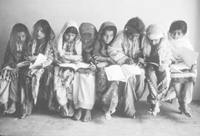
The real casualty Education in Fata has suffered a lot because of the US-led 'war on terror'
By Noor Wali Shah Continued strife and armed clashes between the security
forces and the militants in the violence-stricken tribal areas have
adversely affected the already neglected sector of education. The ongoing
military operations and unremitting violence in the tribal areas is not
only affecting the education of those students who are studying in local
educational institutions, but is also proving to be inconvenient for those
students of the Federally Administered Tribal Areas (Fata) who are
studying at the University of Peshawar. Besides other factors, the United States-led so-called 'war on terror' -- which the Pakistan Army and paramilitary forces launched on their soil against the al-Qaeda and its local collaborators in Fata along the Pak-Afghan border -- has badly affected education as most related institutions have either been damaged in the fighting or shut down because of the worsening law and order situation. Most residents of South Waziristan Agency have got their children admitted to schools in the nearby settled districts of Tank and Dera Ismail Khan. Similarly, most residents of North Waziristan Agency ñ where hundreds of people were killed and many others dislocated as a result of heavy fighting between the security forces and the militants ñ have got their children admitted to schools in the nearby settled districts of Bannu and Lakki Marwat. The lone Government Girls' High School in Miranshah, the headquarters of the militancy-hit North Waziristan Agency, was blown up a few months back by suspected militants. It is pertinent to mention that the militants have been opposing girls' education in the tribal areas in general and in the restive Bajaur, Mohmand, and South and North Waziristan agencies in particular. Talking to The News on Sunday, students of the two violence-hit tribal agencies -- South and North Waziristan -- who are currently studying at the University of Peshawar expressed deep concern at the deteriorating law and order situation in their hometowns. They also demanded of the government to change its policy of confrontation with the militants. Hailing from North Waziristan Agency, Akhtar Rasool Dawar, who is a student of MA Final Year at the Department of International Relations, told TNS that he could not obtain good marks in his MA Previous examination because he was mentally disturbed. "Some of my close relatives were killed in the military operation in my village," he recalls. "I was here physically, but was mentally with my family members, who were stranded in the fighting and were facing hardships of all sorts," Dawar states. Sharing his views on the solution to the problem that had shifted the world's attention to the once peaceful North Waziristan Agency as well as other tribal regions, he suggests that the government should engage the militants in negotiations. "The government should fulfil the legitimate demands of the local Taliban as well as the tribesmen, and work for promotion of literacy in the region," he stresses. Dawar believes that the tribesmen are carrying out suicide attacks on the security forces and government installations, because closure of schools has increased illiteracy and prompted the area's youth to resort to violent means. He hopes that the new government would create job opportunities for the people of the tribal areas, as that would help in curbing militancy in the region. Shehnaz Wazir, a young woman from North Waziristan Agency who is doing her BBA at the Department of Institute of Management Studies, says at times she has to stay in the hostel for three to four months at a stretch because the road leading to her village is mostly closed. "I even spent my preparatory leave in the hostel, which is an additional financial burden on my poor parents," she laments. Shehnaz views that jirga is the only solution to the ongoing problems. The local residents will fully cooperate with the government once it engages them in talks, she believes. Zahid Wazir, who is pursuing a PhD degree at the Department of Political Science, informs that he missed the university exams as he was stranded in his village in South Waziristan Agency because of the fighting. "I could not appear in several job interviews because of the same reason," he regrets. Bakhtawar Gul of North Waziristan Agency, who is a post-graduate student at the Department of Journalism and Mass Communication, also says that he faces problems in reaching his home due to road closure and the ongoing fighting. "When I go to my native village, I cannot prepare for my exams due to the intense cross-firing between the security forces and the militants," he adds. Zahid Wazir requests the government to hold talks with the militants and resolve the ongoing conflict amicably, as it is in the larger national interest. He says that the government should at least provide basic facilities to the tribesmen, so as to enable them to face the emerging challenges. Shazia Khan of Bajaur Agency, who is a student of MA Final Year at the Department of Electronics, urges both the government and the militants to find a peaceful solution to the problem. "I went to my village last year to prepare for the MA Previous examination, but due to the intense cross-firing between the security forces and the militants I could not study properly, which adversely affected my results," she says. "I was hopeless about my own and my family members' education in Bajaur Agency, so we moved to Peshawar about a month ago," Shazia informs. Speaking about the solution to the problem, she says: "Negotiations are the only way to solve the problem. The government should also accept the legitimate demands of the local Taliban to restore peace in the region." She also demands of the government to reopen educational institutions in Bajaur Agency and provide jobs to the local people, as "unemployment is the major reason behind the increasing suicide attacks." |
|
 permanent wars.
 only in further inculcating the sense of insecurity among the already
insecure masses of the country.
only in further inculcating the sense of insecurity among the already
insecure masses of the country.
 how can the new coalition government in Islamabad avoid this crisis?
"Appoint technocrats as heads of agriculture, livestock, finance and
production ministries," Mughal replies. When he was asked what could
be the possible way to give ministerial portfolios to technocrats, even if
the government agreed to his proposal, he replied: "By getting them
elected as members of the Senate of Pakistan."
how can the new coalition government in Islamabad avoid this crisis?
"Appoint technocrats as heads of agriculture, livestock, finance and
production ministries," Mughal replies. When he was asked what could
be the possible way to give ministerial portfolios to technocrats, even if
the government agreed to his proposal, he replied: "By getting them
elected as members of the Senate of Pakistan."