



|
|
|
|
 |
 |
   |
review What's in a
face? Zia
Mohyeddin column
Pakistan's
Nuclear Future: Worries beyond War By Rabia
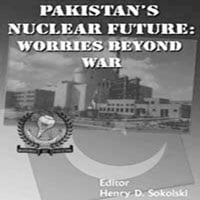
Akhtar 'Pakistan's Nuclear Future: Worries beyond War' is an edited book by Henry Sokolski which was released online on January 16, 2008. This book is the ninth edited volume in a series of volumes produced by the collaboration of Nonproliferation Policy Education Center (NPEC) and Strategic Studies Institute (SSI), US Army War College on International security and strategic issues. This volume is a compilation of commissioned studies (some of which have already been published earlier elsewhere) contributed by various prominent scholars highlighting the concerns related to Pakistan's nuclear future in eight chapters divided in three categories preceded by an introductory chapter by the editor. The first set of papers are
compiled under the theme of Islamabad's Proliferating Past 'Pakistan's Nuclear Future' is the recent most literature addressing concerns pertaining to Pakistan's weapons and civilian nuclear programmes. Given that this book addresses worst case scenarios, views expressed herein do not present an overall pessimistic picture about the future of nuclear Pakistan. A primary assessment shows this book to be a combination of both positive and negative indicators about Pakistan, where the positives overwhelm the negativity that does surround some of the futuristic assessments. Such negative connotations have been similar to the scenarios we have recently read in last three months on the security aspects of Pakistan's nuclear programme. Sokolski, who has contributed the introductory chapter in this book, thinks that the point of departure of this book from the current debate about Pakistan's nuclear programme is the examination of future challenges that a moderate government in charge of the nuclear arsenal and materials might face while enjoying peace time with India. In the first theme, exploring Pakistan's proliferation past tracing historical roots of the nuclear programme, Bruno Tetrais and George Perkovich conclude that Pakistan is likely to proliferate in the future. According to Bruno Tetrais some sanctioned and unsanctioned transfers are likely to take place in future. The fears of unsanctioned transfers arise, given the factor of religious sympathies, crisis scenarios where Pakistan would, in desperation, give pre-delegation authority for fear of preemption or decapitation or in the absence of real checks and balances in an undemocratic political setup. These fears are, however, speculative in nature and should not appear disconcerting because both the authors in their separate pieces, exhibit their confidence in the existing nuclear establishment to rise up to the challenge of proliferation, acknowledge Pakistan's excellent export control mechanism and applaud the Strategic Plans Division (SPD) for the seriousness with which it conducts nuclear matters post-A.Q Khan episode. Tetrais concludes by making a case for long term Pakistan-US alliance "based on the recognition of enduring common interests, allowing the restoration of mutual trust; and the diffusion of a culture of responsibility in the vast Pakistani nuclear complex, beyond the elites." George Perkovich (Part I, Chap III) understands the reason for Pakistan's covert nuclearisation pre-1998, given its obsession with India and concludes that regardless of sanctions and stringent export controls, nobody could have done anything to stop it. Gregory Jones (Part II, Chap IV) in his analysis of Pakistan's nuclear force requirements for minimum deterrent suggests that Pakistan should not move towards war fighting strategy in future because such a move would require doubling or even tripling of its nuclear arsenal. However, Jones concludes safely that Pakistan is content with its current nuclear forces which significantly raise the stakes for India in any major future conflict. He nevertheless predicts that any increase in Pakistan's nuclear forces is dependent upon an increase in Indian nuclear forces. Peter Lavoy (Part II, Chap V) examines Pakistan's strategy for ensuring security and survivability of its nuclear deterrent in peace time, crisis and war which has become a crucial question for Pakistan given the Indo-US deal which sets the balance in favour of India, if it materialises. The author is highly appreciative of the responsive strategic command and control arrangements in Pakistan. He has, however, highlighted some strategic concerns which have long term implications for Pakistan. According to Lavoy, the Indo-US deal will allow India to expand its fissile material production, access hi-tech intelligence, surveillance and reconnaissance (ISR) capabilities (which could prove lethal for Pakistan) and allow India to influence US policy circles in the advent of any future conflict with Pakistan. The author has left this debate open-ended raising some very important policy points that must be seriously considered by the Pakistani nuclear establishment before the Indo-US deal survives the test of time. Zia Mian, A.H.Nayyar, Rajaraman and Ramana (Part II, Chap VI) have explored the fissile material stocks in South Asia and the implications of Indo-US nuclear deal. According to the authors, India currently faces severe domestic uranium constraints and if the deal materialises it will provide India the ability to seek a fourfold increase in weapons production. The authors have analysed Pakistan's plans to expand civilian nuclear power by 2030 to 8.8 gigawatts generating capacity thereby giving Pakistan a nuclear-weapon-making mobilisation base in case India continues weapons buildup. However in case India does not continue with making more nuclear weapons, Pakistan would also be making power. Their overall conclusion complements the dangerous trend in weapons build-up by the Indo-US deal as suggested by Lavoy in the preceding chapter. Nullifying Pakistan's civilian reactor sector sabotage and attack threats, Abdul Manan (Part III, Chap VII) appears confident that "the controls around various nuclear installations and radiation facilities in Pakistan are enough to deter and delay a terrorist attack and any malicious diversion would be detected in early stages." Manan calculates the consequences of terrorist acts against Pakistan's nuclear facilities a very remote probability bordering on impossibility. The author, an official of Pakistan Nuclear Regulatory Authority (PNRA) very confidently rejects any possibility, whatsoever, of fabrication of Radiological Dispersal Devices (RDD) or WMD by a terrorist within the context of Pakistan. Chaim Braun (Part III, Chap VIII) extensively deals with the terrorist threat to Pakistani nuclear power plants in view of the current nuclear power expansion plan Pakistan is envisioning. Despite conducting some terrorist attempts at nuclear power plants scenarios, the author suggests that since the current nuclear trade bars Pakistan to construct large sized nuclear power plants, Indo-US deal can open space for similar deals for Pakistan with possible sponsorship from China, France, Canada or even Russia. Braun also positively asserts that a global communications and technical support network should exist to encourage technical flow between Pakistani nuclear personnel and their global partners. The author has re-played the insider-outsider threat in Pakistan that is also currently being projected in the West in general. However, he suggests that if Pakistan's internal security situation improves, then foreign experts can provide technical assistance to their Pakistani counterparts. This thought is encouraging and suggests that Pakistan should make internal political stability its foremost priority so as to benefit from the fruits of globalisation in the realm of nuclear commerce. The last chapter of the book has been written by Thomas Donnelly (Part III, Chap IX). The author has played out hypothetical strategic, operational and tactical scenarios whereby Pakistani government requests US assistance in liberating its strategic nuclear facility (e.g. Kahuta, chosen by the author) from the control of terrorists. Much like a James Bond scenario, the author concludes that the situation would be hopeless if attempted by the US and suggests that in order to deal with this kind of futuristic scenarios where terrorists capture sensitive nuclear facilities in Pakistan; the case for long-term Pakistan-US policy of engagement serves the best bet. Thereby, making a case where Pakistan should seek US help in securing its facilities and materials. Suggestions like these based on "hopeless scenarios" as depicted in this chapter are not surprising. We have recently witnessed a surge of such submissions by various American thinktanks and even from US Presidential candidates hinting at long-term Pak-US collaboration in the nuclear sphere. What does then this book overall suggest about Pakistan's nuclear future? The lessons we can take home are plenty but positive. We should not have any doubts that Pakistan figures very prominently in US strategic calculations as a state with which they cannot work unless Pakistan sets its own rules of engagement. This fact is evident from the conclusions drawn by the authors of this book. Regardless of all the worst case scenarios about the safety and security of Pakistan and the subsequent war games to secure Pakistani assets, it is clear that not even a single analysis in this book suggests that Pakistan will behave irrationally as a state with its nuclear weapons or use them recklessly. Although the authors have analysed extreme hypothetical scenarios which include terrorists and non-state actors endeavouring to gain access to nuclear weapons and materials, but one must understand that these fears are as true for Pakistan as they are for any other nuclear weapon state in this world. Even before Pakistan went nuclear, multitude of studies carried out in the West expressed similar concerns emanating from terrorism. All, what post 9/11 world has managed to do is to heighten these fears, BUT it certainly did not give birth to them. Pakistan understands that the threat of non-state actors for sabotage and attempts of the sort is real, thus it has put in place safety and security mechanisms under a highly efficient command and control set up that confidently surpasses any international standards existent today. Although this book presents a fair analysis of the challenges that the present or any future government in Pakistan might face, given its nuclear policy or expansion strategy, but most importantly the broader conclusions of this volume do not undermine Pakistan's ability to effectively deal with these challenges. For now, Pakistan's only limitation in achieving excellence in its nuclear ambitions is the challenge of achieving internal cohesion and stability -- a fact Pakistan is fully cognisant of and is determined to handle, with a positive outlook towards a bright nuclear future. Rabia Akhtar is a doctoral candidate in DSS, QAU working on nuclear issues. Email rabiakhter@gmail.com
By Amara Javed The title of this article posses an interesting question. Why are we so engrossed in a person's physical features as opposed to the emotional, mental and intellectual capabilities they might possess? Maybe it's because we live in an image-crazed, beauty-obsessed world. Maybe the answer is more philosophical. Most of us, due to time constraints or limited mental faculties, don't read philosophical works. Let's face it, most of us don't care and don't want to. But you'd be surprised at the answers some of the great minds behind these works would offer you. Arthur Schopenhauer is
undoubtedly one of the most influential philosophers of the 19th He doesn't feed us with a lengthy doctrine on moral righteousness. He explains our most innocently contrived judgments without admonishment so we understand that it's normal to form opinions on physical attributes alone. Schopenhauer states that "[it's] a fact that in private life everyone criticises the physiognomy of those he comes across, trying to secretly discern their intellectual and moral character from their features." It's true, we see people and we try to gauge how intelligent (or not intelligent) they are, or how popular, or how funny. And we really can establish the truth of most of these by a mere observation of their faces. Look at the stereotypes that television and books have presented to us: big eyes mean innocence, full lips mean sensuality, an upturned nose means haughtiness. Characteristics become easily identifiable through physical features, and most of the time we make correct assertions. Let's say we meet a person, just a random, run-of-the-mill stranger. We see their face, perhaps look into their eyes, gaze at their smiles; then we start to decide how we want to go forward. See? We decide the future of whatever relationship may develop purely on the countenance of said person. This is why first impressions are so important. Why you ask? It's all pretty simple. Schopenhauer believes that "the outer man is a picture of the inner, and the face an expression and revelation of the whole character." Therefore the characteristics, emotions, fears, thrills -- everything -- begins to reflect itself upon a person's face. We have all heard from our mothers how you can see a person's evil nature reflected in their face; or how a pious person has a saintly glow about them. It is a commonly held belief with a lot of substantial backing; you will notice its relevance as you look around you. Schopenhauer gives a beautiful analogy in an attempt to clarify his stance of first impressions: "An odour affects us only when we first come in contact with it, and the first glass of wine is the one which gives us its true taste: in the same way, it is only at the first encounter that a face makes its full impression upon us." At the time of the first impression, we have no preconceived notions. Therefore we can make speculations purely on how the person looks, and, come up with an entirely objective, unbiased opinion. Faces and the information they hold is greater than any words of genius anyone has ever spoken. Why? Well Schopenhauer explains it like this: "...the face of a man gives us a fuller and more interesting information than his tongue; for his face is the compendium of all he will ever say, as is the one record of all his thoughts and endeavors." The tongue can lie but a man's face cannot conceal the truth forever. He also asserts that it is foolish to try and separate the body from the soul. Both are essential ingredients in the make-up of Man. They are also reflections of each other -- the body reflects the soul and vice versa. Don't let this blatant judgment of people solely on the basis of looks give way to some form of moral guilt. It's human nature remember? And while most of us wish we were poetic enough to believe the cliche that it's the 'inner beauty' that counts, the truth is that we all know that's not the case. We look for outer beauty, and so does everyone else. And don't let the guilt get you, even a brilliance philosopher like Schopenhauer was ruthless when it came to ugliness: "how poor most faces are! There are some people whose faces bear the stamp of such artless vulgarity and baseness of character, such an animal limitation of intelligence, that one wonders how they can appear in public with such a countenance, instead of wearing a mask... there are faces, the very sight of which produces a feeling of pollution". Ouch. And I thought I was condemnatory. At least most of us do not openly rebuke people for being ugly. But we do think about it. So, what's in a face? Everything. The face lays everything out on the table for you. The trick lies in how you interpret those little complexities which run rampant on everyone's faces. Nature has done her best to present us with the truth about a person, only human error leads to lapses in judgment.
Zia
Mohyeddin column The title 'Poet Laureate' was created many centuries ago. The job of the poet appointed to this (thankless) exalted position was to write appropriate verse to commemorate royal weddings, coronations and funerals. The title of Malik-ul-Shoara (Chief of the poets) came into existence in the earlier part of the 19th century during the Qachar dynasty in Persia. The Malik-ul-Shoara performed precisely the same functions as the Poet Laureate, that is to say, he poeticised all royal occasions such as births, deaths, marriages, victories in wars, royal hunts and many other events. The only difference between the two was that the Poet Laureate was paid a pittance while the Malik-ul-Shoara received a handsome salary, almost as much as that of a Minister. The idea of a royal wedding poem reached England with the Renaissance when dynastic marriages prompted verse from the greatest poets of the era, Donne, Spencer and the like. In our part of the world, a royal marriage was commemorated with a sehra, a poem written in praise of the bridegroom -- the bride was rarely mentioned. Literally, the word means the bridal wreath that a bridegroom (and sometimes the bride) wears on his head during the marriage ceremony. In English, a formal wedding song is called 'epithalamium.' The tone and timbre of an epithalamium was no less laboured than that of sehra. Poets, modern poets, in particular, have found it hard to strike the right note in official verse especially at a time when a royal couple trip down the aisle. John Betjeman, a homely poet, who retained his position as a Poet Laureate for many years, had to write the epithalamium when Princess Ann wedded Captain Mark Philips: "Hundreds of birds in the air And millions of leaves on the pavement, Then the bells pealing on Over palace and people outside All for the words "I will" To love's most holy enslavement -- What can we do but rejoice With a triumphing bridegroom and bride?" In an interview with the Times, Betjeman said that his insipid lines were one of the most laborious things that he had ever done. It is understandable: modern poets can no longer focus, gleefully, as their ancestors did, on the bride's ritual loss of virginity. In his poem, Donne commands the bride to get up and: "put forth that warm balm-breathing thigh Which when next time you in these sheets will smother There it must meet another." The notable poet, Ted Hughes, husband of Sylvia Plath (he became much maligned in the literary world because it was thought that he drove Ms Plath to suicide) who also occupied the post of Poet Laureate, not so long ago, didn't do much better when he wrote the nuptial ode to Prince Andrew and Sarah Ferguson. The wedding took place during his tenure: "Far from this day which gave you each To each man and wife That's the chance and this the song Of a true and happy life Gold, gold as the honey Bee Soft as a thistle crown." In earlier times he couldn't have got away with such frisky lines. Funerals present another set of headaches for the Poet Laureate. Alfred, Lord Tennyson had a long, perhaps the longest, 40-years reign as the Laureate. When the Duke of Wellington, the victor of Waterloo, died, Tennyson thought he should write a funeral elegy. Wellington died in 1852 and by that time much of Britain had come to regard Wellington as an anti-democratic, dyed-in-the-wool Tory despot rather than the nation's saviour. It is to Tennyson's credit that his ode, though stately in grandeur, is a reluctant tribute to the "Iron Duke": Where shall we lay the man, whom we deplore? Here, in streaming London's central roar Let the sounds of those he wrought for, Echo round his bones for evermore... The sehras at a royal wedding represented a challenge for the poetic talent of the Laureate. There was nothing much the poet could do except to create metaphors for a 'true and happy life.' The poet was compelled to treat words punningly and he had to show great skill in weaving the names of the couple into the tapestry of the verse in such a way as to suggest more than one meaning. The couplets of a sehra written in Urdu are a very good example of contrived versification. The poet, not knowing much beyond the genealogy of the characters being tied in wedlock, resorted to by-play on words and other linguistic dexterities: "Khush ho ay bakht ke hai aaj tere sar par sehra Baandh Shahzaday Jawan Bakht ke sar par sehra" "Rejoice, O Fate, that you have been chosen To place a floral crown on 'Young Fate'" Jawan Bakht (Young Fate) was the name of the Prince. The Malik-ul-Shoara had to walk a tight rope. He had to be always on his guard for he never knew which metaphor (or simile) might offend his patron, the king. And if he was displeased, the king would not only take away his title, he would withdraw whatever munificence he had bestowed on the poet. There are instances of many poets who were reduced to penury because the king dispossessed them of all their worldly goods. The Malik-ul-Shoara was not necessarily the best poet of his era. (The Mughal kings in India often had more than one poet attached to their courts). He just had to be the one whose style and manner appealed most to the monarch. The later Mughal kings usually dabbled in poetry themselves. If a king fancied himself to be a poet he appointed his own ustad (mentor) to be the Laureate. Persian language has a vast store of qasidahs (panegyrics). Oddly enough, none of the great qasida writers, Saib, Urfi, Zahoori, were ever appointed as Laureates. The Laureate's task in the Indian subcontinent -- apart from State duties -- was to compose lengthy qasidahs for his patron. Qasidahs were written not just by the Laureate but other poets as well. It was the standard practice for poets, in need of subsistence, to submit a qasidah to the king in the hope of receiving some kind of financial reward. (The great poet, Ghalib, wrote many qasidahs not just in praise of the Empress, Victoria, but for minor functionaries of the Raj as well). His reward, alas, never went beyond a new, embroidered cloak. I find the qasidah to be the dullest form of poetry. Even the great Ghalib's qasidahs are full of hyperbolic praise. I have yet to come across a qasidah which does not descend into banalities -- and bathos. Whatever the rewards of a sehra or a qasidah, I doubt if there is a poet of any merit who does not echo John Betjeman's feelings about his laudatory verse.
|
|
 addressing the concerns that surfaced with the AQ Khan network and the
lessons that the international community can draw from the activities of the
network. The second set of papers are assembled under the theme of
Maintaining South West Asian Deterrence and the papers cover the nuclear
force requirements for Pakistan's minimum deterrence, analysing Islamabad's
nuclear posture and the presence of fissile materials in South Asia examining
implications of the Indo-US deal. The last theme explores the future of
nuclear concerns and worries that are likely to emanate, given an unforeseen
unstable political environment in Pakistan, from a futuristic perspective.
The papers under this theme relate to nuclear terrorism, security issues
related to the future of Pakistan's nuclear power programme and the measures
that can be taken to secure Pakistan's nuclear weapons and materials, in case
Pakistan disintegrates ensuing any unforeseen political crisis in the future.
addressing the concerns that surfaced with the AQ Khan network and the
lessons that the international community can draw from the activities of the
network. The second set of papers are assembled under the theme of
Maintaining South West Asian Deterrence and the papers cover the nuclear
force requirements for Pakistan's minimum deterrence, analysing Islamabad's
nuclear posture and the presence of fissile materials in South Asia examining
implications of the Indo-US deal. The last theme explores the future of
nuclear concerns and worries that are likely to emanate, given an unforeseen
unstable political environment in Pakistan, from a futuristic perspective.
The papers under this theme relate to nuclear terrorism, security issues
related to the future of Pakistan's nuclear power programme and the measures
that can be taken to secure Pakistan's nuclear weapons and materials, in case
Pakistan disintegrates ensuing any unforeseen political crisis in the future.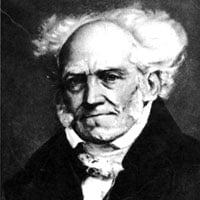 century. His essay 'Physiognomy' is one interesting piece of work. I was
completely engrossed in the way Mr. Schopenhauer managed to intellectualise
the most basic reality of human behaviour: that we (us humans) judge a book
by its cover. That is to say, we judge a person by the way they look. The
majority of the human race, however, would never admit to this; as if it's
some heinous crime against the laws of morality. And perhaps it is. But we
must come to terms with the fact that human nature and human morality lay at
opposite sides of the spectrum; what we strive to be (morally) and what we
are are two distinctly different things. This is precisely why I took the
time to read the essay.
century. His essay 'Physiognomy' is one interesting piece of work. I was
completely engrossed in the way Mr. Schopenhauer managed to intellectualise
the most basic reality of human behaviour: that we (us humans) judge a book
by its cover. That is to say, we judge a person by the way they look. The
majority of the human race, however, would never admit to this; as if it's
some heinous crime against the laws of morality. And perhaps it is. But we
must come to terms with the fact that human nature and human morality lay at
opposite sides of the spectrum; what we strive to be (morally) and what we
are are two distinctly different things. This is precisely why I took the
time to read the essay.