


|
|
|
|
|
 |
 |
   |
analysis Newswatch firstperson Shared
opportunities issue For
good or bad economy Need for
change
Crises galore! The left, as the current experiment in Latin America indicates, has much more to offer than the right By Aasim Sajjad Akhtar As the depth of the global financial crisis becomes clear,
numerous fallouts are coming to the fore. In the advanced capitalist
countries of Europe and North America, unemployment rates are higher than at
any time since the stagflation of the 1970s. Financial institutions and big
manufacturers continue to flounder despite the infusion of unthinkable
amounts of cash into financial markets by governments of all stripes. More
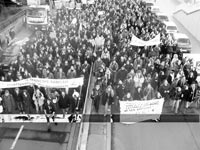
bankruptcies are widely expected. Social disaffection is widespread. Towards the end of last year, a youth rebellion gripped Athens and other urban centres in Greece. For a few days public administration was completely paralysed. While order has since been restored, the crisis of the existing socio-political order is intensifying at a dramatic pace. Across Europe sales of Karl Marx's writings have increased ten-fold. The latest upheaval is taking place in France. A successful general strike is likely to be followed by more militant actions in coming days. France is home to arguably the best organised working class movement in the western world, which has not been undermined as much by the neo-liberal onslaught as its counterparts in other European countries. However, the undertones of the French strike demand further attention. Observers of France will know that tensions between the white majority and a rapidly growing immigrant population (hailing primarily from Muslim North Africa) erupted a couple of years ago in the shape of mass riots on the outskirts of Paris. As a general rule working class movements can tend towards xenophobia in times of crisis, especially where highly visible and oppressed minority populations are to be found. The right-wing narrative posits immigrants as stealers of jobs that rightfully belong to native workers. The global financial crisis is at least partially
explained by fact that capital has been given complete freedom to enter and
exit national economies, thereby ensuring maximum profits for financial
speculators. In contrast, labour is not allowed free entry and exit,
immigration laws having become increasingly more draconian over the past two
decades or so. The logic is obvious: immigrant labour from the third world
inevitably works more, for less, than local unionised workers. There are also
demographic concerns; for example, in the United States immigrants from
Central America have become the biggest minority community in the country.
Within a decade or so, whites will no longer be the majority of the
population of the US. In France there has been a huge uproar about the wearing of hijab (veil) in the public sphere, particularly in schools. State regulations prevent the wearing of head-dress in educational institutions, and this has been challenged by Muslim immigrant communities who argue that restrictions on hijab constitute an encroachment on fundamental rights, including the right to freely practice religion. Such contradictions will continue to emerge with increased immigration. Far-right French politician Jean-Marie Le Pen incited hatred against immigrant workers as one of the planks of his presidential campaign in 2006 which he lost to the also rightist Nicolas Sarkozy (who, incidentally, had initiated major legislation against immigration as the interior minister). In Austria, the far right has also made major gains. Where the left is weak or discredited and cannot build bridges between local unionised and immigrant workers, the right is able to make major gains. Indeed, the rise of fascism in Italy, Germany and Spain in the 1920s and 1930s was a function of corporatist strategies by the state in which exclusivist nationalism replaced the expansive ideologies of the left. Then too, the structural context was an economic and cultural crisis precipitated by the First World War. The present crisis is only now beginning to unfold. It remains to be seen whether left forces can organise themselves to present an alternative to the right. The stock of both is likely to rise as the legitimacy of the existing socio-political order is further eroded. Outside of the first world, there are also conflicting signs. In Latin America, yet another presidential election – in El Salvador – has recently been won by a leftist. In the Muslim world, it is the religious right that continues to make gains. The question of who will emerge the stronger is, of course, a contextual one. But it is also a question of who is able to provide a meaningful alternative to the present system. Here the answer is clear. The right – in Europe, Muslim countries and elsewhere – simply does not have any solution. The religious right invokes a mythical past, while the Le Pen-type right blames others for the problem. Neither is able to offer a viable model to fix the problem. This is not to suggest that the left has a foolproof plan, but as the current experiment in Latin America indicates, it has much more to offer than the right. Capitalism will of course seek to ride out the crisis. And where there are no challengers to the system – and I do not put the right into this category – the chances are that the system will survive in a slightly modified form. The United States is the primary example in this regard. In the two-party system that prevails in that country, there is simply no space for a third party, and this is why the Obama administration will be able to make do with bail-out plans and moralistic pleas for 'reform'. In Pakistan, we are seeing the rise of a state-sponsored Islamic 'alternative' that exploits long-standing class and other inequalities. It is a moot point whether the Islamists continue to be covertly backed by the state. The point is that ordinary working people want change and the Islamists are the only obvious force on the political horizon that speaks about change (notwithstanding Nawaz Sharif's recent exhortations to this effect). I believe that the rightists – here and abroad – will be exposed sooner rather than later. What comes afterwards is anybody's guess. Or perhaps I should say that it will depend on whether the left reconstitutes itself as a meaningful force. Marx has become a bestseller. What better time than now?
Newswatch Concerning the English language 'as she is spoke'
By Kaleem Omar The bit about the language "as she is spoke" comes from a remark made by the late great American poet Ezra Pound, who could be pretty earthy sometimes about lexical matters, though his own verse demonstrates time and time again that he was, in fact, one of the twentieth century's great masters of the English language and a superb craftsman to boot. This fact was publicly acknowledged by no less a person than the Nobel Prize literature laureate T S Eliot when he dedicated his poem The Wasteland (widely regarded as the twentieth century's greatest poem in English) to Ezra Pound, calling him "il miglior fabbro" – Italian for "the better craftsman". George Bernard Shaw, who was Irish but spent most of his life in England and was himself a Nobel Prize literature laureate, took a characteristically iconoclastic view, however, about language, politics, middle-class morality and a host of other things. He didn't think much of America or the version of English spoken in that country, and once famously remarked that "England and America are two countries separated by the same language." In this case, however, he may well have been right. In England, route is pronounced root, as in: root, branch and tree; in America, it's pronounced rout, as in: the Lakers versus the Celtics game was a total rout – even the skimpily-clad, high-kicking cheerleaders were booed. When you take Route 87 North out of Manhattan, you end up in Albany, the capital of the State of New York. In England, however, you could look for that kind of Route all day and never find one. Better, then, to take the Great North Road out of London and head for Rugby, the town where Tom Brown went to school and where the game of rugby was invented. It is another matter that rugby is now also played in France, where linguistic purists hate all things English – both English English and American 'English'. To make matters even more confusing, Route 87 North is also known as Major Deegan. Perhaps, Major Deegan was an American Civil War hero who stood his ground and kept his troops from being routed by the forces of the South. Rooted or routed, one thing is for sure: when an American says schedule, he says skedule; but when an Englishman says school, he says skool. The question is what do Americans call schools? Shools? Or what? When I posed this question to Lyce Doucet of the BBC at a dinner party at her house in Islamabad one evening back in 1989, she thought it so funny that she insisted I repeat it to her American guests. Needless to say, they were not amused. In England, people laugh (weather permitting, of course); in America, they laff (no matter what the weather). In England, when you ask people the time, they say it's ten to three; in America, they say it's ten of three. If the English poet Rupert Brooke had been American, that line in his famous poem The Old Vicarage at Grantchester would have read: "Stands the Church Clock at ten of three?" instead of "ten to three?" In England, eccentric old, gout-ridden Empire Hands may call upon Prime Minister Gordon Brown and hand him a petition demanding the restoration of the North American colonies. In America, however, you don't meet President Barack Obama – you meet with him. In America, even lesser mortals meet with each other, rather than simply meeting each other. In England, things happen on Tuesday; in America, they happen Tuesday, as in: President Obama said Tuesday he didn't have any plans on his desk right now to invade Pakistan. The New York Times, however, seems to think that he does. Incidentally, or perhaps not so incidentally, the New York Times is controlled by the Jewish Sulzberger family. In England, mobile is pronounced mow-bile (as in telephones); in America, it's pronounced mow-bill (as in Slick Willie Bill Clinton). There is even a branch of sculpture in America called mow-bills, as in the late Alexander Calder's free-form creations. There are Calder mow-bills in all sorts of unlikely places. There's even one in Chicago, President Obama's hometown. The American poet Carl Sandburg called Chicago the "City of Big Shoulders". I can't imagine any contemporary English poet calling London that, not with the likes of the wafer-thin former fashion model Twiggy still around. Bundle, of course, is both American and English slang for a lot of money. But what is bundling? The 1811 Dictionary of the Vulgar Tongue tells us that bundling is a term used to describe the practice of "a man and woman sleeping in the same bed; he with his small clothes, and she with her petticoats on; an expedient practiced in seventeenth and early eighteenth century America on a scarcity of beds, where, on such an occasion, husbands and parents frequently permitted travelers to bundle with their wives and daughters." "The custom is now abolished," the dictionary adds, straight-faced. And a very good thing, too, that it is. In England, there is an eastern coast and a western coast. In America, there is neither; there is only an East Coast and a West Coast – the latter being a sort of generic term for the whole 2,000-mile sweep of coastline from California's southern border to the State of Washington's border with Canada. California, which bills itself as "The Golden State", was named by Spanish explorers for an island paradise in a sixteenth-century novel. It has beckoned dreamers ever since. Some, from the frantic gold rushers of 1849 to would-be stars of stage and screen today, have come seeking wealth or fame, or both. Others, like the mission-building Spanish priests of yore or today's fuzzy New Age spiritualists like onetime US presidential candidate Jerry Brown (aka 'Captain Moonbeam') have followed a more otherworldly call. Back in the 1960s, there was even an American Top of The Pops song called California Dreaming – pronounced dreamin', of course. So what's a circumbendibus, then? Well, if you must know, it's English slang for a roundabout way or story, as in: I took such a circumbendibus to get to California. Here, then, is a serendipitous case of Shaw's two languages – English English and American English – becoming lexically joined at the hip like Siamese twins. Happy circumbendibusing, everybody! But Indian writer Gita Mehta, author of Karma Cola and several other works, said: "The art of dialing has replaced the art of dialogue", though Bill Gates would say that dialing itself became passe long ago and has been replaced by push-buttons and touch-computer-screens, as in those we saw on CNN and Fox News during Obama's election.
Communication: the missing links There is a serious shortage of strategic communication practices in Pakistan By Sheher Bano Menin Rodrigues, president and chief executive officer of
Shamrock Communications (Pvt) Ltd, is a seasoned campaigner and a well-known
name in the marketing and media circles of Pakistan. He has been associated
with the media in Pakistan since 1976 when he first started writing as a
correspondent for the Morning News, a leading national daily of the time.
Since then, Rodrigues has held several senior marketing and public relations
positions in leading organisations of the country. Regarded and recognised as
a pioneer in strategy-based public relations practices, he has set up public
relations offices, introduced unique public relations initiatives and managed
events for heads of states. Moreover, his pioneering practices define the
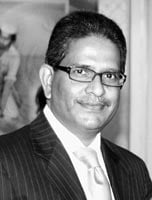
public relations industry today. Menin Rodrigues has a master's degree in business administration, a diploma in journalism and mass communication, and is a certified trainer in strategic public relations communications and media training. He practices social science through his writings, and contributes a good deal of his time to charitable and community work. He is the recipient of many international and national awards, prominent among them being the ITT Worldwide Award for Creative Public Relations. In addition, he has counselled some of the leading business firms of the country. The News on Sunday interviewed Menin Rodrigues recently. Excerpts follow:
The News on Sunday: How would you define the term 'strategic thinking'? Menin Rodrigues: Strategic thinking leads to good strategic planning; it also uncovers potential opportunities for creating value and, thus, makes goals clear and definable. Strategic thinking is a way of understanding the fundamental drivers of a business and persuasively challenges conventional thinking about anything that is achievable. Therefore, good strategic thinking translates into goals that give way to the right action to meet the future needs in the desired period of time. It is a little twisty, but when indulged into makes a lot of sense. TNS: How has the concept of strategic communication developed in Pakistan, both in the public and private sectors? MR: Basically, strategic communication is about systematic planning and realisation of information flow, communication, media development and image care in a long-term horizon. It conveys deliberate messages through the most suitable media to the designated audiences at the appropriate time to contribute to and achieve the desired long-term effect. I think there is a lack of understanding of how strategic communication can help achieve organisational goals. Generally, we have an attitude of either procrastinating things or doing things in haste. Future planning cannot be done instantly by a drop of a hat or by an order or decree; it needs to go through a process of study and strategic thinking. Since we are not accustomed to planning, we tend to ignore the importance of strategic communication in both the public and private sectors. TNS: Can you outline in broader terms what communication strategies do we need to develop in all sectors of economy to achieve robust growth at the macro level? MR: Firstly, let us accept the fact that, because our strategic planning is done in haste, we tend to be led by what we are fed. For example, we justify the present economic crisis in the country by linking it with the global financial crisis, even though the two may not be related; ours is a unique socio-political-security triangle that defines the economic health of the nation. Only a few years ago, all the economic indicators were positive. Suddenly, everything seems in shambles: for example, the inflation rate has increased from only 7 percent to 27 percent. This huge difference is reflective of the wide gap between myth and reality. It seems there is a serious shortage of strategic communication practices in Pakistan. Logically speaking, if we deploy professional services – a kind of a public-private sector initiative – and get the right message through the right media to the right audience at the right time with the right effect, robust growth at the macro level will fall in place. TNS: How can we develop the concept of integrated communication in the public sector? MR: The concept of integrated communication can be successfully implemented in public sector organisations if it is looked at as a holistic approach to integrating all the work being carried out in public sector domains. It is not an easy task considering the fact that there are so many factors involved in it. In the developed countries, public sector organisations operate successfully because of their integrated management and marketing efforts. We too can learn from their experiences and successful models. Moreover, in order to introduce the most practical and workable template of integrated communication in public sector organisations, the induction of qualified personnel is necessary. TNS: Are we using effective communication strategies in the marketing and advertising world? MR: Yes, today we do have an excellent talent pool in our marketing and advertising worlds, and they do put together some powerful campaigns using a good mix of communication strategies. The past was a different ball game altogether, because there was no technology. However, I believe back then our marketing and advertising stalwarts used to practice strategic thinking in the development of their campaigns. In short, technology and human endeavour should be combined to give marketing and advertising a polished look. We also need strategic communication thinking institutions where young brains can interact, exchange ideas, talk about the future and simply think. TNS: What are the key criteria for developing an organisation's strategic vision? MR: Everybody considers public relations as their first cousin, because it is believed that if we can have good relationship with everybody from a politician to a police officer we can get our work done based on this affinity. Over the years, this has been the role of public relations practitioners or the public relations departments in public sector organisations. This fallacy is mainly due to misrepresentation by our leading advertising agencies, which misguide companies that they can effectively manage a public relations campaign. What public relations – and only public relations – can do is to lay the foundation for trust and credibility. Marketing cannot do this. Advertising cannot do this. Why? Because only public relations bases its influential powers on action. Only public relations operate on the premise that 'what you do speaks so loudly that I cannot hear what you say'. Only credible relationships established by public relations professionals between an organisation and its stakeholders can nurture an organisation's reputation among its selected audiences. However, of late, this profession has got a lot of recognition and has been accepted as an important tool of management. Therefore, the key criteria for a strategy-based communication campaign would be: 1) WHO: the thinking process to defining audiences; 2) WHAT: formulation of clear external communication objectives; 3) WHEN: the timing of strategic plans; and 4) HOW: selection of mediums for implementing the strategy. TNS: Why does a top-hierarchical management change in organisations leads to job dissatisfaction and turnover? MR: Unfortunately, undoing the past things and introducing abrupt changes by the new management has become an established norm in some organisations. Ideally, a new management should review the communication goals set by the previous management team and fill in the gaps, if any, with newer plans by combining the past and the present to achieve future goals. To this end, a lot of planning meetings, for developing trust and confidence, should be organised at all levels of management to give way to new ideas. One cannot simply change things at his/her own sweet will just to make one's presence felt as a new management; a gradual change can yield better results. TNS: Strategic communication is not taught in schools and colleges, and the subject is introduced only at the master's level. Do you think it is time to review this? MR: Strategic communication is part of many theoretical subjects, but no graduate will come out of an institute / university as an expert in this field unless he/she opts to spend some time researching in a specialised business school. Barring a few universities, in-depth studies of issues management and research analysis is missing in most of the institutions. Therefore, we need to establish strategic communication schools, societies and think tanks, where young people can throw new and innovative ideas and find solutions to problems that will affect them in the future. Once they develop their thinking pattern, they can become good strategic thinkers. TNS: What is the difference between the media and marketing in terms of communication strategies? MR: After spending a lot of time in both the fields, I would like to say that the two, being distant relatives, are critically enjoined in the minds as twins playing different ball games on the same pitch. And therefore, if an organisation is strategically aligned and has integrated communication as a core function, it can come up with a very powerful business model through synergising. The positive thing is that the concept has been acknowledged lately and more and more companies are looking towards marketing and public relations experts to direct and find a common denominator in their communication strategies. Organisations that work with public relations firms also tend to and usually insist on highlighting the promotional aspect of a story, which makes it unfit for newspapers due to its low news value. Therefore, at the agency level, there is a need to differentiate between what is news and what is not news.
History has often proved that the vital nature of freshwater provides a powerful incentive for cooperation
By Asma Rashid Faced with increasing population, growing food demand and
climate change, water is becoming a progressively scarce and fluctuating
resource. As a result, there has been an increasing competition between
countries vis-à-vis their right to water. River basins shared by more than
one country cover over 45 percent of the world's land surface area. Currently,
263 trans-boundary or international river basins are being shared by two or
more countries. Reservoirs of freshwater also move silently below
international borders in underground aquifers. Currently, there are more than
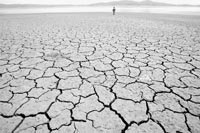
270 known trans-boundary aquifers. In this context, sustainable development and management of water resources are the major short- and long-term challenges. Global warming, which is changing the rainfall patterns and increasing the risk of water-related disasters like floods and droughts, is further worsening the situation. Moreover, glaciers and ice fields – the immense reservoirs of freshwater stored in the world's mountainous and polar regions – are also melting at a fast speed. It is projected that 1.8 billion people would be living without enough water by 2025, thus competition over this precious resource could become an increasing source of tension – and even conflict – between countries. "Fierce national competition over water resources has prompted fears that water issues contain the seeds of violent conflict. If all the world's peoples work together, a secure and sustainable water future can be ours," opined Kofi Annan, former secretary-general of the United Nations. An international day to celebrate freshwater was recommended at the 1992 United Nations Conference on Environment and Development. The UN General Assembly responded by designating March 22, 1993, as the first World Water Day. Thereafter, this day is celebrated every year to focus attention on the importance of freshwater and to advocate for the sustainable management of freshwater resources. This year, the theme of the World Water Day is 'Shared Water – Shared Opportunities' and special focus has been placed on trans-boundary waters. The objective emphasised is that nurturing the opportunities for cooperation in trans-boundary water management can help build mutual respect, understanding and trust between countries, as well as promote peace, security and sustainable economic growth. The United Nations Educational, Scientific and Cultural Organisation (Unesco) leads the activities of the World Water Day 2009, with the collaboration of the United Nations Economic Commission for Europe and the Food and Agriculture Organisation (FAO). One of the major aims of water management is to continually reconcile the competing interests of all water users – be they individuals, corporations, interest groups or sovereign entities. The management of water-related conflicts, confrontations, competitions and cooperation is, thus, part of water resource management in its broadest sense. This may range from overseeing peaceful cooperation between users of a resource to facilitating negotiation of disputes between countries. Though shared water resources may be a source of conflict, their joint management should be strengthened and facilitated to promote cooperation between the users. The World Water Day holds great significance for Pakistan. Melting water from the Himalaya, Karakoram and Hindukush glaciers contributes more than 60 to 70 percent to the flows of the Indus River System. The agrarian economy of Pakistan – with about 90 percent of the land being arid, semi-arid or hyper-arid – depends largely on this water for irrigation. The trans-boundary Indus River System has been a hotspot between India and Pakistan since the partition. In 1960, the Indus Water Treaty facilitated by the World Bank, provided the basis for dividing the waters of the Indus Basin Rivers between India and Pakistan. The Indus Water Treaty gave three eastern rivers – Ravi, Sutlej and Beas – to India and three western rivers – Sindh, Jhelum and Chenab – to Pakistan. As an upper riparian, India is allowed specific uses of water from these rivers, but such projects should not curtail downstream flow in any manner. The generation of hydel electricity is one such use, but it is a highly circumscribed privilege: there should be no reduction of water flow to Pakistan. However, against the provisions of the treaty, India's Baghliar Dam project has badly affected water flows to the Chenab river, thus the venture has resulted in conflict and heightened tension between the two countries. Another dimension to the issue of trans-boundary water management is that of climate change and global warming. The ever-increasing concern of glacier depletion due to global warming, resulting in decreased flows, threatens agricultural economies in particular. There is a consensus in the scientific community that the Himalayan glaciers are receding faster than glaciers in any other part of the world. On average, the Indus River System receives up to 80 percent of its flows from snow and glacial melt. This figure is likely to increase considerably over the next two to three decades, followed by decrease in flows due to glacier depletion. The cross-boundary-induced climate changes in the Himalayas pose a serious threat especially to Pakistan; the excessive water that the upper riparian (India) is unable to store will be leashed into the country at a short notice, bringing widespread damage to its assets and agriculture. The total number of water-related interactions between countries is titled in favour of cooperation: there have been 507 conflict-related events as opposed to 1,228 cooperative ones. This implies that violence over water is not a strategically rational, effective or economically viable option for countries. In the 20th century, only seven minor skirmishes took place between countries over shared water resources, while more than 300 treaties were signed during the same period. The UN Convention on the Law of the Non-navigational Uses of International Watercourses was adopted on May 21, 1997, after 27 years of negotiations. It sets out the basis rights and obligations between countries relating to the management of international watercourses. International water law concerns the rights and obligations that exist, primarily between countries, for the management of trans-boundary water resources. Such legal rules and principles are dedicated to preventing conflict and promoting cooperation of shared water resources. The primary substantive rule of international law is that countries must use their international watercourses in an equitable and reasonable way, and without causing significant harm to their neighbours. In the context of conflict-ridden Indo-Pak relations, the Indus Water Treaty has a unique standing. It has survived two wars and has functioned well so far. The treaty serves to act as a model for conflict resolution by providing the mechanism for settlement of disputes related to the sharing of waters of the Indus Basin. In the scenario of depleting water supply, major water storage projects are needed to be built and operated with regional collaboration. Regional peace, economic development and cultural preservation can all be strengthened by countries cooperating over water. "Water has the power to move millions of people – let it move us in the direction of peace," said Mikhail Gorbachev, former president of the USSR. (The writer is scientific information officer at Global Change Impact Studies Centre, Islamabad. Email: asma.ras@gmail.com) For comments and feedback: Email: editorpe@gmail.com
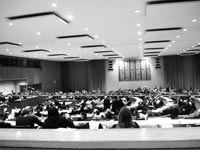
Full of contradictions The inside story of Pakistan's participation in the 53rd United Nations Commission on the Status of Women By Ayra Inderyas Under the theme of 'Equal Sharing of Responsibilities between Women and Men, Including Care Giving in the Context of HIV/AIDS', 92 member countries, UN agencies and NGOs gathered in New York for a two-week session of the United Nations Commission on the Status of Women (UNCSW) that ended on March 13. Responding to the theme, Sindh Minister for Information Shazia Marri read a statement on March 4, highlighting the actions taken by the Pakistani government to uphold gender equality and women empowerment in the country. In particular, she mentioned the Benazir Income Support Programme under which Rs1,000 per month will be given to women-headed poor households every alternate month and the Gender Reform Action Programme focussing on gender mainstreaming. Marri's statement categorically emphasised that women
had been given increased role in every sphere of life and they were now
serving in every field – a situation many women's rights activists and
groups dream of, but which may have nothing to with reality. In fact,
Pakistani women face several challenges and obstacles to achieving their
due place in society. Listing the government's achievements, Marri's statement mentioned that there were currently 17 women senators and 76 women MNAs in Pakistan. She especially drew attention towards the recent formation of the Women Parliamentarian Caucus (WPC). However, commenting on the WPC in one of the parallel events, Tahira S Khan, a professor of Political science in New York, said it was a usual elite club of women, comprising wives or sisters of feudal lords, who have no commitment to gender sensitisation and who lack independent thinking. "The recent signing of a peace accord in Malakand Division with zero women representation and the lack of women at the decision-making level are evident of their status in Pakistan," she added. Shazia Marri's statement also mentioned the establishment of the Gender Crime Cell for prevention of women harassment at workplace. Knowing the insurmountable barriers that women, especially those of lower socio-economic strata, face in seeking judicial redress, one wonders if the Gender Crime Cell will make much difference. Marri, in her statement, considered Pakistan's ratification of the Saarc Convention on Trafficking in Women as a step towards promoting gender equality. If that matters, Pakistan has already signed and ratified a number of international treaties: the United Nations Convention on the Elimination of all forms of Discrimination against Women; International Covenant of Economic, Cultural and Social Rights; and International Covenant of Civil and Political Rights to name just a few. However, to translate international commitments into
domestic law, concrete mechanisms are needed. Women's contribution to the
agricultural sector is far from being recognised and remunerated equally
in Pakistan, while Marri noted in her statement that tracts of cultivable
lands have been allotted to women farmers to help them earn their
livelihoods. Speaking on HIV/AIDS and equal sharing of responsibilities
between women and men, including care giving, Marri said the Pakistani
government's commitment to fighting the disease is reflected in the fact
that it finances 80 percent of the related expenses. However, the situation on the ground tells an altogether different story. According to a 2008 UNAIDS report, 85,000 people are living with HIV/AIDS in Pakistan. Moreover, it has been confirmed by the National Aids Control Programme (NACP) of the Ministry of Health in a report that the HIV epidemic is concentrated among injecting drug users, and their infection rate increased to 21 percent in 2008 from 10.8 percent in 2005. To contain this epidemic, Pakistan launched the NACP in 1988. Its objectives included prevention of HIV transmission, establishment of surveillance mechanisms and research on the disease. Moreover, the National Aids Policy was drawn in 2003 and the National Aids Strategy in 2007. The latter focusses especially on women, children and young adults. However, access to health services for the most affected population – including injecting drug users, male and female sex workers, etc – is still low and does not even meet the minimum standards. A 2007 World Bank report warned that Pakistan faced the risk of rapid increase in the incidence of HIV if immediate steps were not taken. The increasing HIV pandemic calls for concerted and serious efforts to address all related issues, such as stigma and discrimination; dearth of information; lack of awareness about safe sex; drug abuse; poor access to health care facilities, especially in rural and semi-rural settings; spread of quackery; and unethical medical practices playing havoc with the lives of innocent people. Women are most vulnerable to sexually transmitted diseases, According to one estimate, women make up 60 percent of the population living with HIV/AIDS. They also have the least access to reproductive health and HIV/AIDS prevention measures. In February, this scribe questioned a group of 78 women about HIV/AIDS during a community seminar at a slum dwelling on the outskirts of Lahore. Of those women, only two knew about HIV/AIDS, which speaks volumes of the lack of awareness about HIV prevention among poor women. In Pakistan, strong stigma and taboos are attached with discussing safe sexual practices. As a result, women or girls involved in commercial sex industry end up getting sexually-transmitted diseases and stay at a high risk of catching HIV/AIDS. A misconception that HIV is only transmitted through sex workers is also widely prevalent. The real causes of HIV/AIDS are hardly taken into consideration. Awareness on the use of contraceptives is rare among women. Besides this, unequal power relations in families do not allow women to have any say in their reproductive decision-making. In another parallel event on March 5, Salman Ahmad of Junoon was seen among the panelists advocating increased awareness about HIV/AIDS. "Our job is to open up discussion on issues related to HIV/AIDS through art and culture. The rest of the responsibility lies with politicians, religious leaders and the media, who should break the silence and raise awareness about HIV/AIDS," Salman said when asked how celebrities can bring about a change and support care givers. Will these celebrity initiatives ever reach out to those who are infected with HIV/AIDS and are in need of special care, including financial support? Or will celebrities make fortunes in the world of glamour on the pretext of raising awareness about HIV/AIDS? Women bore the burden of care giving, but it also stopped them from adopting professions of their choice, Shazia Marri admitted. She further stated that women are paid less for their work as compared with men, their work is not legally recognised, they are often deprived of the benefits of labour legislation and they remain confined to informal sectors. One hopes that women parliamentarians will take up these issues seriously and devise concrete strategies to introduce the concept of gender budgeting. The 2008 Global Gender Gap Report of the World Economic Forum ranked Pakistan at 126th position. In terms of women labour force participation, the country was ranked 121st of 128 countries. The Pakistani government had introduced many plans and policies – such as the National Employment Policy, National Plan of Action, Poverty Reduction Strategy Paper and Gender Reform Action Plan – to introduce gender equality in the country, Pakistan's Acting Permanent Representative to the UN Farukh Amil said during the 47th session of the United Nations Commission for Social Development on Feb 5, 2009, in New York. In order to witness the practical realisation of aforesaid policies and plan, concerned government quarters need to devise a comprehensive mechanism with transparent monitoring and accountability procedures. Following a long debate on March 13, most member states at the 53rd UNCSW were able to evolve consensus. This decision was hailed by the majority of member states, including Pakistan. However, a few member states disagreed on the pretext that the consensus fell short of their expectations. In a nutshell, the consensus included recommendations for governments, civil society and intergovernmental organisations for implementation at international, national, regional and global levels. It called for implementing the Beijing Platform for Action 1995, and reducing predicaments to ensure women participation in all spheres of public and private life. Regarding care giving, the UNCSW demanded speeding up efforts to achieve global access to prevention programmes, treatment, care and support by 2010. In addition, the UNCSW stressed governments to include value and cost of unpaid work in polices and budgets, guarantee women and men access to maternity and paternity leave, and increase access to public infrastructure and transport. The commission also adopted a draft resolution urging governments to create conducive environment for women empowerment, and reinforce women economic independence, inheritance and property rights. It further called for preventing violence against women and girls in relation to HIV/AIDS; ensuring women's sustained access to health care services; strengthening health care faculties, including sexual and reproductive rights; and addressing situations where girls are forced to drop out from school due to care giving burden. The consensus also called government and international donor community to ensure sufficient funding for local HIV/AIDS programmes. For good or bad Revival of students unions with strong political affiliations does not augur well for academic peace, but there is no alternative By Gulnaz Nisar Bhutta The government's decision to revive student unions has
given rise to a lot of questions and doubts in almost all the concerned
quarters. Most importantly, all the stakeholders, especially parents and
university managements, are apprehensive that the interference of political
parties in union's activities will lead to violence and disruption of academic
activities; easy flow of money and arms; political support to racketeers and
professional student leaders; and, consequently, a further decline in the
standard of education. However, in interviews conducted by this scribe, many students and teachers also said unions provided a systematic and orderly solution to discipline on-campus political activities of students. Moreover, unions are important to nurture future leadership by providing a training ground for aspiring politicians and promoting democratic norms in the younger generation. Universities are expected to be characterised by a certain standard of research and higher education. Politicised or less politicised, unions generally provide support and services to students and assist them in working towards the development and betterment of their university / institution almost everywhere around the world. The situation in Pakistan is, however, different. In the current scenario, most students prefer to stay away from politics. For most, politics is not a good career option; neither does it solve any of the problems faced by the country. Moreover, many of the mainstream political parties exploit the undirected and emotional force of youth to further their narrow interests by employing student politicians to create pressure groups. Politically motivated student groups and unions supported by their strong political affiliations have mostly caused trouble for university administrations, faculty members and other students too. However, banning student unions entirely could never be a solution to any of the problems related to academic peace. The last 25 years of student politics without unions have done more damage than good to our institutions of higher learning, as well as to the standard of education. Absence of student unions gave way to on-campus party politics that led to violence, proliferation of arms and deterioration in the standard of education. As a result, our institutions of higher learning were divested of the educational environment that produces freethinkers, leaders and change-makers. Consequently, we have a generation of apolitical, apathetic and self-centered youth, which is incapable of thinking beyond the immediate concerns and myopic vision of being able to secure a 9-5 job, or settling down somewhere abroad. Most of the students have a dilapidated view of politics and they loath the present leadership. Unions, ideally speaking, produce student leaders who would lead the country in the future. On the contrary, party politics have greatly disillusioned our young lot with the current political scene and the leadership in the country. And this process, over the years, has created a large population of apolitical people who just believe in meaningless criticising rather than getting constructive ideas across. We have more than enough of critics, but we need people to get to work with all their enthusiasm to cleanse what they call dirty. Student unions provide the ultimate training and breeding ground for our future leadership. In addition, they provide practice ground for democratic thinking and governance. The closure of the unions, back in 1984, triggered the detrimental process of depoliticisation of our youths. The question that whether political groups should be allowed or disallowed on campuses, or whether unions should be allowed to have political associations, is not only difficult, but also convoluted. Political interference or political associations of students have its pro and cons, but at the same time it must be realised that it is impossible to exclude politics from the campuses. Students need to gather around causes and ideologies in order to vanguard their rights; their right to association should not be defied. Simultaneously, links between national political parties and their student factions need to be regulated, but an imprecise, incomplete, vague and arbitrarily concocted solution will not do. The majority of students – who are badly disillusioned with politics and the government's bill of students' regulations – both demand and suggest that campuses should be kept clear from politics. However, this is disrespect for politics; disrespect for democracy and disrespect for the students' right to association that is enshrined in the constitution. At the same time, it is also important that student politics is not hazy, and is not vulnerable to the influence of 'professional' politicians who hijack genuine student movements and protests. Students should be allowed to team up ideologically in student parties, free from any political interference. It is hoped that the revival of student unions will bring back the disenchanted and marginalised student groups (the left groups, the cultural associations, study circles, etc) into the system. It is important to have these entities, because compared with the currently politically active lot, they have a wider acceptability among the general student community. It is also important that our youth unites against their destinies being written by the ill-willed political conspiracies. Besides, politically motivated students are not the only problem: at times, valid problems and concerns of students are left unheard, which ultimately leads to violence and unrest in an academic institution. As we all know, university managements and administrations often show a laidback attitude in finding a solution to students' problems. Institutional peace and smooth running of academic activities is impossible to ensure without solving longstanding problems of our educational institutions. The end of the influence of political parties and pressure groups is a massive task, but improvement in students-teachers and students-administration relationship and cooperation through restoration of student unions can be the first steps towards betterment. Students, administration and teachers should work in unison towards the development of their institutions; otherwise, what we see as a result is the deterioration and derailment of the education system and dysfunctional universities. economy A poor start at least on the econmic front
By Hussain H Zaidi It has been exactly one year since the Pakistan
People's Party (PPP)-led government came to power after the Feb 18 general
elections. Though one year may not be enough to come up with a definitive
assessment of the economic performance of a government elected for five
years, one can judge the same by looking at the government's response to
the major macro-economic problems. The most important economic challenge for the PPP-led government has been to ensure growth with stability. For a developing country like Pakistan, economic growth is always a major macro-economic objective. However, as Pakistan's own experience shows, this growth has to be stable; otherwise, it will be difficult to sustain. The bursting of the bubble of economic growth just before the PPP-led government came to power exposed the essential flaws in the economic policies of the previous regime. Sustained growth rate is the effect, rather than the cause, of the increased productive capacity of the economy and, therefore, attention needs to be paid to shoring up the productive capacity of the economy. However, during the Musharraf regime, little was done to increase the productive capacity of the economy; efforts were aimed largely at showing an increase in numbers, such as gross domestic product (GDP) growth and per capita income rates. Hence, though the economy of Pakistan grew on average at a healthy rate of 7 percent per year during last four years of the Musharraf regime, this growth did not rest on strong fundamentals, as reflected by the low level of savings and investment, high inflation, deteriorating balance of payments position, and large-scale unemployment. Thus, the PPP-led government was required to correct the economic fundamentals. However, stabilisation policies are not without cost. The most obvious cost is that they slow the pace of economic growth, because the government pursues either a restrictive fiscal or monetary policy, or both. The PPP-led government faced this stability-growth trade-off and so far, it has preferred stability to growth. The federal budget for 2008-09 (FY09) set GDP growth target at 5.8 percent, which was subsequently revised to 3.4 percent and later to only 2.5 percent. Even this modest target, the lowest in a decade, may be difficult to achieve if the political and energy crises linger on. During the first five months of FY09 (July-Nov 2008), the large-scale manufacturing sector registered negative growth of 5.6 percent. When economic growth shrinks, jobs are lost and incomes fall. Consequently, unemployment and poverty levels rise. The government's priority has been to arrest the unsustainable fiscal and current account deficits. During 2007-08, the fiscal deficit rose to 7.4 percent of the GDP from 4.3 percent during 2006-07 (FY07). During FY08, the total revenue collected was Rs1.49 trillion, while the total expenditure incurred was Rs2.27 trillion, thus a fiscal deficit of Rs772.2 billion, more than double that during FY07. During FY08, the revenue-GDP ratio fell to 13.4 percent from 13.9 percent during FY07. During FY08, the tax revenue-GDP and direct tax-GDP ratios remained 9.6 percent and 3.7 percent, respectively, the same as during FY07. Not only did the fiscal deficit rose drastically in FY08, the way it was financed was also unsatisfactory. About 67 percent of the fiscal deficit of Rs520 billion was financed through bank borrowing, in particular central bank borrowing, which, though the most convenient source, is highly inflationary. For FY09, the fiscal deficit target of 4.7 percent of GDP was set. In order to curtail the fiscal deficit, the government was required to increase public revenue and reduce public spending, including taking the politically difficult decision of eliminating or substantially reducing oil and power subsidies. During FY08, the government had provided subsidies worth Rs407.48 billion, including a subsidy of Rs175 billion on petroleum products in the wake of an unprecedented increase in the international oil prices. In an unpopular move, the government abolished the fuel subsidy and decided to phase out the power subsidy by the end of the current fiscal year. In FY09 budget, tax target of Rs1.25 trillion was set, which has now been increased to Rs1.30 trillion. According to figures recently released by the Ministry of Finance, during first half of the current fiscal year (July-December 2008), total tax revenue collected by the federal government was Rs556.02 billion, while the non-tax receipts were Rs240.24 billion. If we deduct the provincial share in the federal divisible pool, the net federal government revenue comes to Rs545.68 billion. During the same period, total expenditure was Rs793.01 billion. This gives us the budget deficit of Rs247.33 billion, which is 1.84 percent of the GDP for the whole year. As in the past, the government has heavily relied on bank borrowing for deficit financing; over 85 percent of the budget deficit has been financed through bank borrowing of Rs209.72 billion. In November 2008, forced by trade deficit of $21 billion, current account deficit of $14 billion (until June 31, 2008), depletion of foreign exchange reserves to $7.31 billion (as on Oct17, 2008) and drastic depreciation of the rupee, Pakistan had to sought capital assistance from the International Monetary Fund (IMF). Under a two-year stand-by arrangement, the IMF will be providing $7.6 billion credit to Pakistan. It is important to mention that the IMF assistance is a bailout, and not a development, package. The purpose is to help the country service its debt, make payment for imports and build up its reserves. The IMF assistance will not be spent on poverty alleviation or infrastructure development. The assistance from the IMF has saved the country from having to default on debt re-payment and made it possible for it to pay for imports. Now what the country imports from the IMF money is another issue altogether. It may import essential goods, such as food, raw materials and machinery necessary for industrial development, or luxuries like bulletproof cars for VIPs or even defence equipment. World Trade Organisation (WTO) rules allow a country facing a balance of payments problem to restrict imports temporarily, but whether the government has the political will to do so? Unfortunately, the signs so far have been far from positive. The IMF assistance is at best a temporary recipe. In the long-run, Pakistan's balance of payments position will be determined by the relative demand for (imports, debt servicing, etc) and supply of (exports, foreign capital inflows, etc) foreign exchange. A continuing adverse balance of trade will put pressure on the reserves and depreciate the rupee. During the first seven months of FY09 (July2008-Jan 2009), the country has registered current account deficit of $7.75 billion, compared with $7.63 billion during the corresponding period of FY08. During the same period, the trade deficit reached $8.53 billion, compared with $7.95 billion during the corresponding period of FY08, notwithstanding a record slump in international oil prices. Given these figures, it may be difficult to reduce the current account deficit to 6 percent of GDP during FY09, from 7.5 percent during FY08. The huge trade and current account deficits have put strong pressure on foreign exchange reserves. On June 30, 2007, foreign exchange reserves were $15.61 billion, which decreased to $11.39 billion on June 30, 2008. As on November 25, 2008, the reserves shrank to $6.4 billion. On November 26, the country received the first tranche of $3.1 billion from the IMF, of the total agreed assistance of $7.8 billion. The IMF capital eased the reserves position and as on December 5, they had risen to $9.09 billion. As on week ending Feb 27, 2009, the reserves had increased to $10.13 billion. Containing the rising inflation has been another challenge for the government. The FY09 budget set inflation target at 12 percent. In order to bring down inflation, the State Bank of Pakistan (SBP) has been pursuing a rather restrictive monetary policy for quite some time. In July 2008, the discount rate was increased by 100 basis points (1 percentage point). Subsequently, in Nov 2008, the discount rate was pushed up by 2 percentage points to 15 percent. Overall, during 2008, the discount rate was increased by 5 percentage points. The Monetary Policy Statement for Jan-March 2009 has retained the 15 percent discount rate. However, strong inflationary pressures persist in the economy. During the first seven months of FY09 (July 2008-Jan 2009), average inflation as measured by the consumer price index (CPI) was reported to be 23.9 percent, nearly three times more than that during the corresponding period of FY08. For the whole FY09, average inflation is projected to be 20.3 percent, while during FY08 it was 12 percent. Does this leave room for further argument? (Email: hussainhzaidi@gmail.com)
The earlier the government reduces bank interest rates, the better for economic growth By Huzaima Bukhari an Dr Ikramul Haq Adviser to the Prime Minister on Finance Shaukat Tarin,
speaking at the top 25 Companies Awards for 2006 and 2007, organised by
the Karachi Stock Exchange (KSE), promised that the discount rate would
come down to single digit by August and would further reduce to about 6
percent on average in 2010. A day earlier, State Bank of Pakistan (SBP)
Governor Salim Raza, in an interview with Reuters, said the interest rates
in Pakistan should come down over time – given that price rises remained
lower and core inflation continued to stabilise. These are encouraging statements. One hopes they materialise, because due to high interest rates our economic growth is being seriously hampered. During acute recession, it is not possible for anybody to do business with interest rates as high as 16-18 percent. The government itself is borrowing funds at enormously high cost making things worse. With unbearable debt servicing cost, the viability and profitability of organisations is crumbling. The SBP is going to announce a monetary policy statement next month and it is likely that the key discount rate will be reduced to an affordable level. Inflation in Feb rose to 21.07 percent from a year earlier, after declining month-on-month for three months, after hitting a record high of 25 percent in Oct 2008. However, the SBP governor observed "it was a 'one-time' rise and the downwards trend in inflation month-on-month would continue." Raza was optimistic that core inflation would stabilise, rather drift down, in the next few months. Independent analysts also endorse this view. However, interestingly, neither the adviser to the prime minister on finance nor the SBP governor has realised the real malaises of our economy. They failed to mention and acknowledge the fact that domestic debts surged by 10 percent to the record level of Rs3.6071 trillion during they first seven months (July 2008-Jan 2009) of the current fiscal year (FY09), from Rs3.2661 trillion on June 30, 2008 – showing an increase of Rs341 billion courtesy the ever-rising fiscal deficit and slow foreign inflows. The slow inflows on the back of stalled privatisation process during the past one-and-a-half years and less than target revenue collection have compelled the government to borrow from the domestic market at a very high rate. The rising fiscal deficit and high current expenditure also raised the government's reliance on domestic debts, as well as on external debts, to meet its financial requirements. A SBP report admits that the country's overall stocks of domestic debts – including permanent debt, floating debt, and un-funded debt – have registered a growth of 10.44 percent during the first seven months of FY09. The burgeoning debt burden with high interest rate will certainly increase the fiscal deficit, because the cost of debt serving is going to be monstrous in coming years. The tightening of fiscal policy – keeping high interest rates intact – has been termed by the Commerce Ministry a failed policy, because it has been unable to control inflation and to strengthen trade balance. According to a media report, the ministry conveyed that "during the first nine months of 2008, tight monetary policy could not give its desired results, as the core objective of controlling inflation and narrowing of trade balance was not achieved." The Commerce Ministry reportedly took up these issues with Prime Minister Yusuf Raza Gilani in a recent inter-ministerial meeting. The ministry has very strongly demanded lowering of interest rate for making exports competitive in the international market and providing liquidity to exporters. The ministry recommended to the policymakers that for the next quarter an expansionary monetary policy should be adopted – interest must be slashed so that the decline of exchange rate could be reversed. As agreed with the International Monetary Funds (IMF), the SBP has been pursuing a tight monetary policy, aimed at controlling inflation and trade deficit. While in the rest of the world the reserve banks considerably lowered discount rates and the government announced generous bailout packages, the SBP revised the interest rate upwards, with the view that this would attract foreign capital for higher return, which would not only decrease the inflation rate but would also decrease the exchange rate. No such thing has happened. The experts are of the view that international economic situation negatively affected the export and import performances of all countries, and caused downward trend in international aggregate demand. Consequently, a significant decrease in imports was observed. The same international and national economic factors have adversely affected Pakistan's trade balance too. According to the Commerce Ministry, higher interest rate induces foreign capital inflow, which further appreciates domestic currency; consequently, the exportable commodities become expensive in the international market. Moreover, higher interest rate increases export finance rate and makes the capital input more expensive, which increases cost of production and makes it less competitive in the international market. Pakistani exporters are under great stress because the country's competitors have decreased their interest rates considerably. This has helped them to decrease their capital input cost and depreciate their currencies. As a result, their export products are becoming more competitive in the international market as compared with that of Pakistan. Many quarters are critical of government for not brining down the interest rate even after decline in inflation and improvement in balance of trade position. It is important to note that these positive results are not primarily due to the tight monetary policy; there was a sharp decline in the international oil prices, as well as that of edible oils, which significantly reduced the balance of trade gap and stabilised domestic prices. Exports during the first seven months of FY09 increased to $10.934 billion from $10.122 billion in the corresponding period of FY08, registering an increase of $0.812 billion, or 8.0 percent. Slow growth in exports was due to power shortage, rising domestic cost of production, chilling effect on production-enhancing costs and retarding exports. The major items showing increase during July-Dec 2008, as compared with the corresponding period of last fiscal year, were raw cotton (229.9 percent), rice (109.5 percent), cement (91.6 percent), engineering goods (89.4 percent), petroleum products (27.5 percent), chemicals (24.6 percent), towels (18.7 percent) and cotton cloth (13.0 percent). Major items showing decline during July-Dec 2008, as compared with the corresponding period of last fiscal year, were petroleum top naphtha (36.5 percent), carpets (24.5 percent), leather tanned (17.7 percent), cotton yarn (14.7 percent), readymade garments (12.2 percent), leather manufactures (12.1 percent) and bed wear (9.3 percent). During the first seven months of FY09 (July 2008-Jan 2009), exports increased to $21.661 billion from $20.480 billion during the corresponding period of FY08, registering an increase of 5.8 percent. On the other hand, growth in imports slowed to 5.8 percent during the first seven months of FY09, as compared with 18.9 percent during the corresponding period of FY08. As a result, trade deficit during this period grew by only 3.6 percent, as compared with 35.5 percent in the corresponding period of the last fiscal year. The increase in imports growth was attributed mainly to the inflated petroleum group imports on the back of high international oil prices, import of wheat in the wake of flour crises, and increase in the import of power generating machinery. The major items contributing to an increase in the import bill were wheat (810.7 percent), power generating machinery (108.8 percent), construction and mining machinery (51.6 percent), petroleum group (38.6 percent), other machinery (25.0 percent), electrical machinery (22.9 percent), iron and steel (12.2 percent), palm oil (7.9 percent), and chemicals (3.9 percent). The major items showing decline in imports during July-Dec 2008, as compared with the corresponding period of the last fiscal year, were aircraft, ships and boats (69.4 percent), telecom (45.1 percent), fertiliser manufactures (31.2 percent) and road motor vehicles (24.8 percent). All these indicators suggest that there is no justification in keeping the interest rates high; a tight monetary policy should not be growth retarding. Now that inflation is moving down and the current account deficit has reduced to $500 million from $2.1 billion – a fall of nearly 75 percent – there is an urgent need to cut discount rates considerably. It would certainly help the ailing economy in recovering fast. (The writers, tax advisers and authors of many books, are visiting professors at Lahore University of Management Sciences.)
Home|Daily Jang|The News|Sales & Advt|Contact Us| |
|