


|
|
|
|
|
 |
 |
   |
sher
issue MOOD
STREET Town
Talk market By Saleha Rauf Noreen ignored her eye infection and eyesight problems for two years. The fruitless visits to her physician forced her to see an eye specialist at a local hospital. She was eventually diagnosed with glaucoma.
sher issue Fair without fanfare The shrine of Shah Jamal has been closed to drug addicts and dhamaals as the urs approaches By Waqar Gillani The annual celebrations (Urs) of Hafiz Baba Shah Jamal,
one of the most prominent saints of Lahore - falls on the third of the
Islamic month Rabius Sani (this year on March 30). Thousands of devotees
from across Pakistan, among them, dozens of foreigners, throng the shrine
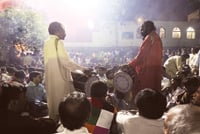
every year. This year is different. For the first time perhaps, since partition (1947), the administration of the shrine has banned the entry of drug addicts including Malangs (generally known as Saeen) in the premises of the mazar (shrine) and the graveyard there a place occupied by addicts allegedly backed by various mafias, for the past several years. Many addicts are also fond of dhamaal (traditional dance on drumbeat), the main feature at the mazar which has become very popular among Lahorites with the passage of time. A ritual in which many people lose themselves emotionally has gone beyond the shrine. The regular drumbeaters here -- Pappo Saeen and Mitho Saeen now charge more than Rs 200,000 for an evening to amuse their audience outside the shrine of Shah Jamal. The tomb of Shah Jamal (1548-1628) is on an old hill, now gradually converted into cemented structure with the help of donation collected by Punjab Auqaf Department and local shrine committee. Locals say the use of hash, opium, heroin and many indigenous drugs like bhang, is quite common on places like Shah Jamal, where people take these things as rituals. More importantly, these 'rituals' are quite common at
places like shrines where Muslim saints are buried. However, there is
something special about this place, the reason why people have moved the
Lahore High Court against the ban, taking the plea that the shrine
administration is unjustifiably trying to stop people from performing
years old 'rituals'. The ban was imposed on February 21 this year, forcing
opponents to move court a couple of weeks ago, according to the shrine
administration. Tahir Farooq, manager of the shrine appointed by Punjab Auqaf Department, who is busy in the preparation for the urs, says he is not allowed to issue any statement in this regard. Allah Ditta Bodi, vice chairman of the shrine committee, who is also elected general councillor of the same union council says, "The message of the saint was not to promote drugs and make youth addict. The graveyard of the shrine was totally occupied by these elements, allegedly backed by mafias, and the place was being used to sell drugs of all kind. Even relatives of those buried here, found the graveyard full of addicts who would abuse people entering graveyard." He said the locals had complained to the department in writing against this situation, the reason why the new administration of the shrine took this bold step. Bodi says nobody objected to drumbeating or dhamaal but to sale of drugs here as two boys who came here had died of addiction in the past few months. Criminals in the garb of Saeen were selling drugs here. He recalled that till a year back there was a Saeen who stayed in the shrine for at least four years and sold drugs here. He was connected to a strong mafia, Bodi went on to say. That Saeen once also managed transfer of a superintendent police of the area on trying to arrest him. "Once the whole locality gathered and beat him. Police also did not listen to him and he had to run away," he says. Now these addicts are sitting outside or carrying out their activities in the cemented compound reserved for Qawwali. But the administration would not allow them to capture the graveyard and tomb's premises, blocking others' way, he says. On last Thursday, the addicts could be seen sitting on the footpath amid preparations for the urs till late night. Some of them were dancing on the road on drumbeat. The donkey cart race people were also ready after this drumbeat to start their routine race, from shrine to Lal Pul (Red Bridge) on the Canal Road. The unhappy people, including youth, seemingly, were in majority trying to find out whether the issues would be resolved by the start of celebrations or not. "As far as hash is concerned, I agree that this should not be allowed but this cannot be a justification to stop people to go upstairs," Haq Nawaz Saeen, who is a frequent visitor here and has been performing dhamaal for the last 20 years, tells TNS. Nawaz, who works in Ever New film studio and is also proud of having performed with late Sultan Rahi (one of the most popular heroes of Punjabi films of his time), is very popular among the people interested in performing 'rituals'. There was hardly anyone who did not greet him that night and bowed before him, touching his knees (to show traditional respect) when Nawaz was sitting on a tea stall (Thara). "These rituals are our asset and people come here from far off areas to see and perform dhamaal," he says, adding, "To stop people is not the solution." If the government is serious to control drugs then it should apprehend the mafia and suppliers and not these harmless addicts. Though many of these addicts could be from very good and well off families, they are harmless now, he says. He believes addicts can't be stopped. Baba Mafi Saeen, another Malang, also believes in having dhamaal without any constraint. "This is as good as bad," he says, adding, "The people who just come for dhamaal are also affectees now." Ali Hussain, a youth, believes that this was not the only bad thing going on. "If people are into these things and government is careless then why is the shrine administration worried?" Dr Naseeb R Awan, forensic expert and former teacher of King Edward Medical College, who lives in the neighbourhood of Jamal Jamal's shrine, thinks differently. He believes in saints as reformers but blames the government for its utter negligence and just making these shrines a source of income instead of source of spreading peaceful message and image of Islam. He called for spending proper money on these shrines and construct buildings and markets with all facilities to attract the people. "Has some one ever thought why entry to shrines are mostly through dark alleys with unhygienic shops, full of social evils like use of drugs?" he questions. This negligence was causing repulsion among people. He is living in the same street for last 22 years and the street lights on this road leading to the shrine have never been lit fully. He believes this is intentional to keep people away from such places now being used for social ills. He suggests that to promote the message of these saints, the government should promote their works so that these places do not become a hub of social ills.
Flexing vocal chords By Aziz Omar Everyone has had certain interests that one used to
indulge in while in their teens and wishes that they could build on them at
some point during their lives. Yet, though most tend to drift away for
reasons best known to them, some meander back to their adolescent (pipe)
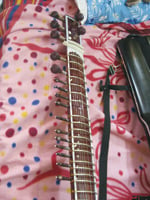
dreams. A friend of mine from my school days is in the throes of releasing his first music album and would have most probably unleashed his first song via his website by the time you are reading this. His music that has been influenced by his inclinations towards regional peace and cooperation shall surely strike a deep chord in the hearts of many a discerning listener. Ever since I have known him, I have seen Shahvar crooning, trying to emulate the style of legends such as Rafi, Kishore and Mukesh. I can clearly recall him getting emotional and lending a throaty voice to Mukesh's famous number kabhie kabhie while performing in one of the school functions. The funny thing is that it wasn't as if I used to admire his vocal ability while regretting not being able to catch a tune myself. I was quite musically inclined myself and started singing from my preschool days. Nursery rhymes, poems, milli naghme (national songs), naats…..you name it and I have chanted them all on one occasion or the other (and of course I won prizes if they were for a competition). And in my later years at school, I happened to have some outstanding teachers who exposed me to various genres of music. There was Shadé aunty who mostly indulged us in feel-good songs such as Puff, the Magic Dragon and Que Sera Sera. Then there was Shafqat Amanat Ali Khan (yes the same Shafqat Amanat Ali who is now dubbed as the Rock Star Ustad) who instructed us in the various nuances of the Indian Subcontinent's classical music. Outside school, it was his cousin Rustam Fateh Ali from whom I took classical singing lessons on and off throughout my teens. What with all the Raags (collections of musical melodies) under his belt, be it Aimen, Bhopal or Darbari, I diligently practiced them over and over again with the intent of fine tuning my voice. In fact, I remember that it was to one of these practice sessions about 12 years back that I invited Shahvar along. Of course he took to it like a fish to water and thoroughly engaged in a number singing classes afterwards with me. The ragas entailed so many various intricacies to them that it used to be a proper exercise for us to navigate amongst the alaap, Aaroh, Vadi, Samvaadi and of course the ensuing Taans. The high point of all this training on my part was a performance that I gave soon after at one of the annual events of the All Pakistan Music Conference (APMC). It was a piece titled Daata Tore Dwar that had been sung by the late Ustad Amanat Ali Khan. I was even helped by an old family friend visiting from Bangladesh, who happened to be student of the late Ustad. She guided me along the finer aspects of his rendition of this particular piece that she herself had been instructed in. Of late, while flicking across the Pakistani channels line up, one tends to come across a lot of desi band-bajay walas that are churning out their tunes for the public to stomach and be entertained. I have high hopes that Shahvar will be able to posit himself in the higher echelons of our music industry, and of course beyond. Hopefully I too shall soon revive my singing vocal chords that have lain dormant for over a decade. Yes, I can. Hummm.
• Panjabi Sangat on every Friday at 49 Jail Road Lahore at 7pm. at Najam Hussain
Sayed's house. Any person who chooses to visit the Sangat can freely and
actively participate in the above mentioned activities. • Mela Chiraghan is starting on Friday, March 27. It takes place at the shrine of Shah Hussain in Baghbanpura, adjacent to the Shalimar Gardens. • Lahore's 4th Critical Mass event today at Zakir Tikka intersection on Sarwar Road, Lahore Cantt at 5pm. • The National Art Gallery has organised an exhibition of watercolour painting 'A Tribute to Old Lahore' by an eminent painter, Dr Ajaz Anwer. Today is the last day. • Exhibition of works by Adeel Ahmed and Amra Khan at Nairang Gallery till march 31. • APMC Classical Music Programme on Wednesday, 1st April at Alhamra Arts Council, Hall III, The Mall at 6pm. Vocal: Faheem Mazhar, Anees Irfan Tabla solo: Nafees Irfan, Accompanists: Ustad Mehfooz Khokhar on harmonium and Ghulam Sabir on tanpura.
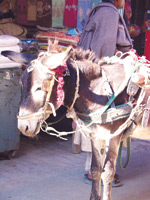
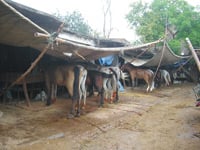
Horse-trading goes on in Lahore Donkeys and horses brought from as far as Kabul are traded outside Delhi Gate every Sunday By Shahzada Irfan Ahmed Last week's newspapers carried a news item regarding
theft of a poor man's donkey from outside his house in Shafiqabad area.
The donkey, which according to its owner, was worth Rs 25,000 has not yet
been recovered and the police have registered a criminal case against
unknown people. What surprised this scribe were the price tag carried by the missing donkey and the fact that its owner had succeeded in getting an FIR registered against the theft. This obviously is no small feat keeping in view the attitude of our police force. At times when even the most influential and the rich fail to get FIRs registered the owner of the donkey has set an example by reversing the trend. The efforts on part of this scribe to confirm the price tag carried by this donkey finally led him to the venue where horses and donkeys are traded every Sunday. Though many of us would have travelled repeatedly to the Walled City very few of us know that the stretch between the shrine of Shah Muhammad Ghaus outside Akbari Gate and Milad Chowk outside Delhi Gate hosts a horse market every Sunday. A visit to the site shows that every week people bring their animals to this place and sell them to intending buyers. The best attractions are horses coming from Kabul and other areas of Afghanistan via Torkhum border and in rare cases via Balochistan. The merchandise offered here for sale also belongs to places like Muridke, Gujranwala, Sialkot and even Sibbi in Balochistan where horse fares are held quite often. Muhammad Rafique, a trader, tells TNS that most of the
horses traded here are for use in tongas and carts. Their prices fall in
the range of Rs 20,000 to Rs 30,000 on average and in some cases up to Rs
50,000. He says quite rarely horses used in derby races are also brought
here for sale. "But this happens only when a horse or mare becomes
unfit for racing or is too aged." I have myself brokered deals
between sellers and buyers of racing horses and observed that they are
mostly used for breeding in farms. They are bred and trained in a way that
they cannot be put before a cart, he adds. Saleem Bhayya, a horse-cart race organiser, tells TNS that apart from horses the paraphernalia like carts, saddles, bridles are also traded here. People from the far-flung areas of Punjab come to this market in search of animals. Some of them buy horses and donkeys on cash basis whereas there are those also who trade in animals with the ones they already have, he adds. Anyhow, he says, they do pay the differential in case there is a difference in their prices of the exchanged animals. Saleem says though tongas are disappearing fast from streets of Lahore the use of horses in transporting goods is increasing day by day. The same holds true for donkeys, he adds. Saleem says a good horse can be bought for Rs 25,000 whereas a healthy donkey is available for Rs 10,000 to Rs 15,000 or so. "This amount is for a high quality animal; the average one can be bought for even less than Rs 10,000. I can't believe that a donkey can carry a price tag of Rs 25,000," he adds. This assertion on part of Saleem increased the awe and respect that I had for the donkey owner who had recently lost his animal. In addition to getting an FIR registered with the police, he was able to exaggerate the value of his animal. Humayun Iqbal, an active player in the market, has an interesting story to tell. He tells TNS that there are hundreds of thousands of horses available in Afghanistan. Influentials and warlords in the country can boast of owning thousands of horses which are used for transportation and playing traditional Afghan game 'buzkashi.' Humayun says for a long time people would steal these horses and push them towards this side of the border. Traders would load them in trucks and bring them downcountry for sale in local markets, he adds. He says the practice nowadays is that the agents of traders on Pakistan side buy horses in Afghanistan and hand over to them on Pak-Afghan border. He also narrates a story that he has heard from his elders. He says during Afghan Jihad saddles with deep hidden pockets were produced in this very market and exported to Afghanistan on horse-backs. The deep pockets would carry weapons and ammunition meant for Mujahideen, he adds. He says the number of horses that carried these saddles to Afghanistan was in thousands. It is also believed that the influx of so many horses into Afghanistan from Pakistan led to phenomenal increase in their number there. It's quite likely that the horses coming here from Afghanistan are from the same lineage, he adds. Humayun tells TNS that a new trend has also been observed over the last couple of years. "You can find buyers looking for horses to be kept in farm houses constructed in the city's peripheries," he adds.
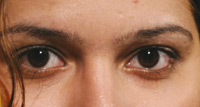
Many people lose vision because minor eye problems are not paid attention to, and remain untreated By Saleha Rauf Noreen ignored her eye infection and eyesight problems for two years. The fruitless visits to her physician forced her to see an eye specialist at a local hospital. She was eventually diagnosed with glaucoma. In Pakistan, minor diseases and ailments are commonly
ignored, both by the patients and their families, until things become
serious or incurable. Out of the 1.5 million blind people in Pakistan,
around 60,000 are suffering from glaucoma, an irreversible blindness,
caused by delay in treatment, says Prof. Dr Asad Aslam Khan, Director
General of College of Ophthalmology and Allied Vision Sciences (COAVS) in
Mayo Hospital. Glaucoma is caused by the drainage of aqueous humour -- a thin watery fluid between cornea and iris that nourishes cornea and lens and keeps the eye in shape. Glaucoma is also called 'silent robber of the vision' as it starts narrowing the angle of vision, eventually causing blindness. The two main types of glaucoma are 'primary open angle glaucoma' and 'angle closure glaucoma'. These are marked by an increase in intraocular pressure (IOP), or pressure inside the eye. In primary open glaucoma, the patient loses vision, has headaches, halos, and watery eyes. This is treated with topical eyedrops. If not controlled, oral treatment is started. Sometimes patient needs laser treatment and surgery to get safe intraocular pressure (IOP). In angle closure glaucoma, the patient suffers from severe pain, sudden loss of vision, redness of the affected eye and eventually, nausea and vomiting. Immediate treatment, usually laser surgery, is needed after dignosis of angle closure glaucoma. Glaucoma can be treated if diagnosed at an early stage. One of the precautions is to go for regular eye checkups, especially for people above forty. If someone has a family history of glaucoma, he should consult an eye specialist twice a year. Diabetes, uveitis (inflammation of the middle layer of the eye), myopia, hyper-mature cataract and eye injury are also some of the causes of glaucoma. Nawaz was operated three years ago for cataract but became partially blind. Six months ago he lost vision completely. He was later diagnosed with glaucoma in the right eye and cataract in left. Hyper mature cataract caused glaucoma in his right eye. Riaz from Bhai Pheru, a glaucoma patient, told TNS that he has been suffering from glaucoma for a year now. He persistently ignored the 'dark spot' in the eye and after sometime realised he is losing vision. There is little hope for Riaz and patients like him. Punjab Government has recently established the College of Ophthalmology and Allied Vision Sciences (COAVS) in Mayo Hospital. According to the college sources the hospital has the latest facilities for diagnosis and treatment of glaucoma like Optical Coherence Tomography (OCT) and Heidelberg Retina Tomograph ( HRT). People from all over Punjab come to Lahore for treatment of glaucoma because of the expertise available here. Director General of COAVS Professor Dr Asad Aslam Khan told TNS: "Glaucoma is preventable and curable if diagnosed in time. People should be given awareness about the significance and seriousness of eye diseases. Both print and electronic media should play their role in this regard." Dr Nasir at Mayo Hospital told TNS: "Glaucoma causes silent and irreversible loss of vision. Those who have a family history are more prone to glaucoma. It is important that people are educated about the disease and eye infections in general." Pakistan Glaucoma Association is also taking initiatives to spread awareness regarding glaucoma by arranging workshops, walks and seminars in collaboration with Allama Iqbal Medical College Lahore. Most patients, especially those from the rural areas, rely on quacks for minor ailments. This not only aggravates the disease but also causes serious complications in future. These physicians usually use eye drops containing steroids which also causes glaucoma. On the other hand an optometrist checks the pressure inside the eye to diagnoses the eye diseases.
|
|