


|
|
|
|
|
 |
 |
   |
policy Newswatch reforms Challenges
ahead struggle 'We
could not have achieved all that we did without an alliance' debate 'Controversy arises because there is no policy
framework guiding the privatisation process' The News on Sunday: What do you think are the problems that besiege the privatisation efforts of the government?
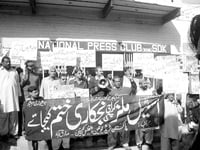
policy A strictly private affair! The opponents of the privatisation find themselves helpless in the face of a resilient state that is strongly committed to privatisation By Zeenia Shaukat The term 'privatisation' has come a long way in Pakistan.
The concept, introduced in the 1950s, when the newly established Pakistan
Industrial Development Corporation (PIDC) sought 50 industrial undertakings
across the country, and transferred them to the private sector after their
successful operation and management in the public sector. The It has been a trend worldwide that any transfer of ownership of assets is met with resistance. Arguments against privatisation largely centre on the state's responsibility to promote growth in various sectors of the economy and provide universal access to essential services such as education, as is the trend in the European countries and the US where most of the educational institutes are state-owned (See Economist Kaiser Bengali's interview on back page). The privatisation process also tends to become controversial in developing countries since it often smacks of non-transparent handling, as is the case in Pakistan. Another fear that surrounds privatisation drive is the handing over of state assets to foreign investors. In the late 1990s, the privatisation drive of the Nigerian government came under staunch criticism as it sought to give away management control of important sectors, prominently the oil sector that accounted for 25 per cent of the country's GDP, to western multinationals. The Musharraf-Aziz government's privatisation drive has divided the opinion surrounding privatisation in the country in three categories. The first group belongs to the government, supports privatisation and buys no argument against it. The embarrassing defeat faced by the GoP in the Supreme Court (SC) in the Pakistan Steel Mill (PSM) case last year did little to compel the government to rethink its privatisation strategy. Rather, the government's spin doctors sought to turn the SC defeat into success as the Court raised no objection on the privatisation policy of the government. The SC verdict was therefore, projected as an exceptional case. The other group does not object to the idea of privatisation. It rather disagrees with the practice adopted by the current government. Sherry Rehman, member National Assembly, has been a vocal opponent of the current government's privatisation endeavours, labelling it as arbitrary and often corrupt. "Privatisation was introduced in Pakistan by Benazir Bhutto's PPP government, so clearly it is not as if we oppose privatisation in principle. Our objection is to the process and criteria this regime has been following, which is both flawed and non-transparent." The third group strongly resists privatisation and argues that the state-owned enterprises (SOEs) have a very important role in the growth of the economy. They also argue that it is the responsibility of the state to provide essential services to the citizens, an objective that private enterprises can never serve. MNA Chaudhry Manzoor Ahmed leads this group in the parliament. "SOEs certainly have a very important role to play in helping the economy grow, in job creation, and in discouraging the creation of cartels (that spell disaster for the economy)." One of the major contentions against the privatisation drive of the current government has been the sale of the entity at a price lower than the sale of its assets. This has been the highlight of the sale of the Pakistan Steel Mills and is backed by the SC's ruling of the case. According to Rehman, the government has been guilty of a number of irregularities in all its privatisation deals. "After all, what sense does it make to sell off the PSM for a paltry sum of Rs.21.68 billion when the enterprise was built at a cost of $2.5 billion?" Chaudhry Manzoor agrees. "If the government has made up its mind to privatise assets despite resistance, the least it can do is not to resort to 'loot sale' and follow the privatisation rules properly. To bring the price down (and hence make the entity attractive for the potential buyers), one of the tactics that they employ is showing zero book value of assets such as office furniture and building etc." Terming it as 'highly unfair' Manzoor argues that such a tactic massively slashes the price of the entity. The allegations pertaining to sale price being lower than the price of the entity have also been levelled against the concerned authorities in the cases of the privatisation of the PTCL and the KESC. The PTCL privatisation has been challenged in the court on similar grounds. Economist Kaiser Bengali however believes that this contention is restricted by the absence of relevant data supporting the argument. "It is a good political statement to make and one has reasons to believe that the government is short of selling state assets. However, there is no (hard) evidence to support it." Non-transparent nature of the privatisation deals has also been a factor that has earned the ire of the anti-privatisation lobby. It is alleged that in the case of the privatisation of the PTCL, the successful bidder backed out of the bidding process and was persuaded to honour the commitment by granting a range of generous concessions. Sherry Rehman testifies: "In the case of the PTCL, the government bent over backwards to accommodate Eitesalat when it refused to honour the bid. Instead of initiating a new bidding process, the government got into negotiations with Etisalat to reduce the prices and change the terms of the deal. The actual deal has not been made public to this day." The interest of the workers remains another source of contention in so far as privatisation is concerned. Lay-offs are observed to follow once an entity is privatised since the new owners are bound to seek the objective of profit making that requires cost cutting. Pakistan's law does grant the members of the union the right to form management groups to participate in the bidding process when a state-owned enterprise is being privatised. During the privatisation drive of the 1990s, the government had encouraged the workers management group to buy out entities being privatised. By the late 1990s, the management of 12 units were transferred to the workers management groups. The cases of Millat Tractors and Allied Bank, both handed out to workers' management groups, have been touted as successful by analysts as both have turned into profitable entities. However, in the case of Pakistan Steel Mills sale, the workers management group had alleged that they were snubbed and sidelined when they made an attempt to participate in the bidding process. The issue of management control also remains a bone of contention. The management control of many of the entities privatised has been given away at the purchase of 22-26 per cent shares of the entity. "Giving greater or all management control means reduced representation of the government on the Board of Governors," describes Kaiser Bengali. "By giving greater management control to the purchasing party, the government essentially seeks to place the fate of the public money in the hands of the private company." Chaudhry Manzoor argues that the government should follow the same rule as the Company's Act requires private enterprises to follow. "In the private sector, a company is given management control over the purchase of 51 per cent shares only. Why should the management control of the state-owned assets be given to the private owners at a purchase of merely 26 per cent shares?" Lastly, there is an interesting dimension to the tussle between the pro and the anti privatisation lobbies in Pakistan. The pro-privatisation lobby represented by the government has so far successfully escaped all attempts to sabotage the privatisation process, despite massive fight put up by its opponents. This could be attributed to the state's power to execute decision on the basis of the authority it enjoys. The anti-privatisation lobby is characterised by its easy accessibility to the media, its strong arguments backed by researched facts and figures, and its readiness to participate with vigour in any public debate. One can argue that it is even backed by popular will. However, it does not have much to celebrate apart from occasional successes like the SC's ruling in the PSM case. In the absence of parliament's power to debate such important decisions, this group has to rely on public platforms and court cases to fight its anti-privatisation battle with a resilient state that is committed to the international finance institutes to carry out privatisation. TNS repeatedly attempted to seek government's version on the story. However, despite committing to answer TNS queries the Media office of the Privatisation Commission remained unavailable for comments. (See related interview with Kaiser Bengali)
Newswatch Aviation scenario
By Kaleem Omar PIA Chairman Zafar A. Khan, who was appointed chief of the national carrier in early April following the resignation of Tariq Kirmani, says he is still looking for someone suitable to fill the post of the airline's managing director. Under the terms of the PIA Act, the chairman is the airline's chief executive officer, while the MD is supposed to run its day-to-day affairs. In the past, this has often led to friction between the chairman and the MD, with the two top officials pulling in different directions -- to the detriment of the airline. One can only hope that this will not happen again, and that the chairman and the person chosen to be the managing director will work together as a team to restructure the troubled national carrier to reduce its mounting losses and make it profitable again. The job is going to be far from easy, of course, and Khan is going to have his work cut out for him to tackle PIA's multifarious problems. I, for one, however, wish him well in this endeavour, just as one wished Kirmani well. Criticising people is easy, but the criticism should not be ill-informed. PIA is a national institution that carries the country's name around the world. National institutions need to be nurtured and strengthened, rather than being made the subject of the kind of ill-informed criticism that led to Kirmani's resignation. Khan is PIA's 28th chairman since the state-owned airline was founded back in the mid-1950s. Until an MD is appointed, Khan will also hold charge of the office of managing director. His predecessor, Kirmani, was chairman, CEO and MD. Successive governments seem to have adopted a sort of revolving-door policy when it comes to the appointment of PIA chairmen. In the last 16 years, the airline has had 15 chairmen. This means that, on the average, a chairman has lasted a little over a year. During the same 16-year period, the airline has also seen over a dozen MDs come and go. As if all this weren't bad enough, PIA has had 12 heads of its engineering department in the last 10 years. Small wonder, then, that it has had aircraft maintenance problems -- as evident from the recent ban imposed by the EU civil aviation authorities on PIA's Boeing aircraft flying to European countries. Nobody -- no matter how good a manager he may be -- can be realistically expected to restructure a large organisation like PIA and make it profitable again in only a year or two. Turning PIA around in today's highly competitive international aviation environment will take at least five years or more. But how can it be turned around if its chairman/CEO and its managing director keep being replaced every year or two? Aviation is a highly competitive industry, with airlines emerging and exiting all the time. This is especially true of the civil aviation environment of today, where the steep hike in international oil prices have resulted in the global airline industry incurring additional fuel costs of $ 45 billion since 2001. Very few airlines are making profits these days. Most of the world's 300-plus airlines are in the red, including some of the biggest names in the business. Like most other airlines, PIA, too, has seen its operating profits in 2005 and 2006 turned into losses due to its hugely increased fuel bill, which now accounts for no less than 49 per cent of its total operating costs. In 2006, PIA incurred a net loss of Rs 12.8 billion against Rs 4.4 billion in 2005. The biggest factor in this rise in losses was the abnormal increase in fuel cost by Rs 6.9 billion in 2006, 26 per cent higher than in 2005. Since mid-2005, international crude oil prices have witnessed an abnormal increase, which reached its peak in late 2006 when crude was being sold at $ 78 per barrel. As a result, aviation fuel prices also rose sharply. PIA's fuel bill rose from Rs 26.5 billion in 2005 to Rs 33.4 billion in 2006. PIA's fuel bill as a percentage of ticket and cargo sales, at 47 per cent, is much higher than the industry average of 31 per cent. Nearly half of its sales revenue is now spent on meeting its fuel bill. This is partly due to the government not allowing PIA to use price-hedging as a mechanism to reduce its fuel costs, and partly due to the fact that PIA has a high rate of burn-off of fuel on its ageing aircraft, which are much less fuel-efficient than newer models. At the beginning of 2006, the average age of PIA's fleet was 20 years -- much higher than the industry average. With the induction of new aircraft, however, the average age of PIA's fleet has now been reduced to 12 years -- which should bring down the rate of fuel burn-off and help to reduce its fuel bill. PIA has also experienced substantial cost increases in aircraft chartered for meeting scheduled and Haj traffic, engineering and maintenance costs, aeronautical and flight-handling costs, and selling and distribution costs. As a result of higher levels of borrowing, PIA's interest cost on bank loans in 2006 increased by Rs 2 billion over the 2005 figure to Rs 4.8 billion. This 71 per cent increase was primarily due to additional borrowing for the purchase of three Boeings and three French ATR aircraft (to replace the grounded Fokker Friendship aircraft in PIA's fleet) and increase short-term borrowing to cover the fuel-price-led increased operating cost. The spike in domestic bank interest rates also contributed to PIA's increased financing cost in 2006. To compound the problem, PIA is a heavily over-staffed organisation. With more than 18,000 employees and a fleet of only 42 planes, it has the highest employees-per-plane ratio of any airline in the world. This over-manning is, in part, the result of previous governments having stuffed PIA with hundreds of political appointees. Khan's predecessor, Tariq Kirmani, had prepared a plan to partly tackle this problem by transferring 1,500 employees in PIA's Flight Kitchen on to the payroll of the joint venture company formed by PIA and a Singapore company to run the flight kitchen operations. PIA would have a 49 per cent equity stake in the joint venture and would be entitled to a corresponding share in its revenue and profits. The joint venture company would sell meals to PIA at specially reduced rates and to other airlines at market rates. The second prong in this staff-reduction strategy was to transfer 2,000 of PIA's ground-handling staff on to the payroll of a joint venture formed with a Swiss company to whom PIA proposed to outsource its ground-handling operations. PIA would have a 30 per cent equity stake in the joint venture and would be entitled to a corresponding share in its revenues and profits. The third prong in the staff-reduction strategy was to retire 1,500 PIA employees under a voluntary 'Golden Handshake' scheme. The government had agreed to foot the bill for this scheme. The money to make the 'Golden Handshake' payments to the retiring employees was to be given to PIA as an outright grant -- meaning, that it would not be shown as a loan in PIA's balance sheet. The implementation of all three phases of the staff-reduction scheme would mean a reduction in the total number of PIA employees from the present 18,000 to 13,000 -- resulting in a substantial reduction in the carrier's employees-per-plane ratio and helping to significantly reduce its operating costs. Zafar Khan, PIA's new chairman and CEO, would be well-advised to press ahead with this scheme and not allow bureaucratic red-tape to delay its implementation. reforms Taxing times Foreign tax consultants, hired at exorbitant fees, do more harm than good because they do not understand the problems peculiar to Pakistan
By Huzaima Bukhari & Dr. Ikramul Haq The Central Board of Revenue (CBR), according to a Press
report (Business Recorder, May 8, 2007) has paid hefty amounts to local and
foreign consultants in the name of tax reforms. It is disappointing that the
Government of Pakistan is wasting huge amount of borrowed money on It may be recalled that the World Bank has extended to Pakistan $125.9 million grant, including IDA credit of $102.9 million, and a UK DFID grant of $23 million, for the Tax Administration Reform Project (TARP) (which should have been called 'TRAP'). The objective of the project is to improve the "integrity and fairness of tax administration by improving organizational efficiency and effectiveness of the revenue administration". It was a national shame that for improving the integrity and fairness of tax administration we agreed to such a heavy borrowing from the World Bank and other donors. Even though a part of the revenue collection by the Central Board of Revenue (CBR) could have been earmarked on an annual basis for this purpose, but the government was bent upon borrowing funds for this purpose. It was obvious that the actual aim behind the project was to make Pakistan subservient to the agenda of foreign donors. In reality the donors wanted to take huge chunk of money back to their home countries through the appointment of their approved consultants. This is a well-known modus operandi of international donors. But instead of criticising the international agencies, we must condemn our decision-makers who follow their line. According to Press report, the CBR so far has hired/paid the following so-called experts (local as well foreigners): 1. One local lawyer at Rs. 3 million per year to guide the CBR Legal Wing on interpretation of tax laws to handle the court cases. Does CBR Legal Wing lack expert officials having command on legal matters to effectively plead the cases? Legal Wing of CBR is headed by a Grade 21 Member and many officers in the Department possess L.L.M from Harvard and other prestigious institutions. 2. A programme manager TARP is hired for two years as at US $660,000. 3. Foreign tax consultants from USA, UK and Germany have been paid an amount of $13,649, £ 2,425.50 and $30,000 respectively for assisting in the implementation of TARP. 4. A consultant from USA was hired for 3-4 weeks to help in purchase of ITMS, a software to integrate all the taxes. CBR paid an amount of US$ 13,649 on completion of his task. 5. Another one from UK has been paid £2,425.50 for giving one-week consultancy on human resource management. 6. A German tax consultant was hired for 30 days to evaluate the PACCs on the recommendations of the World Bank (WB). He was paid an amount of US$ 30,000. The credentials of these so-called experts were not made public. Their selection was not approved by National Assembly Standing Committee on Finance. According to Business Recorder (January 7, 2006), the CBR, with the approval of World Bank decided to appoint Program Manager for the TARP for a period of two years. It is revealed that the World Bank "has given a No Objection Certificate (NOC) to CBR for signing the contract..." It confirmed the age-old adage that beggars cannot be choosers as the government needed NOC from the World Bank to appoint a consultant for tax reform. At the time of signing agreement with the World Bank for over 100 million dollar loan for tax reform, did the Government of Pakistan agree to such conditionality? If so, why did the Government not bother to seek an approval from the Parliament? It confirms the dearth of both democratic values and culture in our society. It is disturbing that at present, the CBR, in addition to members for each individual tax (coming from regular service cadre), has many members from private sector (enjoying extraordinary wages and privileges compared to members from the regular cadre) -- and yet we need foreign consultants. The CBR in February 2002 hired a chartered accountant at market wages (MP-II) as Member Audit. He was later replaced with another chartered accountant with MP-I package. After this costly appointment, a foreign consultant was hired at around US$ 15,000 per month to devise audit plan and strategy. If the latter had to execute this assignment, what is the justification of hiring a Member Audit locally? It is also alleged that present Member Audit is close relative of the present Chairman of CBR. It is necessary that to rule out possibility of favouritism and ensure selection on merit, the House Finance Committee should be given the task of recruiting consultants for tax reform. Initially, members from private sector were appointed for a two-year term to help the tax officials in devising the tax strategy. They were given another two-year extension because they failed to meet their targets and goals, which expired in February 2006. Following the expiry of their contract in February 2006, another extension for indefinite period and elevation from MP-2 to MP-1 was awarded to them with additional perks and privileges despite a floundering performance and failure to meet goals. In other words, they were rewarded for their inefficiency. Since 2001, in the name of simplifying of tax laws and reform project, the CBR is imposing more obligations on the citizens of Pakistan without conferring corresponding tax rights (Taxpayers' Bill of Right proposed by Federal Tax Ombudsman) in tax codes. The taxpayers have been burdened with cumbersome tax terms and new enhanced obligations of withholding taxes without any compensation. Under the new round of reforms financed with foreign grants, more money is being given to hand-picked consultants, who hardly know about pragmatic tax policy and its administration. More workshops are going to be held to waste public money mercilessly. This nation is going to have more well-equipped tax dacoits who are going to play havoc with their peace and tranquility. This entire process will be carried out under the umbrella of World Bank. The basic problem of Pakistan is that its tax system is not equitable. The burden of taxes is already less on the rich and more on the poor. In the face of this reality, the government is resorting to regressive taxation like presumptive taxes in income tax and turnover taxes in the shape of multi-point sales tax. However, targets achieved by CBR are way below the actual potential. A collection of US$ 10-15 billion by CBR is not an achievement to be proud of because many comparable economies have managed to collect four time higher than what is achieved by CBR. To raise tax-collection, present tax incidence has to be rationalised, and the incompetent, inefficient and corrupt tax machinery needs to be overhauled. We should get rid of the reform game of the foreign donors. The tax policies implemented by the Pakistani government on the dictates of foreign donors have led to increase in poverty for a vast majority of the people. While the CBR is showing a 'record collection' by imposing unprecedented taxes and duties on POL imports (the share in per litre price is nearly 50 per cent). These policies are not making us self-reliant but on the contrary are destroying our industrial and business base. If we manage to formulate a rational tax policy through public debate and parliamentary process and implement it through consensus and not coercive measures, there is every possibility to liberate ourselves from World Bank and other donors in a short span of time by paying off all our foreign loans and generating enough funds for future projects. However, if we persistently follow their prescription, we will neither realise real tax potential, nor achieve the cherished goal of self-reliance through rapid industrial growth. Our present tax revenue potential, if monstrous black economy is dealt with iron hand, is not less than US $ 50 billion (Indonesia collected US$ 35 billion this year) provided that the existing tax base is made wider and equitable, black economy is discouraged, tax machinery is completely overhauled and exemptions and concessions available to some privileged sections of society are withdrawn (money laundering through facility provided under section 111(4) of the Income Tax Ordinance, 2001 should be immediately abolished). Many local experts can do the reform work at much lesser cost than what we waste on foreign consultants at the commands of World Bank and others. This is the story (sordid and disgusting) of tax reforms so far. The so-called experts invited from abroad (who cannot even drive themselves home on Pakistani roads) are not capable of understanding the ground realities prevailing in Pakistan. Even if they are competent and sincere, the task of tax reform in Pakistan cannot be successfully carried out by them or the tax bureaucrats sitting in CBR as it needs backing of the people. Presently the entire process is unilaterally imposed by foreign donors and their local gumashtas (agents). Bureaucrats dominate the supervisory body in the Finance Ministry that has to monitor and look after the CBR reforms. This is where the fault lies. It is high time that a National Commission on Tax Reforms, under the supervision of a Judge of Supreme Curt, is constituted to achieve national consensus after consulting all the parties. The bureaucratic leadership of such a process is highly undesirable as they are the people who are responsible for the present situation. They are merely the executive arm of the State and should not be given the task of legislative work or policymaking. (The authors are well-known authors of many books on Pakistani tax laws. They are also members of visiting faculty of LUMS). Challenges ahead Various problems faced by Pakistani economy and possible measures to deal with them
By Hussain H. Zaidi In its recent forecast of Pakistan's economy, the Asian
Development Bank (ADB) while lauding the government's macroeconomic policies
has identified some key challenges for the national economy. These include
low investment-GDP and savings-GDP ratios, growing current account and fiscal
deficits, a narrow industrial and export base, and human capital The key to sustaining the current high growth rate is to increase the level of savings and investment. Investment has a two-fold role in the economy. In the short-run, investment affects aggregate demand and thus output and employment. In the long-run, investment affects GDP growth. A country's rate of growth largely depends on how much it forgoes present consumption to provide for production of capital goods. Investment is in fact the engine of growth. The spectacular economic performance of East Asian countries can in the main be attributed to their high investment-GDP ratio. Conversely, it is the deficiency of capital or low investment-GDP ratio that is the major weakness of most developing countries. Generally, an increase in GDP is accompanied by an increase in savings-GDP and investment-GDP ratio. However, Pakistan is a different story, where savings-GDP ratio has come down during last three years despite rapid economic growth. In 2000-01, savings-GDP ratio was 17.8 per cent, which increased to 18.1 per cent in 2001-02. But subsequently, the ratio has decreased: 17.6 per cent, 15.7 per cent, 14.5 per cent and 14.4 per cent in 2002-03, 2003-04, 2004-05 and 2005-06 respectively. The investment-GDP ratio has a slightly better picture. In 2003-04, investment GDP ratio was 16.6 per cent, which increased to 18.1 per cent in 2004-05 and to 20.0 per cent in 2005-06. However, despite the increase, the investment-GDP ratio is well below the desired level. For instance, in India, the investment-GDP ratio exceeds 30 per cent, while in case of Bangladesh and Sri Lanka it is 25 per cent and 24 per cent respectively. The major reason for low level of savings and the resultant low level of investment is the low level of per capita income. Although per capita income in Pakistan has, according to official statistics, increased from $657 to $847 in 2003-04, this increase indicates nominal rather than real income thanks to a high inflation rate, which increased from 4.6 per cent in 2003-04 to 9.4 per cent in 2004-05 and was about 8 per cent in 2005-06. Two other major causes of high consumption and thus low savings are consumer financing and proliferation of credit cards. In 2005-06, current account deficit reached the highest ever level of $5 billion, 3.88 per cent of GDP. The surge in current account deficit can be attributed in the main to the trade deficit, which has increased from $1.20 billion in 2003-04 to $8.25 billion in 2005-06. This is not surprisingly as, during the last three years, imports have grown by 81 per cent against 32 per cent export growth. During the current fiscal year (July-February), trade deficit was registered at $6.6 billion. A country having a narrow industrial base cannot have a broad export base. A country manufacturing low technology products cannot be an exporter of high technology, high value-added products. This is the case with Pakistan. About 65-67 per cent of the exports consist of textiles and garments only. Just five product categories – textiles, leather, rice, sports goods and carpets and rugs – constitute 85 per cent of our exports. Pakistan has a narrow export-base and is an exporter of primary and low technology products, because this is what its industry can offer. The industrial and export constraints of Pakistan are brought out by its low ranking – 91 in 2005 and 94 in 2006 out of 125 countries – on global competitiveness index. No doubt, on demand side, effective marketing and preferential market access are important for substantial increase in exports. But without overcoming supply side constraints, they cannot be of much use. A country's current account deficit is financed by inflow of capital from external sources – foreign investment and external borrowing. Foreign investment may take the form of portfolio investment or foreign direct investment (FDI). Portfolio investment is essentially volatile and therefore cannot constitute a credible source of financing current account deficit. FDI, because it implies a long-term commitment for the foreign investor, is a most credible instrument of financing current account deficit. It is good to see that FDI in Pakistan has jumped from $949 million in 2003-04 to $3.52 billion in 2005-06. However, nearly 45 per cent of $3.53 billion FDI consisted of privatisation proceeds. During the first nine months of the current fiscal year, FDI was registered at $3.85 billion of which only $133 million consisted of privatisation proceeds. The important challenge for the government is to maintain the momentum in FDI regime, particularly in the face of surge in terrorism and religious extremism. On account of a pro-growth fiscal policy, fiscal deficit rose to 4.2 per cent of GDP in 2005-06 from 2.4 per cent in 2003-04 and 3.3 per cent in 2004-05. A pro-growth fiscal policy is expansionary and in itself is not much of a problem. However, the expansionary fiscal policy poses real problems when public revenue remains stagnant, as in case of Pakistan. During last few years, public revenue-GDP ratio has remained stagnant around 14 per cent. To finance the budget deficit, the government has to resort to borrowing. The most convenient source of borrowing is the central bank, which obliges the government by printing more money. The major problem with this mode of financing is that it begets inflation. Hence, we see that on account of borrowing from the central bank together with an easy monetary policy of the State Bank (SBP), inflation in Pakistan rose to 9.3 per cent in 2004-05 from 4.6 per cent in 2003-04. In 2005-06, the inflation rate was brought to 7.9 per cent -- though still very high -- as the SBP tightened the monetary policy. Finally, human capital development is necessary for sustaining the growth momentum. Poverty, sickness and illiteracy reduce people's productivity and thus their capability of making contribution as economic agents. Human capital development is still to form an important component of the government's growth strategy. This is evident from low budgetary allocation for health and education sectors, which taken together is less than 3 per cent of GDP. The above mentioned challenges are essentially economic, but they have political dimensions as well. Without improved governance and strong and responsible political institutions, it is well-nigh impossible to grapple with these challenges. Whether it is attracting FDI, raising the level of domestic savings and investment, increasing the per capita income, or developing the human capital, a transparent, predictable and stable political regime is necessary. On the other hand, politico-constitutional crises increase the cost of doing business and divert the government's already meagre resources from productive to non-productive purposes. E-mail: hussainhzaidi@yahoo.com struggle Wastelands Up to 50 per cent of Pakistan's urban population lives in 1500 Katchi Abadis most of which remain un-planned, under-serviced or un-serviced as ever
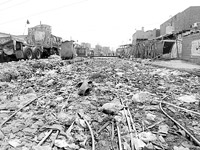
By Ali Sultan "We live here," says Mohammed Javaid. He is
standing beside a huge garbage dump. It stinks heavily and flies register
themselves in huge quantities, yet in this wasteland of plastic bottles and
empty wrappers live a hundred people. This is Baja Line, a community of 5000 people that live across the railway tracks. It is one of the forty slums or Katchi Abadis that exist in Lahore. "We came here from Multan to find work," says Mohammed Javaid while children in tattered clothes pick up garbage behind him. "But we don't have money to pay rent or anything so we put up these tents." There are ten tents, each one sheltering ten people. There is a scarcity of water and food. Disease runs rampant here, mostly because of unclean water and malaria. "But we are happy here," says Javaid. "At least we make some money to feed our children." The general definition of Katchi Abadi (slum) is an un-planned, under-serviced or un-serviced settlement located normally in urban areas but the legal definition of Katchi Abadi is a cluster of 40 dwelling units established on state land on or before cut off date of March 23, 1985. Baja Line is a kaleidoscope of Katcha makans (clay
houses), small shops and tents. "My father came here forty years
ago," says Wajib Bashir who owns a small pan shop here. "At first
there were no houses here but slowly people started bribing the railway
authorities and started building one or two room houses here." He says
that water is a huge problem here. "Water sometimes does not come for
days," he says. Researchers estimate that up to 50 per cent of Pakistan's urban population lives in 1500 Katchi Abadis all over the country. According to a report by Perween Rehman, since the early 1970s, Katchi Abadis all over Pakistan have been recognised by the government and officially stated in the LDA Act 1986. "Kachi Abadis started emerging right after Independence in 1947," says Anjum Zahid, President All Pakistan Alliance for Katchi Abadis. "Many people who migrated here had no money and found abandoned plots where they put up their jhugis (tents) mostly around railway lines." The constant influx of migration from outside areas and poor planning by the government has resulted in a delayed response to the increasing housing demand resulting in the formation of Katchi Abadis or squatter settlements. These are either permanent or temporary shelters for the low income groups or immigrants. They are located sporadically throughout the city and are often illegally occupied land. The people are mostly nomadic low income groups usually from another over-populated settlement or from a foreign region altogether. Katchi Abadis can range from tent like structures or vernacular mud-brick construction typically housing an entire family in one room size area, thus making them very dense settlements. Ayesha Toor works for Kashf trust, an organisation that lends emergency loans to poor women in Katchi Abadis, says: "The main reasons behind the establishment of Katchi Abadis are non-availability of shelter/housing units, no other option except settling down on any available land, failure of government housing policies, high prices of land in private sector, rural to urban migration, poverty, inflation and unemployment that forces the people to live and establish Kachi Abadis." Anjum Zahid tells TNS that the main problems that these settlements face are mostly disease such as Hepatitis and Diarrhea, Sewerage problems and Water sanitation. Karachi has the largest number of Katchi Abadis in the country. 55 per cent of the population resides in Katchi Abadis. According to a report Karachi alone has 540 Kachi Abadis in contrast with 250 settlements in the whole of Punjab. Many NGOs have worked for the betterment of these settlements, but the most famous of them has to be the Orangi Pilot Project (OPP) which became a model for all subsequent development work. Orangi is a low income, unplanned settlement on the periphery of Western Karachi. It is a large township consisting mostly of Katchi Abadis. Twenty years ago the streets were full of filth because there was no disposal for the waste. In 1980, there were a few water lines in Orangi that had been provided by official agencies. Bucket latrines or soak pits were the main means of disposing of human excreta and open sewers were used for the disposal of waste water. The result was poor health with typhoid, malaria, diarrhea and dysentery being commonly borne by the local population. Furthermore, poor drainage resulted in waterlogging and reduced property values. In response to the sewage crisis, Akhtar Hameed Khan who was a development activist launched the Orangi Pilot Project (OPP) in April 1980. Its success depended upon mobilising the local population to support the project. Once the householders realised that they could address both the health problems and damage to property for only a small amount of money, OPP had to persuade them to invest in the sanitation scheme. OPP considers itself to be a research institute whose objective is to analyse outstanding problems and discover viable solutions. In recognition of the fact that NGOs cannot solve problems on the scale required, OPP does not construct sewage lines or set up clinics itself. Instead, its strategy is to promote community organisation and self-management. By providing social and technical guidance, it encourages the mobilisation of local managerial and financial resources and the practice of co-operative action. The Orangi project has been a huge success because the sanitation system now reaches more than 90 per cent of the residents in Orangi. It is an underground sanitation system financed and laid by the people, whilst they managed the money to fund the project themselves. Arif Hasan, a renowned social researcher, planner and consultant to OPP, says that for foreseeable future only informal settlements can provide housing for the poor because land is a commodity. "The poor do not have the resources to purchase it. The funds available for slum upgrading are a fraction of the demand. Therefore what we require is not less slums but more slums. However, they should be secure slums."
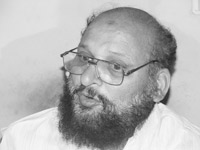
'We could not have achieved all that we did without an alliance' Anjum Zahid is the president of All Pakistan Alliance for Katchi Abadis. His parents migrated from Shujapur, UP, India in 1947 and settled in a katchi abadi near Railway Carriage Workshop, Lahore, where he was born. Anjum has struggled for years for the rights of dwellers of katchi abadis in different parts of the country. It was in year 2000 that he floated the idea of forming a nationwide alliance and invited all the katchi abadis of the country to join it and struggle collectively for a common cause. He got an overwhelming response from everywhere and spearheaded the movement to secure ownership rights for inhabitants of katchi abadis. He had to face 16 cases registered under section 16 of Maintenance of Public Order (MPO) in different times. In an interview with The News on Sunday, he talks about different phases of his struggle, achievements so far and the further agenda of the alliance. Excerpts follow:
By Shahzada Irfan Ahmed The News on Sunday: Your struggle for people of katchi abadis spans over decades. Why is it so that you decided to form an alliance as late as 2000? Anjum Zahid: You are right that people of katchi abadis
were not united before 2000 and waging their individual battles. In fact,
they had never felt as threatened as they did at that time. Soon after
General Musharraf's taking over the government, a grand operation was
launched against katchi abadis, especially those set up on railways land. One
fine day when I was away from home, I received a phone call that Deputy
Director Railways We approached Dr Mubashar Hasan who took us to the Lahore Corps Commander. On his order the operation was called off. Similar attempts were made by the army in other parts of the country. At this we decided that we should make our voice heard all over the country and formed the alliance. TNS: Can you tell what difference the forming of this alliance has made in your struggle? AZ: I would simply say we could not have achieved all this without forming this alliance. Previously, the problems faced by a katchi abadi could not be highlighted before the rulers, policymakers or the media. It would take years to get the simplest of people's demands met by the relevant quarters. But once the alliance was formed, our strength multiplied and we emerged as a very effective pressure group. For example, when an operation was launched to remove a katchi abadi near Kala Pul in Karachi, we held a protest demonstration outside the Civil Secretariat Islamabad. The operation was instantly called off. Similarly, we have held countrywide protests, many of them outside press clubs, all over the country whenever there has been any case of excess against dwellers of katchi abadis. We have presence in Hyderabad, Karachi, Sahiwal, Quetta, Peshawar, Multan and many other cities. Here I would like to laud the role of Late Omar Asghar Khan who supported us on every occasion and convinced General Musharraf not to demolish katchi abadis. TNS: The government claims it has given ownership rights to all the katchi abadis set up before March 10, 1986. Are you satisfied with what they have done? AZ: No doubt, it's a big development that the government has acceded to our demands but there are still many issues to be resolved. While the provincial governments have no qualms in giving us ownership rights, Pakistan Railways is creating many hurdles. So far, it has given these rights to 25 per cent of the occupants and is denying ownership to the remaining 75 per cent on different grounds. For example, they say these abadis are located too close to railway tracks or they were set up after the cut off date of March 10, 1986. For your information, this date was given by Prime Minister Muhammad Ali Junejo on April 7, 1986, to muster support of residents of katchi abadis just three days before the return of Benazir Bhutto. These people had pinned great hopes on Benazir as they thought she would complete the promise of Zulfiqar Ali Bhutto to give food, clothes and shelter to the masses. But railways officials have even used the announcement of this cut off date to deprive people of their rights. Muslim Auqaf and Hindu Auqaf departments have also resisted for long on grounds that ownership of trust properties cannot be changed. But finally they have given people of katchi abadis no objection certificates (NOC) that will help them get ownership rights. TNS: Once the ownership rights have been granted to katchi abadis, do you think there is need to keep the alliance intact? AZ: I would say that the winning of ownership rights is just one of the demands of people of katchi abadis. There is lot more to be done. Unfortunately, it took us 60 years to get ownership rights. Now, we have to fight for our right to a decent living. There are no clean drinking water facilities, dispensaries, government schools and sanitation facilities in katchi abadis. The incidents of Hepatitis are the highest here. The alliance knows it is not an easy task to get these demands fulfilled. Just imagine, electricity supply was given to katchi abadis in 1975 and water supply in 1977. However, I hope the alliance will ensure that it doesn't take that long to get these facilities. TNS: Quite often dwellers of katchi abadis are condemned by the government for grabbing state land. How do you see it? AZ: This is a totally false charge. These katchi abadis were set up only to give shelter to the shelterless. I would say it's the duty of the government to give jobs and a decent living to its people. If it can't, it has no right to point finger on us. Why is it so that only the army personnel have the privilege to get plots worth millions in recognition of their duties/sacrifices? Can't anybody tell them (the rulers) that the sacrifice of those who had migrated to Pakistan from India in 1947 was not a small one. debate Town versus country If the present phase of capitalist modernity is not transformed into something radically different, those of us living in cities, fond of bright lights, big cars, and plenty of high-octane entertainment will, at some point be subject to the wrath of those who make it all possible By Aasim Sajjad Akhtar Among the many promises of capitalist modernity is that
the historical divide between town and country will be bridged. As we
approach the end of the first decade of the twenty-first century, it is quite
clear that no such 'bridging' is taking place, and instead, the historical
divide is becoming dangerously acute. It can therefore be surmised that as
the contradictions of unbridled capital accumulation become more serious, the
conflict between town and country will deepen, and surely have great
consequences for the survival of twenty-first century society itself. The symptoms of the problem are limitless. Take for example the energy shortage that we are currently encountering. Or perhaps it would be more accurate to call it the energy shortage that urban areas have created; after all, the use of expendable resources in rural areas is miniscule in comparison to the energy 'needs' of the cities. But ultimately, when shortages arise, it is rural and peri-urban areas that suffer most. So if any neighbourhood in Lahore, Karachi or Islamabad has to put up with an hour or two of load-shedding on the average summer day, the small town or village is made to suffer for many more. Parts of the Sindhi interior were recently without electricity for over a week. It is no surprise that this preposterous privileging of town over country is a major source of resentment. Even the ongoing anti-government lawyer's movement is a testimony to the town-country divide. It has been the lawyers of small settlements in the interior of Punjab (and to a lesser extent Sindh) which have been the most militant sections of the mobilisation. For example during the Chief Justice's historic 24 hour rally from Rawalpindi to Lahore, the most raucous welcomes he received were in the smaller urban zones. Many lawyers in Islamabad and Lahore have admitted that the major impetus for the launching of the movement itself came from lawyers outside of the major urban centres. More generally, unorganised and often unreported protests by working people in peri-urban and rural areas are commonplace. Most of these protests target state agencies charged with the responsibility of providing basic amenities such as electricity and water. And this is not a phenomenon unique to Pakistan. In China, which distant observers often cite as the new model of third world development, tens of thousands of protests in rural and peri-urban areas were reported (by official sources no less!) over the past year. No doubt these protests are a direct response to the dramatic reversals that have taken place in China over the past two decades from a model of social change privileging the vast rural social formation to one that now considers rural areas to be only a source of natural and human resources for huge industrial enclaves such as Shanghai. The coming to power of leftist leaders in Latin American countries such as Bolivia, Ecuador and Venezuela due to the support of racial majorities primarily hailing from rural and peri-urban areas is yet another indicator of the growing town-country divide. In these countries rural hinterlands have sustained urban islands of luxury for centuries. The mandate given to Morales, Chavez & co. is indubitably a emphatic rejection of this historic subjugation of country to town. It is worth recalling that many great anti-colonial thinkers of the twentieth century presciently warned against the town-country divide. Gandhi for example was far less optimistic than Nehru or Jinnah about the promises of modernity, and argued against naively replicating the development project of the western world. While many other leaders of heroic anti-colonial struggles correctly suggested upon gaining independence that neo-colonialism would paralyse attempts of the new nations to become economically independent, the solution was seen to be in building up an industrial base that would allow the post-colonial economy to be competitive internationally. It was of course the rural hinterland that would fund this industrialisation drive, and thus, quite ironically, state orthodoxy was to in fact reproduce the subjugation of the rural social formation that defined the colonial state project. Needless to say, not much has changed in the half century since the wave of decolonisation of Africa and Asia started after the second world war. If anything, with the rise of neo-liberalism since the 1970s, the logic of capital accumulation replete with the promise of a universal urbanist consumer culture has become more pronounced. And it is in the vast rural hinterlands of the third world that this accumulation takes on the most brutal forms. But as pointed out above, this intensification of the town country divide is giving rise to radicalisation and revolt. Of course there is no guarantee that this radicalisation necessarily is of a progressive variety. In fact, if one were to closely study the geographical concentration of Islamic militancy in Pakistan, there is an overwhelming concentration in peri-urban and rural areas of the Siraiki belt, the NWFP and Pushto-speaking northern Balochistan. Nonetheless, it seems to be an objective truth that the vast rural social formations of the third world will be at the heart of anti-capitalist resistance in decades to come. It should not be understated that there has been rapid urbanisation in many third world countries including Pakistan, but this does not mean that rural areas have disappeared, or even that peri-urban zones are not subject to the same city-bias that the prototypical village suffers from. What is true is that the highly individualistic consumer culture that is a defining feature of modern, urban society, is penetrating rural areas as well. And this could prove to be the biggest hindrance to emergent forms of collective resistance. In any case, there can be no debate over the inevitable and growing contradictions between town and country. It remains to be seen what the end result of this historical divide is. But if the present phase of capitalist modernity is not transformed into something radically different, those of us living in cities, fond of bright lights, big cars, and plenty of high-octane entertainment will, at some point or the other, be subject to the wrath of those who make it all possible. 'Controversy arises because there is no policy framework guiding the privatisation process' Interview with leading economist Kaiser Bengali The News on Sunday: What do you think are the problems that besiege the privatisation efforts of the government? Kaiser Bengali: There is no policy framework under which
privatisation has been carried out. Since 1985 onwards, the rulers began to
trumpet that the public sector entities' losses were a drain on the budget.
Therefore, they ought to be privatised. Instead, it started getting rid of
profitable concerns making the same argument when the rush for privatisation
started in the 1990s. Today the argument is that it is not the business of the state to be in business. However, going by the PTCL case, which has been bought by the state-owned enterprise of another country, this argument has effectively turned into "it is not the business of the Pakistani state to be in the business. Rather, it can be the business of a foreign state to be in the business of the Pakistani state." These issues arise because decisions are made on expediency. There is no formal privatisation law and no discussion has taken place in the parliament over the matter. The government has no legal, political or moral basis for privatisation. Industry is a concurrent list subject. Any decision on privatisation should have first gone to the Council of Common Interest. This never happened in any of the privatisation deals. This is a violation of the constitution. TNS: How similar are the problems associated with privatisation of state-owned assets in Pakistan to those that confront other developing countries? KB: It is similar in some countries. During the privatisation phase of the 1992-93, companies were sold on negotiation basis. This happened in Russia too. Selected people had ties with the government of the day and they had access to all entry points. Both Pakistan and Russia are paying a heavy price for that now. Even today the privatisation process follows the same route (of closed-door negotiations). However, the process today is much more sophisticated and is routed through the stock exchange TNS: With so much controversy each privatisation bid has created, coupled with the Supreme Court's ruling in the PSM case, would the foreign investors now feel inclined to come to Pakistan, even though this government is known to bend over backwards to accommodate foreign investors? KB: Controversy arises because there is no policy framework guiding the privatisation process. There would have been no controversy had there been a well-defined policy. Most of the foreign investors, being referred to, have come to Pakistan because they were getting something on a low price. Pakistan is a captive market for them where the profits are secure. In such a case, even if the investor is able to recover his investment in a two-year's time, he will be happy wrapping it up and leave. Given this backdrop, political instability is hardly a concern for the foreign investors. As far as net foreign investment, meaning setting up of industries by the foreign investors, is concerned, Pakistan is not getting any. This is because the country has no infrastructure, no skills and no law and order. So, the foreign investment coming to Pakistan is geared towards the change of ownership of the existing entities. This is foreign capital inflows and not investment. TNS: If one considers privatisation a necessity, what do you think is the ideal way for privatisation that should ensure the public welfare is taken care of? KB: Let's go back to the 1990s when the government sought to privatise loss-making entities. First, there are legitimate reasons why a company is not making profits. If we take the case of the Steel Mills, it is worth noting that the PSM was never set up to make profits. It was to provide subsidised steel to the engineering industry. The idea was to generate social profit and not monetary profit. However, later the government started preparing the case for privatisation on the pretext that the Steel Mills isn't making any profit. How fair it is to set up an entity with one criteria and evaluate it on the basis of another. In all the privatisation deals, the government should have kept the land to itself, and should have leased it out rather than giving it away as it has been doing. By not following this strategy, the government is actually initiating a process of de-industrialisation. Usually, the investors buy out a given entity, dismantle it and sell off the land at exorbitant rate recovering his cost of purchase. Zeal Pak Cement that was privatised in the 1990s has been shut down, and the land is up for sale for a housing scheme. Same is the case with what used to be the Roti Plant at the Karachi's Sabzi Mandi. After privatisation, the plant was shut down and replaced by a housing complex. Hence the main attraction for investors lie in the land and not the concerned entity itself. TNS: Is it a realistic idea to expect the state to take control of, and play a role in promoting growth in various sectors? KB: It is very much realistic. It is actually the responsibility of the state to promote growth in different sectors. This is being rigorously followed in Argentina and Brazil. The latter just pledged to break the patent on HIV drugs because of their exorbitant rates. This shall pave the way for the import of the drugs from India. The question is, should privatisation be put before national interest. When the US stopped a Chinese company to purchase its strategic assets, and barred a UAE-based company to handle its port operations, it was essentially prioritising its national interest . State owned assets are not disposed off to the foreigners just because they have to be privatised. The arguments regarding privatisation being a necessity in the light of rapid globalisation do not hold weight. Globalisation is a western concept used by them when the wish to purchase our assets. It becomes a redundant idea when we express an interest in buying their strategic interest. Similarly they are asking us to privatise education to improve its quality. And we have been doing that too. However, more than half of the universities in the US and the UK continue to be run by the state. -- Zeenia Shaukat
|
|
 nationalisation drive of the 1970s and its undesirable results evoke the need
for the transition to the system of private ownership of state assets for the
purpose of efficiency, and better service delivery. Post 1977, there have
been a number of measures directed towards transferring the state assets back
to the private sector. However, it was the democratic dispensation of the
1990s that sought to pursue privatisation policy with vigour and made it its
primary economic policy objective.
nationalisation drive of the 1970s and its undesirable results evoke the need
for the transition to the system of private ownership of state assets for the
purpose of efficiency, and better service delivery. Post 1977, there have
been a number of measures directed towards transferring the state assets back
to the private sector. However, it was the democratic dispensation of the
1990s that sought to pursue privatisation policy with vigour and made it its
primary economic policy objective. hiring foreign/local consultants at exorbitant fees, when the latter neither
qualify for the job nor possess any knowledge of carrying out reform in our
peculiar milieu. In all democratic countries of the world, for such important
assignments, experts are selected after detailed scrutiny by specialised
committees of parliament. In Pakistan, such appointments are made without
scrutiny by the parliament and without a transparent process.
hiring foreign/local consultants at exorbitant fees, when the latter neither
qualify for the job nor possess any knowledge of carrying out reform in our
peculiar milieu. In all democratic countries of the world, for such important
assignments, experts are selected after detailed scrutiny by specialised
committees of parliament. In Pakistan, such appointments are made without
scrutiny by the parliament and without a transparent process.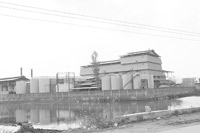 development. The bank is of the view, and rightly so, that these challenges
need to be addressed if the current buoyant-growth momentum is to be
maintained.
development. The bank is of the view, and rightly so, that these challenges
need to be addressed if the current buoyant-growth momentum is to be
maintained.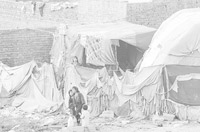
 Land, Bashir Marwat, had come with his squad to bulldoze our katchi abadi. He
was adamant to achieve this task and left only when people started stoning
the team.
Land, Bashir Marwat, had come with his squad to bulldoze our katchi abadi. He
was adamant to achieve this task and left only when people started stoning
the team.