


|
|
|
|
 |
 |
   |
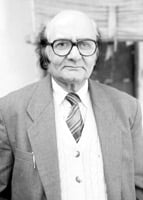
That Intizar Hussain's
work is an excellent example of Magical Realism can help us better understand
and penetrate deeper into his works and establish parallels with literature
being produced around the world "The story has been told before, of course... and it has also been told once, and often, by the mouths, ears, and hands of collective memory. It is time to look back now, before it is too late, and tell the story in such a way that the errors of the past will not be repeated, but also told in such a way that it can be transmitted and understood..." -- Ariel Dorfman The God
question Simple, passionate, straightforward, rational, uncontrived and uncompromisingly honest, 'The God Delusion' is perhaps the most important work by Richard Dawkins. A word about letters The Urdu conference organised by the Urdu department of the Bahauddin Zikriya University of Multan in the last week of April was followed by yet another national conference on Urdu. It was held in Lahore in May by the editorial board of the biannual 'Makhzan', founded by Sir Abdul Qadir in 1901 as a monthly literary magazine and now being published by the Quaid-e-Azam Library of Lahore. The main topic of the conference was the future of Urdu in Pakistan.
That Intizar Hussain's work is an excellent example of Magical Realism can help us better understand and penetrate deeper into his works and establish parallels with literature being produced around the world "The story has been
told before, of course... and it has also been told once, and often, by In that marvellous story, 'Shehr-e Afsos', Intizar Hussain's protagonists are three dead people discussing the circumstances of their death. The story, which begins with a clear sense of 'death', is blurred as the story progresses with the protagonists arguing about the degree of certainty of their deaths -- and if, they have 'died' at all. In all this, each dead man recounts how he died. The story invokes myths and archetypes rooted in local cultures (Hindu, Muslim, folk), and ideas of migration, cultural and social dislocations, and most of all, memory. However, this is only a perfunctory comment on an extraordinary work of art. Critics of Urdu literature, in general, have opined that this particular story is about Partitions ('47 and '71), which is, really, no great insight because the story was written in the backdrop of '71. Some other critics said that the story is also about his longing for the past, which again, is a cliche, and one may even be tempted to disagree with this argument, only for the lack of sophistication. However, the point is that aside from a few exceptions, most of the Urdu critics are oblivious of the happenings in world literature, especially literary criticism. The term Magical Realism which has been applied -- more as a description than a definition or a genre -- to understand a certain kind of writing appearing from post-colonial world for the past thirty odd years, has remained absent from critical discourse in our part of the world. Initially applied to
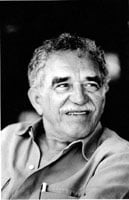
paintings, the term Magical Realism was later taken up by literary critics As mentioned earlier, magical realism refers to a broadly descriptive approach for understanding than a definitive category. The term itself has come under fire by post-colonial critics, because it is considered by them as "a category used by 'whites' to marginalize the fiction of the 'other'". However, it does not diminish its usefulness in interpreting the works and offering insights. According to Lindsay Moore, literary critic, general characteristics of texts which are termed as magically realist are: a. Hybridity: Rushdie invented wondrous phrase 'love song to our mongrel selves...' to explain art from our part of the world. This remains a primary feature in the magical realist texts: 'the inharmonious arenas of such opposites as urban and rural, and Western and indigenous. The plots of magical realist works involve issues of borders, mixing, and change'. b. Authorial Reticence: Many of the magical realist texts are written in a voice which combines a folklore-ish sensibility in a modern setting. Memory becomes one of the major mediums and subjects, and the notions of culture and collective life are brought into the story. As Moore explains, 'Authorial reticence refers to the lack of clear opinions about the accuracy of events and the credibility of the world views expressed by the characters in the text.' c. The Supernatural and Natural: The real achievement, if one may say, of these texts is that they have superceded the simplistic distinctions between real and fantastic, superstitious and empirical -- bringing forth the complex notions of reality that are an integral part of the 'traditional people's' world-view. This sketchy framework provides us some ground to understand Intizar Hussain's work better, and possibly make a few passing comparisons with Marquez. (It was explication of Marquez's works brought Magic Realism to forefront of critical discourse.) Hussain talks of two reasons for breaking away with conventional realism and adopting a style of writing which was dastan-esque. In one of his interviews, he states that the 'oral' style suits our story-telling better than the popular Western style of writing a story. The simple reason for this is that the tradition that the people of India have inherited and are traditionally skilled in is the 'oral' skill of telling a story. Second, he explains that India has inherited an amalgam of history's richest literary heritages; fables like 'Mahabharat' and 'Ramayan' "are like a jungle that allows you to tread in any direction whereas Greek Mythology, which is very 'cut and dry'." Therefore for Intizar Hussain, use of this style of writing is, in part, a repossession of a cultural heritage, which has been pushed to the margins because of historical processes of colonialism and its continuing legacy. For Intizar Hussain, memory is both the chisel and the marble in the sculptures of his stories, i.e. it serves to shape the narrative and forms the subject. The speech is guided by memory, while there is an omnipresent sense of a 'misplaced' identity and an indefinite sense of time. In essence, therefore, it is the memory that guides the story. An ideal example would be 'Daira', where the narrator is trying to write a story and his memory always digresses into situations and characters whose story he does not wish to tell. In the end he fails in his attempt. Similarly, the idea of a 'collective memory' is a central ingredient in Intizar Hussain's works. According to Muhammad Umar Memon, 'Shahr-e Afsos' "projects the fall and annihilation of memory". Intizar Hussain's works consistently seem to affirm the inextricable link between the histories of a people and their collective memory. "During the first migration, we left the graves of our ancestors behind. This time we left their corpses behind..." (Shahr-e Afsos) Writing about Marquez, literary critic, Ariel Dorfman notes that he has done what they had been "unable to do thus far in history - combine separate ways in which they know, in which they understand, in which they inscribe and read (or speak) their reality." It applies to Intizar Hussain equally -- and this, perhaps is his major contribution to our literature: he has kept alive the 'reality' that resides in the souls of our people, but which has been relegated as 'traditional' and is obliterated from the mainstream discourse. His story 'Reserved Seat' makes the traditional value of dreams its subject and the kind of reality it represents for people. Let's also note very briefly that this reclamation of history through collective memory implies something different in Marquez's work. Dorfman notes that in Marquez's case it is 'to find out why history had devoured his people, history, the entity that men and women supposedly make and that should, at least in principle, be the territory where they exercise some command over their lives, hammer out some recognizable images of themselves'. Mira Nair, the celebrated Indian filmmaker, said, "We need to tell our stories. If we don't, no one will. They will be lost for the coming generations." If this impulse is shrouded as it seems it is these days, Hussain's marvels of artistic creation would be subjected to exact same fates as the stories that his works have attempted to revive and relive. The God question The
God Delusion Simple, passionate, straightforward, rational, uncontrived and uncompromisingly honest, 'The God Delusion' is perhaps the most important work by Richard Dawkins. 'The God Delusion' sets up a simple hypothesis: the existence of God is extremely unlikely. What is fascinating and important (and this may come as a surprise to creationists) is that the book points out the weaknesses in its own case: it frankly admits that it is providing only an argument not a proof, and at other times, a counter-argument and not a refutation. An important point made by
Dawkins is that when we argue, collect facts or make Dawkins also answers questions of his methodology because, and it is quite understandable, his approach would be shocking to most people in this country (and many others). Isn't the existence of God a matter which requires special treatment? How can we use the same methodology to answer this important question that we use to investigate a petty crime? Can reason alone lead us to the truth of this important matter? Dawkins' reply is that this matter seems more important simply because we are told that it is more important. If we are to 'reason' that this matter is so important that reason alone is not enough to settle it, then we are accepting the answer to this question without investigating it. Anyone who has reached an affirmative answer this way has not reasoned it out. We may respect a person's right to believe in a creator but 'only in the sense and to the extent that we respect his theory that his wife is beautiful and his children are smart'. A large part of the book devoted to tackling age old arguments that are usually presented by theist in order to 'prove' the existence of God. It is well known that these arguments are either flawed or incomplete. Some of them are completely absurd and others simply hilarious. At best they can be used to show the likelihood of a creator; that is, to shift the probability of the existence of God a bit towards the positive side. Most of these arguments are easily dismissed except one: the argument of design. Dawkins devotes considerable time on this argument. How does one explain the apparent design in the universe? How can we explain the perfection of an eagle's eye or the complexity of human brain without an intelligent designer? Firstly, he points out a flaw in the intelligent designer theory: it creates a bigger problem than it solves. If one were to say that a Boeing 747 was assembled by an intelligent designer then we are still left with the question, who designed the designer. 'God tries to have his free lunch and be it too!' Thus, the God hypothesis does not solve the problem but poses an even bigger one. Dawkins argues that 'God is the Ultimate 747' whose existence will require yet another designer. Secondly, Dawkins points out that the answer to the apparent design and complexity in the universe is not chance. It is evolution: Darwinian evolution. Darwinian evolution satisfactorily solves perhaps the most intriguing question in all of sciences. It explains the apparent design that we see in the universe. Generally speaking, evolution is harder to understand because it operates on time-scales that are so large that our brain is not equipped to comprehend them. Although, Dawkins does a good job of explaining evolution and how it explains apparent design in the universe, the theory is better and more thoroughly explained in two of Dawkins' earlier titles 'The Blind Watchmaker' and 'Climbing Mount Improbable'. Dawkins also highlights the dark sides of religion and religious fundamentalism. How religion has been responsible for wars, murders and even genocides. He points at particularly disturbing developments in the United States. He is particularly critical of creationists who have subverted the teaching of science. Above all, he argues, that religious fundamentalism is a very well-accepted form of child abuse. Children are taught never to question and have no choice but to accept the faith of their parents. They are denied the most fundamental right: to choose their own religion (or none at all). Because of the nature of the subject, it is inconceivable for many people to think critically about the existence of God. And Dawkins' arguments will definitely seem bizarre if not downright evil to many among the faithful. Dawkins' positive contribution with this book is to raise our consciousness and shown us that we can rationally approach and deal with the question of God and its relevance to our lives and society. Above all, this book has created the much needed space for those who question everything and do so most uncompromisingly.
By Kazy Javed The future of Urdu The Urdu conference organised by the Urdu department of the Bahauddin Zikriya University of Multan in the last week of April was followed by yet another national conference on Urdu. It was held in Lahore in May by the editorial board of the biannual 'Makhzan', founded by Sir Abdul Qadir in 1901 as a monthly literary magazine and now being published by the Quaid-e-Azam Library of Lahore. The main topic of the conference was the future of Urdu in Pakistan. Chairman Senate Muhammadmian Soomro was invited as the
guest of honour at the inaugural session of one-day moot. The reason was
explained by Mr. Inayatullah, a former bureaucrat and chief host of the
conference in his capacity as chairman of the editorial board of the Makhzan,
who said that the enforcement of Urdu as the national language of the country
was a federal affair and Senate is the symbol of the federation. The Senate
Chairman obliged the participants as well as the organisers of the conference
by making many promises. He assured them that he would gladly play his role in
the enforcement of Urdu. He also assured them that the present government was
not unmindful of its constitutional obligation of enforcing Urdu as the first
language. Prime Minister Shaukat Aziz, he said, he already constituted a
committee for this purpose and the committee was now compiling recommendations
of various experts and scholars on this issue. Dr. Jamil Jalbi, a great Urdu enthusiast and main speaker at the conference, was however not happy with the treatment of Urdu meted out by the rulers. He was of the opinion that the present rulers, like the previous ones, have secretly given English the status of the first language of the country. Their preference for this alien language depicts their cultural and mental enslavement by their former colonial masters. Jalbi Saheb claimed that this slave mentality has greatly damaged the cultural and mental growth of our new generations and has also served a severe setback to the national development in all the spheres of life. The Lahore conference attracted a number of scholars and writers from various parts of the country. The list included, among others, Dr. Anwar Sadeed, Mohsin Ehsan, Dr. Abdul Hakeem Baloch, Khatir Ghaznavi, Zaheer Javed, Dr. Sohail Ahmad, Atash Durrani and Dr. Firdaus Anwar Qazi. They presented papers dealing with various aspects of the promotion of Urdu. Two interesting revelations were also made at the conference. One came from Mehtab Akbar Rashidi who asserted that the Urdu language originated from her province, Sindh. In order to substantiate her claim, she added that a conference of Sindhi scholars was held in 1936, the year the Sindh Assembly adopted a resolution in support of the creation of Pakistan, to commemorate the birth of Urdu in their region. Professor Fateh Mohammad Malik who chairs the National Language Authority, could not come to Lahore for participation in the conference on account of personal engagements. However, he did not forget to send in his paper that was read out in the second session by Dr. Salim Akhtar, a literary pundit who is also a member of the Makhzan's editorial board. In his paper, the learned professor came down heavily on those who call for making Punjabi language the medium of instruction in Punjab. Punjabi, he implied, is a vulgar language which is not fit for the status. Urdu, he averred, is the refined form of Punjabi and as such its use as the medium of instruction should be continued. It is important to note that assertions such as professed by Dr. Mehtab Akbar Rashdi and Professor Fateh Mohammad Malik are only made in our country. Indian scholars, especially those who belong to mother-tongue Urdu speaking areas, seldom subscribe to them. Take the example of Shamsur Rahman Faruqi, the renowned Indian critic and scholar of Urdu language. In his book on the origin and early history or Urdu titled 'Urdu ki Ibtedaee Tarikh', he has listed not less than fifteen languages and dialects that, according to his light, have played some role in the early development of Urdu. Faruqi's list carries not a single Pakistani language not even Punjabi or Sindhi.
The plight of magazines Literary magazines have been rendering yeoman's service to literature for more than a hundred years. They bring latest literary creations like short stories, articles, poetry and other related pieces to readers. Published in many languages, they have introduced hundreds of new writers to readers and literary circles. In fact, there are very few writers whose early writings were not published by these journals. Presently some forty literary magazines are being published from our country. Many of them are based in Lahore and Karachi -- two main centres of literary and cultural activities. However some of these magazines are also brought out from small cities and towns like Layyah, Gujrat and Rahimyar Khan. How they are pulling through? Very little consideration has been given to the circumstances in which these publications have been somehow managing to keep their existence. The truth of the matter is that they have remained unprofitable venture from the very beginning and their problems have been increasing with the passage of time. Some of the best journals like 'Fanoon', 'Auraq', 'Naya Daur' and 'Naqoosh' have already ceased to exist while many others are being threatened by extinction. One of their two main problems is lack of subscribers. People like to read them but are not willing to buy them. The other main problem is the reluctance of government and commercial institutions to provide them with advertisements. Ataul Haq Qasmi's editorial note carried by the latest issue of his quarterly 'Muaasar' is enough to make us realise the plight of the literary magazines. He writes therein that 80 per cent copies of each issue of the journal are distributed among the people who never pay for them. They are deemed as honorary copies. Azhar Javed who is the editor of the regularly published monthly Takhleeq has editorialised these problems many a time. But nothing has come out of it.
|
|
 the mouths, ears, and hands of collective memory. It is time to look back now,
before it is too late, and tell the story in such a way that the errors of the
past will not be repeated, but also told in such a way that it can be
transmitted and understood..." -- Ariel Dorfman
the mouths, ears, and hands of collective memory. It is time to look back now,
before it is too late, and tell the story in such a way that the errors of the
past will not be repeated, but also told in such a way that it can be
transmitted and understood..." -- Ariel Dorfman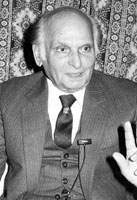 to describe the works of writers like Jorge Louis Borges, Gunter Grass,
Gabriel Garcia Marquez and Salman Rushdie. It is pertinent because this
critical framework, for the lack of a better term, equips us to better
understand and penetrate deeper into the works of writers like Intizar Hussain
and helps us to establish parallels with literature that is being produced
around the world.
to describe the works of writers like Jorge Louis Borges, Gunter Grass,
Gabriel Garcia Marquez and Salman Rushdie. It is pertinent because this
critical framework, for the lack of a better term, equips us to better
understand and penetrate deeper into the works of writers like Intizar Hussain
and helps us to establish parallels with literature that is being produced
around the world.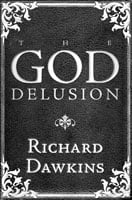 observations to ascertain if an assertion is true, our arguments only
partially convince us of the truth of the assertion. Thus, in practice, we end
up assigning probabilities to the truth of the assertion. Once, these
probabilities become sufficiently low, we act as if the statement was not
true. For example, there is a positive probability of having an earthquake in
Lahore tomorrow. However, it is so low that we act as if it is not going to
happen. Dawkins extends this analogy: there is nothing inherently different
when one is arguing for or against the existence of God. A rational approach
is to listen to arguments provided from both camps, examine them with an open
mind, use one's own intelligence to construct further arguments and assign
probabilities to the existence of God. And this is where Dawkins makes his
most important point. When we examine the arguments with this approach, the
conclusion stares us in the face: the likelihood of the existence of a creator
is extremely low.
observations to ascertain if an assertion is true, our arguments only
partially convince us of the truth of the assertion. Thus, in practice, we end
up assigning probabilities to the truth of the assertion. Once, these
probabilities become sufficiently low, we act as if the statement was not
true. For example, there is a positive probability of having an earthquake in
Lahore tomorrow. However, it is so low that we act as if it is not going to
happen. Dawkins extends this analogy: there is nothing inherently different
when one is arguing for or against the existence of God. A rational approach
is to listen to arguments provided from both camps, examine them with an open
mind, use one's own intelligence to construct further arguments and assign
probabilities to the existence of God. And this is where Dawkins makes his
most important point. When we examine the arguments with this approach, the
conclusion stares us in the face: the likelihood of the existence of a creator
is extremely low.