



|
|
|
|
|
 |
 |
   |
analysis
Newswatch
Development
Whither
the state?
The so-called 'war on terror' remains front and centre
in political and intellectual circles, and This is not to suggest that a large number of
Pakistanis take everything that the media says for granted. As I have
reiterated time and again in this space, most working people, regardless
of the extent of their exposure to the media, believe firmly that imperial
America is largely responsible for the escalating violence, alongside the
Pakistan Army and its 'jihadi' proteges. It would be insulting the
intuition of this silent majority to suggest that its opinions are a
function only of media coverage. Nonetheless, it is true that the media and the religious right to which the former gives a disproportionate amount of air time have successfully duped the silent majority into believing that the very secular war that imperial America is waging in this region and other parts of the Muslim world (in the sense that it is doing what it is doing to achieve strategic and material objectives) is, in fact, a civilisational war, or more specifically a war against Islam. Then again, the refusal to depict the reality in all its contradictory holism is not surprising. Media complicity with power is a worldwide phenomenon. The media and other power brokers in the western world are even more deserving of unbounded criticism than their counterparts in countries like ours for reporting only that side of the story that reinforces the prevailing hegemony. Perhaps the biggest news item in the world today is the financial meltdown on Wall Street, yet the corporate media prefers to spew out half truths rather than offer meaningful investigation or analysis that highlights the true significance of what is actually happening. That even very informed observers in Pakistan are not clued into what is going on in the US at the present time is only partially a function of our grappling with our own very serious problems. It also reflects the media's refusal to move beyond the superficial tirades about America's war against Islam. If instead there was an attempt to understand the financial turmoil for what it is, namely a epoch-defining crisis in the global capitalist order, we would be much closer to putting America's war-mongering in Afghanistan and Pakistan into its rightful context, and accordingly much closer to conceiving of a meaningful strategy of resistance, rather than continuing to posit that the obscurantism of the Tehrik-e-Taliban Pakistan (TTP) is the panacea to all our problems. In short, the collapse of American financial giants one after the other perhaps marks the end of America's reign as the undisputed hegemon in the capitalist world system, and leaves Washington with only its overwhelming military might as a means of maintaining its dominance of the world. The American economy has, of course, long ceased to be the world's most productive; East Asia having acquired this mantle over the past two decades or so. Crucially, since the oil shocks of the early 1970s and the end of the gold standard, the dollar has been the world's reserve currency and this has permitted the American government, its now deep-in-trouble banks and virtually every American family to accumulate an astounding debt that continues to be backed up by governments all over the world. For the time being, most of these governments do not want any more uncertainty on the capital markets than Wall Street because their foreign exchange is all in dollars, but this does not mean that America is not in trouble. It is now up to the American state to, as one commentator put very succinctly, "save capitalism from the capitalists". And despite the failure of the first rescue plan that envisaged the American taxpayer fronting a $700 billion bail out of the corporate sharks, a slightly watered-down version of the proposed Congress bill will eventually be passed by the House of Representatives (and might already have been by the time this essay is published).0 As I suggested earlier, the media's coverage of this epic collapse has been suspicious at best: it has chosen only to focus on the government's dragging of feet on the bailout rather than whether financial institutions that have engaged in nothing less than criminal money-minting practices should be bailed out at all. It goes without saying that no fundamental questions have been raised about the viability of capitalism itself. Given the intercon-nectedness of national economies all over the world, the impacts of the financial collapse in the US will be felt far and wide. And the American government's temporary papering over the deep cracks in the global capitalist order, by according protection to those who have created the problem, will serve only to make the poor and weak more vulnerable while bolstering the rich and powerful, both within the United States and around the world. Meanwhile, it should be expected that Washington will compensate for its continuing economic decline by attempting to deepen its strategic and military power, and this spells bad news for regions such as ours. Some astute writers have noted that the US has been acting like a wounded bear ever since the September 11 attacks; alongside the obvious material and strategic objectives that explain American empire-building policies during the tenure of George W Bush, there has also been a barely suppressed ego at work, proclaiming to the world that it can act unilaterally and without impunity, and daring anyone to stand up to it. This rather warped national psychology is likely to intensify in the aftermath of the Wall Street collapse. Throughout history, empires in decline have very rarely seen the writing on the wall and the United States of America is hardly different. Despite its unquestioned military dominance, Washington is now suffering from a classic case of imperial overstretch. Exhortations aside, it has already lost the battle for 'hearts and minds'. By insisting that America is fighting a civilisational war against Islam, we not only foreclose the expansive anti-imperialist alliances that we can build, we also fail to understand the possible contours of a global political economy in which the US is not top dog. When the United States does become yet another washed-up empire, the next claimant to world dominance that replaces it will not be any less ruthless in securing its material and strategic objectives. Then, as now, it will not be an attempt to suppress Islam that will inform the engagement with Pakistan or any other Muslim country. The sooner we accept this, the better.
Newswatch China is developing a force to tackle information warfare By Kaleem Omar China, which launched its third manned space mission last week, and is busy modernising its military at a pace that has the Americans worried, is developing a strategic information warfare unit to neutralise the military capabilities of technologically more advanced foes, according to a US report. The unit, dubbed 'Net Force', will wage combat through computer networks to manipulate enemy information systems spanning spare parts deliveries to fire control and guidance systems, according to a report prepared by the US Congressional Research Service (CRS), the research arm of the Library of Congress. "China is pursuing the concept of a Net Force which would consist of a strong reserve force of computer experts trained at a number of universities, academies and training centers," according to the CRS report, titled Cyberwarfare. "Several large annual training exercises have taken place in recent years. The Chinese have placed significant emphasis on training younger persons for these tasks," the report said. A military official at China's embassy in Washington said no such entity exists as yet, but agreed that China has put a priority on such efforts, according to a report published in the American weekly military journal Defence News. "Officially, we do not have such a Net Force," the official was quoted as saying. "We have not heard of that. But we pay a lot of attention to information warfare, like the military people in the US." The Defence News report quoted James Mulvenon, a Chinese military specialist with the Rand Corporation think tank in Washington, as saying that there is "a very, very robust effort going on in China to have a wholesale move from some of the more primitive systems they used to use to land-line fibre optics, digital microwave and satellite communications." If these technologies are matched with skilled operators to create an effective computer-network attack capability, China could have a potent so-called asymmetric, or non-traditional, weapon to level the battlefield in a conventional fight against a more technologically sophisticated foe, such as the United States, Mulvenon said. US government assessments of China's information warfare capability are classified. However, many analysts have considered what a strategic information warfare capability could give China, the Defence News report noted. "It would give China a power-projection capability that its conventional forces just don't have," Mulvenon said. "It would allow China to reach out and touch US forces in the continental United States that their conventional forces physically can't." Strategic information warfare, Mulvenon argued, could give China the means to shape US attempts to intervene in a conflict over Taiwan. "Because if you can trip up our logistics tail in the rear areas, you might be able to slow the flow of forces," he said. According to the Defence News report, however, not everyone in the US defence community believes that China's military is a few keystrokes and mouse clicks away from disrupting or corrupting an enemy's information backbone. "These futuristic capabilities are very much that -- futuristic," Bates Gill, a defence analyst with the Brookings Institution think tank in Washington, was quoted as saying. China's military, like nearly every major power, paid close attention to the 1991 Gulf War and the role that information technology played in defeating Iraqi forces and their largely Russian and Chinese equipment. Information technology also played a key role in the America's utterly illegal invasion of Iraq in March 2003. The Chinese government made oblique references to information warfare objectives in its defence white paper issued in October 2000. "Faced with the world's military developments and the characteristic of modern warfare," states the document, "the Chinese armed forces will, in the course of modernising their weaponry, devote themselves to transforming semi-mechanised and mechanised weapon systems to automated and information systems as soon as possible, so that they can possess weapons as advanced as possible." According to Gill, however, "They (the Chinese) still have a long way to go... with little in the way of joint cross-service, air-land battle kind of capabilities that the United States has perfected for so long." It is just this sort of dominance that an offensive information warfare capability could be designed to offset. If progress in introducing expensive information technologies across China's vast conventional forces is slow, China has crafted a vigorous programme to modernise other strategic information systems, according to Mark Stokes, a former US assistant defence attache in Beijing, who later worked on the Pentagon's China desk. In a paper published in 2000 by the US Army War College, Stokes argued that Beijing could gain information dominance against a technologically advanced enemy if China succeeds in efforts to modernise its telecommunications infrastructure, develops a robust space-, air- and ground-based sensor network, and creates electronic attack systems. The defence position white paper issued by the Chinese government in October 2000 says that China's military modernisation programme is being fuelled by the US military presence in Asia and multinational efforts to develop missile defence systems, as well as continued US arms sales to Taiwan. China's concerns in this regard have reportedly grown since President George W Bush's administration's 2002 decision to unilaterally withdraw from the Anti-Ballistic Missile Treaty it signed with the Soviet Union back in the 1970s and go ahead with plans to build a missile defence system. Beijing's white paper warns of "drastic action" in the event of any move by Taiwan towards independence. China regards Taiwan as its rightful territory and staunchly opposes US arms sales to the island. According to the new defence document, Beijing is designing its military modernisation programme in large part to counter what it calls US hegemony. According to a Chinese white paper, Beijing sees "new negative developments" in the Asia-Pacific region. These include a strengthening US military presence and bilateral military alliances in China's neighbourhood, and US development of a theatre missile defence system and plans to deploy it in Asia. "The Taiwan Straits situation is complicated and grim," the white paper states.
Without education, most children in
rural areas will never break out of the vicious cycle of hunger, poverty
and ignorance By Sidra Tufail Education is the best social and economic
developmental investment a country can make. For this reason Education has been a panacea for sustainable economic progress and was the key factor in the rapid development of many countries. From a macroeconomic perspective, education promotes sustainable economic development by producing a more skilled labour force, thus increasing productivity. From a microeconomic perspective, the individual benefits in terms of better wages, improved health and hygiene, lower fertility rates, and many other things that are intangible and difficult to measure, such as increased awareness, better living standards and improved parenting skills. "Both social and economic developments are impossible without education, because a direct link exists between them. Education is the backbone of a country. If the people are not educated and are not aware, then how can we expect any progress in the country?" says Tehmina Sheikh, director programmes at the National Education Fund, an organisation that actively pursues the goal of achieving universal education in Pakistan. Education remains a goal, rather than a reality, for Pakistan, especially for rural areas. The majority of Pakistanis live in rural areas and it makes sense that any attempt to reduce poverty should, therefore, focus on these. Improving education outcomes in rural areas of all the provinces is essential for a noticeable impact on poverty and human development outcomes in the country as a whole, because without adequate education most children in rural areas will never break out of the vicious cycle of hunger, poverty and ignorance. It appears to be the only way of effecting social change and determining social development, as well activating participation in rural and cultural progress. Research shows that basic education affects agricultural productivity. A farmer with four years of elementary education is on average 8.7 percent more productive than a farmer with no education. Moreover, farmers with more education easily adapt to innovative farming techniques and technological advances. Many children will be the farmers of tomorrow; if well educated, they have a greater chance of becoming more productive and efficient farmers. It is the children who would eventually construct the future rural life of Pakistan and educated children will be better able to pave a path to the improvement of rural areas. Despite the fact that education is a basic right and an essential prerequisite for reducing poverty, improving the living conditions of rural people and achieving overall sustainable economic development, children's access to education in rural areas is still very limited, and the quality and standard of education deplorable. Rural children, most of whom are extremely poor, have very limited opportunities to obtain a basic viable education that could help them break out of the poverty cycle. "Education in Pakistan's rural areas is appalling right now. What can be a greater measure of illiteracy than the reality that women are being buried alive in villages? If people were educated, they would never even consider such a depraved and vile acts," Tehmina Sheikh says. "In the earthquake-hit areas, many of the damaged schools are yet to be repaired, forcing the children to be taught in the open. There is an acute shortage of functioning schools in many rural areas. Even if there is a school, it has either no or ill-equipped teachers. The quality of education is, as a result, extremely poor. This sheds light on the gravity of the situation." The education system in rural areas has long been incapable of providing quality education. The teachers, hired mostly as a result of political patronage, have questionable qualifications and sparse training or relevant experience. Teacher absenteeism has always been a problem too and the student to teacher ratio is also very high. When asked why the curriculum is so obsolete, Tehmina Sheikh says: "The curriculum has been revised many times, but it is designed by those who are not aware of the rural life, thus it is not suited to local conditions and life experiences." This is why the curriculum and textbooks have failed to keep up with the evolving social and economic demands, while rote learning and memorisation have been emphasised in the Pakistani education system, leaving students without the analytical skills that are crucial in today's world. Moreover, economic factors are another key impediment to education. In addition, cultural traditions and poverty act as big hurdles in children's education. In the face of increasing inflation, parents would rather have their children working in the fields or in the households or even send them to the city to work to be bread earners, instead of enrolling them in schools. Schools in rural areas face daunting challenges in catering to the needs of children's education. Many of these are intimately linked with the social, regional and cultural circumstances and traditions prevalent in rural areas, which act as formidable obstacles to free, accessible and quality education. One of the most execrable aspects is that in some regions, particularly the northern areas, the education of girls is strictly prohibited on fake religious grounds. Powerful local landlords, village heads and feudals also openly oppose education of any type. Gender barriers multiply in rural contexts and education is no exception. At the primary level, there are five times more male teachers than female teachers in rural areas in Pakistan. Also, if schools lack boundary walls or require a very long walk, or have coeducation, then this will also affect girls' education because of parental concerns about the safety of their daughters. The main aim of the government should be to improve rural access to quality schooling and increasing retention and transition of children in the school system, with a particular focus on girls, by upgrading the quality and utilisation of physical infrastructure in schools, reducing gender and regional disparities, addressing existing implementation bottlenecks, and augmenting the effectiveness of public incentive programmes, by implementing appropriate reforms that target both the demand and supply side of the rural education sector. This can be achieved by analysing policies that have been most effective in breaking down barriers to access and completion to education in other developing countries in Asia and accordingly designing strategies that should be adapted for promoting rural education in Pakistan. There has been some progress as the government continues its efforts to expand the coverage of basic education and to improve its quality, but it is simply not enough. Expansion and improvement of rural education are often at the center of a country's poverty reduction efforts. Education oriented to urban, rather than rural, needs is disadvantageous for rural as well as urban areas, because it accelerates the process of rural to urban migration, thus generating youth unemployment and congestion in cities. That is why there should be special emphasis on removing the urban bias. A chief area for improvement is the existing quality of teachers and learning, which needs to be enhanced by instituting merit based recruitment, increasing accountability, undertaking regular and unbiased evaluation, and encouraging the continuous training and professional development of the teachers. Additional staffing of female teachers will also go a long way in reducing the gender disparities.
(Email:
sid_tufail@hotmail.com)
Political parties must understand that they would have to pay a heavy price for their misdeeds, because the electorate is watching them like never before By Javed Ahmed Malik If there is anything February 18 election proved in
Pakistan, then it is the dynamism and the changed The impact of these socially conscious cause struggles was reported some times in a magnifying way to the masses, who in majority now watch round the clock news channels replacing their previous favourite Indian movies. This has created a like-minded urban middle class that thinks in the same manner in most of the urban centre with local variations. News channel anchors have now attained a new celebrity status, which until recently was enjoyed only by TV artistes. The resultant incremental changes in society are now getting noticed, and advocacy groups and media watchers are now registering them. At the height of Musharraf's military dictatorship, when Chief Justice Iftikhar Muhammad Chaudhry started taking human rights and public interest-related cases on a consistent basis, for the first time the people of Pakistan saw someone finally reining the excesses of this post colonial bureaucracy. The urge to have the rule of law and public accountability has always been there in the Pakistani society and an emerging educated middle class in Pakistan was happy more with the process than with the actual outcome of each suo moto case. The thought of making powerful military and civilian ruling elite accountable revived a great sense of hope among common Pakistanis. The lawyers' movement brought back the issue-based politics in Pakistan to an extent that the Pakistan Muslim League-Nawaz (PML-N) staged an unexpected comeback due to its clear stance over restoration of the judiciary. This is not to say the ruling elite is not resisting this change. For the time being, they seemed to have influenced the legal minds of the Pakistan People's Party (PPP)-led government, which is now restoring judges on its own conditions and only after first humiliating them. Unfortunately, the law minister has no vision of the role of an independent judiciary as an institution. More than ever, he is proving the point that state managers are once again refusing to listen and, therefore, learn from society; they have lost the sense of society's pulse. The changing voting pattern, the emergence of a socially conscious media and a call for strengthening state institutions from a number of quarters basically indicate that the size of middle class has swelled over time. There are far more number of restaurants almost full to the capacity and one can see more and more families eating out. Every one has a cell phone and connectivity with the Internet, causing a whole new chain of social relations. Those who now are committed in a relationship with a man or a woman of their choice in universities are increasing, something that was considered highly negative in the past. This more liberal outlook in life is not necessarily making them more socially and politically conscious, but of course is giving them a sense of freedom they never had before. This means that as a trend the younger generations would listen less to their clan or families when making a choice. By 2010, the Pakistani youth would be almost two-third of the country's total population, which means that they will be in a position to define society's direction in their own way. If the political parties do not know, then the Taliban definitely seem to know it. The majority of their leadership is in their early 40s if not late 30s, while the executors were mostly in the teenage or a little older. The presence of youth in such a huge number, with a value system relatively liberal than their parents and with a relatively better capacity in education as well as computer and IT knowledge, is, of course, an opportunity for political parties. However, because student unions have remained redundant for almost two decades (the last union elections were held in 1989), the parties lack the kind of leadership that could reach out to the heartland of student bodies. Therefore, it is very important to regulate the explosion of youth earlier on. The revival of students union can become a good entry point to cater to at least some of their needs. It is also an opportunity to revive the otherwise lacklustre campus sports and other aspects of student life that are as important as their academics.
(Email:
javedkaemail@yahoo.com)
Ensuring safety and security of all Pakistanis is the government's foremost responsibility Doom and despair are writ large on the face of the
nation. Frequent disasters and accidents in the recent Some of the backdrop events and the manner of their unfolding have made people believe in conspiracy theories. Since the response of the leadership is weak and often not forthcoming, people get all the valid reasons to believe in these theories. Government functionaries only resort to quasi-preposterous reassurances that neither work nor cause any impact on the prevailing circumstances. The people want the government's resolve, if it exists, to be translated into swift action through timely decisions. Political consensus is the basic prerequisite for preventing the damage resulting from terrorist attacks. The government should immediately take the decision to initiate a meaningful and result-oriented consultative process. For this purpose, political leaders, religious scholars, militants, economic interest groups and power-wielding tribal heads must be approached to subscribe to a certain common agenda. An all parties' conference with representation from other important interest groups can be the starting point. Ensuring safety and security of all Pakistanis, their assets and properties is the foremost responsibility of the government that cannot be shirked at any cost. Skillful negotiation and clear articulation of national interests in the current scenario must follow this process. If consensus-building efforts are kept on the backburner, the country shall not be able to come out of the existing quagmire of terror and fear. The basic edifice of governance has fallen apart. Many indicators testify to this fact. Insufficient and faulty delivery of health care, decadent educational system, failing food crops, sliding value of currency, high scale of inflation, rise in crime rate and disruption in food supply are critical issues that need to be addressed immediately. A review of the various sectors reveals that the delay in curtain decisions has acutely affected the overall performance of the country. The appointment of schoolteachers in Sindh is a case in point. The schools, especially in the rural areas and smaller cities, have been acutely affected by the delay in resolving this matter. Similarly, an unwanted controversy has been created about the controlling authority of examination boards in the province. This matter surfaced up due to internal power tussle between the coalition parties in Sindh. The current situation demands that we set aside petty conflicts in the larger interest of the nation and its people. The political leadership should focus entirely on the performance benchmarks of respective sectors. It should prove its mettle by taking informed decisions with a well-reasoned approach to pave the way for smooth implementation by the bureaucracy. If the leadership falters, the implementation mechanism will be the first victim of its poor performance. An analysis of the recent food crisis shows that unclear and delayed stance of the government has contributed to it. The wheat crisis began building up during the first half of the previous year. Due to delay in the procurement of wheat, the supply chain was adversely affected. A similar situation is in the making now. Flawed irrigation techniques and availability of less amount of water has put the food crop issue in the limelight again. Strategic decision-making is needed to replenish the essential stocks of wheat for uninterrupted supply to the population. Security of supply routes and anti-smuggling measures also await a befitting policy- and decision-making response. Quickly changing positions and announcement of weak decisions bolster the mafias and vested interests to the detriment of the common people. The country's judicial system is the most important casualty of delayed decision-making. In the absence of a viable mechanism of providing justice, anti-social and criminal elements have had many field days! Though many 'deposed' judges of the higher judiciary have now taken oath of their offices, normalcy will only return after all the pending issues are addressed. The government must realise that by weakening the judiciary, the structure of governance will be weakened. At the level of sessions and lower courts, the general impression is that through administrative actions, immunity and impartiality of the judiciary can be reduced. Criminal and corrupt elements have taken full advantage of this situation. The exponential rise in crime has actually been encouraged by the 'assurance' to criminals that they would not be rounded up even after committing the most heinous of acts. Clan influence, party connections, bureaucratic linkages and mere professional incompetence does not leave enough incentive for prosecution to develop a proper judicial mechanism. In this scenario, the rich and powerful are set free even if they commit heinous crimes, while the poor and downtrodden are grilled even on simple charges. Unless the government decides to act and perform as a government, the country will not be able to adjust its rudder against the incoming whirlwinds. The advantage of a liberal political environment waits to be fully realised. It appears that the government has left every small detail to be fixed by the president. In contrast, institutions must be given preference over people and kitchen cabinets of sorts. It will be beneficial in the long-term for members of kitchen cabinets also, if they wish to survive as worthwhile politicians. Without correct and timely decision-making, the fruits of democracy will not be achieved.
(Email:nomaniconn@hotmail.com) The government has finally realised
the need for taking hard economic decisions The recent Asian Development Bank (ADB) forecast of
Pakistan's economy in fiscal year 2008-09 (FY09) puts economic growth at
4.5 percent, inflation at 20.0 percent and current account In FY08, the country's economy grew at 5.8 percent, inflation was registered at 12.0 percent and current account deficit jumped to 7.0 percent of GDP. Budgetary targets for FY09 include GDP growth of 5.8 percent, inflation rate of 12.0 percent, and current account deficit-GDP ratio of 6.0 percent. The ADB's projections are based on certain assumptions, such as greater political stability, rationalisation of subsidies, high international oil prices, increase in the cost of doing business, continued slowdown of manufacturing and agricultural sectors, robust growth of the services' sectors, fall in private consumption, low capital inflows, and 9.5 percent growth in imports. To correct the major macroeconomic imbalances, the ADB notes, a credible short-to-medium term economic stabilisation and reform programme needs to be implemented, while at the same time protecting the vulnerable sections of society. In this context, the government announced a short-term stabilisation programme on September 19. The 'home-grown' package rules out assistance from the International Monetary Fund (IMF) and focusses on greater fiscal discipline. It also says subsidies on oil and gas will be eliminated and power subsidy phased out by the end of FY09 (June 30, 2009). To lessen the government's dependence on borrowing from the State Bank of Pakistan (SBP) for deficit financing, which is highly inflationary, the package envisages non-bank borrowing schemes, such as Pakistan Investment Bonds and commercial papers. It also seeks to privatise public enterprises to generate revenue, as well as reduce public expenditure, particularly developmental spending. The package, the government is confident, will help reduce fiscal deficit and contain inflation. The fiscal package has come at a time when Pakistan's economy is in a bad shape, to put it mildly. The country's foreign exchange reserves have fallen to $8.82 billion and the rupee is fast depreciating; the exchange rate was Rs78.21 per $1 at the close of business on September 25. In the first two months of FY09 (July-August 2008), the country's current account deficit was registered at $2.57 billion, 64 percent higher than $1.57 billion in the corresponding period in FY08 (July-August 2008). Similarly, trade deficit, the major item on the current account, reached $2.65 billion in the first two months of FY09, 67 percent higher than $1.59 billion in the corresponding period in FY08. General inflation on year-on-year basis was registered at 24.3 percent and 25.3 percent in July and August 2008, respectively. Similarly, food inflation increased to 33.8 and 34.1 percent in July and August 2008, respectively. However, both workers' remittances and foreign direct investment (FDI) also registered an increase in this period. The remittances went up to $1.21 billion in the first two months of FY09 from $985 million in the corresponding period of FY08. Similarly, FDI increased to $754 million in the first two months of FY09 from $460 million in the corresponding period of FY08. The elimination of oil and gas subsidy and the phasing out of power subsidy was a hard decision to make. However, hard times necessitate hard decisions. The former was necessary to bring down the country's fiscal deficit. In FY08, oil subsidy worth Rs175 billion was granted; this accounted for 43 percent of total subsidies and more than one-fourth of the country's fiscal deficit. Similarly, the phasing out of power subsidy will reduce the demand for energy due to higher prices. However, the removal of these subsidies would also have undesirable effects. The most obvious will be increased inflationary pressures in the economy. This will tell upon both consumers and businesses and may impede other objectives of the government, such as reducing current account deficit, increasing the economy's productivity and raising the level of savings. The economy's productivity would go down, as resources will be diverted to speculative or non-productive activities, such as investment in real estate. The surge in prices of inputs will push up the cost of production, thus driving up the final price of exportable goods, making them less competitive in the international market. Savings will be discouraged, partly due to reduction in real incomes, the single most important factor behind savings, and partly due to increased consumer spending in anticipation that prices will go up further. The fall in real output, already predicted to grow at a modest rate of 4.5 percent, will also negatively affect the level of employment. Finally, increased inflation will have an enormous social cost, because it will hit hardest the salaried class and the poorer sections of society. The combination of low output and high inflation -- called 'stagflation' -- is dangerous. Usually, there is a trade-off between high GDP growth and low inflation. However, many a time, the economy reaches a stage where this choice is no longer available. The result is increased prices accompanied by reduced output, employment and incomes. In FY08, GDP growth went down from 7.0 to 5.8 percent, while inflation went up from 7.8 to 12.0 percent. The current fiscal year's projections show that things will only get worse. To steer the country out of this difficult situation, the government needs generous foreign assistance. Mere readjustment of policies will not help. At the launching of the Friends of Pakistan -- a forum of some rich countries -- in New York on September 26, President Asif Ali Zardari said what he wanted from the donors was not cash inflows, but transfer of technology. The fact of the matter is that Pakistan needs both cash inflows (in the short-run) and transfer of technology (in the long-run), just as a starving person needs food to survive before he can think of making a living. (Email: hussainhzaidi@gmail.com)
A new development? Confusion prevails on why uplift projects funded by donor agencies and implemented by experienced locals fail to deliver By Farheen Hussain The development sector in Pakistan has been in
existence for more than three decades, with The power that the formidable donor agencies, such as the World Bank, the International Monetary Fund (IMF) and the Asian Development Bank (ADB), wield in shaping the global economy and influencing public policy is exactly what brings into question their larger economic interests and underlying political motives when they flush developing economies with liquidity. As is the case with structural adjustment programmes (SAPs), which Pakistan has a penchant for entering into with the IMF, foreign aid comes mostly with its own string of conditionalities. Disregarding the separate debate on the aid that is tied to the purchase of weaponry or increased access to our markets, the concern here is with ODA, which is earmarked to target predefined development issues. These funds are keeping our development sector afloat and making it as lucrative as the corporate sector. Still confusion prevails on why development projects funded by donor agencies and implemented by experienced local development practitioners fail to deliver. For this, it is important to recognise that far from the possibility of foreign aid revolutionising a country's socioeconomic structure, history lacks examples where aid from the World Bank, the IMF or the ADB was the cause, impetus or even facilitator of development. On the other hand, what is usually a function of effective development is a culture and infrastructure of community participation; something Pakistan lacks the most. The most experienced development practitioners acting as an interface between the donor and the community have cited the steady disillusionment and detachment of the populace from the foreign-funded development programmes as the major cause of their failure to reap harvests. How can the people be expected to engage actively in a process that does not cater to their needs, does not draw from their knowledge and does not engage them at any stage? It suits local development organisations dependent on donor funds well to take dictation from their benefactors. So even if the targeted issue, overall vision, objectives and strategies are not determined entirely by the donors, they are certainly in line with their 'priorities'. As a result, development organisations in the Third World, with minimal leeway to innovate, are left with no choice but to design and implement projects that pursue the predefined objectives and to report back on the 'successes' to the donors. The entire approach is top-down and it only responds to the donor agency's interests. For any authentic and sustainable change to take place, it is imperative that development originates from the people and not the donors. Therefore, development practitioners, donor agencies and academics must assume the role of facilitators, rather than that of implementers. Far from participation, the entire process should feed off the community and sustained by it, from the actualisation of a project to its evaluation and ultimately to reaping its benefits. Development organisations in the Third World are merely vehicles that make it possible for the people to partake in their own development by filling in the gaps, such as the need for mobilisation and awareness raising, capacity building and technical support, and network building. The notion of participatory development, originally inspired by Paulo Freire and advocated by Left leaning development activists, is by no means a modification of the mainstream development practice; it is a radical role reversal from top-down to bottom-up approach, from centralised standardisation to local diversity and from blueprint to learning process. This radical role reversal necessitates revolutionising the development methodology, from the role of the development worker and research format to relationship dynamics between the development worker and the community. Since the community is the propagator of the change advocated by development organisations, there is a reversal in the importance given to knowledge, categories and values of the local people against those of the outsider professionals. Development workers embed themselves, seeking to develop a deep, rich and holistic understanding of the local community. There is a reversal of learning from the local people to the development worker, directly gaining insight from their indigenous technical and social knowledge. This is a clear departure from survey questionnaires, currently the only means of engaging the locals in any project. The issue that a project is designed to address is locally defined, so the project vision and objectives take root from the community. Since the entire development process from research and planning to implementation and evaluation is community driven and organic, success lies not in dogmatically following written rules, regulations and procedures handed down by development manuals, but applying individual judgment through observances, personal interactions, judgment and choice. The conventional investigations employing survey questionnaires are designed by outsiders and coloured by their preconceived notions. They seek to elicit responses and fill fixed boxes, so that neat data can be gathered, entered and analysed. In fact, the 'reality' is forced to fit the professionals' familiar frame. Reality can never be simplified and standardised without largely compromising on authenticity. This requires a move from questionnaire interviews to semi-structured and informal conversations, the result being not to measure but compare. In conventional project management, the norm is to make absolute measurements. This preoccupation with numbers deprives us of the richness of the process, because every observation, interaction and experience is subjected to some measure to produce numbers that can be manipulated. The stress here is to empower not extract. When the locals express and share what they already know, they also learn through that expression and sharing. Those who investigate and observe add to their knowledge. Those who analyse become yet more aware and reach new understanding. When the locals are the predominant contributors to the development of their own community, they take ownership of the project. Nevertheless, is such development possible? Indeed various such initiatives in South Asia and Latin America are gaining popularity, with donor funding conditional to the success of the project. Still the idea is not complete rejection of the ODA, but a realisation to make the rhetoric more real. (Email: farheen.297@gmail.com)
An equitable Islamic tax system remains a distant dream By Huzaima Bukhari and Dr
Ikramul Haq It is an undeniable fact that the Muslim world is
faced with serious problems of income On the contrary, more room for exploitation has been created in the name of Islamic mode of financing. The so-called 'Shariah-compliant' instruments prevalent in the existing Islamic banking system are, in substance, not much different from normal financial transactions. Mere change of nomenclature is nothing but eyewash. The only additional feature is that ulema get their due share in this exploitation by endorsing these instruments under self-created fiqah. All the leading Western banks initiated 'Islamic' banking in the Middle East in the 1960s and soon spread their tentacles all over the world, finding it even more profitable than other exploitative banking instruments aimed at robbing the poor and benefitting the rich. For the past many centuries, intellectually barren Muslim societies have failed to evolve their own economic, political and social systems based on the guidance available in the Holy Quran and Sunnah. As a result, rigid and inflexible theocratic, clergy-evolved models, which emerged during monarchies, have been followed blindly without questioning their validity in modern times. Even the rationale behind these theories has never been tested on the touchstone of the principles enshrined in the Holy Quran. On the other hand, emulating western system in a peculiar Muslim milieu has been creating inconsistencies and incompatibilities due to fundamental differences in approach towards life as a whole. In this scenario, is it possible for the Muslim world as one community to evolve some common models for economic growth, resource-sharing and progressive taxation as a means to end income and wealth inequalities? The answer seems to be a big no. It is strange to see that Muslims living in various countries have common jurisprudence sources for evolving harmonised models in all spheres of life, but no serious thinking or effort has ever been made in this direction. In contrast, the European Union (EU), comprising countries having no common source of legislation, has successfully harmonised its tax system in the last decade or so. Why has the so-called Ummah failed to evolve a union on the pattern of the EU? The answer is simple: there exist unimaginable sectarian divisions and regional and ethnic animosities within the Muslim world. On the one hand, Muslims keep on telling the world that they profess faith in one God, one Book and one Prophet; while, on the other hand, they do not pause even for a while in killing their own brothers and sisters in the name of self-assumed interpretations of the Holy Quran. The modern day Western civilisation has attained social and economic justice by adopting principles of equality, social mobility, opportunities for all, respect for human dignity irrespective of class stratifications, work ethics, democracy and rule of law. All these elements are missing completely or largely in the majority of Muslim countries. The issue of improvement of tax administration and introduction of Shariah taxation with particular reference to Zakat and Ushr to meet the changes rapidly taking place in the world cannot be seen in isolation. This goal cannot be achieved without first establishing democratic institutions and culture. The tragedy with Muslim rulers and their bureaucracies is that they want to do everything without the involvement of the people. In a truly democratic dispensation, such programmes of change are unthinkable without the active participation and support of the people for whom they are meant. Since the rulers of Muslim World have little respect for democratic culture and values, they try to impose Western models on their people. They do not even know whether these models could be introduced in their societies, without appropriate modifications to conform to Quranic injunctions and Sunnah, or even to suit local conditions and requirements. The result is that they fail to implement foreign models, because of lack of people's consent, motivation and participation, as well as corrupt, incompetent and inefficient bureaucracies that are not accountable to any public institution. In this scenario, clergy-ridden, despotically-ruled and badly-governed Muslim societies have lost the very basic quality of adhering to the higher values of justice and rule of law. If they want to regain the strength and supremacy they once enjoyed in history, they will have to change themselves by getting rid of monarchs, despotic rulers and religious extremists, and establishing egalitarian societies in which a just Islamic taxation system can play an important role. The dilemma of today's Muslims is that they want to regain past glory without realising that the world today requires excellence in research and technology, which is not possible in undemocratic environments, for lack of freedom of thought and tolerance towards others people's viewpoints. Most Muslim countries have no respect for redistribution of wealth in their taxation systems, whose sole aim is to collect more and more resources to cater to luxuries of the rulers. For example, in Pakistan, the rulers are burdening the poor with harsh and oppressive taxes that they are wasting on their own luxuries. The presumptive tax system is the worst example of this phenomenon. Adding insult to injury, tax officials feel no shame in holding conferences to promote Shariah taxation. Most tax administrators do not even know the basic precepts of Shariah, what to talk of devising a tax system based on it! Tax policy issues, after thorough public debate, should be translated into proper legislation and placed before Parliament, taking into consideration advice of experts in the field. Everywhere in the world, universities are the main source from where the latest research for framing laws and policies on a particular subject emanates. In the Muslim World, however, the rulers want tax collectors, who mostly lack the relevant knowledge, to do the same. (The
writers, tax advisers and authors of many books, teach at Lahore
University of Management Sciences. Email:
www.huzaimaikram.com)
NGOs and civil society in Pakistan are faced with a dilemma By Aftab Ahmed Awan In today's world,
non-governmental organisations (NGOs) are playing an increasingly
important However, in Pakistan, many factors have not allowed most NGOs and other civil society organisations (CSOs) to live up to the potential despite their increasing numbers. These factors have not let NGOs play their role as effectively as their counterparts are playing throughout the developing and developed world, and especially in our neighbouring countries. However, this does not imply that all NGOs and CSOs in Pakistan have failed to deliver. We do have some very good service delivery and advocacy NGOs, whose work has not only been recognised nationally but also internationally. These include both advocacy NGOs fighting for human rights and gender issues and service delivery NGOs working with vulnerable and marginalised communities. However, most development organisations do not even have a clear vision of what they are there for, and often have objectives that are not focussed and are not driven by the actual needs of their communities. Moreover, many of these NGOs are facing severe shortage of resources and funds to continue their operations, and to keep on providing services to their target communities. Critics claim that almost all NGOs and other CSOs in Pakistan are mere pawns in an international game, and are not representative of the communities for which they claim to be working. They argue that the NGO sector has become a racket and those involved are only wasting precious resources on activities that are not contributing to the achievement of development goals. Although there may be some truth in these allegations, they do not present the complete picture. In fact, many factors have not allowed NGOs and other CSOs to operate as effectively as they could have in Pakistan. To analyse the factors behind this lack of effectiveness and to discuss the hurdles that are being faced by NGOs in Pakistan, we will have to look at their genesis and analyse the way they have progressed over the years. The evolution process through which NGOs have gone through in Pakistan lies at the heart of the ideological dilemma that these organisations face today and that results in their relative inefficiency in making a visible difference. In Pakistan, spotlight started to fall on NGOs and other CSOs during the last decade of the 20th century, because of changing international trends of funding and development concepts. However, NGOs and other CSOs are by no means a new phenomenon in Pakistan. The history of NGOs goes back to early days after independence. Many voluntary organisations were established at the time of independence to provide humanitarian aid to refugees coming into the newborn state and to help victims of communal riots. Organisations like All Pakistan Women's Association (APWA), Boy Scouts' Association and Girl Guides' Association were established in 1947 and 1948, and have been active since then. Some organisations like Anjuman Hamayat-e-Islam were established even before the partition and have been active since the early 20th century. Most NGOs that were established immediately after the independence concentrated on rehabilitation and on providing basic services, such as health and education. The governments of the 1950s and 1960s recognised the role of NGOs in development and community uplift, yet the relationship between the state and civil society can at best be described as vague during that period. The governments tried to regularise the sector by promulgating different acts and laws. However, the policy of nationalisation adopted by the Bhutto government in the 1970s delivered a severe blow to the NGO sector, because trusts, foundations and community organisations were nationalised by the government without taking into consideration the fact that by doing so the actual spirit of volunteerism and activism would perish. Ironically, tremendous growth in the number of NGOs was observed during the martial law regime of Gen Ziaul Haq, because the government propagated its philosophy of social work and encouraged establishment of NGOs to be involved in social development. However, the underlying motives were not so noble, because all this was done to weaken the political forces and reduce their influence among the masses. Special funds were set aside for development through local bodies and a large number of NGOs were established by those who saw the opportunity. The trend continued in the late 1980s and 1990s, as subsequent governments initiated different social development programmes that emphasised community participation and involvement of NGOs in the implementation. However, the real boom in the sector was witnessed during the 1990s, when the development paradigm changed internationally. This had much to do with the perception among international development agencies that governments all over the world and especially in the developing countries had failed to deliver in the fight against poverty. Two decades of 'government to government' interaction, aid and support had yielded very poor results, because of the lack of capacity of governments, and had in fact led to greater corruption and growing levels of bureaucracy while making little impact on poverty. So the policymakers of the international financial institutions and agencies concerned with official aid discovered NGOs and started investing in them with a set of rules within an agenda of improved aid effectiveness. This resulted in mushroom growth of NGOs all over the world as well as in Pakistan. Some experts might argue that this is a very simplistic explanation for the growth in the number of NGOs across the world. Many other reasons -- such as the end of the Cold War; emergence of the global media, providing a platform to NGOs to express themselves; and spread of democratic norms -- can be cited as reasons for the increase in the number of NGOs. However, it is not difficult to see that none of the above mentioned factors had anything to do with the rise of NGOs in particular and civil society in general in Pakistan. Here the numbers NGOs grew not as a result of any awakening of social consciousness and/or community empowerment, but because of greater funding opportunities being made available nationally and internationally and because of the desire of the local and international funding agencies to operate through NGOs. Once again, I must add here that this does not apply to all NGOs; many of them have been operating for a long time and doing very well without the support of the state or international agencies. Moreover, they also enjoy support and confidence of the communities they work for. The first and foremost issue of our NGOs is that most of them are still operating under the welfare paradigm. They work under the ethical notion of giving and serving the humanity. But it has been proved that however noble the notion may be, it does not change the ground realties at all. The situation of those who are being served does not change. They remain poor, uneducated, vulnerable and marginalised. Rather, support provided to them by welfare-oriented organisations increases their dependence and disempowers them further. It is said in the development world that "it is better to teach one to catch a fish, instead of giving him or her one fish daily", but it takes more effort and often means changing the social order, which perhaps we do not want to do at this moment. You may observe that some of the very popular organisations in Pakistan are doing just the same kind of work. As said earlier, most NGOs were not established for awakening of the social consciousness or taking up real issues of the communities. These were established to utilise the greater funding opportunities being made available locally and internationally. Their objectives were not developed as a result of community participation, but in such a way to make them more attractive and aligned to donor agendas. Therefore, we can say their objectives are not community-driven, but donor-driven. However, donor priorities change frequently and funding opportunities vary accordingly. To remain relevant to these priorities, such organisations change their focus of work and often take up causes that have nothing to do with their target communities. These organisations are ideologically confused and often invite the wrath of critics both from within and outside. But we have to admit that even these organisations have done a lot of good work, not only in terms of services provided to target communities but also in terms of bringing international resources to the country, which otherwise might not have come at all, and generating job and business opportunities in an otherwise stagnant economy. Pakistani NGOs and CSOs are often blamed for being donor-driven and for promoting foreign agendas, but we forget that these NGOs get very little support from local philanthropists. A study done many years ago claimed that every year about Rs70 billion is given in charity in Pakistan. However, most of this amount goes to individuals, mosques and religious institutions like madrassas. Some organisations, which are welfare- and service delivery-oriented, also get a share form this pie. However, advocacy organisations and those organisations that work with vulnerable and marginalised communities do not get any share at all from this local philanthropy. Naturally, they become dependent on support from international donor agencies and have to follow their priorities, which at times renders them irrelevant to local scene and makes them alien in their own land. Although successive governments have recognised the role and importance of NGOs, they have refused to accept them as equal partners. NGOs and CSOs are seen as mere implementers, who are called to perform the duties once the plans, programmes and projects have been developed and finalised. No NGO can implement a project satisfactorily that has been developed at some high level without the consultation and participation of the communities for whom it is meant. When such projects fail to achieve the objectives, the blame falls on the implementing NGOs and their lack of capacity. However, no NGO can afford to implement such projects, because refusal would mean being left behind. NGO and CSOs in Pakistan usually have to operate in an environment that is becoming increasingly hostile to them. When even opening a girls' primary school is considered as an encroachment in the cultural tradition, NGOs often take the easy route and prefer to work on projects that do not challenge the even the most decadent of cultural norms. It is often emphasised the NGOs and CSOs should adopt a culturally sensitive approach, but we tend to forget that it is sometimes the culture and traditions that need to be challenged in order to bring about positive changes in society. Failure to do so has made the Pakistani society go backward, instead of forward, in recent years. These are only a few of the factors that have stopped NGOs from achieving their true potential. How these challenges can be addressed is another long discussion that needs to be taken up separately. However, we must remember that NGOs and CSOs are now significant actors lurking at the outskirts of the development stage. They are at the centre stage and have to play the lead role in the development of the country. In order to be able to do so, they need to look within and without, and not only identify the challenges that have hindered their growth but also develop indigenous strategies and responses to overcome these challenges. Imported ideas and philosophies will not work for them; rather, they will make them foreign to the communities in which they work and even more confused then they are now. (The
writer is chief executive officer of the Pakistan AIDS Control Federation.
Whither
the state? The state has
historically played a central role in economic transformation, including
in developed countries of the West and newly industrialised
entrepreneurial states of East Asia. There are many reasons for the
state's central role, but those associated with investment coordination,
technological capability enhancement and upgrading, and provision of
viable governance and social security structures form the core. The fact,
as mentioned by Abramowitz, that "the capital stock is interdependent
in use but independent in ownership" also provides a convincing
argument for the state to provide coordination mechanisms. In Pakistan too, the state has played a major role in determining resource allocations and putting in place policy instruments to support economic transformation. However, in doing so, its performance as both an entrepreneur and a conflict manager has been sub-optimal. As a result, industrial growth and development in the country has been painfully slow. For example, Pakistan's growth rate lags far behind that of South Korea, though both the countries started with low-performing agriculture and almost non-existent industrial base. Interestingly, Pakistan and South Korea had military coups in the late 1950s and the early 1960s, respectively; while the state remained authoritarian, directive and, at times, market stifling. However, the results of the state's role in industrial development have been very different in the two countries. The state has arguably stood stranded in polarised socioeconomic realities in Pakistan, while it has been effective and has provided ladders for industrial growth and development both for the private and public sectors in South Korea. With the passage of time, Pakistan seems to have reached a stage where the state must try to understand the economic and industrial decline, without losing the sense of history and social and political processes. At this point, a question emerges: how can a state successfully redeploy resources for economic development without increasing inequalities? A look at Pakistan's economic history provides an answer to this question. Pakistan decided to industrialise and transform the economy soon after coming into existence. The main strategy employed for economic change in the country has been over-stretched import-substitution industrialisation, without successfully upgrading export-oriented industrialisation from primary to tertiary sectors. Most of the time, the state has relied on tariffs, exchange rate and subsidy-related manipulations, without putting in place an elaborate system of visionary industrial policy frameworks to design coordination mechanisms backed by viable institutional arrangements for implementing public policy agenda. Glaring gaps in the industrial policy and the state's skewed role have also affected negatively outcomes of various economic transformation interventions over the years. During the first decade after its inception, in the absence of a sizable private sector, the state relied on the public sector for structural transformation from the agriculture to the manufacturing sector. The second decade entrenched a never-ending system of political alignments where players were handpicked for capital accumulation and investment. This resulted ultimately in the concentration of wealth in a few hands and regional disparities. Therefore, mainly because of the flawed entrepreneurial acumen in allocating resources to leverage economic transformation, the role of the state became a source of conflict in itself. Responding to the political pressure on the issue of regional economic disparities, the Zulfikar Ali Bhutto government brought the public sector to the fore once again in the 1970s, mainly by nationalising the major private sector entities. However, the use of the public sector for political patronage continued. On the other hand, in South Korea, around this time, the entrepreneurial state was directing the public and private resources to heavy industries, such as shipbuilding enterprises. In the 1980s, the authoritarian state remained largely inefficient and resources were wasted at a mass scale. This resulted in a near-failure of a possible second round of industrialisation after the early 1960s. The 1980s ended with the start of neo-liberal ascendancy under various forms of structural adjustment programmes (SAPs) in Pakistan. However, contrary to claims of the orthodoxy settled in the commanding heights of economic policymaking, no major breakthrough has been made in the manufacturing sector under the export-led growth strategy. In fact, the controversial growth spurt in the manufacturing sector between 2004 and 2006 is fast receding despite removal of tariffs, subsidies and support systems. In other words, shrinking the role of the state in industrial development, without reforming the state itself, has been counterproductive. Empirical evidence provided in the latest Economic Survey of Pakistan and recent researches conducted by Dr Khalid Nadvi and Dr Asad Sayeed show that neo-liberal reforms have coincided with decline manufacturing sector output. It appears that an authoritarian state dominated by the military and civil bureaucracy has failed to act as an entrepreneur, who could visualise and implement higher levels of equilibrium in resource allocations. Moreover, the state has failed to act as a trustworthy conflict manager who could address social, political and economic grievances of the people. The cost of such failures has been more debilitating in the multi-ethnic state of Pakistan than the less-diverse South Korea. Because of poor institutional performance, the meta-institution of participatory democracy still needs support to be effective in Pakistan. In addition, despite highly controversial political economy of fiscal deficit, targeted private and public sector investments in the manufacturing sector are still awaited. In the context of the question raised earlier in this article, Pakistan urgently needs to look for innovative solutions and interventions beyond the neo-liberal prescriptions. The state must focus on the human development aspect of industrialisation and engage itself actively in strengthening institutional arrangements, especially vis-a-vis social and labour policies. It cannot afford to overlook distributional impacts of economic growth, because the ultimate test of the success of a development policy lies in improvement in the living standards of the people. These improvements cannot be brought about by relying excessively on monetarism; for rapid economic transformation, an important step is developing a coherent industrial policy that outlines coordination mechanisms. To conclude, it can be said that the state should not only facilitate economic transformation; it must also become an entrepreneurial entity that can provide viable governance structures and implement public policy agenda without being captured by vested interests. (The
writer is a Chevening scholar.
|
|
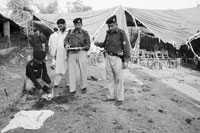 understandably so. Over the Eid
holidays, more high-profile incidents of violence took place, none more so
than the attack on Asfandyar Wali. For its part, the electronic and print
Urdu media continues to report on the conflict in FATA and the NWFP in
epic terms, all too often airing only those perspectives that make for a
sensational story; indeed, rather than informing the viewer, the coverage
serves only to confuse, and in the worst cases, romanticise the
protagonists.
understandably so. Over the Eid
holidays, more high-profile incidents of violence took place, none more so
than the attack on Asfandyar Wali. For its part, the electronic and print
Urdu media continues to report on the conflict in FATA and the NWFP in
epic terms, all too often airing only those perspectives that make for a
sensational story; indeed, rather than informing the viewer, the coverage
serves only to confuse, and in the worst cases, romanticise the
protagonists.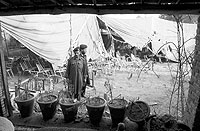
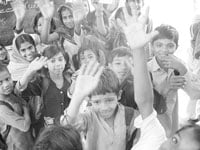 alone, a
government should be completely committed to ensuring that education is
attained at all levels. Clearly, economic achievement and educational
achievement are intertwined and no developed country has made it to that
stage without a strong public education system.
alone, a
government should be completely committed to ensuring that education is
attained at all levels. Clearly, economic achievement and educational
achievement are intertwined and no developed country has made it to that
stage without a strong public education system.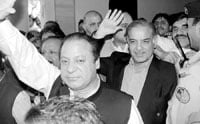 nature of the Pakistani
society. It is hardly the same society that the Pakistani state managed
throughout history, even till late 1990s. It has become far more aware,
far more conscious of its rights and far less dependent on leaders. To an
extent that even in the absence of necessary political infrastructure at
the grassroots level -- such as student and trade unions, and lack of
political organisation at ward and union level -- it has been able to
mobilise itself on social causes like independence of judiciary, missing
people and media freedom.
nature of the Pakistani
society. It is hardly the same society that the Pakistani state managed
throughout history, even till late 1990s. It has become far more aware,
far more conscious of its rights and far less dependent on leaders. To an
extent that even in the absence of necessary political infrastructure at
the grassroots level -- such as student and trade unions, and lack of
political organisation at ward and union level -- it has been able to
mobilise itself on social causes like independence of judiciary, missing
people and media freedom.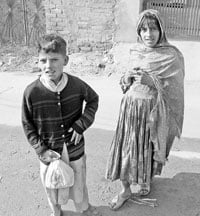 past have had a
deep psychological and attitudinal impact on the common people of all age
groups, economic strata and social origins. A few concerns are repeatedly
brought to the fore of discussion. For example, the government's ability
to prevent incidents of terrorism and minimise the damage is a core issue.
past have had a
deep psychological and attitudinal impact on the common people of all age
groups, economic strata and social origins. A few concerns are repeatedly
brought to the fore of discussion. For example, the government's ability
to prevent incidents of terrorism and minimise the damage is a core issue. deficit at 8.0
percent of gross domestic product (GDP). Though the fiscal deficit will
exceed the budgetary target of 4.7 percent of GDP, it is still likely to
be less than the preceding year's 6.7 percent of GDP. The projected
figures make two things obvious: one, on the whole the country's economy
will be in a worse shape in FY09 than in the preceding year; and two, the
government will significantly fall short of the key targets for the
current fiscal year.
deficit at 8.0
percent of gross domestic product (GDP). Though the fiscal deficit will
exceed the budgetary target of 4.7 percent of GDP, it is still likely to
be less than the preceding year's 6.7 percent of GDP. The projected
figures make two things obvious: one, on the whole the country's economy
will be in a worse shape in FY09 than in the preceding year; and two, the
government will significantly fall short of the key targets for the
current fiscal year. the official development
assistance (ODA) being pumped into the country increasing continuously and
exceeding the $2 billion mark in recent years. Yet ambiguity remains on
the effectiveness of this aid, which has trickled into a country that is
now placed at an all-time low of 136th position on the Human Development
Index and 65.5 percent of whose population still lives on less than $2 a
day. This phenomenon is not exclusive to Pakistan and the global
development community recognises this, with the British Prime Minister
Gordon Brown calling for a serious "system overhaul" to find
better ways of creating a United Nations that works and a World Bank that
is more accountable to its clients among other things. Underneath all this
rhetoric, the international community routinely spouts to assure us of its
noble intentions and commitment to the uplift of the poor.
the official development
assistance (ODA) being pumped into the country increasing continuously and
exceeding the $2 billion mark in recent years. Yet ambiguity remains on
the effectiveness of this aid, which has trickled into a country that is
now placed at an all-time low of 136th position on the Human Development
Index and 65.5 percent of whose population still lives on less than $2 a
day. This phenomenon is not exclusive to Pakistan and the global
development community recognises this, with the British Prime Minister
Gordon Brown calling for a serious "system overhaul" to find
better ways of creating a United Nations that works and a World Bank that
is more accountable to its clients among other things. Underneath all this
rhetoric, the international community routinely spouts to assure us of its
noble intentions and commitment to the uplift of the poor. inequalities and injudicious
distribution of wealth among the various segments of society. Even in the
oil-rich countries, the gap between the poor and the rich is wide. The
women get a negligible share in available resources, thus remaining in a
perpetual state of economic backwardness. It is unfortunate that, even in
the post-colonial period, Muslim rulers and thinkers have failed to evolve
a commonly accepted Islamic tax system in the light of instructions
contained in the Holy Quran and Sunnah, to meet the requirements of the
present day world.
inequalities and injudicious
distribution of wealth among the various segments of society. Even in the
oil-rich countries, the gap between the poor and the rich is wide. The
women get a negligible share in available resources, thus remaining in a
perpetual state of economic backwardness. It is unfortunate that, even in
the post-colonial period, Muslim rulers and thinkers have failed to evolve
a commonly accepted Islamic tax system in the light of instructions
contained in the Holy Quran and Sunnah, to meet the requirements of the
present day world. role and they seem to be everywhere. They claim to be able to do
almost anything, from eradicating poverty to fighting disasters and from
protecting environment to safeguarding human rights. International and
local NGOs have also taken the centre stage in global efforts for the
achievement of millennium development goals (MDGs), and they are now
considered a very important component of civil society, which is an
increasingly popular concept among policymakers. In fact, civil society is
now considered as the third most important player along with the state and
the market.
role and they seem to be everywhere. They claim to be able to do
almost anything, from eradicating poverty to fighting disasters and from
protecting environment to safeguarding human rights. International and
local NGOs have also taken the centre stage in global efforts for the
achievement of millennium development goals (MDGs), and they are now
considered a very important component of civil society, which is an
increasingly popular concept among policymakers. In fact, civil society is
now considered as the third most important player along with the state and
the market.