



|
|
|
|
 |
 |
   |
Editorial prognosis Works
for me! Our state of
huzun Women,
elders most vulnerable Facilitating
patients Symptoms
of success Treating
the stigma treatment 'We
have to keep it going'
In contrast to the harrowing experience of the sufferer, the word 'depression' seems a mild signifier. Often ignored, left untreated or brushed aside as a 'mood problem,' depression is in fact a way for our consciousness to tell us that certain neuro-chemical processes in the brain are not helping it produce thoughts of well-being. As we are chemical beings, our sense of self-worth is also altered by these neuro-chemical changes in our brains. At an individual level, untreated depression can lead to long-term suffering and a lack of personal accomplishments. At a collective level, a nation of depressed citizens may not be able to realise its true potential in the comity of nations. On the occasion of the World Mental Health Day, we offer a Special Report on depression and urge our rulers to configure our social and political arenas in such a way that the greatest number of citizens can realise their life goals. Greatest happiness of the greatest number is the real idea behind the rise of democracy. On World Mental Health Day, we remind our leaders that it is their responsibility to produce satisfaction, a sense of self-worth, and a feeling of ebullience in the citizens of Pakistan. Our wars and our peace should all be directed at this aim: a nation of physically and mentally healthy people. In a democratic polity, it becomes all the more important that the right of the citizens to lead their lives without fear and duress is safeguarded by the State. As the Preamble of the Constitution of Pakistan describes this as the reason for the existence of the State: "Therein shall be guaranteed fundamental rights, including equality of status, of opportunity and before law, social, economic and political justice, and freedom of thought, expression, belief, faith, worship and association, subject to law and public morality." Therefore, we ask the present government to create an atmosphere free of trauma and depression and ensure the happiness of the greatest number of citizens on urgent basis.
The ability to control
our mind and body is something we tend to take for granted. When we talk
of Apparently, 23 years old Sana looks healthy and even happy. She suffers from 'moderate' depression and is on mild medication and therapy. "No one can understand what goes on in my mind. To say someone is depressed and to be depressed is two different things. I don't feel bad for the poor on the road because I know no one feels bad for me." Sana couldn't continue her studies after school and was made to stay at home. After years of putting up with her "violent behaviour", her family decided to get help. Sana has been seeing her
doctor for almost three months but says she doesn't feel better or It is generally believed that depression is only caused by trauma. This, according to Dr Nazo Mahmood, is true only to a certain extent. "Depression is not in control of the patient. It depends on certain neuro-chemical changes. With the imbalance of these chemicals, the whole bodily function is disturbed." But, it is mostly triggered by a traumatic episode in the patient's life. Depression, according to her, is a multi-factorial disease. It is not just one thing but a cluster of symptoms. Genetic factors and biological factors are usually not the only factors; certain circumstances do trigger the manifestation of the illness. Dr Nazo claims that the workload of the psychiatrists and psychologists would lessen majorly if the economic conditions of the country became better. "Poor economic conditions, insecurity and political instability do cause depression because these things directly affect the lives of the people." But, depression is no less common in rich countries. Those, according to her, are the "real patients of depression" because what our people suffer from is not depression but "anxiety and frustration which might lead to serious depression later". This assertion also refutes depression as a disease of the elite. "There is no gender or class discrimination when it comes to depression, says Dr Parveen Ilyas, a psychiatrist. "How can we say that there are no patients of depression in villages when there are no psychiatrists there?" Nimra Basir, a clinical psychologist, asserts that the assumption that better economic conditions will lessen the number of patients can't be true because many forms of depression have nothing to do with the socio-economic factors; they include post-partum depression, SAD (seasonal effective disorder), involutional depression associated with old age and others caused by medical complications. These forms are also very common in Pakistan but are not reported because they are not treated as a clinical problem. According to Dr Sumaira Qambar, people are forced to keep mum about depression. They are afraid to see doctors for various reasons: they think they will get hooked to medicines, they'd rather spend on something that makes them happy than see a doctor; or they just don't want to face the fact that they have a problem. "They'd rather go to a 'peer' for charms or 'taveez' than come to us because a 'peer' or 'hakeem' is more familiar to them than a psychiatrist. I have patients who come to me without letting their families know because they don't even want their families to think they are sick." Psychologist Fahad Zaman says, "I don't understand why depression is such a stigma in our society. If you have a doctor for every part of the body why not a doctor who treats your brain. Depression is a very serious problem. People need to know that if depression is not treated at early stages it can be very dangerous." The doctor shared the case study of a patient who remained at the hospital for almost two months. He was given medication and therapy regularly until he was discharged from the hospital. Two days after he was discharged, he committed suicide. But there are also patients like Mrs Naseer who aren't told by others to get help. "I knew I had to get help for the sake of my kids. When I was sick I thought I'd never feel better or recover from my husband's death. Although things are far from perfect now but my attitude towards life has changed." She owes it to medication. "For me, therapy never worked. I think medicine is the only solution. Although you know something is wrong you can't change it yourself unless you take medicines. I would have never come out of depression if I weren't given a medicine." However, she admits that she can't give up medicine. According to Irum Bokhari, a senior clinical psychologist, therapy can decrease the chances of a relapse. "The usefulness of therapy depends on the patient. At times, cognitive therapy doesn't work and medication is the only way out. Usually, it works when depression is caused by trauma or things like a break-up. Therapy also lessens the chances of suicide." In teenagers and children, depression is not even considered a probability. Taking sleeping pills, anger and violent behaviour are usually passed off as 'stages' by adults. Doctors say that these so-called tactics need to be recognised as the patients' cry for help. When a child says he doesn't like school, parents should listen to him and try to find out the root cause of the problem. Likewise, teenagers are more prone to depression and parents should immediately seek help when they see their child is in trouble. Doctors point out an important fact in this regard; most of the patients of depression suppress anger against their parents during their teen age. In Pakistan, family is the basic and probably the best support system. But it cannot compensate for support groups at social level. In fact, many women who suffer from depression come from joint families. The first thing that needs to be done is identifying depression as a clinical problem at the familial and social level. Most people aren't comfortable going to a psychiatrist and resort to alternative methods of treatment The biggest problem with patients of depression is that they are not willing to accept that they are suffering from it. Besides, most of the times they are made fun of by their near and dear ones for being negative or over-sensitive. It's a pity that very few people, especially from the middle and lower strata of the society, find it necessary to visit a psychologist, psychiatrist or neurologist. On the other hand, they prefer to go to self-styled spiritual healers who adopt weird ways to treat them. In worst cases, narcotics are thought to be the last resort and consumed excessively by individuals to forget all the worries that are hounding them. But this does not mean that the alternative methods used for this purpose are not effective. In fact, many people seem to have benefitted from aroma therapy, music therapy, light therapy, and excessive reading of Holy Scriptures to relieve themselves of depressive thoughts. Dr Babar bin Dilawar, a strong proponent of healing through Quranic verses, tells TNS that severe depression is mostly caused by the happening of some unfortunate events in life such as the death of a loved one or the loss of a fortune. But, in milder cases, even the loss of one or more activities in one's life can cause depression. Babar says religion treats patients with depression by inculcating in them the belief that everything good or bad that happens in life is the will of Allah. It declares pessimism as a sin and the person committing suicide will be doomed to hell, he adds. Babar says that if one prays, God's help will follow. Secondly, he says, it's a fact that depression also stems from jealousy. "When people see others prospering, they suffer from an inferiority complex and start having depression bouts. Religion prohibits this and says that those deprived in this life will be compensated in the life hereafter." Muhammad Iqbal, an Islamabad-based IT expert who moderates several chat forums, tells TNS that depression becomes severe when someone does not find out any medium to vent out his emotions. Therefore, he recommends the patients to join therapy groups, forums and depression chat rooms where they can talk everything about themselves while staying anonymous. He says this practice has helped many patients to realise that "they are not the sole sufferers of all the calamities of the universe". Instead they become content to a great extent when they find that many people are suffering from problems much more acute than what they are facing. Iqbal says that the best way to minimise depressive thoughts is to divert the mind of the patients to some other activity. It can be through exercise, meditation, exercise-induced sleep, repetition of Quranic verses and indulgence in other religious activities. Though it is difficult to clear one's mind of negative thoughts it is not impossible, especially when there is someone present to help the patient and boost one's morale. Similarly, exercise and exertion are also suggested as means to fight depression. Those who do not exercise at all are much more likely to suffer from depression than those who do. One will be surprised to hear that talking a walk daily in the sun can do wonders as this activity produces a brain chemical called dopamine which helps maintain mental equilibrium. --
Shahzada Irfan Ahmed Dr Feriha Peracha, Vice President, Fountain House, Lahore, speaks of "interface medicine" for "a depressed nation" "In my estimate, 5 to 7 percent of Pakistanis suffer from depression. The problem gets compounded because of the complexity of diagnosis. There are many types of depression: bi-polar, uni-polar dysthimia, cyclothemia, atypical and psychotic. Another fact that makes the recognition of depression difficult is the high level of illiteracy in the country. In my opinion, people who cannot verbalise their feelings properly tend to somaticise their depression more often than those who can express themselves. Furthermore, when a patient with a somaticised manifestation of depression goes to seek treatment for a physical ailment, our hospitals do not have any arrangement for his or her psychological assessment. This combination of physical and psychological diagnosis and therapies is called 'interface medicine' and it is not practised in our hospitals and clinics at all. "I think the main reason for depression in Pakistan is the feeling of helplessness produced by the social structures. When people do not have control over their life choices, they are more likely to get depressed, feel anxious or stressed. If these feelings are not paid any attention, they can result in actual physical illnesses as I have discussed above. I even posit that cholesterol may have gotten the fame or notoriety for the wrong reasons as a cause of cardiac diseases. The real reason may be anxiety and stress. If we introduce a system of economic and social justice, we will witness a decrease in psychological illnesses in the people. The kind of risky behaviour that we witness on our roads (intolerance for others, irritability, road rage, and impulsive driving) indicates that, psychologically, we are not a stable people. We are a depressed nation because a very large number of us are not in control of our destinies. To express the psychological condition of our nation, I would like to refer to a word used by Orhan Pamuk about Istanbul. We, as a nation, are in a state of huzun (the Arabic and Turkish word for depression)."
Though anyone can be a
victim of depression, women and elders are found to be the most "We all get depressed from time to time," says Prof Dr Hussain Mubashir Malik, Vice Chancellor University of Health Sciences (UHS). "But this is just a depressive mood, but when it lasts for more than a week it becomes depressive illness." He further says that women were the most susceptible to depression. This is also because they lack resilience or because they are in the post-natal period. In the elderly, depression takes root because of continued feelings of loneliness, physical disabilities and a sanity deficit. Prof Dr Mubashir reveals that the ratio of vulnerability is lesser in children but they are likely to experience depressive phases through adolescence because of unresolved crisis of identity. He adds that the increase in suicidal attempts among the youth were due to their being severely depressed. "Anyone can be prone to stress or mild depression because of the kind of environment we have. However, the ratio of women suffering from depression remains higher," says Prof Dr Saad Malik, Head Psychiatry Department, Allama Iqbal Medical College/Jinnah Hospital, Lahore, talking to TNS. This, he says, is because women have various biological factors. Dr Malik adds that those of us that are neglected, isolated, or do not have a support system -- family, friends, neighbourhood etc -- are more easily inclined towards depression. Post-trauma patients also become victims of depression, especially if they are unable to recover early. Dr Nusrat Habib Rana of the Institute of Mental Health Sciences tells TNS that women are more prone to depression because of biological reasons but also because of the kind of stressful life they lead in general. However, any individual, for that matter, who is passing through stressful phases is vulnerable to depression. These individual stress factors include unemployment, socio-economic status, traumatic environment, insecurity, blasts and biological stressful life. -- Waqar Gillani
Mental health should
feature prominently in the government's agenda, and funds should be
allocated "There is one psychiatrist for every 10,000 people in Pakistan," says Dr Aslam Chaudhry, Director General Health Punjab, talking to TNS. "We understand that mental disorders, particularly depression, are on the rise. That's why, the government is making efforts to provide facilities to the common people for treatment of such illnesses." However, he adds, "the government alone cannot shoulder this huge responsibility; it needs the cooperation of the private sector." Presently, there are only four major mental hospitals in the private sector in the country, while another 20 units have been attached to government medical colleges where patients with mental disorders are treated. Dr Abbad Ahmed, Registrar, Psychiatric Department, Ganga Ram Hospital, says that considering the way the patients of depressive disorders are increasing in numbers, it is feared that depression will become the second most common disease to hit the country after cardiac arrest, by the year 2013. He says that about 60 to 70 percent people who come to Ganga Ram for treatment annually are suffering from one form of depression or the other. Dr Zoryab Khan, a senior psychiatrist in a tehsil hospital of Zhob, Balochistan, expresses his dissatisfaction with the kind of mental health facilities that are provided by the government in the province. He says that the departments of neuropsychiatry in public sector hospitals either do not have the required number of beds for indoor patients or they are heavily under-staffed. Besides, there is a shortage of psychotropic drugs. Dr Aslam Chaudhry suggests that mental health should be included in the government's agenda and funds should be allocated for related issues. -- Ahsan Zia
A young man, diagnosed with BPD, manages to rise above his illness, and how Shahrukh Kiani, 27, moved in and out of clinics and tried various treatments before being diagnosed with a depressive illness. He was in his early twenties back then. He believed he couldn't be cured but, years later, the reality is pleasantly different. Here is a first-person account of Shahrukh's experience: "Today, I can frankly talk about my bipolar disorder, but for a long time I didn't tell anyone I had it. Perhaps, because of the social taboo attached to it. I learnt that the best way to combat this was to talk about it -- its symptoms, its genetic component, and also how lifestyle choices could influence one's susceptibility to more manias. "If you ask me how it all began, I'd be unable to answer because I believe the 'symptoms' were always there -- since my childhood. But I could never figure out why this was happening to me. I have always been a big reader of fiction, a complete movie buff and had a passion for arts and music. However, these interests were to die out after a while and I wouldn't be able to understand what was wrong with me, why I couldn't stick to one profession when the people around me were successfully pursuing their careers single-mindedly. I was clueless. "It didn't make sense to me until my life took a turn -- for the worse. "At age 24, while I was in university, I became involved with a girl. However, our relationship didn't work and we broke up. It was during that time period that these unusual shifts in my mood, energy, and ability to function were diagnosed as 'bipolar disorder' by the shrink. It was different from the usual highs and lows that 'normal' people go through. It was much more severe and resulted in my poor grades that compelled me to quit the university (although I was in the last semester of graduation). "The doctor focused on my insomnia. He gave me medication for sleep but when it didn't work. I got more hyper and my energy was peaking beyond control. "Many other problems occurred during this period such as, I turned to religion. I also became aggressive which is something very uncharacteristic of me because I hardly lose temper. "It was my uncle (a doctor) who advised me to read up on the bipolar disorder. He told me that I needed to know what was wrong with me. And he was right. "Now I was reading everything and became aware of what I was putting my parents through. It must have been extremely difficult for them to deal with the fact that their son was ailing -- that, too, mentally. "In order to run away from reality I started working with a newspaper. I thought this was the best way to exhaust myself. I would stay in the office till wee hours. This continued for months. I began to feel better. Then I decided to go back to the university. I realised that it was my loss and suffering for my family. "I was wrong. Returning to university aggravated my problem as I started having suicidal thoughts. All my friends at university had graduated. My ex was still there, and even though she was not the problem, I felt lonely at the campus. This was the most difficult period of my life and I developed various eating and sleeping disorders, and even had hallucinations. "This cycle continued for two years and I was kept on medication. Reading was still my passion, and it was this passion which helped me to fight back -- aside from the constant support that my family proved to be. There was no shifting away and that helped me a lot. The doctor tapered off my antidepressants when there was a temperament stability. "I must add here that there is no cure -- as they say -- for a depressive illness; it can come back to you anytime, and you should accept that this cycle can start again. And, frankly, I do sometimes feel that I'm drawing back to that cycle. But everytime I make an emotional check on myself. And, it helps." -- Naila Inayat Affected individuals are often seen as weak and unsuccessful in their lives and their depressive state is concluded as a result of their own shortcomings The stigmatisation of depression is largely due to the misunderstanding that people have in their minds about this mental state. The confusion also extends to the perceived symptoms and affects that the subject might undergo. The affected individuals are often seen as being weak and unsuccessful in their lives and their depressive state is concluded as a result of their own shortcomings. Even when a person's emotionally withdrawn state has been diagnosed as clinical depression, they themselves or their respective family members try to conceal the treatment. One major factor for the stigma attached to cases of depression is due to it not being identified as an illness early on and is instead attributed to mood swings, bad upbringing, lack of intelligence or even supernatural elements. This context of depression is not including the kind that is initiated by post-traumatic stress as a result related to a horrifying personal experience such as rape or the death of a loved one. There are countless stimuli present in everyday life that can lead to acute depression initially and if left untreated may morph into full-blown major depression. Even the patient suffering from depression may not accept that his/her syndrome as something to be taken seriously and seek professional help. What's more, even the term professional help has been popularised as a way of ridiculing and passing negative judgment. Within certain roles in the society, people are particularly prone to depression and the effect of the stigma that their conditions are tinged with. A student might want to refrain from revealing an ongoing depression out of fear of being ostracised and being labeled a 'mental case'. An employee of an organisation might want to conceal his state out of doubt of being considered unsuitable for a promotion. In Pakistani society, marriage proposals usually entail a formalised process undertaken by the elders of the family. Matches are finalised based on caste and creed, material assets and nature of business. All things considered, if an ailment such as chronic depression is mentioned, potential marital matches would all be compromised. In order to address the stigma of depression, awareness and education starting right from schools will go a long way in encourage more research and debate. Influential personalities such as musicians and actors, by acknowledging their own cases of depression can create a positive aspect of dealing with depression and lend it a more mainstream character. -- Aziz Omar
treatment Depression is more than just an individual's personal suffering; it affects his family, his home and his work. That makes going to an expert -- in this case, a psychiatrist -- all the more important. Treatment should be sought before the ailment becomes life-threatening By Usman Ghafoor Ever thought how many
times you've been called a loser because you were 'not making an effort'
to According to Dr Abdul Shakoor, Associate Professor of Psychiatry at Sheikh Zayed Hospital, Lahore, "It is wrong to assume that depression, however mild, could be cured -- just like that. "To try to deal with your mental conditions on your own or to simply ignore the symptoms can have very serious repercussions in the long run," he says, talking exclusively to TNS. "Unfortunately, a great number of depressive patients come to us months and years after they started experiencing episodes (of depression). By that time, it's quite late, in the sense that the problem has aggravated to a point where a lot of patients tend to be suicidal." He blames it on a "general lack of awareness and guidance. A lot of people prefer to consult their GP (general physician) and the very idea of seeing a psychiatrist or even a psychologist makes them cringe with fear. "It must be remembered that our general practitioner is not sufficiently trained and equipped to deal with mental patients." However, ruling out any physical disability or ailment is a pre-requisite to putting a psychiatric patient on a treatment. "We must first find out if the patient has a heart problem or a thyroid issue, or he has a history of hypertension or insomnia, and also whether he's had some kind of an injury. The vitals are recorded and important tests taken, if so required. Only then do we move forward." Dr Shakoor says that a person is clinically diagnosed as having depression on the basis of a)symptoms -- morbidity, general apathy, negative thinking, sleep and appetite disturbances, and a lack of concentration; b)duration -- the symptoms persist for at least two weeks; and c)suffering -- not being able to function 'normally' in one's day-to-day life. Medication may be the next step. Dr Shakoor identifies three main classes of antidepressants that work by bringing certain brain chemicals (called neurotransmitters) into the balance required. These neurotransmitters are responsible for our different emotional and mental states, and it is by achieving the 'right chemical balance' that most patients with a mental disorder are treated. The most common antidepressants are of the SSRIs group (major brand names: Prozac, Faverin, Zoloft and Cypralex) that act upon the neurotransmitter 'serotonin', said to be a major mood influencer. These are also considered safe in the sense that they have the least side effects. He distinguishes between antidepressants and tranquillisers by saying that the latter are a short-term solution -- lasting only about eight hours -- whereas the former are medicines that do not show immediate results but they are long-term therapies. Because most of these medicines are very expensive, a psychiatrist has to sometimes prescribe brands that are cheaper. However, the effectiveness of these drugs remains an issue. Commonly, if a single episode of depression has occurred, the patient is put on medication for a six months' time. "We start with a small dose, maybe half a tablet a day, increasing it to one. Within 2 to 3 weeks, the patient should be symptoms-free. Later, a maintenance dose is required for up to four months." These are psychoactive drugs and, therefore, the treatment cannot be put an immediate stop to. The medicines are always tapered off. Lt Col (retd) Ahmad Farjam, Consultant Psychiatrist at Fauji Foundation Hospital, Peshawar, speaks of a more holistic approach to treating patients with depression -- what he calls the "bio-psycho-social model". He identifies the effective role of the psychiatrist in collaboration with that of a clinical psychologist, a social worker and an occupational therapist. It's a multi-disciplinary approach whereby "you are taking care of a patient's physical health (hormonal factor, injury factor, drugs factor, neurotransmitters factor) together with his psychological factors (personality, grooming, education, childhood etc); and also involving a social worker to guide you in the various external stresses (redundancy, displacement, food inflation, bomb blasts etc). The occupational therapist trains the patients to become useful members of the society. "A psychiatrist alone cannot do much," he declares. By nature, depression is a recurrent disorder, says Dr Shakoor. "Because certain 'triggering' elements will always stay in our environment or even in our personality." Does that mean depression cannot be cured? "Well, by cure if you mean that a disease should be completely uprooted so that it will never occur again, then there's no cure for any disease in the world." To sum up, depression is more than just an individual's personal suffering; it affects his family, his home and his work. That makes going to an expert -- in this case, a psychiatrist -- all the more important. And, treatment should be sought before the ailment becomes chronic and life-threatening.
-- Dr Haroon Ahmed, renowned mental health expert, psychiatrist, and president of the Pakistan Mental Health Association By Xari Jalil The News on Sunday: What are main mental problems which affect Pakistanis today? Dr Haroon Ahmed: Around
70 percent of our people suffer from minor or major depression. Then we We also have patients with other problems such as epilepsy, drug dependency and schizophrenia -- which is a genetic condition, but may also be environment-induced. As far as the statistics go, every fifth house has a person with a mental health problem, while every tenth house has a person who needs to see a psychiatrist. TNS: How will you define 'clinical depression'? HA: The first thing to remember is that if a person has been in a kind of a low mood for more than two weeks and has showed general disinterest in everyday things, he is likely to be suffering from depression. This is called clinical depression, a term which specifies that it is different from a superficial 'low' one experiences for a momentary period of time, such as one day. Clinical depression carries on for over two weeks. Like in other developing countries, Pakistan has a high rate of depression, but the people who are affected suffer from a psychosomatic problem first. That is, they feel aches and pains, or a loss of appetite, a low libido, and a lack of sleep. They do not, however, tend to give attention to their moods or observe changes in their moods. At his workplace, a depressive worker will generally have a low creativity level, lower output and lower quality of work. He may also be absent many times, and begin to feel he is a liability for his family. In women, the menstrual cycle may be disrupted, while men may suffer much more only because of the symptoms associated such as lack of virility. Suicide is the most dangerous tendency among the depressive. Around 80 percent of people who attempt suicide do so because of depression. The rest are para-suicide attempts which may or may not be consummated. These people are more impulsive. TNS: People often blame psychiatrists for being very expensive, and that the average man cannot afford to see them. Comment. HA: Well, this is not entirely wrong in many cases, but the fact is that we have to give the patients extra time and try to build a rapport with them. A good psychiatrist will never charge by the hour; he will charge by the visit. And, in this visit we give time and we try and build a connection with the patient. We are not treating a malaria patient whose illness will end after medication. We have to keep it going. As for services for those who belong to the lower strata, we at PMHA have started a Free Mental Health Clinic in Karachi wherein we offer free counseling and free medication. It is run on zakat and trust. But we have the very best specialists of the city who work with us. TNS: What about treatment drugs being notoriously addictive? HA: It's a myth related to medication. Usually, the pills that are prescribed are not addictive. These medicines work by regulating certain chemicals in the brain which are used up by the body in, say, the span of a day or a few days. The body needs quick replacement of these chemicals, and the medication and dosage is prescribed to the patient accordingly. It's the sleeping pills or hypnotics and tranquilisers or anxulectics which may prove to be addictive and, at the same time, do not solve the problem. In many cases, these are self-suggested, prescribed by friends, chemists, and even family physicians.
|
|
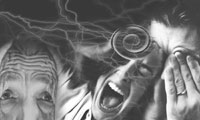 'disease' we think of physical illnesses like hepatitis, cancer etc.
Depression is most unlikely to come to mind as a disease. It's a problem
all right. A surprising position for the third most common disease in
Pakistan. This is because we only associate sickness with the
malfunctioning of a bodily organ, ignoring the connection mind has with
these organs. The fact that depression is a serious disease -- and can be
fatal in the form of suicide -- is not recognised in our country. The
patient ultimately finds refuge in drugs and alcohol.
'disease' we think of physical illnesses like hepatitis, cancer etc.
Depression is most unlikely to come to mind as a disease. It's a problem
all right. A surprising position for the third most common disease in
Pakistan. This is because we only associate sickness with the
malfunctioning of a bodily organ, ignoring the connection mind has with
these organs. The fact that depression is a serious disease -- and can be
fatal in the form of suicide -- is not recognised in our country. The
patient ultimately finds refuge in drugs and alcohol. happier. "I see my therapist every other week, but I don't look
forward to coming here because I know he is not getting what I'm trying to
tell him." Bushra, a clinical psychologist, says that the first thing
they do when a patient comes to them is to "make him feel we are
there for him."
happier. "I see my therapist every other week, but I don't look
forward to coming here because I know he is not getting what I'm trying to
tell him." Bushra, a clinical psychologist, says that the first thing
they do when a patient comes to them is to "make him feel we are
there for him." vulnerable.
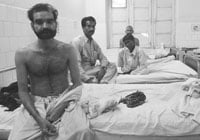 for related issues
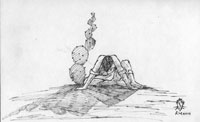 'snap out of it'? Or, because you were 'taking yourself too seriously'?
Also, because you weren't 'occupied enough' which is why you should be
ready to take up more work? You might as well be told you 'deserved it' so
you got it -- that it's some sort of a comeuppance (read divine justice)
for you because you often missed your prayers or never stuck to an
exercise regimen. Some might even have you try dope and stuff. The catch
is, most patients with mild depression don't look (or behave) 'a certain
way', and chances are that they will be discouraged to consider their
problem, let alone see a specialist.
'snap out of it'? Or, because you were 'taking yourself too seriously'?
Also, because you weren't 'occupied enough' which is why you should be
ready to take up more work? You might as well be told you 'deserved it' so
you got it -- that it's some sort of a comeuppance (read divine justice)
for you because you often missed your prayers or never stuck to an
exercise regimen. Some might even have you try dope and stuff. The catch
is, most patients with mild depression don't look (or behave) 'a certain
way', and chances are that they will be discouraged to consider their
problem, let alone see a specialist. have patients with BPD or bipolar disorder, which means there is an
extreme high or low mood condition. Anxiety disorder comes next, with
symptoms of phobia, obsession, hysteria, and post-traumatic stress
disorder (PTSD).
have patients with BPD or bipolar disorder, which means there is an
extreme high or low mood condition. Anxiety disorder comes next, with
symptoms of phobia, obsession, hysteria, and post-traumatic stress
disorder (PTSD).