


|
|
|
|
|
 |
 |
   |
role
model MOOD
STREET The
increasing gap TOWN
TALK politics By Ahsan Zia As the sense of insecurity among people increases with the crime graph showing upward swing, senior government functionaries point out that the inability of the police to apprehend proclaimed offenders (POs) is one of the foremost causes of increase in crime. The situation, according to them, has worsened to such an extent that POs are operating freely and committing crimes of all sorts.
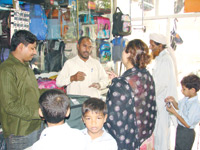
role model Living with dignity A deaf and dumb person runs a shop of bags repair successfully. He has employed two more persons who are handicapped like him By Farooq Khattak The provincial metropolis is a treasure trove of a lot of stories and a witness to many rises and falls. One of these is a success story of a special person, a man who can't speak or hear. Lahore and Lahorites are one and the only of its kind
in the world. The residents of the this gem of a city have many virtues
which include resilience, cheerfulness and craftsmanship. These were the virtues that attracted rulers of this subcontinent to this city. The rulers, right from Sultans of Delhi to Moghul emperors and British colonial rulers, chose this city as a seat of government. These qualities are evident from the story of Khalil Ahmad, son of Sheikh Mohammad Yaqub, who is deaf and dumb but faces life bravely and did not take an easy route, like begging or waiting for mercy of others. He is working from 9 to 5 six days a week. Khalil Ahmad was born in 1965. He has two sisters and four brothers. His parents and all siblings are perfectly healthy except for a younger brother who can hear but cannot speak. Khalil is the eldest among his siblings. He is running a successful business of repairing bags, attach'e cases, alternation and fixing zips at the Girja Stop in Township in a side alley of a church there. He is a happy person who seems satisfied with his life and has a ready smile on his face whenever he converses. Looking at him, one thinks that impediments whether physical or mental can be overcome and happiness can be attained even in adverse situation. This is exactly what I am writing about, the greatest virtue of Lahorites -- spirit. The shop in the area is known as three deaf brothers' shop. Nonetheless, the other people working in the shop are not his brothers but two of them, Mohammad Jamil son of Mohammad Ghafoor, a resident of Attari Darbar, Nishtar Colony and Waqar Ahmad, a resident of Green Town, are deaf and dumb too like Khalil. Talking to TNS in rudimentary sign language and with the help of the third worker who can hear and speak properly, Khalil said he fell ill when he was three years old. He had high fever and when it went it took away with it his ability to speak and hear. It all happened within 10 to 15 days of fever. Khalil is a hard worker who does not let his handicap come in his way. There is a steady stream of customers visiting the shop. Some customers tell TNS that the mending work carried out in the shop is of good quality that is why they prefer to come here rather than go to any other shop in the Township area. At this point, Khalil called my attention and raised a finger towards the sky and then made signs that he is fine and smiled. Probably he wanted to say that his condition was God's will and that he is grateful to God for the life that He has given him and is content. Khalil started the repair and sale work when he was 10 years old. This is a family run business and his father used to do the same. Khalil is married for the last eight years but has no children. His wife too is deaf and dumb. Khalil expressed with his hands that it is better to work than to beg, no matter you are handicapped. You just show your intent to make a living honestly and you will, he says. He is an example of a man who lives with dignity and gives an important message to all that one should not lose wits in adverse circumstances or affliction but take the bull by its horns and work to earn a living.
MOOD STREET Fragility of it all
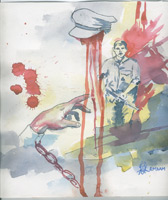
By Saeed Ur Rehman The afternoon sky was blackening again after hours of downpour early in the morning. There were dead cars in muddy rain puddles along Jail Road, the Canal and Jinnah Hospital Road as I drove my 1971 CJ5 Jeep to the Afghani restaurant in Model Town Extension where Jamshed worked at the cash register. On the radio, the jockey interrupted Beyonce and Sean Paul's 'Baby Boy' to warn listeners not to take Peco Road if they were going to Township. Water, he announced, had covered the trenches dug by the telephone department. Some motorists had to be rescued after their cars drove into the submerged holes. I was not going to Township so I swivelled the tuning knob to another station. They were playing 'The Sunscreen Song.' I turned the volume up and engaged the four-wheel drive lever. Monsoon had turned many roads into wide strips of loose gravel dotted with large chunks of tarmac. At the intersection before Jinnah Hospital, I turned left and drove through the market. On both sides were shops selling hand-dyed dupattas and block-printed shalwar-kameezes. The restaurant was behind the market, opposite the car park and a rubbish heap. I pulled up near a pile of empty coca-cola tins in front of the kitchen door and let the engine idle. I sat there and played with the radio. On one channel, a scientist was discussing the probability of robots becoming intelligent enough to replace human beings by 2050. In the car park, a rabble of half-naked boys was trying to ride a stray donkey. The donkey was struggling to free himself when its hind legs gave under the weight of the boys. Jamshed knocked on the windshield to announce his arrival and opened the passenger side door. After he had settled in the passenger seat, I turned the jeep around. We reached Jail Road listening to the scientist describing the benefits of having a robot as a domestic servant. I tried to think of the future but could not think of anything crisp and shiny. I switched off the radio and, for a while, we both listened to the sticky wet drone of tyres rolling on the macadamized road. I looked at Jamshed who had pulled up his knees and seemed busy tinkering with some thoughts. "How was your day, Mr. Cash Manager?" "Okay," he drawled. "Except the usual bickering of waiters about the way the tip is divided." "Hmm." I did not have anything to say about grumpy waiters. I tried to picture an unhappy waiter but all I could think of was the image of an angry waiter spitting in the food before serving it to a troublesome customer. Nothing out of the ordinary. "How was your day, Mr. Journalist?" "I am not a journalist. I am a pen-pusher. I sell sentences." "Okay, okay. I sit corrected, Mr. Pen Pusher. How did your day go?" "I woke up around 9 or 9:30 by the sound of rainwater streaming down the windowpanes. The sloshing noise of water lulled me to sleep again. Just before waking up at about 11:30, I had a strange dream. A police officer was trying to shoot someone who looked like an ordinary bricklayer after declaring him a suicide bomber. A nightmare or should I call it a daymare?" "They say the dreams that you have just before waking up are more likely to come true." "I don't know about that. But I don't want such dreams to come true." The sky was unloading all the water it had. The wiper blades were swishing at the fastest. The vapours from our breath had covered the windows. There was no defogging system in the jeep. A little later, I pulled up in front of a pharmacy on Jail Road to buy a pack of Cipralex. Jamshed remained in his seat as I got out. Clammy raindrops patted my head. In the medical store, there were candles lit on the counters. I wondered about the medicines kept in the dead fridge and the people who would buy them. I asked a salesman for the tablets. He rummaged a pile of small cardboard in a shelf in an unlit corner and pulled out a box and brought it closer to one of the candles and shouted "590 Rupees" towards the cash register. I went to the shadow behind the till machine and pulled out a note from my wallet. After a while we were at Yaqoo's tea shop on Temple Road, waiting the karak chai. Because of the rain, the traffic was thin and slow and the road had become slippery. The waiter came and placed two steaming cups of creamy chai on the dashboard. Looking at the passing cars, motorcycles, and rickshaws, we drank the chai. The hot liquid burnt its way down my throat. I looked at Jamshed who was gazing at a banner advertising the latest DSL internet connections available. "What are you thinking?" Jamshed suddenly asked me. "I am thinking about a sentence I read some days ago. It went something like 'by inventing the train and the railroad, human beings also invented derailment.'" The increasing gap Those who can pay, send their children to private schools but hardly anyone ensures grooming and there seems to be no check on fee raise. Parents speak
By Isma Haider Knowledge was once considered to be the wealth of all
but today this wealth has been reserved for the wealthy only. Larger part
of Pakistan's population is deprived of basic education, that is
schooling. Fee structures of most of the institutions are such that lower
middle class can only dream of admitting their children there. And those
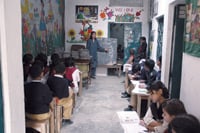
who somehow manage to do so do not seem satisfied. "Fees are heavy and we have to cut short our other necessities in order to send our children to good schools", says a mother, Unaiza Asif. "Sometimes, I feel there is no use of sending our children to these expensive schools since I do not find any grooming in my sons. Most of the parents like me send their children to big names merely to groom them. Studies and syllabus are not big issues. They are almost the same everywhere. What really matters is grooming which is yet not gained", she adds. "My son is in class 5 in a renowned school of the city. The school emphasizes on the syllabus pretty good. They have Oxford books and curriculum but my child cannot write fast and much. If, suppose, I want my child to go for matriculation in future instead of O level, it really wont work. He is not capable of writing enough material and with speed. Moreover, he is habitual of objective test system which reduces his ability on the grounds of subjective patterns", says Aliya. Ayesha, a house wife, living in Shadbagh, has a different sort of complaint. "The biggest drawback of famous, sought after schools, is that they do not open their branches in small and lower class areas, thus creating an air of status difference in society. Our children feel inferior when they go to these schools. Secondly, there is no check and balance in these schools. Children from rich background can bring as much money as they like. Sometimes, they even bring Rs. 200 or Rs. 300 to schools on Fridays. This instills inferiority complex in our children, leaving them more demanding, annoyed and unhappy with their parents because we cannot afford such luxuries". "We are compelled to admit our children into private schools because of falling standards of government schools. The private schools exploit the parents. The famous schools raise the fee from 12 percent to 18 percent every year," Nadia Saeed cries out. "Private schools and big celebrated names in this field give great importance to their Montessori and pre-school level classes that is playgroup, nursery and prep. But as children go to bigger classes, the level of social behaviour falls down. The main campuses for 6, 7 or 8 standards to O-A Levels are overloaded, sparing no time and space for staff to groom the students; especially boys. Another drawback is that our children do not speak fluent English -- one of the main charm of these big schools. Pronunciation is not well dealt with and our children have not improved their ability of spoken English although it is compulsory for them to speak only English," yells Sidra. Private schools mostly argue that the annual raise of 10% in the fee structure is mainly applied to facilitate the students with more and newer accessories. "I have two sons, both studying in 5th grade in a famous school of Lahore. They often get projects on different subjects from their schools. Sometimes they need computer for that and of course they know how to use it but for me it is not satisfactory. I want my boys to have proper scientific knowledge of computers and to benefit from the computer labs they have in school. Raise in the fee structure should be utilised for this purpose," Sadia shares her ideas. "Providing excellent curriculum is our priority. Each and every student is given proper attention. We encourage them in their positive activities. We teach them discipline. Moreover, an assembly session is held every morning in which patriotism and moral values are taught. Students participate in short skits which help them build their confidence and pave way for them to learn quickly and more easily. The skills of the students are being developed through these short skits; sometimes humorous and sometimes serious, thus building their moral values, love for their country, social behaviours and code of conduct," justifies Khawaja Shafique, principal of a prominent school in Lahore. Nadeem Ashraf, Secretary Education Schools of Punjab says, "Almost 42000 private schools in Punjab are offering education at a fee less than Rs. 300 per month. Moreover, the schools opened for the elite, asking for huge amounts, are strictly forbidden to demand three months advance payment of fee in the name of summer vacations. We strongly wish to provide our future generation with quality education, comfortable furniture, clean and healthy water and good atmosphere. Above all is the priority to facilitate students with the best ever circumstances to continue and complete their studies", he concludes.
TOWN TALK • 'Vasda Lahore' photo exhibition is being organised by Chitrkar which has extended the call for entries. Now the last date is October 30. This exhibition will be based on entries submitted by citizens Other than photographs, verse and poetry, sound recordings are also welcome. Weblink-www.lahorechitrkar.com
• Puppet Show at Alhamra, The Mall every Sunday at 11am.
• Talent Hunt Show (singing) every Saturday
• Panjabi Sangat is a weekly gathering every Friday and Sunday at Najam Hussain Sayed's house at 7pm where Punjabi classical poetry is readand sung. Any person who visits the Sangat can freely and actively participate in the above mentioned activities. Under the PU carpet The 'crackdown' against the IJT has proved to be nothing but a bid to please the Governor. The IJT still exists in its PU headquarters
By Waqar Gillani The 'crackdown' against Islami Jamiat Talaba (IJT) in
the Punjab University seems to be nothing but a good politico-public
relations exercise by the new administration of the university, The News
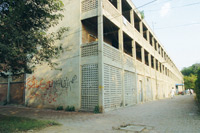
on Sunday has learnt during a recent visit to the university premises. The doors of a few rooms of the hostel number 1 (Quaid-e-Azam Hall) occupied by the university administration and made RO (Resident Officer) offices, most of the time, are seen locked even during the office timings. On the other hand, IJT is fully active within the hostel which is known as headquarters of IJT in the campus, TNS observed during two visits made to the university last week. The PU administration's exercise, which was nothing more than locking two to three rooms of the hostel number 1 (Quaid-e-Azam Hall), has ended as IJT activities are still on in the hostel, which is known as headquarters of the PU Jamiat. "No one can stop us," says a local Nazim of the university while pasting colourful IJT-posters carrying anti-liberal agenda on the notice board of the hostel number 1. "Actually, the locked rooms were union offices that have been taken over by the university with some understanding," he claimed, while moving in the hostel corridors. "IJT activities can't be stopped," said another IJT sympathiser, adding, "Our leadership enjoys good terms with Vice Chancellor Prof Dr Mujahid Kamran." PU insiders also believe that it was not VC's wish to start 'crackdown' on IJT, however, he had to do this as what can be called a 'politico-public relations exercise' to please the power corridors of the Punjab. The exercise, TNS learnt from the administration sources, was started by 'discovering' some dumped ammunition from a university playground that exists near the hostel number 1. The inquiry report of this almost diffused but dumped explosive was almost hushed up as it was inconclusive. The whole exercise of the university administration, insiders believe, was a political stunt that began after taking JI bigwigs into confidence to please a purely pro-PSF (Peoples Students Federation) Punjab Governor Salmaan Taseer before the issuance of a final notification of VC's appointment. Soon after a few days of this 'crackdown' the governor visited PU and loudly called to uproot fundamentalism in the university and appreciated the effort of the university, which seems to have stopped now. The insiders told TNS that VC had also met the governor, PPP central secretary general Jahangir Badar and a few other leaders who expect from him to create a pro-PSF environment in the university. Sandwiched between the power corridors of the Punjab with clear lines drawn between Pakistan People's Party (PPP) Governor Salmaan Taseer and Pakistan Muslim League Nawaz (PML-N) Chief Minister Shahbaz Sharif, the PU VC is on his toes to establish strong links with the CM to avoid any confrontation, TNS further learnt from insiders. For this purpose the VC managed a number of dinners in the honour of PML-N legislators, especially women MPAs. However, Shahbaz Sharif is least interested in establishing Muslim Students Federation (MSF) in the university as he was the CM who, in 1997 (his first tenure of CM-ship), appointed retired army generals giving them task to clean up campuses from political violence in the Punjab University and University of Engineering and Technology, Lahore, the insiders indicate. Before becoming the vice chancellor, Prof Dr Mujahid Kamran had always opposed the IJT activities in the campus though some people in the university allege that he has a soft corner for IJT and 'friendly relations' with JI bigwigs like Liaquat Baloch. "It seems that VC who has been claiming honesty and criticising the former VC, a retired general, now himself has opted the style of previous administration by allegedly dodging the power corridors, assuring them all the support to fix IJT on the one hand and supporting IJT on the other," a senior faculty member of the university who knows VC closely, told TNS. He added that this was not understandable because the VC was taking all the decisions under the influence of a selective lobby of teachers, sometimes ignoring the concerned heads and deans of various departments. The university administration has been alleged of seeking support of some sections of media, through various non-professional means. The PU VC was not available for comments despite repeated efforts. However, PU Registrar Prof Dr Muhammad Naeem Khan, ruling out the impressions, told TNS that actually they did not want to be hard on IJT. "We want to give equal opportunities and neutral platform to all parties so that every shade of public opinion is reflected in the campus." For the purpose, he declared, the university would also arrange an All Parties Conference (APC) details of which are with the VC. "We want to make university an apolitical place," he says, adding, "the occupancy of Hostel Number 1 rooms is a big achievement of the university." To the question of inquiry into the discovery of dumped explosives, the registrar told TNS that the concerned quarter had not submitted its report yet. Responding to the allegations of non-professional approaches in seeking support of media, he said, "We like to have good access to journalists and want to highlight activities in a better way and encourage press for that purpose," he said, adding, "that is why the university had arranged very good tours of some sections of media to its Murree Hills campus for some days. The university managed the whole tour." However, he denied any non-professional approach in getting this support. The Islami Jamiat Talaba (IJT) -- a youth wing of Jamaat-e-Islami, has a long history of imposing its view on the PU, a central public educational institution of not only Lahore but also the whole province, entertaining more than 20,000 on-campus students. The IJT has a history of instigating violence in the university, preaching extremism and Jihad by arranging various sessions, lectures and interactions of hostel students with the Mujahideen who had been fighting in Afghanistan and Kashmir in the name of Islam. Some sections of media had been playing an important role for the past few years to highlight the IJT role in promoting extremism and imposing views on others. Though the impact of IJT has been reduced with the passage of time, it could not be uprooted because of its deep links with the university administration and teachers' community. The overwhelming majority of the university stakeholders always want a sincere cut down in the IJT role but nothing comes out whoever the vice chancellor may be. --vaqargillani@gmail.com
Here is how police declare a person a proclaimed offender
By Ahsan Zia As the sense of insecurity among people increases with the crime graph showing upward swing, senior government functionaries point out that the inability of the police to apprehend proclaimed offenders (POs) is one of the foremost causes of increase in crime. The situation, according to them, has worsened to such an extent that POs are operating freely and committing crimes of all sorts. The questions that arise here are -- actually, to what
extent are the POs responsible for the overall increase in the heinous
crimes, what is the modus operandi of police to get the criminals declared
POs by the courts and why have the police not been able to apprehend a
reasonable number of them despite launching scores of crackdowns in the
past. Though most of the senior police officers claim that the process of declaring a PO is above board, some junior police officers don't agree with this notion. A police officer posted in the CIA Lahore, says on condition of anonymity that most of the time an accused police get hold of, has no prior record in the police files. He is forced to confess committing heinous crimes during the course of investigation which ranges from dacoity-cum-murder or rape during a dacoity -- a crime considered unpardonable in any case by many police officers known for their unique skills in staging police encounters. "However, before taking any decision about the fate of such an accused arrested by the police, it is ensured that the 'the exemplary legal action' against the accused must take its course after thorough investigation that could prove his involvement in the crime beyond any doubt". For more satisfaction, the police officer continues to say, police tally the accused's statement with the circumstantial evidences and eye-witnesses' account. He is taken to the place of incident of crime in a fresh condition (a term used by the police officers) and his identity as well as involvement in the crime is confirmed by the victims. "Once it is proved that the accused is involved in the crime, his status turns from an accused to a criminal in the eyes of the police officers", the police officers say, adding that the criminal's name is registered in the case file of that incident of crime in back dates. The police also take supplementary statement from the victims on the basis of which procedure of getting the criminal declared proclaimed offender by the court begins .Nonetheless, the police also make it sure that the arrest of the criminal is not registered in the police record, he adds. "Having the 'criminal' declared proclaimed offender (PO) by the court, the police allegedly kill the criminal in staged police encounter. This ensures justice to the victims. Later, the criminal's police as well as court record that shows he is a proclaimed offender, is provided to the Press as well as other departments concerned to hush up the matter", says the police officer. Another police officer deputed in a police station in the City as Station House Officer (SHO) has also something to unfold. He says getting an accused declared a proclaimed offender is not as easy task as is generally thought by the people. Police have their own list of touts as well as lawyers that make things easier for the police in the courts. For the police, he says, the most complicated procedure for getting a criminal declared PO by the court is in cheque-dishonour, dacoity or robbery cases. Sometimes, it takes us 20 to 25 days in getting a criminal declared proclaimed offender in such cases. "However, the time span for getting a criminal declared PO in other cases varies in accordance with their nature". The SHO agrees with the notion that in the past many innocent persons who were neither hardened criminals nor were wanted by the police, perished in fake police encounters. Their sole sin was that either they had enmity with others or had big property, he divulges. Many a police officer notorious for their expertise in fake police encounters, arrested these persons because their opponents greased the police's palms heavily. As regards modus operandi of these police officers, it was very simple, he goes on to say. Whenever these influential police officers decided to kill a person in fake encounter, they would get a number of FIRs registered against the person in different police stations. It was ensured that the victim remained completely in the dark till the last moment about what was going on against him. "Afterward, the police officers would get the person declared PO by the court on the basis of the cases registered against him. The police would then arrest and kill the person in fake encounter. Later, the police record against this person was used to justify the police action". Regarding police crack downs on POs, he says, "It is also true that such police actions time and again have resulted in the arrest of only low profile criminals. These low profile POs are not usually active. Arresting them is useless in checking crime." Soon they are released by the same police who arrest them", he says, adding that "We cannot keep them at police station indefinitely because the fear of court bailiff pursuing habeas corpus cases and public pressure oblige us to set them free if they are not found to be involved in the specific crime for which they have been arrested". He also claims that most of the senior and middle-ranking police officers are oblivious of POs' movement even in their own areas. "On getting strict directions to arrest POs, policemen usually ransack proclaimed offenders' houses through raids and take away whatever valuables they find there," he says. CIA Inspector Ibrar Shah says proclaimed offenders usually don't stay at their actual addresses after committing heinous crimes and keep on changing their hideouts. "We call them Target Offenders (TOs) in police language. Whenever extreme pressure is exerted by political bosses or courts, the police force comes into action and gets hold of whoever comes in its way." In such situations, he says, police action is brisk and painful because there is hardly any discrimination between the criminals and the innocent. This is what a traditional crackdown on POs means. Ibrar Shah says it is the involvement of active POs in heinous crimes which is pushing crime rate up. Some of them are so desperate that they even don't hesitate to open fire on police parties. This aspect is evident from the fact that some senior officers have also been killed by these POs in the recent past. The SSP operation Shafique Gujjar dispels the impression that there is any foul play in getting the criminals declared POs by the police. He says we are ensuring utmost transparency in doing so. We have put various checks on police officers so that they could not, in any case, get an innocent person declared PO by the court. He says this is true that by launching an effective crackdown on the POs, crime rate can be brought down to a reasonable extent. That's why Lahore police not only launched such operation in the past, it will continue to do so in future too, says SSP Operation. |
|