


|
|
|
|
 |
 |
   |
review Does
Obama deserve it? profile Inverse
operation RIPLE EFFECT
Route to change Analysts agree that between the two extreme positions -- one, advocating total repeal, and the other aggressively defending the Blasphemy Laws -- there lies ground for creating a culture of tolerance and social acceptance for religious diversity By Zeenia Shaukat Pakistan's controversial Blasphemy Laws have come to
occupy a permanent space in the public discourse. However, successive cases
of violence against vulnerable groups on the basis of Blasphemy charges have
done little to change the status of Chapter XV of the Pakistan Penal Code
covering Offences Relating to Religion, (popularly known as the Blasphemy
Laws). The Gojra and Sambrial tragedies this year have brought a renewed focus on the anomalies of these laws, especially the Zia-led order that introduced stricter punishment in Section 295A followed by the 1992 Senate's decision for mandatory death sentence upon conviction on Blasphemy charges. The president and the prime minister have endorsed a process of review of these laws and a Parliamentary Standing Committee on Minorities has been established for this purpose. The civil society has called for total repeal, and at least two signature campaigns have been launched to muster support for this objective. Last week, in parliament, MNA Sherry Rehman called for
"immediate action on repealing or amending the Blasphemy Laws" and
was also backed by the ANP's MNA Jameela Gillani. Media space, especially the
print media, the internet and the blog domain is replete with demands by
prominent citizens for repeal of the order. However, the question about the
right route to change remains unanswered! "At this point, it is not possible to change these laws," says Senator S.M. Zafar when asked if repeal of the Blasphemy Laws is a practical proposition. "This needs to be addressed in stages, though one agrees that the time has come to review these laws." The HRCP Executive Director I.A. Rehman observes that "those calling for a change are heavily outnumbered by the 'no-change' crowd." MNA Sherry Rehman points to the backlash by the right on any mention of repeal or review. "People are declared apostate and death threats are rife," she said as public representatives face increasing pressure to revisit these laws. This position of pragmatism also draws attention to the
reality of street power repeatedly demonstrated by the religious right and
conservative entities on the issue. Over the years, these groups have
fiercely resisted any move for an alteration in the Blasphemy Laws. The 'Tahfuz-e-Namoos-e-Risalt'
rally in Karachi on Oct 11 by the Jamiat-e-Ulema-e-Pakistan was not the only
show of opposition against any change in these laws. The PML-Q Leader
Chaudhry Shujaat has categorically stated his party would resist any move to
repeal the laws. With the memories of 2006 Danish caricature crisis fresh in
one's mind, it is hard to imagine the agenda of repeal would stay peaceful.
A.H. Nayyar of the Sustainable Development Policy Institute explains:
"Either you match the street power of the religious forces or you follow
repeal through absolute dictatorship. There is no way a democratic process
could repeal these laws." There is also the argument that even total repeal may not work as a remedy in cases related to offences against religion. Very often, mob violence and police brutality in such cases follow a sluggish court procedure subjecting the accused to lengthy periods in jail, legal costs and repeated court appearances. According to the National Commission of Justice and Peace (NCJP) at least 966 people have been charged under the blasphemy laws between 1986 and September 2009. 486 of these are Muslims. The rest include Christians, Ahmadis and Hindus. The NCJP cites 32 extrajudicial executions on blasphemy charges so far. "Even if these laws are repealed, the instances of
mob violence may not go away, because it has become a kind of habit with the
people (to take law into their hands)," says Doctor Tariq Rahman,
academician at the Quaid-e-Azam University. However, analysts agree that between the two extreme positions; one, advocating total repeal, and the other aggressively defending the Blasphemy Laws, there lies ground for creating a culture of tolerance and social acceptance for religious diversity. "There is no remedy to the problem other than public opinion," says S.M. Zafar, advocating a stronger role for the media to raise awareness and building institutional capacity of the police to control mob violence. Professor Tariq Rehman too suggests that a media campaign along the lines of the one followed for Women's Protection Bill can pave the way for consensus on the issue. Peter Jacob, Executive Secretary NCPJ, says that despite their strong stand on repeal, the minorities would not like to act like stubborn trouble makers in the process. "There is need for broader education of people, and the media and the civil society could assist in the process." As far as legislation is concerned, putting the process on
hold till public opinion evolves in favour of repeal may not be a feasible
idea. "A pragmatic approach would be to call for total repeal and settle
for amendments, to begin with," says I.A. Rehman identifying the course
for parliamentary route to the issue. "At the moment, the room for
consensus is extremely limited. The political leaders and parties are so
mortally afraid of clerics that even a minor change in procedure will be an
achievement." MNA Sherry Rehman maintains that her position is first repeal, "but if there is no support in the parliament for that, then review could be pursued." However, a parliamentary path may turn out to be bumpier compared to the 2006 Women's Protection Bill that too materialised only after an extensive media debate and lobbying on the subject. The two main issues that may slow down the process of change are Objectives Resolution that serves as a preamble as well as a substantive part of the constitution facilitated by General Zia in 1985. The other issue is public representatives' vulnerability to public opinion in the process of law-making. Zafar disagrees: "Objectives Resolution is a neutral
document that has secular as well as religious interpretations. Being a
document that stands for a liberal and progressive society, it does not
hamper the procedure to change these laws." I.A. Rehman too feels that
Objectives Resolution is not an issue: "The real issue is the
interpretation of Islamic injunctions regarding blasphemy. Neither the
Objectives Resolution nor Articles 2 and 2-A of the Constitution stand in the
way of modifying, even repealing, the blasphemy laws." The growing consensus on a review of the Blasphemy Laws has evolved following years of suppression of vulnerable groups to the misuse of these laws. The opportunity for an inclusive order is as much dependent on the political will of the ruling coalition as it is on the civil society's capacity to influence change. Ultimately, it is the marginalised that will be losers if the proponents of the repeal and the no-repeal positions fail to find a common ground for change.
Course for Legislative Amendments "I stick to the demand for repeal. Short of that I should suggest revival of the alternative punishment (life imprisonment) that the law originally provided, withdrawal of application to non-Muslims, stricter investigation procedures, and trial only in high courts." -- I.A. Rehman
"We should remove the provision for police to take
cognizance of this offence on its own. The next step should be to alter the
sentence part of the laws, reducing the death penalty to life
imprisonment." -- S.M. Zafar
"If total repeal of these Laws is not possible, amendments should be initiated without any delay. These amendments should not only rationalise punishments prescribed by the law, they should also address lacunae that allow the conviction of the accused on the basis of vague definitions of actions that this law covers." -- MNA Sherry Rehman
"The law should include action against those who execute others on an unsubstantiated basis, and also those who spread false rumours and incite violence against an alleged blasphemer. They should get the same punishment as the Blasphemy accused. Such a change may not face any resistance by the religious right as they would have no justification for that." -- A.H. Nayyar
Follow up Layyah On Jan 28, 2009, Kot Sultan police registered a case against four Ahmadia community children aged between 12 and 16 and a 50-year-old teacher on charges of desecrating the name of Prophet Muhammad (PBUH) in Chak 172/TDA of District Layyah in South Punjab. They were granted bail by the Lahore High Court six months later. The case is pending before the district courts.
Kasur On June 30, over 600 Muslims attacked Christians in village Bahmani, District Kasur. The angry mob tortured men and women, destroyed their houses and looted their valuables. The local and provincial administration settled the issue after pressure from Muslims.
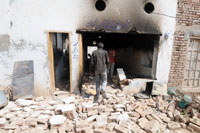
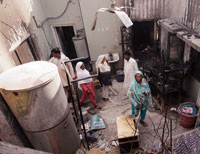
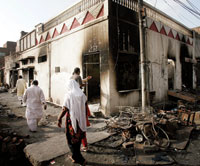
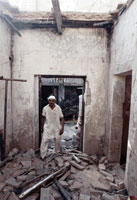
Gojra On July 25, 2009 some Christians at a marriage ceremony allegedly desecrated Quran in the Korian village, Tehsil Gojra in Central Punjab. Some furious Muslims burnt Christian houses in the village. After four days, the accused, Talib Masih, was questioned by the committee of village elders that declared him guilty of the crime. By July 30, seven miles away from Korian in Gojra, the news of the incident reached the local clerics, who urged Muslims to unite against Christians. On August 1, thousands of Muslims, wearing masks and wielding kalashnikovs, converged on the Christian colony to take revenge for an unconfirmed act. Seven Christians were killed of which six were burnt alive. Two more succumbed to injuries a couple of days later. A case was registered against Muslims under international pressure. Alongside, about 124 Christians were booked as well. Almost three months later, no significant progress has been reported on the case, except that a government-backed peace committee is pressing the two groups to settle the issue through a compromise. The Punjab government also ordered a judicial inquiry which has already submitted a report. The government, however, has not made the inquiry public.
Sialkot Robert Fanish alias Fanish Masih, a 21-year-old Christian from the Jaithikay village in Sialkot was accused of desecrating the Holy Quran. The local police arrested him on September 12, 2009 charging him of blasphemy. Two days later, he was moved to the Sialkot Central Jail where he was found dead the next morning. The jail authorities claimed he committed suicide, while human rights activists and his family hold that he was tortured to death. The government ordered a probe but its findings are not public yet. Kokab Warriach, Inspector General Prisons of the province, tells TNS that the chemical examination report, postpartum report and judicial and departmental inquires by the government confirm that Fanish committed suicide. However, the human rights bodies doubt the findings, terming them "non-transparent".
-- By Waqar Gillani
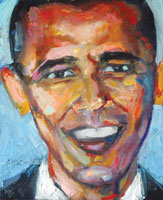
To award him a peace prize on the basis of unquantifiable contemporary opinion does seem a tad unjust By Adnan Rehmat The Obama phenomenon has touched virtually everyone in the
last two years with his mesmerising electoral performance. The guy has
created history in many ways and trashed some stickily persistent myths about
America and brought the country some respite from the popular global spite
against it collected by George W Bush (remember him?). It's all the more
difficult to dislike Obama easily if his rise to power and fame is seen in
his personal struggles and the mountain of odds that he overcame to be what
he is today: arguably the most powerful man on Earth and yet generally both
admired and inspiring despite that position. His latest accomplishment -- winning the prestigious Nobel Peace Prize -- has, however, triggered some unexpected passions. Does he deserve the award? Considering that you can't nominate yourself (and so can't be 'blamed' for winning it), was he a fair choice for this award? Opinions vary. Some are even amused. Even Obama acknowledged he was taken by surprise and also ventured that he didn't deserve it. Others in the world -- including droves of his well-wishers -- seem almost embarrassed. The split reaction (people generally liking Obama but not reconciling with the award to him) can be seen in direct proportion to the widespread popular ownership of the award itself -- the Nobel Peace Prize is arguably one of the most popular, respected and coveted global awards. Perhaps only the Miss Universe award beats it in anticipation and profile although Miss Universe is nearly always bagged by unknowns (many of whom go on to become famous only afterwards) while the Nobel Peace Prize is more often than not awarded to someone that many know already. The Nobel Peace Prize is one of the five Nobel prizes bequeathed by the Swedish industrialist, inventor and philanthropist Alfred Nobel who passed away in 1896. His will said the Peace Prize should be awarded to a person who "during the preceding year…. shall have done the most or the best work for fraternity between nations, for the abolition or reduction of standing armies and for the holding and promotion of peace congresses." The Norwegian parliament appoints a 5-member Nobel Committee, which selects the laureate for the Peace Prize. Nominations must usually be submitted to the committee by February 1 of the year in question. This year (2009) a record 205 nominations were received for the Peace Prize. The statutes of the Nobel Foundation do not allow information about nominations, considerations or investigations relating to awarding the prize to be made public for at least 50 years after a prize has been awarded so we don't know who Obama trumped to win -- it perhaps implies that not many were trying to make peace in the world in 2008. Unlike the scientific and literary Nobel prizes that are generally issued in retrospect and often decades after the awarded achievement, the Peace Prize is awarded for more recent or immediate achievements. The brouhaha over Obama's award stems largely from incredulity that the eligibility criteria of having worked for "fraternity between nations, for abolition or reduction of standing armies and for promotion of peace congresses" in the preceding year meant that he has been awarded for a period in which virtually his entire waking hours were dedicated to first seeking nominations of the Democratic party for presidentship and then to winning the position by spending time at the hustings. He hardly had time to commit to efforts for world peace by any stretch of the imagination. Obama's award also clearly isn't for work beyond February 1, 2009, which leaves barely the first few weeks of his current term in office for consideration, which, of course again amount to little in terms of measure, leave alone achievement. The citation for his award reads "[the prize is awarded to him] for his extraordinary efforts to strengthen international diplomacy and cooperation between peoples." There's little to show that in the period under consideration, Obama had little or no time to do this as he went about his election campaign. It's clear though that he was electrifying people with his extraordinary oratory on the campaign trail and by the time he won office in November 2007, he was popular not just in the US but the world over. And despite slippages in his popularity ratings nearly one year down the line, to award a peace prize on the basis of unquantifiable contemporary opinion does seem a tad unjust. Or possibly erroneous. One way to measure his achievement is to do a comparative analysis of his small band of peers within the larger pantheon of 97 individuals and 20 organisations awarded the Peace Prize. Obama is the 21st American citizen to win the Nobel Peace Prize (three American organisations have also won it) and the country's third sitting president to do so. Theodore Roosevelt was awarded in 1906 "for his successful mediation to end the Russo-Japanese war and for his interest in arbitration, having provided the Hague arbitration court with its very first case." Woodrow Wilson was awarded in 1991 "for being a founder of the League of Nations". A former US president, Jimmy Carter, was also awarded, in 2002, "for his decades of untiring effort to find peaceful solutions to international conflicts, to advance democracy and human rights, and to promote economic and social development." (Ironically Carter wasn't awarded for crafting a durable peace between Israel and Egypt). Clearly Barack Obama has been awarded for a lot less compared to other American presidents – both in terms of effort and achievement. Then there are the other glaring paradoxes. America is the only country in the world to have used nuclear weapons (on civilian populations to boot), has the second largest stockpiles of usable nuclear weapons, second largest stockpiles of fissile materials (to produce new nukes), the largest military in the world, the country with the most deployed offensive-status military personnel outside its own borders (not just now but since WWII), has conducted the most numbers of live nuclear tests, is currently fighting major active wars in at least two countries (Afghanistan and Iraq), has the biggest single-country military budget in the world, and sells the most weapons in the world in a calendar year (for many years running) and yet has managed to bag nearly a fourth of all Nobel Peace Prize awards given to individuals. Ironically President Obama has won a Nobel Peace Prize despite the fact that as commander-in-chief of the world's most powerful army he is currently leading two active wars in foreign countries -- Afghanistan and Iraq -- where the US army is seen as an occupation army, the wars are massively unpopular locally as well as in America and there is fierce resistance to their presence. More ironically, even as he has been awarded the Peace Prize, he is considering sending tens of thousands of more American troops to Afghanistan and warning of expanding the 'war from the skies' (drone attacks) in a third country -- Pakistan. But to be fair to Obama, he is not the first winner of the prize to be wrapped up in controversy. Some of the others nominated for the honour -- but who mercifully did not get it -- include Adolf Hitler, Joseph Stalin and Benito Mussolini. On the flip side, the Nobel Foundation is also known for not awarding some people who should have been automatic choices in any of their most years of their life for their widely recognized contributions to peace, such as Gandhi (even though he was nominated in 1937, 1938, 1939 and 1947), Eleanor Roosevelt, Vaclav Havel, Ken Saro-Wiwa and Corazon Akino. Others who never won the prize but should have included Pakistan's incredible Abdul Sattar Edhi, Irena Sandler, Pope John Paul II and Dorothy Day. In the end it is useful to remember that the Nobel Peace Prize is decided not by peoples or governments or broad-based committees (so the chance of disappointment is potentially always huge). The award is not based on popularity (or the likes of Che, Lenin, Mullah Omar, Osama bin Laden and Baitullah Mehsud may have been in the running at some point or the other) but on the measured views of a very narrow, select group of persons who are members of the Nobel Committee. Clearly this committee is still in awe of Obama even as his own supporters are starting to lose patience at the slowing pace of the delivery of his promises. Not that this will bother Obama too much -- he's richer by a cool $1.4 million. He may not have brought peace to the world but this money will bring him some peace.
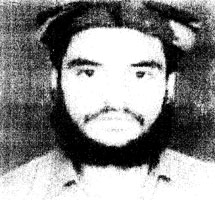
Cursing the nurse Aqeel was not an ordinary terrorist led by the nose by his handlers. He was himself the handler and probably knew well that the GHQ attack would not get very far By Amir Mir Mohammad Aqeel alias Dr Usman, the only Pakistani militant
captured alive in critical condition from the premises of the General
Headquarters (GHQ) of the Pakistan Army in the garrison town of Rawalpindi
after the October 10, 2009 bloody terrorist attack, is a member of the Punjab
chapter of the Tehrik-e-Taliban Pakistan (TTP) and has the distinction of
having served the Army Medical Corps as a nurse at the Combined Military
Hospital (CMH) in Rawalpindi till 2006. Mohammad Aqeel had abandoned the army service in 2006 to join the Jaish-e-Muhammad (JeM) led by the Indian Central Bureau of Investigation's (CBI) Most Wanted Maulana Masood Azhar. He remained affiliated with the al-Qaeda-linked Lashkar-e-Jhangvi for a brief period and later joined the Azad Kashmir chapter of the Harkatul Jehadul Islami (HUJI) led by Commander Ilyas Kashmiri who had been working in tandem with the TTP Chief Commander Baitullah Mehsud in the South Waziristan Agency, before being killed in a US drone attack in August 2009. According to a video released by the Geo television network a couple of days after the GHQ attack, Aqeel was shown getting military training at an unknown place in the South Waziristan tribal region. A mastermind of several past terrorist attacks, Aqeel
decided to become a part of the team that was sure to die during the GHQ
raid. And that's why he had left a video which was to be aired after his
"fidayeen mission". Going by his dossier of activities, Aqeel was
not an ordinary terrorist led by the nose by his handlers. He was himself the
handler and probably knew well that the GHQ attack would not get very far.
The daring assault was most likely a symbolic move to reassert the power of
the Pakistani Taliban in the backdrop of Baitullah Mehsud's death and the
subsequent media reports about its declining might. Aqeel knew it was going to be his last act and he did try to blow himself up with an anti-personnel mine at around 9am on October 11, 2009, but survived the explosion and was captured in a seriously wounded condition. Six commandos were killed as a result of the blast in the final phase of the GHQ operation which was carried out by the Special Services Group (SSG) of the Pakistan Army, 18 hours after the GHQ attack to rescue 42 people taken hostage, most of whom were khakis. The Punjab police had been looking for Aqeel since 2006 in connection with a number of terrorist attacks carried out in the province. He was first named in a failed attempt to target President General Pervez Musharraf's plane in 2006 by using an anti aircraft gun from the roof top of a house in Rawalpindi. Usman, a nursing assistant in the Army Medical Corps working at the Combined Military Hospital in Rawalpindi, went underground immediately after the incident and a case was registered against him with the Burni police station in Rawalpindi. The Punjab Police, ISI, IB and the CID launched a coordinated operation for his arrest but failed. Aqeel later joined three different jihadi and sectarian
organisation including: the Jaish-e-Mohammad, the Lashkar-e-Jhahngvi and the
Harkatul Jehadul Islami and finally became an active member of the Tehrik-e-Taliban
Pakistan (TTP). Besides masterminding the February 2008 murder of the Surgeon
General of Pakistan Army, Lt-General Mushtaq Baig, in a suicide bomb attack
outside the GHQ, he is believed to have led the March 3, 2009 bloody attack
on the Sri Lankan cricket team in Lahore. Interestingly, Aqeel's's father was
an ex-army official who had three sons and three daughters. It is pertinent to mention that Aqeel had in fact been arrested by the secretariat police station, Islamabad in October 2008 for his alleged involvement in the September 2008 suicide attack on the Marriot Hotel suicide bombing. Reports published in national newspapers on October 25, 2008, said that an anti-terrorist court in Rawalpindi had been told by the Islamabad police that four people had been arrested in connection with the Marriot Hotel attack. The report said that the investigation officer Altaf Khattak had informed the ATC No 2 that the Secretariat police, Islamabad had arrested Dr Usman, Rana Ilyas, Hameed Afzal and Tehseenullah Khan. Aqeel is considered to have been a part of an earlier
conspiracy, hatched by Ilyas Kashmiri, to assassinate the Army Chief General
Ashfaq Pervez Kayani, in collusion with al-Qaeda, largely because of the
COAS's lead role in the ongoing War against Terror. General Ashfaq Kayani's
daily visits to a gymnasium were reportedly tracked by an Aqeel-led al-Qaeda
cell in Pakistan, and it was decided that he would be targeted by a suicide
bomber as soon as he would step out of his car. However, the plan could not
be materialised after being leaked out to the intelligence agencies. Hardly a few weeks before Ilyas was accused of conspiring to target Kayani, Ilyas Kashmiri was named in a charge sheet filed by the Islamabad police in the November 2008 gruesome murder of Major General (retd) Amir Faisal Alvi, the former General Officer Commanding (GOC) of the Pakistan Army's Special Services Group (SSG). The 12-page charge sheet submitted in an anti-terrorism court on May 12, 2009 had stated that the former SSG commanding officer was killed to avenge the role he had played in the fight against Taliban linked militants in the tribal areas of Pakistan. The charge-sheet prepared by the Koral police station said three people involved in the assassination and already arrested included Major (retd) Haroon Ashiq, a resident of Azad Kashmir; Mohammad Nawaz Khan of Peshawar and Ashfaq Ahmed of Okara. According to the charge, Alvi's murder was carried out on the instructions of Ilyas Kashmiri who had also provided funds and weapons.
Though widely hailed as successful, the GHQ rescue operation has raised many questions about the ability of law-enforcers to protect themselves, even if there is credible intelligence information
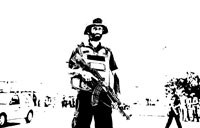
By Shaiq Hussain It all started at 11:30 am on Saturday when ten armed men, wearing camouflaged uniforms and brandishing assault rifles and grenades, arrived at the first GHQ check post in Rawalpindi near the Mall Road in a white Suzuki van and started indiscriminate firing at the soldiers deployed there. A militant also threw three grenades at the check post, as witnessed by Mansoor Ahmed, who was passing by. "It was a deafening exchange of fire between the militants and the troops with a lot of screaming going all around me. I saw a militant hurling grenade at the soldiers manning the check post and also saw another attacker falling on the ground after receiving bullets. "It was unbelievable watching a few militants daring to assault the symbol of Pakistan's military might but I saw that with my own eyes and I could never forget it," he said. The attackers, soon described by the military and the government officials on media as diehard 'Jihadis' associated with Waziristan-based Tehrik-e-Taliban Pakistan (TTP), took no time to rush to the second check post where they engaged with the soldiers in intense gunfight. This nearly 50-minute exchange of heavy fire resulted in the reported killing of six soldiers including a brigadier and a colonel, who had reportedly come out of the nearby office to see what was happening. Five militants were also reported killed. However, this isn't where it ended. Still to follow was a nightmarish 20-hour drama of hostage-taking at a nearby security office building. Reportedly, the remaining five militants took as many as 42 military and civilian employees of GHQ hostage. Their ordeal came to an end after a rescue operation by the army's special services group's commandos at around 6am on Sunday. They managed to save the lives of 39 hostages, kill four terrorists and arrest their leader, Aqeel alias Dr. Usman. Two commandos were reported dead in the operation while three other injured members of elite force succumbed to their injuries a day later. Three hostages also died according to reports. Tehrik-e-Taliban (Amjad Farooqi Group) claimed responsibility for the attack on the day of the assault whereas TTP spokesman, Azam Tariq on Monday claimed the Taliban was behind the deadly act by making phone calls to some news wire services. Tariq threatened the Taliban would continue with such violent acts unless and until military operations against militants were not stopped in different tribal areas and Swat. The GHQ rescue operation, widely hailed as successful by the government functionaries, politicians and masses showering praises on the military, has also raised many questions such as the inability of security forces to thwart the assault even after they had the intelligence information. This information was made public much before the actual assault, as this newspaper reported on October 5 that militants wearing army uniforms would carry out an attack on the headquarter. The intelligence and security brass needs to know the answer to this simple but highly significant question. Director General Inter Services Public Relations (ISPR), Maj. General Athar Abbas, told the media that the GHQ attack was planned by Taliban in South Waziristan and masterminded by Waliur Rehman, deputy of Hakimullah Mehsud, the new militants' chief. He also reiterated the military's resolve of taking on the terrorists in Waziristan. Nonetheless, it is crucial to reassess the capacity of intelligence apparatus and its ability to assess the strength and the weaknesses of enemy. The security agencies have a good clue at hand in the form of Aqeel alias Dr. Usman who could divulge many things about other attacks in the pipeline and thus give ample information and time to security forces not only to prevent future terrorist acts but also to focus on the plans to carry out a successful operation in South Waziristan considered to be the hub of al-Qaeda and the Taliban. Apart from Aqeel, the security agencies have also picked up Azam Qazi who rented the house to Aqeel and his accomplices at Dhok Awan, Model Town Humak near Rawalpindi. The property dealer who facilitated the rental agreement is also in police custody. According to an investigating police official, who requested anonymity, the police recovered army uniforms, maps of government buildings, fuses and detonators used in explosives, material used in suicide jackets and many identity cards from the militants' hideout along with the rent agreement showing the house was rented for Rs10,000 per month on September 9 this year. He said the attackers stayed there for around 25 days. A first information report (FIR) has been registered at the Royal Artillery Bazaar (R.A Bazaar) Police Station against Aqeel for the attack. The FIR was under Anti-Terrorism Act with clauses about murder, attempt of murder and possession of explosives and illegal arms. A military official, who also spoke on condition of anonymity, said at least 5 out of 10 attackers, who took part in the GHQ assault were from Baitullah Meshud's group while the others were from splinter Jihadi outfits who parted ways with Jihadi organisations like Jaish-e-Mohammad and others. He said the hostage-takers were demanding the release of 100 detained militants being kept in different prisons across the country including those arrested for the assassination of former Prime Minister Benazir Bhutto. The military official said that currently air operation was underway in South Waziristan with an aim at softening the enemy. "As for the ground operation, it cannot be delayed any further but still we need some time to launch as it is a very difficult terrain with thousands of local and foreign militants willing to die in the defense of their bastion." He said one other hurdle in the Waziristan operation was the slow supply of required military equipment by Washington which was a major pre-requisite for an effective operation in the rugged terrain. "We have been asking the Americans for long for the provision of assault choppers but still they have to come up with the supply. We need them (helicopters) badly and the Americans need to understand that."
Attack on GHQ – some questions
By Omar R Quraishi The attack on GHQ on Oct 10 has left dozens of questions unanswered. For the benefit of readers, some of these are (in no order of importance but written down as each comes to mind): From where did the men who allegedly carried out the attack get hold of the military uniforms that they were wearing? Can any Tom, Dick and Harry go to a store in a cantonment area and purchase a military uniform? Most countries in the developed world have stringent checks on civilians obtaining military and/or police uniforms. Are any such checks in place in Pakistan? From where did the attackers get hold of military plates and insignia for the car that they were travelling in as they approached the GHQ main gate? Most published reports of the attack, quoting officials, say that the Suzuki hi-roof in which the attackers approached the checkpost had a military number-plate and also that a raid carried out by the secretariat police at a house on the outskirts of Rawalpindi, in Awan Town, netted several items of interest including military signs and insignias. What is the authenticity of these items and if they are indeed genuine, how did the attacks come to possess them? Is it possible for civilians or for former soldiers to get hold of such materials from military stores? What checks, if any, are in place to prevent such material from getting into the wrong hands? The alleged ring-leader Aqeel, alias Dr Usman, had been arrested (first pointed out in a letter in this newspaper on Oct 14) by the Secretariat police in Islamabad in late 2008 for suspected involvement in the attack on the Marriott hotel. He had been arrested, according to several newspaper reports published on Oct 25, 2008, along with three other suspects and this was told by investigation officer Altaf Khattak to a local anti-terrorism court in Rawalpindi on Oct 24, 2008. The question to ask here is that why was Dr Usman released at that time? Assuming that he was released for lack of evidence, was anything done to rectify that fault in the investigation process. Perhaps, most importantly, once he was released, was any effort made by the civilian and/or military intelligence apparatus to keep him under surveillance and if that wasn't done, what was the reason for that? The alleged mastermind, Dr Usman, served as a nursing assistant in the Army Medical Corps, and he reportedly left the military in 2004 and joined a militant outfit. How was his time as an active duty soldier spent, given that right after leaving the military he joined a jihadi outfit? It has also been reported that the organisation he joined was affiliated with Ilyas Kashmiri -- killed some weeks back in a drone attack in Waziristan -- but who Hamid Mir claimed had served earlier in the military as an SSG commando. Though ISPR did not deny this, eventually a retired colonel, who was in the SSG, by the name of Colonel Imam, wrote a letter to this newspaper saying that Kashmiri had never served in the military. If one's memory is correct, Col Imam is the same former military official who has been accused of helping the Taliban post-retirement and was some months ago the subject of a detailed interview in a British newspaper. The fact that the alleged mastermind -- presently in custody and severely injured -- has been acknowledged by security officials as being a member of the Jaish-e-Mohammad and that he has close links with other jihadi outfits seems well established by now. Why then are pro-establishment commentators or others known for links and/or sympathies with the establishment trying to suggest that somehow the Americans or the Indians are involved in the attack? How can the Jaish possibly be involved with anything to do with India? Wasn't it the Jaish which was founded after Maulana Masood Azhar was released from an Indian jail, as a result of the hijacking of Indian Airlines Flight 814 on Dec 24, 1999? How could the Indians -- though they secretly wouldn't have been all that upset over the attack on GHQ -- possibly do business with the Jaish or any of their affiliated outfits after this? As for the Americans being allegedly involved, as is being advocated by the usual gang of conspiracy theorists, isn't there presence in Afghanistan and Pakistan often cited as the primary reason by the Taliban and other extremists for waging "jihad" in this reason? How on earth, then, could the Jaish, or other jihadi outfits work with the Americans and private US mercenaries such as DynCorp? (Of course, this doesn't take away from the fact that DynCorp may well already be in Pakistan as part of a security detail to provide protection to American or other foreign diplomats.) This type of argument was often given -- also by the same elements -- with regard to Baitullah and even in some cases with the Swat Taliban. Those who wish to define the concept of national interest for all Pakistanis -- though they have no real constitutional authority to do so -- usually raise the American/Indian/Israeli bogey whenever things with the Taliban/al Qaeda/jihadis begin to get out of hand and the state itself comes under sustained attack. Again this doesn't discount the possibility that both India and Israel may well prefer a weak Pakistan but what one is trying to suggest is that past history and experience suggests that the attackers are very much homegrown. And hence the question that why are these elements so keen on making a link with a foreign hand when security and government officials themselves have said that jihadis are involved and that the ring-leader is a former member of the JeM? Even if some government officials have tried to bring in the so-called 'foreign hand' and linked it with the GHQ attack, that has been done later, after a couple of days had passed, and without offering even the slightest bit of evidence. In that regard, the question that comes to mind is that why do we want to blame the rest of the world for ills and problems which are quite clearly of our own making? And that if we haven't been able to realize that after an attack on the headquarters of the Pakistan Army when will we ever search for the actual perpetrators of such terrorist acts? The writer is Editorial Pages Editor of The News. Email: omarq@cyber.net.pk
|
|