


|
|
|
|
|
 |
 |
   |
analysis
ceconomy Part-I environment
debate
Let
heavens fall!
The people's court? The Supreme Court's decision to reinstate the chief justice is not likely to impact the overall working of the country's judicial system, as it entails doing away with the colonial legacy By Aasim Sajjad Akhtar Since July 20, the brains behind the lawyer's movement --
that has dramatically altered the power equation in Pakistan -- have claimed
that the impact of the Supreme Court's decision to reinstate the chief justice
will resonate all the way down to the lower tiers of the country's judicial
system. Following this line of argument, a 200-year-old legal system --
conceived and realised as an implement of colonial rule -- will be transformed
overnight, with every magistrate in every tehsil magically becoming a defender
of the people's rights. This claim has more rhetoric than substance. It is quite likely that those who have been making such proclamations are well aware of how superficial this 'trickle-down' theory is. The fact that certain segments within the lawyers' community have persisted with this line of reasoning can either be explained as wishful thinking or a veiled attempt to return to the streets, to extend the not so insignificant gains made during the chief justice saga. It is indubitably true that only the pressure of a mass movement can bring about positive changes in the legal system or, for that matter, any other branch of the obsolete post-colonial state. The high sensationalism associated with the events of the last six months has lent support to the claim that the higher judiciary has, quite incomprehensibly, left behind a long legacy of complicity with dictatorship and emerged as the true defender of the people's basic freedoms. In fact, nothing of the sort has happened. It is instructive to peer into our history to understand
exactly why it is nothing short of naive to impute to the judiciary glorious
revolutionary credentials on the basis of the fallout from what is effectively
an internal contradiction in the corridors of power. As suggested above,
Pakistan's legal system is colonial in nature, retaining many of the
institutional features of the pre-1947 legal regime and replete with many of
the original statutes enacted by the British Raj. Lest one forgets, the law under colonialism had little to do with the public will; the colonial power never allowed any governmental mechanism to come into being through which the people's will could be represented. Thus the law was equated to the public interest, but this public interest was defined by the colonial state itself. In effect, this was little more than a means of institutionalised oppression of the colonised people. More specifically, the law was designed so as to prevent the emergence of any countervailing power to that exercised by the 'steel frame' of the Raj -- the administrative, unelected institutions of the bureaucracy and the army. In the post-colonial period, it was expected that this legal basis for the supremacy of the bureaucracy and the army would be overturned by the representatives of the people through the enactment of new legislation. But this required, first and foremost, the establishment of an independent institution of people's representatives; and then the existence of an independent judiciary that would ensure the subservience of the hitherto dominant administrative institutions. Needless to say, this two-fold process of evolution in the colonial structure did not take place. The supremacy of the people's will remained a pipedream, precisely because the army-bureaucracy combine continually disrupted the fledgling constitution-making process, culminating in the coup of October 1958. And as is a well-known fact, the higher judiciary essentially provided a mandate to the administrative order by invoking the infamous 'doctrine of necessity', which essentially meant that the colonial logic of equating the public interest to the state's interest remained unchallenged. What tends to be ignored in this familiar narrative is the fact that the law remained colonial in nature, in as much as it was under the guise of legal compulsion that the administrative (read colonial) order was sustained. Given that no such legislative institution was allowed to come into being, which could re-write the law to reflect a new social contract that was not colonial in nature, the existing statutes remained the basis of the legal system. Thus, whenever the need arose, a familiar colonial mandate was invoked by the judiciary to protect the 'greater national interest'. This in-built contradiction in the state structure could not be done away with even in India, where so much more progress has been made in transcending the colonial inheritance. This was underlined in a painfully obvious way during the emergency imposed by Indira Gandhi between 1975 and 1977, when the Congress government suspended all fundamental rights in a typically colonial assertion of state power. The emergency reflected just how tenuous the notion of the rule of law could be when the law itself was designed to suppress, rather than ensure, the supremacy of the people's will. In Pakistan too, the oft-heard cries for the need for the rule of law must be put into proper context. As far as the present state of affairs is concerned, it is important to recognise that the last six months cannot, in any way, be presented as a revolution in the legal structure of the state or even in the ethos of the judiciary. Until and unless the supremacy of the people's will is established, there is no question of the judiciary upholding this will. One is then simply reduced to hoping that the judiciary acts in favour of the people, but hoping can only get one so far. The fact that the Supreme Court reinstated the chief justice only reflects that there was immense public pressure for this to happen. But only two months later, the Supreme Court's ruling that Nawaz Sharif be allowed back into the country was not upheld, and there was a distinct lack of censure of the government by the apex court. In the latter case, there was no major public pressure and one was left hoping in vain. The Supreme Court may or may not rule against Musharraf's proposed running for president in uniform. Rest assured that the considerable watering down of the mood on the streets since July 20 will be reflected in whatever ruling is made. In the recent past, many people have lauded the role of the judiciary and the media in effecting a 'major change' in Pakistan. Unfortunately, there has neither been a major change yet nor can the judiciary or the media spearhead a challenge to the military's domination of the state and society. The only countervailing power to dictatorship is that of the people. People's power is the prerequisite to the reordering of the colonial structure of the state and the emergence of a legal regime that genuinely reflects the public will. In theory, the 1973 Constitution offers a starting point for the long process of overturning the colonial legality; but it is nothing more than a starting point. This is not only because the Constitution itself is flawed in many ways, but more importantly because only a mobilised people -- that jealously guard their right to determine their own fate from incumbent forces, such as the army -- ensure that the constitutional order is not subject to the kind of arbitrary manipulation that has been on show since the Ziaul Haq's coup of 1977; a coup that was, of course, upheld by the higher judiciary. Between March 9 and July 20, there was a glimpse of just how powerful a mobilised people can be. And it is important to bear in mind that the chief justice movement was primarily led by lawyers with ordinary people involved largely as spectators. In other words, a truly widespread mobilisation of the people would truly put the cat amongst the pigeons. If and when this does happen, one can turn to the need for an independent judiciary and media to ensure that the people's will is upheld. A guide to US military war jargon
By Kaleem Omar Americans are nothing if not inventive when it comes to coining war jargon. In World War II they gave us the term "GI" -- which stood for Government Issue (uniforms, weapons, etc) and eventually came to stand for the American soldier himself, as in GI Joe. In the Vietnam War they gave us that memorable expression "terminate with extreme prejudice", CIA-speak for assassinate. The Vietnam War also gave us the "11 o-clock follies", a derisive term used by American reporters to describe the US military high command's mid-morning briefings for the press in Saigon. The 1991 Gulf War gave us "smart bombs", "friendly fire" and "collateral damage" -- all terms that are still with us today as Bush and his hawkish chamberlains continue to bomb the stuffing out of Iraq in order to bring the joys of democracy to the country and its defenceless people. If the 2001-2002 US bombing campaign against Afghanistan gave us "bunker buster" and "daisy cutter", the current war against Iraq has given us "speed bump" (anything that slows down the progress of the war), "effects-based warfare" (an approach to war combining "graduated destruction" and "psyops" -- psychological operations) and, of course, the much ballyhooed "shock and awe". The coiner of the expression "shock and awe", Harlan Ullman, was once quoted as saying that the phrase had "not been helpful". If that isn't the mother of all understatements, one doesn't know what is. Then, there is "target of opportunity" -- an expression used by US military planners to describe their chance to get in with a spectacular first blow, when their raids on Baghdad on March 20, 2003, attempted to "decapitate" Iraq by killing Saddam Hussein. "Friendly fire" featured prominently in the American bombing of Afghanistan, including an incident in April, 2002, when four Canadian soldiers were killed and eight others wounded by US bombs. And it has featured again in the current war against Iraq, which has seen several British air force pilots and other military personnel killed by US friendly fire. Just how friendly can killing people get? In the Gulf on July 3, 1988, towards the tail-end of the Iraq-Iran War (a war during which America had no moral qualms about supporting Saddam Hussein's regime), the US navy cruiser Vincennes -- the most modern warship afloat, bristling with the latest technology -- shot down an Iranian civilian Airbus (Flight 655, from Bandar Abbas to Dubai), killing all 290 passengers and crew on board. The Vincennes' commanding officer ordered the plane be shot down despite the fact that the aircraft's transponder signal had clearly identified it as a civilian airliner. Several years later, Britain's Daily Telegraph newspaper printed an interview with the captain of a British navy frigate that had been operating in Gulf waters close to the Vincennes on the day of the tragedy. The British officer said he had picked up the Iranian plane's signal on his vessel's radar and had twice warned the Vincennes that it was a civilian aircraft, but the Vincennes had shot it down anyway. He said the warnings were on tape in his vessel's command-and-control recording system. So what happened to the Vincennes' commanding officer? Was he tried for a war crime? Was he punished? No, in what was clearly part of a political cover-up, he was awarded a Commendation Medal by the Pentagon for his "ability to quickly and precisely complete the firing procedure." But how is it that the world's self-appointed policeman cannot even tell which side is which? "Picking at scabs" was how the US air force's then-chief Charles 'Chuck' Horner described British investigations into a friendly-fire incident during the Gulf War. On February 26, 1991, an American A-10 'tankbuster' aircraft hit two British Warrior armoured vehicles, killing nine British soldiers. Horner's description demonstrated, yet again, that truth is the first casualty of war. He clearly believed that the truth was better left unsaid -- doubtless on the theory that the US taxpayers were not likely to have much confidence in a huge military machine that costs them hundreds of billions of dollars a year, but cannot even tell friend from foe. To minimise politically embarrassing casualties in dozens of 'messy' and complex military situations (many of them of Washington's own making, such as the war against Iraq), the US has looked for high-tech solutions to traditional situations, talking its way through wars in a language that seeks to create the impression that war is clean, precise and virtually bloodless. US wonder weapons work, but only in Hollywood movies. Movie-goers see Tomahawk cruise missiles pick out the bad guy in the street, leaving crowds of barefoot children happily munching their burgers a few feet away. In the real world, however, there are no friendly weapons. Some of the much-vaunted 'smart' weapons used by the US in Kosovo missed that country altogether and landed in Bulgaria. The same thing happened during the US bombing of Afghanistan in 2001-2002, when several American missiles landed in Pakistan's Balochistan province. Indeed, in recent years there have been so many incidents of US pilots mis-identifying their targets that they have become a joke on American TV. But the most shocking of all American friendly fire incidents occurred in 1943 during the Allies' invasion of Sicily, when US naval gunners blasted a bunch of C-47 transport planes carrying US paratroopers with a deluge of bullets, shells and rockets, killing or wounding a total of 318 paratroopers. They died where they sat, shot by machine-gun bullets or ripped apart by shrapnel. One American destroyer, the Beatty, fired on a plane that had ditched nearby in the sea, even though its US markings were clearly visible. With the blackest of gallows humour, one of the surviving C-47 pilots later remarked: "Evidently the only safe place for us in Sicily tonight is over enemy territory." "A-day" was US military jargon for the main attack against Iraq. One Pentagon official was quoted as saying that the initial attack on March 20, 2003, was "a limited thing". "It wasn't A-day," he said.
A half-hearted attempt The Anti-Money Laundering Ordinance 2007 was promulgated as a presidential ordinance without any debate in the parliament or the public By Huzaima Bukhari and Dr Ikramul HaqThe anti-money laundering law was promulgated in the form
of a presidential ordinance on September 8. It is unfortunate that the
National Assembly, which takes great pride in the fact that it is the first
one in Pakistan's history to complete its full tenure of five years, failed
to do any legislation to curb the menace of money laundering. The Anti-Money
Laundering Ordinance 2007 (hereinafter 'the Ordinance') that came into force
with immediate effect prescribes rigorous imprisonment of one to 10 years, a
fine of up to one million rupees and forfeiture of property for the offence. The 33-page Ordinance describes in detail the punishment for the offence of money laundering; the procedure for the investigation of doubtful accounts and transactions; and the process for the forfeiture of money and property, as well as for the management of forfeited money and property. A person shall be guilty of the offence of money laundering if he or she acquires, converts, possesses or transfers -- or renders assistance to another person in acquiring, converting, possessing or transferring, or for concealing or disguising the true nature, origin, location, disposition, movement or ownership of -- property that was proceeds of crime. Property or assets of any description -- corporal or otherwise, movable or immovable, tangible or intangible, including deeds and instruments -- wherever they may be located can be forfeited under the new law, It also specifies that the government would form a national executive committee -- headed by the finance minister or the prime minister's adviser on Finance -- to evolve a strategy to combat money laundering in coordination with the law-enforcement agencies as well as for further refining the law. The other members of the committee would be the prime minister's senior advisor on Foreign Affairs, Law, Justice and Human Rights; the federal law, justice and human rights minister; the federal interior minister; the governor of the State Bank of Pakistan; and the chairperson of the Pakistan Securities and Exchange Commission. The Ordinance also allows investigators to collect information about any doubtful accounts with financial institutions and money exchanges, and transactions by stockbrokers, besides holding such accounts for two months for the purposes of investigation. The Anti-Money Laundering Bill has been pending with the National Assembly for the last two years. One fails to understand why it has so far not been passed by the assembly and a presidential ordinance has been promulgated instead. According to well-placed sources, the reasons are best known to the Prime Minister's Secretariat and the President House, which had issued clear instructions to keep it pending. Interestingly, the bill was still with the National Assembly's Finance and Revenue Standing Committee when all of a sudden the government decided to promulgate the Ordinance without any debate in the parliament or the public. Isn't it a clear violation of the democratic principles? The government has claimed that the Ordinance was promulgated to meet international commitments and obligations -- in case of its failure to put in place a system to check illegal money laundering by the end of this year, the country's banking system could have been discredited. This shows that there was no genuine desire on the part of the government to enact any law to curb this menace. The Ordinance's promulgation in no way means that the government is serious in implementing it too, as the only reason it has been promulgated is to meet the 2007 deadline fixed by the European Union and other international organisations. Considering this, one can say that the Ordinance is not only a half-hearted attempt, but also a self-contradictory one -- the government lacks the political will to enforce it in the letter and spirit. Prime Minister Shaukat Aziz, on whose advice President General Pervez Musharraf has promulgated the Ordinance, conveniently ignored the fact that the government itself provides a free hand to money-launderers, assuring them that no question would be asked from them by the tax authorities if they remit their ill-gotten-money from outside sources through banking channels; and surrender their foreign currency to the State Bank and get Pakistani currency as encashment. In the Income Tax Ordinance 2001, promulgated on September 13, 2001, following the dictates of the International Monetary Fund (IMF), a special provision [Section 111(4)] has been inserted to facilitate money-launderers to remit (read launder) their ill-gotten money through banking channels without any fear of punishment. In the wake of this facility, aimed at attracting foreign investment but used liberally by drug syndicates and tax-dodgers to launder their ill-gotten money, the foreign reserves of Pakistan have crossed the $16 billion mark. Money laundering is particularly damaging to the economic and social fabric of developing countries -- it results in increased crime and corruption; destabilises financial markets and institutions; reduces foreign private investment; negatively affects tax revenue generation; and weakens the state's control over the country's economic policy. In Pakistan, banks, insurance companies, non-banking financial institutions, investment companies, money transmitters and real estate agents are all targets for money-launderers. The financial institutions, inadvertently or otherwise, support money laundering by providing means to convert cash into different types of financial instruments as well as to convert the currency of one country into the currency of another. The successive governments in Pakistan have never bothered to unearth the laundered money; rather, they have always joined hands with tax-evaders and money-launderers to provide them concessions for 'whitening' their black money. Large-scale tax evasion and the existence of a large black economy, while resulting in loss of revenue to the state, tend to reduce the built-in elasticity of a fiscal system to the extent that inflationary pressures are generated; and the prices of commodities as well as real estate increase. Therefore, it is important to identify the sources of generation of black money -- unless these sources are eliminated money laundering will keep on unabated, no matter how stringent the laws are. Here one may ask why has Pakistani become a paradise for money-launderers? The answer to this question is simple: the black economy has evolved so rapidly in the last two decades that it has benefitted almost everyone. There are multiple factors leading to this phenomenon, most notably the state-sponsored corruption and deliberate tolerance to malpractices. As a matter of fact, Pakistan since its independence has been a fertile ground for money-launderers. During the last 15 years, however, they have gained a lot in strength -- now they do not need any international channel to launder their ill-gotten wealth, as all the support from the state is available at home. The recurrent appearance of amnesty schemes and money-whitening instruments shows that the state has conceded the failure of its tax machinery in performing its main function of tax collection. This nation has become addicted to easy money and such schemes / instruments have become a routine matter for them. The people know for sure that after every two or three years there will be an amnesty scheme, providing them with an opportunity to get their ill-gotten money whitened by paying far less the amount than what they were required to pay under the normal income tax regime. It is tragic that the entire state apparatus has become subservient to those who blatantly manage to hide their income. Isn't it an ugly joke with those who have been paying their taxes honestly at much higher rates than those offered to tax-evaders (ranging between five and 10 per cent) under such schemes? If the government is really sincere in curbing the menace of money laundering, it must announce the Compulsory Public Disclosure of Assets Scheme, requiring the privileged classes of society -- who should act as examples for others -- to make their assets and liabilities public. This will not only help motivate the common people to pay their taxes honestly, but will encourage voluntary compliance. The state needs to wage an all-out war against burgeoning money power and corrupt politico-administrative structures. This war, however, must start from the privileged classes of society, as this alone can ensure proper and voluntary tax compliance in the country. In the wake of the Ordinance's promulgation, the government needs to develop a permanent structure in institutions like the Federal Board of Revenue, the Federal Investigation Agency, the Securities and Exchange Commission of Pakistan and the State Bank of Pakistan, so that the issue of money laundering can be effectively addressed. Similarly, special courts should be established, and judges having expertise in financial and banking matters should be appointed, to hear the cases of money laundering. Also, there is an urgent need to introduce policy and structural changes with regard to the working of banks. It is unfortunate that benami accounts are widely accepted in both public and private sector banks. Presently there are 28.8 million accounts with various Pakistani banks, out of which only 14.8 million were opened against personal names. The state cannot tap the real revenue potential unless stringent measures are taken to combat money laundering and to eliminate parallel economy through proper documentation. This will automatically broaden the tax base, besides freeing the society of many evils. The government must remember that half-hearted measures like The Anti-Money Laundering Ordinance 2007 will not yield the desired results, as it also needs to demonstrate political to counter money-launderers and tax-evaders. (The writers are tax advisers. Email: huzaimaikram@gmail.com)
A solution to energy crisis It is important to analyse biofuel prospects in Pakistan in a sustainable development context By Shaheen Rafi Khan The Climate Change 2007 Fourth Assessment Report has
muffled the sceptics. The current findings replace speculation with
scientific certainty -- in fact, the reality has overtaken modelled
forecasts. Earth is heating up faster than predicted, with extreme events in
their several manifestations spiralling out of control. Glacier retreats,
polar ice meltdowns, sea level rise, tropical cyclones, storms and hurricanes
have triggered natural and human calamities on an unprecedented scale. There
is a corresponding urgency to address both the causes of climate change
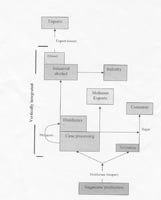
(mitigation) and its effects (adaptation). Renewable energy in general and biofuels in particular have begun to look like an increasingly viable mitigation option. The 'bio' in biofuels refers to crop and wood-based raw materials such as molasses, rice husks, corn and wood waste, which are processed into fuel. For developed countries, biofuels offer prospects for meeting their emission reduction commitments under the Kyoto Protocol. For developing countries, biofuels present a means to reduce energy import bills as well as earn precious foreign exchange. Reconfiguring the fuel economy to renewable sources, however, is not without risks, as global environmental benefits also generate adverse local environmental impacts. Similarly multinational corporations offer price incentives to farmers to switch from growing food crops to biofuel crops, which threatens food security. The rapid uptake of biofuels reflects the ease with which they can replace or be blended with fossil fuels, such as petrol and diesel. The technology is simple, cost-effective and environment-friendly. The blended fuels provide a higher octane content, improving vehicle efficiency while reducing carbon emissions. Developing countries also enjoy a cost advantage -- they experience year-round growing seasons, they can access cheap farm labour, and they can use crop by-products to fertilise fields and fire up distilleries. For instance, Brazil is able to sell ethanol for $25 a barrel, compared with $50 and $70 for the United States and Europe respectively. Not surprisingly, many countries have picked up on biofuels as a way to reduce their oil bills or to earn foreign exchange. Thailand is building over a dozen ethanol plants using sugar cane and rice husks as a fuel source. China has constructed the world's largest fuel ethanol facility at Jilin. It is reportedly planning to import Brazilian ethanol as well. Japan has already gone that route -- the country signed its first 15 million-litre deal with Brazil in May 2006 preparatory to replacing up to three per cent of its gasoline. Still, this emerging global market in biofuels is not clear of the political thicket. Developed-country farm lobbies lend momentum to biofuels market development, but they also demand protectionist barriers. "Everyone pretends (their enthusiasm) is for the environment, but it is all about agricultural subsidies," biofuels expert Christian Delahouliere warns. To encourage biofuels, the European Union pays farmers 45 euros for each hectare of 'energy crops' they grow. That provides them a huge incentive to produce 'energy crops', effectively barring cheap foreign bioethanol from entering their market. When Pakistan gained special access to EU markets in 2002 and began shipping bioethanol, local farm lobbies persuaded Brussels to change course and re-establish tariffs. The US also imposes a 50-cent-a-gallon import duty on Brazilian ethanol. Additionally, almost every country has its own biofuel standard with different specifications that may be manipulated to hinder market access. In this article, we evaluate the biofuel prospects in Pakistan in a sustainable development context. The specific biofuel is ethanol, extracted from molasses, a by-product of sugar. The potential for producing biofuels from corn, rice husks and wood waste exists, but has not yet been tapped. We will also examine the external and internal policy constraints that have prevented the domestic ethanol production from taking off. Production trends The sugar industry in Pakistan is the second largest after textiles -- 76 sugar mills are currently operating at or below their capacity. The production of sugar reached 4.0 million tonnes in 2003-04, from 2.89 million tonnes in 1991-92. The production potential, however, has not been fully realised in Pakistan, as the sugarcane yield remains well below the global average. Also, because of sugar prices doubling since 1992, Pakistan continues to remain globally non-competitive. The emerging markets in industrial alcohol and fuel ethanol offer prospects of making sugarcane production economically viable. About 80-85 per cent of the total sugarcane production goes towards producing sugar. The remaining 15-20 per cent is converted into gur, a local variant of sugar, which is largely produced and consumed in the NWFP. Cane crushing produces sugar and molasses as a by-product. The molasses-to-bioethanol conversion process is conducted in distilleries. Currently, 21 distilleries produce industrial alcohol in the country. Most of these distilleries are a part of sugar mills and are situated on-site, making the production cycle an integrated one. The mills receive the cane, crush it for sugar, store the molasses in storage tanks on-site and then pass it on to the distilleries for industrial alcohol production. Industrial alcohol can be converted into fuel alcohol by using molecular sieve technology, which requires a capital expenditure of about $1.5 million and a completion period of five to six months. As many as eight distilleries have so far installed the molecular sieve technology to process industrial ethanol into fuel ethanol. The fuel ethanol conversion plant is linked to the industrial alcohol plant.
Export trends Until recently, the bulk of the raw molasses was exported -- with exports ranging between 0.70 million and 1.75 million tonnes -- and only small quantities were converted into industrial alcohol for domestic use and export. In the last five years, however, a substantial proportion of these molasses was converted into alcohol. Fuel-grade ethanol, which is blended with petroleum products, fetches the highest price in the world market. The distilleries in Pakistan have three major buyers. The domestic industry purchases industrial alcohol for various purposes. Fuel ethanol is currently only being sold domestically in small quantities to the Pakistan State Oil (PSO), as part of a pilot project under which ethanol (10 percent) is blended with gasoline (90 percent). The third and predominant outlet is exports. Most of the industrial and fuel ethanol produced in the country is exported through international trade houses. It is brought from distilleries throughout the country to the Karachi port for onward shipping to different parts of the world. Alcohol exports have increased rapidly in the last five years, reaching 167,600 tonnes in 2006-07. The average export price for different grades of alcohol ranged from $560-680 per tonne; the total earnings amounted to $100.6 million in 2006. The value-addition in molasses through its conversion into alcohol has enabled exporters to earn as much as eight to 10 times more foreign exchange. The bulk of exports went to Japan and the EU, with Italy being the single largest recipient country within the EU. However, exports to the EU as a whole declined in the wake of Pakistan's removal from the GSP scheme.
Sustainable development implications Bioethanol is produced entirely from molasses, a direct by-product of sugar production. While other indigenous raw materials -- such as maize, rice, wood pulp and other forest residues -- are available in large quantities, they do not offer the same scope for value addition that sugarcane does. In other words, the opportunity cost of producing bioethanol from sugarcane is substantially lower than from other available sources. The sustainable development implications are, therefore, positive. Bioethanol production is not likely to displace food crops or cause deforestation. This is because there is a large untapped potential to convert raw molasses into bioethanol, provided the right kind of policy incentives are in place. However, in the long term, the sustainable development concerns may materialise if the production of biofuels in Pakistan takes off. In view of the increasing scarcity of water and land, land-use conversions (deforestation) and crop-switching (threatening food security) would then become legitimate concerns. The wriggle-room here would be provided by sugarcane yield increases and the introduction of sugar beet on a large scale. Sugar beet can be inter-cropped with sugarcane, and it has relatively higher yield as well as a higher molasses-to-ethanol conversion ratio. Another environmental concern relates to industrial effluents. Wastewater flowing out of distilleries is highly contaminated; if left untreated, it can pollute fertile land and harm aquatic life in water bodies. However, despite the general lack of effluent treatment by industries in Pakistan, most distilleries have installed treatment plants, albeit with varying efficiencies. Cost savings associated with waste treatment are the main incentive for distilleries to be environmentally conscious. Distillery wastewater treatment is an anaerobic process through which the organic components of the wastewater are converted into biogas, with negligible excess sludge production. The two major products of the treatment process are methane gas and carbon dioxide. Methane gas is recycled as an energy source in the distilleries, meeting as much as 70-90 per cent of the total energy requirement. In effect, distilleries have a 'closed carbon cycle'. The final discharge, when diluted with subsoil saline water, has BOD and COD concentrations reduced by as much as 97 per cent and can be used for land irrigation. The environmental gains from wastewater treatment are thus obvious, while the cost-savings incentives to distilleries are written in. In relation to the end-use, the consumption of fuel ethanol in automobiles leads to a substantial reduction in emissions. The blended fuel provides a higher-octane content without any presence of lead (traditionally used in gasoline as a booster), thus enhancing car performance and at the same time reducing disease-causing emissions from car exhausts. Although no Pakistan-specific estimates are available, the general norm is that for blended gasoline carrying 22-24 per cent fuel ethanol, reduction of fossil carbon dioxide from the tailpipe could be as high as 80 per cent. The clearly demonstrates that economic and environmental benefits associated with bioethanol production have failed to induce adequate policy responses, both domestic and foreign.
(The writer works with Sustainable development Policy Institute. Email: shaheen@sdpi.org) environment A tale of murky waters The labourers working in Kasur's tanneries are unaware of the health hazards they are exposed to
By Naila Hussain Babar, Parvez and Mansoor (names changed to conceal
identity) wash leather and spend hours each day in inhuman environment. These
young workers laughed off our queries about their problems, as they seemed to
be quite used to them by now. "This is the only job we can get. At
least, we are not exposed to chemicals here like in other tanneries,"
they say. It does not enter their minds that things can always change. The situation, to say the least, was a little tricky -- while our dialogue was going on, the owner of the tannery sauntered in and started glaring at us with a mixture of hostility and curiosity. We tried to reassure him that our objective was only to understand and raise awareness about the situation in Kasur, with the help of the government, tanners' association and the civil society of the society. We also informed the owner that the idea certainly was not to target one particular person or a tannery. After listening to this, he finally seemed to be satisfied. To assess the situation further, we decided to speak to a few more workers. Just off the main road of Kasur, we saw Allah Rakhah drying wet blue leather on large wooden boards. We requested for a few minutes out of his time. He had been working with bare hands and feet in absolute filth. Allah Rakhah says he does whatever job that comes his way. He has been doing this particular job since last four to five months and had faced no problems so far. He informed us that he even volunteered to get his blood tested and "the doctor was quite happy with the result". He could not recall the name of the doctor for some reason . Mohammad Younas, about 20, was engaged in similar work. He had been in this business for about 12 years. About 20 of his relatives are also in the same field. Mohammad Younas earns about Rs 5,000-6,000 a month and works, like many others, on contractual basis. He feels that chemicals pose no health problems to him. It merits a mention here that both him and Allah Rakhah appeared to be suffering from anaemia and malnutrition. Next, we moved on to Bangla Kumboh -- a close by village
that was surrounded by chemical-laden wastewater from the tanneries before
the treatment plant was set up (details given in the first part of this
series published last week). At that time, the residents of this village were
afflicted with all kinds of diseases associated with polluted water. In order to learn more about the current situation, we spoke to one of the inhabitants of Bangla Kumboh. Hamid, 40, and has been involved in tanning-related work for the last 20 years. He stitches gloves and cleans leather, which in their lingo is called challai. Leather is cleaned off hair by the help of sodium and water. Hamid, who manages to clean off about 400 cow hides daily, earns Rs 80 for every 100 cow hides. His normal day starts at the crack of dawn at 5 am and ends at around 3 pm. He says that they are physically very strong people, so the work at the tanneries does not affect them. However, slowly the story starts unfolding. Laughing, Hamid relates an incident that speaks for itself: "One day some foreigners came to see the products in the tannery and they seemed shocked at the state of affairs. When they went away, I asked our supervisor about what they had said. He replied: 'They said that it was so strange that the people working in such an environment were still alive.'" Hamid says that he has been suffering from cough, breathlessness, stomach problems and respiratory illnesses since his early childhood."Thank God that I do not have to deal with chemicals! It is like death for those who do it each time they have to mix salt and acid. The fumes are so strong and unbearable that they blow your mind."he tells. Bearing in mind all these problems, we asked them that if they ever considered buying safety gear for themselves. Hamid responds with a very reflective expression, saying: "We have never been informed about the importance of safety equipment, though the boots cost only Rs 300, the goggles Rs 100 and the mask Rs 25. We end up spending a lot more on doctors' fees and medicine." He informs that some of the bigger tanneries, which are into exports, do provide to their employees with protective gear and cards for free consultation with doctors, but this is not a widespread practice. Speaking about domestic problems, Hamid says that his wife has been very ill and he has so far spent about Rs 10,000 on her treatment. He has complete faith in the doctor, who he feels is very competent. "The doctor has diagnosed an inflamed liver and says that my fine will be fine soon," he adds. His colleague Majeed, 22, who is also involved in the same work, nods with enthusiasm now and then. He says that diseases were rampant when the treatment plant had not been set up. But now, he feels, it is a lot better. Majeed stresses that when clean drinking water was not available and there were stagnant ponds all over the place, it was very difficult to survive. He says that the passive attitude of the municipal committee is one of the major problems that the people of Kasur are faced with. Majeed recalls that it was in Benazir's second tenure as the prime minister that the water treatment plant was set up. He informs that Sardar Asif Ali -- who was foreign minister at that time -- was instrumental in setting up a water tank for the people of Bangla Kumboh, as there was a lot of suffering and pain. Majeed says that the residents of the village were informed that it would take up to three months for the tank to be operative, so as a stop gap arrangement Sardar Asif Ali made arrangements to bring in water containers in the morning and evening for drinking purposes. This way, the drinking water issue was addressed. Recently, he adds, something went wrong with the water pump for two days; and within that short span of time, the health-related problems were back with a vengeance.
(The writer is an independent researcher. Email:nailah@wol.net.pk)
Water woes In Pakistan, the annual number of cases of infection because of the lack of clean drinking water is reported to be about three million
By Syed Kosar Naqvi It is a fact that most people in our country are deprived of potable water. According to the World Health Organisation (WHO), water provision -- both for consumption and sanitation -- is a basic life line. In its absence, the community is deemed to be in a state of disaster. Water is vital for life and is one of the basic resources for existence. It is a universal solvent and contains dissolved particles in its natural state. It is also a favourable habitat for majority of living organisms. Water is a unique liquid. It constitutes two-thirds of body cell matter and 90 per cent of all body fluids, including the blood as well as the lymphatic and spinal fluids. It is necessary for all biological processes and also contributes to the regulation of body temperature through perspiration. Water makes up more than two-thirds of the weight of the
human body and without it humans would die in a few days. The human brain is
made up of 95 per cent water, blood of 82 per cent water and lungs of 90 per
cent water. A mere two per cent drop in our body's water supply can trigger
signs of dehydration; fuzzy short-term memory; trouble with basic
mathematics; and difficulty focussing on smaller print, especially on a
computer screen. According to United Nations statistics, over one billion people -- one-sixth of the world's population -- lack clean drinking water and 1.7 billion do not have access to adequate sanitation facilities. In Pakistan, it is reported that the annual number of cases of infection because of the lack of clean drinking water is about three million. As many as 40 per cent of these cases of infection prove to be fatal. Contamination of drinking water is a serious issue in Pakistan, as wastewater from raw sewage, industrial waste and agricultural runoffs may be mishandled and dumped directly into lakes, rivers and streams. Polluted water may contain inorganic chemicals, such as bicarbonates, chloride, calcium, fluoride, iron, iodide, magnesium, nitrate, phosphate, potassium, sodium and sulfate; as well as organic compounds like phenolic substances, carboxylic compounds, pesticides, detergents and pathogens. Polluted water is often turbid with a particularly unpleasant smell, odour and taste. However, water may remain colourless while containing a large number of pathogens. Abbottabad -- which is a unique city because of its pleasant weather, picturesque sceneries and quality educational institutions -- has no more remained an exception, as most of its drinking water supplies have become contaminated too. Abbottabad district, because of its mountainous topography, has numerous water sources for both rural and urban populations. But on its way from the source to the consumer, water is liable to pollution and contamination with serious implications for the health of people. It is estimated that if clean drinking water is ensured, 60 per cent of all diseases would disappear. So one can imagine the magnitude of the problem, both in term of health and socio-economic implications. Different water studies have revealed that most of the population consumes contaminated water. It is being observed that water is usually relatively clean at the source, but becomes contaminated by the time it reaches the point of supply; mineral contents are within the acceptable limits. Intermittent water supply is dangerous because when the water is turned off, contaminants from the surrounding soil enter the pipelines in areas where they may be cracked or broken. Integrated Development, Empowerment and Advocacy for Livelihood Support (IDEALS), with the support of Abbottabad Fund for sustainable Development (AFSD), after getting microbiological and chemical analysis of 30 different sites from the Pakistan Council for Research in Water Resources (PCRWR) has revealed that 93 per cent of the drinking water is unsatisfactory and unfit for human consumption. Of the 30 samples ,18 were from rural areas and the remaining 12 from urban areas. 94 percent of the rural and 92 per cent of the urban samples were found to be unsatisfactory and thus unfit for human consumption. In particular, seven water supplies -- Kakul, Dhamtore, Old Tap water Malikpura, Illyasi Mosque, Sheikhul Bandi, Salhad and Cantonment Tube Well in Abbottabad city -- have been categorised as 'very high risk' ones, as they contain the highest quantity of faecal coliforms. The faecal coliform in these water supplies crosses even the 'very high risk' level of 1,600 per 100 millilitres of water. According to WHO standards, 1,000 faecal coliform per 100 millilitres of water is considered to be of 'very high risk' level. Of the 30 samples, only Retri water supply at Nathiagali and water supply in the Havelian village have been declared as satisfactory, as no faecal coliform is reported in both the schemes. After laboratory analysis, microbiological and chemical, the results have shown that only two water samples (seven per cent) are satisfactory and the remaining 28 (93 per cent) are unsatisfactory for human consumption. The faecal coliforms in most of the water samples touch and even cross the 'very high risk' level. The result of the Abbottabad tehsil is 95 per cent unsatisfactory and five percent satisfactory; and of the Havelian tehsil, 89 percent unsatisfactory and 11 per cent satisfactory. The overall result of the Abbottabad district reveals that 93 per cent of drinking water is unsatisfactory, while only seven per cent is satisfactory. Globally, water is considered to be unsafe when the supply is intermittent, as it is all over Pakistan and in most developing countries, and when there is no chlorination. Intermittent water supply is dangerous because when the water is turned off, contaminants from the surrounding soil enter the pipeline in areas where they may be cracked or broken. Chlorination kills the pathogens in the water and makes it safe for drinking. However, chlorination is expensive and, the more so, when millions of gallons of drinking water are wasted on leaking taps, watering lawns and washing driveways. Water is essential to sustain life and a satisfactory supply must be made available to the consumers. Every effort should be made to achieve a drinking-water quality as high as practical. Those at greatest risk of waterborne diseases are infants and young children, people who are debilitated or living under unsatisfactory conditions, the sick and the elderly. District governments should be advised to adopt stringent measures in water quality control according to WHO guidelines, with regular and periodic sampling of all water sources and reservoirs, especially of those that are used for drinking water. The future generations will greatly benefit from the action taken on the basis of the outcome of the study. The report suggests both short- and long-term measures, which include awareness campaign, chlorination, solar water distillation, regular laboratory testing, and introduction of a water and sanitation office to look after the related affairs. The suggested long-term measures include a comprehensive master plan for water supply and sanitation , rapid sand filter plants and sanitation system for mega urban localities. Whither provincial autonomy? The federal government is yet to adopt any concrete measure for granting autonomy to the provinces
By R Khan With only about one month remaining in the completion of tenure of the existing National Assembly, an important constitutional amendment bill pertaining to provincial autonomy is unlikely to be tabled in the house despite the vows of the government, in particular the Ministry of Inter-Provincial Coordination, to this affect. The uncertain situation regarding the proposed Provincial
Autonomy Bill can be ascertained from a statement issued last week by Federal
Minister for Inter-Provincial Coordination Senator Salim Saifullah Khan:
"If the 18th Constitutional Amendment Bill is tabled in the next session
of the National Assembly, the Provincial Autonomy Bill must be incorporated
into it." This shows the federal government's approach towards provincial autonomy -- the bill regarding this important issue is not being tabled separately in the National Assembly. Moreover, the concerned federal minister -- who could not be reached for comments despite several attempts by the scribe -- is still unsure whether the bill would even be tabled in the National Assembly or not. On the other hand, leaders of nationalist parties -- known for championing provincial and ethnic rights -- are of the view that merely tabling the Provincial Autonomy Bill is not enough, as it is not a part of the solution. They stress that what is needed is a genuine willingness on part of the federal government to transfer powers to provinces. Independent observers are of the view that if the issue of provincial autonomy is not addressed immediately, the country would have to suffer dire consequences. They believe that extremism and terrorism, the main problems faced by the country at present, are also linked with the issue of provincial autonomy -- the state has been rendered weak, and thus unable to counter these menaces, because of denying autonomy to the provinces. In order to substantiate their viewpoint, they refer to the ongoing tension in Balochistan, which according to them is a direct outcome of denying autonomy to the province. The work on the proposed Provincial Autonomy Bill started with great fanfare amid promises by the federal government, especially Salim Saifullah, that this time round it was serious in granting autonomy to the provinces. The federal government also indicated that it was considering elimination of the concurrent list of subjects altogether, as was enshrined in the 1973 Constitution. The concurrent list included those subjects that were to be transferred to the provinces within 10 years, by 1983, of the adoption of the Constitution; however, no concrete step was taken in this regard by successive governments and regimes. "Till the rulers in Islamabad change their attitude drastically, the solution to the problem of inter-provincial disharmony is not possible. The basic problem is that they are not willing to accept the fact that Pakistan is a multi-ethnic state," views nationalist leader Senator Dr Abdul Hayee Baloch, who is one of the few members of parliament who did not sign the 1973 Constitution. "The present government has brought about a radical shift in the country's foreign policy, especially with regard to the relations with India and Afghanistan. This is a positive development, very much in line with the stance of nationalist parties that our foreign policy should not be India-centred. However the question remains that if the government can accept the realities concerning foreign relations, then why is it afraid of acknowledging the domestic realities? Why don't the rulers realise that marginalised nationalities are not anyone's slaves?" he questions. Dr Hayee Baloch goes on to say that the rulers have been trying to integrate various ethnic groups that make up Pakistan on the basis of religion. "This is integration by force. The rulers have been exploiting the masses and implementing the neo-colonial imperialist agenda in the name of religion, forgetting that Islam is a universal religion that transcends boundaries," he adds. "Pakistan is considered to be an important country in the world because of its geo-strategic location. The country owes this mainly to Balochistan, which not only provides strategic depth to it but also has a 770 kilometres-long coastline. Despite this, the rulers deny the inhabitants of the province even their basic human rights. The rulers say that we will grant you autonomy, as if we are favour-seekers or Islamabad's colony," Dr Hayee laments. Condemning the Centre's attitude, the senator from Balochistan says that the rulers in Islamabad have not addressed important issues like democracy and human rights. Replying to a question that what would be the response of nationalists if even this time the government failed to fulfil its promises regarding provincial autonomy, he pledges: "We would continue to keep on struggling for our rights. We have decided not to accept the Centre's control over our resources at any cost. The inhabitants of Balochistan do not need mega projects and development on the Centre's terms; what they need is ownership of their resources. The Centre is distributing Balochistan's land among military, para-military and coastguard personnel, as it wants to convert the Baloch majority into minority through bringing in people from other areas." Dr Hayee views that for real democracy to flourish in the country, the federating units have to impart power to the Centre, and not the other way round as is currently the case. "We cherish democracy without meeting the necessary conditions for the same. The proposed Provincial Autonomy Bill is a farce, because the Centre is not willing to grant autonomy to the federating units. Do we call it granting autonomy if only a few insignificant subjects of the Constitution's concurrent list are transferred to the provinces?" he asks. Former federal minister for Railways Ghulam Ahmad Bilour, who is also senior vice-president of the Awami National Party (ANP), views: "Our party's stand regarding provincial autonomy is very clear. We believe that the Centre should have control over only four subjects -- defence, economy, foreign affairs and communications. If the proposed Provincial Autonomy Bill is based on these lines, then it is welcome; otherwise, it would be meaningless." The ANP leader warns that if the government fails to grant autonomy to the provinces, the consequences for the country would be disastrous. With the authorities shifting responsibility on each other for the current flour crisis, the consumer is crying for the commodity's availability at an affordable price
By Hamid Waleed It is not the first time in the last seven years that sectoral cartels, both within and outside the government, have joined hands to manipulate the situation and mint money. However, it is the first time that federal lawmakers and provincial governments have started shifting responsibility on each other. This is a new development, as they have defended each other during every crisis in the past. Pakistan is facing a serious flour crisis. Interestingly, it has come at a time when the country witnessed a record bumper wheat crop of 23.5 million metric tonnes. Critics believe that actual size of the wheat crop was lower than what the government claimed, simply to paint a rosy picture of the economy. Advisor to the Ministry of Finance Dr Ashfaque Hasan Khan added flavour to the story by pointing out that the Federal Minister for Food, Agriculture and Livestock, Sikandar Hayat Bosan, decided on his own to export wheat in order to ensure support price of Rs 425 per 40 kilograms to the farmers. Dr Ashfaque's statement is startling to say the least. How
on earth could the Ministry of Finance, mother of all ministries, be kept in
the dark regarding the important decision of exporting surplus wheat? Ibrahim Mughal, the president of Agri-Forum Pakistan and an agricultural expert having the privilege of interacting with Sikandar Hayat Bosan from time to time, has a different version of the story. According to him, Pakistan produced only 23.3 million tonnes of wheat, and not 23.5 million tonnes as claimed, during the last season. But the money-minting mafia manipulated the situation and succeeded in exporting wheat at the international price of $220 per metric tonne. Ibrahim Mughal further says neither did Pakistan export 800,000 tonnes of wheat after May nor were the stocks hoarded by the mafia in Pakistan and Dubai. If this claim is taken as true, Pakistan would have earned Rs 11 billion in revenue. Pakistan is now planning to import one million tonnes of wheat at an exorbitant price of $450 per metric tonne, so the government will have to pay Rs 23 billion in case it imports a quantity equivalent to what it had exported earlier. According to Mughal, the difference of Rs 12 billion is going into the pockets of economic managers of the country. "Exporting a commodity at a low price and importing it at a high price within a short span of two-and-a-half months is an exclusive 'credit' of the present regime," he alleges. Meanwhile, the federating units started accusing each other of fomenting the crisis. The cartel of flour mill owners in Pakistan came out to further fleece the inflation-stricken masses, by selling flour at an unprecedented higher price despite the fact that there is enough wheat supply to the millers from the provincial authorities. Those in Punjab argued that the provincial food department released quota of wheat to flour mills at a higher price than the last year. According to the owners of flour mills, the Punjab Food Department procured wheat from the farmers at the rate of Rs 425 per 40 kilograms and added another Rs 40 as stock-handling charges before releasing it to flour mills. Last year, they informed, the Punjab Food Department had added only Rs 15-25 as stock-handling charges -- it procured wheat from the farmers at the support price of Rs 415 per 40 kilograms, and released it to the millers at a rate ranging between Rs 430 and Rs 440. They alleged that the Punjab Food Department earned millions of rupees through the latest increase of Rs 40 per bag as handling charges. This also played a vital role in spiralling up flour prices at retail. The flour millers in Sindh have not only questioned the actual size of the crop, but are also demanding an import of 1.5 million tonnes of wheat to control the prices in the province. They have also levelled an allegation that the wheat / flour crisis in smaller provinces of the country has been created by the largest federating unit -- Punjab. This allegation, however, has been strongly refuted by both the federal government and the Punjab government. Federal government officials believe that the millers had total stocks of nearly two million tonnes, as they had pledged a stock of 1.2 million with the State Bank of Pakistan and of nearly 800,000 tonnes with the private sector in order to raise money. They have further pointed out that it is only the importer mafia that wants to create an artificial shortage of flour in Sindh; otherwise, there is no shortage of wheat in the country. The annual consumption of flour in Pakistan is about five million tonnes. Both agricultural experts and flour mill owners agree that the country has 4.5 million tonnes (or 4.6 million tonnes, as some farmers' associations believe) of wheat stocks, including 2.65 million tonnes in stocks of the Punjab government and 1.3 million tonnes in stocks of the Pakistan Agricultural Storage and Services Corporation. Sindh has 550,000 tonnes of wheat, besides the fresh and carryover stocks of the NWFP and Balochistan governments. "Had the government procured an additional 400,000-500,000 metric tonnes of wheat from the market in time, the country might have been saved this crisis-like situation," stresses Ibrahim Mughal. The flour millers are of the view that the crisis could be overcome through doubling the daily release of wheat to flour mills from the government stocks. The government has actually done this now and flour mills in Punjab are receiving 40 sacks per roller on a daily basis as against 25 sacks per roller prior to the crisis. Meanwhile, the provincial governments have taken a number of preventive measures to avert the crisis. These measures include raids against the hoarders of wheat; supervision of wheat and flour stocks at flour mills by the staff of food departments and district administrations; and a substantial increase in the release of wheat to the flour mills besides fixing retail price of flour at Rs 295 per 20 kilograms. These steps, agree the flour millers, have calmed down the uncertainty at the retail level, as the wholesale dealers have stopped buying in order to analyse the situation before building up fresh stocks. A few flour millers pointed out that the government's action has fetched the desired results and the market is now being flooded with sufficient stock of flour, as majority of wholesale dealers are avoiding placing orders on the newly-announced controlled rate of the government. Similarly, they add, the rate of wheat lying with private stockists has started dwindling from the unprecedented level of about Rs 650 per 40 kilograms. But the consumer is still crying for the availability of flour at an affordable price. Independent economists point out that the government would have to pay the price for the current situation in the next general elections and the public would perhaps go for some alternative leadership. The demands raised by them are legitimate to say the least -- immediate and independent inquiry to assess whether there was any export of wheat, and the fixing of responsibility for the hoarding of wheat, especially when most of the hoarders are believed to be sitting in the assemblies.
There haven't been a lot of judges in Pakistan's history who have made daring statements By Dr Khalil Ahmad On September 10, two events of immense significance took
place in Islamabad at about the same time. While twice former prime minister
Nawaz Sharif was being deported to Saudi Arabia, despite the Supreme Court's
judgment affirming his constitutional right to come to and remain in
Pakistan, Chief Justice Iftikhar Muhammad Chaudhry was addressing a ceremony
where he said: "The Supreme Court will do justice even if heavens
fall." There haven't been a lot of judges of the higher courts in Pakistan's history who dared to make such statements. More often than not, the judges got influenced by the ruling elite, either civilian or military, that wanted the Constitution to be interpreted in a way that suited its interests. Thus the custodians of the Constitution themselves allowed its spirit to be killed, so much so that a dictator called it a piece of paper that could easily be disposed of. Had the judges possessed moral courage and considered their oath sacred, they would have adjudicated cases in keeping with the spirit of the Constitution rather than being influenced by the ruling elite. This way, they would have also shown to the dictators that the Constitution is not just a piece of paper; it could make heavens fall. In fact, that is what a constitution is meant for. Fortunately, those 134 memorable days (from March 9 to July 20) did give birth to a new man in Chief Justice Iftikhar Muhammad Chaudhry. This new man is a custodian of the Constitution not because of his oath to protect it, but because it is this very Constitution that gave him a new life -- a new liberty with a lot of responsibilities. If there had been no Constitution, there would be no chief justice. Who knows this better than the chief justice himself? Also, who knows better than Justice Iftikhar Muhammad Chaudhry that it is the Constitution that gives life and liberty to the citizens of the country? So, what gives life and liberty to the citizens needs to be protected by them at whatever cost they have to pay for it. However, it is the responsibility of judges of the higher courts only to protect the Constitution, which is a living document and not a piece of paper for the dictators to be disposed of as they wish. The statement of the chief justice that "the Supreme Court will do justice even if heavens fall" repudiates, rejects, negates and nullifies any understandings, giving-ins, compromises, expediencies and justifications by the Supreme Court in the past. It affirms in unequivocal terms that the Constitution and its spirit will be followed, regardless of the nature of the circumstances created to influence the Supreme Court as well as the consequences believed to be accruing as a result of its judgments. It forestalls the fears of the imposition of emergency or martial law, and makes it clear that such threats are not going to influence the Supreme Court's judgments in future. On the other hand, anti-democratic, anti-constitutional, anti-rule-of-law and anti-people forces are getting together. In their desperation, they are putting forward proposals of grand reconciliation, which is in fact only a trap for pro-democratic, pro-constitutional, pro-rule-of-law and pro-people forces. One may ask why national reconciliation at this juncture and that too at the cost of pro-people forces! All this talk of national reconciliation is a deception, just like the eternal deception of 'national interest'. Not only are the pro-people forces being hoodwinked in this manner, but the apex court is also being threatened. Should the Supreme Court ignore the provisions and the spirit of the Constitution? Also, should the political parties that incidentally find themselves on the side of a pro-people agenda at this time strengthen the anti-people forces in the name of national reconciliation? One can argue -- it will be always so that this or that type of circumstances will not bode well for this or that section of society. Then, is it advisable that the Constitution be left at the mercy of changing circumstances? Never! The Constitution can never be sacrificed at the altar of any such thing. It is the Constitution that brings out a nation safe and sound through the thick and thin of circumstances. As norms, values and principles make someone a worthy man or woman, similarly law and constitution make a nation worthy. Another scenario that is most destructive to the solidarity of this country is being put forward by some opportunists -- the judges of the higher courts should be asked to take a fresh oath that will turn them into loyal custodians of the whims of the ruling elite. Not only will this be a deadly blow to the Constitution, but it would virtually mean the abrogation of the Constitution. Undoubtedly, all this fuss is being created to ward off any judgments that will dismantle the plans of the ruling elite. The chief justice seems to be well aware of it. It seems he is all set to do justice even if heavens fall. His brother judges ought to follow suit and let heavens fall!
(The writer is associated with Alternate Solutions Institute. Email:khalil@asinstitute.org) |
|