



|
|
|
|
 |
 |
   |
Editorial overview Panic
attacks strategy Educating
the impact Chained
reactions
The term "war on terror" came in the backdrop of the dominant public discourse that pretended to defend the concept of "just war," that distinguished between the morally good and morally evil ways of killing, and one that thought of the organised killing by one state against the other as a phenomenon separate from "terrorism.". The term "war on terror" clearly put them into two different categories: the morally and politically acceptable "war" that must be waged on the condemnable, non-statist "terrorism." As we in Pakistan marvelled at the ingenuity of this clever construct, "war on terror," it did not take long before we found ourselves involved in both -- war on terror as well as terrorism, both as victims and perpetrators. Of course, we had little choice except to join the "coalition of the willing" soon after the 9/11 incidents. For us, though, this brush with terrorism against which we resolved to fight was preceded by another war that took place some thirty years ago. We have tried to trace the roots of this terrorism in our history in I.A. Rehman's piece who reminds us of the clear and present danger to the people at large, the innocent citizenry, because of a faulty policy that now goes back to about 60 years. The anti-Americanism that is seen on the streets of Pakistan and in the villages of FATA is a historical problem that we must deal with now. Even if it means a majority of Pakistanis vying for militancy. But are they not stuck in a complicated situation? Their sympathies for militancy as a logical reaction to the unequal world apart, the loss of innocent lives around, the ever-lurking fear and threat of a terrorist attack is nothing less than a dilemma. The people of this country are not ready to die just to promote the cause of militants who are out to prove their anti-Americanism by killing their own; especially because these militants do not carry the heroism of the Palestinian freedom-fighter. It is this dilemma that we have tried to address in this Special Report as we look at the possibilities of how to deal with this? Terrorism, as it is generally understood, will not make the desired impact, will in fact be meaningless, if there was no media to report it in real time. The antidote, thus, must come through the media. Is our media projecting the right message to the people? Is it not trying to condone militancy in some sense, and with dangerous consequences? What are the intelligence agencies doing to prevent the attacks and why do they stop short of predicting that a given number of suicide bombers have entered a city? Do these predictions, just as the ones being made in Karachi lately, not fall in the realm of "psychological terrorism" if ever there was such a term? How prepared are our hospitals to deal with cases of bomb blasts? What do we need to tell our citizenry in terms of physical preparation for an attack? These are some of the questions that will be raised in the stories here because we thought that songs alone will not be enough. This time we really need to "do more."
The constitution upholds a religious state and Pakistani soldiers have been given a motto indistinguishable from the militants. But, this is the advantage Pakistan's "inept" rulers have been conceding to the militants and now they appear bewildered when the latter want to cash on it By I. A. Rehman Few Pakistanis, except
for perhaps the amateur cops in authority, doubt the seriousness of the The people have become familiar with the sequence of events in each operation. Acts of brutality and open defiance of state authority compel the government to summon the armed forces to its help. The military uses force against selected targets. Some militants are reportedly killed. Announcements are then made that such and such areas have been cleared of miscreants, though more evident is the displacement of innocent families. Under pressure, the militants melt away into local communities. Soon afterwards they reappear and resume their task of policing their areas and setting up their own courts. Whatever the local population may think of these militants, it does not or cannot deny them vital concessions. Many factors have contributed to this situation. It is now almost three decades since Afghanistan became the battleground of two alien expeditionary forces, one came from the west and the other from the east. The western force wanted to add Afghanistan to the socialist camp and the eastern force wanted to save the Afghan souls for the capitalist camp, albeit in supardari* to Pakistan. General Ziaul Haq is often blamed for ignoring the risks in getting involved in the Afghan war but perhaps he saw in it the possibilities of completing his design to resurrect a medieval theocracy in Pakistan. He decreed the conflict across the Durand Line to be Pakistan's own. He not only turned the FATA into a vast base for the recruitment and training of irregular troops to wrest control of Kabul from the Soviet-backed Afghan forces but also welcomed recruits from different parts of the world, especially from Arab and Central Asian countries. Perhaps the greatest stroke of the eastern coalition's military strategy was to confer the title of Mujahideen on its troops and brand the rivals as infidels. That was the beginning of Pakistan's misfortunes. Once the mystique of jihad had been invoked it became impossible to persuade the jihadis or mujahideen to give up an essential obligation enjoined by their faith. More so when they believed Afghanistan was still under the grip of infidels and their surrogates. The FATA warriors' withdrawal from what they saw as a holy war for the redemption of Afghanistan was made difficult by the Musharraf regime's failure to shrug off the Zia legacy. No attempt was made to convince the tribesmen that they had been tricked by the eastern coalition's propaganda gurus into believing their expedition to Afghanistan to be a jihad while it was no different from the British push into that country in the 19th century to install in Kabul a king of their choice. Nor were Pakistan's claims to supardari over Afghanistan given up in any real sense. Further, Islamabad took no notice of the fact that its view of the United States as a benevolent patron was not shared by the tribal population. The latter had little cause to appreciate the US role in bolstering Pakistan's armed forces or its supposed support to its economy. In the FATA tribesmen's view, the United States was not only waging a war against Muslims in Iraq and Afghanistan, helping Israel to usurp Palestinians' rights and threatening to erase Iran from the world's map, it was also aiming missiles and bombs at their own homes and schools and mosques. Over the past seven years, the anti-American feeling in the FATA has been growing stronger and stronger. Since Pakistan is seen as a US client, the tribesmen's allegiance to Pakistan, always determined by themselves, has been getting more and more tenuous. Pakistan's efforts to enforce order in FATA are thus seen as part of the US offensive against the people of the area and are unwelcome for that reason. Each NATO force bomb that hits a target in FATA undermines the local community's allegiance to Pakistan. Another grievous mistake of the Musharraf regime was to expect the tribals to abandon the foreigners among the Mujahideen, many of whom had been billeted in FATA villages by Pakistan government's agents. There is no record of any plan to negotiate the exit of the Arab/Uzbek/Tajik/Afghan 'heroes', who had taken wives from the local families and handsomely rewarded their hosts. Resort to force as the first option was the easiest way to transform the tribesmen from friends of Pakistan into its foes. But perhaps the costliest folly of the Musharraf regime has been its failure to realise that by sending troops into areas where no previous Pakistan government, nor the British before them, had ventured, it was violating the tribal people's political and cultural autonomy. Although the decision to withdraw troops from the FATA borders is believed to have been taken before independence, the Quaid-i-Azam won the tribal population's hearts by vacating the forward posts. The measure not only reflected the new state's trust in the tribal people's fidelity, it was interpreted as a pledge to honour their cultural freedom and to avoid any unilateral interference with their political autonomy. Pakistan is likely to be indicted as an incorrigibly naive state if it does not accept responsibility for ignoring FATA's need for a representative political authority. This might have been easily possible fifty years ago. Now the task has become greatly complicated because the winds of change that have been blowing across the globe have helped the tribal population to raise their demands year after year, and made them wary of merger with an administration that is known largely for sloth and corruption. Obviously, Pakistan troops entered FATA, at least some parts of it, at a time when its population had been fully awakened to its right to autonomy. The issue there is, thus, essentially political. Although more Pakistanis are aware of the hazards of dealing with political issues through force than were there in 1971 they are as unable to influence the events as were their predecessors. Those in authority have no time to listen to the warnings given by academics like Ayesha Jalal, Ahmed Rashid, or Khaled Ahmed, or media commentators. The militants have tried to gain moral high ground by claiming that they are fighting only to establish the rule of Shariah. In this way they have built large constituencies in various sections (or classes, if that word is still in use) of Pakistan society, including the armed forces, political parties, the judiciary, and the media. These apologists of militancy are as dangerous to democratic governance and rule of law as the militants as they embolden the latter to challenge the state. In reality the militants take a very narrow view of the Shariah and interpret jihad in terms convenient to them. That in many matters they hold their tribal custom superior to God's word is no secret. Shariah is mostly used in FATA, as it is indeed used in the rest of Pakistan, to capture power for oligarchs of one's choice. The post-Zia state of Pakistan, unfortunately, is neither inclined nor equipped to rebut the militants' claim to be Islam's soldiers. The constitution upholds a religious state and Pakistani soldiers have been given a motto indistinguishable from the militants. This is the advantage Pakistan's inept rulers have been conceding to the militants and now they appear bewildered when the latter want to cash on it. At the moment most of the people in Pakistan are divided into two groups. One of them wants the militants to be crushed with full force. The other group says force will not work and therefore all issues should be resolved through negotiations. Some people who do not join either of the two large groups maintain that force and talks should be used simultaneously. A very tiny minority holds the view that none of these options will lead Pakistan out of the crisis because these approaches address only the violent manifestations of militants' belief; they do not tackle the dynamics of belief. Thus, a dialogue with the militants is necessary not on a rather vulgar sharing of power but on a proper understanding of belief, state's role and the rationale for the rule of law. This dialogue is necessary not only between authority and militants but also, and perhaps more essentially, among all the citizens of Pakistan. Unless this happens the spectre of Talibanisation will continue to haunt Pakistan, which also does not seem to have time on its side. *Supardari is a well-known transaction in Pakistan. Whenever stolen property is recovered from thieves and robbers it is often entrusted to its owner or anybody else for safekeeping till the disposal of the case. This is called supardari. Have Taliban actually arrived in Karachi or is MQM crying wolf? Common man is fear-struck By Xari Jalil Shaista*, a resident of
Gulshan-e-Maymar, a relatively new and developing area in the outskirts of Shaista tells TNS that the young men introduced themselves as activists of the Muttahida Qaumi Movement (MQM), the party with the maximum 'stronghold' areas in Karachi. The boys, she adds, went from door to door in the entire neighbourhood telling people that "Taliban have entered the vicinity and in case you are in any kind of danger, you should all collect in the nearby building where the MQM has made certain arrangements to counter any possible threat". The result, as is obvious from Shaista's reaction, is that the common public has been left to feel insecure (read scared) 'till any untoward incident happens'. In a city where the people seem to have become increasingly insensitive towards incidents of crime and violence, a fresh threat from Taliban has now re-instilled fear in their hearts. Since MQM's stance is believed to be focusing the second largest ethnic community in Karachi -- the Pukhtoons -- a slight paranoia has begun to set in. According to Saeed Ahmed Khan, President ANP Karachi West, there is no Taliban presence in Karachi and whosoever is making such claims has 'political motives'. "Considering what has happened in the last nine years, the government should ensure security arrangements any way," he says, "But to create panic is wrong and it will lead to nothing. "Ever since the news about Taliban presence in Karachi came out, the Pukhtoons have been specifically targeted. It is unfortunate that those people who have been living in this city for so many years are now being targeted for the wrong reasons." Most Pukhtoon residents of the city share Saeed Khan's view. "If you talk about Taliban, I'd like to say that they do not belong to a particular ethnic community," says Shaukat Khan, a factory worker, who lives in the Sohrab Goth area. "But it is becoming clear gradually that when certain political elements talk about Taliban, they definitely mean the Pukhtoons. All of us are not the same." Mufti Mohammad Naeem of Jamia Binoria vehemently rejects any claims regarding Taliban presence in Karachi: "Those spreading such rumours only mean to create panic so that the common people can be brought under their control. Why do they need to go from door to door, toting their guns and throwing words of caution (against Taliban) when the neighbourhood is all peaceful? It's ridiculous. We don't even know if the Tehrik-e-Taliban is created by the agencies or whether it is real." "This is a propaganda campaign targeting the Pukhtoons in Karachi," says Ejaz Ahmed of Karachi Committee. "By labelling them (the Pukhtoons) as Taliban, they are sure that the US support is coming their way." On the other hand, MQM's Nadeem Ehsan, member National Assembly, insists that it is absurd to suppose that Taliban are not in Karachi when the spokesman of Tehrik-e-Taliban Pakistan has already told the media that they are "only waiting for their authorities to give them the green signal. "Karachi is Pakistan's economic hub," adds Ehsan, "Our enemies know that, too. They know what to hit in order to cause a serious damage to the country. You can already find loads of wall-chalking in the city. Besides, some schools have been getting threats. Should we wait for them to strike in order to understand the gravity of the situation?" Ehsan says that MQM is only trying to create an awareness among the citizens. Bombings in remote areas have not benefited the Taliban, so they are moving towards the urban areas in order to hit the business centres of Pakistan. "We had a meeting with the government recently in which we gave them some important information related to the authenticity of the Taliban's presence in Karachi. We see no reason why we should wait." *name changed for anonymity Tasked with protection of citizens, the police itself becomes the foremost target of suicide bombers By Shahzada Irfan Ahmed Of the probable targets
of suicide bombers and terrorist acts, the police force is the most likely
to The situation has aggravated drastically over the last couple of years. The acts of terrorism are getting severer and more frequent, especially after the launch of the US-led war on terror and the Lal Masjid operation in Islamabad carried out by Pakistan's security forces. What the country has seen is an exponential growth of suicide bombers. Dealing with them is next to impossible for the law enforcing authorities. On different occasions, police officials in Pakistan have asserted that it is impossible to stop suicide bombings. The question that arises here is that whether the menace should be left un-tackled or strategies devised to take this challenge head-on. Police officials asked to comment on police preparedness to combat the current wave of terrorism in the country have an almost similar answer. For them certain precautionary steps and vigilant watch can minimise the damages caused by a suicide blast if not averted altogether. A senior official in the investigation wing of Karachi police tells TNS that one of the best ways to track suicide bombers is by planting police officials in plain clothes at or around suspected sites. These places can be seminaries as well as the potential targets where acts of sabotage are feared. For example, the official says, the targets of a suicide bomber can be the highly populated spaces, public gatherings or government installations. The purpose behind adopting such a strategy is to intercept a terrorist before he strikes. On the other hand, if uniformed policemen are deployed at such a site the approaching suicide attacker can blow himself over fears of being caught, the official says. Here one can recall the news story carried by The Washington Post in August, 2005, on suggestions given by an international group of police chiefs to use deadly force to stop suicide bombers from achieving their goals. The suggestions included the one to the officers to shoot suspected suicide bombers in the head. The apparent signs that could identify a suicide bomber, according to the same suggestions, included his 'wearing of a heavy coat in warm weather, carrying a backpack with protrusions or visible wires, nervousness, excessive sweating or an unwillingness to make eye contact'. Besides, there might be chemical burns on the clothing or stains on the hands and the person might mumble prayers or be pacing back and forth in front of a venue. "These suggestions appear good on paper but it's practically impossible to implement them," says the official. He says there is no way one can ensure that a person carrying all these signs is a terrorist and not a confused nerd. The killing of an innocent Brazilian in London on suspicion of being a suicide bomber is just a case in point. Though the police carry out the search operation and most of the investigation, they are overwhelmingly dependent on the information provided by intelligence agencies. Even the telephone calls of suspects are recorded by intelligence agencies and then provided to police that cannot itself monitor these calls. These intelligence agencies also get tip-offs from the sanctuaries of terrorists and share them with the police. A proof of this fact is the press conference of the Capital City Police Officer (CCPO) Lahore, Pervez Rathore, in which he attributed the success of Lahore police to the timely information provided by an intelligence agency. With the help of this information they had seized four suicide jackets from nine suspects who were travelling in a bus, posing as Islamic preachers and had packed the suicide bombing equipment in their bedding. An inspector in Punjab Elite Force, tasked with dealing terrorists, tells TNS that it is very difficult for police to detect suicide bombers travelling from the country's tribal region to bigger cities in the South. He says they are brainwashed by masterminds and seen off to their destinations. On their way they do not carry explosives which are provided to them by local facilitators in cities where they are supposed to strike. "That's why they can easily hoodwink the officials deployed at different checkpoints falling in their way." Captain (r) Suhail, SP Iqbal Town, Lahore, tells TNS that the police have been issued certain guidelines and asked to follow them strictly to avert the designs of terrorists, especially the suicide bombers. For example, he says, the police reserves have been ordered not to form groups while performing their duty. Flocking to a place is tantamount to asking a suicide bomber to target them, he adds. This is something that happened outside Lahore High Court (LHC) early this year. Secondly, he says barriers have been placed in front of all potential target sites so that no one can reach them without going through thorough search. All the VIPs and officials of law-enforcing authorities have been asked to follow staggered routes to reach their destinations. Otherwise, the attackers will find it easy to track their targets. Similarly, vigilant policemen equipped with binoculars have been posted at sensitive spots and hidden cameras placed throughout the city to detect suspicious people. Suhail says that disruption of supply of raw material to use suicide vests and other explosives is equally necessary to weaken the terrorists. He says the explosive devices and belts used recently were not as sophisticated as they were earlier as bombers are using more and more local material. "To check this practice police have launched crackdown against sellers of certain chemicals used to make explosives," he adds. Suhail goes on to say that many chemicals used in manufacturing fireworks are used to make explosives. The recent crackdown on firework manufacturers was also meant to check the misuse of such chemicals. The SP says that the arrest of some potential suicide bombers has led to that of those selling dangerous chemicals to the suspicious people. TNS also asked him about the credibility of news like that of the number of suicide bombers entering a particular city or province. To this he says such news is always based on information coming through highly credible sources placed near the breeding grounds of terrorists/suicide bombers. He says that there have been incidents where such sources have informed law enforcing agencies about the movement of some madrassa-students-turned-suicide-bombers towards major cities. At this, those madrassas were raided and certain students were found missing from the premises, he adds. "Sometimes phone calls made by terrorists and traced by intelligence agencies prove equally useful." Now that the power of decision-making has shifted from army to elected representatives, it is pertinent that a mass media campaign should be launched in order to separate an act of terrorism from its impact By Nadeem Iqbal Since Oct 2001's launch of Pakistan-supported war on terror, dozens of suicide incidents have taken place, many in the close proximity of the civilised populace. But no concerted effort has been made by the federal government to launch a proactive mass media campaign as a counter to nullify the impact of these terrorist acts. In fact, the interior
ministry's announcements issued on different occasions regarding a certain Well, the main objectives of the militants -- as in unconventional warfare -- is to instil fear or a sense of awe among the people with the ultimate aim of pressurising the army-led government to abandon its lead role in the international war on terror and pave the way for the establishment of an Islamic state. It must be remembered that the militants are targeting the Pakistani society which they believe is anti-American, anti-west, anti-Jew and anti-Hindu. Therefore, whenever terrorists hit Israeli troops, NATO in Iraq or Afghanistan, the media in Pakistan carries reports without any slant but the incident is not condemned by the public mainly because of a sense of affinity with the Muslim world. The situation becomes awkward when terrorists in Pakistan target the Muslim population. The war in the tribal belt is an extension of a similar war being waged in the Middle East. Therefore, when a suicide bomber strikes a place, he is hailed and glorified in the entire neighbourhood. There is no effort on the part of the government to separate the local or internal war from the international 'war on terror'. Perhaps, the government does not have the capacity to do so, particularly on the face of the repeated incursion of NATO forces in Pakistan's territory. The previous Muttahida Majlis e Amal (MMA) government in NWFP was more critical of NATO operations in Afghanistan and tribal belt than the suicide bombers hitting the locals. However, the government could have exploited the situation and developed an anti-suicide bomber consensus when the terrorists attacked in close proximity of the people that are considered as power mongers. For example, terrorist attacks in different localities of Islamabad including F-8, Apara, Super Market, the Mall and cantonment area badly shook the twin cities. Other cases in point include terrorist attacks in Lahore such as on FIA office, Naval War College and at policemen on duty near High Court. Although innocent lives are lost in incidents of bombings, the terrorists succeed in sending out the message that their actual targets are only those fighting against them. In a similar public relations' exercise, in the first week of July, a suicide bomber riding a car struck the Danish embassy in a posh locality in Islamabad. The Danish embassy had a skeleton staff and those killed were Pakistani guards and visa seekers. Many quietly applauded the terrorist attack, seeing it as a revenge for blasphemous caricatures. The justification given was: 'For a bigger gain, small sacrifices may be made'. Pakistan armed forces give due importance to the psychological warfare. As per the website of ISPR (Inter Public Service Relations), "It safeguards negative influences on the Armed Forces, monitors mass media and discerns contours of hostile psychological campaigns for effective response." It adds: "In a free society, organisations function more effectively with public good will and support; the Armed Forces are no exception. Effective public relations succour to cultivate and ensure public support for all the work we do. Every service member in his capacity has a role to play in representing the public image of the Armed Forces, but there are real challenges facing those with public relations responsibilities. In today's world, the various media have emerged as a powerful tool than ever before, more demanding of our time and far more sophisticated in their use of technology." It appears that the understanding of the ISPR regarding psychological warfare is more in its conventional sense, as the army has learnt most of its lessons from conventional wars chiefly Kargil. The impression is that Pakistan won the Kargil war but lost the media war. Therefore, the growth of electronic media was facilitated -- it being open to official plantations. Though, it's another story that the media backfired domestically -- for them -- when it took Musharraf to task for his unconstitutional acts. In the present day Pakistan where the breaking news culture is fast spreading, driving the journalists crazy, the primary objective of a common TV viewer is to see if he is safe. Education, information and entertainment become secondary. The counter info war has to be designed on the abovementioned lines. The time is ripe for such an intervention, since the power of decision-making has shifted from army to elected representatives. It is pertinent that a mass media campaign should be launched that could separate an act of terrorism from its impact. In turn, the impact should be countered by making public the fact that this war is people's own war (against terrorism). Similarly, instead of bringing in pop stars and musicians to dispel the impression that we as a nation are not terrorists (remember 'Yeh hum nahin'?), ulema should be roped in to come out and condemn terrorism -- on the pattern of India where, in March this year, over 4,000 religious scholars attended the All India Anti Terrorism Conference at Deoband and issued a clear fatwa against terrorism, saying that it completely negated the teachings of Islam. Our brave soldiers and policemen should be glorified and, without taking names, stories should be published of those people who helped police in arresting terrorists. In addition, case studies of the terrorists should appear in the media, highlighting how they were picked up by a particular network. Instead of only erecting barriers on the roads to check vehicles or holding flag marches, announcements should be made on how to identify a terrorist and what to do if a suicide bomber explodes himself around you. This would definitely reduce the number of the suicide bombings because it would kill the terrorists' objective. There should also be an open trial of accused terrorists and the court deliberations should be released to the media. It would be interesting to launch a debate in media drawing a comparison between the State of Pakistan and the Islamic state which the bigoted want to establish. What comes to your mind when you think 'terrorism'? Some reactions from people on the street... "I am amazed that a majority of Pakistanis haven't come out in the open to condemn these suicide bombings. Moreover, I am equally shocked that some even endorse the tactics employed by Taliban while some think of it as a grand USA conspiracy to defame Islam by 'using' the Taliban as front cover!" -- Zain Ghani, 22, Student (Lahore) "The solution is simple: totally reject and persecute the mullahs. This, however, must be done by the common Pakistanis and not by alien elements such as the Americans and the Europeans. Do not talk, consort or socialise with anyone suspected of being a mullah. Do not accept their customs and put up notices in shops, restaurants and other commercial outlets clearly barring their entry. Do not employ them. Instruct your children to identify and avoid them. Litigate against 'tableeghis' on the basis of nuisance and trespass laws (available under Pakistani tort laws) preferably under class actions, which are more economic and effective. The list is endless but the problem is that the ordinary Pakistani public sympathise with the mullahs, which is why the nation is utterly doomed." -- Zainab Shah, 30, Teacher (Lahore) "I think everything today is hypocritical and the term 'terrorism' is the icing on the cake. Why are NATO forces that bomb our villages and kill innocent children not deemed as 'terrorists'? Tell me where was this 'terrorism' before 9/11? It's all part of the western propaganda and nothing else." -- Haider Jan, 18, Student (Lahore) "How can you compare a person who accidentally killed another person in a road accident with the fanatic who kills because he considers the victim as someone who does not deserve to live? 'Mens rea' (guilty mind) is of paramount importance in evaluating the depravity of an act like homicide. Not all homicides deserve equal punishment. Not all homicides amount to murder. Terrorism is not merely homicide or murder. It is worse -- a desire to impose a depraved fascist ideology on people." -- Muddasar Iqbal, 45, Lawyer (Lahore) "Sometimes the 'moderates' try to get into an intellectual discourse with the fanatics, optimistically believing the fanatics would realise their folly. It is a tiring activity to talk to the 'moderates' -- what is that anyway -- someone who never dares speak, only suffers, and that too, 'moderately' (hahaha). The 'moderates' are my favourite people as they listen so politely, like they're really interested. It won't work. Fanaticism is one of the most prominent expressions of an irrational mind. The religious fanatic's mental make-up is quite like that of a deeply embedded cult member's. It is like a brain maliciously washed clean and bearing no capability whatsoever for rational thought." -- Aqila Sarwar, 27, Writer (Lahore) "The press should talk about the agony of the policemen on duty as they are the top target of the suicide bombers. These people don't get a decent salary, as compared to the motorway or traffic police, and no remuneration whatsoever in case they are killed in the line of duty which is to ensure the safety of others. They have long duty hours and virtually no facilities. Theirs is a job fraught with danger. They are living on the edge. They are at the mercy of the bombers." -- Hanif Ahmed, 42, Head Constable (Islamabad) "If God so wills that I die then no one can save me. All suicide bombings are taking place because Allah lets them to happen; they will cease to happen as and when Allah wishes so." -- Farhat Ali, 28, Mason (Islamabad) "I have no idea what I'd do if Taliban were in the city. Of course, I'd be scared, not just for myself but for my family, especially since we belong to the (Hindu) minority." -- Vijay, 25, Fruit vendor (Karachi) "I'm scared ever since I came to know that the Taliban were in Karachi, too. I always thought that they existed somewhere in the remote areas of NWFP. But now they are here and very much so. I sometimes get very nervous sending my children to school and even when my husband goes to work, because -- God forbid! -- anything could happen to us, anytime." -- Riffat Jameel, 32, Housewife (Karachi) "If you ask me, I am not ready to buy that Taliban is going to invade a city like Karachi. This must be part of some political propaganda to rein in the citizens of Karachi, using fear as the basis. The government should stop it right now." -- Kamal Zaheer, 50, Businessman (Karachi) "It is scary to think that a large group of organised terrorists planted a bomb next door. Why are the TTP being given so much importance, any way?" -- Ansar Hafeez, 20, University student (Karachi) Compiled by Nadeem Iqbal, Ali Sultan and Asra Pasha
|
|
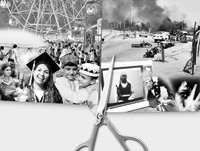 threat to the state posed by the pseudo-religious militancy, especially in
the Federally-Administered Tribal Areas and parts of the
feudally-administered Frontier province. Nor is it possible to exaggerate
the difficulties the security forces are facing in the course of their
dangerously delayed and spasmodic campaign to rid the land of the
terrorist menace.
threat to the state posed by the pseudo-religious militancy, especially in
the Federally-Administered Tribal Areas and parts of the
feudally-administered Frontier province. Nor is it possible to exaggerate
the difficulties the security forces are facing in the course of their
dangerously delayed and spasmodic campaign to rid the land of the
terrorist menace.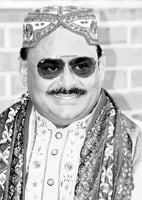 Karachi, encountered something which she describes as a frightening
experience. "I follow the news everyday. I knew about the
announcements that Taliban had entered Karachi, but I could never imagine
the intensity of the situation till some young men knocked at our door and
warned us of a serious threat."
Karachi, encountered something which she describes as a frightening
experience. "I follow the news everyday. I knew about the
announcements that Taliban had entered Karachi, but I could never imagine
the intensity of the situation till some young men knocked at our door and
warned us of a serious threat."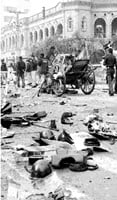 be hit. Its personnel are supposed to guard vulnerable installations as
well as intercept suspected individuals trying to explode themselves. Even
in the case of time bombs or remote controlled explosive devices, it is
these policemen who have to take the risk of searching the premises or the
carrier vehicle.
be hit. Its personnel are supposed to guard vulnerable installations as
well as intercept suspected individuals trying to explode themselves. Even
in the case of time bombs or remote controlled explosive devices, it is
these policemen who have to take the risk of searching the premises or the
carrier vehicle. number of suicide bombers entering a certain city without any follow-up
advisory for the public on how to act (in the 'possible' presence of a
suicide bomber) have only helped the objectives of the terrorists.
number of suicide bombers entering a certain city without any follow-up
advisory for the public on how to act (in the 'possible' presence of a
suicide bomber) have only helped the objectives of the terrorists.