



|
|
|
|
 |
 |
  
|
attack arts
Business of art Purity of
musical expression
It is time the government developed a consensus on fighting against the already identified terrorists and mobilising the people to condemn terrorism By Nadeem Iqbal The devastating 20/11
attack has once again exposed the inadequacy and inefficacy of the security
apparatus in The list of issues that have been raised does not end here. These include: the reaction time of the law enforcement agencies after getting a tip off about a suicide attack; the post disaster management by the municipal agencies including fire fighters; damage mitigation through issuing statements to restore the shattered confidence of the public; paying compensation for the loss of life and property and to those who are critically injured; and establishment of fund for the dependents of the dead and those who have lost their body parts or have been left crippled. Just for record's sake, people who lost their cars in the July 2, 2008 bomb attack at the Danish Embassy in Islamabad have yet to receive any sort of compensation. So, in effect, only the relatives of those who get killed are paid compensation. The weekend suicide attack on the Marriott hotel Islamabad killed 53 people including the Czech Ambassador to Pakistan Ivo Zdarek, two American marines, a Vietnamese woman and a Danish official, while more than 250 people, including foreigners, were injured. The footage captured by the CCTV (close circuit TV) shows a six-wheeler dumper truck hitting a steel barrier at the hotel's main entrance. The attacker, who could not be seen in the film, opened fire on security guards, forcing them to retreat, and then blew himself up causing a small blast which set the truck on fire. In the footage, a number of courageous security guards reappear, one of them with a fire extinguisher who tries to extinguish the blaze but fails. He tries repeatedly to douse the flames as traffic is seen on the road in the backdrop. There is no sign of movement in the truck. The footage does not show the massive blast which wreaked havoc in the hotel and surroundings. Officials say the bomb contained an estimated 600kgs of military-grade explosives as well as artillery and mortar shells. It was the first incident in the capital in which terrorists used RDX, TNT explosives and Aluminium powder. Interestingly, the advisor to PM on Interior, Rehman Malik, saw the terrorist attack having links in Waziristan, while NWFP Governor Owais Ghani thought otherwise. The governor was quoted as saying, "the militants in the tribal areas of the NWFP have established firm networking (with jihadi groups) in southern Punjab and most fresh recruits for suicide attacks are coming from there. Militant leaders and commanders are also coming from Punjab. The militants' field commander in Swat too is from Punjab." All these contradictory statements notwithstanding, the fact remains that the destruction affecting all the adjoining buildings and ministers' residences and other offices occurred due to a huge security lapse. An official of the Hashoo group, which owns the Marriott hotel, told TNS that the hotel guards bravely performed their job as they prevented the bomber to enter the hotel at the cost of their lives. "The dumper which is mainly used to carry construction material like crush, bricks and sand could not cross the hotel's outer barrier and its tyres were punctured by the spikes placed at the gate. Had it entered the hotel and smashed the main building, the destruction would have been much greater. It is the government, which is responsible for security outside the hotel, that failed." According to him, the backyard of the hotel including the kitchen, boiler and CCTV recording room are still intact. The official, who has also served in the army and is involved in the post disaster management at the hotel, said that RDX, TNT and Aluminum have different effects as TNT causes blast and sends shock waves while RDX has the ability to cut the concrete structure like an iron cutter. "All these chemicals, around 800-1000 kgs, were used collectively to have optimum impact and destruction." There are many theories doing the rounds in the capital city regarding how the dumper succeeded in entering the city and from which point. Officially, the dumpers and big trucks are allowed to enter the city only after 8pm. Actually, heavy traffic keeps moving all day on the main Kashmir highway which is in close proximity to the Red Zone. On Sept 20, when the terrorist act was carried out, the iftar time was 7:17pm while the dumper reached the hotel at around 7:44pm and the blast occurred at 7:49pm. It appeared on the scene from the direction of the nearby PTV building which was heavily guarded because it is closer to the Federal secretariat. One theory is that the truck loaded with ballistic material had entered the city via 9th Avenue at the time of Iftari and took the VIP Margalla Road to reach the road in front of Marriott. It crossed the Hotel from the other side of the road and took a U-turn from the road cut in front of the Evacuee Trust building and reached the hotel gate. This entire movement of the dumper remained unchecked even though there was the threat of an attack on the city and all the important personalities of the country, including the army chief, were in the vicinity. This reality has sent shock waves among the residents of Islamabad. The blast itself has affected the financial activity of the city. Apart from the hotel, the adjoining Evacuee Trust building housed dozens of IT offices, call centre, etc. Similarly, there offices of leading international NGOs, donor agencies and educational institutions in the vicinity. Many schools have been closed, citing unavoidable circumstances as the reason. The truth is that the blast has touched the high-ups and elite of the country even though a majority of those who got killed were poor people. The prevailing perception among the masses is that if the country's security agencies have failed to defend the sovereignty of the country, then they should let the Americans violate it. Already, US-led troops in Afghanistan are believed to have a tacit approval of the government of Pakistan to hit at terrorists' hideouts inside the semi-independent Federally Administered Tribal Areas. There's one thing that the Marriott incident has reaffirmed, though, even among people who did not believe it till now; that Pakistan is not fighting America's war but its own. This fact that needs to undergo some kind of a reality check; the federal government must now develop a consensus among people on fighting against the already identified terrorists and mobilising them to condemn terrorism which is killing the innocent people of this country. A personal narrative Never before in my life have I been a witness to such a scene of horrific devastation… My sister's call from Chakwal, inquiring whether I was safe because there had been a truck bombing of the Marriott Hotel, put the sound of explosion we had heard a little earlier into perspective. Four of us -- myself, Jawad, Fatima and Hamza -- bundled into the car and headed straight to the site of the mayhem. We must have been among the
very early arrivals on the scene, reaching there some time after 7:50pm.
After parking our car along the Ataturk Avenue, we rushed towards the
Marriot. Beyond the injured man, I saw big singed, burnt out twigs coming off the trees and lying about on the road leading to the Marriot from the Super Market side. Suddenly my eyes fell upon the disquieting scene of a few spots of congealed blood plastering the road. I figured out that the impact of the massive explosion must have injured people who were on the road far away from the Marriot. As I inched towards the hotel, the scale of mayhem slowly began to reveal itself. I saw the cars parked on the roadside, far away from the hotel, badly dented, their windscreens cracked. The scene at the entrance was one of huge unquantifiable shock. I found cars parked in the hotel's parking lot melted, with their sitting occupants reduced to coal; a cargo of dead bodies strewn near the entrance; a deep hole in the ground created by the truck carrying explosives; the hotel lobby utterly destroyed. Never before in my life have I been a witness to such a scene of horrific devastation. Doubly burdened by a mixture of deep grief and utter shock, I texted incoherent messages of what I felt and saw. Ambulances arrived on the scene and began the work of removing mostly dead people to the hospitals. With time, the crowd began to thicken. I heard one of the blood spattered survivors shouting into his cell phone that the number of dead could be in hundreds. As time passed, the Marriot Hotel became a ball of fire within full sight of the crowd. When I arrived, only one portion of the hotel was engulfed in flames. Within a short space of time, the fire engulfed the whole building with little visible action made by rescue services to contain it. They lolled about as the fire spread to the entire hotel. I thought the quality and quickness of response could have contained the damage and saved a few more trapped human beings. Something, I suspect, is never going to change in Pakistan. Quick and robust response to disaster is a dream. Perhaps this sloth and indifference is rooted in the low respect we accord to human life. Reading an account of Czech ambassador's unavailing cries for help in the next day's paper brought tears to my eyes. When would the unceasing round of training workshops on disaster preparedness translate into saved human lives? I thought we need to get tough, unreservedly, on terrorism and the causes of terrorism which is a growing menace to our national fabric. Partisanship, dual-faced policy can only prove terminal to our existence. The prime test of our governments is providing a sense of safety to the people. And this sense of security of life and limb should inhabit both the gates of Wah factory and the Marriot Hotel. -- Arif Azad
Previews are 'dry' rehearsals of the actual exhibition even though these are arranged with positive motives By Quddus Mirza Safdar Ali Qureshi, the
miniature painter, recently approached a public gallery in Lahore to have a
preview of his Qureshi is not the only artist who has asked for this favour; several others now prefer to hold such previews prior to their exhibitions at other places, especially outside Pakistan. In all probability, it was R.M.Naeem who began this trend by showing his works in Lahore before holding his exhibition at Canvas Gallery in Karachi. This was picked by many artists who held previews before sending their works to international exhibitions, including one person shows, biennale, triennials and art fairs (like the recent Dubai Art Fair). The whole idea of having a preview ahead of the actual exhibition is a new phenomenon and needs to be explored. One assumes that the artists genuinely wish to share their creative output with their audience, who can not travel to other places. So it is a way of connecting with their immediate environment. The preview is held, usually for a day only, in order to showcase it to the local public. It is important because, for a number of reasons, our art is developing/splitting into two streams -- local and international. Although both are made by artists based here, the 'local' art is created for the local viewer, gallery and collectors, while the 'international' art is primarily made for the audience abroad -- the size, price and visual content of these art works cater to a different set of curators, galleries and collectors. The decision to exhibit in a gallery – mainly the private and commercial space -- means that an artist is willing to sell his work but the whole idea of exhibition is not only about selling: More than that, it aims to invite a response and review on one's effort. So, in an exhibition, both the activities -- of marketing one's recent outputs and of having a critical dialogue on it -- take place simultaneously. The recent trend of previews at one place and the actual exhibition at some other have segregated the two aspects. On the occasion of the preview, it is understood that the viewers are invited to see the work, but they can not purchase it or come to look at it again, since it is mostly held for a single day. On the other hand, when the same work arrives at its final destination, the audience are entitled to not only enjoy the work, but to collect it and have the possibility of viewing it more than once. In a strange sense, previews are 'dry' rehearsals of the exhibition even though these are arranged with positive motives. They signify a growing divide in our art. Because, generally, the works shown in previews are unconventional in appearance, format and dimension (huge pieces, video installations, digital prints or uncommon materials) with huge price tags, fit to be paid by foreign connoisseurs only. The preview reaffirms that some of us are mere spectators, while others are real players. Usually the public which is invited to a preview is not considered capable enough to appreciate the work wholly, because it is the other 'real' audience that is waiting at some distant venue. This tendency (in most instances carried out for good reasons) has created a gulf between the art practices of different kinds in our midst, like the grower of good quality mangoes in Multan, who witnesses and observes the ripened fruit of excellent quality in his hometown, but is unable to have a bite because it is intended for other destinations. Similarly, the viewer of art in Lahore or Karachi comes to a preview, knowing that he will see an art that is too important, sophisticated and valuable, because it is displayed for a very short period before it is packaged to other, more prestigious, venues. Apart from preview art, what we have is usual exhibitions of works that are manufactured for home markets. Lines of abstract paintings coming out of Mashkoor's studio or landscapes by Lahori artists, nomadic women drawn in suggestive poses and attires by a number of artists (ranging from Saeed Akhter to Moazzam Ali) fill up our galleries. These occupy our public spaces because the other, more serious, contemporary and cutting-edge work – including modern miniature -- is drifting away from our art world. It is glimpsed only in the preview, consolidating the fact that the audience in Pakistan is not ready or capable enough to appreciate it fully or house it properly. This situation demands a revision in the practice of previews. Perhaps, the artists need to have full scale exhibitions of their works in galleries here, instead of one day shows. Thus, they will be able to bridge the gap between the audience at home and abroad, and make themselves and other believe that the local viewers are also entitled to enjoy works of great aesthetic value and high price. One hopes they adopt such an inclusive approach soon. Meanwhile, the present practice reminds one of what one Noble Laureate, poet Derek Walcott, wrote about another Noble prize winner from his homeland, Caribbean. Walcott says there is no one who can write a better sentence in English today than V. S Naipaul, only if he considers that people from his own homeland are also human and deserve his attention. Revisiting the phenomenon of art as investment in the wake of an exhibition by NCA Miniature graduates of class 2008, held at Gandhara Art in Karachi By Nafisa Rizvi For almost five years now,
the art world has been reeling from the ecstatic shock of gravity-defying
prices paid for The skyrocketing prices of art in recent years partly reflect booming financial markets, with hedge-fund managers delving into collecting and the creation of new wealth in Russia and China. Those factors have fuelled speculative investments from stocks to real estate. In the case of art, however, the attraction is twofold: investment potential combined with the social cachet of owning landmark pieces. Christie's sold approximately $154 million worth of artwork in October 2007 compared with the $83 million it made at those sales in 2006 and $33 million in 2005. Sotheby's sold 387 works at its London auctions in 2007, compared with 254 last year and 206 the year before. The Swiss bank UBS has an Art Banking division set up just 10 years ago, to facilitate their HNWIs as they are called (High Net Worth Individuals) to add art works to their investment portfolios. There is no word yet on how collectors have reacted to the most recent meltdown, but naysayers had been predicting a reversal of fortunes in the art market. However, research has shown that art does not suffer the debilitating effects of economic busts as much as other sectors. Meanwhile, the resonant
echo of the art boom is reverberating across the art galleries and drawing
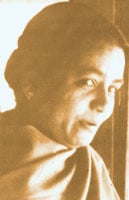
rooms in But the question to be asked is whether, for aspiring artists, this signals a grand turn-around for penurious artists or a transformation of the art industry into a fly-by-night haven for savvy marketers who want to skim the market without worry of professional progression or authenticity? Many young pocket-laden individuals in Pakistan are looking at art as investment though they are as yet hesitant and apprehensive as art has proven to be a little more complex than real estate and analytical predictions of value increases are hard to come by. So far, the market has been small and cliquish and we have followed home-grown benchmarks: buy reputed artists' works and wait for them to pass away before re-selling the work for many times more than the amount paid. Unfortunately the situation is not so cut and dried any longer. Fresh graduates are demanding almost as much as artists who have been working for decades. This quirky phenomenon infecting the art market in Pakistan is not about quality art being bought by perceptive, well-informed collectors. It is darker than that. Not all artists have the inclination or stoicism to walk the impecunious path which in no way speaks ill of them. In fact it denotes determination and faith in one's own talent. It is true that the recent 'big bang' in art may give many artists the chance at better lives and more fruitful careers because sales encourage artists in more than just monetary ways. It helps them invest in their materials and in the exploration of new ideas and innovative media. It helps in widening their exposure to and interaction with the art of the world, opening up forums for debate and interface. But the debate isn't that simple. The "Case of the High Priced Neo-Miniature" is confounding. An unabating surge of Neo-miniaturists has taken the country by storm. Since Shahzia Sikander took the pioneering plunge and produced a restructured and re-valuated version of miniature, and then went on to earn kudos (and millions) for her work across the globe, the miniature department at the NCA and other prominent art schools have become a beehive of activity with just the NCA churning out 8 to 10 students annually. At some stage the miniaturists decided for themselves that they would price their work high because the creation of the wasli was exacting and laborious as was the subsequent rendering of the image with the single-haired squirrel haired brush. This plausible-sounding justification struck home and stayed though it should have been argued that other media like installation or oil painting or printmaking are just as labour-intensive. And while the stage was set for the sale price of the miniature, little thought was given to the conceptual process and the development of the cerebral passage with which all art must be imbued to succeed. An exhibition of works by NCA Miniature graduates of class 2008, held at Gandhara Art in Karachi, was a sad reflection of the level of mediocrity and falsehood that the form has been reduced to and the sheer self-indulgent gluttony of 21-year old artists who are demanding phenomenal prices for works that speak loudly of appropriation or banal unresolved ideas. One of the works used the sewing thread and cloth as metaphor, a subject that has been explored extensively by a senior miniaturist Sumaira Tazeen. Another work was a microscopic representation of the hand woven cloth, a concept that has been used with greater understanding and skill by artist Mohammad Talpur. It is true that the representational and naturally reductive qualities of the neo-miniature are appealing to buyers who may not comprehend abstraction. But it must be remembered that content and not form eventually makes the art great or insignificant. It must denote the kind of metaphysical and personal authenticity that is easily recognised when it exists and rankles when absent. There are very few artists or sculptors like Shahid Sajjad who have plodded through their lives creating extraordinarily monumental works, expecting little in return in terms of acknowledgement or financial gain. Or Ahmed Pervez before him who expected so much but got so little in return. But artists like these can rest assured that their place in history has been marked and set aside for them as reward for the gargantuan legacy they have left us, which is rich, fulfilling and authentic because their work reflects lives lived and experiences experienced. What the neo-miniaturist can look forward to is a question they must ask of themselves before they sell another piece of art. Annapurna Devi is a traditionalist, a quintessential musician who plays for herself By Sarwat Ali To many Annapurna Devi is
one of the greatest musical minds of the contemporary generation, but to most
she is The reason is simple; she is a woman and it was and still is considered a taboo among hereditary musicians to let their women perform in public. In her case, it was even more acute because her elder sister Jahan Ara had separated from her husband when she was heard singing by her in-laws. Being the daughter of Ustad Alauddin Khan, she had music in her blood and she grew up amidst two great musicians, her brother Ali Akbar Khan and her future husband Ravi Shankar. It would not be wrong or an exaggeration to say that she was the real strength behind the two but she stayed in the shadows, living through her brother and father's disciple, feeding them, teaching them, encouraging them and thus enabling them to become the two very well-known musicians in the second half of the twentieth century. Annapurna was not given any proper music education till her father unsuspectingly heard her sing and play the surbahar. During the riyaz session of her brother Ali Akbar Khan, in particular, she often sang and played the correct tonal permutation while her brother struggled to do the same under the furious supervision of the father. They were both initially taught dhrupad in the Maihar Senia tradition. She was named Annapurna
Devi by the Maharaja of Maihar, where Ustad Alauddin Khan was a court
musician while Uday Shankar had initially set up his centre at Almora but it collapsed and Ravi Shankar was thrown out of work. He then joined the Indian Peoples Theatre Association and composed music for their films especially Dharti Ka Lal but it was not financially paying. And the financial disaster of the audiovisual grand experiment "Discovery of India" based on the writings of Jawaharlal Nehru done under the aegis of Indian Renaissance Artists forced him to do concerts. He even asked Annapurna Devi to play with him. He then joined All India Radio Delhi, as Director of Music of the External Services Division. He then started to tour internationally and became a star and a cult figure. He resigned from the Radio in 1956 and performed full time all over the world, staying away from his wife for extended periods of time. This was the wont of women of hereditary musicians. Since the musical knowledge and the secrets of the trade were encapsulated in families as the blood and teaching lines guaranteed a transmission of musical knowledge in its exclusivity, the women/mothers played a vital part in this familial nexus. The mothers, being the daughters of musicians themselves, were fully versed with the craft of music and when they became mothers it became their duty to bring up the children, the boys in such a manner that they became musicians. Now much more is known about Annapurna Devi as her authorised biography, written by Swapan Kumar Bondyopadhyay, has been published. It is the sign of changing times that she came out of the shadows and became a full fledged performer. Annapurna's first concert was before the Maharaja of Maihar Brijnath Singh and then she teamed up with her husband in the 1950s while she joined the Ali Akbar College of Music in Calcutta which her brother had set up. The distance between Ravi Shankar and Annapurna Devi had started to widen and while she stayed at home, either in her father's house or in India, Ravi Shankar travelled and performed. They were finally divorced in the early 1970s. Annapurna Devi was then asked by her brother to join the Ali Akbar College which he had established in Calcutta. There she taught the list of her shagirds gives a good indication of her musical prowess because it includes Nikhil Bannerji, Hariprasad Chaurasia, Amit Bhattacharyia, Nityanand Haldipur and Suresh Vyas. Their only son, torn between the mother and father, died an unhappy man in 1992 in the United States. Annapurna Devi is very much a traditionalist, a quintessential musician who plays for herself. Different from Ravi Shankar who is much more conscious of the changing taste in music and often tailors it to suit the popular sentiment. She did not often approve of his showmanship and pandering to larger audiences. Ravi Shankar's innovations were more in synch with changing times while that of Annapurna Devi were more on the lines of the purity of musical expression. It is usually said that her music was eight percent of her father Ustad Alauddin Khan's while Ali Akbar's was seventy percent and Ravi Shankar's forty percent.
|
|
 preventing acts of terrorism. There has indeed been an over-emphasis in
protecting high profile buildings like the parliament, the PM house and the
presidency, leaving big gaps where terrorists can outsmart the law enforcers.
preventing acts of terrorism. There has indeed been an over-emphasis in
protecting high profile buildings like the parliament, the PM house and the
presidency, leaving big gaps where terrorists can outsmart the law enforcers.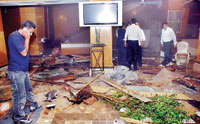 The first sight of the tragic scene was depressing and gave a stark
intimation of what I was to see later in terms of destruction -- human and
non-human. A few yards from the parking lot, I saw a bulky, sturdy European
man, wearing spectacles, a little shaken but still in full possession of his
senses, trying to block bleeding from his forehead, and requesting his helper
to take him to the hospital.
The first sight of the tragic scene was depressing and gave a stark
intimation of what I was to see later in terms of destruction -- human and
non-human. A few yards from the parking lot, I saw a bulky, sturdy European
man, wearing spectacles, a little shaken but still in full possession of his
senses, trying to block bleeding from his forehead, and requesting his helper
to take him to the hospital.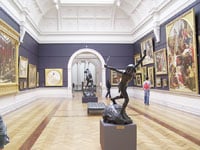 work, which was scheduled to be held at a commercial gallery in Karachi
later. The young and energetic curator of Lahore's public gallery politely
declined his request -- on the pretext of lack of space, shortage of time and
some other such excuses. Basically, she did not agree with the idea that the
gallery space should be utilised to market the artist or advertise works
which are going to be sold at some other venue.
work, which was scheduled to be held at a commercial gallery in Karachi
later. The young and energetic curator of Lahore's public gallery politely
declined his request -- on the pretext of lack of space, shortage of time and
some other such excuses. Basically, she did not agree with the idea that the
gallery space should be utilised to market the artist or advertise works
which are going to be sold at some other venue. art works at auctions and private sales. Damien Hirst's infamous
8601-diamond-encrusted skull entitled "For the love of God" fetched
a record breaking US$ 125 million in 2007 (source ABC News ) though it still
didn't beat the sale price of Jackson Pollock's No. 5 drip painting of US$
140 million in 2006(Source NY Times).
art works at auctions and private sales. Damien Hirst's infamous
8601-diamond-encrusted skull entitled "For the love of God" fetched
a record breaking US$ 125 million in 2007 (source ABC News ) though it still
didn't beat the sale price of Jackson Pollock's No. 5 drip painting of US$
140 million in 2006(Source NY Times).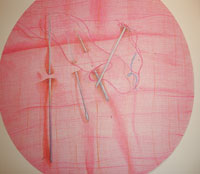 Pakistan too. There has been a meteoric rise in interest in art and a
simultaneous corresponding explosion in prices of art works. At a Christie's
auction in New York, Rashid Rana's work "A Day in The Life of
Landscape" was sold for an unprecedented US$ 133,000, more than any
Pakistani artist has ever sold for, surpassing even Shahzia Sikander. Rashid
Rana's work is spectacular in its quiet understated thoughtfulness.
Pakistan too. There has been a meteoric rise in interest in art and a
simultaneous corresponding explosion in prices of art works. At a Christie's
auction in New York, Rashid Rana's work "A Day in The Life of
Landscape" was sold for an unprecedented US$ 133,000, more than any
Pakistani artist has ever sold for, surpassing even Shahzia Sikander. Rashid
Rana's work is spectacular in its quiet understated thoughtfulness.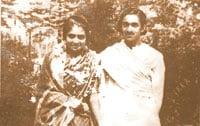 not even known for her prowess in this field.
 she was named Roshan Ara by her parents. Ravi Shankar was a dancer in his
brother's troupe but after hearing and seeing Ustad Alauddin Khan who had
joined the troupe, he decided to switch to playing the sitar and he moved
from the glitter of the performance circuit and international tours to the
backwaters to live almost the life of a hermit. Uday Shankar had toured
Europe in the early 1930s and then again in 1935 taking Baba Alauddin Khan
along after Timir Baran had left the troupe. As Uday Shankar set up his abode
in Almora, Ravi Shankar became the shagird of Baba Alauddin Khan in
ashram-like environs around 1938 in Maihar. There he met Annapurna Devi, the
daughter of his guru, married her and soon had a son Subho Shankar.
she was named Roshan Ara by her parents. Ravi Shankar was a dancer in his
brother's troupe but after hearing and seeing Ustad Alauddin Khan who had
joined the troupe, he decided to switch to playing the sitar and he moved
from the glitter of the performance circuit and international tours to the
backwaters to live almost the life of a hermit. Uday Shankar had toured
Europe in the early 1930s and then again in 1935 taking Baba Alauddin Khan
along after Timir Baran had left the troupe. As Uday Shankar set up his abode
in Almora, Ravi Shankar became the shagird of Baba Alauddin Khan in
ashram-like environs around 1938 in Maihar. There he met Annapurna Devi, the
daughter of his guru, married her and soon had a son Subho Shankar.
