



|
|
|
|
|
 |
 |
   |
analysis Newswatch firstperson terrorism Time
running out? Limited
choices agriculture Setting
new records
analysis By Arif Azad The second part of the
long-awaited financial crisis to engulf the United States, and by
extension Sensing spreading panic in the world stock markets, the US government duly stepped in, on September 17, to nationalise AIG, the insurance giant. If AIG, with assets of more than $1 trillion, were to collapse too, this would have had global economic effects. Similarly, major banks and financial houses are in the line of fire ignited by the 'assets bubble' in the last few years. It seems we are witnessing the whole edifice of global finance on fire, with flames leaping to all continents. Indeed, the present crisis is of such a serious nature that it is already been compared to the Great Depression of the 1930s. The crisis did not sprout out of nowhere though. The first part of the current crisis -- or its dress rehearsal -- landed as a warning shot six months ago when, hinting the impeding crisis, the US government bailed out Freddie Mac, one the largest government banks in the US, followed by Britain's nationalising of Northern Rock in August. How the crisis unfolded
can be traced to an unprecedented consumption boom in the US, mainly due The low interest rate policy led to an unprecedented credit availability and consumption binge in the US. The latter was equally shared by the rest of the world, which saw consistent economic growth during this period. The world's prosperity depends largely on America's trade deficit, which allows 'surplus countries' (with a stock of surplus dollars earned out of exports to the US) to invest heavily in US treasury bonds, quasi-governmental bonds and asset-backed securities. The US conveniently looks the other way despite clocking up a huge deficit, simply in the belief that dollars accumulated by 'surplus countries', such as China, have nowhere else to go. However, America's trade deficit is not without problems of its problems; when it is high, more US bonds have to be printed to meet the gap. When trade deficit evens up or trade goes in surplus, US bonds shrink in supply. Trading countries with surplus dollars invest first in US bonds, and then in quasi-governmental or government sponsored enterprises, such as Freddie Mac, and asset-backed securities by the private sector. In the 1990s, when America's trade was in surplus or near surplus, foreign capital was invested in quasi-governmental-type bonds that led Freddie Mac and other similar financial houses to invest heavily in the housing market. This, naturally, led to a phenomenal boom in the housing market. After early 2002, foreign investment started going into asset-back securities operated by private finance companies that relaxed credit-lending conditions to a disturbing level. These companies doled out mortgages, right and left, to everyone wishing to step onto the property ladder. Such mortgages came to be known as 'ninja' (no income, no job and no assets) mortgages, because they were not backed up by collateral. These trends led to an extraordinary consumer consumption and property boom in the US. The housing market in the UK also travelled a similar trajectory. The double boom of housing and excessive credit creation led to a massive consumption boom in the US, which lifted other economies of the world as well; China's ever-booming economy also owes largely to exports to the US. It seemed for a moment that capitalism was succeeding in its prime purpose of spreading prosperity, which lifted the spirit of the apostle of capitalism -- the US. However, this did not turn out the way free-marketers had planned it, as proved by the unfolding events. From 2003 onwards, farsighted economists began to whisper that the asset and housing bubbles were vulnerable to a sudden burst anytime soon, because neither was the assets backed up by capital nor were the generous mortgages doled out hedged with collaterals. This was a recipe for disaster. The monster of loan default was the first to rear its head, leading to a steady fall in the prices of houses in both the US and the UK. It was followed closely by credit crunch. The result was an increase in house repossessions and bad debts in the two countries. This trend is at the heart of the current financial crisis, leading to predictions of prolonged recession, in the US. Its first sign appeared when the mortgages lending giant, Freddie Mac, came close to collapse, only to be saved by the US government at the last minute. The UK followed suit with the copycat buyout of Northern Rock in August. These temporary measures did not address the systemic problem that resulted in the unprecedented collapse of Lehman Brothers only one month later. What lessons are inherent in the current financial crisis? First, unrestricted flow of capital under the guise of globalisation is not a good idea. During the East Asian crisis, Malaysia was able to shield itself from the worst effects of financial crisis by staunching the flow of capital. This calls for greater regulation of capital and speculative financing. Second, the prevailing wisdom that market is the ultimate arbiter has received a serious blow. With intervention of both the American and the British governments, the principle of the continuing relevance of state in the regulation of economy has been re-established. Thus, the long-ruling orthodoxy of unbridled free-marketism espoused by Milton Friedman and his acolytes is on retreat, while the Keynesian model of economy gaining its lost ground. In broader terms, the model of free-market democracy stands thoroughly discredited for the moment. The long-glowing bonfire of free-market vanities seems to be nearing its logical end, with social democratic model of economic management replacing it. (Email: arif_azad6@hotmail.com)
Newswatch Who armed Iraq? By Kaleem Omar During the months leading up to America's invasion of Iraq in March 2003, hardly a day passed without the Bush administration claiming that Iraq's so-called 'weapons of mass destruction' posed (in President George W Bush's words) "an imminent threat to the national security of the United States and its allies", and that that was why Iraq had to be disarmed and Saddam Hussein's government removed from power, by military force if necessary. The irony, however, is that the very same United States, the world's leading arms exporter, spent more than 10 years shipping chemicals, biological seed stock and biological weapons to Iraq, because Iraq was then engaged in a war against Iran at the behest of the US. In those days, Iran was America's Middle Eastern Enemy No 1 and Saddam Hussein was Washington's blue-eyed boy. According to the weapons declaration that Iraq submitted to UN weapons inspectors in December 2002 in compliance with a UN resolution, American and other Western companies played a key role in building Iraq's war machine. The 12,000-page document contained a list of Western corporations and countries -- as well as individuals -- that exported chemical and biological materials and arms to Iraq during the decades of the 1970s and 1980s. Embarrassed, no doubt, by revelations of its own complicity in arming Iraq, the US hijacked the Iraqi declaration and censored the entire dossier, deleting the names of more than 100 Western companies and groups that profited from selling lethal materials and arms to Iraq, before giving copies of the document to the other members of the UN Security Council. The censorship came too late, however. The long list -- including names of large US corporations Dupont, Hewlett-Packard and Honeywell, among others -- was leaked to a German daily, Die Tageszeitung. Despite the Security Council cover-up, the truth came out, though it was largely ignored by the mainstream American media. A German company, for example, exported 1,000 ignition systems for Styx and Scud missiles capable of carrying biological and nuclear warheads (although Iraq had no nuclear warheads). Alcolac International, a Maryland-based US company, transported thioiglycol, a mustard gas precursor, to Iraq. A Tennessee-based US manufacturer supplied large amounts of a chemical used to make sarin, a nerve gas implicated in Gulf War diseases. Phyllis Bennis, author of Before and After, noted that "the highest quality seed-stock for anthrax germs (along with those of botulism, E coli and a host of other deadly diseases) was shipped to Iraq by US companies, under an official US Department of Commerce licence, throughout the 1980s." A US Senate banking subcommittee report in 1994 confirmed that US shipments of biological germ stock to Iraq continued well into 1989. According to Judith Miller, in Germs: Biological Weapons and America's Secret War, Iraq purchased its seed stock -- its 'starter germs' -- from "The American Type Culture Collection", a supply company in a Washington, DC, suburb. The Reagan-Bush administration maintained cordial relations with President Saddam Hussein in the 1980s, promoting and supporting Iraq's eight-year war against Iran. Donald Rumsfeld, later US Secretary of Defence in George W Bush's administration, visited Baghdad several times as Reagan's special envoy in 1983 and held meetings with the Iraqi president, assuring him that Washington wanted to normalise relations with Baghdad. Twenty-four US firms exported arms and materials to Baghdad. France supplied Iraq with 200 AMX medium tanks, Mirage bombers and Gazelle helicopter gun ships. As then-US Assistant Secretary of Defence Richard Armitage (later Deputy Secretary of State in Bush Junior's administration) testified at a congressional hearing in 1987, "We cannot stand to see Iraq defeated." That's the same Iraq that the US invaded and occupied in March / April 2003. As Paul Rockwell noted in an article posted on the website of San Francisco Chronicle, the CIA, the State Department and the Central Military Command, directing Middle East operations, were well aware of Iraq's biological-weapons efforts in the 1980s. Nevertheless, Iraq's applications to the US Commerce Department for licences to import chemicals and other materials from American firms were seldom denied. The infamous massacre at Halabja -- the gassing of several thousand Kurds -- took place in March 1988. Six months later, on September 19, a Maryland-based US company sent 11 strains of germs -- including four types of anthrax -- to Iraq, including a microbe strain called 11966, developed for germ warfare at Fort Detrick in the US in the 1950s. The vast, lucrative arms trade in the Middle East created the groundwork for Iraq's invasion of Kuwait in August 1990, with April Glaspie, the then-US ambassador in Baghdad, playing a key role in baiting the trap by assuring Saddam Hussein during a meeting a week before the invasion that Washington regarded the dispute between Iraq and Kuwait as an internal affair between the two countries. The Iraqi president took this US assurance to mean that he could invade Kuwait with impunity. In the months leading to the US invasion of Iraq in March 2003, as Rockwell noted, the weapons inspection process in Iraq spawned a host of questions about US policy. Why weren't US and European scientists, who invented and produced lethal materials for Iraq, subjected to interrogation like their Iraqi counterparts? Were US companies supplying deadly material to other dictators? Why were there no congressional hearings on the US role in arms proliferation? And how many US senators were taking campaign contributions from American arms firms? The US exports more weapons than all other countries combined. As Rockwell noted, "No despot, no monarchy, no medieval insurgency that can be exploited, no regime of terror seems to be off-limits to the sale of arms for profit." From 1983 to 1988, Siad Barre, the then-dictator of Somalia, received from the US 155mm howitzers, 20mm Vulcan air defence guns, light artillery pieces, mortars, anti-tank rocket launchers, a mass of firearms and millions of rounds of ammunition. By 1989, its precious desert water holes demolished, the impoverished country was in open revolt. When Siad Barre fled, he left the country in ruins, leaving all his US weapons behind -- the very weapons that enabled warrior clans to bring down US Black Hawk helicopters and kill 70 US and UN humanitarian troops. When 18 American soldiers were killed by tribal guerrillas in the streets of Mogadishu, the US pulled its forces out of Somalia, leaving 4,000 Pakistani UN peacekeeper troops to maintain law and order. The Pakistani forces remained there for several years. Today, Somalia, which didn't even have a government in the 1990s, is still awash with US weaponry. The moral of the story is that while arms traffic may be very profitable for US companies, like General Dynamics and Lockheed Martin, it can be deadly for developing nations.
For the people I believe that a city reflects a society's values and a city also creates these values; it creates a way of life By
Rabia Ezdi, By education trained in
economics and history, Enrique Penalosa has done much beyond the scope Although he is best known for developing the TransMilenio, a bus-based mass transit system for Bogota, Penalosa's vision runs deeper and encompasses not only engineering solutions but also a way of valuing human life. Some of his most notable achievements for the city include development of an affordable housing for the poor; upgrading of slums, and improvement of schools, community centres and libraries; reclaiming of pedestrian space from motorists; introduction of thousands of kilometres of green public space; and a drastic fall in the crime rate. Despite the many
accomplishments, Penalosa says his visit to Pakistan is not in the
capacity of The News on Sunday: As the mayor of Bogota, you took steps that tremendously improved the quality of life in the city. What motivated you to focus on social equality, sustainability and improvement in urban life? Enrique Penalosa: We are not just talking about a city; we are talking about life. What is it that makes us happy? How can we live better lives? That is what we do, as individuals and society, all 24 hours a day. This is the focus of our lives: how can we live better lives? So, it's closer to religion than to engineering. I am often invited to forums, particularly environmental forums, in advanced countries and, of course, I am concerned with the environment, but what I was trying to construct was social equality and quality of life, so that people live better. I have been working in many countries throughout the world. On a personal note, I grew up in a home where my father was more interested in public issues than private business. He had a rural agrarian land reform institute and was interested in how to make the country more just. So from a very early age, I was obsessed with how we could become economically developed, and especially with how we could have more equality, more social justice. Of course, as the French used to say, anybody who was not leftist in his youth has no heart. I went to a university in the United States on a soccer scholarship. I soon realised that socialism didn't work and that economic development would come sooner or later, but we were in the midst of urbanisation and that was the greatest historical challenge of our time -- the way we build cities will determine the way people will live for centuries and may be for the next thousands of years. In 1975, Latin America was going through a similar phase as Pakistan is going through nowadays. Latin America urbanised between 1950 and 2000. It was a huge urban migration process and exactly the same thing is happening in Asia now between 2000 and 2050. But I feel anguish, because I feel that we missed a fantastic opportunity in Latin America. We made very bad cities. We should have made cities that were much more humane, with many more parks, with a fantastic pedestrian network. For example, one piece of land that we do not save for a park is lost for the next 2000 years. If you are able to save a 50-acre park, you will make people happy for the next 2000 years. Many generations of children and the elderly will benefit from it. There are many other things that you can correct later on (for example, if you don't have hospitals and schools, you can build them later), but if you don't save land for parks, this is lost forever. Asia should not repeat the mistakes made by Latin America. What it takes to create a good city is not a matter of wealth or a matter of high technology; it's a matter of, first of all, knowing what we want and then making correct decisions. We are making very boring cities. We should be making cities that are much better than those in Europe or in the United States, but we are making them worse. Today, in 2008, it's much clearer what went wrong with the cities in the 20th century. The last century was a terrible detour in the evolution of human habitat, because we made cities for cars. We have been making cities for 5000 years. The first cities were mostly in Asia Minor. Until 1910, all cities in the world were still pedestrian. People walked in the streets without any fear. There were horses and people on the roads. There were trams, but they would not run you over. I believe that a city reflects a society's values and a city also creates these values; it creates a way of life. It either creates inequality and exclusion or equality and inclusion. A city speaks in every detail; it either speaks for human dignity or of a lack of respect for human dignity. Isn't it strange that even after 5000 years of creating cities, our children are still living under the threat of getting killed? It's possible to create a whole network of hundreds of kilometres of bicycle ways in this city. You need such space where you can take your baby in stroller, just walk in peace away from noise, watch people walk by, see people jog, go to the bakery and children can walk to their schools. All of these things can make society much more equal and happier. TNS: So this is your urban development model for the Third World? EP: Exactly. It's true for anyone, but the Third World is the one that has the most chances of implementing it. TNS: Do you see urbanisation as a positive thing, now that we know that most of the world's population will be living in urban during this century? EP: Regardless of whether it's good or bad, urbanisation is inevitable. There is nothing you can do about it. It's like trying to stop the sun from rising in the morning. In many societies, they have tried to stop urbanisation or to change the pattern, but it's impossible. Even in totalitarian states like the Soviet Union and China, they tried to control the way people live but they could not. It's impossible because there are thousands of variables that determine the patterns of migration. Where people will live is not something that any government can control. The most it can do is to support some middle-sized cities and provide them with infrastructure, so that they become a little more attractive. Right now we are competing for creative people and those who are at a greater risk of losing their best people are the smaller cities, because the best cities are very attractive to young people. A highly accomplished young person will prefer to live in Paris than in Lahore. I would be ready to live in Paris at $10,000 per month, but I would not accept less than $100,000 per month if I were to live in a city in Nigeria. It's easy to retain people where there is quality of life. What makes us happy is to realise our human potential, to be able to create, which takes two things -- talent and training. Cities offer much more possibilities for people to develop their own potential. Cities could be fantastic paradises; they could be so much fun. You should be able to come out of your house like children come out from their classes during break. When shopping malls replace public pedestrian space, it shows the city is sick. Shopping malls are private spaces; they are closed so they exclude the poor. I feel intimidated if I am in a very expensive shopping mall. Similarly, a poor person will also feel extremely intimidated. TNS: Do your mean to say you are opposed to consumerism? EP: Cities should be able to provide a lot of free joy. I would say there are two kinds of needs. Some needs are survival needs; for example, a house, running water, some kind of transport to go to work, etc. The other needs are those that are not necessary for survival, but they are things that can make you very happy. For example, a great public space is like a magical wand; it does not wear out. It never ceases to yield joy. It has the capacity to emanate well-being. A good city offers free happiness. So the argument is not for or against consumerism, because even a street can be full of shops and it can be a beautiful pedestrian experience. However, in the developing countries, shopping malls are like private clubs from where the poor can be kicked out. TNS: What is a good public space? EP: A great city should have one or several great public spaces, and a great public space is one that is so fantastic that even the rich cannot avoid going there. Like Central Park in New York or Hyde Park in London. If you think about it, the only place on our planet to which we have free access is public pedestrian space. The difference between the rich and the poor becomes obvious during leisure time, not so much during work time. The upper income people will go to restaurants, theatres, clubs, but for the poor, public pedestrian space is the only alternative to television. When I talk of equality, I do not mean income equality; that is not possible. An advanced city is not one in which there is income equality or a high average income. An advanced city is where both the rich and the poor use public transport, like in London or Stockholm. Secondly, where both the rich and the poor use public parks. And thirdly, where there are great footpaths. TNS: During your tenure as mayor, how were you able to reduce crime by two-thirds in Bogota? EP: There is much more crime in Bogota than in Lahore, though in terms of income Colombia is much richer than Pakistan. In many ways, you are more civilised than us -- we have alcohol abuse, especially in low income groups, that is responsible for a lot of crime. We have a lot of single mothers with children from different fathers, because the fathers have abandoned the family. Above all, we have found everywhere that orderly public spaces reduce crime. In Bogota, we managed to create an environment that is much more respectful of human dignity. When you create fairness and equality, you create the concept of legitimacy. People obey the law if society is just and legitimate, and they know they will get justice. In Bogota, once people felt that society was caring for them, they obeyed laws and denounced people that broke laws. An indication of such a spirit was when the next mayor came and asked for a 10 percent voluntary tax. More than 70,000 people paid this voluntary tax, because they were satisfied with the performance of the government. TNS: Your most notable achievement was the development of public transport in the form of bus-ways or Bus Rapid Transit. Could you please tell us more about this? EP: The real conflict in a society is not an income conflict; the real conflict is for space and for fun. We understand life through symbols and ceremonies and rituals. For example, the majority of the residents of Bogota don't own cars. When you see a car parked on a sidewalk, it's a powerful symbol of lack of respect for the poor. A great sidewalk and bicycle-way shows that a citizen on a $300 bike is as good as the one in a $30,000 car. Similarly, libraries are a symbol for the poor, saying you are bright, you are valuable. On the other hand, flyovers are monuments to inequality. The question is: how does a democratic society distribute road space between pedestrians, cyclists, public transport and cars. Some things are counter-intuitive; they seem one way, but are another. What must be understood is making bigger roads does not solve traffic jams; it only postpones them for a few years. Building roads as a solution to traffic problems is like trying to extinguish a fire by adding gasoline. Moreover, when you make a bigger road, the city expands, so it also becomes more energy intensive. And when you spread out your city, it becomes difficult to provide low-cost, high-frequency public transport. The United States is a model for the world in many ways, but is a disaster in terms of road infrastructure. In the US, every time there is a traffic jam, they build a bigger road. If you have to build roads, leave two lanes for buses only. So the argument is not building bus-lanes, sidewalks and bicycle-paths instead of cars; the argument is to build these besides cars. TNS: Why did you prefer bus-ways to a rail system, such as a subway? EP: When a government wants to do a rail system, it must invest billions of dollars, because rail systems are highly capital intensive. Bus systems, on the other hand, are intensive in political capital and managerial skill, but not so much in capital. Bus-ways are more suitable for the developing countries where cost is always an issue; all you need is a separate dedicated bus-lane and well-designed bus stops. In the same cost, as a few kilometres of subway, you can build hundreds of kilometres of bus-ways. So you can achieve higher coverage and, if you want to extend the bus-way, that is also easier. TNS: What is your advice for Lahore in particular and other Pakistani cities in general? EP: The more cities and people I see, the more I realise that our problems are very similar. And the biggest problem in the developing countries is, as I said before, inequality. I think that there is a fantastic opportunity to create something that is totally different from and better than those that have been made by Latin American countries. New York City's Central Park was built before 1870, at a time when the city was much poorer than what Lahore is today, but they had the vision to create the 300-hectare park. There are two kinds of challenges in Lahore. One is to make better the city that exists today. That means 75 percent of Lahore of 50 years from now has still not been built and right now lies in agricultural fields. So what can we do? We can build pedestrian streets, greenways, bicycle ways, hundreds of kilometres of networks of parks that would crisscross the city so that people can go 30 to 40 kilometres inside the park, from one extreme of the city to the other. Bogota is not a model city -- it's a mess. But it has two things that are very relevant to Lahore. One, a 35-kilometre greenway along a corridor where a road has been proposed; and two, a 23-kilometre pedestrian street. This happened for the first time in a developing country. This kind of thing changes people; it's a monument to people's dignity. And it's very relevant to Lahore in the city's new expansion areas. In Latin America, we didn't do it because we were really dumb. We missed a historical opportunity. All it takes is that we should want to do it. You see it must be understood that a city is only a means to a way of life and every detail in a city should reflect that human beings are sacred.
The reality is that people do not trust either mighty America or the Pakistani Army that the former continues to back By Aasim Sajjad Akhtar The images of last
Saturday's attack on the Marriot Hotel remain fresh in the memory of
Islamabad's In the days after the blast, debate in the news media and some intellectual circles has centred around the question: is it time to stop conceiving of this as America's war and accepting that it is, in fact, very much Pakistan's war? It is telling that death and destruction of a tremendous magnitude has been unremitting for the best part of the last seven years, yet only incidents in which the elite feels personally affected precipitate serious introspection about what is undoubtedly the most serious of the many crises that Pakistan currently confronts. To be fair there are some segments of the intelligentsia who have been consistently asserting that this is very much Pakistan's war soon after the beginning of the American invasion in October 2001. In fact many of these same individuals have been going on about the threat faced by 'civilised society' to the forces of obscurantism for much longer. They issued prescient warnings even while Ziaul Haq was still alive and it would be an injustice to overlook their far-sightedness in this regard. But these same individuals - and the larger 'civilised society' that they presumably represent -- continue to face the same problem even after the Marriot bombing as they have faced for the best part of the last two decades. In short, a large number of Pakistanis still see the violence and terror that has become all too common across the country over the last few years to be a function of America's war; and, in the popular consciousness, the US remains the main impediment to peace and stability in the region. In part this is simply a function of the non-elite's experiences. Just as Islamabad's high and mighty have been terrorised by the 'extremists' that presumably carried out the Marriot attacks, those who are genuinely at the frontline of the 'war on terror' are far more terrorised by the bombs rained down on them by American drones and Pakistani helicopter-gun ships. Of course, over the last few months, the reign of terror spread by the so-called Tehrik-e-Taliban Pakistan (TTP) has made things a lot clearer in the minds of the majority of Pukhtuns vis-a-vis the supposed alternative to the tyranny of Washington and Islamabad. It could even be argued that if the American and Pakistani militaries could be trusted by the people of FATA and the NWFP to restore the peace and some semblance of service delivery, provision of justice and the like, the elite and the non-elite might even come to some kind of consensus. But the reality is that people do not trust either mighty America or the Pakistani Army that the former continues to back. Beyond personal experiences, the reason why so many people are still unwilling to declare the 'war on terror' to be Pakistan's war is because the 'war on terror' -- in its conception, design and execution -- is undoubtedly America's war, notwithstanding the rather farcical concoction of the 'coalition of the willing' (which in any case is fracturing quite rapidly). Does Pakistan need to deal with the genie of 'jihad' and the wider cultural repression that was initiated by Zia's regime and which has yet to be fully understood, let alone undone? Absolutely. Is this synonymous with fighting in a war that the vast majority of Pakistanis -- and ordinary people around the world -- see as a blatantly imperialist endeavour? Not at all! So in effect, while there is a considerable common ground between those from amongst the elite intelligentsia that have been warning against state-sponsored militarism and working people who have no natural affinity with orthodoxy, there is also a big and growing gulf in both sides' understanding of the world. The elite intelligentsia will not be able to bridge this gulf by simply going on a rant about how the anti-imperialist card plays into the hands of the 'extremists'. Instead it should accept the fact that the common people -- to my mind, quite rationally -- do see America as the biggest perpetrator of terror in Pakistan, the wider region and indeed the world, and then think about how we can, as a collective, address the phenomenon of 'jihad' and the demented mindset of the establishment that continues to think of it as a strategic tool. Most Pakistanis believe that there is no chance that 'jihadi' violence can be isolated and then gradually extinguished while American troops continue to occupy Afghanistan. In related vein, the Pakistan Army is also seen as an obstacle to establishment of peace, because it refuses to sever its long-standing ties with the 'jihadis', which is in many ways quite incredible given that many 'jihadi' groups appear to have broken with their patron and are now directly targeting it. In any case, as the recent incident in Swat proves (in which the authorities fired at unarmed protestors who were demanding an end to the indiscriminate violence being perpetrated against the common people by the army in the name of fighting the 'extremists') that the army is also perceived to be part of the problem, rather than the solution. In other words, those who argue that this is Pakistan's war are stuck. The people of Pakistan refuse to accord any legitimacy to the two major protagonists of this war. As it turns out, the legitimacy of those who claim to be fighting on principle against these two illegitimate militaries has also more or less dissipated. In other words, it is high time that the battle-lines are redrawn: in this fight for the future of Pakistani, Afghan and possibly other Muslim countries in Central Asia, on the one side are ordinary people, unarmed; while on the other is the most destructive and cynical Empire the modern world has even seen alongside two of its numerous proteges. Things have gone badly wrong in the once harmonious relationship between the three, but to posit that any of them, at least as they are currently constituted, can represent the aspirations of people would be simply wrong. In short, this is not our war and it never will be. The sooner this is accepted, the better, because only then can we harness the collective energies of the people to wage a struggle against all these forces of oppression. In part this means that we need to stop looking for an immediate solution to the crisis. There is none, and only when we insist on finding one do we force upon ourselves an alliance with one or the other of the three warmongers. This is not to say that the people will win in the long-run, but to some extent we have to believe that we will. The alternative is too frightening to contemplate. Time
running out? The Marriot bombing and
the fresh wave of attacks on security forces in certain parts of the NWFP Due to its wrong policies in the past, Pakistan is now faced with the devil and rock situation. On the one hand, there is external pressure for military operations against the militants. On the other hand, the people's tolerance has reached zero level due to the worsening law and order situation in the country. Whether the recent attacks were calculated ones and timed to coincide with the US visit of President Asif Ali Zardari or the arrival of US Special Forces in Pakistan, they are causing unrest and a deepening sense of insecurity among the people. As evident from the renovation of its Afghan War-era base at Warsak and unusual activities at its alleged base at Tarbela, the US Special Forces are poising to launch intensive and extensive operations in the Tribal Areas. Despite the hype created by the recent US drone attacks in Angoor Adda, the possibilities of direct operations by its special forces are remote due to strong internal and external reaction. Still, if forced to, the US can launch operations under its counter-terrorism and counter -insurgency plans. There is a general belief among the Pakistani security community that activities of the US Special Forces will not be limited to America's declared objective of imparting training to Pakistan's paramilitary forces; they can undertake counter-insurgency related operations too. Two types of forces are pitched against one other: on the one side are the US and its allies, while on the other side are those who do not want permanent US presence in the region. The 'war on terror' is being fought on different fronts all over the world. Pakistan, in particular its tribal areas, is one of the hottest regions in this war. One can witness both proxy and direct wars between the two sides. There exists an invisible alignment of regional and global powers; some are directly engaged, while others are indirectly taking part in this war. To counter each other's moves, the two sides are playing both covert and overt strategic games. With each passing day, the narrow strategic interests of the two sides are being revealed and actors and factors of strategic games exposed. At the same time, the war in Pakistan's tribal areas is becoming more direct and open. Ordinary citizens, mainly Pukhtuns, are becoming prey to the continued violence, stirred by the clash of interest between global powers. The high rate of collateral damage in the ongoing military operations has not only exposed the professionalism of the security forces but has also cast serious doubts over the motives behind these operations. The security forces have so far failed to target any of the major militant commanders in the ongoing operations in Swat and Bajaur. On the other hand, the number of civilian causalities is increasing and thousands of people have been forced to live a miserable life after leaving their native areas for safer places. The public anger has reached an alarming level, while the official claims of killing militants are not being matched the testimonies of the locals from the conflict zone. The protest on Monday against the killing of three children because of security forces' shelling on 'militant' positions in Char Bagh, Swat, is a glaring example of the zero tolerance of the devastated people. Hundreds of protesters marched towards Gulkada, Mingora, along with bodies of the deceased children. People from nearby villages and Mingora city also joined the protest and they did a sit-in near government offices. The protesters also raised slogans against the security forces. The recent terrorist acts have brought to the fore the issue of national cohesion and of consensus on Pakistan's policy and role in the 'war on terror'. The lack of transparency and national consensus in devising and implementing important national policies is raising the issues of credibility and ownership. Currently, there is a consensus on a debate in the parliament to revisit 'war on terror' policies in the light of national aspirations. Moreover, the concepts of so-called 'supreme national interest' and 'national security', which failed to keep the country united in 1970, need to be revisited. With the active encouragement and support of global champions of 'democracy' and 'human rights', undemocratic forces have repeatedly usurped power in the name of these concepts, only to deprive the people of their civil and political liberties and basic human rights. Amid the increase in militant attacks, an unprecedented external pressure and continued military operations by the security forces, one cannot rule out the possibility of increase in violence in the coming days. Time is running out fast, but still losses can be curtailed by evolving a consensus on important national issues. (The writer works with Sustainable Development Policy Institute, Islamabad. Email: aimalk@yahoo.com)
By Dr Noman Ahmed The PPP-led coalition
that came to power after the February 18 general elections has so far
shown According to the World Bank's estimates, households earning more than $2 per day make up more than 85 percent of the country's population. It is a matter of serious concern that neither market operations of current stakeholders nor state interventions have been able to generate any option worth the scale to meet the needs of the majority of this segment of the population. High risks in manufacturing, processing and related sectors have led investors to focus on land and property transactions as an enterprise. In the past, land distribution was managed as a social process under the welfare state model, but it has now transformed into a value addition mechanism and new variables of value are being attached to this emerging business. Similarly, new stakeholders have replaced the older ones. Now only individuals with purchasing power, proven credit worthiness or right connections are blessed with the role-playing prerogative in Pakistan. Thus, land and property transactions have been freed of the confines of legal and regulatory considerations, and urban and regional planning prerequisites, besides concerns of social justice. They are being governed only by crude capitalist behaviours, and weak sections of the society are not getting legitimate access even to basic housing choices for survival. Land and housing are expensive entities; even the high-income groups acquire them mostly with the help of credit. However, the low- and lower middle-income groups have almost no credit worthiness. Banking credit can be obtained only by those in Pakistan who possess stable and recognised employment, moveable or immovable assets, marketable social status, and an understanding of the banking system. Thus, credit access remains confined to those individuals who are employed in the corporate sector or own formal business enterprises, as well as are socially well connected. The poor belong to a different category; they are usually employed in the informal sector, they do not own any assets and they hardly have any connections with powerful lobbies. Though they desperately need credit to fulfil their most basic need of housing, the system does not offer them enough opportunities. The credit requirements of the low-income groups are usually of small amounts, which are discouraged by commercial banks due to increasing overheads. Except for a few micro-credit banks or organisations, this group has no other option in the formal sector. Therefore, the poor obtain credit either from moneylenders, who fleece them at exorbitant interest rates, or the suppliers of building materials. None of these options favours their socioeconomic status. Low-income neighbourhoods in Pakistani cities have been the traditional resort for those seeking houses. Many of these neighbourhoods have greatly transformed over the period of time. From sprawling low-density locations, they now enjoy the status of bustling areas of mixed land uses with relatively developed infrastructure availability. However, they can only serve as fresh locations for housing when they are re-planned and developed according to a scientifically evolved urban design scheme. This is a crucial policy matter for the government to consider, because the locational advantages of many of these places are suitable to accommodate a larger number of the urban poor. Lyari in Karachi is a typical case in point. This area is close to the city's central business district with a huge potential to be properly up-scaled with respect to housing development. From a pragmatic standpoint, a composite response is needed from all stakeholders. The government must assign priority to the housing sector in the overall policy framework. This shall have very positive consequences. The poor would receive the reassurance that the policy is being devised to address their genuine concerns. Moreover, the government should clearly spell out the roles and responsibilities of all stakeholders. Active implementation can be ensured only through following an incentive-based approach. For instance, district governments may be asked to plan and develop intelligent housing schemes; and then rewarded by a proportional increase in their developmental assistance based on performance. Real estate developers may be provided subsidised estate land for the development of housing stock to be occupied by carefully targeted needy groups. Taxation subsidies of various kinds can be created to facilitate this process. Similarly, housing finance institutions may be tasked to develop credit products that are affordable for and accessible to the majority of clientele, even with heterogeneous financial backgrounds. They may be compensated with other market-oriented incentives. (Email: nomaniconn@hotmail.com)
agriculture By Tahir Ali Pakistan inherited a
predominantly agriculture-based economy at the time of its independence. With the advancement in agriculture-technology, the productivity and contribution of agriculture to GDP and GNP should have increased, but the sector is in a shambles. High prices of various agricultural technologies and paraphernalia; poverty and, therefore, inability of the farmers to modernise their farming techniques; shrinking water resources; wastage of irrigation water; shortage of urea fertiliser; inability of the system to use all the available land and water resources; depleting land resources due to conversion of vast cultivated land into residential and commercial plots; and lukewarm attitude and criminal negligence on the part of successive governments to patronise the sector have dealt severe blows to it and, thus, to the country's economy. An acute food crisis and the resulting food inflation have engulfed the entire world, and Pakistan too is in their grip. It is shocking to say the country -- which has been lavishly bestowed with the soils, topography and climate that are suitable for year-round agriculture and which was food sufficient in not so distant past -- will have to import wheat worth more than a billion dollars this year. Though our agricultural growth target for the last financial year (2007-08) was 4.8 percent, the actual growth was recorded at 1.5 percent (which is 69 percent less than the target and 59 percent less than the growth achieved in the preceding year). In their quest for industrialisation of the economy -- a dream that has not been materialised yet due to a variety of reasons -- our rulers have been neglecting the agriculture sector. As a result, Pakistan is now finding hard to provide food to its ever increasing population. It needs to be reminded that an estimated 4.3 million people are added to Pakistan's population each year. Experts agree that empowerment of farmers, and especially of small ones, is a prerequisite for increasing the agricultural output. For example, Saudi Arabia, despite being a predominantly arid land, now exports wheat because it gave incentives to small farmers who, in turn, increased production successfully. India too announced a subsidy of $15 billion for farmers in March. Shouldn't we follow suit? Sahibzada Israr Bacha, a local farmer, tells The News on Sunday that farmers are becoming increasingly sceptical about the worth of agriculture. "As the increasing prices of petroleum products, power, fertilisers, seeds and pesticides have drastically affected the poor farmers, there is a need for offering them direct incentives. In particular, subsidies on agricultural machinery and accessories must be increased," he says. He opines that agriculture cartels who work as intermediaries between farmers and consumers take up the bulk of profits. "Their role must be minimised, if it cannot be eliminated altogether, if the government wants to make the sector attractive for farmers and if it sincerely wishes to stem the price hike in the country." Pakistan is still far from utilisation of its total available land and water resources for uplift of its agriculture-based economy. According to an estimate, of the total land area of 80 million hectares, only 21.5 million hectares is cultivable. Each year, 40,000 hectares of irrigated land is lost to water logging and salinity. Because of increasing population, that demands more food on the one hand and reduces agricultural land on the other, our current and potential agricultural land is shrinking tremendously. It has been estimated that throughout the country, every day approximately 500 acres of farmland is taken out of agriculture following the shift of tilled land into residential and commercial use, due to the booming real estate business and surging population. An estimated five to 10 percent of such land is feared to have been already lost. "The vast cultivable but untilled land should be distributed among landless peasants throughout the country," suggests Qayyum Khan, a farmer, adding that, "It is imperative that the microfinance facility is extended and banks are asked to provide soft loans for the preparation of fields and sowing of crops." Bacha says: "Hailstorms, powerful winds, torrential rains and flooding destroy crops each year, inflicting huge losses on the majority of poor farmers. I think that the policymakers should start working without delay on Prime Minister Yousuf Raza Gilani's recent announcement that his government intends to initiate a crop insurance scheme for small farmers. As the prime minister has promised, the scheme must be made as affordable and easy as possible." Haji Naimat Shah, vice-president of the NWFP Anjuman-e-Kashtkaran (tillers' association) and president of Kashtkar Development Foundation, Mardan, tells TNS that his fraternity is under tremendous duress. "We are being given bank loans at a mark-up of 15-16 percent, while industrialists get the same loans at 4-5 percent. The farmers are at the mercy of the notorious patwaris (revenue officers) who exploit the ignorance or compulsions of the helpless farmers. There is no proper system of checks and balances in the revenue department." Shah draws attention to the shortage of fertilisers in the country and informs that though the prices of urea have doubled in recent months, even then it is unavailable in the market. "These are being smuggled to central Asian states via Afghanistan in broad daylight." He proposes that domestic and animal wastes -- available in plenty in rural areas, dairy farms and poultry farms around the country -- be used for this purpose. Shah further says if the government does not come to the rescue of the overburdened farmers, many may give up the profession. "I think our successive governments have left no stone unturned to destroy the agriculture sector. With the population explosion we face and being mindful of the problems we confront, that are making it increasingly difficult for us to continue with the profession, I am afraid we are fast moving towards an Ethiopia-like situation where people have to eat leaves to live." Naimat underlines the need for increased storage capacity in the country. "Storage facility for vegetables, grains, crops and fruits should be enhanced, so that we do not have to face the 'problem of plenty' again (remember the Shaukat Aziz regime had said it exported 'surplus wheat' because there was not enough storage facility). Handsome packing is also imperative for which the government should establish local packing factories. Farm to market roads also go a long way in the development of the sector and help ensure the prosperity of the people associated with it." He is also angry at what he terms the exploitation of farmers by the sugar millers. "Sugarcane is still being purchased from the growers at a rate when sugar was available at Rs18 per kilogram. Now it is sold at Rs35 per kilogram, but purchase price for the poor farmers has not been increased." Gulraj Akbar, another farmer, says ever since fertiliser factories have been privatised, the equilibrium between its demand and supply has titled and its prices have increased rapidly. Naimat also seconds the view and urges the government to take the matter into its hands before it gets too late. He stresses that the government should import good seeds as was done during the Ayub era, which, according to him, had substantially raised the wheat output then. Akbar further says aabyana (water tax) collected from farmers in the NWFP is much higher than that in Punjab. Although Pakistan has vast water resources, the country's existing water reservoirs are faced with the problem of a decreasing storage capacity. We either have to confront the problem of plenty or shortage of water at different times in the year; with the former causing water logging and the latter diminishing the crop density and intensity. The river flows in Pakistan are highly seasonal, but it does not have enough reservoir capacity in its irrigation system to store seasonal waters. It is shameful that Pakistani governments over the last three decades have failed to construct new dams, much to the detriment of the agriculture sector and the public need for clean drinking water. "The dams built earlier at Warsak, Mangla and Tarbela on rivers Kabul, Jhelum and the Indus, respectively, have outlived their existence and now they must be supplemented with new dams," urges Roz Muhammad Khan, another farmer of Mardan. Reminding of the rainwater potential, he says small dams should be developed at strategic locations in all the provinces to preserve the rainwater for irrigation purposes. Khan adds that strategies should be devised to use the domestic wastewater for irrigation; it is used for soil fertilisation in many parts of the world. It has been estimated that Pakistan needs about 260 million-acre feet (MAF) of water annually. Of the 145 MAF water entering the canals each year, it is estimated that about 28 MAF is lost in transit and another 36 MAF in the watercourses. Hence, only 71 MAF of water reaches the fields. Of this, 18 MAF is wasted in the fields. The result is that we only have 51 MAF water actually left for crops, while 98 MAF water per year goes waste. This huge deficit can only be bridged if the available water resources are managed efficiently.
Setting
new records By Sibtain Raza Khan For a developing country
like Pakistan, where trade and current account deficits are touching
record Unfortunately, Pakistan's foreign exchange reserves are depleting at a fast pace. According to the State Bank of Pakistan (SBP), the country's foreign exchange reserves fell to $8.9 billion during the week ending September 13. Of these, $5.52 billion are with the SBP and the remaining $3.38 billion with commercial banks. A number of factors have contributed to the fast depletion of foreign exchange reserves in Pakistan, such as increase in imports, stagnation of exports and outflow of foreign investment from the country. As the demand for imported goods is very high in Pakistan, the major chunk of foreign exchange reserves is being wasted on unnecessary imported items, such as luxury cars and mobile phones. Data prepared by the Federal Bureau of Statistics (FBS) shows that the increase in the number of generators, because of the acute power shortage in the country, has also contributed to the increasing import bill. Currently, Pakistan annually spends foreign exchange reserves of $11 billion on import of petroleum products, $10 billion on imports of machinery and other raw materials, and $5 billion on food imports. The FBS data paints a very bleak picture of the economy, as the country's trade deficit has ballooned to an unprecedented $3.52 billion in only the first two months (July-August) of the current fiscal year. Experts fear that if the present trend continued, the trade deficit would reach $21 billion by the end of the current fiscal year (June 2009), which would be impossible to cover through normal inflow of remittances from overseas Pakistanis or foreign investments. Although the government has taken a number of steps, such as the imposition of additional customs duty on more than 370 luxury items, to control imports, still it would have to devise long-term strategy for improving the country's overall economic indicators. In this regard, our fast depleting foreign reserves are indicating the alarming situation and are pressing for concrete actions, rather than mere verbosity. Being an agricultural country, imports of food items should be discouraged by giving more incentives to the agriculture sector. Moreover, the record of demand and supply of agricultural products in the country should be properly maintained. Consequently, we will be able to reduce our import bill on food items. Additionally, export of food items like wheat and sugar should be discouraged. As we have seen in the past, shortage occurs locally when these items are exported; and the government has to import them at much higher rates to cater to the domestic need. Moreover, customs duty should be increased on those imported goods that are also produced locally, such as dairy products, juices, cereals, biscuits, chocolates, sauces and other food items. Similarly, import of textile items should be restricted through the imposition of additional taxes. Some people even think that the import of food and luxury items should be banned altogether. "The poor have nothing to eat and the rich are importing luxury items for themselves," Aslam, a local shopkeeper, says sarcastically. Haleema, a university student, says: "As a developing country, we cannot afford luxury items, because their import is an additional burden on our economy." Fatima, a working woman, views: "The import of unnecessary luxury items should be banned totally and only necessary items should be imported with certain restrictions." Ali Zahid, who belongs to a lower middle-income family, says: "There should be total ban on imported goods." While economists are of the view that being a member of the World Trade Organisation (WTO), with many trading partners, Pakistan cannot stop importing cars, mobile phones any other luxury items. However, we can still adopt some protectionist measures to restrict imports at a certain level. Moreover, we have seen that after restrictions are imposed on imports, many items are smuggled through different channels. Importantly, we as a nation would have to change our habit of using imported goods. According to experts, some of the recent measures adopted by the government -- such as steep depreciation in the value of the Pakistani rupee against dollar, Euro and other major currencies of the world; and announcements of tighter fiscal and monetary policies -- could help decrease the demand for imports. However, there should also be immediate introduction of strict prohibitive measures to control imports; otherwise, foreign exchange reserves would be spent in three to four months. Moreover, sensible import restrictions would also revitalise the local manufacturing sector. While the government is hopeful of getting a bailout package of $5.5-6.5 billion from international donors, yet experts suggest that it should focus on curbing imports and should adopt the policy of zero trade deficits. In this regard, the country's economic managers can follow the measures adopted by China and India to discourage imports, even without violating WTO rules. Besides this, the government should make all out efforts to enhance remittances from overseas Pakistanis. As the country's human resource accounts for almost 30 percent of its foreign exchange earning, the policymakers should make concerted efforts to export skilled human resource abroad. The concerned ministries and departments should assist willing professionals and workers in exploring job opportunities abroad. Only by reducing trade deficit, increasing inflow of foreign investment and exporting human resource, the government will be able to counter the problem of depleting foreign exchange reserves. (Email: sibtaintainkhan@yahoo.com)
|
|
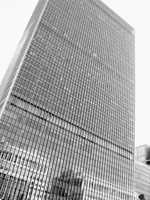 the whole world, assumed concrete form with the collapse of the Lehman
Brothers and the takeover of Merrill Lynch during September 13-14 weekend.
This development sent shockwaves through Europe and the rest of the world,
triggering panic in the stock market. The immediate ripple effect was felt
in the United Kingdom, where HBSO -- the owner of Halifax and the biggest
mortgage lender -- was saved from collapse by the treasury-encouraged
buyout by the Lloyds bank.
the whole world, assumed concrete form with the collapse of the Lehman
Brothers and the takeover of Merrill Lynch during September 13-14 weekend.
This development sent shockwaves through Europe and the rest of the world,
triggering panic in the stock market. The immediate ripple effect was felt
in the United Kingdom, where HBSO -- the owner of Halifax and the biggest
mortgage lender -- was saved from collapse by the treasury-encouraged
buyout by the Lloyds bank. to the low interest rate policy maintained by the US Federal Reserve Bank
between 2001 and 2006. Though the low interest rate policy is widely
believed to be a reaction to the sudden bursting of the 'dot-com bubble',
Robin Blackburn, ex-editor of the New Left Review, maintains that low
interest rates and consumption bonanza were part of the official US policy
after 9/11. The overarching purpose was to show to the world that the US
financial system had not been dented by the terrorist attacks and the
happy days of unbridled consumption were going to stay regardless.
to the low interest rate policy maintained by the US Federal Reserve Bank
between 2001 and 2006. Though the low interest rate policy is widely
believed to be a reaction to the sudden bursting of the 'dot-com bubble',
Robin Blackburn, ex-editor of the New Left Review, maintains that low
interest rates and consumption bonanza were part of the official US policy
after 9/11. The overarching purpose was to show to the world that the US
financial system had not been dented by the terrorist attacks and the
happy days of unbridled consumption were going to stay regardless.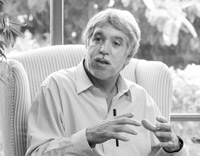 of his professional degrees. The former mayor of Colombia's capital Bogota
is noted for his radical and humane transformation of the city during his
tenure from 1998 to 2001 In an era where most of the world's developing
countries are looking to emulate the West in increasing per capita income
and building more expressways as symbols of progress, wealth and
modernity, Enrique Penalosa stresses that "cities are only a means to
a way of life, and every detail in a city should reflect that human beings
are sacred."
of his professional degrees. The former mayor of Colombia's capital Bogota
is noted for his radical and humane transformation of the city during his
tenure from 1998 to 2001 In an era where most of the world's developing
countries are looking to emulate the West in increasing per capita income
and building more expressways as symbols of progress, wealth and
modernity, Enrique Penalosa stresses that "cities are only a means to
a way of life, and every detail in a city should reflect that human beings
are sacred."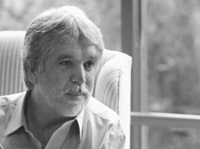 Bogota's former mayor, but as a student of urban issues who has seen many
cities and urban development models throughout the world. "The more I
travel and the more cities and people I meet, the more I realise that our
problems are extremely similar." Currently, he heads the Institute
for Transport and Development Planning and spends his time travelling
across the world, trying to convince people to develop cities that value
human dignity above everything else. The News on Sunday interviewed him
during his recent visit to Lahore. Excerpts follow:
Bogota's former mayor, but as a student of urban issues who has seen many
cities and urban development models throughout the world. "The more I
travel and the more cities and people I meet, the more I realise that our
problems are extremely similar." Currently, he heads the Institute
for Transport and Development Planning and spends his time travelling
across the world, trying to convince people to develop cities that value
human dignity above everything else. The News on Sunday interviewed him
during his recent visit to Lahore. Excerpts follow: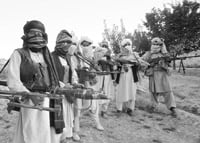 elite; much of high society shudders to think of how often it has
inhabited the lobbies of a building that has now been reduced to rubble.
Those who were not in the vicinity on that fateful day secretly feel
relief but also incessant fear that they might be in the wrong place at
the wrong time in days to come. To be sure, the attackers have succeeded
in doing precisely what they intended: striking terror into the hearts of
those who survived.
elite; much of high society shudders to think of how often it has
inhabited the lobbies of a building that has now been reduced to rubble.
Those who were not in the vicinity on that fateful day secretly feel
relief but also incessant fear that they might be in the wrong place at
the wrong time in days to come. To be sure, the attackers have succeeded
in doing precisely what they intended: striking terror into the hearts of
those who survived.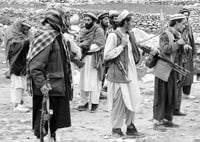 and FATA are once again raising questions over Pakistan's participation in
the US-led 'war on terror'. The recent terrorist attacks have not only
demonstrated the access, reach and capabilities of the militants, who
strike when and wherever they want, but also exposed the lapses in the
government's security and intelligence systems. Whether the 'war on
terror' is Pakistan's own war or someone else's, the fact is that the way
Islamabad is conducting it is only pushing the country towards further
chaos and instability. This is also one of the major reasons for the
growing frustration among the people in Pakistan.
and FATA are once again raising questions over Pakistan's participation in
the US-led 'war on terror'. The recent terrorist attacks have not only
demonstrated the access, reach and capabilities of the militants, who
strike when and wherever they want, but also exposed the lapses in the
government's security and intelligence systems. Whether the 'war on
terror' is Pakistan's own war or someone else's, the fact is that the way
Islamabad is conducting it is only pushing the country towards further
chaos and instability. This is also one of the major reasons for the
growing frustration among the people in Pakistan.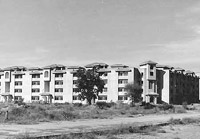 little concern for the shortage of houses in the country. Therefore, the
need for more houses is on an exponential rise in the major urban centres
of Punjab and the NWFP, and in Karachi and Quetta. Some of the factors
responsible for this situation include massive dislocations from FATA and
Swat; seasonal and quasi-permanent dislocations from southern Punjab to
Karachi; increase in population; carry-over backlog of houses due to the
unmet demand; rise in nuclear families; and relative shrinking of rental
housing choices.
little concern for the shortage of houses in the country. Therefore, the
need for more houses is on an exponential rise in the major urban centres
of Punjab and the NWFP, and in Karachi and Quetta. Some of the factors
responsible for this situation include massive dislocations from FATA and
Swat; seasonal and quasi-permanent dislocations from southern Punjab to
Karachi; increase in population; carry-over backlog of houses due to the
unmet demand; rise in nuclear families; and relative shrinking of rental
housing choices.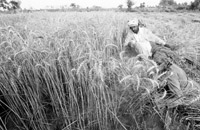 Though the situation has changed over time, agriculture is still a main
sector of the country's economy -- about half of foreign exchange is
earned through it; 47 percent of civilian labour force is directly or
indirectly associated with it; and its contribution makes up 21 percent of
GDP. Agriculture not only supplies food to more than 160 million
Pakistanis, it also helps overcome unemployment, creates markets for
consumer goods, provides raw materials for various industries and earns
precious foreign exchange for the country when surplus agricultural
products are exported. Its importance, therefore, cannot be over
emphasised.
Though the situation has changed over time, agriculture is still a main
sector of the country's economy -- about half of foreign exchange is
earned through it; 47 percent of civilian labour force is directly or
indirectly associated with it; and its contribution makes up 21 percent of
GDP. Agriculture not only supplies food to more than 160 million
Pakistanis, it also helps overcome unemployment, creates markets for
consumer goods, provides raw materials for various industries and earns
precious foreign exchange for the country when surplus agricultural
products are exported. Its importance, therefore, cannot be over
emphasised.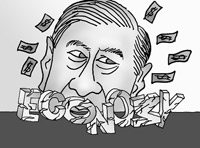 heights and debt repayments are engulfing the resources, foreign exchange
reserves are supposed to be the backbone of economic stability. Sizable
foreign exchange reserves are seen as a country's economic strength, while
low or falling ones are deemed as a recipe for default. They are also an
important indicator for determining a country's credit rating.
heights and debt repayments are engulfing the resources, foreign exchange
reserves are supposed to be the backbone of economic stability. Sizable
foreign exchange reserves are seen as a country's economic strength, while
low or falling ones are deemed as a recipe for default. They are also an
important indicator for determining a country's credit rating.