


|
|
|
|
 |
 |
|
|
Editorial overview Count
me out ethnicity In
bad times "There’s
no need for a religious
column" Editorial A neutral exercise meant to ensure good governance -- demarcating electoral constituencies being one of its essential functions -- census has become the most controversial matter in our context. To begin with, in more general terms, the credibility and authenticity of the entire exercise has always been in doubt and more so in the current one. The social contract between the state and the citizens rests on such flimsy ground that any representative of the state on your doorstep elicits mistrust. Why share information with an ‘indifferent’ or even ‘hostile’ state is how the census official is looked at. The next question that logically comes to mind is: what did we do with the findings of the earlier censuses held in this country? Did we plan better? Did we fare better? Certainly, not a promising start, these questions, to the sixth decennial census currently underway in this country. Already delayed by three years (lack of funding is the excuse), apprehensions abound. The seeds of mistrust were sown long ago, in the colonial times when the exercise was first conducted in this part by asking questions about religion and caste and race. For the colonists, this was an administrative tool for the infamous strategy of "divide and rule". For the natives, the census findings provided a reason for communal conflict, leading to partition. Census in other parts of the world is a secular exercise. A tough call for a country created in the name of religion. Once you had provided for separate electorates for religious minorities, counting them in the census on the basis of religion was the only solution. And once you had started counting on divisions, they started multiplying -- from religion to ethnicity to sect to biradari, the divisions kept multiplying. This is why census looks a little problematic. Balochistan and Sindh provinces have become two ethnic hotbeds that both dread and doubt the census. And then there are other strife-ridden areas where census cannot be conducted. And how to count the IDPs and so on. So what do we make of census 2011. Census is important; a crucial means to a desirable end. We need a credible census to plan better for disasters. We need it for better gender and fertility management. We need it to ensure education and health and plan our urban and rural centres and populations. It is our, the media’s, job to tell people how important census is. It is our job to tell the state to make it more inclusive, secular, just and credible.
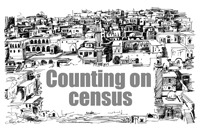
Counting on census Ethnic concerns could become more volatile on the completion of the process By Adnan Adil The house-listing exercise, that began on April 5 as the first round of the 6th national census, has courted controversy at the very outset and brought to the fore the strong ethnic divide in the Sindh and Balochistan provinces. In order to address some of the objections raised in Sindh, for instance, the federal government has added six more days to the house counting, which will now conclude on April 25. In Balochistan, where the Baloch separatist parties have called for a boycott of the process, the house-listing has either not been launched or could not be conducted in as many as eight volatile districts of the province, out of a total of 30. The current census has an immediate political
significance attached to it because it should form the basis of a fresh
demarcation of electoral districts for the 2013 general elections. In
addition, since political representation in the national and provincial
assemblies and allocation of federal jobs and the development funds to the
provinces are dependent upon the census outcome, different ethnic
communities are quite sensitive about it. In Balochistan, the Pashtun-Baloch divide and their competing interests are a perennially contentious issue. In Sindh, the Sindhi-Mohajir-Pashtun split has been a major factor behind the ongoing violence in Karachi, with each ethnic group battling to gain maximum control over the city. Baloch concerns The province of Balochistan is inhabited by two major ethnic groups -- Baloch and Pashtun. In 1998, the Pashtun Khwa Milli Awami Party (PKMAP), the largest Pashtun nationalist party in Balochistan, had boycotted the census, but it is now supporting the exercise as it realised that the boycott last time only harmed the interests of the Pashtun as they were not fully counted and left deprived of their due share in the provincial assembly seats and the allocation of development funds. According to the 2008 Pakistan Statistical Year Book (projections based on the 1998 census), the Baloch constitute 40 percent of the population in the province while 20 percent of the population is Brahvi-speaking and around 25 percent Pashtu-speaking. According to the Pashtun nationalists in the PKMAP, the population of the two ethnic communities, Baloch and Pashtun, is equal in the province, but the Baloch leaders do not recognise this. They say the Baloch population is 80 percent of the province while the remaining 20 percent are Pashtuns. Two-thirds of the electoral constituencies in the province have a majority of the Baloch. Twelve northern administrative districts are dominated by the Pashtun population while 18 districts are dominated by the Baloch. On the other hand, the Baloch ethnic parties say the Pashtun want to get their share increased by counting the Afghan refugees, who illegally acquired the Pakistani nationality, as the Pashtun, and they say they would not accept any census that counts Afghans as part of Balochistan. According to the Balochistan National Party (BNP), as many as 2.1 million Afghan refugees are living in Balochistan and it would not be possible for enumerators to exclude them in the counting. This has been a consistent position of the Baloch nationalists since the 1980s. In recent years, the Baloch position has hardened to assume a new dimension of the outright rejection of any authority exercised by Islamabad over Balochistan, which they want to see as a fully independent state. Agha Hasan, the information secretary of the BNP, said to media: "In a province where thousands are missing, mutilated bodies are being found almost daily and a military operation is underway, how can one think about taking part in a census?" On April 16, the Balochistan National Party-Awami filed a petition in the Balochistan High Court appealing the court to order the postponement of the census. On the other hand, the Baloch insurgent groups have threatened to carry out attacks on the census staff. House listing in five districts including Khuzdar, Awaran, Turbat, Panjgur and Mastung was not launched because of law and order issues. In Gwadar, Kalat and Kech, census staff has reportedly refused to carry out their work owing to threats to their life. In Kahan area of Kohlu and Pelaogh area of Dera Bugti, the heavy contingents of the security forces have been deployed to protect the census staff. Even the relatively moderate Baloch nationalists have some reservations over the holding of census. The National Party’s Ishaq Baloch told media his party had appealed to the people to take part in the census but his party had some reservations regarding the exercise because a huge population had been displaced from Nasirabad, Jaffarbad, Sibi and adjoining areas after the 2010 flash floods. In his view, another 120,000 people were displaced from Dera Bugti because of the military operation there in 2005. Sindh’s fears In Sindh, the controversy surrounding the census is not less acute than in Balochistan. In Sindh, Pashtun and Sindhi ethnic groups fear that the Mutahidda Qaumi Movement, representing Urdu-speaking or Mohajir population of urban Sindh, has taken over the census machinery in Karachi and Hyderabad and is making efforts to show more than the actual number of Mohajir population so that the Mohajirs could get larger share of funds and representation. It is alleged that the government employees, having sympathies with the MQM, have been hired to conduct the exercise and that they are biased in favour of the Mohajir population and have been over-counting the houses in Mohajir-dominated areas. It is also alleged that the buildings in Karachi have been given more than one house number to include fake entries. On the other hand, the MQM contends that each flat or apartment needs to be marked as a separate housing unit in a multi-storey building. In 1998, all multi-storey buildings were allotted a single house number. On April 15, speaking at the Sindh Assembly, Jam Madad Ali, Leader of the Opposition, demanded of the government to conduct the census under the supervision of the army in order to make it fair and transparent. He said the census staff had not visited many villages (goths) in the outskirts of Karachi. In his opinion, without the cover given by the army the census staff cannot access many parts of the province, including some localities of Karachi and Hyderabad, kutcha areas of Khairpur and Ghotki, Jacobabad areas that border with Balochistan and certain parts of Shikarpur. Although Moor Muhammaf Leghari, the Sindh Census Commissioner, said 90 percent of the house listing had been completed in the Interior Sindh till April 18, the government extended the deadline for house counting so as to remove the complaints of exclusion. The other aspect of the Sindhi nationalists’ concern is more problematic and can hardly be addressed within the existing constitutional framework that allows a citizen of Pakistan to live anywhere in the country. They fear that the Sindhi-speaking population might be converted into a minority in Sindh as a result of the fresh census. They demand that those people who have migrated from other parts of the country to Karachi like southern Punjab, Hazara and Khyber-Pakhtunkhwa should not be counted as permanent residents of Sindh but be given a separate category. This exclusion would imply depriving millions of people in Karachi of their political and economic rights and negation of the federal nature of the state where the residents of a province cannot have the same citizen rights in another province. The nationalist parties have announced a strike on April 30 against what they call a bogus census. With these kinds of ethnic considerations running high in Balochistan and Sindh, one can easily imagine what lies in store once the census results are made public on the completion of the process in September this year. For the time being, the government may not yield to the demand of the ethnic groups, but this could become a volatile issue, providing grist to the milk of ethnic politics in the days ahead.
Category of ‘others’ Minorities fear being It is interesting to note that all minority groups -- linguistic, ethnic or religious -- have raised objections because they fear being undercounted. "We were 3.5 percent of the population at the time of independence which means there must be at least 10 million Christians in Pakistan today. But, concerned authorities believe their number is less than 5 million," says Peter Jacob, Executive Director, National Commission for Justice and Peace. Jacob believes that undercounting deprives the Christians of the additional, reserved seats in the parliament. "The data related to religious minorities has always been very confusing. No one can use it, as no specifications are available. Minorities like Sikhs, Buddhists and Jews are put in the category of "others". He says that the representatives of minority groups included among the census-takers to reflect the true number of them. "In most cases, both wife and husband belonging to the minority go out for work during the day which means their chances of remaining uncounted are high." The concerns of the Ahmadi minority are no better. They believe that prejudice against them in the society is for all to see, especially in the teaching community. "Do you think those who do not tolerate Ahmadis as their students in the classes will fairly do the counting?" asks Salim-ud-Din, spokesperson of Jamat-e-Ahmadiya. The organisation has already directed its followers to actively take part in the census and ensure that they are counted under the category of Ahmadiya. "But it’s not easy for Ahmadis to ‘announce’ themselves in public, especially in the present circumstances, so we believe that an overwhelming majority of us will be counted as ‘Muslims’," he adds. Hindus, especially of low caste (scheduled caste), also fear that they would be under-counted because an overwhelming majority of them is concentrated in Cholistan and Thar deserts but most of them are nomads and keep moving from one place to another for livelihood. Ramesh Jaipal, Chairman, Scheduled Caste Rights Movement Pakistan, believes that certain practices in the country have kept indigenous populations out of the census, excluding them from most development strategies thus leaving them more marginalised. He claims that low caste Hindus make up 95 percent of the total Hindu population in Pakistan which makes them the largest religious minority group, but since 2002 they haven’t had even a single representative in the parliament. "An amount of Rs 5 billion has been reserved for the national census and more than 200,000 people trained for the process, but not a single person from our community is contacted by the authorities." He says that the government should launch a census operation to list the different castes and sub castes of the different scheduled castes. "We believe that the number of high caste Hindus in not more than 100,000 in Pakistan but they have been using all our resources. We will not accept the category of "others" in the census and want to know the exact number of people of different religious minorities," he says.
-- Aoun Sahi
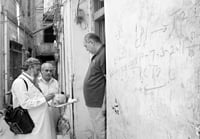
People fear their data will be misused to charge additional taxes, inflict ethnic or sectarian violence By Shahzada Irfan Ahmed The poor schoolteachers on census duty least expected an encounter with the Police Rescue team in Defence, Lahore as they stood outside a palatial house waiting for its door to open. The lone resident of the house, a retired bureaucrat, had raised the alarm fearing that a bunch of robbers were trying to break into the house. This is just one of the many accounts narrated by
officials assigned to do census duties or asked to survey households for
different purposes. On many occasions, they face resistance from residents
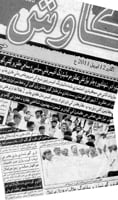
who are not willing to listen and grant entry to them to their houses. "The reason is simple. You never find state representatives at your doorstep for some good reason," says Waseem Khan, a marketing executive based in Peshawar. He thinks the impression is so strong that even the extensive marketing and awareness campaigns by the government cannot undo it. Most of the time they are there to recover utility bills, inspect meters, make tax assessments or issue warnings on different matters, he says adding: "they are anything but friendly." Residents are reluctant to open their doors to the census staff, and many would peek through their windows endlessly and wait for the visitors to disappear, he explains. Waseem tells TNS the standoff normally remains for hours as census staff visits households after working hours and is not ready to believe that no male member is home. "It is not binding on the staff to visit houses late but they are advised to do that. This saves them supplementary visits." The public response to census-related queries differs from people to people depending to their education, social standing and exposure, says Mirza Kashif Ali, a social sector expert in Lahore. He tells TNS that census nowadays is much more than headcount and the interviewers may ask questions pertaining to age, sex, marital status, housing, education, ethnicity, assets, fertility rates and so on. This raises doubts in the minds of people who think the real purpose of collecting the data is other than what’s being told, he adds. The data collected during census is used for political, administrative, economic and educational policy-making. The same data helps planners devise policies on population, public health, perform demographic and market studies, he adds. But unfortunately, Kashif says, the people approached during census fear they will be burdened with taxes or involved in crimes committed on ethnic grounds in case they mention their ethnicity in census forms. Ghulam Rasool, a Federal Bureau of Statistics (FBS) employee, thinks the large number of surveys conducted by NGOs and government bodies have made people skeptical about them. People, he says, often claim NGOs use their households as samples in poverty surveys and promise to return with financial help but never do. He recalls how an approaching census team was given an unpleasant welcome in a locality inhabited by the poor. It was the community where a survey under the Benazir Income Support Programme (BISP) was held recently. The people lashed out at the team for returning empty handed as they took them for BISP team visiting the place to distribute money. Ghulam Rasool shares that people doubt them for carrying out the survey on behalf of a third-party-which in their opinion may be the Federal Board of Revenue (FBR). They are extremely conscious when you ask them about their assets, landholdings, agricultural produce, the worth of jewellery they possess and others things like these, he adds. He says female staff is often taken along as questions like use of contraceptives, practice of having interval between childbirths and plan of having children in future may also be asked from women. Such questions are necessary as census is conducted decennially, and they help determine the rate of population growth etc during the time in between. It’s no easy task to make people believe these questions are highly relevant A Karachi head of a multinational company, who hails from Lahore and wants his name to be withheld, says he does not want his vote to be registered in Karachi. He says there are pressure groups who are asking people to give their present address as permanent address or vice versa during census for obvious reasons. "A properly conducted census can change the dynamics of country’s politics. I am aware of this and do not want to play foul out of fear or for any other reason." ethnicity No con-census Sindh accords a ‘controversial’ status to the exercise even before the completion of its first phase By Zulfiqar Shah If you pick any recent Sindhi vernacular newspaper, you will find it teeming with census-related items -- official statements, concerns of common people regarding the process of house counting, press conferences by political leaders, demonstrations and protests against the census, etc. The ongoing house count, as the first phase of the
national census, is an important activity going on in the country and being
reported in the national media, but Sindh’s case is different. Here, one
sees the kind of heated debate on the issue which is not to be found in
other provinces of the country. The issues surrounding the census have
proved, once again, that there is a serious divide in Sindh which accords it
the ‘controversial’ status even before the completion of its first
phase. Similar controversies in the 1991 census had compelled the government
to reject the results of the house count. Later, it took the state
authorities another eight years to go in for a fresh census in 1998. Sindh,
then, made 23 percent of the country’s total population. Of its 30,439,893
population, 48.75 percent lived in urban centres and 51.25 percent in rural
areas. In Sindh, since ‘98, a lot has changed, both in terms of politics and numbers. Many people believe the population of the province grew more than it did in the other provinces of the country, mainly on account of internal migration and migration from other countries such as Afghanistan. Karachi, decidedly the most important city of the province, carries a major chunk of this two-pronged migration. The census statistics show demography on various accounts including language. The accuracy of the process is in question as even the Sindh Chief Minister, who is also the provincial head of the ruling Pakistan People’s Party, along with Senator Taj Hyder, another senior officer-bearer of the PPP, have acknowledged receiving complaints against the census staff as well as the process of house count. Stronger voices are heard from over a dozen nationalist parties which have also formed a joint "Sindh Census Committee" to collectively take up the issue with authorities and in public. Sindhi intellectuals and writers are also not left behind when it comes to expressing apprehensions. Ironically, there are serious differences among all the five provinces of the country on how their indigenous resources should be shared in the NFC. Sindh and Punjab, for instance, are divided also on the issue of the storage of water. But the ethnic divide in Sindh is more dangerous as it serves to destabilise the province internally. "The process of house count is neither accurate nor transparent," contends Hakeem Baloch, former provincial minister and head of a civil society census awareness committee in Karachi. "Numbers are being reduced in rural areas [of Sindh] whereas in urban areas the process is under the complete control of a political group. So, one can imagine how fair would the result of the house count and the census be," he adds, sardonically. He also says that a large chunk of the population in Karachi, especially Katchi and Memon, are being forced to register as non-Sindhis. On the other hand, political activists are reported to have snatched house count forms and other material from the census staff and stopped them from entering in their areas, telling them that they would do the needful by themselves. In some parts, the government staff has actually been attacked allegedly by political workers to influence the count. In many instances, the census staff has not been able to reach the villages in rural Karachi despite raising hue and cry. Similarly, there are complaints coming in from the rural Sindh about a large number of houses that have not been counted. Even where the counting took place, it is said to be inaccurate. Jami Chandio, a representative of Sindh Democratic Forum, says the problem lies with the social structure of the country. In rural areas, many families live in one house, so this is counted as a single house because of a lack of understanding on the part of the census staff. "A family [a married couple and their kids] should be enumerated as a separate unit even if they are living together with their other siblings or relatives. But that’s not how it is being done in rural Sindh." On the other hand, in Karachi and Hyderabad, a building with multiple housing units is counted separately. Another issue is the reach of the census staff to far-flung areas. There is a general perception that population in remote areas will be left uncounted because the census staff does not have an easy access there. Following the numerous complaints it received, the government has now extended the duration of house count to another six days, ending April 25. Sindhi nationalists are considering different options including the boycott of the next round of census due to start in August this year. They are demanding of the government to announce the results of the first phase before heading into the second. "The Sindhis are being pushed to the wall. So, if is no option left we will boycott the process," declares Jalal Mahmood Shah, former deputy speaker and head of Sindh United Party. He criticises the government, saying that the Sindhis have always been marginalised in different tenures of the PPP government. "PPP has already compromised on the political sovereignty of the Sindhi people in order to save its own government in the province. And, now a sensitive process like census has been handed over to a coalition partner whose bias with other nationalities is evident to all. They are playing with the future of the Sindhi nation. It could spell disaster for the entire country." MQM has been intriguingly quiet on the issue and choosing not to respond to the hue and cry raised by the nationalists. An MQM leader, when approached for comment, said he needed party permission to speak to media on the issue. However, on the condition of anonymity, he said that the nationalists were "talking nonsense". "This is an official process and it may be a bit flawed, but blaming everything on MQM is not justified". He also said that the Urdu-speaking had an equal share in Sindh and there could be no two ways about it. ANP, another major coalition partner of the present provincial government, which represents the Pashtun population of Karachi, also has strong reservations about the census process and has been demanding that the house count should be held under the supervision of the army. Unfortunately, the PPP government, both in the centre and Sindh, seems to be least bothered about all controversies surrounding the census. One way to address the grievances as well as the apprehensions of the different groups of the province would be to call on the All Parties Conference and try to reach a common understanding on the matter. Now when the government has lost the opportunity to take all stakeholders into confidence in advance and the process is becoming controversial by the day, it is important that the government ensures accuracy and transparency of the headcount process and also make sure that the process is undertaken successfully by the designated government staff without interference from any political parties or group.
Secluded, excluded Discrimination begins with exclusion in headcount of Dalits Scheduled caste Hindus, or Dalits, are the most marginalised communities in Pakistan. According to the figures of last census held in 1998, total population of Hindus in Pakistan was 2,443,514 of which 2,111,171 were Hindu Jatis (upper castes) and 332,343 were scheduled castes (lower castes). Ordinary scheduled caste members as well as their representatives believe that discrimination starts from their exclusion in the headcount. They are of the opinion that their numbers have been deliberately reduced which is also a reason for their backwardness. Scheduled castes representatives claim that their actual population is more than 2 million but as an overwhelming majority living in rural and far-flung areas and, in many cases, on the move (gypsy style), they are missed in most census processes. During the ongoing house count, there are reports of scheduled castes population not being counted. These complaints are coming from remote districts such as Tharparkar and Umerkot in southern Sindh where a large number of inhabitants belong to scheduled castes. A huge number of Dalits also live in upper Sindh districts and most of them are peasants. Sindh Census Commissioner says he is already reviewing such reports but scheduled castes representatives are asking more prompt action. "It’s very important that the government ensures accurate counting of scheduled castes this time," says Malje Rathore, a representative of Pakistan Dalit Solidarity Network (PDSN). "Due to injustices in the last census, we have been deprived of our due share in social, economic and political spheres and if the same practice continues it would be a big injustice." Ramesh Jaipal, a representative of Scheduled Castes Rights Movement from Rahimyar Khan, says that accurate counting of scheduled castes is not an easy task. "They are missed in the counting because they live in remote places. Besides, the census staff is biased and there are faults in census forms." In his view, if the government is sincere about a genuine counting of marginalised sections of the society such as Dalits then it has to go an extra mile. "We are also Pakistanis and need equal treatment at least in counting, leave alone actual distribution of the national resources," he says. -- Z. Shah
Conflict, militancy and harsh weather make census in KP and Balochistan a challenge By Arshad Yousafzai Security concerns and bad weather in parts of Khyber-Pakhtunkhwa, the Federally Administered Tribal Areas (Fata) and Balochistan are hampering efforts to ensure timely completion of the house-listing operation of the 2011 census in Pakistan. The first phase of the 15-day house-listing exercise ended on April 19, but the population census organisation is confronted with the daunting challenge of undertaking the much-delayed census in the strife-ridden areas of the country. Fazle Rabi, the provincial census commissioner in Khyber Pakhtunkhwa, conceded that 75 percent of the house counting in the province and 50 percent in the Fata had been completed to date. "We have asked the federal government to extend the house-listing period to April 30 as we were unable to complete the task due to insecurity and bad weather," Fazle Rabi told TNS. He said the house counting work in settled areas like
Kalam in Swat district, Nathiagali in Abbottabad district and Kohistan was
hampered by heavy snow. He pointed out that the process could not be
completed in certain tribal areas due to the military operations against the
militants. "In Orakzai, the house listing operation could not be
completed in Mamuzai and Dabori areas as the residents have been displaced
due to the fighting. The situation in Bara and Tirah valley in the Khyber
Agency, and central Kurram Agency isn’t suitable for conducting the
housing census," he added. The Bara sub-division, it may be added, is inaccessible to the census teams due to the ongoing military operation whereas fighting between two rival militant groups, Lashkar-e-Islam and Ansarul Islam in Tirah valley has left the mountainous area bordering Afghanistan virtually cut off from rest of the country. Fazle Rabi also said that the census teams in insecure tribal areas such as South Waziristan, Orakzai, Bajaur and Kurram were supported by the Pakistan Army and no incident of violence against them has been reported. In Bajaur Agency, the housing census couldn’t be carried out in Chamarqand tehsil on the border with Mohmand Agency where the armed forces are active against the militants. According to Mohmand Agency’s Assistant Political Agent Maqsood Hassan, the house listing work in five out of seven tehsils was completed without any problem. However, he admitted that it couldn’t proceed as planned in the remaining tehsils of Baizai and Safi on the Pak-Afghan border. "Work in only 23 out of 111 blocks in Baizai tehsil could be completed as the teams could not operate in the remaining 88 blocks due to the military operation. The house counting in 27 out of 51 blocks in Safi tehsil also was couldn’t be done due to the military operation there," he explained. In reply to a question regarding listing of houses destroyed during military action or blown up by the militants, Maqsood Hassan said the census teams worked their way out of the dilemma by marking the fully or partially damaged homes. Another problem was counting houses in deserted villages whose inhabitants had migrated due to insecurity. Government officials said the housing census in the lower and upper Kurram valley was done without encountering any hurdle. However, no house counting could be done in Chinarak, Sperkat, Nika Ziarat, Burjo Killay, Tawda Cheena and surrounding areas in the central Kurram Agency due to the volatile security situation there. The housing census in North Waziristan was mostly peaceful, though the data collection was reportedly inadequate in Miramshah, Prangzai, Thall, Shawal and Shera Killay. According to tribal journalist Malik Mumtaz Khan, the main reason for less than expected housing data in North Waziristan was the lack of interest by the census teams. "Both the Army and the Taliban had assured the census teams their full support in the house counting work but most teachers tasked to do the job didn’t perform their duty properly," he complained. Malik Mumtaz added that the house listing figures in South Waziristan were lower than in North Waziristan as most villages populated by the Mahsud tribe there were emptied following the military operation, Rah-e-Nijat, against the Hakimullah Mahsud-led Tehrik-e-Taliban Pakistan (TTP) in October 2009. He said no house counting could be done in Ladha, Makeen, Dwatoi, Srarogha and Mahsud tribal villages. Though the security situation in parts of Balochistan is also volatile, only five out of the 30 districts have been declared sensitive for the house listing operation. The troubled districts include Kharan, Awaran, Kohlu and Dera Bugti and tehsil Wadh in the Khuzdar district. The provincial census commissioner Muhammad Khalid Baloch was upbeat about the house listing work in Balochistan. "No mainstream political party has resisted or boycotted the house listing process. In fact, the parties are telling their supporters to fully cooperate with the census teams to ensure collection of correct data," he said. The Balochistan National Party (BNP) had filed a petition in the court against the census. One reason that the party gave in the petition was its fear of registration of Afghan refugees in the process. The court proceedings have been completed but the decision is yet to come. The separatist Baloch Liberation Army (BLA), Baloch Republican Army (BRA), Baloch Liberation Front (BLF) and Lashkar-e- Balochistan had also initially resisted the census and told the Baloch people not to participate in it. During the 1998 census, boycott by the Pakhtunkhwa Milli Awami Party (PKAMP) led to low listing of the Pakhtun population in Balochistan, particularly in the Ziarat district where the annual population growth was recorded at 0.2 percent. It hasn’t boycotted the present census. Besides Khyber Pakhtunkhwa, the Sindh government has also requested the federal government for an extension in the house listing operation as the work could not be completed there in the allocated time.
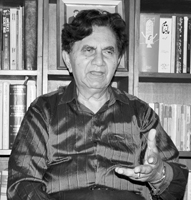
religious column" -- Dr Akhter Hasan Khan, former Census Commissioner By Abdul Sattar The News on Sunday: What, in your view, is the link between development and census? Dr Akhter Hasan Khan: There cannot be any planning for development projects without an official census. In democratic countries, it assumes an even greater importance because it is on the basis of population that the seats of lower houses [in many countries] are determined. Census, thereby, becomes hugely important for political parties, the government and the development planners. In a country like Pakistan, census helps to divide the resources among the provinces. Earlier, these resources would be divided purely on the basis of population but now other criteria are also taken into account. However, population remains the key to the division of the resources as 82 percent of these would be divided on the basis of population. TNS: How wise is it to conduct the census at a time when
at least two of our provinces are plagued with insurgency and terrorism? AHK: Census cannot be held hostage to a country’s law-and-order situation. You cannot delay it even if it’s due to any incidents of violence. In the affected areas, you can have more troops and improve law-and-order. Besides, I think the situation is not as bad as some people make it out to be. After all, business and commercial activities are going on in the country, aren’t they? So why should we not conduct a census. Allow me to say that it is also in the interest of the insurgents that the people of the province participate in census and their houses are counted because it could benefit them politically. Insurgency is not going to go away easily; it will take a long time. If it could be dealt within, say, a few months’ time then you could possibly delay the census in the affected areas. TNS: What about the IDPs and their participation in the census? AHK: I believe the government must’ve devised some mechanism to include these people [in the census]. Their temporary houses or camps may be marked and once they are back in their homes they could be included in the census. In the same way, the temporary houses of the flood-affected, if there are any, should also be marked and, once they are rehabilitated, they can be included in the census. We still have a few months to the census. Let us hope the situation improves by that time. TNS: How do you see the demand of some political parties in Sindh to conduct the house count under the supervision of the army in Karachi and certain other urban centres of the province? AHK: The people of Sindh have always been sensitive to the issue of census. During the course of the 1981 census, certain elements in the interior Sindh claimed that their houses had not been properly counted. Then we recruited officials and enumerators and found that their numbers were similar to ours with only a few variations. So, if anybody has any reservations, these can be addressed in an effective way but calling army into a civilian matter is not good. Today, there are people who are saying the census ought to be held under army supervision in Karachi; tomorrow some people in Lahore could stand up and raise similar demands. I think the civilian staff is fully capable of conducting the census. Actually, in Karachi, you have a political problem. The Pushtun say it is their [population-wise] biggest hub. The Urdu-speaking people also claim that this city is their ‘chosen’ abode. Then there are Sindhis, Baloch, Punjabis and many other nationalities. There are also contradictory claims as to the population of various ethnicities. Some say the population of Karachi is around 20 million, others put it down to 15 million. I think all these issues should be resolved politically, while the government should be making all-out efforts to hold census in a fair and transparent way. TNS: How do you see the criticism on the inclusion of the religion column in the census? AHK: I think there is no need for such a column because it only serves to further alienate the minorities from the rest; it gives them the feeling of being rated as second-class citizens. Census is meant to measure development and for demarcation of seats in the assembly; a religion column does not fit in the scheme of things and should be abolished. TNS: Could you tell us in brief how the census staff is trained? AHK: In the first place, the census department trained some people for a period of two months. These were called master trainers who would then hold week-long training sessions to other people. Most of the people who work during the census are taken from the education sector, such as teachers, but people from other departments are also trained to be a part of the census staff.
|
|