


|
|
|
|
 |
 |
  
|
holiday By Irfan Husain I have a theory that airports are designed to maximise discomfort, thus forcing passengers to reconsider their journeys. Over the years, I have passed through many of them, and have yet to come across one that was a joy to travel from or to. Our trips are often predicated on my wife's firm belief that we should go on travelling as long as we are fit enough to lug our suitcases around. She blithely books flights on the Internet, and I am left to run around with my toxic green Pakistani passport, trying to get a visa. She was born with a red British one, and so is exempt from visa requirements in many countries.
My first Hong Kong Hong Kong provides all the luxuries of the developed world while maintaining distinctive eastern values. For a tourist, this dichotomy is exciting in itself By Nafisa Rizvi Before Lord Norman Foster built the magnificent new Chep
Lap Kok airport, coming into Hong Kong was one terrifying experience. The
plane edged its way between tall buildings narrowly avoiding scraping
apartment walls with its wings. A minute later the aircraft would nosedive
towards the ocean and just at the point of impact, it would screech onto the
tarmac with an easy landing. The fact that the perils of the landing were
just an illusion was usually told to you after you had unclenched your fists
and opened your tightly shut eyes. The entry into Hong Kong (or 'fragrant harbor' given to the city because fragrant wood products and incense were once sold here in abundance) is not half as dramatic as it once used to be but the city still draws you into its strange mix of high-rises and tropical foliage when you land. The island city lies nestled at the foot of green mountains surrounded by the warm waters of the South China Sea and includes a portion of the mainland as well as an archipelago of 260 tiny islands. It is governed as a Special Administrative Region of the People's Republic of China, a link between Communist China and the capitalist world. Hong Kong's history has been as rocky as its mountains. Under Imperial China, Hong Kong was little more than an outpost and a haven for pirates who hid amidst the mountainous islands. When trade began between China and Europe, European demand for Chinese goods was voracious but the Chinese did not hanker for anything European until they were introduced to opium which the British brought in huge quantities from India. This initiated the Opium Wars, as they are known, between China and Britain but the British forces were powerful and the Chinese were compelled to sign the Treaty of Nanking of 1842 which exempted British nationals from all Chinese laws and ceded the island of Hong Kong to the British 'in perpetuity'. In 1941, Japan took control of Hong Kong and Chinese
civilians were massacred while westerners were incarcerated at Stanley Prison
on Hong Kong Island. In 1945 Japan surrendered and withdrew from Hong Kong.
In the wake of the Chinese revolution the island was left as an economic
outpost under British authority and it was not until 1999 that Hong Kong was
transferred to China as per an agreement between Britain and China. When
queried about the handover, a shopkeeper at Stanley said, "We were
nervous about the handover, but we are happy about the way things have worked
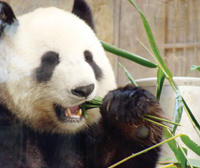
out. All the changes have been for the better." Today, Hong Kong is a dynamic, vibrant city at the forefront of development and progress in all areas of economic expansion. The city thrives and bustles late into the night, though there is little of the loud, raucousness of, say, New York. The people of Hong Kong are disciplined to a fault and they take cleanliness to exacting levels, which may indicate residual tremors from the SARS epidemic and the Bird-flu outbreak, both of which terrorised the city in recent years. The subways are spotlessly clean unlike the underground networks in Paris and London, which are dirty and noisy. The water in the water features is disinfected and fixtures offering free hand sanitisers dot the shops and malls. Cleanliness and safety are two overriding reasons parents of small children opt for the city as a vacation spot. It's a child-friendly place and there's always something for the kids to do around town, including the mount Olympus of kiddy entertainment Disneyland and a zoo with orangutans and lemurs and reptiles that kids adore. A local theme park Ocean Park is also hugely entertaining with its pandas, dolphins and macaques, a captivating aquarium and two particularly nerve rattling/thrilling rides (the epithet changes according to the age of the rider!) Hong Kong is said to have one of the world's finest
transportation systems, offering so many alternatives for travel that
tourists and visitors are spoilt for choice -- subway, cab, a wonderfully
quaint ferry system that has been running since 1888, tram, bus and train are
all efficient and reasonably affordable. My 16-year-old daughter would
routinely take the cab and the subway trains to the central district on her
own and return home in the evening having exhausted her money and her feet.
Many residents opt not to keep cars because the cost and trouble of parking
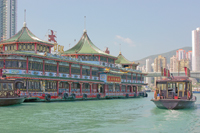
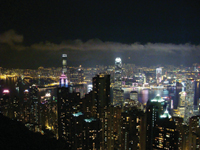
and maintaining a car is high in comparison to public transport. The edifices of British imperialism are surprisingly few. The Supreme Court building, St John's cathedral and the Fringe Club are a few examples. In the heart of the city, the area that once housed the barracks of the colonial masters has been converted into the huge Hong Kong Park with a conservatory and a wonderful aviary teeming with exotic birds that can be viewed in their own open environment. The colonial influence however, can be more easily detected in the attitude of the people of Hong Kong. They are imbued with a sense of positive superiority (which sometimes translates into a kind of snootiness towards foreigners) and differ from their mainland Chinese counterparts in that their sense of individualism is keen. They exude a heightened confidence in their own talents which nears narcissistic levels. The people of Hong Kong are proud of their city and pay homage to it on a daily basis by keeping it safe and almost devoid of crime, abiding by the laws and maintaining strict rules of conduct and accountability. Taxi drivers can even be reported for speeding but they can also be relied on to return wallets with money to passengers. The downtown district of Hong Kong houses some of the tallest and most striking buildings in the world: the fourth tallest is the International Commerce Centre, the seventh is the Two International Finance Centre, the 11th is the Central Plaza and the 12th highest is the most distinctive of the buildings, the Bank of China tower designed by the renowned architect I.M Pei. The locale of these buildings is what gives the city its unique quality -- lined along the waterfront and growing as if 'organically' out of a tropical rainforest setting, the cluster of buildings are gentle on the eye unlike the harsh and forbidding concrete jungle of most comparably large cities. You can see evidence of a frenetic construction activity as old buildings are regularly torn down while new ones with shiny glass and modern lines take their place. Known for its shopping, Hong Kong does not disappoint. There's a market for almost every pocket and every taste. While the big names Gucci, Prada, Jimmy Choo, Louis Vuitton and Bottega are ostensibly visible and inviting, the cheaper versions at a tenth of the price are too similar and tempting to resist at the Night Market at Stanley or at what are referred to locally as The Lanes –narrow, congested cobblestone streets lined by kiosks and shops. These are fun places for the bargain hunter. For specialist shoppers there are bazaars interspersed across town -- there's a flower market, a goldfish market, and a bird market. Eating out in Hong Kong is an epicure's delight. Every cuisine from around the world is available and since residents are particularly picky about their food, the quality is superb. A floating restaurant called Jumbo, set up on a barge in the water is accessed by a short ferry ride and though the décor is kitschy with red and gold dragons hovering over you as you eat, the food is sumptuous. There's a wonderful Korean restaurant in Time Square where you are invited to cook your own dinner though it only take a few minutes and serves to increase your appetite while you watch and wait. Even the little eatery Lucy's in Stanley offers great food and a homely ambience. However, local tastes in smaller eating houses in central Hong Kong may prove to be too overpowering for the queasy stomach -- all variety of animals and insects are cooked and eaten in Hong Kong from locusts and frogs to snakes and eggs buried in the earth until they are black with age! Residents often remark that Hong Kong provides all the luxuries of the developed world while maintaining distinctive eastern values. For a tourist this dichotomy is exciting in itself.
"... with my toxic green passport" Security issues can become such a pain in the neck By Irfan Husain I have a theory that airports are designed to maximise
discomfort, thus forcing passengers to reconsider their journeys. Over the
years, I have passed through many of them, and have yet to come across one
that was a joy to travel from or to. Our trips are often predicated on my
wife's firm belief that we should go on travelling as long as we are fit
enough to lug our suitcases around. She blithely books flights on the
Internet, and I am left to run around with my toxic green Pakistani passport,
trying to get a visa. She was born with a red British one, and so is exempt
from visa requirements in many countries. I thought my least favourite airport was Heathrow with its constant crowds, its endless corridors, and long immigration queues. I have been subjected to its delays and inconveniences too many times to count, but due to circumstances, I'm forced to use it several times a year. But recently, another airport has overtaken Heathrow in my list of most painful travel experiences. Halifax in Canada is, I'm sure, a pleasant enough town. But its airport is a national disgrace. We flew in there recently to take a connecting flight to St John in New Brunswick. The airline would not check in our luggage all the way to our final destination, so not only did we have to get through immigration, collect our luggage, go through customs, and then check in again for the connecting flight, we had to do all this within an hour. Naturally, when we got off the plane and walked though a series of corridors, we encountered a long queue. In Canada, there are no separate lines for local and foreign passengers, so we had to join the queue that snaked around a big hall, and moved at snail-like speed. Once we had finally got to an immigration official, he was pleasant enough, but wanted to chat about St Andrews, the small town where we planned to spend a month. After a few polite comments, we managed to race to the luggage hall, retrieve our suitcases and then struggle to find the check-in counter which, mercifully, was still boarding passengers. The clock ticking, we then charged through a long boarding area to the flight gate. Naturally, ours was the last, so we really had to dash. Along the way, I thought how ironic it would be to collapse of a stroke. With only a few minutes to spare, we finally made it, only to discover that our take-off had been delayed by 15 minutes, so we could have taken our time. Thanks for not informing us of this delay at the check-in counter, Air Canada… The plane turned out to be a tiny 18-seat propeller-engine aircraft that flew us low over miles of fir trees and deep blue lakes. So it was worth the rush, after all. One reason why the whole flying experience has become more of a pain is that security takes so much time. As you are not allowed to carry any liquids on board, you can't buy any duty-free booze if you are then going to take a connecting flight. So I was forced to walk past the fine selection at Heathrow without purchasing a thing. If my heart-felt curses have any effect, the wretched Islamic terrorists who have inflicted this heightened security at airports around the world will not get a single virgin in the afterlife. The whole business about taking your laptop out of its case, removing your jacket and occasionally, your shoes and belt, takes a lot of time, and is very inconvenient. When the Underwear Bomber tried to blow up an airliner over Chicago last Christmas, I was afraid that this bungled terror attack was going to usher in a whole new experience for passengers and security staff alike. Fortunately, we have not yet been asked to strip down to our shorts, although some American airports have introduced X-ray machines that effectively undress passengers. To undo some of the stress one accumulates in making one's way to the boarding lounge, Colombo Airport has a fine antidote. This consists of a small room where you can have a foot, head or shoulder massage for a few dollars. I deliberately check in early for the pleasure of having my feet rubbed. If only Heathrow would follow suit… The writer is a senior columnist. |
|