


|
|
|
|
 |
 |
   |
health Let's
think, let's love Bags
of BLISS response By Dr Ahsan Wagha It is precisely the Indus valley, the centre of one of the five old civilizations of the world, which is hit by the mother of disasters, the flood. In the middle of the disaster lies the middle Indus valley or the South Punjab. Social and economic indicators show Pakistan can take care of flood victims even without foreign aid By Adnan Adil The begging bowl of the Pakistani elite is pit-less. The moment they come across the slightest of an emergency at home, they start begging for money doing the rounds of world. Is Pakistan indeed so poor and devoid of resources that it cannot cope with the crisis situation on its own? Let us have a look at some indicators of our economy and social order.
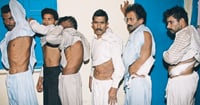
Browsing for a kidney Clandestine kidney sales continue though a new law restricting such sales has brought down the numbers By Kamila Hyat In a small 'clinic' located somewhere close to a busy road in Lahore, vehicles occasionally bring in kidney 'vendors', quite often after nightfall. "I do not know the place where I was taken, but it
appeared to be a small hospital. I never met any doctors either," Javed
Ikram [not his real name] who lives in the Youhanabad settlement on the
outskirts of Lahore told TNS. What Javed does know is that he now has one
kidney. Jobless, he arranged in March this year to sell an organ through a
middleman. "I was promised Rs400,000 but have only been paid
Rs250,000," he said. He also complains of feeling "weak and
suffering headaches" since the surgery to remove his kidney. He was
warned not to speak to anyone about the surgery. Since the Transplantation of Human Organs and Tissues Act came into force in March this year, it has become considerably harder to buy a kidney in Pakistan. This has been the case since 2007, when the Ordinance, restricting donations of organs to blood relatives was signed -- though a period of limbo that followed the lapse of the law appeared to give those engaged in the trade hope of a revival. However, even though it is now illegal to purchase a kidney, the buying and selling of organs continues in a clandestine fashion. Even today, on the Internet, it is possible to locate ads -- many placed by desperate young people -- hoping to earn somewhere between Rs300,000 and Rs1,000,000 by selling a kidney. 'Buyers' from around the world, aware of Pakistan's reputation as an international marketplace for kidneys, seek to purchase an organ from desperate 'vendors', asking them in some cases to also arrange doctors who can carry out the illegal surgery. "I have many issues. I just want to go abroad to work," Arshad Salim [Not his real name], 24 years, said when asked why he had advertised to sell his kidney. He is vaguely familiar with the new law, but has little idea as to its purpose. "It just makes things harder for us," he said. The still more impoverished vendors based in rural areas of the Punjab or at Youhanabad are even less well-informed. According to the WHO, 1500 commercial kidney transplants took place in Pakistan in 2005, the last year for which figures are available. A resolution adopted by the World Health Assembly, the decision-making body of the WHO, in May this year highlighted the social risks associated with trafficking in human materials and the need for public support to stamp out the trade and increase donations from deceased donors. [http://www.emro.who.int/pressreleases/2010/no8.htm] While hospitals previously believed to have been engaged in the practice, according to media reports, informed the Supreme Court in June 2009 [http://www.supremecourt.gov.pk/pr/press_release/pr4-23-06-2009.pdf] that this was no longer the case, 'vendors' who have sold kidneys during the past few months maintain the practice continues, with smaller clinics sometimes used to remove the kidneys. Two hospitals -- one in Lahore and the other in Rawalpindi -- were identified during the court hearing. Several other hospitals in Lahore were identified by vendors as places where organs for transplant had been removed over the past few months. "When surgery takes place in small backdoor clinics, apart from the horrible situation for the vendor, the recipient too is much more likely to end up with complications. We hear of such cases now and then," said Dr. Farhat Moazzam, Chairperson Centre for Biomedical Ethics, at the Sindh Institute of Urology and Transplantation, which played a key role in the drafting of the THOTA law and its passage through Parliament. Studies back this assertion, with one which followed 36 patients from the Balkans who underwent commercial transplants in Lahore and Rawalpindi between January 2006 and December 2007, describing the poor outcomes for many recipients. Seven of those transplanted died. Others suffered infection or other serious complications. [http://www3.interscience.wiley.com/journal/123575888/abstract?CRETRY=1&SRETRY=0] Aware that problems persist even with the law on the statute books, Dr Moazzam said that to "reduce the shortage of organs we need deceased donations." The THOTA law lays down a provision for the donation of organs after a person is declared brain dead. "Frankly, this will not happen here. The person would need to be kept on a ventilator, and besides who will agree? Cutting up bodies after death is taboo here and very few facilities have ventilators," Dr Muhammad Usman, a practioner in Sargodha, told TNS over the phone. Dr. Moazzam said that since the law required the person be brain dead, this meant the person who died would already be in a hospital, on a ventilator. In this case the idea could then be sensitively brought up with families, without pushing them. "Apart from educating the public, we also need to educate physicians too," she said. She believes that the ugly trade in kidneys can stop only if donations from deceased donors become more common. According to a research citing the limited figures available, at least 4,000 kidney transplants were taking place annually in the country in 2007. Only about 25 percent involved donations from related donors and around half the recipients were foreigners. [http://www.issuesinmedicalethics.org/152ed52.html] The number of kidney buyers has gone down since the THOTA law was passed, though some violations are believed to continue. "No illegal kidney transplant has been conducted since the law regulating human organ transplantation was passed," Maj-Gen (retd) Abdul Qadir Usmani, the administrator of the Human Organ Transplant Authority told TNS. He said all the 2,164 kidney transplants conducted since September 2007 conformed to the law and that no foreigner underwent a transplant in the country during this period. General Usmani said a "strict monitoring mechanism" at all big hospitals ensured this. "I raised the issue of organ donations after death with my college students. At first, most were opposed to the idea -- but then some saw that the idea of giving someone else life, or sight by donating corneas after death was a beautiful one," said Munazza Shireen, a sociology teacher. "All we need to do is to create awareness so that thinking changes." Follow-up Following the publication on May 23, 2010 in TNS on a stem-cell scam in Karachi titled "Depending on Desperation", the website for Healthcare Solutions International (HSI) was removed a few weeks later. Dr. Ilham Saleh Abuljadayel, who pioneered the controversial retrodifferentiation treatment continues to offer it in Egypt and possibly other Middle Eastern states. The doctor representing her in Egypt told TNS the unproven procedure could cure specific conditions, including diabetes, blood diseases, degenerative diseases and spinal cord injuries, regarded by conventional medicine as manageable, but incurable. The process was being offered at a physical rehabilitation centre in Cairo, with the exorbitant rates in the same range as those quoted in the original article.
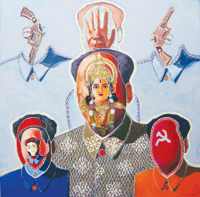
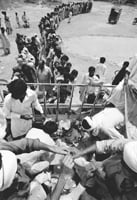
By Raania Azam Khan Durrani 2.49am, Monday – Karachi. It is literally the time of Cholera in Pakistan. The national disaster, or better still the beginning of a global disaster, brings with it deep waters of angry skies and melting mountains. The heat is rising, spirits are diminishing and diseases are rapidly increasing. Gastro, fever, scabies, post traumatic stress and yes, cholera are killing the youngest and the eldest. The death toll in the recently established Karachi camps has reached ten. Yet it is not these furious bacterial waters that are killing our nation. The lack of love is killing it faster. The headlines for South Asia, a few minutes ago stated:
Pakistan's situation 'critical'; Deadly blast at Pakistan mosque; Pakistan
probes brothers' killing. All this and more. Despite the sadness and illness
everywhere, our people are still at war, still fighting, still maintaining
egos and still being brutal idiots. This week as millions fled their homes
drowning in sorrow and filthy water, hate continued to breed. The brothers,
who were beaten to death in Punjab, will forever be a reminder of this
nation's frustration, hate and inability to be peaceful and content. The
bombs are still going off and the target killings continue. That is the problem. During a late night discussion with a Baloch friend, we came to the grave conclusion, that a large number of people in this country believe they are divine. They don't think, they only feel superior to everyone else. No one thinks, no one is taught to think. Those who have been lucky to have kept their values, moral and culture intact are few. Thinkers and visionaries are few. Despite the history of love and spirituality, music and legends, the average Pakistani is beginning to believe whatever they are exposed to via propaganda. As the bomb went off in Waziristan this afternoon and the target killings happened in Karachi before sunset, a friend updated his status on Facebook 'I am an ashamed Muslim, and an ashamed Pakistani', I could relate completely. An hour or so later another dear friend and colleague not known to the above mentioned, updated his status saying, "few people do something wrong, we hate Pakistan and are ashamed of being Pakistani. Millions of Pakistanis are doing good deeds in this critical time, no one acknowledges and feels proud to be Pakistani. Weird isn't it?" I respect this sentiment and yes I am proud of all those who represent strength, peace and positivity, but unfortunately the negativity is just out doing the goodness. There is hate, supreme egos and lack of compassion in every reflection and in every shadow. The relief efforts are ongoing and people I know, including my own near and dear are working on ground. But amidst this great devastation the rich powerful lords and politicians have their own agendas, and are trying to sweep up as much aid and good for their own wealth. How disheartening and frustrating for those in need and those bringing in aid. There is no being, no politician, no country, no donor that will give us peace in a package. We have to find it inside, somehow. In the small things that give us pleasure, in the large gesture of a helping hand and in the ability to forgive and be human. When there is no food it is impossible to be compassionate, perhaps, and hunger is abundant. But the hunger is not only for food, but also for revenge, blood, wealth and power. In the past few weeks we saw in the international and national press, how hungry some prominent figures were, and how they continue to consume our shares, before our eyes and helpless hands. In light of spiritual teachings of a great man, a friend said today, "divinity and heaven is when the self is at peace inside, and hell is when there no peace within." I look around and I see there is hell in the hearts of many, there is no love, but there is cholera. This way we will kill ourselves, we are killing ourselves. For those who can, let's think and let's love before the darkest clouds show up.
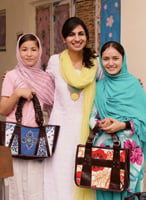
A social venture promoting entrepreneurship and education among girls By Jazib Zahir In the remotest corners of Attock, many daughters of the Afghan Turkmen labour under the belief that they are doomed to a menial existence of weaving carpets. But recently, a few dozen chosen ones have been infused with a new zeal for life under the banner of the non-profit BLISS. BLISS stands for Business and Life Skills School. The
pilot project is an innovative means of providing uplift to the community
by encouraging young girls to pursue an education focusing on practical
skills. The girls are compensated with a cash amount comparable to the
wages that they would earn in carpet weaving to provide an incentive to
attend the schools. It is hoped that this schooling will allow their
payoff to multiply in the future. So three hours a day, these diligent girls engage in typical classroom lessons that range from languages to mathematics. In the near future, this curriculum will incorporate coursework in nutrition and hygiene that is perhaps even more pivotal to their welfare than the ability to read and count. But most critically, one hour of classes a day is dedicated to the art of embroidery. The designs developed by the girls eventually inspire handbags that are produced by affiliated workshops in the cities. These finished products will eventually be distributed through select channels, generating profits that will sustain the schools. And the entrepreneurial spirit triggered in the girls, coupled with business classes that will be taught to them in the near future, will allow them to become the masters of their own destiny. BLISS is the brainchild of Saba Gul, a Pakistani who has spent most of the last decade studying and working in the United States. She conceived BLISS during her student days at the Massachusetts Institute of Technology. The idea caught the imagination of experts in social entrepreneurship who showered her with seed funding and mentoring. BLISS is the proud recipient of several awards and has inspired a series of successful fundraising events across the United States. Saba is ably supported by a team of devoted professionals and mentors. An American friend Eleni Orphanides is the co-founder of the enterprise. Dr. Ishrat Hussain of the Institute of Business Administration has provided invaluable advice through the throes of development. As the non-profit has burgeoned in scope, several volunteers have responded to the clarion call and taken up roles in finance, operations, design, marketing and public relations. Saba attributes the concept of BLISS to her belief in what social scientists have termed the 'girl effect'. There is growing empirical evidence that empowering adolescent women through education and entrepreneurship creates a ripple effect that raises standards of living for everyone around them. While Saba is primarily based in the United States, she frequently travels to Pakistan for hands-on involvement in BLISS. This generally involves the shunning of security concerns and spending several days in the Attock area at a time to interact with the students and teachers. She likens the process of running a non-profit to that of managing a startup company. It can be chaotic and frustrating but those who show initiative can bask in personal rewards. The positive response to their efforts has overwhelmed the BLISS team. Saba recounts many poignant moments from the ecstasy of young women socialising in a healthy classroom environment to the palpable joy of receiving their monthly paycheck and the festivities that ensue. Capacity constraints force BLISS to turn away many young women who have their hearts set on becoming a part of this magic. On her last trip to Attock, Saba found that the mothers of many of her students were keen that similar opportunities be made available to them. So how can others contribute to the success of BLISS? The BLISS team has held several informal outreach sessions targeting students and working professionals to spread the word. While donations can easily be made on the website, it is hoped that regional chapters of BLISS will blossom. This would allow a more organised effort in channeling logistical and financial muscle into setting up a larger network of schools. While BLISS has enjoyed early success, Saba remains wary of the need to devote more time and resources to sustaining and expanding it. It may not be easy to juggle such lofty ideals with full-time jobs, but given the spirit BLISS has demonstrated till now, we need not harbour any doubts on its ability to continue to put smiles on faces in Attock and beyond.
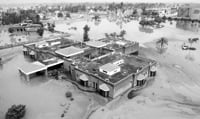
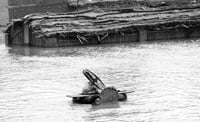
Embankment flood The surging mighty Indus River requires a debate on water management and flood protection By Azhar Lashary "…., floods are not events but processes intrinsically linked to river regimes, geomorphological momentum and drainage networks. Tampering with this complex web can result in several negative complications, most of which may be irreversible." --Rohan D'Souza The worst ever flood of Pakistan's 63-year history has been wreaking havoc across all the provinces. According to UN Office for Coordination of Humanitarian Affairs (OCHA) report dated August 23, it has directly affected 17.2 million people; claimed 1,539 lives, damaged and destroyed 1.2 million houses; inundated standing crops on at least 3.2 million hectares; and fully or partially damaged 7,820 schools. Besides, it has caused colossal damage to electricity,
telecommunication, road, railway, bridges, irrigation and drainage
infrastructure across the country. However, the devastation so far reported
can be a proverbial tip of the iceberg given the fact that the flood is not
yet over and unfolding threats like food insecurity, water-borne diseases and
epidemics that can assume serious proportion. Along with the surging mighty Indus River and its tributaries, arose a debate on detaining and containing of the rivers to effectively control the flood. Far away from the dangers of devouring tides, a certain section of press, news channels, political leaders, intellectuals and so-called experts have been mindlessly underlining the need of building new dams, particularly Kalabagh Dam, to avert floods. Political insensitivity of proposing a controversial dam at this critical moment aside, the pro-dam lobby is equally blind about the role of dams, barrages and related structural measures across and along the Indus River in turning the drainage into a nightmare, intensifying the scale of flood and related devastation. Had the Kalabagh Dam been built, could much of death and destruction have been averted, as they suggest? Or, on the flip side, the very solution could have over-complicated the problem? As both the questions are speculative, in order to reach any conclusion, we need to have a clear understanding of the structures built along the banks and across the channels of Indus River in last one hundred years and their impact on drainage and people's vulnerability to floods. In subcontinent, the British Raj, equipped with scientific knowledge and subsequent technological advancements, introduced a new era of water management marked by increased control of human beings over river water through structural measures. Completed in 1930s, Sukkur Barrage is the first water-diversion structure on Indus to be followed by Jinnah Barrage, Taunsa Barrage, Tarbela Dam, Chashma Barrage, Guddu Barrage and Kotri Barrage. These dams and barrages accompanied by an extensive network of water-controlling structures like river training works, flood protection embankments, dykes, spurs, irrigation canals, inter-river link canals and drains have considerably altered the Indus river regime. These dams and barrages, which made power generation and perennial irrigation supplies possible, gradually contained the once mighty, multi-channel Indus into a single narrow stream. The containment of river brought drastic social and environmental changes in the low-lying floodplains of Indus, locally known as Kaccha -- stretching from Mianwali to Badin on its left bank and from Dera Ismail Khan to Thatta district on its right bank. With a width varying from 25km to 40km and a length of around 1,100km, the Kaccha or low-lying floodplains was once known for its proverbial prosperity. Before the advent of dams and barrages, Kaccha had a peculiar economy that depended much on the floods. The land use patterns and water management systems, which unlike the modern ones, were in harmony with the natural river regime and provided the local populace multiple livelihood choices. All the land, notwithstanding its fertility, was not used only for crop-production purposes. Instead much of it served as pastures, forests and lakes. Similarly, all the water was not used for irrigation purposes, notwithstanding the canal system; Persian-wheel and other local irrigation technologies were developed in the floodplains of Indus. Rather much of it was meant for ecological purposes like enriching pastures and forests and replenishing underground water reserves, lakes and delta. There existed community-based flood response mechanisms grounded in local knowledge. The houses and villages were built on elevated platforms to avert potential threat from inundation. Food and fodder were stored at safer places. The fisher-folk and ferrymen, who lived in close vicinity of the river, served as early warning authorities. In case of an emergency, the local people knew when, how and where to move. They had boats available to them. They knew their neighbouring communities to stay with until the floodwater receded. The host communities, who also directly or indirectly depended on the river-based economy, would welcome them to reciprocate the generosity of their guests in normal times. The river engineering developments have considerably reduced the frequency of benevolent, seasonal flooding in Kaccha while increased people's vulnerability to floods over the dacades. Accumulation of silt in the reservoirs and in the embanked riverbed has reduced the drainage capacity of the river. The hill-torrents from Suleman Range and Khirthar Range, which discharge into Indus, bring high loads of silt in their water. The spate irrigation through hill-torrents on the right bank of Indus was once helpful in trapping much of silt on the Pakka (the highlands) and letting less quantities falling into the river. However, the replacement of spate irrigation with canal irrigation enhanced the silt quantity being discharged into the river through the untapped hill-torrents. Undoubtedly, the population growth and ill-planned settlement patterns in last several decades have aggravated the flood. However, on the flip side, the very flood protection embankments have created a false sense of security and encouraged ill-settlement patterns in the Kaccha area. The forests, pastures and lakes have been turned into agricultural land. The traditional flood preparedness strategies have been abandoned, particularly in the new settlements, as they were no more needed in the presence of flood protection embankments. So when the river swelled after extraordinary rains this monsoon, the government machinery decided to dam up the reservoirs. It increased pressure on the embankments, operation and maintenance of which was forgotten for years. Thus the already fragile embankments could not sustain the pressure and developed breaches. The irrigation authorities also created breaches in the embankments to protect the barrages from possible collapse. The breaches thus developed or created loosened hell in the areas bottled up by the embankments. As if the devastation in the Kaccha was not enough, the water obstructed by the embankments found its way through the canals to inundate the areas, which have never been flooded by the Indus in past. Following the breach in Abbas Spur at Taunsa Barrage on August 2, the floodwater found its way to Taunsa-Panjnad Link Canal and Muzaffargarh Canal. The canals allowed the Indus to make a new channel to fall into Chenab River after inundating hundreds of villages and towns in Muzaffargarh district. Similarly the breach in Tori Band caused flooding in Jaccobabad (Sindh) and Jaffarabad (Balochistan) districts, where the inundation by Indus makes no sense. The receding floodwater from Balochistan found its way through MNV Drain and RBOD to hit Qambar-Shahdadkot district. Besides, the drainage of hill-torrents obstructed by road and canal infrastructure complicated flooding in the Pakka area. Much of the havoc wreaked by flood in Dera Ismail Khan, Dera Ghazi Khan and Rajanpur districts has been due to obstruction of hill-torrents -- Kaanh, Looni, Sanghar and Vahoa, to name a few -- by Chashma Right Bank Canal (CRBC), DG Canal, Kachi Canal and Indus Highway. The flood 2010 can be termed the embankment flood, which in its nature, was sudden, unanticipated, far more aggressive and protracted. It exposed the effectiveness of dams and barrages in flood protection, asking for a paradigm shift in water management. Instead of mindlessly parroting a quick-fix solution to flood, we need to develop an integrated flood management policy based on people's participation and focusing on the existing challenges pertaining to river regime, drainage and ill-settlement patterns.
'The writer is a Policy Coordinator in an international NGO and has an experience of campaigning on social and environmental injustices rendered by mega projects of irrigation and drainage sector.'
The element of irreconcilability between 'Punjab' and 'South Punjab' needs a careful scrutiny because it is in the hour of misery that people rise up for identity By Dr Ahsan Wagha It is precisely the Indus valley, the centre of one of the five old civilizations of the world, which is hit by the mother of disasters, the flood. In the middle of the disaster lies the middle Indus valley or the South Punjab. Politics of mitigation is the general focus, but equally
interesting is the fast changing collective state of mind of the people in
this area. Rhetorical logic, even with sanest of its arguments, does not work
when feelings of masses take the form of articulated consensus. The chronic
self-perception of this agro-pastoral southern community of the province as
deprived is supplemented recently with the consolidation of administrative and
financial powers of the Punjab government through provincial autonomy as
agreed to under the eighteenth amendment. Together this is transforming into a
feeling of utter helplessness at present. What will be the mood of the helpless millions trapped in long term turmoil of relocation and reconstruction, if not anger? The mantras over Kalabagh dam or the climate change do not seem to easing their sufferings. It is in the hour of misery that people rise up for identity. The potential of Seraiki identity has already been tested in the clever use of the tool of language by the president and the prime minister. They made national level speeches in Seraiki which, many think, were aimed at neutralising the anti-Punjab sentiments and selling their strategy of reconciliation with the "Sharif opposition". It worked both ways. The element of irreconcilability between Punjab and the South Punjab needs a careful scrutiny. What leaves deep scars in souls of the sufferer is his wrong "characterisation" by the powerful. This writer had a chance of visiting some of the IDPs of the flood-hit areas in parts of the right bank of Indus between the Dariya Khan Bridge and the Taunsa Barrage. The popular view that loss of lives and livelihoods was caused by peoples' encroachment of the river seemed to be only a myth. The area in and around the vast river bed is divided into Kaccha (the fragile land, or the wetland), the Baet (the mound between two permanent branches of river) and the Pakka (the firm land). This division provided with a continuous reminder that the Kaccha and the Baet were the places not meant for carefree living. With life and livelihood, mainly livestock, at stake, the people living here stayed most alert. They smelt the air, watched the sky and regularly listened to radio. According to one of the narrators among the victims, what failed them this time were three factors: the sudden rise in water level, the extraordinary rain and the unusual diversions of flood which chased them in some of the locations they always used as tested safe spots. Coming to the larger picture, many aspects of identity crisis are thrown open through informal media -- text messaging, internet and small scale publications. The content has two features: persistence on topics like deprivation, culture and language, and linking every problem to being a particular people. A fresh text message, for instance, reads as this, "Great segregation! Punjabi language is made optional subject from class 6th onwards, Seraiki is inundated". Difficulties ahead may worsen not due to bad intention but due to bad knowledge. The common perception about South Punjab is mostly shaped on hearsay about its few cities. The majority in the country are unaware of the fact that deep into the plains, there are patches and patches of dwellings largely undeveloped, intact with their centuries-old naturalness. This is also true about the countless settlements in the vast Indus basin with makeshift dwellings. A portion of riverine communities live undocumented, deprived of the rights of citizenship. Many of them are nonexistent in revenue records, the voters' lists and the hard disks of NADRA computers -- a dilemma the aid distributers are soon to face. With the scanty infrastructure in rural areas of the flood-hit districts washed away, the vast territory will emerge almost like a planet without government. Add to this the unending contest between the stakeholders of this human tragedy. The CM advises the flood sufferers to pray for forgiveness of their sins, innocently blaming the victims as if they were more sinful then the people in safe parts of the country. The live media portrays the otherwise brave sons and daughters of Indus valley as the wailing, begging and wretched beings doomed forever in a failed state with most corrupt and inefficient government. The extremists, the worst violators and the best beneficiaries of human rights and civil liberties, reach the poor with food for repentance. Everybody is doing his Karma. Karma is a unique theme of rightness of human action. Above the binary division of deeds into virtue and sin (the Punnye and paap, or the Amr-o-nahiy), it offers a non-exclusionary view of human engagements. "The one who is acting is right, the one who is resisting him is also right in his place and the one who is opposing both of them is right too in his position," the philosophy of Karma says. One can remind the government, the sole authority to form a policy and get it implemented, to come up with a quickly legislated parliamentary decision to an arrangement of 'local self control' in South Punjab. This is perhaps the only way to govern the vast, desolate and ungovernable area. The writer is a linguist and a student of cultural and linguistic developments in Pakistan Email; ahsan_wagha@yahoo.com
Social and economic indicators show Pakistan can take care of flood victims even without foreign aid By Adnan Adil The begging bowl of the Pakistani elite is pit-less. The moment they come across the slightest of an emergency at home, they start begging for money doing the rounds of world. Is Pakistan indeed so poor and devoid of resources that it cannot cope with the crisis situation on its own? Let us have a look at some indicators of our economy and social order. Above all, we have a feudal social order in which 75
percent of the population (nearly 120 million people) is forced to live in
abject poverty. That is why the poor are forced to build their mud houses in
low-lying areas where the land is cheap or free. This makes them vulnerable to
flooding from an overflowing river or heavy rains. In contrast, the country
has a substantial size of middle class -- the estimate ranges from 30 to 40
million people out of a total of 180 million. If we take the average family
size of five members, as it is generally believed, there are 6 to 8 million
families with solid financial position. One indicator of the existence of a prosperous class is an increasing number of sprawling smart neighbourhoods in big cities and rocketing prices of real estate and houses. A look at the newspaper advertisements gives a clue to our society's obsession with the real estate. Besides, our streets are getting crowded with cars. Despite higher prices, and premium, the demand for cars is up and up. According to official statistics, the car sales went up by 49.6 percent in July-June 2009-10 as compared to the last fiscal year. Interestingly, during this period, the sales of expensive big cars (1,300cc and above) surpassed the sale of small cars (800-1000cc). Obviously, no person from the low-income group can afford to buy or maintain an expensive car. Religious rituals also provide a glimpse of the spare money a class of our people have. Newspapers are replete with the advertisements of Umras (prayers at Khana-e-Kaaba) and Haj. Now VIP Umras and Hajs are organised with facilities of five-star and seven-star hotels for the performers in the close vicinity of Khana-e-Kaaba. One can easily find rich businessmen who boast of having offered 50 or 100 Umras at a young age. During the fasting month, expensive hotels and restaurants in the big cities get packed at the time of Iftar dinners. According to estimates taken from the skin merchants, on the occasion of the last Eid-ul-Azha, people sacrificed animals worth at least 100 billion rupees. Nearly the same amount of money is spent on the Muharram rituals every year. Besides, there are more than 90 million mobile phone subscribers, 8 million users of cable TV network and 400,000 users of broadband Internet connections. All this spending indicates the presence of a large number of families with extra money and savings. Then why do we need to go begging across the world all the time? We do have a large section of the affluent people that can take care of the flood rehabilitation. Why can't at least 30 million moneyed people in the country look after the needs of the 20 million calamity-hit people for one year? It is true that many people are already doing the job but perhaps not at a required scale. It is also a fact that the major brunt of the displaced people during the peak of the floods was taken by the close relatives of the affected families. A large majority of the displaced people spent weeks with their close relatives and friends at safer places and did not seek any help from the outside. Only the very poor people whose relatives could not bear their burden sought help from the charities. In the same spirit, our moneyed people can extend their courtesy in the rehabilitation process, and at one level, they are doing so. We also need some specific kind of help from the outside world for those things that are not available at home such as big helicopters in order to reach out to the far-flung areas, which are inaccessible owing to broken roads and bridges. There is no shortage of funds with the government to carry out the rehabilitation of the flood victims and reconstruction of the affected areas. Only it needs to set its priorities right. This fiscal year, an amount of nearly 70 billion rupees was allocated ostensibly for the poor under the Benazir Income Support Programme. This amount now can be diverted to the flood-hit people because a huge portion of this allocation is being misused to extend political patronage. Through privatisation, the government can save more than 200 billion rupees, being used this year to meet the deficit of white elephants of public corporations like Pakistan Steel, PIA etc. The government can also stop building luxury projects of new airport terminals and motorways and divert the resources for the reconstruction in the flood affected regions. The issue is not that the Pakistan government does not have money or that our moneyed people cannot help out the calamity-stricken people, but that our ruling elite -- politicians and civil-military bureaucracy -- is greedy and dishonest. One example is that the 2010 floods caused so colossal destruction because, among other reasons, the embankments along our rivers breached at several points drowning hundreds of villages and small cities. It happened because they were in poor shape and not properly looked after despite spending billions of rupees on their upkeep every year. The ruling elite did not stop its corrupt practices even during the flooding. Some politicians in power reportedly manoeuvered the direction of floodwater to save their big farms and orchards. In Sindh, cuts made in the Tori Embankment have become a major issue. |
|