



|
|
|
|
|
 |
 |
   |
revenue governance The
anti-corruption brigades Dear
gold aid
construction Balochistan: The
course to accountability
The
economy has suffered a great deal from a lack of By Dr Pervez Tahir In discussions of tax issues in Pakistan, a familiar refrain is that the country fails miserably in terms of the development of a tax culture when compared with other countries. But the recent budgetary gridlock in the United States and Pakistan’s budgetary experience suggest that this country is not far behind in its distaste for raising taxes. The ideologically charged faction of the Republicans, the so-called Tea Party, considers the very mention of more taxation as blasphemous. It has made the Republican members of the joint committee set up to cut deficit, sign a no tax pledge. The committee will effectively be looking for expenditure cuts of over a trillion dollars at a time when the economy is heading for the dreaded double dip. Not surprisingly, opinion polls show the Congress and politicians in the lowest ever esteem. The spectre of double digit unemployment has no impact on the feuding politicians. The bickering politicians and legislators in Pakistan have suffered a similar loss of esteem. Government debt has risen sharply to around 60 percent of GDP, with fiscal deficit over 6 percent. This fiscal fiasco is the result of structural as opposed to temporary factors. These include a tax to GDP ratio stuck around 8 percent and expenditure rigidities arising from the top two consumers of the budget, debt servicing and defence. At 13.4 percent of GDP, gross investment is the lowest in three decades. The national savings rate at 13.8 percent of GDP exceed investment, which only means that investment is so low that it cannot utilise fully even a low rate of saving. A poor GDP growth of 2.4 percent, with negligible increase in income per capita, is the inevitable result. The economy has suffered a great deal from a lack of political consensus on key issues. In the run up to the budget for 2011-12, it seemed there was a consensus on not to tax any further. The PML-N took a good initiative by presenting a ten-point agenda. The government responded by constituting teams for formal deliberation. However, spoilers were thrown in even before the deliberations started. PML-N chief issued a statement in Badin that his party would implement the ten-point agenda after coming into power. Clearly, he did not expect the government to deliver. Similarly, the finance minister declared the 45-day deadline set by the PML-N artificial. Of the ten points, only six related to the economy. These included return of defaulted loans, formulation of an energy plan, withdrawal of petroleum price rise, action on loss-making public enterprises, relief on items of common use and a 30 percent reduction in current expenditure. Like the Republicans in the United States, the most important proposal relates to expenditure reduction, others call for tax reductions and none to raise taxation. It was as if the PML-N members had signed a no-tax pledge. This is not to say that the government was any more serious about new taxation than the PML-N. It was found debating mobilisation of additional resources for rehabilitation and reconstruction long after the unprecedented floods had receded. A surcharge on imports for the rich would have yielded immediately available resources. Federal laxity is made worse by the provincial inaction. A share larger than the federal share under the Seventh NFC Award has indeed weakened the incentives to mobilise additional provincial resources. All provinces still looked up to the federal government for resources to meet the cost of rehabilitation and reconstruction. It seems that we like to levy taxes somebody else has to pay. The MQM had launched a frontal attack on feudalism and the privilege of the landlords for not paying tax on agricultural incomes. All incomes, it said, should be taxed without discrimination. Not having any feudal in its fold, the implementation of the proposal would not cost the MQM a dime. Now the flood tax proposed by the President on property in areas unaffected by floods was a clever response to the MQM attack on feudalism. The proposal did not discriminate between rural and urban property. However, it is not by accident that the greatest incidence of the flood tax in Sindh would have been on the MQM constituencies. Not surprisingly, the MQM leadership resisted the tax tooth and nail. And the MQM had strange bedfellows here. The PML-N government in Punjab showed strong opposition to it. On a purely provincial matter, the explanation given was that they would look at it when the proposal would be made for the entire country. It was also said that the people (the privileged?) were already overtaxed. The fact was that the burden of the tax would have to be borne mainly by the political constituency of the PML-N. The position of ANP in Khyber Pakhtunkwa was no different. With positions like these, the tax/GDP ratio of the country cannot but continue to be on the downhill. A belated tax package was announced on March 15, 2011. The measures announced could have easily been implemented soon after the country came under floods. At the time of such a grave emergency, nobody would have objected to a surcharge on income tax and duties on luxury items to generate funds for relief, rehabilitation and reconstruction. Instead, the zeal to reform as scripted by the IMF overcame the ill-prepared economic team. It had to face stiff resistance not only from the opposition parties, but also from the parties allied with the government. As a matter of fact, the government had to retract from the oil price raise announced in line with the higher world prices. Far from reforming the tax structure to increase the share of taxes in GDP, the country returned to the good old game of introducing marginal changes through SROs and ordinances. The irony is that the near-consensus among political parties on not to tax any more forced the government to issue ordinances rather than move any bill in the parliament. This is not exactly the beauty of democracy one hears so much about. Only Rs2 billion were expected from 0.7 million said to be the possible evaders. However, the de-exemption of domestic sales of agricultural inputs, textiles, leather, sports goods, carpets and plant machinery from GST would broaden the tax base. Bringing agricultural inputs under the GST is an indirect way of taxing agriculture. In no way is this, however, a substitute for a genuine agricultural income tax. Unfortunately, some measures are being taken back for political considerations. The debate on RGST was only an exercise in point-scoring. The government could not disseminate properly the simple information that the RGST is not a new tax. Nor could it convince any one that the IMF is only asking us to live up to the plan we had given. The government did not come out honest on the effect on prices. Politically, the government itself seemed unsure of itself. What to speak of the deviant coalition partners, the PPP did not manage its own flock well. No wonder, the National Assembly Standing Committee on Agriculture unanimously voted against it. It does not follow that the opposition had a case. A point common to all opposing parties was that the country was already overtaxed. The shamefully low tax to GDP ratio gives lie to this. Secondly, the point was made that taxing the already taxed is unjust. Now this may be true of the flood surcharge on income tax, which is a one time levy and justified in an emergency, the RGST actually would have reduced the rate on the already taxed and brought under its purview the sectors and activities exempted so far. Thirdly, too much was made of the indirect nature of RGST. It exempted basic foods and medicines and spares small businesses. Tax rates in the United States are the lowest in six decades. The highest income tax rate has fallen from 91 percent to 35 per cent. Warren Buffet, the third richest person in the world, felt embarrassed that he was liable to pay 17 percent of his income, while all his employees paid at an average rate of 30 percent. In Pakistan, a recent study carried out by the FBR came out with the surprising result that the distribution of tax burden in Pakistan is progressive. It does admit that “the level of taxation and, therefore, of the effective tax rate in Pakistan is low by international standards.” It should also be noted that withholding taxes, levied due to the persistence of the undocumented sector, are the major source of direct tax revenue. The size of the informal economy in Pakistan has been the subject of wild guesses ranging from 50-100 percent of the formal economy. A recent working paper of the State Bank puts the size at 30 percent in the past and 20 percent currently. Not only the informal sector is not as large as perceived by the FBR, another working paper of the State Bank concludes that enforcement is the main reason for the existence of the informal sector. Using withholding taxes or inflation to tap the informal economy only hides the inefficiencies of collection. Pakistan has individuals like Jahangir Tareen who feel embarrassed about their low tax liability. But when the Pakistan Business Council engaged with political parties on a common minimum economic programme, raising taxes was not an important part. In the meantime, our own Tea Party goes on. The writer is a former chief economist of the Planning Commission. He is based in Lahore pervez.tahir@tribune.com.pk Creation of new provinces without effective local government structures will not lead to improved working By Raza Rumi Since 1977, military or quasi-military governments have ruled Pakistan. The basic tenet of such a governance structure has been centralisation and denial of multiple identities that Pakistanis have. Recent reform via the 18th Amendment has opened up a debate on new provinces. Not long ago, division of provinces was a taboo. Not anymore. This by itself is a major victory of the quasi-democratic process since 2008, howsoever flawed and contradictory it might be. Remember this is a country where the largest federating unit — East Pakistan (Bengal) was denied its due in power and resources leading to the tragic events of 1971. From 1955-1970, ethnic, linguistic and local identities were forcibly negated under the One Unit. After the creation of Bangladesh, the federal debate focused on Punjab versus the rest of Pakistan. Even the elected Prime Minister, Zulfikar Ali Bhutto ordered army operations in Balochsitan and the North West Frontier Province to quell insurgencies and demands for local autonomy. Zia’s rule (1977-88) was a major setback to the federal project as Sindh was at the receiving end and the smaller provinces were remote-controlled from Islamabad. During the decade of democracy (1988-1999), things improved but only marginally. Musharraf’s rule witnessed the brazen undermining of provincial identities and powers through a centrally imposed local government system and army action in Balochistan, FATA and parts of Khyber-PakhtunKhwa (KP). The brutal murders of Akbar Bugti and Benazir Bhutto were viewed as another attempt by the “Punjab-dominated” army to eliminate leaders from smaller provinces. Since Musharraf’s departure and return of an elected Parliament, major structural reforms have been introduced in the form of a revised formula for national revenue-sharing, the clauses on provincial autonomy and abolition of 17 federal ministries. The transition is slow as the implementing national and provincial bureaucracies are change-averse; and the ‘systems’ — the institutions, norms and formal rules — are yet to adapt to new realities. Today, there is a fairly well-informed debate taking place on the national media on the creation of Hazara, Seraiki, and/or Bahawalpur subas (provinces). There have been a few references to partitioning the Pakhtoon areas of Balochistan and merging them with Khyber PakhtunKhwa (KP) province. Political cards have also been played in the name of dividing the Sindh province enabling the creation of Karachi as a separate federal unit. On the latter proposal, the major stakeholder Muttahida Qaumi movement (MQM) has clearly articulated its point of view that it does not want a separate Karachi province. Demands for another constitutional amendment for new provinces on administrative, ethnic, and linguistic or a combination of all such imperatives have been made. In part, this discourse is shaped by the electoral politics of the ruling Pakistan People’s party and its newfound ally the Pakistan Muslim League-Q (PMLQ), which are proponents of a Southern Punjab and Hazara provinces respectively. PMLQ supports both while PPP is using the division of the Punjab as its master card for public mobilisation in the next election, especially in its likely contest with the Pakistan Muslim League faction led by the Nawaz Sharif. PPP’s co-chairperson and the President of the country, Asif Ali Zardari, has proved himself to be a deft player of political cards. Hitherto, the PPP had maximised its unique position as a federalist party and had expressly used the “Sindh-card”. However, over the last few months, it is also championing the cause of a Seraiki province. This enables the party to consolidate its electoral support in Sindh and South Punjab. Whilst the northern and central districts of the Punjab are considered to be strongholds of the PMLN, the PPP is attempting to protect its base in the South. Furthermore, it is also eyeing a split vote between the two PMLs in the northern/central constituencies of the province thereby cornering the PMLN. This has been a smart strategy and is likely to keep the debate alive beyond the next election. Similarly, by lending tacit support for a Hazara province, the PPP is also helping PMLQ gain ground in the Hazara districts of KPK traditionally aligned with the PMLN. Nevertheless, the issue of creating more provinces should not be restricted to short term electoral gains. There are strong administrative grounds to improve the way provinces are governed. The increase in Pakistan’s population and the intra-provincial inequities are also a matter of public concern. Punjab, for instance, has a population of over 100 million people. It is simply impossible to rule such a huge province from Lahore and that too through the creaky bureaucratic machinery. The Seraiki belt has complained time and again for not getting adequate development funds as the concentration of development has been in the ‘urban’ areas of the Punjab. Similarly, the relative under-representation of South Punjab in bureaucracy is another grievance articulated by its political representatives. The issue of a linguistic and cultural identity is also another factor that augments the case for a separate province. However, there is little consensus on whether there needs to be one or two provinces in the South as the Bahawalpur (a former princely state) has a claim on provincial status. Much more needs to be done beyond the political rhetoric. The position of Awami National Party (ANP) on a Hazara province is ambivalent thus far. The party had surely moved on from its earlier stance on the indivisibility of KP but it will not be easy to get a new province going unless there is accommodation either through the integration of federally administered tribal areas (FATA) into KPK and/or inclusion of the Pakhtoon districts of Balochsitan. In terms of economic viability, it has been stated that Hazara province is a feasible proposal given its natural resources and ability to generate revenues. On the other hand, the Seraiki province will be the least viable province due to its agrarian base and positioning in terms of water resources. The Pakhtoon belt of Balochistan earns its money through trade with Afghanistan and has coal reserves in the Loralai and Zhob regions, estimated at roughly 200 million tonnes. While it may not fully benefit the long term economic gains of remaining with Balochsitan, it will not be all too worse off by merging with KP. Having said that, a full-scale economic assessment of the proposed new provinces is also a neglected area that the political parties are yet to take up. In general the political parties have limited technical resources to undertake such analyses; and this is where the civil society, think tanks and academia must step in. Other than the collective in Karachi very few think outfits have ventured to make such feasibility studies. Such thinking is necessary to shape the political argument and ensure that creation of new provinces may not result into dependent units with elite capture over institutions, thereby denuding the entire purpose of administrative reshaping of provinces. Achieving an agreement on more provinces will not be an easy task. For instance, the new provinces will need to handle 47 devolved subjects of the concurrent list. In the absence of finances and limited administrative experience makes the prospects even more complicated. In the past, provinces have resisted the levying of VAT on services given the weak tax machineries and potential socio-political upheaval. However, on the positive side the federal government now has thousands of employees in the surplus pool that could be relocated to the new provinces if the proposals materialize. There are strong political, cultural and governance arguments for new provinces. At the same time, creation of new provinces requires critical thinking and studying the experience of India, which has now 29 provinces and the process that the country followed whereby relatively peaceful re-shaping of boundaries was accomplished through a political process. Power has been centralised for too long in Pakistan and it has only resulted in nurturing narrow oligarchies and lobbies which profit from centralised rule at the expense of citizen interest. Having said that, creation of new provinces without effective local government structures will not lead to improved governance. Power would still remain in the hands of provincial elites. Pakistan needs both decentralisation and actual distribution of power that is unattainable without responsive local government system. In the short term, demands for new provinces will provide a newer arena for politics taking a diverse country such as Pakistan in the right direction. The one-nation, one-faith bogey has not delivered in the six decades of its existence. However, formidable legal, economic and administrative challenges remain which need to be tackled through a national commission as proposed by Mian Nawaz Sharif. A parliamentary commission should look into all these challenges and achieve consensus on the new Pakistan that the civilians badly need to construct. The
writer is a policy adviser based in Lahore. He blogs at www.razarumi.com
and edits www.pakteahouse.net. Contact him via Twitter: @razarumi
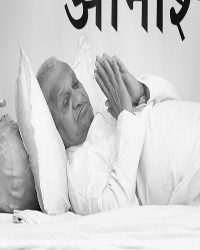
We should leave Indians to their Anna Hazares and work out our own route to the kind of democracy that will give something to our long-suffering people By Aasim Sajjad Akhtar The Anna Hazare
‘movement’ in India has gotten Pakistani progressives excited. The
chattering classes have been spitting fire The democratic credentials of the self-styled Satyagarhi aside, the very emergence of such a figure says a great deal about Indian democracy — it is the latter that we should be seeking to learn from rather than wishing for the dramatic appearance of our very own Anna Hazare. Indeed, the difference between our two countries can be summed up in the way we think about our problems — while there may be exceptions, the majority of urban, educated Indians do not constantly invoke messiahs to swoop down from the sky and rid the country of its ‘evil’ elected rulers. That Indian democracy suffers from its fair share of problems is without dispute. The Indian state has no more tolerance for basic political freedoms and economic rights in Kashmir, Nagaland, and Assam than the Pakistani state has for the Baloch. The much-feted shift away from Nehruvian socialism and towards a rabid glam-capitalist development model has given fresh impetus to a Naxalite insurgency — thought dead and buried by the early 1980s — that has spread to more than twenty percent of the country’s total landmass. Certainly, the failings of liberal capitalist democracy are as evident in today’s India as anywhere else in the world. But then we have not even managed to institutionalize this highly unequal political-economic order. And unbelievably, our intellectual and social elite continue to express outright contempt at the fledgling democratic experiment which is barely three years old. Lest we forget, Indian democracy with all of its problems is not struggling to prevent its biggest metropolis from falling through an endless abyss of violence. The Indian state may share a blatantly repressive face with its Pakistani counterpart but this has not translated into a fundamental contradiction with regard to its ideological foundations. India is a country with countless ethnic-nationalities — many more than the handful that constitute the Pakistani state — and has managed, with the obvious exceptions, to evolve power and resource-sharing arrangements whilst also celebrating its diverse identities. If I were to be convinced that more democracy is not the immediate solution to Pakistan’s problems, it would only be because a progressive revolutionary movement existed and was capable of replacing existing political, economic and social structures. What do we have today as a genuine alternative to mainstream political options? Will the middle class be convinced by yet another motley crew of establishment-friendly politicians setting up yet another Muslim League? If we are honest with ourselves we will admit that there is no immediate political alternative on the horizon. So, where does that leave the politics-hating middle class? Do I hear calls for the military to intervene? Not quite, but these days the good old patriotic general has been replaced in the middle-class imagination by the rule-bound, incorruptible superior court judge. It is the latter who has been viewed as the de facto Anna Hazare of Pakistan by the middle classes for the best part of the last three years. Even though the most optimistic observers would be willing to admit that the Chief Justice and his coterie of popularity-hungry jurors are not about to transform Pakistan into a model state, the attempts to forge a confrontation between the Supreme Court and the government have not ceased. To what end? Because it has consistently touted the anti-corruption motif, Imran Khan’s Pakistan Tehrik-e-Insaaf (PTI) appears to be winning the race to be the new kid on the block, in urban areas at least. The middle class likes the cricketer-turned politician, given that he is untried and has demonstrated a commitment to social welfare through his cancer hospital (which I believe is now expanding — a new and improved Shaukat Khanum is to be built in Karachi). Whether or not the new pretender to the throne will be able to piece together enough support from the big wigs in rural constituencies will determine his showings in the next general election. Either way, I would suggest the middle classes — especially those of an ostensibly ‘progressive’ bent — to pay more attention to the nitty gritty of the PTI’s political programme. The rhetoric may be compelling, but the content leaves a lot to be desired. In the final analysis, I cannot see Anna Hazare’s ‘anti-corruption’ campaign causing anything more than ripples in Indian political life, just like I doubt that the Newsworld scandal will dramatically affect the trajectory of British politics in times to come, and so on and so forth. Capitalist democracy in the 21st century is an institutionalised form of corruption insofar as this means that inordinate political and economic benefits accrue to a narrow elite that directly or indirectly monopolise policy and official resources. Anyone expecting that Pakistani democracy — peopled as it is by our weak and compromised political parties — would be a breath of fresh air after almost nine years of dictatorship were deluded from the outset. Does this mean that we should trash the baby with the bathwater? Does Arundhati Roy — easily the most strident critic of India’s ‘actually existing’ democracy — suggest that we should do away with the whole thing? Does Noam Chomsky — who for decades has shown that American democracy is dominated by a narrow oligarchy — call for military takeovers or judicial coup d’etats? As I suggested earlier, radical critics of democracy would gladly welcome structural overhaul, if the right subjective conditions existed for such overhaul to take place. But here we have no such options, anti-corruption tirades do little but make clear just how brittle our democracy is. And what we cannot afford right now is for this brittle democracy to be upended. What we can afford is for it to be deepened, even revolutionised. But that will take time, and patience. I say we leave Indians to their Anna Hazares and work out our own route to the kind of democracy that will give something to our long-suffering people. Steep rise in the price of gold have affected local investors and the common man in different ways By Shujauddin Qureshi Soaring gold prices have
recently made headlines, taking the investors and the common people by
surprise, the latter because While the middle class people are simply unable to buy gold, investors of gold, both small and big, are enjoying increase of value of their investments. Gold, these days, is considered as a profitable investment and comparatively less risky. People usually invest in gold coins or gold bars, purchased from reputable goldsmiths. In Pakistan, or elsewhere, the gold prices are determined according to the international gold rates. In the world market, gold prices started increasing by early this year due to financial crisis in the West. The international financial crisis, including debt issue in Europe and America has resulted in steep rise in gold rates. The declining credit ratings of the US and other European countries, weaker dollar, and heavy investment in the gold have resulted in steep rise in the rates. The weaker dollar has also added to steep rise in gold prices in the international market. In Pakistan, local currency is also depreciating, which has a multiplying impact on prices of gold. Many small investors are looking for precious metal investment. “Even reputable financial advisors recommend investment in gold as they tell us if we hold our investment for the coming couple of years, we are sure to earn a small profit out of it,” says Alim Jan Mohammad, an investor at Karachi Stock Exchange. “International recession in the capital market has forced investors to opt for gold,” he adds. For the common man, the price hike is not a good omen. Mrs. Mukhtar Afzal has postponed the marriage of her two daughters because of sky-rocketing prices of gold in Pakistan. Although the price hike is an international phenomenon, the local population is badly hit by prices of gold jewelry in the local market. “I had planned to buy the latest fashion jewelry when the marriage dates would come closer,” says Mrs. Afzal. “I was, in fact, waiting for prices to come down.” In Pakistan, traditionally a marriage is incomplete if gold jewelry is not included in dowry and not gifted to a bride by both her parents and in-laws. “Even speculative
investors did not expect such a high price,” says Mujeeb Mohsin, a local
businessman in Karachi. Although most jewelers say the number of their customers has decreased, some are happy on price escalation as investors buy gold bars from them in large quantities. Investors in gold are more active than currency investors, an investor says. The currency and shares markets are in depression and it is only gold where there is a huge profit. Some investors though are cautions to invest in gold because they fear a steep decline in rates. The retail trade of jewelry has almost come to a standstill because of increased price of gold. “Many of our members are either trying to close down the business or start another business,” says Hanif Chand of Karachi Sarafa Jewelers Group. Talking to The News on Sunday, Chand says the law and order situation in the city has also added to the misery of jewelers. “It is not easy to predict about gold rates as they are making new records everyday. For example, on Wednesday gold price hit an all-time peak of Rs58,400 per tola (11.666 grams) as compared to Rs57,000 on Tuesday,” he says. The skilled workers of gold jewelry are also the worst sufferer due to sluggish trade. “Look at the deserted shops in Saddar. Despite the fact that marriage season is in the offing just after Eid-ul-Fitr our workers are looking for other trades because of less orders of jewelry,” says Mohammad Usman, a jeweler in Saddar, adding, “Many gold workshops in the Saddar areas are facing problems due to reduction in orders. Other problems include increased hours of load-shedding.”
Pakistan’s economic managers will have an uphill task trying to persuade the IMF for yet another loan By Mehtab Haider Pakistan, which was
known as single-tranche country under the IMF programme during the 1990s,
seems all set to repeat its The problem faced by the economic team in achieving revival of the IMF programme was revenue collection that severely tarnished the image of the country in the eyes of International Financial Institutions (IFIs). The Federal Board of Revenue (FBR) Chairman, Salman Siddique, claimed on June 30 that the board surpassed its revised tax target of Rs 1,588 billion and netted Rs 1,590.4 billion. But on July 22, 2011, the same Chairman conceded that the revenue figure of Rs 1,590 billion was wrong and actual collection stood at Rs 1,550 billion. The FBR is now grappling with massive mismanagement. In these circumstances if someone believes that tax reforms will be pursued vigorously lives in a fool’s paradise. The top leadership of the tax machinery, it is alleged, is accommodating favourites of political masters on all important positions. The situation has worsened to such an extent that even donors’ money meant for tax administration reform project was largely utilised in purchasing bricks and mortars and luxurious cars instead of developing a software data house that could help broadening the tax base. All this and other failures in implementing power sector reforms that caused cash loss to the tune of Rs250 to Rs 300 billion per annum have piled up un-fulfilled promises up to a point of no return and IMF decided to say good bye without completing the ongoing SBA programme. All top functionaries of the economic team of Prime Minister Syed Yousaf Raza Gilani confirmed this unpleasant development that Islamabad would remain unable to draw the last two tranches worth $3.2 billion under SBA programme in the wake of failure to meet budget deficit target and pursuing key reforms in the power sector. The core economic team led by Minister for Finance Dr Hafeez A Shaikh and Deputy Chairman Planning Commission Dr Nadeem Ul Haq always claimed that they had decided to pursue reforms agenda in key sectors in accordance with the existing political realities. The economic team had
already witnessed the first severe damage last month when former Governor
State Bank of Pakistan, A key official of economic team said that Pakistan abandoned its efforts to pursue the IMF for reviving stalled $11.3 billion SBA programme after receiving preliminary feedback from Washington-based Breton Woods system. He was of the view that it was not appropriate to put burden on friends in the IMF with such demands that were not possible for them to entertain. When contacted, renowned economist and head of Economic Advisory Council (EAC) and Revenue Advisory Council (RAC), Dr Hafeez A Pasha, says “Pakistan had obtained quite soft programme from the IMF in November 2008 because democracy had been revived in the country and, as a frontline state in the war against terror, there was a lot of support from the international community that helped Islamabad secure favourable IMF programme.” “The IMF,” Dr Pasha says, “was so much generous with Pakistan that it approved $7.6 billion programme with first installment of over $3 billion without placing any prior conditions. There was so much support that this programme was augmented to $11.3 billion. Keeping in view long queue after European debt crisis, it would not be easy to get another IMF programme. Pakistan will have to implement tough conditions first to qualify for the second IMF programme in later part of the ongoing fiscal year,” he maintains. Pasha cautions that “the new IMF programme would be folded into tough conditions such as overhauling of cash bleeding public sector enterprises by undertaking crucial structural reforms in order to curb billions of rupees losses per annum.” However, a top member of Gilani’s economic team says broad parameters of the next IMF loan were expected to come under discussions in October after expiry of existing SBA programme. The IMF is bound to hold consultations with all member countries once a year. The top official concedes that there was no other option but to seek fresh IMF loan package as the Breton Woods Institutions (WBIs), including the IMF, World Bank and all other bilateral donors knew that Pakistan’s economy was plunging into a difficult situation. Talking to The News on Sunday, Vice Chancellor Pakistan Institute of Development Economics (PIDE), Dr Rashid Amjad, says it seems that the IMF is out and the existing SBA programme is not going to be revived till September 30, 2011 when it formally expires. “The real problem on the economic front will start emerging when Islamabad starts repayments of IMF’s outstanding loans from February 2012,” he adds. Although, the external account, according to him, was quite comfortable at the moment but it could come under pressure when repayments of due loans start. Pakistan’s economic team, led by Minister for Finance Dr Hafeez Shaikh, will visit Washington in September to attend the annual spring meeting of the IMF and WB scheduled from September 21 to 25, 2011. On the sidelines of coming annual spring meetings, Islamabad’s economic managers will discuss possibilities of new programmes with the top management of the IMF. The IMF extended this programme from December 2010 to September 30, 2011 with the condition that Islamabad would move ahead with Value Added Tax (VAT) as well as pursuing key other reforms, especially in the power sector and placing amended SBP act that could not be implemented effectively.
construction Sub-standard building materials and poor maintenance have cost precious lives in Karachi and elsewhere in the country By Professors Sarosh Hashmat Lodi and Noman Ahmed The past few weeks saw
many people losing their life in roof collapse accidents. A roof in a
house in North Nazimabad, Karachi Torrential rains in Sindh caused a roof collapse of a house in Mirpurkhas that resulted in six fatalities. The common reason behind each of these tragedies is the existence of buildings and structures that are unfit for human habitation. In the old quarters of Karachi, the Sindh Building Control Authority has declared more than 190 buildings dangerous. No one knows about the exact count of such houses elsewhere in the city and beyond. Ironically, calamities such as earthquakes, floods and cyclones uncover the weak construction of various kinds, leading to deadly outcomes. It is important to note that buildings with a proper engineering design, construction and supervision have been able to fare better in the face of disasters of different categories. But the existence of safe buildings is limited. A road journey from Karachi to Peshawar reveals that barring few exceptions, many buildings and structures have a non-engineered origin and existence. Several formats of construction are followed in the country. Areas in southern Sindh in and around Karachi resort to self-built construction comprising reinforced cement concrete and cement sand blocks. Most of the areas in Sindh, central and northern Punjab, and Khyber Pakhtunkhwa have reinforced or un-reinforced brick construction. Some constructors also use timber and stones subject to comparative costs and availability. Houses of the poor are usually clad in mud construction of very basic kind. Roof material also varies from cast-in-situ reinforced concrete to thatch and reed mats. However, absence of a proper design exposes these structures to multiple risks. Absence of soil investigation, lack of basic foundations, inappropriate geometry of construction, poor or total lack of grading of construction materials, disproportionate use of reinforcement (wherever used), poor ventilation, absence of provisions of emergency exits, faulty electrical installations and plumbing accessories render much of the building stock unworthy of utilisation. Even the slightest of catastrophes or disasters lead to damage of life and property. The tragic earthquake of 2005 led experts to do extensive research on scientific assessment of threats and vulnerabilities. Ample reason was found to properly plan and design buildings in almost all locations that possessed threshold parameters for safe human habitation. Due to lack of adequate land use restriction in the calamity-prone areas in the city and regional planning laws, master plan rules or by-laws, the cities tend to expand in all directions, occupying even most danger prone terrains. Realising this issue, need was felt for establishing a proper techno-legal regime through appropriate provisions for safety against natural hazards. The Federal Ministry of Housing assigned the task of developing the national building code to a leading consulting firm of the country. The Expert Committee constituted by the Pakistan Engineering Council vetted the proposed guidelines. Simultaneously, the Federal Government also enacted National Disaster Management Ordinance, 2006 (NDMO). This provided an elaborate system of Disaster Risk Management (DRM) at the national, provincial and district level was established. The National Disaster Management Authority (NDMA) at the federal level started acting as focal point to lead the process by facilitating the work of Provincial Disaster Management Authorities (PDMAs) and the District Disaster Management Authorities (DDMAs). The new system envisaged sustainable social, economic and environmental development in Pakistan through reducing risks and vulnerabilities. Whereas key documents such as building code and regulations for controlling the zoning and building activity were enacted, the cumulative scenario of built environment showed an overall anarchy in the domain of construction. And when a calamity strikes, not much efficiency is witnessed on the ground by the newly-created band of agencies. In addition, the limited capacity of local institutions, weak interface between field stakeholders such as petty contractors and material suppliers with local bodies and proverbial mal-practice have also compounded this undesirable outcome. Several practical considerations must be kept in real perspective. The approach of mere promulgation of building by-laws and their bureaucratic enforcement will not be able to yield positive results. On the contrary, it is likely to open a Pandora's Box of malpractice and corruption where relevant government functionaries shall find it prudent to penalise aspiring builders who decide to construct various facilities. A pragmatic approach must be adopted to generate effective results that practically benefit the society. Efforts must be made to enhance quality of basic materials and standardised construction products. Cement, sand, steel, bricks and blocks constitute this category. Many pilot projects have proved that by raising baseline quality scales of fundamental materials, the construction quality can be greatly improved. Vocational training programme is another key consideration. The country has a well-laid down institutional framework of technical and vocational authorities in each province. They must be engaged to develop output-oriented training programmes based on sound need analysis. The writers teach at the NED University of Engineering and Technology, Karachi.
Balochistan: The largest province in terms of area should be seriously taken for its massive economic potential By Zubair Faisal Abbasi Desiring an economic
growth impetus in Balochistan is asking for a moon, or so it seems. Many
argue that unless peace is A more complex proposition is that economic growth will be rootless and possibly ruthless until rights of people are not recognised and respected. In principle, the proposition holds water partially albeit bending the stick too much on the other side. For the proposition being partially true, the reason is simple. If history can be a guide, growth can be made inclusive and it can copilot with rights being accorded to people. Higher incomes, human development and well-being even help create weather systems in which the progeny of rights can be more meaningfully nourished. Apart from the theory of growth and equity in rights, the fact is that Balochistan province is having more than fifty percent of its population under below the poverty line while in rural areas the poverty touches seventy percent according to some reports. The situation required at least two basic features of human activity to take some shape as Prof. Paul Collier has argued in his lectures on ending poverty of the billion. First is compassion and the second is operationalisation of enlightened self-interest. Compassion is something which helps activity to get started while enlightened self-interest keeps people serious about growth for poverty eradication. Compassion demands creation of visionary inclusive growth strategies while enlightened self-interest demands facilitating the entrepreneurs and firms which form the building blocks of an economy. Practically, what is being suggested is to use fiscal and administrative powers of the state to articulate a growth framework and build technical and commercial skills of people in the direction of growth strategy. In this article, a case for building productive capacity of the economy of Balochistan for agro-based high value food industries is argued. Estimates by many experts show that agro-food industries are sun-rise industries for many years to come and will generate profits for firms and growth benefits for the economy. However, care needs to be taken that the development gains are shared with most people and inequalities across class, ethnicity, and geographical expressions are taken care of. This care is actually weaved through many interventions such as by creating good quality social security systems as well as engendering labour-absorbing growth momentums. However, to make sure that economy does not go into deficit, the inclusive growth strategy needs sufficiently efficient system of revenue collection. The most important step is to consider insights of behavioural economics. The theory says that endowment effects have to be created in an economy because people value the things more which they own. Therefore, utilisation of growth channels should not create resource curse-like situation which give power to a minority elite — both foreign and local — to be the exclusive and primary beneficiaries of a booming economy. Around the world, the chances of increase in production and consumption of high value foods such as fruits, vegetables, meat, and dairy seem inevitable. The emerging middle classes in three economic powerhouses: China, India and Russia bordering Pakistan create opportunities for such businesses. It is important to know that around forty percent of Pakistan’s livestock is based in Balochistan while the province also gets around forty percent of GDP from this sector. Presently, the province has around 17 poultry farms, 15 dairy and cattle farms while one disease diagnostic laboratory and one animal science institute is there to serve the livestock sector. This means that there is need of big push to formally organise and modernise the sector in terms of production but also in terms of domestic and international trade. Facilitation in trade means more than just finance but also awareness and laboratory certifications about health and technical standards. These steps can help create globally acceptable and respectable brands to become competitive in national and international markets. Ironically, the governments at this moment is not spending enough money or providing friendly support for the creation and operationalisation of firms. For example, according to reports in the press, a meagre amount of Rs280 million has actually been allocated for the livestock sector in Public Sector Development Programme (PSDP), which is insufficient to create institutional arrangements for growth. It is also important to recognise the drivers of economic growth in Balochistan and take all possible steps which can increase fiscal transfers (and aid), trade, security, and better governance. The
writer is a development consultant and can be reached at abbasi.zubair@gmail.com
The common man has the right to demand accountability of public officials By Gulbaz Ali Khan and Fayyaz Yasin Social accountability
refers to the concept of public involvement towards building a mechanism
where common citizens of a state can participate in demanding
accountability from public officials responsible for ensuring efficient
delivery of services. Aimed at triggering the collective action for
change, in a broader context, the concept of social accountability is all
about gathering Some of the tools and mechanisms employed to ensure social accountability are comprised of citizen report cards, participatory budgeting, community score cards, citizen charts, public expenditure tracking, social audits and people’s right to information acts. Though the concept of SAc is relatively new the areas where it has been practised, has marked significant achievements in improving governance and ensuring quality service delivery. However, it has also been realised that the efficacy of the concept towards achieving the desired goals can only be enhanced if additional measures are taken to link up the supply and demand side of services, capacity of staff is upgraded, and an effective monitoring and evaluation system is put in practice. Moreover, the entire idea of SAc must revolve around civic engagement, where common citizens and social organisations can directly participate in demanding accountability of the respective authorities. The idea behind the SAc initiative is to achieve broader goals of reducing poverty, increasing effectiveness of development works, and empowering the marginalised sections of society. The mechanism of social accountability is usually misunderstood as a mere practice that is confined to the voting process only as communities exercise their right to hold their representatives accountable. In reality, however, the idea stretches far beyond that and besides ordinary citizens, invites participation of civil society organisations as well. Together, they not only provide their input in public policy-making and participatory budgeting, but also play a vital role in public expenditure tracking, monitoring of public services delivery and, if needed, in lobbying and conducting advocacy campaigns. There are no two opinions about the fact that active citizenship is one of the prerequisites of effective democracy. Here, by active citizenships we mean the form of citizenship where people are not only aware of their rights but also vigorously opt for an active engagement towards demanding transparency and holding government institutions accountable. Thus, SAc also implies addressing loopholes in democratic practices as most of the time government institutions miserably fail to deliver services equitably and effectively. SAc ensures enhancing participation of ordinary citizens through mobilisation, training, capacity building, lobbing and monitoring the accountability. While completely in practice, social accountability can yield positive results to a state or society. Firstly, it empowers the marginalised and neglected segments of society by engaging them in constructive dialogue with bureaucratic and political administration and resultantly improves the quality of services being provided to them. Secondly, it augments the capacities of government offices to institutionalise the tools of social accountability and form their policies while keeping in view the needs of marginalised families and to plan and execute their activities accordingly. Thirdly, it builds up the capacities of civil society organisation by engaging them into the activities that ultimately promote democratic practices at all government levels. Finally, it plays a pivotal role in forming people friendly national policies based upon lessons learned from the SA practices promoting the participation of the marginalised. The realisation for the importance and implementation of social accountability is in its infancy stage in Pakistan. However, acknowledging the efficacy and need of the concept in highlighting and promoting the essence of democracy and improving the quality of service delivery in the country, some development organisations, with the financial cooperation of the donors, are implementing social accountability in their area of interest. Affiliated Network for Social Accountability South Asia Region (ANSA-SAR) is a World Bank (WB) initiative, which is aimed at promoting transparency, curtailing corruption and ensuring good governance in South Asia region. Pakistan, Bangladesh, India, Nepal, Afghanistan and Sri Lanka are the countries where SAc programmes are currently implementing. The organisations selected from Pakistan are Sustainable Development Policy Institute (SDPI) and Centre for Peace and Development Initiative (CPDI) in Islamabad and Shehri and Hisaar foundation in Karachi. All four organisations are aimed at employing the tools of social accountability which, in the long run, will lead to achieving the essence of democracy and good governance and will improve the quality of service delivery in Pakistan. The social accountability tools these organisations are implying respectively are Citizen Report Cards, CSS tools, Mutual accountability and Right to information. The fact of the matter is that the world around us is changing rapidly and to ensure the sustenance of our society we must realise the fact that democratic governance and accountability will have to be put into practice. Home|Daily Jang|The News|Sales & Advt|Contact Us| |
|
 about corruption and nepotism virtually since this government came to
power — as was the case with all other elected governments before it —
and the ‘anti-corruption’ campaign that Hazare is spearheading has for
a change got the Pakistani middle class wishing its country could be a
little more like India.
about corruption and nepotism virtually since this government came to
power — as was the case with all other elected governments before it —
and the ‘anti-corruption’ campaign that Hazare is spearheading has for
a change got the Pakistani middle class wishing its country could be a
little more like India.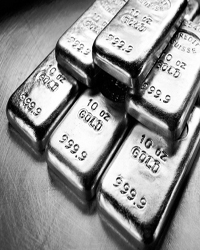 jewelry is considered as symbol of prestige and honour for well-to-do
families.
jewelry is considered as symbol of prestige and honour for well-to-do
families.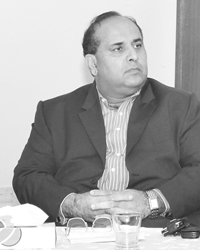 “Internationally, investors are preferably buying gold for investment
purpose, particularly after weakened dollar and stock market recession. In
Pakistan, gold has become the first choice for investors. For small
investors, however, storage of gold is a big challenge due to worsening
law and order situation in the country. For a well-off investor gold is a
jackpot,” he adds.
“Internationally, investors are preferably buying gold for investment
purpose, particularly after weakened dollar and stock market recession. In
Pakistan, gold has become the first choice for investors. For small
investors, however, storage of gold is a big challenge due to worsening
law and order situation in the country. For a well-off investor gold is a
jackpot,” he adds. history as the existing $11.3 billion Standby Arrangement (SBA) will
expire on September 30, 2011 on an unsuccessful note.
history as the existing $11.3 billion Standby Arrangement (SBA) will
expire on September 30, 2011 on an unsuccessful note. Shahid Kardar, resigned and parted ways with old friends as he was fully
convinced that it was not possible for him to pursue ‘crucial reforms’
under the dispensation of this regime.
Shahid Kardar, resigned and parted ways with old friends as he was fully
convinced that it was not possible for him to pursue ‘crucial reforms’
under the dispensation of this regime.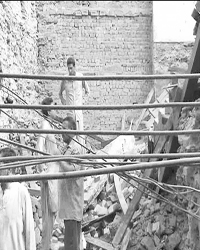 caved in and caused two causalities on the eve of the Independence Day. In
another accident, a five storey building collapsed in Moosa Lane in the
dense neighbourhood of Lyari, killing 31 people and leaving many others
maimed and traumatised for life.
caved in and caused two causalities on the eve of the Independence Day. In
another accident, a five storey building collapsed in Moosa Lane in the
dense neighbourhood of Lyari, killing 31 people and leaving many others
maimed and traumatised for life. restored, growth will remain alien to the province and, therefore, poverty
has to keep stinging the frail bodies. Flipping the argument upside down,
there are people who argue that carefully managed growth in itself can
create conditions for peace and socio-political stability. Factually
speaking, the causality may run either way.
restored, growth will remain alien to the province and, therefore, poverty
has to keep stinging the frail bodies. Flipping the argument upside down,
there are people who argue that carefully managed growth in itself can
create conditions for peace and socio-political stability. Factually
speaking, the causality may run either way.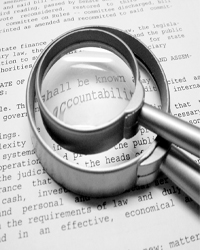 information on rights and service delivery.