|
|
| |
Recommended
reading from 2008
|
| |
AS
Byatt
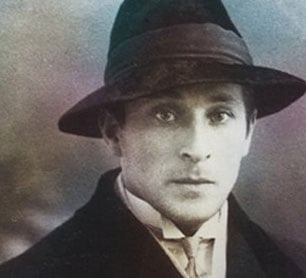
One biography: Jackie Wullschlager's endlessly absorbing account
of Chagall and European life, wars, arts and ideologies (Chagall:
Love and Exile).I still don't love Chagall, but every page of
this tale is enthralling, gripping and strange.
Three novels. Philip Hensher's The Northern Clemency, about
Sheffield in the Thatcher years. Hensher understands people
and he understands politics. He understands the wise, the mean
and the absurd. Michelle de Kretser's The Lost Dog, which is
one of the best-written books I've read for years. She writes
with clarity and wit and thoughtfulness. And Nadeem Aslam's
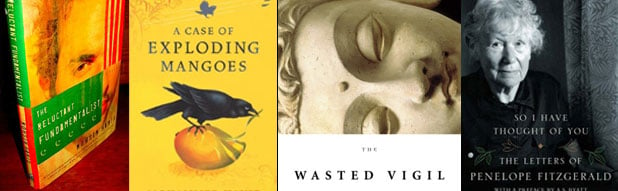
powerful Afghanistan novel The Wasted Vigil. This book is terrifying.
It is also tragic and beautifully written, and changes the reader. |
 |
|
| |
Tariq
Ali
I was much impressed by two debut novels by south Asian writers who,
unlike many local counterparts, write about things that matter. Mohammed
Hanif's A Case of Exploding Mangoes is a surreal thriller dealing
with the assassination of a Pakistani military dictator. At times
incredibly funny, it also, like a Buñuel film, captures the
sinister side of life. Tahmima Anam's The Golden Age explores the
painful birth-pangs of Bangladesh through the eyes of a family wrecked
by the war.
Ronald Fraser's magisterial history Napoleon's Accursed War is a brilliant
view from below of the popular Spanish resistance to French invasion,
in what the insular Brits still call the Peninsular war, when the
term "guerrilla" came into common currency. One of the great
epics of the 19th century, properly recovered for the first time by
Fraser in all its ambiguities and tragedies, along with its popular
heroism, it's continuously moving, without a trace of sentimentality.
William Boyd
The most original novel I read in 2008 was Gordon Burn's Born Yesterday.
It is a highly sophisticated take on the news that was served up to
us by the media in 2007. Burn's great gift is to make us see these
events - that we were all very aware of - anew, through the filter
of his fiction. No one has written more shrewdly and knowingly about
popular newspaper culture than Burn, but with this novel he taps into
something more profound and sinister.
The most nriginal novel of 1842, Nicolai Gogol's Dead Souls, has achieved
a magnificent rebirth in 2008 through Donald Rayfield's superb new
translation. Rayfield's translation is one that Vladimir Nabokov would
unreservedly admire and is accompanied by dozens of superb, hitherto
unseen illustrations by Marc Chagall. A big, beautiful book and a
mould-breaking classic reinvigorated. |
| |
 |
| |
Alastair Campbell
I missed Mohsin Hamid's The Reluctant Fundamentalist when it came
out in hardback, but picked up the paperback at City airport a few
months ago. It was one of those rare occasions when I wanted the flight
to be longer so I did not have to stop reading. The narrative device
- the entire novel is just one side of a conversation between two
strangers in a Lahore café - could have been very limiting.
But it is the perfect vehicle for a beautifully written story that
builds in intensity to a climax that has you thinking long after the
book is closed.
Carmen Callil
I have spent many happy hours reading So I Have Thought of You: The
Letters of Penelope Fitzgerald. Until a biography of this genius comes
along, we have these letters, so ironic, idiosyncratic and beautiful.
Because her letters are full of the stuff of every day and because
her life straddled the last century (she died in 2000), her correspondence
presents both a public and private portrait of an age. And every letter
made me think: if Jane Austen had been permitted to live a century
or two later, had lived in England through two world wars and had
been allowed to take part in the ups and downs of domestic and literary
life, she would have been just like Penelope Fitzgerald. –
Courtesy The Guardian
|
| |
|


