


|
|
|
|
 |
 |
   |
Mock
war secularism
debate analysis Sweet
dreams Intellectual or political or both? differences were tolerated and diversity was cherished By Ateeb Gul The story of the Islamic religion unfolding onto the world stage is most fascinating. In fact, calling the formative centuries of the Islamic civilization ‘rich’ will be a massive understatement. Adorned with intellectual, legal, philosophical, scientific, artistic, architectural, poetic and mystical contours, the Islamic civilization has contributed volumes to the history of the world.
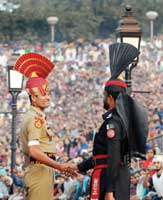
No aggressive posturing or just a formal handshake between the officers representing the two sides? An evening at Wagah’s flag-lowering ceremony to see what has changed By Waqar Gillani A few miles away from the colourful city of Lahore — the heart of Pakistan — the show starts by evening at Wagah border, the line that divides Pakistan and India. The show pulls a large crowd and serves like a daily doze
to invoke the spirit of nationalism and patriotism against the "real
enemy" of Pakistan. Several hundred people start moving towards the
border, on both sides, to watch this flag-lowering ceremony, which has been
made attractive with a competitive parade of a special group of Jawans
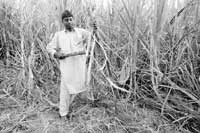
(soldiers) on both sides. It is more like a competition between the forces and general public, with each laying a greater claim to patriotism. The challenging Pakistani soldiers, wearing angry looks, stride past the people with rhythmic thumping of foot while showing up fists to the "enemy" during the parade ceremony. Their posture is proverbially not less than the traditional "Pehlwan" (wrestler) who falls in the ring to shoot down the rival. Particularly trained and well taken-care of Jawans, mostly picked up from district Mianwali of South Punjab, with good height and wide chest, are made to take special diet and rehearse for a couple of hours every day before the show starts. Pakistan Rangers take pride in these gestures designed to show superiority over the other side of the border force. Pakistan Rangers (Punjab) and Indian Border Security Force (BSF) had recently announced to reduce hostile gestures towards each others during flag-hoisting ceremonies. Later, the Pakistani side backed down from its earlier position and shot down the Indian suggestion to do away with the aggressive posturing and boot-stomping during the ceremony at Wagah Border post. Both sides have agreed to revive formal handshake between the officers representing the two sides and stop showing thumb in the fist gestures. "There is no particular change. The troops will continue their daily parade as part of the flag-lowering and hoisting ceremonies at Wagah Border in the traditional enthusiastic style," a Pakistan Rangers official tells TNS. The show begins with a competition of patriotic songs on loudspeakers on both sides like "Aay puttar hatan tay nai vikday" (these sons of soil never compromise their dignity while standing on the border and fighting in battlefield) and "Dil Dil Pakistan, Jaan Jaan Pakistan" (My heart and soul is Pakistan). These songs are followed by patronised high-pitched national slogans by a few regulars wearing green attire who have been attending the ceremony for the last eight years. They are rewarded by the audience in the form of some money. The parade continues till Indian Taranga and Pakistani Jhanda (flags) are down on the sun set. For former brigadier Rao Abid, now a human rights activist, the ceremony conducted on both sides of the border is contrary to accepted norms and etiquette of military drill. "It puts the participating troops in bad light and shows them being delinquent and ruthless. This is a far cry from being disciplined, well trained, honourable and chivalrous which should be the hallmark of any good army," Abid tells TNS. "It adds yet another unfortunate dimension to the normally raging fire of hate and mistrust between the two countries. The exaggerated boot-stomping, furious swing of arms and distortion of facial expressions are major features of this ceremony," he laments. "It has resulted in damage to joints and the knees of the troops participating in this display." "We cannot compromise on our dignity," an official of the Pakistan Rangers says. "The hard gestures are part of the drill that forces perform on both sides and emotionally involved people watch the parade. There is no compromise on foot-pressing and leg-stretching. It is a soldier’s dignity. India should compete with the Pakistani soldiers. It is a professional parade and not a catwalk. There can be goodwill gestures between the governments, human rights bodies, but not forces. An enemy is enemy and India is real enemy." People from all walks of life, especially schoolchildren and college students, have to walk up to two kilometres in a seemingly non-friendly environment at the border because of ‘security’ concerns to watch the show. Spectators park cars and vans away from the border in an open field. Protocol vehicles are an exception. While across the border, the scene seems more amazing as enthralled people sit even on the road in a relatively friendly atmosphere. "This creates devotion and love for Pakistan. It is very important for patriotism," says Fayyaz Ahmad, 54, a government official in the Audit Department who loves to come to see this parade. "Through such challenging expressions, we tell our enemy that we are not sleeping," says a pompous solider who is an integral part of this show and surrounded by public for a group photo. "Will you print my picture in the press," he asks before speaking to TNS.
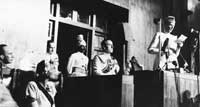
Let truth be known Separation of church and state is not just the right thing to do but it is the only thing that will help build a progressive and democratic state By Yasser Latif Hamdani Other participants in this debate have already informed the reader of the history of the idea of separation of church and state which is rooted in the power struggle between temporal rulers and the church in largely homogenous nation states of Europe and America. The history of Europe, especially the period that is referred to as reformation and renaissance, is also significant as being the history of Protestant and Catholic sectarian conflict. It is, therefore, not a surprising paradox that secularism
in its purest form emerged from confessionalism that was often at the root of
the European nation state. England was the bastion of protestantism, even
though protestantism itself was rooted in a rebellion against papacy. Similarly, Spain and other continental powers were self-consciously Catholic. England’s adoption of the Protestant creed, followed by a fanatical purge of the Catholics, was itself the state’s attempt to establish the primacy of the state over religion. The binary thus is not a false one nor can this binary be reconciled. Secularism is the state’s struggle to liberate itself from the burdens of established church and dogma. Multiculturalism comes only later and is at best a desirable by-product. So what is the relevance of this term or idea in a conservative Islamic society such as ours which is organised under a constitution that defines itself as Islamic and blends religious ends with secular ends? There is to start with, of course, the burden of Pakistan’s founding myth i.e. Pakistan was created in the name of Islam, which gives our priestly class a veto on any progress towards secular equality in Pakistan. This is stemmed in confusion regarding the events that led to the partition of the subcontinent. What is clear, however, to a historian is that Pakistan’s founder, Jinnah, expected the new nation to follow Europe’s example when he said that "in due course of time, Hindus will cease to be Hindus and Muslims will cease to be Muslims, not in a religious sense for that is the personal faith of an individual, but in a political sense as citizens of the state". Quite appropriately the nation’s father quoted the example of Great Britain where Protestants had long persecuted Catholics but had ultimately come to see themselves as one nation, Protestant and Catholic. Ten years before this famous speech, on 20 September 1937, he had spoken in the Indian legislative assembly of a "distant ideal to mould the whole of India into mere citizens when the Hindus will cease to be Hindus and Musalmans Musalmans politically" but had argued for a solution to "the problem of minorities first" instead. The point here is that Pakistan’s creation was the result of the inability of the representative parties of India to agree on a constitution. The myth of Pakistan being founded in the name of Islam, thus, is a sham and the more we insist on it the more we will prove it a white lie. The recent debate on blasphemy law has once again brought
out our internal contradictions to the forefront of the debate. I do not need
to remind the reader that the rot started when our leaders, beginning with
the framers of the Objectives Resolution, chose to demarcate a definite role
for Islam, in letter and spirit, in our constitutional documents. Having thus
opened the door, the slide down the slippery slope was a matter of time. With the separation of Bangladesh in 1971 and the worldwide conservative Islamic revival of the 1970s and 1980s, Pakistan chose to underline its Islamic identity and in doing so became a state intolerant of diversity. Just as multiculturalism is the consequence of secularism, shrinking of dissent and tolerance is the consequence of theocracy. The most devastating impact of a deliberate detour from normality that our leaders took from 1949 and the consummation of the marriage of religion and state in 1973 has been a breakdown of civil discourse in our society. In our quixotic quest of fusing the temporal with the eternal, we have denigrated the faith and destroyed our government. The human march towards progress is irreversible and trying to march against it means sure destruction. The attempt and the abject failure of Muslim societies in reconciling the binaries will mean that Islam, unfortunately, will have to face a greater reversal in the Muslim East than Christianity has faced in the Christian West. It is unfortunate because Islam’s legal and civilisational traditions provided for an internal mechanism of ijtehad which was abandoned over time. Religion would still have a place in society but chains are meant to be broken not worn like ornaments. The Church in the West realised it gradually but at the time it did not have any other advanced civilisation breathing down its neck. In the information age a country such as Pakistan cannot sustain itself on religious dogma and if it tries to, it becomes an unreliable factor in global politics. The international community is mortally afraid of a nuclear armed nation which has its top nuclear scientists people who believe in miracles and whose enrichment experts have been known to write papers on how to harness the power of the Djin to produce electricity for Pakistan’s power needs. And the world is also not too impressed with a commitment to religion that leads to death sentence for a poor hapless woman whose only crime was to be born in a Christian household in Pakistan. Contrary to the propaganda drummed against secularism in Pakistan, the-self styled "anti-secular" forces can actually be quite anti-people. Just one example: In the landmark Qazalbash-Wakf case, drawing on arguments based on a limited and opportunistic interpretation of Islam, through Pakistan’s premier religious scholar Justice Taqi Usmani, the Supreme Court of Pakistan declared land reforms un-Islamic. Separation of church and state is not just the right thing to do but it is the only thing that will help us build a progressive and democratic state for 170 million people, a great majority of whom are Muslims. The failure to voluntarily correct our course will condemn all of them to uncertainty and poverty. The choice is ours as well as the responsibility. Let us not confuse our people further by speaking in abstractions and nuances of Islamic interpretation when we need to simply tell them the truth.
Mischievous leaks Defending and putting a spin on the spin of their diplomats, many of whom acted as spies, and disproving conspiracy theories is not going to be easy for the US By Imtiaz Gul Should we call it a historic treasure trove or the "mischievous" side of the US private and public diplomacy? Or perhaps a Tsunami that has swept in a good part of what US civilian and military leaders say in public about countries such as Pakistan and their leaders? The "stinking" leaks — even though US
Secretary of State Hillary Clinton played them down as part of the job
"US diplomats are performing in the national interest" — do
provide strong hints and proofs about the suspicions and misgivings the
American administration nurture about Pakistan. The deluge of leaks, including those from Ann Patterson on Pakistan’s nuclear programme as well as personal "assessments" of other rulers, do reflect the thinking within the State Department and gives plenty of reason to be skeptical about its functioning. Clinton condemned the release by WikiLeaks of a quarter-million confidential American diplomatic cables as "reprehensible" and promised action against those involved, yet these documents gave scores of detractors of the United States of America, particularly the Muslim world, a reason to feel vindicated. As a consequence, many hardliners and right-wing nationalists are cockcrowing about their past statements. In an "I-told-you-so" fashion, the conspiracy theorists are reminding us of their conviction that the Americans are after Pakistani nuclear weapons, something that clearly comes through a dispatch by the then American Ambassador Anne W. Patterson (May 2009). She reported to the State Department that Pakistan was refusing to schedule a visit by American technical experts because, she said quoting a Pakistani official, "if the local media got word of the fuel removal, they certainly would portray it as the United States taking Pakistan’s nuclear weapons." Nothing could have been more shocking than to learn through this leak that the move had been afoot since 2007 to remove from a Pakistani research reactor PINSTECH highly-enriched uranium that American officials fear could be diverted for use in an illicit nuclear device. The excuse may have been to get back the enriched fuel that the US gifted to Pakistan in the 1960s for PINSTECH but the thinking betrays a grave suspicion of Pakistan as an "irresponsible" country where enriched fissile material could land in the hands of rogue elements — the anti-US jihadists. Patterson’s dispatch essentially exposes the discriminatory treatment, if not the paradoxical US policy, towards Pakistan. It is probably not out of place to mention that the New York Times, based on the leaks, has already pieced together a "fascinating study of the twists and turns of US policy towards Iran and how this relates to Saudi-China relations — guaranteed oil deliveries were offered if Beijing cut its links with Tehran — and the US-Russia debate on missile defence." The goal for the Americans in both cases was to get Moscow and Beijing on board to back tougher sanctions against Iran. The WikiLeaks cables are therefore likely to entail serious short-term and long-term impact on the US-Pakistan relations, and undermine those Pakistanis who have spoken up in favour of closer cooperation with the US in recent times, putting the so-called liberals on the defensive. Fundamentally, mistrust and mutual doubts continue to overshadow the uneasy but expanding Pak-US ties, which are likely to get an equally harder hit when seen in the context of revelations Bob Woodword had made in his book "Obama’s Wars" about the special secret forces operating in the Af-Pak region. One of the leaked correspondences says that small teams of US special forces have been operating secretly inside Pakistan’s border regions. In October 2009, for instance, the Pakistani military quietly allowed a small team of US special operations soldiers to "deploy with Pakistani troops in North and South Waziristan." They were there to provide "intelligence, surveillance and recon support co-ordinating drone strikes and helping the military hunt down militants." Until now, Pakistan army has consistently denied reports of the "US boots on the ground." In fact, soon after a brisk US marines operation in early September 2008 in Angoor Adda, South Waziristan, the Army Chief Gen. Ashfaq Kayani had issued a stern warning saying no "American operations on the Pakistani soil would be allowed." In this context, therefore, it will not be surprising if many faces go red — both in Washington and Islamabad — where the Americans believe their interests are well-guarded. While far from perfect, says one of the documents on the Pakistani president, "President Zardari is pro-American and anti-extremist; we believe he is our best ally in the government." Unlike these flattering words, Saudi King Abdullah seemed to see Zardari in a different light. These remarks, and also those about Iran and its president, primarily betray the deep-seated thoughts of the Saudi monarch about heads of state in his neighbourhood. It bears the potential of virtually destroying the good work that officials in Tehran and Riyadh had put in to improve their relations. On the other hand, some of the documents single out sources within Saudi Arabia as the financiers of al-Qaeda and like-minded networks operating elsewhere. Publicly, there is hardly any ostracisation of Saudi Arabia on this count, or for that matter on public executions, (for the plain reason that Saudi Arabia services and protects the American defense industry by buying billions of dollars worth of hardware almost every year). Al-Qaeda funding from Saudi sources is in fact something that largely goes missing in the debate — also in the US media little attention is paid to the Saudi role in the spawning of trans-nationalist Islamist movements. These networks and movements are now threatening not only Pakistan but also other countries. Regardless of the merit or otherwise of the act of leaking official documents, the entire US administration now has a tough mission — to convince allies such as Pakistan that it means no ill. Defending their diplomats, putting a spin on the spin of their diplomats many of whom acted as spies, and disproving conspiracy theories, however, is not going to be easy. The leaks have only reinforced the alarmists, conspiracy theorists and Taliban-al Qaeda apologists. This is the last thing the United States would have wanted in Pakistan for instance; Washington has committed over 700 million dollars for the post-flood operations, hoping it would help improve its public image in Pakistan. The leaks are scary as well as alarming as they would slow down any reforms — if any at all — underway within the Pakistani establishment. And that will certainly be detrimental to the desperately-needed review of our defense outlook. The author heads the Centre for Research and Security Studies, Islamabad and is the author of The Most Dangerous Place (Viking Penguin USA) Email: imtiaz@crss.pk
The crisis may worsen in days to come as sugarcane producers are asking for rates the mills owners are not willing to pay By Shahzada Irfan Ahmed Sugar crisis in the country seems far from over despite the fact the government has stepped in, though very late, to ensure the commodity’s availability at rates between Rs70 to Rs75 per kg. But the situation on ground is that the rate differs from place to place and at many places shopkeepers insist on selling sugar at higher rates. Different stakeholders in sugar trade believe it will
be an uphill task for the government to ensure these rates in days to come
due to certain reasons. For example, Sheikh Mushtaq Ahmed, a Lahore-based
sugar dealer, says the sugar being sold at Rs70 to Rs75 per kg was
imported by Trading Corporation of Pakistan (TCP) some time back when
rates in the market were comparatively low. He tells TNS, "The local sugar industry cannot produce sugar at these rates as the input costs have increased a lot and the cost of sugar in the international market has also soared to record levels. The constant rise in sugarcane prices, power tariffs, and rates of petroleum products and imposition of new taxes like Reformed General Sales Tax (RGST) would definitely push the price upwards." Ahmed says, "The imported sugar is in powdered form and has low sucrose level. On the other hand, the granulated sugar produced locally is high in quality and has high sucrose level. Two spoonfuls of powdered sugar cause as much sweetness as caused by one spoonful of granulated sugar." Ahmed’s apprehensions apart, the most immediate cause for increase in sugar prices can be the shortage of sugarcane supplies to sugar mills. The sugarcane producers are asking for rates the sugar mills owners are not willing to pay. Javed Kayani, Chairman of Pakistan Sugar Mills Association (PSMA), tells TNS, "It’s impossible to ensure a fixed price for sugar in the absence of a mechanism to fix input costs." He says farmers are demanding Rs250 to Rs300 for per maund of sugarcane which is not workable if the government wants the industry to produce sugar for Rs70 to Rs75 per kg. "To produce sugar at this price, sugar mills will have to procure sugarcane at rates as low as Rs150 to Rs180 per maund." He says, "The government monitors rates of flour but in that case it provides flour mills wheat at subsidised prices. Therefore it is in a position to dictate its price." Kayani questions as to how the government can ask the sugar industry to sell sugar at a price fixed by it. "If the input costs are to be determined by the market then why not the output cost," he adds. Kayani says though sugar mills have started crushing, most of them are running even at less than one-third of their capacity because the supply of sugarcane to mills is just 30 per cent of what’s needed at this time. "The markup on industrial loans has reached 17 per cent which makes it impossible for them to sell sugar at same price for longer periods. Every month Re1 per kg has to be added to the price to account for debt-servicing charges. RGST, if imposed, will automatically lift sugar price to Rs80.5 per kg in the market even if the ex-mill price of Rs70 is ensured by the industry," he says. Kayani shares it with TNS that to discourage hoarding, PSMA has told all its members to declare their stocks honestly. He says India is expecting a bumper sugar production this year and may try to dump it in Pakistan around January. "My request to the government is to discourage import of Indian sugar at the cost of local growers and industry," he says. Sindh Abadgar Board (SAB) President Abdul Majeed Nizamani, a grower from Matiari, Sindh, tells TNS the sugar situation will not stabilize till the government creates a balance between inputs and outputs. He fears that the shortage of sugarcane is bound to worsen the crisis in times to come. "Only 14 out of 32 sugar mills in Sindh have started crushing though none of them is working even at half its capacity. The growers are not willing to sell their produce at low rates, but they will have no other option after a month when the sugarcane available with them will start losing moisture content, weight and sweetness." Nizamani says the farmers who have suffered heavily due to floods are being offered rates as low as Rs170 per maund. "In Sindh, growers have also to bear the cost of transportation to mills, while there are procurement centers at regular distances in Punjab which save growers transportation costs. How can a grower pay Rs20 kg to Rs30 kg per maund as transportation cost when he is getting Rs170 per maund? This cost is in addition to Rs20 per maund they pay to the manual labour to cut standing crop," he concludes. Intellectual or political or both? Islamic documentaries digitally re-live an era in history
when By Ateeb Gul The story of the Islamic religion unfolding onto the world stage is most fascinating. In fact, calling the formative centuries of the Islamic civilization ‘rich’ will be a massive understatement. Adorned with intellectual, legal, philosophical, scientific, artistic, architectural, poetic and mystical contours, the Islamic civilization has contributed volumes to the history of the world. In fact it has now been demonstrated by many mainstream
academics that the very roots of the Renaissance lay in the medieval world of
Islam. And here we see the contemporary relevance of this glorious phase of
Islamic intellectual history — relevant not only to the Muslims but rather
to the whole world, especially the Western world. Perhaps this is why many
international media houses have comparatively recently been involved in the
production of documentaries focusing on this specific aspect of Islamic
history — its massive contribution to Europe that played a central role in
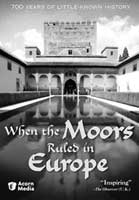
the occurrence of the European Renaissance. Assuming that many among us would already be familiar with the relatively well-known three-part PBS (Public Broadcasting Service) documentary entitled Islam: Empire of Faith, it is important to discuss a few documentaries that focus on the Islamic roots of Europe. Bettany Hughes is a name recognized in the media as well as in the academia. Her presentation of the history of al-Andalus (Muslim Spain) is well researched and passionate in the Channel 4 documentary entitled When the Moors Ruled in Europe. After having visited many historical places in modern day Spain and having interviewed many experts in the field, she has introduced the viewer to an account of the centuries when Spain was ruled by Muslims. Hughes takes the viewer on a journey where we learn how the modern world has been shaped massively by this grand historical phenomenon called al-Andalus. Science and Islam (al-‘ilm wa al-Islam) is perhaps one of the best-presented documentaries that I have seen. Produced by BBC Four and presented by University of Surrey’s Dr Jim al-Khalili, it is an account of the career of the scientific enterprise throughout the Islamic civilization — from the classical period till today. Divided into three parts; ‘The Language of Science’, ‘The Empire of Reason’ and ‘The Power of Doubt’, this documentary traces the history of science in the Islamic world. Focusing on almost all aspects of this history, considerable weight has been given to astronomy in medieval Islam that truly set the stage for the later Scientific Revolution in Europe. However, another documentary entitled An Islamic History
of Europe, produced by BBC Four and presented by Rageh Omaar, seems to fall a
little short of making a coherent argument. Although starting with a focused
theme, the presentation digresses from one point to the other so quickly that
it is unable to do justice with any single theme. One of the reasons for this
is the comparatively lesser duration of the documentary as compared to
Science and Islam. But even within this duration, it does succeed in showing
the various strands of the medieval Islamic civilization that, through major
European cities such as Granada and Sicily, shaped the modern world. Another production, by KPBS, which is related to PBS in the United States, is entitled Cities of Light: The Rise and Fall of Islamic Spain. This documentary film re-creates the entire political and regional history of modern day Spain from the time when the young Tariq bin Ziyad attacked Jibraltar till the time when the armies of the Catholic monarchs King Ferdinand-II and Queen Isabella-I reclaimed it for Christian Europe. Al-Andalus was a haven for religious diversity in very real terms. Muslims, Christians and Jews enjoyed the luxury of inter-religious harmony which we hope that we could enjoy today. These centuries of Islamic Spain not only provide to us a model of how to co-exist peacefully, they also have another significant factor attached to them — the way Islamic Spain helped kick-start the progress that was later to grow into the European Renaissance. In fact, while talking about the role of the Christo-Judaic-Islamic milieu in Islamic Spain, the narrator of Cities of Light states, "here were the very seeds of the Renaissance". On a relatively lighter note, What the Ancients Did For Us: The Islamic World, another BBC production, does justice to the overall notion that Islamic scientists contributed immensely to both science and technology of that time. The presenters are candid in acknowledging the fact that historically speaking, it was with the positive contributions of the medieval Islamic world that Europe later saw the emergence of the modern world. One must notice that many of these documentaries deal directly and exclusively with the Islamic roots of the West — Europe to be more precise. And the sources mentioned in most of these documentaries involve leading academics in this field. But it might be interesting to ask: what are the factors that motivate these production houses and the presenters to investigate into this topic in the first place? Are these factors intellectual, or political, or both? Even if one argues that the motivation is purely that of business and that these media houses are capturing on a market that is increasing every day, one has to ask the reason for the increase in this market. Is there vacuum that these media houses are trying to fill in through these productions? This is an important question because the answer to this will inform us whether these media ventures are just exploring the contours of history or are they answering a specific theme that exists in the intellectual and political climate of the West — the much-hyped and later rejected theme of the clash of civilizations. Has it somehow triggered a special nerve in the West? Has it in some way made them aware that the Islamic civilization might be connected with their own in a most intricate sense? It is interesting to note that contrary to our perception of the Western media, which admittedly does possess excessive tendencies to portray the Islamic world in a negative light, there have been some excellent attempts by a few media houses to actually work with leading academics in order to present a more accurate picture of Islamic history. These efforts, though few and far in between, are worth appreciating. Another interesting thing that we must notice in this respect is the inherently collaborative nature of these documentaries with respect to the media and the academia. After all, the authorities that need to be quoted in such documentaries have to have a strong research background, and the academia has been the historical training ground for research and scholarship. Most of the aforementioned documentaries feature scholars and academics who specialise in one aspect or the other of the history of the Islamic world. Such collaborations between the media and the academia should be encouraged. There may be multiple reasons behind the investment in the production of these documentaries. Ranging possibly from educational to economic to ideological, these reasons should be explored in detail. But I think that for many among us it would be enough if these ventures were being undertaken to perhaps digitally re-live an era in history when differences were tolerated and diversity was cherished!
Ateeb Gul is currently working as the Head Teaching Assistant of the Islamic Studies core course at LUMS
|
|