


|
|
|
|
 |
 |
|
|
Editorial Reality
check Issues of
morality Bend it
like Begum What the
world is producing… "Pakistani
shows are severely lacking in original ideas"
The cultural critics have almost demolished the idea of reality tv. It belongs to the philistines, is unsophisticated, addresses the baser human instincts, is far removed from reality, is scripted and manipulated, is out to make profits, is unethical, immoral and what not. In our context, the criticism is even worse — it lacks originality. The truth is that reality tv is here and from the looks of it is here to stay. It has captivated audiences and is making huge profits and you cannot blame the media executives or producers alone. This is a genre that survives on the participants and the audience as much as the media (And tv by the way has survived all these decades on the profit instinct alone). And that is a good enough reason to admit that this is a real social and cultural phenomenon that needs a serious appraisal. In some absolutely plastic and "exploitative" cases, the sociological lessons may not be very easy to draw but by and large they do expose human nature and behaviour in different type of situations, to see "what people will suffer and do for money, and how we enjoy that suffering" etc. Unlike the bestselling varieties, the high art and high literature category is reserved for a few. Reality tv, on the contrary, makes no such pretensions. All it wants is to touch a raw nerve with the masses, the ordinary people. And that it has done successfully. It is too early to predict how it has impacted society. In some instances, journalists and media people have achieved some amazing results, creatively speaking that is. Some have turned out to be serious portrayals of our social life and others have given us a pool of talented people we wouldn’t have got otherwise. The argument that all we do in this part of the world is mimic the Western shows without adapting them to our local conditions is proved wrong by the sheer numbers hooked on to them. Of course questions must be asked and certain lines need to be drawn but it is problematic to reject a phenomenon that has been accepted wholeheartedly by the majority. The cultural critics need to pay it a little more attention to see how it connects with the modern life.
By Osman Khalid Butt Five years — and counting — since British journalist George Fulton (of Geo tv’s George Ka Pakistan) became a Pakistani national. In what was rightfully touted as one of Pakistan’s first original reality tv shows, one would think that George…, which took millions of viewers on Fulton’s journey to become a Pakistani in three months straight, would have laid the foundation for the entire nation to be bitten by the reality tv phenomenon. Hard. One would, unfortunately, be rather wrong in making that
assumption. Because if our current reality tv scenario is taken into
account, it’s more a case of reality tv biting the dust. That’s not to say there’s been a dearth of reality tv in the country. Indeed, if quantity is to be taken into account, Pakistan has struck gold. It’s the lack of originality slash blatant plagiarism that bothers: several Nach Baliye-themed dance-reality shows, our own version of Ghost Hunters (‘Woh Kya Hai’ — aka paranormal investigation dud?); an Apprentice-esque Anchor hunt show (called The Anchor); Pimp My Ride, desi style with Scoop Up; various talent hunt shows (Sangeet Icon, anyone?), Dum Hai Toh Entertain Kar, where Anu Malik and Farah Khan (hosts of Entertainment Ke Liye Kuch Bhi Karega, the ‘inspiration’ for the show) are replaced by local ‘celebs’… amongst countless others. Then there are the more controversial segments, like Maachis, Living On The Edge and Chhaapa Maar (India’s Emotional Atyachar-brought-home — the teaser of which is available on YouTube for those seeking their thrill Jerry Springer-style — all scripted, of course). In an age where our every household is obsessed about Bigg Boss 4 (or Veena Malik sharing her controversial life with the world, proceeding to stroke Ashmit Patel’s arm!) or Akshay Kumar-then-Priyanka Chopra hosted Khatron Ke Khiladi, the question one begs to ask is: where did we go wrong? Why can we not seem to strike a balance between what’s pushing cultural boundaries and what’s simply pushing our luck? PTV Global’s Kanwal Masud has an optimistic verdict to give. She says, "Reality shows will be and can be successful wherever there is life and its realities. Why not in Pakistan? It is the changed form of the old PTV drama that hooked audiences, especially the women who related to the drama and the soap format instantly. It was a medium narrating their stories, their issues, thus becoming hugely successful… A reality show is the same drama, just with real people instead of famous actors. "Pakistanis are watching Indian reality shows, which are in turn localised versions of the western formula," she adds. "This one factor has hampered the production of a reality show that is produced here. If a good-quality show is available on screen in our own language, nobody bothers about the origin of the country producing it. Hence the popularity of the Indian reality shows such as Bigg Boss." When asked as to why reality tv is not as successful in Pakistan, Kanwal says, "First of all, the hype created with a show — the advertisement campaign, the greatly planned launches — all combine to jumpstart the show from a level much higher than a normal show launch thus adding immensely to the build-up of mass interest. In Pakistan, we do not pay much attention to the hype-building factor. And it doesn’t end with the show launch. Actually, most part of the actual show consists of the hype-building factor." Our shows are also criticised for lacking in star power (read masala). Indian shows, on the other hand, so highly rated and appreciated, are anchored, hosted by or somehow involve mega stars. To quote Kanwal, again, "India has a wealth of a great film industry, which is extensively used in their shows. Pakistan lags far behind. We don’t have many superstars. Period." She also blames it on the wrong use of money: "We do not spend as much as we should on our shows. Money properly spent at the right place and at the right time plays a pivotal role and that shows in a show. At the end of the day, it all depends on the director and his vision. Unfortunately, we cannot even copy properly." Irfan Asghar, Executive Director of Studio 63, seems to agree. "A majority of reality shows in India are being hosted by their superstars whereas we have not been able to create such stars," he tells TNS. "In Pakistan, the number of A-class entertainment channels is smaller than that of news channels." Interestingly, as Asghar would like to put it, it is "the news channels [that] are a source of the kind of ‘reality stuff’ we are discussing here." Regarding a lack of originality, he says: "Perhaps due to financial risks, our channel heads do not go for new ideas of [reality] shows. However, small-scale shows [such as Maachis, The Price is Right, Yeh Ghar Aap Ka Hua and others] have gained a considerable amount of popularity here." This, given the fact that the localised version of Simon Fuller’s Pop Idol — Pakistan Idol — was cancelled due to a ‘lack of interest’ from audiences — a reasoning rather hard to swallow, seeing the tremendous response it garnered upon its announcement. For Irfan Malik, CEO of Lights Asia, a new tv channel that is set to introduce two "thought-provoking" (in his own words) reality shows, "We must understand that India is one of the biggest tv and film markets in the world. The kind of money they invest in producing their shows is unimaginable for our local tv production houses. The franchise cost itself is unaffordable for us, not to mention the production and promotion. For example, Bigg Boss is shot with more than 50 HD cameras and a crew of over a 100 people. So, I suppose the finances play a very big role when we talk about any such venture." However, Malik is not hesitant to admit that there is a lack of creativity and professionalism when it comes to bigger shows that require a lot of planning and coordination. "I also think there is a lack of original ideas [in most of our shows] but its main reason is the fact that creativity is not respected in Pakistan like it is in India and elsewhere." He also says that creative positions are held by most uncreative people which spells disaster. "To be inspired by an idea is natural and also acceptable, but to plagiarise the same is a crime. What we lack is the intelligence and creativity to domesticate/localise the same idea according to our culture and viewing trends." As for the viability of reality tv in Pakistan, Malik says, "I am totally for reality shows, but I also believe that it should be designed to suit the local taste palette. We copy dance shows of India without realising that Pakistanis generally would not like to see their daughters dancing, especially on tv." On Survivor Pakistan, part of the franchise deal that was cancelled after just one season, Malik says: "Whatever little I got to see [of the show], I felt that it was without a soul. I believe that a reality show ought to have a soul, otherwise it is dead." A recent report from the Indian media states that the broadcasting of reality tv shows from prime time — before 11 pm — has been banned by the Information and Broadcasting Ministry due to its controversial content. Perhaps it’s time we took a cue. That, or six years since the possible inception of reality tv, we need to come of age.
How far do the reality shows go to exploit certain people for the fun of others? By Shahzada Irfan Ahmed The popularity of reality shows among viewers brings good advertising revenues for the producers but at the same time hints at a trend questioned by many on moral grounds. The critics assert the emphasis of these programmes is on
showing people in painful, embarrassing and humiliating situations. The
viewers are also culprits as, according to them, they laugh and derive
entertainment from watching people in situations in which they would never
want themselves to be. The content is not necessarily entertaining all the
time; on occasions it can be so horrific and shocking that it can give
nightmares to the viewers for a long time. There’s a debate going on in the West — from where we have adopted this idea — on how far reality shows can go in their pursuit to exploit certain people for the fun of others. While there’s wholehearted approval for shows featuring contestants who volunteer themselves, opinion is divided on hosting shows which capitalise on placing unsuspecting people on streets in embarrassing situations. Though they may wave at the camera and give a smile on being told about the episode, there’s a strong possibility they are hurt and worried about the footage being in permanent custody of the show organisers. There’s a common perception that reality shows are often pre-planned and not based on unscripted and unplanned situations, and evoke pre-decided reactions from people on camera. If it’s true, the show organisers are morally bound to explain the logic behind making people believe in something which actually is not what it’s being portrayed as. Quite recently, a lot of content of reality shows has come from the recordings made by surveillance cameras, handycams, inbuilt cell phone cameras, spy cams, CCTVs and so on. With spy camera technology shrinking day-by-day, people have witnessed hidden cameras and spy cameras inside just about anything. Video footages thus produced make way to free websites like YouTube for endless distribution among networks and email groups. Increasing security concerns, especially in terrorism-hit Pakistan, have spurred the use of security cameras all around in a bid to spot suspicious activities and persons. But ideally, despite all such urgencies, there’s no justification in placing cameras at public places without people knowing about their presence. The practice approved and followed abroad, as well as in Pakistan in some cases, is that every fixed speed and surveillance camera is accompanied by high profile advance warning signs. The purpose obviously is not to help criminals evade arrest but to give abiding citizens a feeling that their privacy is not being breached without any purpose. Also, the use of moveable hidden cameras for investigative tv reporting and citizen journalism have brought the issue of journalistic ethics to the fore. Is it justified to use such means to uncover frauds, corruption, abuse of power, lapse of security at some sensitive place and disclose matters that serve public interest is the question? There are two opinions on this. The first one approves of the use of this technology from the start whereas the saner view is to resort to this tactic once all the efforts to derive information using conventional methods have failed. This course must be taken only when the expose is expected to go a long way in serving public interest. Bend it like Begum It was through a ‘reality’ show on television that Ali Saleem went bride-hunting for himself. Of course, the phenomenally successful Begum Nawazish Ali helped him create an alter-ego that was to become a cathartic tool with which he says he was able to "find acceptance" from his audiences also. The show’s immense popularity led him across the border and spawned a (small-time) me-too on a private channel in India. More recently, Ali was picked up to be a part of Bigg Boss, decidedly Indian tv’s biggest game show till date. He had an early eviction, but the experience Ali gained on the show during his fortnight-long stay at the BB house taught him quite a few ropes. By Usman Ghafoor The News on Sunday: Tell us, especially in the light of your recent experience on Bigg Boss, how far do the reality tv shows go to ‘exploit’ their contestants? Just how pathetic is the situation, when it comes to morals and ethics? Ali Saleem: Reality tv is a very popular genre all around
the world. There are some amazing shows being produced in the western world
and, now, in India as well. Of course, there are things that are engineered
or tailored in a way to attract more viewership. It’s about ratings, after
all, because a lot of corporate giants are involved in the sponsorship of
these shows. But as far as my own personal experience on Bigg Boss goes, I
didn’t find anything ‘exploitative’ in that sense. Let me say that the
people who participate in these shows do so with their own consent and will;
nobody is forcing them to participate. TNS: If you were to compare the quality of reality shows in India with the ones being churned out in Pakistan, what would you say? Where, in your opinion, do we lag behind and what are our strengths, if any? AS: There is no comparison, actually. They have huge budgets, whereas we don’t. But where they take the lead is in a strong sense of professionalism. Indians value their time like nobody’s business. Their workday starts at 5 in the morning and finishes at 6 in the evening. During the Begum shows in India, I saw that there was an hour-long lunch break at 1 and everybody on the set, be it a superstar or a lightsman, would eat from the same buffet. There was no disparity on the basis of star status, not at the dinner table at least. Whereas in Pakistan, I see the so-called ‘stars’ demanding and getting branded meals on location while the crew members have to make do with a cheap, 15-rupee-worth biryani. That is why we are not able to create that kind of a magic on our screen [that the Indians do]. We don’t give our technician his due respect; how can we expect him to put his heart and soul into his work? TNS: Are we technologically equipped to handle big franchise shows such as American Idol? You know how Pakistan Idol was shelved, after it was launched with great fanfare in Karachi a few years back? AS: See, these are huge productions and involve a great deal of money and effort. The said project didn’t take off because, again, we as a nation lack sincerity towards our work. We are always looking for short cuts and we are always trying to save a penny somehow. Except for drama which has been our forte since PTV, we have not been able to produce any show that is of international standard. TNS: Most of our shows are bad rip-offs of their Indian counterparts. Do you agree? AS: I completely agree. Especially since Indian channels have been banned in Pakistan, tv producers here find it much easier, instead of innovating and coming up with original concepts, to copy something which is happening across the border and, the worst part is, they can also get away with it. TNS: Was Begum Nawazish Ali a cathartic experience, in the sense that you were able to create an alter-ego right in front of your audiences and find acceptance for what was such a strong part of your personality? AS: I have always said that Begum… was a liberating experience for me; it helped me come to terms with my actual self and also find acceptance among the masses. It made me a much calmer person. Today, I am quite comfortable with myself. TNS: So, you think reality tv shows play a positive/constructive role, too? AS: Yes, they do. Let me state here that I am all for reality tv. Though I am a little uncomfortable with having cameras in my face 24/7, which is why I left Kaun Teri Dulhaniya mid-series and was happy to be getting out of the Bigg Boss house, too. You know, such shows are more difficult to be a part of than, say, drama which is pre-scripted and follows a certain, author-backed evolution of every character. Here, things are abstract. But, it’s also a lot more fun. There’s a greater room for spontaneity, innovation and experimentation here.
Though dating-based shows are yet to make inroads into Pakistani tv screens, we are borrowing heavily in other subgenres of reality television By Naila Inayat Whereas the entire Pakistan is going crazy after Bigg
Boss (in its season 4), with its wide-ranging, colourful ‘inmates’ who
like to create some fresh controversy every now and then, especially the
lovestruck Veena Malik and her off-again-on-again-beau Ashmit Patel,
Bangladesh sits glued to Uttaradhikar, its own very popular local version. Uttaradhikar has as many as 10 celebrities locked inside a Zamindar Bari (landlord’s palace), and they have to do all that the BB inmates do, except that here they are competing to win the inheritance of the 100-year old palace. Innovation, you said? In another part of the globe, the Turkish small-screen viewers are hooked on a local reality show, titled Marriage With Esra Erol, directed by Do?a K?lc?o?lu. It presents unknown, common people who are looking for a match (for marriage). It is rightly said that this is an age of reality tv and as much as we hate to admit it, we love watching shows of this genre. In Pakistan, where the primetime viewership or the TRPs are won (hands down!) by the various news channels (thanks to the ‘spicy’ talk shows), to attempt something that is genuinely in sync with the international shows would be a great beginning. However, in the west, reality tv is not such a recent phenomenon. It was in 1948 that a show, titled Candid Camera, was produced by Allen Funt. Of course, we became acquainted with the format only in the ‘90s! A comedy show that captured people off-guard in the middle of something funny and later revealed the intention saying, "You’re on Candid Camera!" MTV Bakra was its popular successor, at least in India and Pakistan. 1970s’ An American Family is regarded as the first
participatory show where an average American family was seen going about its
daily chores right before the camera. The format of the show, in a way,
predicted the various future shows of similar nature — compare present-day’s
Big Brother or its Indian version, Bigg Boss. It also led to competition
shows where the contestants would now be vying either for money or love.
Hence, a lot of Channel [V]’s dating-based shows. When MTV first broadcast The Real World, in 1992, not many critics were inclined to call it ‘reality tv’. It was regarded as an experimental show that housed seven people from different backgrounds for several months together. But it was in 2002 when CBS’s blockbuster hit called Survivor finally gave reality tv its name. A cast of regular people were marooned on a desert island and left to survive in order to win a grand prize. Unlike in India and Pakistan, the west now has at least seven primetime reality shows currently going on on ABC, NBC, CBS and Fox. Internationally, even the cable channels are getting on the reality tv bandwagon, promoting shows such as Growing Up Gotti, Family Plots, Sports Kids Moms and Dads, Top Chef, Project Runway and Straight Guy. Even channels like Discovery and History are now producing series such as The Deadliest Catch and Monster Garage. Reality tv has also changed overtime, becoming much more ‘graphic’ in content. MTV’s Iraq Uploaded shows troops’ real-time war sequences shot by servicemen on their mobile phones and digital cameras. It is only recently that dedicated websites that carries front-angle-footage, especially ifilm (an online archive of short films, movie trailers, and other video clips of interest), in the war-zone section. Sex is now an integral part of most shows, be it reality living shows like Big Brother or dating shows like The Bachelor, A Double Shot at Love and The Bachelorette. Wife Swap, a show that began in the UK and later in the US, has women from different families go to each other’s house, look around and read manuals which outline the family’s beliefs, daily routine and rules. Beauty and the Geek has seen many roommate hook-ups, something only thought of in American media! Fear Factor sees contestants eating grubs, worms, grasshoppers and things they probably wouldn’t even imagine themselves doing. Of course, the winner gets a big fat paycheque. Europe and America, with 912-odd reality shows presently running on their major tv networks, could be called world leaders in reality tv. Cutting-edge technology, novel ideas, competitiveness, hostility and market-driven materialism now define reality tv shows. In our part of the world, they are either based on western franchises like American Idol, Are You Smarter Than a 5th Grader? (India came out with Kya Aap Paanchvi Pass Se Tez Hain?) and Who Wants to be a Millionnaire? (Kaun Banega Crorepati? in India and Kya Aap Banenge Crorepati? in Pakistan). There are several music and dance shows of this nature that enjoy a huge fan following. They are built around public votes, a method which is usually considered flawed because the people usually vote for those belonging to their own caste and social groups. Voice of India seasons one and two, Chhote Ustaad season one, Indian Idol and Aaja Nachle have been criticised for tempering with results. What actually goes on during the making of these shows is a closely-kept secret!
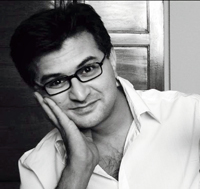
"Pakistani shows are severely lacking in original ideas" — Hasan Zaidi, journalist turned documentary film maker The News on Sunday: Do you think Pakistan is producing quality shows in the ‘reality tv’ genre? If not, could you briefly state the reasons why? Are we lacking in big budgets, great ideas or what? Hasan Zaidi: First of all, I have to admit I am not an
avid or regular consumer of ‘reality tv’ (aside from news), though I do
find the odd reality programme interesting from a sociological point of
view. Basically, reality tv is an extended and often manipulated version of
the old ‘fly-on-the-wall’ or cinema verite documentaries. Mostly, I find
reality shows to be unreal and staged mainly not to provide any insight into
human interaction or social dynamics but rather only for the sake of
generating advertising revenue. This is not to say there is not an appetite
for them or that they cannot be entertaining. But generally, Pakistani shows, with one or two exceptions, are severely lacking in original ideas and have tended to attempt to mimic the style of reality shows elsewhere without adapting them to the Pakistani environment. TNS: Is it all about Target Rating Points (TRPs)? How methodical is the whole Ratings system in Pakistan? HZ: This is a long discussion but briefly put, the current ratings systems in Pakistan is absurd. For one thing, the ratings are measuring only the popularity of programmes in certain four or five major urban centres such as Karachi, Lahore and Rawalpindi, because, according to the ratings companies themselves, this is all the advertisers are interested in since this is where the main purchasing power is. Secondly, even within these large cities, the sample size is miniscule and probably not very representative. In Karachi, for example, the sample size is a mere 300 or so households. Thirdly, as has been evidenced through events in the last year or so, even that sample is open to manipulation. But the advertisers follow this ratings system because they claim it’s better than nothing. And yes, TRPs matter for television shows. In the case of reality tv shows they matter even more because these shows have often been constructed with the express idea of generating viewership and, thus, revenue. TNS: Most of our shows are bad rip-offs of their Indian counterparts, such as the various singing competition and game shows. Do you agree? HZ: Generally, yes. Though it should be noted that many of the Indian shows are copies of western shows themselves. I mean, even Bigg Boss is a franchise of the original Big Brother series. The issue is not whether Pakistani formats are copies — I mean, there are just so many popular genres in reality shows and success does invite replication — but whether they bring something new and insightful for local viewers. TNS: If India can strike franchise deals with American Idol and Fear Factor etc., why can’t Pakistan do the same? Why should an ambitious project such as Pakistan Idol be shelved, despite having been launched with great fanfare? HZ: Well, that comparison is a bit unfair. India is a far larger market than Pakistan and, thus, can afford to generate the kind of revenue needed to service expensive franchise deals. Pakistani shows just cannot match that kind of money. It’s the same with films: if you try and play on the same kind of big-budget wicket, you will always come off looking poorer in comparison. Which is why I think Pakistani shows need to think outside the box and come up with ideas that create a splash through their very concepts. I have no idea why Pakistan Idol was shelved. Unless it was an issue of the economic viability of paying a large sum to international companies to obtain the ‘Idol’ franchise, I would have thought local sponsors could well meet the costs of such a programme for Pakistan. TNS: What, in your opinion, are our limitations as reality tv show producers? For instance, can we afford to be as ‘graphic’ in content as, say, The Jerry Springer Show or Cheaters? HZ: Obviously no, we cannot. Nor should we be attempting to use graphic content as a selling point, given our cultural sensibilities. Jerry Springer is a terrible model to follow in any case. But yes, there are limitations that Pakistani reality show producers work within because the very nature of ‘reality’ means that a lot of what is not shown on tv or not allowed to be shown on tv, would find its way into such programmes. Given the kind of irrational reactions and lack of tolerance one sees in Pakistani society these days, they must also constantly be second-guessing what they can actually run. However, I do think an honest ‘reality’ show, by which I mean a show that is not scripted and manipulated but which touches on issues people think about or deal with everyday, can be interesting for viewers even without sensational graphic content. TNS: How fair is the criticism that reality tv shows are exploitative and fake? Where to draw the line of morals/ethics? HZ: I think I have already dealt with this in an earlier question. The criticism, in my opinion, is largely true when these shows put revenue generation above the idea of providing any insight into real issues. But then television as a medium is not renowned for forgetting about revenue. The same criticism is made about a lot of current news programming as well, that it is exploitative and sensational. TNS: Which are your favourite reality shows on tv and why? HZ: I don’t regularly watch them but I think whatever I saw of Samaa tv’s The Anchor — which is a competition to choose a television anchor — was quite interesting. In a sense, this show was picking on the idea of the media boom and the viewer interest it has generated and using that to craft a show about the media itself. It’s fascinating to see the aspirations of people to become part of the media they only see as passive viewers and also provides a little bit of insight into the minds of those already working in it. Geo-Star Plus’s Chhote Ustad was also an often endearing show, especially given the eye-opening talent those young kids demonstrated. On the other hand, I know a lot of people who are obsessed by what Dolly said to Veena in Bigg Boss, and American Idol, though I find them both boring and un-relatable after a while. TNS: Are YouTube and mobile phones the new ‘reality’ media? HZ: As far as Pakistan is concerned, I guess to an extent because these still are not accessed by the vast majority. But there is a lot of convergence happening too between them and the traditional media such as tv which is interesting. It may sound awful but for a while the Taliban video CDs of slaughter were the main reality media in Pakistan. You have to admit even an obsession with Bigg Boss is better. — Usman Ghafoor
|
|