



|
|
|
|
 |
 |
|
|
All
about a book and a film
Editorial Year-enders in the world
of journalism are supposed to be grim or profound or optimistic or
forward-looking. Essentially, they must be about the work we do all year —
news or newsmakers or both. We at The News on Sunday, on the other hand,
wanted to break free from deaths and their anniversaries. We therefore
picked on two of man’s best creative endeavours — book and film. Of
course, we would have annoyed the artists or philanthropists in our midst by
this subjectivity but, we thought, these two things engage us most when we
are not engaged with work. Talk about a good book or, better still, a good
film and everyone turns from their desks; in a matter of minutes, even the
reticent colleagues become the most opinionated fellows. There could not be
a better way to end the year 2012 and begin a new one than asking the avid
readers and film buffs about their favourite book and film, not necessarily
a 2012 publication or production. Here’s to them celebrating life and arts
in 2012. Happy reading and a happy new year... A journey of discovery Ghazi
Salahuddin Books live in my memory
not only because of what they contain on their pages but because of how and
when and where I made their During that visit, I
requested a meeting with a young author to get some sense of the current
German literature. I asked him to pick out for me one German novel that had
acquired both popular and critical acclaim and was available in its English
translation. He readily mentioned ‘Measuring the World’ by Daniel
Kehlmann. I bought it from a large bookshop near my hotel that night, some
30 minutes before midnight, and immediately embarked on a journey of
discovery. ‘Measuring the World’
is historical fiction. Incidentally, I became fond of historical fiction
after I fell in love with Amin Maalouf’s ‘Samarkand’ about three years
ago and have been recommending this novel about Omar Khayyam to friends. We
now have two great novels by Hilary Mantel, ‘Wolf Hall’ and ‘Bring Up
the Bodies’ and both, incredibly, have won the Man Booker prize within
three years. Kehlmann’s magnificent
novel portrays two great German scientists, Alexander von Humboldt and Carl
Friedrich Gauss and is set at the end I particularly loved the
book because I had no idea what it was about. I had not known it from before
and had not read any reviews. This does not happen in the case of other
books you are tempted to read. Yes, despite my pretensions as a bibliophile,
I had not heard about this book or its author, who has won several awards
for his previous books and short stories. Kehlmann writes in a
superb style and his novel is overflowing with engaging ideas of history,
science and philosophy. I should also mention that the book was published
some years ago. When I checked, I learnt
that ‘Measuring the World’ had been highly-praised by critics in the
English-speaking world. This means that it may not be totally unknown to
book lovers in Pakistan and I would not be surprised if it is available in
some bookshop in Pakistan. A word about cinema.
Having been brought up on Hollywood movies shown in Pakistan in the late
1960s and 1970s, I cherish the — The writer is a senior
columnist. Grand design of men and
women Sarwat Ali When ‘Fifty Shades of
Grey’ by E.L. James hit the bestsellers list last year, one was curious to
know what was new in the book for it to sell It all turned out to be a
bit of a wimp because it is restating the truth — that men and women are
fatally attracted to one another and those women who are attractive and
beautiful always have a much better chance of success than others. It is poignant because
this reality in the past only operated as men were in control and ran the
affairs of the world and women ruled their hearts. But now as women are
getting into places, where they are also in a position to rule the world,
this criterion of being beautiful and attractive can take another hue. What is new in the book
that one does not know already? It is only restating what has been known
forever since the origin of the species and probably it is a poignant
reminder of the truths that keep obfuscating due to the illusion created by
the changing world and shifting values. And if enough dosage of graphic sex
is also thrown in, which borders on the masochism and sadism, you have the
perfect brew that has been drunk deep since the very beginning. Attractive
and beautiful women have nothing to fear because nature has blessed them
with so much that nurture cannot upstage it. The film that stands out
is ‘Anna Karenina’. It is always a challenge to convert a literary classic
to screen and since many versions of the The other piece of
curiosity was the adaptation or the screen play by Tom Stoppard, certainly
the leading playwright these days. But, as it turned out,
this classic was a director’s cut. Though all films are the brainchild of a
director but some more obviously so. Joe Wright’s lavish cinematography was
so overwhelming that it added its own narrative to the plot and the
dialogue. The Russian landscape is itself quite stunning and has posed
immense challenge to the various filmmakers in capturing its full impact and
few have succeeded. In this film, the success
can be placed on the upper end rather than the lower one. Its very opulence
and the immensity of the scale The film was not so much
about the conflict and contradictions that characterise men and women, often
perceived by us humans to be the determining force in the universe. It
appears that nature is too wrapped in its own magic of change and
glorification — and men and women are merely one of the many that are
involved in the grand design. One wished to view it on a
proper big screen for its full impact. — The writer is a
cultural critic. Genres I prefer Sabahat Zakriya If you’ve never seen a
cricket match; if you have and it has made you snore; if you can’t
understand why anyone would watch, let alone obsess over this dull game,
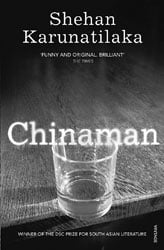
then this is the book for you. — Excerpt from Chinaman. I first heard about this
book from a tweet by Mohammed Hanif, a befitting introduction, considering
‘Chinaman’ by Shehan Karunatilaka is the funniest and most
mould-breaking South-Asian novel I have read since Hanif’s own debut, ‘A
Case of Exploding Mangoes’. I absolutely loved it. If you are a cricket fan
(by which I don’t mean the kinds who crawl out of the brickwork before
every Pakistan-India T20 match), this book will thrill you with its humorous
references to the game’s legends and unknowns, commentators and
controversies. The elderly narrator and his best friend come to blows over
whether Muralitharan chucks, cricket games ‘overlap like stories’ in a
Sri Lankan park, euphoria lifts a divided nation upon a world cup triumph.
But even if you aren’t a huge cricket fan, Karunatilaka’s irreverent
insights into life as it is lived everyday, full of disappointments and
little heartbreaks and the small ways in which we fail ourselves and others Like any good piece of
fiction this one too is essentially about life, which in this case also
happens to be cricket. I am not a prolific movie
watcher partially because I only like watching my movies in the cinema.
Since Pakistani cinemas are partial to big budget thrillers, I rarely catch
a Hollywood film in genres I would prefer. Having never seen or read
anything Spiderman, I tagged along with a friend to watch ‘The Amazing
Spiderman’, and was very pleasantly Relying less on CGI
effects and more on the sensitive high-school hero, who is just beginning to
discover his powers, ‘The Amazing Spiderman’ resonated with me in several
ways. I enjoyed how the movie used the superhero mask sparingly to help the
audience relate more directly to the character, reflected best in the
climactic moment where the hero removes his mask to help rescue a frightened
child from a car perched fatally on the edge of a bridge. Emma Stone as Gwen
Stacey, a capable science student, who is Parker’s intellectual equal, also
added a great touch to the movie. It is sad that it turned out to be the
lowest grossing Spiderman movie ever. — The writer is an
English Literature teacher and blogger based in Lahore. Scarred by love Adnan Rehmat I read about 20 books a
year, all fiction. With a 22-year journalism background, I find so much
falsehood and sly pretentiousness in the ‘truth’ that’s reported. Fiction
brings me better facts and makes life bearable, helping me blunt my hack’s
cynicism. This year I switched
almost full time to reading books on my now-truly beloved Kindle. But my
favourite read of the year was an old-fashioned hardback I gleefully got
from Readings in Lahore early in the year. A year that brings a new Michael
Ondaatje book is a special year for me and his ‘Cat’s Table’ in 2012 comes,
for me, on a par with his hauntingly beautiful novel ‘English Patient’. ‘Cat’s Table’ is the story
of a boy’s voyage in the 1950s, travelling alone on a ship sailing from
Ceylon to England during which he comes of The young protagonist goes
on to — after the seminal sea crossing is over — transition to a
classical Ondaatje adulthood in his novels scarred by unfulfilled loves and
wistful twilights of life, the voyage affecting him in ways he could never
have imagined. In my book Ondaatje can’t do any wrong because he is
essentially a poet and employs a melancholic lyricism to tell his stories.
Secretly, maybe I also love him for his Sri Lankan origin and boyhood on the
emerald isle where I myself came of age in the late 1970s and also because
‘English Patient’ has passages about a Lahore that was my father Rehmat
Ullah Khan’s past from his own eventful boyhood there. This year also brought a
crop of astonishingly beautiful films like the Portuguese ‘Tabu’ by
Miguel Gomes, Christian Petzold’s East German Of course the story ends
on heartache when the pilot disappears and leaves Weisz stood up. “Love,
that’s all,” she says dolefully to her husband when he asks her what
happened. See it for what love does to people who are left to chewing their
bitter hearts. — The writer is a
journalist based in Islamabad. Beyond the obvious Quddus MirzaQuddus Mirza For an avid book
collector, the crucial concern is: which book to read from the piles lying
by the bedside, on bookshelves and tables and even all over the floor. This
knotty decision one has to make; even though many books are left unread
after a few pages, some chapters or in the middle; only a few titles can
make the cover-to-cover journey; and even fewer leave an impact. Being an artist and art
critic, I avoid reading on art. Instead, I enjoy literary fiction, essays
and non-fiction.
Of the books I read this
year, four books are fresh in memory — it seems I finished reading them a
moment ago. One of these, ‘Joseph
Anton’ by Salman Rushdie, is on top of the list. Long before it was
published, I was browsing it on Amazon’s site and thought the novelist had
written a critical study or something of that sort. Once I had the chance to
read the book, it became clear how Rushdi reflects on his own life in this
book during the years of his hiding, which Martin Amis describes as
“disappearing on to front pages”. The book — ‘Joseph Anton’ (named after
Conrad and Chekhov, two authors he likes) is a memoir of those years. It
discloses the position of the writer, his sanity and sanctity of words. The value of words has
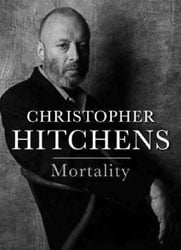
been recorded by Christopher Hitchens in his last book, ‘Mortality’. I
became an admirer of Hitchens only after his death last December. I started
collecting and reading his works, and only wondered how a man could love
words and the world of ideas to that extent. ‘Mortality’ is a collection of
pieces he wrote when he was dying of cancer. The articles convey he wanted
to hold on to the act of writing. It was the real life for him. The other book of essays,
which is still vivid in my memory, is ‘Through the Window’ by Julian Barnes.
His exploration of a few French writers and others is entertaining and
thought-provoking. It appears, while talking about other writers, he is
addressing his own literary concerns. Also, I read ‘Lives of
Things’ by one of my favourite authors, Jose Saramago. In this slim
volume, Saramago creates the world which exists I prefer reading books to
watching films because I feel cinema dictates time, even if you watch a film
taking breaks. But books do not subscribe to such rigidity. You can complete
a book in a day or in a year (or years as in my case!). Despite these
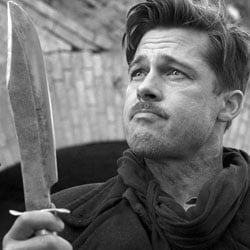
notions about film, I watched ‘Inglorious Bastards’ by Quentin Tarantino,
and must I say I quite enjoyed it! Set in World War II, the movie is about
the construction of reality and its interpretation into fantasy, fabrication
and exaggeration. Almost like a piece of writing, this film makes you think
beyond what is obvious. And precisely that was the reason I loved
‘Inglorious Bastards’. — The writer is an art
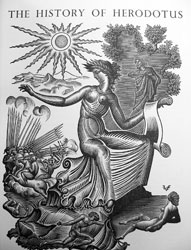
critic and artist. Again and again Salman Rashid When I first read ‘The
Histories of Herodotus’ some 30 years ago, I was impressed by one thing: the
storyteller’s technique of writing history. Herodotus was born about 480 BCE
and died some six decades later. Much to our good luck, his magnum opus
survives to our time and reading it was my first encounter with Greek
historiography. This past year, I read it for the third time. Later, having read Homer,
I came to understand that Herodotus must surely have read both ‘The Iliad’
and ‘The Odyssey’. I say this because even though he does not copy the
earlier writer’s style, he does preserve history with the panache of a
storyteller. His work reads like a novel, bursting with emotion and personal
touch of the author. The sources our well-travelled Herodotus used were
either existing written histories or orally preserved tales. ‘The Histories’ opens in
the middle of the 6th century BCE with the dazzle of the court of the king
of Media, Croesus, the richest man Herodotus makes his kings
and commoners come alive. He makes misty eyes with his account of the fall
of Croesus to Cyrus the Great of Persia and raises goose bumps with the
challenge of Idanthyrsus, the Scythian king, to Darius. And he can
positively bring tears to the eyes with the story of the Spartan king
Leonidas and his 300 warriors against the multitude of the Persians under
Xerxes. The film 300 even uses the very dialogues Herodotus put in the
mouths of the protagonists. If only writers of history
in Pakistan would have read this and other Greek works, history in our
schools and colleges would not have been the drudgery it is. I must have watched it 50
times or more now. And whenever I have nothing else to do and want to watch
a film my wife goes, “Oh no, not ‘Scent of a Woman’ again”. But it is again
and again until I know Lieutenant Colonel Frank Slade and Charlie Simms like
old friends of mine. The prurient and over
bearing, but blind, colonel sets a Thanksgiving weekend as his day to end
his life. The place to do the deed is the When the colonel puts his
service firearm to his head, Charlie scuffles with the man in a very intense
and moving sequence. The colonel threatens to shoot Charlie as well at which
the young man tells him to go ahead and do it because his own life is pretty
well screwed up at school. The turning point in the relationship is marked
by the colonel relenting, unloading his pistol and saying, “Oh, Charlie.
Where do we go from here?” And so, on the next school
day as Charlie Simms faces the committee alone, the colonel walks into the
hall and sits next to the ward he has adopted. There follows a sequence
which, I believe, should be shown to all teachers and elders who proclaim
they try to build character in youngsters. The film is fiction, but
surely there must be men like Colonel Slade somewhere in the world. I
don’t know why I have never met such a man in my life. — The writer is a travel
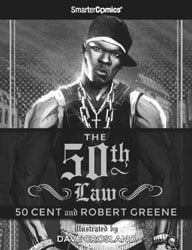
buff and a member of the Royal Geographical Society. Have no fear Sameera Raja The most interesting book
I read in 2012 was ‘The 50th Law of Power: Fear Nothing’, by 50 Cent and
Robert Greene. Having read ‘The 48 Laws
of Power’ by Robert Greene many years back, ‘The 50th Law…’
intrigued me. The book sounded just up my alley since intrinsically I
believe in being a God ‘loving’ than a God ‘fearing’ person, and
that our biggest strength comes from a position of belief as opposed to a
position of fear. Aggression, morality, death; topics that are discussed
generally as absolutes have many hues of grey and how we interpret them
depends on which side of the fence we are sitting. Most of the times we live
in fear of fear itself. The reason being we have not acknowledged the actual
fear even to ourselves. What we actually think is our fear is not so,
because we have not sifted through our feelings to understand the actual
fear. Over time, we accrue so many anxieties that we start living in a state
of perpetual fear. The need to conform, to belong, to be someone other than
what we really are is strong as we are fearful of what people think and say.
This fear takes us away from the very thing that should be our biggest
strength — our individuality. Reading this book made me
realise how our individuality sets us apart from others, how it is a cause
for celebration, how adversity breeds ‘The Best Exotic Marigold
Hotel’ is the movie I enjoyed the most in 2012, though the storyline was a
tad predictable and weak, with a group of elderly British citizens traipsing
all the way to India for the ultimate holiday and the ‘India Shining’
example that frankly is too much to stomach constantly. However, the stellar
performance of the star-studded cast, the witty dialogue and the fantastic
cinematography more than made up for the weakness of the script. Also, the
understated British humour far surpasses the regular run of the mill,
Hollywood-style humour and is extremely refreshing. The movie was also
interestingly, like the book I enjoyed this year, about letting go of your
preconceived notions, baggage and fears. The movie drew attention to people
who were in the twilight of their The relationship between
the book and the movie was about being faced with situations that were not
of your doing, over which you had no control. Yet, how different people,
faced with the same adversity, dealt with the situation and life’s
challenges differently, and how the ones that faced the adversity and
embraced the challenge by letting go of their fears and trying the new, the
unconventional, walked away happy. And how letting go of the fear of the new
sets them free. — The writer is curator
and founder of Canvas Art Gallery in Karachi. Simply sublime Moazzam Sheikh Among the books I read in
2012, I enjoyed Linh Dinh’s ‘Fake House: Stories’. The first half
deals with life in America, the second half with Vietnam. His prose is
anti-high culture, and the subject matter is unsettling, verging on
irreverent. He turns the American dream into a low-grade nightmare. F. S. Rosa’s ‘The
Divine Comedy of Carlo Tresca’ impressed me as well. The lead character
was an anarchist and a labour leader. After his assassination in 1943, he
finds himself in the company of revolutionaries and cultural rebels which
include Trotsky, Billie Holiday, Rosa Luxemberg and others. Funny and
informative, the narrative is brilliantly handled. I also enjoyed a critical
analysis of the poem ‘Sassi’ of Hafiz Barkhordar by Najm Hosain Syed. He
explores the duality a poet inserts into a text, how he plays with the
tension between the language the rulers promote and the one masses speak;
engages with the concept of duality; questions why the Sufis always
encourage people to get rid of it but never explain the source of it. Najm
hints, if I read it correctly, that the source is socio-economic. In other
words, when one sees himself apart from humanity, it leads to separation,
allowing economic inequality. Love for another person is love for the rest
of humanity because to love is to give up materialism, the basis of duality. Of the films I watched
this year three stand out: Chang-Dong Lee’s South Korean drama
‘Poetry’ questions our assumptions about poetry. Anyone familiar with the
international dominance of Iranian cinema would know Kiarostami. His
‘Shirin’ takes cinematic conventions further than his ‘Close Up’. We
see mug shots of over one hundred female viewers. The close ups belong to
Iranian actresses, except the one of Juliette Binoche. The viewers are in a
theatre watching the movie based on Nizami’s poem ‘Khusrow’ and ‘Shirin’.
A viewer is asked to watch other viewers watch a film. The viewer reacts to
the expressions of the actresses. She reacts, simultaneously, to the sound
effects and dialogues without visual access. The movie turns the concept of
viewership on its head. Remarkably, it pits narrative against
anti-narrative. The narrative lacks the visual and the anti-narrative lacks
the sound, the clash beckons the viewer participation. The film takes the
idea of scopophilia to another level. Finally, ‘Mourning’
directed by Morteza Farshbaf is a canvas painted with sound. Just as a film
has long shots, medium shots, close ups, split screen, deep focus, and blank
screen, Farshbaf does the same with sound. Since the main characters, a
couple on the road with their nephew in the backseat, are deaf (the husband
is also speech-impaired) and have decided not to tell the boy of his
parents’ death in a car accident, the mingling of sound, sign language and
subtitles is simply sublime. The writer is the author
of Idol Lovers and Other Short Stories Experiences of life Zeenia Shaukat Shared by a colleague, it
took me quite a few weeks to finish ‘The Book of Salt’ by Monique
Truong. It’s a complex narrative of a Vietnamese cook, Binh, who is a
first generation immigrant in France, employed at famed art collector and
writer Gertrude Stein and her partner Alice Toklas’ house. The narrative is a
self-conversation, so the characters and situations are described from the
eyes of Binh. The book requires 200 per
cent mental engagement. Binh’s world comprises common experiences that we
all go through at some point in life: daily job, people and hierarchies,
love, longing, displacement, and an unpleasant past with images of a violent
father and a submissive mother. His loneliness is driven by a life in exile,
memories of a troubled past, and a strongly defined mistress-servant
relation with his employers. He turns to his inner self for conversations on
daily experiences which he inevitably links with the memories of his
childhood fraught with poverty and hostility, Vietnam, and his job of a cook
which he sees as an act of creation of taste and colours. It is this connection that
is complex because Binh is telling his life story through his everyday
experiences and describing his everyday Monique Truong employs
powerful imagination and play of words to express Binh’s observations. One
cannot really call it a story; it’s more a description of a life in
progress or rather a life stagnant since the novel is essentially about
Binh’s stay at Stein’s. The book is easy to relate
to if you are interested in understanding the routine everyday activities
from the perspective of a man who carries rich experiences. It is Binh’s
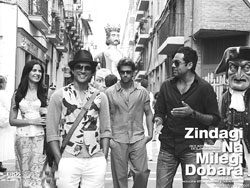
past experiences that add life and depth to his present. ‘Zindagi Na Milegi
Dobara’. Yes, it’s a 2011 release that I was able to catch up this year
only. The title totally reflects the content. Three bachelor friends take a
road trip in Spain to fulfill a long-standing pact before one of them is to
go off to marry. In the course of their journey, they explore more than mere
exotic locations. Their inner conflicts, insecurities, their What I liked about the
film is its realistic tone. It doesn’t take recourse to drama to
communicate transformation in the lives of the three characters though there
are enough exciting moments in the film, showing adventurous sports and fun
times. The script delicately unfolds a slow realisation on the part of the
lead character as the fiends interact with each other and with the outside
world. The film is a rich
experience of life, transformation, and human interaction. It’s not too
deep in its thought and presentation and this simplicity is what touches the
chord. I do recommend the film for its sheer richness and understated
treatment of the narrative. — The writer works on
labour rights.
|
|

 acquaintance. That is how some books get embedded in my living experience.
In 2012, I was happy to get together with a modern German novel during my
visit to Berlin in June. I may not have found this book in the normal
course.
acquaintance. That is how some books get embedded in my living experience.
In 2012, I was happy to get together with a modern German novel during my
visit to Berlin in June. I may not have found this book in the normal
course. 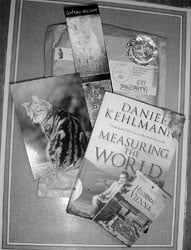 of the 18th century. The two geniuses, a study in contrast, had set out, in
a sense, to measure the world. Humboldt went around the world for his
research while Gauss stayed at home to travel into mathematical realms and
the space.
of the 18th century. The two geniuses, a study in contrast, had set out, in
a sense, to measure the world. Humboldt went around the world for his
research while Gauss stayed at home to travel into mathematical realms and
the space.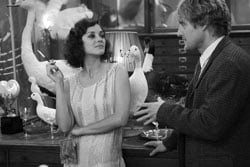 opportunity to go to cinema. Every year, when my wife and I visit our
daughter who lives in Los Angeles in the US, I go to watch movies almost on
a daily basis. So in early January 2012, in the presence of better
productions, I was captivated by ‘Midnight in Paris’.
opportunity to go to cinema. Every year, when my wife and I visit our
daughter who lives in Los Angeles in the US, I go to watch movies almost on
a daily basis. So in early January 2012, in the presence of better
productions, I was captivated by ‘Midnight in Paris’.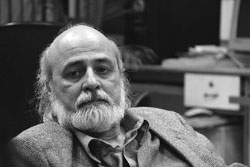 like hot cakes.
  film have been made in the past it eggs critical curiosity to find out how
the latest version has interpreted the text.
film have been made in the past it eggs critical curiosity to find out how
the latest version has interpreted the text. 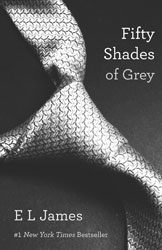 almost made the central characters angst of challenging the laid down
boundaries almost too ordinary.
almost made the central characters angst of challenging the laid down
boundaries almost too ordinary. 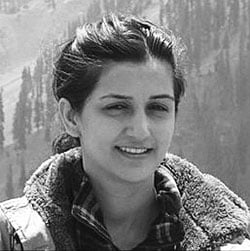
 around us, is a profound and imminently readable treat.
  surprised. It didn’t garner as much media hype as other superhero films this
year like ‘The Dark Knight Rises’ or ‘The Avengers’, and more knowledgeable
friends tell me it wasn’t the best Spiderman movie either. But I loved
Andrew Garfield’s reticently sexy Peter Parker — a more desirable 21st
century incarnation of the nerd, as well as the surprisingly leisurely pace
of this superhero movie.
surprised. It didn’t garner as much media hype as other superhero films this
year like ‘The Dark Knight Rises’ or ‘The Avengers’, and more knowledgeable
friends tell me it wasn’t the best Spiderman movie either. But I loved
Andrew Garfield’s reticently sexy Peter Parker — a more desirable 21st
century incarnation of the nerd, as well as the surprisingly leisurely pace
of this superhero movie. 
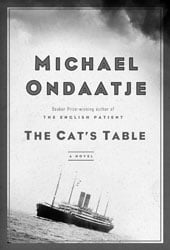 age. For the duration of the oceanic passage, he is seated for meals at ‘the
cat’s table’, which is both the physical and social nadir of ‘the captain’s
table’ where his companions reflect the microcosm of people as they appear
to all of us when we’re very young: adventurers, crooks, lovers, mystics,
and yes, bewildered age-fellows coming to grips with the mysterious world of
adults with their complicated joys and necessary tragedies.
age. For the duration of the oceanic passage, he is seated for meals at ‘the
cat’s table’, which is both the physical and social nadir of ‘the captain’s
table’ where his companions reflect the microcosm of people as they appear
to all of us when we’re very young: adventurers, crooks, lovers, mystics,
and yes, bewildered age-fellows coming to grips with the mysterious world of
adults with their complicated joys and necessary tragedies.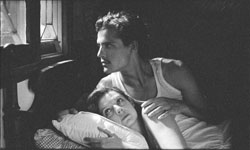 ‘Barbara’ and Michael Haneke’s ‘Amour’. But my favourite film of the year was the slow
burning ‘Deep Blue Sea’ starring Rachel Weisz. What gets my attention
when it comes to films is a love story set against a political backdrop. In
‘Deep Blue Sea’ Weisz is the young wife of a much older judge falling
for a Royal Air Force pilot. There surely is no film more depressing as this
one in recent times — the unplanned consequences of Weisz’ infidelity
will sear into your brain in recognition of the perfect storm of love and
lust in the backdrop of the 1950s conservatism in England, which usually
required sticking with a spouse regardless of a loveless marriage stifled by
ritual (sounds like Pakistan to me).
‘Barbara’ and Michael Haneke’s ‘Amour’. But my favourite film of the year was the slow
burning ‘Deep Blue Sea’ starring Rachel Weisz. What gets my attention
when it comes to films is a love story set against a political backdrop. In
‘Deep Blue Sea’ Weisz is the young wife of a much older judge falling
for a Royal Air Force pilot. There surely is no film more depressing as this
one in recent times — the unplanned consequences of Weisz’ infidelity
will sear into your brain in recognition of the perfect storm of love and
lust in the backdrop of the 1950s conservatism in England, which usually
required sticking with a spouse regardless of a loveless marriage stifled by
ritual (sounds like Pakistan to me). 
 on the threshold of real and imagined. The story in which a man is glued to
his car, and cannot come out of it (till he dies) in an unforgettable
experience since the story was written during the oil embargo imposed by the
Arab countries during the 1970s (a situation Pakistanis can relate to).
on the threshold of real and imagined. The story in which a man is glued to
his car, and cannot come out of it (till he dies) in an unforgettable
experience since the story was written during the oil embargo imposed by the
Arab countries during the 1970s (a situation Pakistanis can relate to). 
 history had ever known. Over the next several hundred pages spread across
nine books, we travel with the great storyteller across Greece, North
Africa, the Danube in Eastern Europe, along the shores of the Black Sea and
into Central Asia. We become acquainted with the pomp and splendour of
Persia and even get to meet giant gold-digging ants in an ambiguous land in
what is now Pakistan.
history had ever known. Over the next several hundred pages spread across
nine books, we travel with the great storyteller across Greece, North
Africa, the Danube in Eastern Europe, along the shores of the Black Sea and
into Central Asia. We become acquainted with the pomp and splendour of
Persia and even get to meet giant gold-digging ants in an ambiguous land in
what is now Pakistan.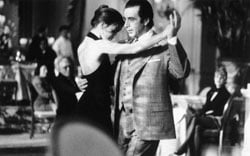 Waldorf Astoria in New York where Slade routinely stayed as a member of
President Lyndon Johnson’s staff. Charlie Simms, a student on aid to the
prestigious Byrd School and, on that particular weekend in a bad spot with
the school disciplinary committee for no fault of his, is recruited to spend
the weekend with the colonel. As the film progresses, the abrasive colonel
reveals a deeply caring and humane person hiding under layers of gruff
exterior.
Waldorf Astoria in New York where Slade routinely stayed as a member of
President Lyndon Johnson’s staff. Charlie Simms, a student on aid to the
prestigious Byrd School and, on that particular weekend in a bad spot with
the school disciplinary committee for no fault of his, is recruited to spend
the weekend with the colonel. As the film progresses, the abrasive colonel
reveals a deeply caring and humane person hiding under layers of gruff
exterior.
 success if only we can let go of our fears — our fear of standing apart.
Most of the time, we are fearful of the new, the untried, the
unconventional. But freedom awaits those who are willing to go down the road
less travelled.
success if only we can let go of our fears — our fear of standing apart.
Most of the time, we are fearful of the new, the untried, the
unconventional. But freedom awaits those who are willing to go down the road
less travelled.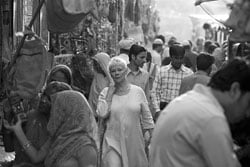 lives, not young ones starting out in
life, finding themselves, fulfillment and love.
lives, not young ones starting out in
life, finding themselves, fulfillment and love. 
 Is its main function to
seek beauty or reflect life with its ugliness? Stricken with early stages of
Alzheimer’s while taking care of her teenage grandson, ‘Poetry’ is
about an older woman who wants to write poetry. As she learns of her
grandson’s involvement in a case of gang rape, leading to the victim’s
suicide, her notions of poetry are shattered, realising poetry is not only
concerned with passive contemplation of beautiful things but physical
involvement with the underbelly of life. Jeong-hie Yun’s superbly
controlled performance anchors the pace and tension in the film.
Is its main function to
seek beauty or reflect life with its ugliness? Stricken with early stages of
Alzheimer’s while taking care of her teenage grandson, ‘Poetry’ is
about an older woman who wants to write poetry. As she learns of her
grandson’s involvement in a case of gang rape, leading to the victim’s
suicide, her notions of poetry are shattered, realising poetry is not only
concerned with passive contemplation of beautiful things but physical
involvement with the underbelly of life. Jeong-hie Yun’s superbly
controlled performance anchors the pace and tension in the film. 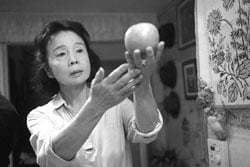
 experiences through the events of the past. Being a cook, his ingredients
are his words and characters that he generously uses to describe his
observations.
experiences through the events of the past. Being a cook, his ingredients
are his words and characters that he generously uses to describe his
observations.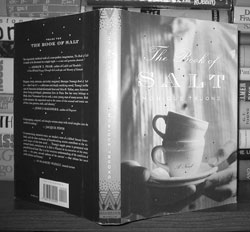 perception of life, and aspirations are all confronted in an understated
tone.
perception of life, and aspirations are all confronted in an understated
tone.
