



|
|
|
|
|
 |
 |
   |
budget Newswatch education Borrowers
of a different type moves Regional
rhapsody firstperson Let better
(civic) sense prevail
Most of the provincial budget
in Sindh consists of non-development expenditure. The little money left for
development gets spent on sectors which hardly cater to the needs of the
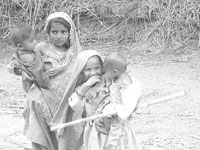
people Zulfiqar Shah A woman died due to non-availability of doctor in a local hospital; children had to study in a school without roof; many people lost their lives due to contaminated water. These are very common stories one often comes across while reading Sindhi newspapers, though they occupy a small space in the inner pages of national dailies and English newspapers. This makes it obvious that
areas like health, education, and drinking water are major concerns for the
majority of the people in Sindh, particularly in the rural areas where a
large portion of the province's Though time and again ministers and officials make tall statements and announcements pronouncing their commitment to solve public problems, a serious look at official documents, such as the annual provincial budgets, shows that these claims are nothing but hollow. These documents show that Sindh government's budget for the current financial year (2006-7) is heavily dominated by non-development and administrative expenditures, leaving a small amount of money for development. Out of Rs 193 billion, the total provincial budget, only Rs 50 billions are earmarked for development. This includes allocation of money under the Annual Development Programme, District Government Development Programme, Sindh Devolution of Social Services Programme and DERA programme. Projects worth Rs 15 billion, funded by the federal government and foreign donors, are also included in this development budget. The rest of the money in the provincial budget goes to non-development expenditures. This includes high cost of maintaining a huge cabinet, maintenance of law and order and debt servicing. (Last year, the provincial government spent more than Rs 10 billions in debt serving alone). In a province where poverty is rampant, lavish spending on cabinet members defies reason. Some recent reports suggest that some districts in the province have more than 50 per cent of their population living below the poverty line. Ask anyone where the Sindh government should spend its money and the answer will be the same: On ministers and advisors. "The government needs to spend money on ministers and advisers so that it continues to remain in power," says Dr Suleman Shaikh, founder of the Sindh Graduates Association (SGA). "I don't think people are on the priority list of rulers. Their priority is to keep their government intact," he says. According to him, it is very unfortunate that a large section of the population is deprived of basic amenities but the government spends money on sectors which suit the interests of only ministers and advisors. Even within the public sector development budget, the government's priorities differ from those of people. This is very obvious from the allocations for the current financial year. Of Rs 50 billion development budget, less than one billion rupees are allocated for the health sector as compared to Rs 4.5 billion allocated for communication. The fact does not help that the lack of access to health is resulting in deaths of thousands of people every month due to easily avoidable diseases. Official documents maintained by the Planning and Development Department of the provincial government on the current year's budget reveal that the highest amount of Rs 5,500 millions has been allocated as special packages, mainly for Karachi and Hyderabad. This allocation is followed by Rs 4,500 million allocated for transport and communication. Education has got only Rs 1,500 millions, one third of the money allocated for communication. For other very important sectors, budgetary allocations have been equally low. For example, women development and environment have been allocated only Rs 59 million and Rs 17 million respectively. These meagre allocations show the non-seriousness of the government to improve the condition of women, which not only make half of the population but are very backward and need a major push for uplift. Similarly, Sindh has one of the worst indicators in environmental degradation with growing pollution in cities. Yet the sector receives scant attention in the budget. Rural development and population welfare have also failed to draw the attention of the provincial financial managers because they have got Rs 80 million and Rs 47 millions respectively in the current year's budget. It's also ironic that most of the money that the provincial government allocates for development is spent in the urban areas though donors like World Bank have verified the fact that the rural Sindh has highest incidence of poverty in the country. Though Karachi as being run by the city district government with huge budgets of its own, a largest portion of the provincial Annual Development Programe (23 per cent) in current year was allocated to just two cities -- Karachi and Hyderabad. The money allocated for communication, and mostly spent on construction of roads, is also necessary but many people think it should not take precedence over critical areas like health and education. "Yes, we need roads and better communication but I think our first priority should be to stop deaths particularly of women and children," says Paryal Mari, a political activist from Shikarpur. "People need safe drinking water and medicine first. The roads and buildings come afterwards," he adds. Political and social activists like him say they have seen many projects, which were unnecessary. The money spent on them could have been better utilised for the betterment of the poor. "Buildings are being built without purpose and roads are being constructed only to connect the lands of influential people," says Imtiaz Dayo, an activists from Thatta, one of Sindh's most under-developed districts. Activists claim that construction projects are given preference because they involve kickbacks and commissions. "The commission system is an open secret. Everybody knows about it," Dayo says. He claims that corruption has been unearthed in big construction projects like university buildings, leave alone smaller projects such as schools and hospitals. People like him, therefore, link these priorities to wide-spread prevalence of corruption. Even if the figures culled from the current year's budget can be overlooked, statistics for the last few years -- as presented by official documents -- clearly show where the priorities of the provincial government lie. For instance, a concept note prepared by former Sindh finance minister Dr Abdul Hafeez Shaikh reveals that budgetary allocations for development work declined from 30 per cent in 1990s to only 18 per cent in early 2000. The same document also raise concern over heavy spending on salaries, leaving very little amount of money for development projects. For instance, in 2002-3, 90 per cent and 74 per cent respectively of the total budgetary allocation for education and health departments were spent on salaries. Though Shaikh tried to revamp the system by enhancing allocations for non-salary items in education and health sectors, his successors have paid very little attention on this as salaries continue to get most of the budgetary allocations. Another important factor in the effectiveness of money allocated for development projects is its timely disbursement. In Sindh it has remained a major problem, leaving many important projects incomplete. Official documents show that allocations made for development projects during the current fiscal year also include money left unspent during the previous years due to non-completion of projects. Allocation aside, many people challenge the process of budget preparation in the province. "The main problem is policy process of budget making," says Sikandar Brohi of the Participatory Development Initiative (PDI). "Budget making has become a bureaucratic exercise with no participation of people and legislatures," he adds. Sikandar says the entire process of budget making is in the hands of bureaucrats and a handful of papers is provided to the legislature at the last moment during budget session, allowing them little room for suggesting any changes. Though the budget preparation process starts in September every year, it is shared with the legislature in May-June next year, he says. "This allows legislators to introduce only cut motions while debating the budget. It's also interesting that most of the cut motions by the opposition legislators are not entertained at all. "A wider consultative process during the preparation of the budget can change the direction of the allocations and spending, Sikandar says. "If you consult people, they will tell you what do they need the most. I am sure their priorities are different from those of the government," he adds. Table Priority areas in budget allocations for year 2006-7, provincial development programme
No. Sector Amount (millions) 1 Special Packages 5500 2 Transport and communications 4500 3 Education 1500 4 Water and power 1500 5 Health 850 6 Culture 150 7 Women development 59 8 Population welfare 47 9 Environment 17 Newswatch The United States possesses the world's largest arsenal of nuclear weapons -- enough to wipe out humanity several times over. Its ally Israel, which has been engaged in a clandestine nuclear weapons development programme since the late 1950s, now has up to 400 nuclear weapons, according to the latest estimates. Yet the US and Israel claim to be worried about the so-called 'threat' allegedly posed to their national security by Iran's fledgling nuclear enrichment programme, which Tehran insists is meant entirely for peaceful purposes and is aimed at producing fuel -- enriched uranium -- for the nuclear power generation plant it is building with Russian help to meet its future energy needs. In an exercise reminiscent of the US-orchestrated brouhaha of 2002 and 2003 over the so-called 'threat' supposedly posed by Iraq's alleged stockpile of weapons of mass destruction (now known as 'weapons of mass disappearance'), the US and Washington's powerful Israeli lobby have for months been orchestrating a campaign against Iran's nuclear programme, aided and abetted by right-wing sections of the mainstream US media, in an effort designed to set the stage for US air strikes against Iran's nuclear sites. As a part of this American-Israeli-orchestrated media blitz, Israel has jumped into the act with periodic statements by the Israeli government to the media that Tel Aviv would carry out air strikes against Iran's nuclear facilities if the US fails to act. Such statements are aimed at keeping Tehran guessing as to which direction the strikes might come from. According to a February 20, 2007 BBC report, however, US contingency plans for air strikes on Iran extend beyond nuclear sites and include most of the country's military infrastructure. The BBC report says, "It is understood that any such attack -- if ordered -- would target Iranian air bases, naval bases, missile facilities and command-and-control centers." The US insists it is not planning to attack, and is trying to persuade Tehran to stop uranium enrichment. But the BBC report quotes diplomatic sources as saying that as a fallback plan, senior officials at the US Central Command (CENTCOM) in Florida have already selected their targets inside Iran. According to the BBC, the trigger for such an attack reportedly includes any confirmation that Iran was developing a nuclear weapon -- which it denies. Alternatively, the BBC report adds, a high-casualty attack on US forces in neighbouring Iraq would also trigger a bombing campaign if it were traced directly back to Tehran. Long-range B2 Stealth bombers would drop so-called 'bunker-busting' bombs in an effort to penetrate Iran's Natanz nuclear plant, which is buried some 25 metres underground. The B2 Stealth bombers are stationed at a US air force base on the southern Indian Ocean island of Diego Garcia -- a British possession on long-term lease to the United States. It was from Diego Garcia that the B2 Stealth bombers used to overfly Pakistan on bombing missions to Afghanistan during the early months of the US war against the Taliban regime. Even today, US long-range bombers can occasionally be seen flying at a great height through northern Pakistani air space on their way to bomb targets in Afghanistan. Such overflights are clearly visible from vantage points in the Margalla Hills that form the backdrop to Islamabad. Any US air strikes against Iran by Diego Garcia-based B2 Stealth bombers would presumably use the same route, and would thus be flying through Pakistani air space. Given this possibility, Pakistan should make it clear to the Americans that no bombers will be allowed to fly through Pakistani air space to attack Iran. Tehran would take a very dim view indeed of Pakistan allowing its air space to be used by US bombers to strike Iran. Any such use of Pakistani air space would be considered a hostile act by Tehran and could seriously damage the good relations that exist between Pakistan and Iran. Pakistan cannot afford to annoy neighbouring Iran, not even at the behest of the Americans. One immediate likely consequence of any such use of Pakistani air space would be Tehran's renunciation of the proposed $ 7.2 billion Iran-Pakistan-India (IPI) gas pipeline project. Iran backing out of the deal is something that energy-hungry Pakistan simply cannot afford. Any such renunciation of the IPI deal by Tehran would, however, delight the Americans who have long been opposed to the project and have been putting pressure on both India and Pakistan to opt, instead, for a gas pipeline from Turkmenistan. Pakistan, for its part, says it would like to see both the Iran pipeline and Turkmenistan pipeline projects go ahead. It says its growing energy needs and rapidly depleting indigenous gas reserves necessitate importing gas from both Iran and Turkmenistan. It's not an either/or situation for Pakistan. The BBC report quoted its Tehran correspondent Francis Harrison as saying that the news that there are now two possible triggers for a US attack is a concern to Iranians. The report said the Iranian authorities insist there is no cause for alarm, but ordinary people are now becoming worried. Meanwhile, officials at the Vienna-based International Atomic Energy Agency (IAEA), the UN nuclear watchdog body, said in a report on Thursday that Iran has expanded enrichment efforts instead of freezing them. The report will now go to the 15-nation agency's board and to the UN Security Council, which had earlier given Iran a deadline for freezing its uranium enrichment programme. The council had set a 60-day deadline on December 23, 2006 for such a freeze and said that continued Iranian defiance past that ultimatum, which ran out on Wednesday, could lead to sanctions additional to those it impost last year. However, top Iranian officials showed no sign of compromise, with Iranian President Ahmadinejad saying that his country's enrichment programme would continue and that every nation had the right to develop a nuclear programme for peaceful purposes like meeting its energy needs. "The enemy is making a big mistake if it thinks it can thwart the will of the Iranian people to achieve the peaceful use of nuclear technology," Iranian state TV's Web site quoted Ahmadinejad as saying on Wednesday. Earlier, on Tuesday, he said that his country was ready to stop its enrichment programmed, but only if Western nations did so too -- something the United States and others with similar programmers are unlikely to even consider. "Do you believe that's a serious offer?" White House Press Secretary Tony Snow asked. "It's pretty clear what the international community has said to the Iranians. You can have nuclear power, but we don't want you to develop the ability to build nuclear weapons. And that is an offer we continue to make." This, again, is a case of US hypocrisy and double standards. It is hypocritical in the extreme for the US, which has the world's biggest stockpile of nuclear weapons (some 18,000 at last count) to tell another country that it has no right to develop nuclear weapons. If a country like Canada were to say this, it would be a different matter because it has no nuclear weapons. But for the United States to say so is a bit like Jack the Ripper lecturing people on the virtues of non-violence. George Orwell is right when he has one of the characters in his 1940s novel 'Animal Farm' saying, "All animals are equal, but some are more equal than others." education Thou shalt not plagiarise The findings of a survey on the quality of research at the universities are alarming. The steps that the government is taking to rectify the situation may be helpful only partially By Khadim Hussain While recently there have been news items in a section of the press regarding plagiarism at Pakistani universities, the Higher Education Commission has declared zero-tolerance against plagiarism. A number of scholars and professionals have observed that there are serious problems which hamper the productive capabilities of Pakistani universities in general, though there are profound variations from university to university. Foreign professors who visit
Pakistan usually observe plagiarism with a sense of bewilderment. They are of
the opinion that students enrolled in research degree programmes at Pakistani
universities Most Pakistani graduate students do not possess knowledge about even the existence of technical literature in their disciplines. Very few Pakistani students that the foreign professors have met do not exhibit a love of learning or enthusiasm for their subject matter. They do not welcome the new or the unfamiliar. Their theses do not show clear structure, subject matter expertise, or originality, suggesting inadequate supervision. Academic libraries are poorly stocked and seriously out of date, at least in the disciplines such as linguistics and social sciences. Students' access to the internet is inadequate. Teaching staff are expected to teach, and even supervise research, outside their disciplines. There is an explicit 'sink or swim' approach for graduate students. I recently conducted a systematic study to find out whether students really lack skills mentioned above. I also wanted to know and document the reasons behind the predicament of this crucial tier of education in Pakistan. Ten universities -- five from the public sector and five from the private sector -- were chosen for the purpose across the country. The number of faculty respondents was 50 while the number of student respondents was 500. The students and faculty were chosen from the graduate courses of humanities, business administration and social sciences. In addition to the survey, I also analysed some 15 theses the students had produced under the supervision of the university faculty. The findings of this study generally supported the observations of the scholars and professionals with respect to the productivity of Pakistani universities. 80 per cent of the faculty and 60 per cent of the students surveyed were of the opinion that students' academic works lack originality. 70 per cent faculty and 80 per cent students said that students were unable to challenge the ideas of their teachers inside the classroom. 60 per cent faculty and 80 per cent students thought that no difference seemed to have been brought about by the recent thrust of the Higher Education Commission on research and creation of new knowledge at the Pakistani universities. 60 per cent faculty and 70 per cent students responded that teachers never enjoy when students debate professional and academic issues inside the classroom. 80 per cent of the faculty and 60 per cent of the students said that the students do not produce standard academic works at our universities. 75 per cent faculty and 62 per cent students were of the opinion that the lack of communication skills in English and improper training in academic discourse patterns are the main reasons for the lack of quality in the academic works of the students. 63 per cent faculty and 81 per cent students said that the main reason behind the lack of quality in academic works at the Pakistani universities is insufficient supervision. The analysis of the students' theses revealed that they quote but don't cite (intentionally or unintentionally) the author of the work they are referring to. Most of them have the whole paragraphs copied from renowned authors found in some other writers. The theses usually carry the original work in the bibliography but avoid mentioning the quoted work even in the bibliography. It was also noticed that the students have a proclivity to download references from the Internet but don't give URLs in the bibliography. They borrow ideas and don't cite the works they borrow from, assuming that they have effectively transformed the text into their own writing or that they wanted to say the same thing or think the same thought. They are vague in methodology. It seems as if it was not clear in the minds of the students that using one method and not the other one needs justification. Carrying out heuristic and not descriptive types of a study to explore a particular issue, phenomenon or process and using ethnographic and not survey method need to be supported with genuine arguments. Moreover, the theses I analysed don't have proper sampling in tandem with the research questions. They also suffer from over-generalisations. The analysis further revealed that the theses don't have a coherent argument. Discussion on the collected data usually lacks a clear-cut linkage with the hypotheses of the theses analysed. Analytical skill of the student usually fails them to bring out an interesting point from their data. The theses usually contain internally contradictory statements. The theses analysed have not scrupulously observed the standard international formats of organisation. They usually make strenuous reading because of the lack of standard organisational formats. It seems there are usually two responses from the faculty, students and managements of Pakistani universities and the policy makers of the Higher Education Commission to this situation. The authorities at the Higher Education Commission presume that the development of the faculty at the universities through Faculty Development Programmes, scholarships for the faculty to pursue their PhDs abroad, allocation of funds for the research projects by the faculty and Foreign Faculty Hiring Programme would improve the situation at Pakistani universities. All these initiatives are commendable and show intent to pull out the sinking ship of education in Pakistan in general and higher education in particular but there are two hurdles in the way of achieving the goal of university productivity in Pakistan as far as the initiatives of HEC are concerned. Firstly, the bureaucratic structure at the lower rung of HEC renders these commendable initiatives meaningless because the attitude of its officials reinforces red-tapism. The officials are also observed to have resistance to challenging projects. Several stakeholders inside and outside HEC told this writer that their zest and enthusiasm die down when faced with such Byzantine administrative structures. Secondly, the initiatives mentioned above suffer from a basic fallacy of argument. The way these initiatives are introduced and implemented seems to support the idea of quick-fixes to improve the situation at Pakistani universities. The academic culture in Pakistan, for decades, has rested on the idea of compliance to the establishment's view, non-challenging attitude to academic issues, raising of no questions to whatever the authority views correct and consequently rote learning which inevitably gives birth to a 'culture of silence'. In addition to all these initiatives, a whole paradigm shift is probably needed to improve the situation at Pakistani universities. The second response usually articulated by the students and faculty is also worth mentioning. Informal interviews with the faculty during the study reveal that in addition to their complaints from the management of their respective universities, the faculty hold the students' urge for cheating, their laziness and above all the students' desire to find short-cuts for grades as the major hindrances in the way of generating creative and innovative ideas for research works. The students on the other hand blame insufficient supervision, communicative inability and lack of training in academic discourse skills for the non-productivity of Pakistani universities with respect to originality and critical and creative capabilities of the students. The foreign faculty members who have worked in Pakistan for a few years usually recommend a thorough overhaul of the public sector tertiary education , including: • Ensuring all teaching staff have a solid background in their disciplines and teach only what they know. • Ensuring all teaching staff consistently demonstrate a commitment to a research culture and a motivation to impart subject matter expertise and independent thinking skills. • Restricting admission to research degrees to the number of students that academic staff can supervise effectively. • A vast improvement in library facilities like holdings, opening hours, inter-library loans and automation of cataloguing and circulation. • Providing amply fast and reliable internet access on campus for all students, preferably 24 hours per day, seven days per week. • Ensuring that all theses meet international standards of excellence. • Ensuring that all those admitted to degrees have acquired the skills and expertise required at the relevant level, compatible with international standards. • Ensuring that all students admitted to degree programmes possess the skills and expertise required to pursue study successfully at the relevant level, in accordance with international standards. This suggests introduction of bridging courses at each degree level. • Removing economic barriers to education by eliminating fees for degree students and those in bridging courses and providing stipends adequate to support students and their dependents, including allowances for transport, books, and any other necessities for their education. • Extending time limits for completion of degrees and providing for part time study so that students' particular expertise can be exploited effectively. (The writer is an academic based in Islamabad. Email: khadim.2005@gmail.com)
Plagiarism both by teachers and students is rampant. The authorities claim that they are doing whatever is required to stem the rot By Syed Ali Abedi The age of internet has made plagiarism easy. Before the introduction of internet, copying things was a time consuming job. Plagiarists had to find appropriate works from a limited number of resources which included books and newspapers. Now, internet has made it easy to find a lot of relevant material in seconds. For educators, it is difficult and some times even impossible to trace whether a work of research is nothing but plagiarism. In Pakistan, plagiarism
exists at all levels, with students getting the dubious distinction of being
the topmost plagiarists. From their childhood, they are told to reproduce
books in examinations in order to get good marks. Otherwise, they will either
hardly pass or altogether fail in the examinations. In a There is no doubt that plagiarism is the a huge intellectual and moral crime and must be strongly condemned. But care should be taken in declaring a work as plagiarised for the one reason. In Pakistan we have very few writers of any worth Particularly in the fields of criticism and research we have failed to develop an indigenous tradition. So, those who still dare to write must not be discouraged. Former head of English department at the Punjab University, Professor Razi Abedi, says the rising trend for plagiarism may have to do with the kind of times that we live in. "We are living in a parodic age. Many classics are now being rewritten or imitated and have already become classics in their own right, like O'Neill's Electra or its other version by Sartre. The list is inexhaustible. In T S Eliot's poetry, there are lines or even passages picked up from other writers. In our own literature we have novels that borrow passages and sentences from other writers. Our satirists and humorous poets parody old masters." But Professor Razi is careful in creating a distinction between what is generally called inspiration and outright plagiarism. "What is borrowed is not so important. What is made of the borrowed material is important." Even in research, great caution is required before terming every type of borrowing as plagiarism. Two things must be borne in mind before declaring any work as plagiarism: One is the intention of the writer in using borrowed passages. The other is the object of borrowing. Research means advancing, discovering and creating knowledge. If a writer's work enhances knowledge, borrowing from other sources should not be attributed to dishonesty. This is very important in view of the prevailing atmosphere of rivalry and intrigue in our highly polarised institutions of higher learning. Let us not ignore that those who stand for judgment on others, what is their standing in the world of research and creativity? Just holding a PhD is not enough. Professor Maksudul Hassan Bokhari, principal of the Government MAO College in Lahore, says noble laureates in their research papers take help from other sources but they could not be called plagiarists because they provide references to the works they cite and quote from their research. In science, he says, scientists regularly use references and that too is not plagiarism. According to him, plagiarism happens when one uses content of a book for his work without giving a reference to it. According to Professor Seed Bhutta of Punjab University's Oriental College, plagiarism started in Pakistan soon after the creation of the country in 1947. "At that time, most of the people who did PhDs in social sciences used research work and papers left by the Hindus," he claims. He is of the view that our society is non-creative and researchers here download material from the internet and get it published in their own names instead of doing creative work. He also alleges that some teachers publish research done by their students in their own names. It's this plagiarism by the teachers that is getting quite a lot of attention these days. Some teachers at some very prominent Pakistani universities have been alleged recently to have plagiarised other's work. They have not just created a lot of media noise about their personal integrity and honesty. They have also generated quite a lively debate about the standard of research in particular and standard of education in general at the universities in Pakistan. A student of the Punjab University's Centre for High Energy Physics, on the condition of anonymity, says plagiarism by teachers shows their ability. He says it proves that teachers who plagiarise are not able to write anything at their own. It's this link between genuine research and the intellectual calibre of a teacher that makes some people suggest that there should be no tolerating plagiarism. Professor Shaukat of Punjab University's Centre for High Energy Physics says people in other countries can spare thieves but they do not spare plagiarists. "In other countries, plagiarism is considered a big crime," he says. It is in this context that the Higher Education Commission has asked the administration of the Punjab University to punish any of its teachers involved in plagiarism. Otherwise, the university risks losing its Rs 2 billion annual grant from the commission. Prof Aminul Haq, dean for the botany department at the Government College University, Lahore, says plagiarism brings bad name to educational institutions. On plagiarism by students, he says his university provides all department heads with software capable of detecting plagiarism. The software will help detect plagiarism by students in their theses or research papers. Professor Qais Aslam, who teaches economics at the Government College University, Lahore, and is facing plagiarism charges, claims he did nothing wrong intentionally. "I have so far written over 15 articles. I am accused of plagiarism in my latest article written in 2004. It is spread over 36 pages, out of which four are said to be 'plagiarised'." Professor Qais says he has provided references to all the authors whose work he cited. "The reference for those four pages might have missed out due to some computer error," he claims. He says there are no laws on plagiarism in the manuals of the Higher Education Commission and the Government College University. He also says he is being victimised for his political views. When contacted on phone, Higher Education Commission's executive director Sohail Naqvi says plagiarism is a serious issue and the commission is taking it seriously. He says it is earning bad name for the country. According to him, the commission has detected cases of plagiarism dating as far back as 1992. Regarding plagiarism at the Punjab University, Naqvi says the commission has warned the university administration to take action against the professors involved in plagiarism. "Otherwise, the university's funding will stop." Naqvi says that the teachers accused of plagiarism have been banned from taking part in international conferences. He also claims that the commission has acquired software to detect plagiarism by students.
The role of the state in health sector is highly important even in the era of markets By Dr Sania Nishtar The divide in opinion about the construction of a medical tower in Islamabad; the indication that another one is in the pipeline for Karachi; signals that investment is underway in high-tech medical equipment; the organ transplantation bill and concerns expressed after its tabling and the debate around the much-hyped medical tourism raise two important questions about the role of the state in health sector. First: what is the role of the state agencies with respect to 'health' within a 'social sector context'? And second: what is the role of state agencies with reference to the emergence of health as a 'sector' within a 'market economy' in Pakistan? These two dimensions of health may seem interlinked, but they are, for all practical purposes, separate paradigms and warrant specific lines of planning and implementing arrangements. In a nutshell, the first
question is linked with the Alma Ata ethos, the 'Health for All' strategy,
the charters of Ottawa and Bangkok. Pakistan is a signatory to all. In line
with these, the country places health as an essential prerequisite as well as
an outcome of sound development policies. The answer to the first question is
also embedded in the 'spirit' of Pakistan's commitment to meeting the First, and ideally, it would be to deliver health services as a public good to the people of the country. Pragmatically, however, in resource-challenged countries it is not possible to deliver all health services to all citizens and therefore the role of the state in countries such as Pakistan is to outline a range of services it will deliver as a public good. These services may be termed as an essential national health package. In the delivery of these services, the state needs to be clear about the coverage and the choices concerning these services, most importantly, about the means and mechanisms of their provision. State agencies in health also need to deliver all services not classified in the above category but classified under article 38 of the Constitution as social protection measures. Both these objectives can be pursued by modernising public financing and provision of health services in order to make them efficient, effective, responsive and accountable so that they can provide the bulk of care through their own infrastructure or by leveraging the infrastructure of the private sector. This should underpin the creation of a National Healthcare System in Pakistan and this is primarily the foremost role of the state in the health. True there is a private sector dimension to this role under question one, and one that needs to be separated from what will be discussed under the second question. Here the private sector assumes importance because it can assist and augment the state's health delivery agenda, for example, in using private clinics and NGOs to get essential services delivered. It can also mean involving the civil society in strategic planning, in autonomous governance arrangements (as in the case of hospitals) and 'contracting out' management. In this framework, the role of the state should be one of legitimate regulation, creating an enabling environment and developing appropriate systems and procedures for public-private engagement with attention to safeguards. This calls for enhancing the capacity of state agencies for playing a contemporaneously appropriate and effective stewardship and governance role in the health sector. The other role of the state under question one is quality assurance of private sector healthcare through regulation. The private sector in Pakistan is huge and has many well documented problems with quality. It is the government's duty to facilitate the private sector in general and this holds true for the health sector as well. But the government also has a fiduciary responsibility in this regard given that health is one of the social services. Therefore, the key challenge is to foster, promote and strengthen private sector healthcare delivery and balance it against quality and patient safety while safeguarding the interests of the poor and the marginalised. With respect to the role of the state, therefore, it means addressing two issues. The first relates to quality assurance and links it with the need to create a regulatory mechanism for quality such as a national institute of healthcare quality. The other relates to developing means of using public funding to ensure that poor people who access health services through private providers are not disadvantaged or discriminated against. This in turn relates to factoring in waiver and exemptions in the existing social protection mechanisms at the level of private providers. The second question is related to the role of the state agencies with reference to the emergence of health as a 'sector' within a 'market economy'. Here 'private' has a 'commercial connotation'. As a way of contextualising the discussion that follows, it may be opportune to point out here that the healthcare industry is the world's largest industry with global revenues estimated at $ 2.8 trillion. Perhaps it is the largest industry in Pakistan as well. In this context, we need to consider a number of important things. First, the much talked about 'medical tourism' which can present an opportunity for hospitals to fuel growth by tapping the potential of the international patient market. In relation to the role of the state, an important caveat here is that public resources earmarked for health should not be used to promote medical tourism at the cost of essential health services because there is little benefit in serving the equity objective in health, except indirectly, through improvements in quality. But because this is an industry, the private sector should be encouraged to analyse opportunities, spearhead sectoral development and formulate strategies to improve competitiveness. In this context, however, the level of facilitation by the state should be guided by the potential that medical tourism holds in Pakistan with reference to fueling growth. A careful analysis shows that medical tourism has limited potential in Pakistan for a number of reasons. The success of medical tourism depends on many factors: high degree of sophistication of indigenous health systems, high quality of healthcare at low costs, an expatriate-friendly environment and a well developed tourist industry. Based on these criteria it is clear that medical tourism industry will not have an emerging trend in Pakistan at least in the short to medium term. On the other hand, Pakistan is unfortunately being ranked amongst the few countries where transplant related-tourism is burgeoning -- an issue brought increasingly to the limelight recently in the aftermath of the tabling of the organ transplant legislation. What will be the role of the state in this situation? Clearly, it is to build ethical safeguards through policy and legislative measures and their effective implementation so as to curb the existing unfortunate practices being used and promoted by huge vested interests. The second important area is the agreement on the liberalisation of services which is a part of the international trade negotiations taking place under the World Trade Organization (WTO). Pakistan is a member of WTO and a signatory to the Agreement on Trade in Services (GATS). Under this, member countries agree to make services trade more open to other countries with the essential aim of further liberalising services that have traditionally been under the public domain. The main concerns about GATS have been along the lines of concentrated ownership and about rules that affect the ability of the government to hold companies providing services accountable. In addition, mainstreaming of curative services on free market principles and the promotion of high-end care would be at the cost of prevention in which the private sector has no incentive to invest in any case. In the wake of these potential challenges, the government must enhance its own regulatory capacity to look at these contemporaneous globalisation-related issues because they impact the delivery of health services. The third area where market mechanisms cross cut with health is in the area of the export of generic drugs. Pakistan has a fairly large local pharmaceuticals manufacturing industry. Growth of the sector as an industry in the neighboring countries raises the question as to how we can enhance our revenues and pursue export targets by strengthening this industrial base. In the post-TRIPS scenario, with stronger patent protection, governments are under obligation to enhance research and development base of the local industry. In this context, the question as to how this can enhance the above mentioned objective becomes even more important. Here it must be recognised that manufacturing and export are dependent on the economic policy framework, patent regime and other regulatory arrangements in a country and that a range of actors in the state's system outside of health such as trade, investment, intellectual property rights and consumer protection have roles in this area. However, at the same time, it must also be recognised that pharmaceuticals are one of the critical inputs into the health system and that the foremost role of state agencies is to ensure the sustainable supply of quality, efficacious and safe drugs. What is the overarching role of the state here then? It is to bring clarity in agency roles, responsibilities and prerogatives in relation to pharmaceuticals as a critical input to health systems vis-a-vis pharmaceuticals pursued as an export target. The fourth area is that of institution-based private practice. There have been many attempts in various parts of the country aimed at mainstreaming this approach on the premise that this will enhance institutional efficiency. Some of these have been successful as in the case of Punjab Institute of Cardiology whereas others such as in the case of NWFP have been unsuccessful for reasons that are beyond the scope of this discussion. Increasingly, many a times a case is made for the use of public money earmarked for health on tertiary care infrastructure on the premise that it promotes institution-based private practice. In this regard, the role of state agencies is to ensure that such investments are made only if they can improve performance and efficiency to meet the equity objective in health. Finally, another commercial consideration in health is one of private health insurance. Questions relating to its potential in Pakistan have frequently emerged. Here it should be recognised that private health insurance is just one of insurance arrangements in health and that its growth is generally paralleled with economic growth in general and growth of the formal employment sector in particular where employers subscribe to health benefits. Through the current foreign direct investment policy of the government of Pakistan and the Insurance Ordinance 2000, an enabling environment has been created for the insurance industry in general. However, the health sector cannot benefit from this significantly because of a number of limitations: fragmentation of the provider market and the predominance of the workforce in the non-formally employed sector being the foremost of them. As a result of this, health insurance agencies do not find the incentive to operate in the country. This is evidenced by the current situation: Group health insurance is offered by seven insurance companies and individual health insurance by only one company. In this context therefore, the state can pursue measures to give financial incentives, albeit with safeguards to regulate the operations of private health insurance agencies. This should be done with the realisation that many other factors influence the growth of private health insurance. There is an important caveat here: easing of insurance regulations and opening up of the sector should be on the premise that employer-provided health insurance is not a substitute for the state's role in financing health. In summary, health should be regarded as a fundamental human right and a key component of the social sector. In this era of liberalisation, however, health sector also cross cuts with market mechanism in many areas and stands out as an industry. As markets create opportunities to enhance efficiencies in the health sector in Pakistan, with indirect possibilities of benefiting the under privileged, the state needs to be cognizant of the potential that markets have in creating inequities. The state must also regard its responsibility for social welfare as a priority to bridge them. The author is the founder present of Heartfile. Email sania@heartfile.org
By Amitabh Pal Aspiring is not achieving A strange thing has happened in India in recent years. Buoyed by rapid economic growth in the past few years and the rising strategic importance of the country, many among India's elite and the middle class have ordained the nation as an emerging superpower. Such people are deluding no one but themselves. Among the prime culprits peddling this line of thinking is India's Minister of Commerce and Industry Kamal Nath, who is writing a book tentatively titled 'India's Century' (presumably referring to the current one). "We no longer discuss the future of India," he crowed to the 'Financial Times'. "The future is India." But he isn't the only person at fault. The 'Times of India' (perhaps the worst English-language newspaper in India) recently asserted: "Our time is now." In a survey late last year, Indians saw their nation as the second-most influential on the planet. Indeed, as 'Fortune' magazine reports, if you type in 'India' and 'superpower' on the Internet, you come up with 1.3 million entries as the result! And it is not only Indians who suffer from this notion. After all, the United States granted India the nuclear deal as a recognition of its supposed emergence as a major power. Though it is no one's fault that India has been ever completely ignored in the global arena since 1947, it has recently been the unprecedented focus of attention. In current year alone, New Delhi has been visited by Russian leader Vladimir Putin, British Prime Minister-in-waiting Gordon Brown and the foreign ministers of China and Russia. Singaporean intellectual and diplomat Kishore Mahbubani titled a recent paper of his 'Will India Emerge as an Eastern or Western Power?' taking a lot for granted in his inquiry. My question on all of the above is: What reality are they living in? I'd like to invite them to my part of the country, district Basti in Uttar Pradesh, the largest state in the country and one of the most underdeveloped. Life here is very difficult. Granted that Uttar Pradesh is notorious for its poverty and misgovernance, but large areas of desperation exist in even the most developed states in the country. When I was in India in late 2005, newspapers had stories of numerous deaths by malnutrition of tribal children in the state of Maharashtra, home of Mumbai, India's financial capital. And Andhra Pradesh, the site of high-tech city Hyderabad, has an entire region (Telengana) so impoverished that it is the base for a fierce Maoist (Naxalite) insurgency. Robert Sosa, a poet from the Central American nation of Honduras, wrote: 'The poor are many and that's why/it is impossible to forget them.' In spite of the legions of the destitute in India, the better off are still trying very hard to erase them from their visions. This incredible disconnect from reality was exposed in the 2004 general elections. The ruling Bharatiya Janata Party (BJP) came up with the slogan 'India Shining,' with a lot of political analysts commending it as being a winning phrase. I was in the country then, and wondered if I was going crazy or were these people demented. It turns out that hundreds of millions thought like me, especially in the rural areas, and threw the BJP out of power, since slogans like 'India Shining' had no meaning for them when their lives were as miserable as before. Just in recent days, there was another reality check. On February 9, the Indian government embarrassedly and quietly put up a report on a website that revealed that nearly half of India's kids are still malnourished in spite of rapid economic growth. Over the last seven years, the proportion of underweight children under three has declined from 47 per cent to 46 per cent. (Divide the 1 percentage point decline by the time span of seven years, and you get an idea of how negligible progress has been on this front.) As the 'New York Times' reports, India's child malnutrition rate is worse than that of Sudan. And India is not failing its children alone. It is failing its women, too. According to the last census, scarcely half the women were even barely literate. It is failing its workers as well. More than 90 per cent of India's workforce toils in the informal sector, where safety laws, environmental regulations and wage rules are practically nonexistent or seldom enforced. And it is also failing its sick. India now has the largest population of HIV-positive people in the world, with little by way of treatment and care facilities for this most grim of diseases. The Indian media deserves a good part of the blame for the ignorance of reality by the India's affluent. As Palagummi Sainath, the rural affairs editor of 'The Hindu' newspaper, has pointed out, the press sent 500 journalists to cover Lakme Fashion Week last year but barely any journalists could be bothered to visit the Vidarbha region of Maharashtra, where at least 350 farmers committed suicide due to financial stress in the previous year alone. According to my friends residing in India, the child malnutrition report got virtually no media coverage. This is not to say that India's problems are unique in the region. In fact, India actually ranks better than any other country in South Asia on the Human Development Index, with the exceptions of Sri Lanka and tiny Maldives. But India's size and population gives it global aspirations and pretensions in a way that no other South Asian nation can dream of. Recent economic growth has made India's elite and middle class even more confident of their country's imminent arrival as a global superpower. I can understand people's desire to see their country 'make it' on the global stage. It doesn't give me any pleasure to wallow in India's misery. With the often-depressing daily litany of events in India, it is a natural instinct to clutch at the positive stories emerging in the recent past and to try to hold on to this silver lining. But people need to get rid of their hubris and stop chasing this chimera. Their energies will be much better spent instead in improving the lives of the hundreds of millions of Indians who are ill able to take care of their basic necessities and don't have the option of being educated or healthy. A superpower does not consist of a population of ill-clad, malnourished, uneducated people in bad health. That is the ultimate contradiction, and it is high time that those in charge in India realised that. Amitabh Pal is the Managing Editor of an American magazine, The Progressive (www.progressive.org), a monthly political publication founded in 1909. This is his regular monthly column for Political Economy. firstperson Makhdoom Javed Hashmi Democratic ideals We are not giving the right message to the people if our leaders do not come back. Leaders should be prepared for all circumstances that they have to face in political struggle. By Noreen Haider Makhdoom Javed Hashmi was born in July 1949 in a deeply religious and sufi family of Multan. His ancestor Makhdoom Abdul Rashid Haqqani was a great sufi in his time. he came to Multan a thousand years ago and founded a small town which was later named after him. Makhdoom Javed Hashmi seems to carry in his person all the traditions and the values of this long sufi legacy. He is also the current holder of the seat of his great sufi ancestor. Javed Hashmi joined politics
as a student leader in 1964. From that day to the present, he has been to
prison for many times for working against military dictatorship as well as
upholding the cause of The News on Sunday had the opportunity to talk to him in his prison cell on all the various issues of national interest. Following are the excerpts of the interview:
The News on Sunday: What is the role of intelligence agencies in today's politics? People seem to blame them for everything that happens in Pakistan... Makhdoom Javed Hashmi: There is no doubt that when Pakistan came into being we were very vulnerable. Survival was our main problem and we needed protection from all sorts of enemy tactics. In this context, the Inter-Service Intelligence (ISI) played the role of the defenders of the country and served to protect the borders. It was only later that they started interfering in the district and tehsil level politics. It was then that their image was distorted and people lost their trust in them. TNS: What if President Pervez Musharraf does not allow Mian Nawaz Sharif or Benazir Bhutto to come to Pakistan before the next general elections? How will it effect the result of the election? MJH: The sanctity and the legitimacy of any election can be guaranteed only if it is free and fair. This parliament is a weak parliament. Though it is close to completing its term, it has not been able to take any important decision on any issue during the last five years. The members too have expressed dissatisfaction over the working of the assembly. The irony is that the president who wants to be elected by the present assembly for the next five years does not want to address the same assembly. President Musharraf does not believe in dialogue or communication. He just says 'I am there and you have to accept me'. In this situation the new elections will be an exercise in futility. TNS: If elections are to be futile, will any political party be in a position to muster enough street power to challenge the regime? MJH: The army has ruled this country for most of the time. They have brought governments and they have toppled governments. Who sent Mian Nawaz Sharif packing, who overthrew Benazir Bhutto's government? Street power has a very limited role in Pakistan. This is also the failure of the (political) leadership, I must say. People do not come out on the streets by themselves. They have to be brought out. We have not been able to lead them properly. TNS: What if Mian Nawaz Sharif suddenly lands in Lahore from his exile in England? MJH: I think he will be sent back. I don't know for sure. But he has to come back now. People need his guidance and leadership. Benazir Bhutto should also come back. We are not giving the right message to the people if our leaders do not come back. Leaders should be prepared for all circumstances that they have to face in political struggle. Our respect is because of our position and our roots in Pakistan. Outside Pakistan you are a stranger. Being in Pakistan is the real strength. Mian Nawaz Sharif should be allowed to come to Pakistan. Only then we will be able to see who is a popular leader. TNS: How does your family endure your prolonged imprisonment? MJH: It is not easy, of course. But we are all prepared to give sacrifices for a cause (of democracy). After October 12, 1999, I asked my children what they thought of the military takeover. I asked them if it was not right, then shouldn't it be resisted. If it had to be resisted, then shouldn't they and their father do it? Why someone else should do it? They fully agreed with what I said. We have borne the brunt of that decision but we know (our suffering) is for a great cause. For the first six months in prison, I was not allowed to meet my family. When my daughters would want to see me, they used to stand in burning sun for six, seven hours only to be sent back eventually. Even today I cannot meet them every week. I am also kept in solitary confinement. No other political prisoner in the history of the subcontinent was kept in solitary confinement for as long as I have been. But I have refused to break down. Kot Lakhpat jail is my second home.I have been coming here since 1971. I am taking this imprisonment as an honour. The government does not want to keep me behind bars. They want to get rid of me, though conditionally. They want nobody is allowed to live honourably. They want that everybody has a tarnished personality. They want to eliminate anyone with some character. They want to dishonour everyone and in this way become honorable themselves. I will never let this happen. This is the tenth time I have been arrested during this government's tenure. I did not make a request to be released on parole for my daughter's wedding. I bade her farewell from the jail (and I was content with that). But the government on its own sent me to Multan (for the wedding) and then nobody contacted me for two days. They would have been very happy if I had stayed there. People would have said that a deal had been stuck between Javed Hashmi and Pervez Musharraf and all my struggled would have been tarnished. Every single moment of freedom is precious, no doubt. But honour and integrity are much more precious than that. TNS: If the government does not want to keep you in the prison, then why are you still behind bars? MJH: The real issue is that they don't want me to challenge their legitimacy. Nobody has challenged their legitimacy accept Javed Hashmi and Mian Nawaz Sharif. Everyone else talks of negotiations with them. We call them usurpers. We have taken a firm stand on that and we want to mobilise people for that. They have absolutely no right to rule this country. The army has to realise that there are serious threats to Pakistan's integrity if the current situation continues. An atmosphere is emerging which can disintegrate the country. When I say these things it hurts them. I said I will not allow Pervez Musharraf to address the National Assembly; I said I will not allow the Legal Framework Order to pass. These are the issues that made them remove me from the scene and from the assembly. TNS: Has army rule become a permanent reality of life in Pakistan? In other words, is there any hope for the emergence of a civilian political system in the presence of a large, strong army? MJH: The truth is that it is the reality of the region we belong to. Even if there had been no Pakistan, still a large army would have been a requirement of a united India. With the boundaries that we have, a large and strong army is a requirement for protecting our borders. Until all issues are resolved with India, we need to keep ourselves well prepared for any eventuality. The problem is that our army has become the ruling army. It has started conquering its own nation. I do believe in the peace process (going on between India and Pakistan now) but I also want to assert that there was never a war between the two countries whenever there was a political and representative government. (It was under the political government that) the peace process was initiated. All wars were fought during the military regimes. Representative governments are strong governments and the invaders do not have the guts to attack popular governments. Look at 1965, 1971, the Afghan war and the war on terror now. With the exception of Kargil fiasco, everyone of them happened while a military government was in power in Pakistan. Even for the ill planned adventure in Kargil, (civilian prime minister) Mian Nawaz Sharif had to pay the price. The generals have achieved nothing for Pakistan ever. When I went to Turkey as a representative of the prime minister, the then Turkish president Bulent Ecevit came to see me despite being extremely busy. His new coalition government was in the process of formation and I was not even expecting him. Then he also came to bid me farewell. This respect can only be enjoyed by a representative government. When President Pervez Musharraf went to Turkey, a minister of sate came to receive him. When Bulent Ecevit came to visit the South Asian countries, he refused to visit Pakistan because the country was under military rule. The fact is that we do need army but we do not need them as rulers. We need them to serve Pakistan and protect its borders. TNS: How would you comment on Pakistan's foreign policy in the light of the recent unrest within the country? MJH: The truth is that Pakistan does not have a foreign policy. There are no think tanks that would sit down and formulate policies for the country. Our foreign policy is running on day to day basis. Neither do we have institutions nor do we take feedback from universities on our foreign policy. The typical British bureaucratic structure is what is still running in our country since the birth of Pakistan. Quaid-e-Azam had a clear vision that the Islamic countries will be our (foreign) constituency but that didn't happen. We were left alone in 1965 war. We were following an anti-Soviet policy but we accepted defeat (in 1965 war) at Tashkand, then a part of Soviet Union. That was another failure of the foreign policy. Again in 1971, Pakistan split but China told us not to expect anything from them. This was another failure of the foreign policy. Our diplomats are, in fact, not diplomats. They were bureaucrats then and they are bureaucrats now. We failed to establish and project ourselves as a democratic, liberal and modern people. We are still indecisive as to what our image should be. In late 1970s, we volunteered ourselves as a frontline state and fought a surrogate war (in Afghanistan). Look at the result (of that policy). Today, again we are a frontline state. Our foreign policy is in ruins but it is still being run on a day to day basis. Speaking English language and wearing neckties is not foreign policy. In our part of the world the foreign policies are not made to save the countries. They are made to prolong the rule of the rulers. It is believed a ruler has a successful foreign policy if the United States is happy with him. TNS: Being a frontline state, Pakistan has launched a crackdown on militants and extremist groups but it has failed to bring stability in the country... MJH: The first thing is that all the world should be concerned about the US policies in our region, not just Pakistan. They (the Americans) are not fighting terrorism. Rather their policies are creating extremism and terrorism. They have created an atmosphere in the region which is breeding terrorism. Earlier, it (terrorism) was never present in our part of the world. Suicide bombings were never our idea (of fighting oppression). I always say the first suicide attacker was Samson in 'Samson and Delilah'. He was a resident of Gaza and an Israeli. But he is considered a folk hero. When there is intolerance and stagnation in a political system, it breeds extremism. Even reading newspaper in the morning is enough to produce suicide bombers the way things are going. TNS: What is the solution for the present crisis? MJH: At the moment, we are in a close alley. It has happened so many times before in Pakistan. It happened with Ayub Khan (ruled the country in 1960s); it happened when (Zufikar Ali) Bhutto and Ziaul Haq (were in power). When doors are closed and people feel trapped, abnormalities start to multiply rapidly. It is this kind of deterioration that we are seeing in society today. Frustration is visible in all sections of the society, from the lowest to the highest. There is also a widening gap between the people of different provinces. Especially in Punjab there is a realisation at all levels that the province's name is being maligned because of the policies of some powerful elements in Pakistan and their vested interests. People belonging to smaller provinces are blaming the Punjabis as usurpers. This mistrust is creating a very grim situation. TNS: Where does Pakistan stand in the new world order? MJH: A new south-south cooperation is emerging. Nations with strong economies in the south are emerging. But we have failed even on this count because we are not ready for this south-south cooperation. Our foreign policy started with failure and it is still failing. We have run out of friends. Afghanistan is blaming us; Kirgistan and Tajikistan are blaming us; Russia is blaming us. What is most regrettable is that now Iran is blaming us for their internal problems. TNS: How do you see the future of Pakistan-India peace process? MJH: India, of course, is an emerging super power and a big economy. Peace with Pakistan is in their interest also. But we have not been able to take advantage of a great opportunity that we had when (then Indian prime minister) Vajpayee came to Lahore. Nawaz Sharif and Vajpayee were on exceptionally good terms with each other. Nawaz Sharif was himself a Kashmiri. He was in a position to give concession to Vajpayee and also to get concessions in return. Before that, (Vajpayee's Bharatiya Janata Party) had been a staunch opponent of the idea of Pakistan. It would blaming Congress party and and Pandit Nehru for the Kashmir problem. (Vajpayee's visit) was a historic opportunity for peace but you know how it was wasted.
Let better (civic) sense prevail Lessons from Lahore show that people need to avoid throwing garbage in drains and sewers. Otherwise they risk endangering both their health and environment By Alauddin Masood The message of experts is loud and clear. Of late, the experts have been vehemently trying to tell that the sewerage system of the metropolitan city of Lahore has reached a critical stage where it can become almost ineffective if people do not change their attitude of carelessness and refrain from dropping waste in the sewerage pipes and open drains. Though, by and large people are conscious about personal hygiene and proper upkeep of their homes, a majority of them do not consider it improper to throw their household litter in open drainage channels or sewerage pipes. According to authorities, out of 16 zones of Lahore, four zones of the city -- namely A, B, G and H -- in particular present the most depressing spectacle. Zone A comprises of Timber Market, Kasur Pura, Qila Lakshman Singh, FV Market and Circular Road; Zone B includes Data Nagar, Sadiq Pura, Usman Ganj, Sher Shah Road and Loha Market; Zone G consists of Krishan Nagar, Gawalmandi, Railway Road, Dil Muhammad Road, Dharam Pura, Allama Iqbal Road and Garhi Shahu; and Zone H represents Mozang, Ichhra, Old Anarkali and Lyton and Nabha roads. Constant deposit of massive waste, about 200 tons in the four most affected zones on a daily basis, often blocks sewerage lines with the result that clogged drainage channels, piles of litter and overflowing gutters become a common and nerve rattling sight in some parts of the city. The problem has finally reached a stage where due to high deposits of silt in the sewerage and drainage channels, the discharge remains sluggish and up to seams even during normal times. A little bit of rain, especially in the monsoon, is enough to make the sewerage/drainage channels overflow, flooding some localities in Zones A, B, G and H with polluted water. According to sources in the Water and Sanitation Agency (WASA), the Lahorites dumped some 100,000 tons of waste in the city's drainage channels and sewerage system in 2006. Using sophisticated machinery, developed management techniques and working round-the-clock, WASA's Project Management Unit (PMU) filtered some 72,000 tons waste from the system and dumped it at a specified site in Mahmood Booti. The filtered waste included: 17,280 tons of shopping/plastic bags, quilts, blankets and sacks; 14,400 tons stone crush, sand and clay; 2,240 tons garbage; 1,520 tons clothes; 9,360 tons mud; 4,320 tons dead animals; 2,460 tons tyres, tubes, foams, animal offal, hides; 720 tons of broken utensils and a host of other assorted items. While it creates innumerable problems for the common citizens, the situation is being termed by health experts and environmentalists as harmful for human life as well as the overall environmental conditions. They warn that it may cause diseases. As the system became sluggish and the time-consuming manual work was not producing desired results, WASA thought it prudent to opt for the mechanisation of the de-silting operation with the help and assistance of Japan International Cooperation Agency (JICA), which provided Rs 789 million for revitalising Lahore's deteriorating sewerage and drainage system. WASA used the funds for buying some 51 modern and sophisticated machines of various sorts, which are engaged, since February 2006, in the de-silting operation. Now, PMU is planning to replace some 16 old (1982 vintage) sewerage pumps in Shad Bagh, Gulshan-e-Ravi and Multan Road areas of Lahore at a cost of 580 million rupees, with funds expected to be provided by Japan. Meanwhile, the Japanese government has started e-monitoring of the sewerage system of Lahore with the help of data, which PMU transmits to the Japanese government and JICA on a daily basis. The relevant quarters in Japan and JICA evaluate this data and monitor the whole operation besides providing suggestions to PMU for ensuring smooth working of the sewerage system. The arrangement has considerably helped in improving the desilting operation of the city's sewerage and drainage system. In late January, this year, a team of Japanese experts visited various areas of Lahore, in particular the city's four most affected zones, to evaluate for themselves the performance of the sewerage and drainage system. After on-the-spot evaluation, the Japanese team expressed its satisfaction over desilting of sewerage pipes and open drains and transportation of desilted waste to the main dumping site. The leader of the Japanese team, Taka Hashi, however, observed: "Lahore's sewerage system ... was still facing a lot of problems as the people were non-cooperative towards ensuring a clean and smooth system. This attitude on their part led to the choking of sewerage pipes and inundation of roads and streets." The apathetic attitude of the citizens and their role in making the system ineffective reminded one about an old fable. Once, on a festive occasion, a king asked his subjects to pour a bucket-full of milk in the palace tank in the wee hours next day. Everyone thought if he poured a bucket filled with water instead of milk nobody would notice it because it would be dark at that time but he also took it for granted that all other citizens would be pouring in milk. Next morning, when the citizens came to the palace feast, the tank had only water in it as none of the citizens had poured milk. As the loyalty and sincerity of the citizens was exposed, they felt extremely ashamed. Dropping waste in sewerage pipes and open drains smacks of bad civic sense. Even a majority of people involved in this (mal)practice would not admit that they deposit their waste in the sewerage pipes and open drains. But the signals coming from the system bear testimony to the fact that some of the citizens are messing up with it at a scale which is beyond the capacity of the system. Choked sewers and drains, overflowing water from the channels and the foul smell are a sort of warning shots that the system is directing towards the citizens. The city's sewerage system has reached a critical stage where if the citizens do not change their attitudes and refrain from dropping waste in the drainage channels/sewers, it can cause not only inconvenience to the people but also endanger their lives and properties. To put this city-specific debate into a regional context, the Asian Development Bank (ADB) has projected unprecedented levels of waste in Asia, where cities would generate an estimated 1.8 million tons of garbage per day by 2025. The ADB has warned that increased waste in the region, from the current 760,000 tons per day, would be beyond the capacity of governments to handle and would require private involvement in waste management. In Pakistan, waste management is almost all major cities leaves much to be desired. The authorities need to ponder over the issue and devise a dependable system for waste management and waste recycling so as to ensure optimum utilisation of the resources. Also, the dropping of waste in sewerage pipes or open drains needs to be made a cognizable offence to be tried by special/exclusive courts. The authorities may also set-up a telephone helpline to guide the citizens about proper waste disposal techniques. Alauddin Masood is a freelance columnist based at Islamabad. E-mail: alauddinmasood@hotmail.com
|
|
 populations is condemned to a life without
basic amenities. Despite the fact that these basic facilities are not
available to the majority of the people, their provision is still not on the
priority list of the provincial government which spends most of its time in
keeping its coalition partners happy.
populations is condemned to a life without
basic amenities. Despite the fact that these basic facilities are not
available to the majority of the people, their provision is still not on the
priority list of the provincial government which spends most of its time in
keeping its coalition partners happy.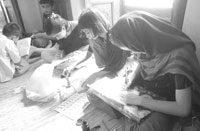 have not acquired skills that would allow them to succeed in
postgraduate education. Critical reading, analytical reasoning, independent
thinking, library and internet research, qualitative research techniques and
strong English and writing skills are not properly practised at any level of
education in Pakistan. That is the reason that students and faculty at
Pakistani universities are tempted to plagiarise.
have not acquired skills that would allow them to succeed in
postgraduate education. Critical reading, analytical reasoning, independent
thinking, library and internet research, qualitative research techniques and
strong English and writing skills are not properly practised at any level of
education in Pakistan. That is the reason that students and faculty at
Pakistani universities are tempted to plagiarise.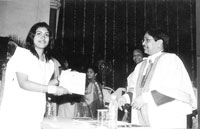 nutshell, we can say
that students are not allowed to use their brains. Rather, they are forced to
become used to rote learning. Most of the teachers are also plagiarists. They
take help and prepare lectures from get-through-guides. They do not tell
where they taken the material from.
nutshell, we can say
that students are not allowed to use their brains. Rather, they are forced to
become used to rote learning. Most of the teachers are also plagiarists. They
take help and prepare lectures from get-through-guides. They do not tell
where they taken the material from. Millennium Development Goals and reflected in the country's strategy papers
-- the Poverty Reduction Strategy Paper, Medium Term Development Framework
and the current Health Policy of 2001 -- their weaknesses notwithstanding.
Trying to answer question one in the context of these parameters, it is clear
that that answer has to be embedded in reducing mortality and morbidity and
the disparities therein and striving to attain a good standard of health by
all people in Pakistan. What is the role of state agencies in this context
then? Foremost, it is to set the vision for the sector within the
constitutional framework of rights and privileges, values and principles. It
is also to integrate the public and private sectors to deliver that vision.
Operationally, this would entail a two-fold exercise.
Millennium Development Goals and reflected in the country's strategy papers
-- the Poverty Reduction Strategy Paper, Medium Term Development Framework
and the current Health Policy of 2001 -- their weaknesses notwithstanding.
Trying to answer question one in the context of these parameters, it is clear
that that answer has to be embedded in reducing mortality and morbidity and
the disparities therein and striving to attain a good standard of health by
all people in Pakistan. What is the role of state agencies in this context
then? Foremost, it is to set the vision for the sector within the
constitutional framework of rights and privileges, values and principles. It
is also to integrate the public and private sectors to deliver that vision.
Operationally, this would entail a two-fold exercise.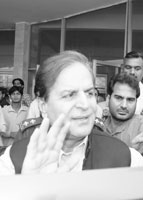 democracy. Even now he is jailed in Lahore for what he
calls his opposition to the rule of General Pervez Musharraf. As well as
being a member of the National Assembly, he is the acting president of
Pakistan Muslim League (Nawaz) because the party's president Shahbaz Sharif
is living in London in exile.
democracy. Even now he is jailed in Lahore for what he
calls his opposition to the rule of General Pervez Musharraf. As well as
being a member of the National Assembly, he is the acting president of
Pakistan Muslim League (Nawaz) because the party's president Shahbaz Sharif
is living in London in exile.