



|
|
|
|
 |
 |
   |
Target,
Pakistan home Another
link Tracing
the terrorist Off track ... overview Revival survival A language of their own Retakes
Editorial It was not just the last week that scores of pakistanis were killed in various terrorist attacks in and outside of their country. These multiple deaths in what has by now assumed a permanent feature of life in Pakistan have a history which at least goes to the Soviet invasion of Afghanistan as far back as 1979. Since then, the country has witnessed thousands of its sons and daughters paying with their lives for the acts of omission and commission by the people who hold power. From being hostage to Islamabad's Afghan policy, countless Pakistanis over the last three decades have seen their near and dear ones blown to bits as a result of what happened in Iran on a very fateful day in 1979 or what erupted in Indian part of Kashmir 10 years later. Though it's a common official refrain that most of the terror attacks in Pakistan have had a 'foreign hand', some latest revelations show that many of the recent attacks were planned, bankrolled and committed by Pakistanis themselves, with foreign element coming only either as ideology or inspiration. Barring a few exceptions, though, their daredevil acts of cruelty and brutality have killed more of their compatriots than anybody else. To some readers this may sound like repeating the official mantra uttered unerringly whenever Pakistan is blamed for cross-border terrorism in Afghanistan and India that we are as much victims of terrorism as anybody else. The vital difference lies in the fact that while this Special Report should be taken as a cue for changing the policies that make Pakistanis fall victims to terrorism in hundreds every year, people in charge in Islamabad like to swim with the international and regional flow instead of coming up with a well-thought out policy to stem the rot. Should we expect that the terror attacks in Quetta and on Samjhota Express would turn out to be the proverbial wake-up call?
home By Rahimullah Yusufzai Soldiers, policemen and judicial officers, all part of the government system, have been the main target of the recent suicide and other terror strikes in Pakistan. Though investigators have yet to conclusively establish a link between the growing acts of terrorism taking place in different parts of the country, the pattern of the attacks show that the strategy is to terrorise and demoralise members of the law-enforcing agencies and create fear among the people. The attacks until now have
occurred in the NWFP and Balochistan, the two provinces bordering an unstable
and insurgency-hit Afghanistan. In Though unrelated to the suicide bombings, the murder of Punjab's social welfare minister Zille Huma Usman at the hands of a religious fanatic, Maulvi Sarwar, in Gujranwala, has added to the uncertain situation. It was a chilling reminder that would-be killers with an intolerant bend of mind were at large and lurking in the shadows to strike at their intended target. Moreover, it was a worrying thought that Maulvi Sarwar had confessed his crime before the media and the judges for murdering six other women in Gujranwala and Lahore since 2002 and even then secured an acquittal from the courts. Ominously, the courts failed to convict him when the witnesses turned hostile, apparently under pressure that they risked religious retribution or even Allah's wrath if they gave statement against the killer. Apart from the intended target comprising cops and judicial officials, the suicide bombings also caused civilian casualties. This is the so-called 'collateral damage', as the US and other Western military commanders describe their civilian victims while fighting wars in Iraq, Afghanistan and elsewhere. But in Pakistan's case, the civilian casualties and the targeted people are all Muslims and Pakistanis, just like the attackers. In some cases, the 'collateral damage' is higher than those being targeted. Those on suicide missions and their sponsors are obviously aware of this possibility but they seem not to care about innocent civilians getting caught in devastating explosions that tear apart and burn down bodies of unfortunate human-beings. There is little doubt that those behind this campaign of violence are extremely angry with Pakistan's present rulers, particularly President General Pervez Musharraf. By the same yardstick, the attackers are unhappy with soldiers, cops and other employees who are in the pay of the state but have to obey orders from the president and his lieutenants. The manner and pattern of the attacks betray an element of revenge against those who belong to armed organisations such as the Pakistan Army, Frontier Corps, the Frontier Police, etc that have harmed the attackers and their supporters. It is like settling scores with someone who has wronged you. The two anonymous callers who claimed responsibility for some of the suicide bombings argued that they were angry with President Musharraf and his government for pursuing pro-US policies. They accused the general and his military of bombing his own people in Waziristan and Bajaur to appease America and other Western countries. They also alleged that practicing Muslims were being targeted, arrested, tortured and delivered to the US just because they opposed American policies and wanted to lead lives according to Quranic teachings. The callers also objected to demolition of mosques in Islamabad, harassment of madrassa students, changes in school curriculum, etc. as steps that showed the 'anti-Islamic' stance of the military-sponsored government. By the way, no claim has been made for the Peshawar suicide bombing near the historic Qissa Khwani bazaar that killed 17 people, including the deputy inspector general of police Malik Mohammad Saad and deputy superintendent of police Khan Raziq and two nazims Mohammad Ali Safi and Asif Baghi. The top cops, in particular Malik Saad, were highly rated and popular and the nazims were elected by popular vote. Even the sponsors of this attack have belatedly realised that anyone claiming responsibility for it would instantly become a hated figure in the public eye. The identity of the callers and the authenticity of their claim haven't been established yet. It is, therefore, difficult to tell that they represented the unnamed organisation that sponsored the suicide bombings. They have until now failed to provide videotapes containing final statements of the suicide bombers, or fidayeen as they are called by the militants. Despite all this, the callers appear believable in view of the language that they use and the reasons they narrate for undertaking the attacks. Theirs is clearly a 'jehadi' cause and their enemy is the US and President Musharraf, America's closest and staunchest ally in its war on terror. Suspicion had fallen on Baitullah Mahsud, one of the most powerful commanders of the tribal militants in South Waziristan, soon after the suicide bombings in Islamabad, Peshawar, Mir Ali, Hangu and Dera Ismail Khan. His statement after the airstrikes claimed by the Pakistan Army in Zamazola in Shak Toi area in South Waziristan made him a suspect because he had pledged to avenge the attack within 10-12 days. The military claimed 32 militants including foreigners were killed in the missile attack, which the residents of the area maintained was launched from the pilotless, US-operated Predator plane. However, the tribesmen said only eight men were killed and they were all locals. Government functionaries pointed accusing fingers at Baitullah Mahsud and President Musharraf in his February 2 press conference in Rawalpindi said he was a marked man after alleging that he was aiding and abetting the Taliban in Afghanistan. It was, therefore, strange that the Governor of NWFP Lt Gen (Retd) Ali Mohammad Jan Aurakzai and the political administration of South Waziristan sent a 21-member jirga of Mahsud tribal elders and Ulema to meet Baitullah Mahsud in his mountain hideout and find out as to what he was up to. It appeared that the president and his governor were working at cross-purposes. The jirga, led by the pro-MMA Senator Maulana Saleh Shah and comprising 11 tribal Maliks and 10 Ulema, returned with a message from Baitullah Mahsud in which he denied his involvement in the suicide bombings and assured his commitment to the peace accord that he had signed with the government in February 2005. He also clarified that the statement in which he vowed revenge was issued by him in a state of emotionalism due to the military attack against civilians in South Waziristan. The jirga gave its report to South Waziristan's political agent Hussain Zada in Tank town and then meet the governor of NWFP in Peshawar on February 22. In aftermath of the renewal of official contacts with Baitullah Mahsud, the government would have to firm its policy on how to deal with him and other militants with whom it cut peace deals in the past in South Waziristan and North Waziristan. The authorities appear in two minds while finalising their policy as they are under pressure from Afghanistan and the US and its Western allies to cancel the peace agreements in Waziristan and resume military operations against local and foreign militants. But the government has seen the fallout of the military operations, which radicalised the whole tribal belt on the Afghanistan border and caused the death of more than 700 soldiers and scores of civilians. The policy to find a military solution of the conflict hasn't worked and instead fuelled confrontation in Fata and polarisation in the society. The peaceful methods subsequently applied by the government by concluding peace accords with the militants and their tribes brought improvements in the situation but the problem is far from over. The spate of suicide bombings have further confounded the atmosphere and forced the government's hand to do something to check the deterioration in the situation. It remains to be seen as to how the government would proceed to tackle a problem that is getting out of hands and is playing on the nerves of the people. Another link Like other places, the purpose of Quetta blast also seems to have been to create terror and unrest By Muhammad Ejaz Khan Police claimed to have rounded up over 60 suspects; some of them Afghan nationals, as investigations continue into a courtroom suicide bombing that claimed the lives of 16 people including a senior civil judge and several lawyers on February 17. The raids have been conducted
in different localities of Quetta after the bomber blew himself up in a packed
room during court proceedings. But, Although the Balochistan government has announced Rs.2 million award for those whose information would lead to the arrest of the culprits behind the suicide attack, yet nobody has approached the police so far. "We have widened the scope of investigation and constituted two special police teams and have geared up the hunt for the mastermind and other responsible persons," said DIG police (Operation) Rehmatullah Khan Niazi while talking to TNS. He said that as soon as they receive the reports of the DNA test of the bomber from CMH Rawalpindi the police would be able to reach a conclusion. "Most of the problems Pakistan is faced with are a fallout of what is going on inside Afghanistan," said provincial governor Owais Ahmed Ghani while talking to TNS outside the BMC after inquiring about those injured in the blast. "Terrorism, narcotics and arms and ammunition have come here from across the border and so has extremism. The unrest in Afghanistan would continue to cast negative impacts on Balochistan and other parts of the country," he observed. The Quetta blast in the court complex was the sixth attack in the past month's wave of terrorism that swept the entire country. In Balochistan at least the two factors behind terrorism previously included sectarianism and Baloch rebels. But analysts think that attacks under these two pretexts would normally spare targeting the Baloch and Pashtoon or the local population. Sparsely-populated Balochistan has been troubled by recurring violence blamed mostly on ethnic Baloch rebels demanding greater political rights and a share in the profits from the region's natural resources. The chief minister, however, ruled out involvement of Baloch nationalists. "Baloch do not indulge in suicide attacks," Jam Yousuf said. "The incident appears a targeted attack on government installations or functionaries of the criminal justice system as part of a reaction against the government's firm resolve to combat terrorism and sabotage in the country," the Home minister Mir Shoaib Nausherwani told TNS. The incidents in Balochistan, NWFP and other parts of the country have a similar pattern -- the government officials and security personnel have been targeted in all these attacks. It is generally believed that the purpose is to create terror and unrest in the region. In protest against the blast in the courtroom, the lawyer community of Balochistan observed a three-day boycott. The court compound is located near police and provincial government offices in Quetta, the capital city that borders Iran and insurgency-plagued Afghanistan. Some officials confided in TNS that they have received information that terrorists would make more attempts at subversive activities in different places. After the bomb blast in the premises of Balochistan high court a couple of years ago, the Quetta district government had issued directives for a strict security arrangement in the district court. "However, some influential persons did not want their vehicles to be searched, therefore, effective security measures could not be implemented on the premises," said Jam Yousuf. Tracing the terrorist One thing that has come out clear is that forensic DNA testing is making entry into our criminal justice system at a fast pace By Shahzada Irfan Ahmed The very first official statement that we hear after a bomb blast in Pakistan is that the government has announced cash compensation for victims, and that the remains of the victims/the suspected bomber(s) have been sent for Deoxyribo Nucleic Acid (DNA) testing. While the first part shows how apathetic the government has become in measuring the loss of life in terms of money, the second hints at the fast pace at which forensic DNA testing is making entry into our criminal justice system. Amazingly, the advancement in
this technology has come at a time when conventional forensic laboratories in
Pakistan are in dire straits; hardly By definition, DNA is a material that governs inheritance of eye colour, hair colour, stature, bone density and many other human and animal traits. Basically, every part of the body is made up of thousands of tiny cells and each contains a sample or complement of DNA identical to that of every other cell within a given person. The DNA code of a person can even reveal data like a person's genetic disposition for thousands of diseases and his or her parental origins and the race to which the person belongs. Scientists say that a detailed DNA sequence collected from a sample can even disclose the origin of great grandparents of the person and tell whether he has Middle-Eastern, African, Eurasian or some other roots. Inspector Babar Ali of Punjab police tells The News on Sunday that use of DNA sample to identify someone's origin is fast increasing in day to day criminal investigations. He says now it has become difficult for terrorist leaders to fake their own deaths, just to take the heat off them. "Whenever, a group claims responsibility of carrying out a suicide attack or there are rumours about a terrorist leader's death in an incident, DNA samples are collected from the scene and analysed to check the authenticity of these claims. In addition to this, he says, more evidence is collected to prove the claim. Many a time the claimants themselves send sufficient supporting evidence to substantiate their claim. "This is necessary as it is quite possible that such a statement is made by a terrorist group, on behalf of some other, just to detract the investigators from moving in the right direction." There is a particular section in law under which a case can be registered against such person for passing on wrong information and making sensational claims. Babar tells TNS that DNA samples can be extracted from sweaty t-shirts, paper or plastic cups, glass, ear wax, fingernail clippings, socks, urine, cheek swabs, saliva, hair and other things. He says the test is so useful that it is used to identify the skeletal remains of people killed in air-crashes and discovered after long periods. Gone are the days when mere holding of a (fake) Pakistani passport by someone would be enough to establish his identity as Pakistani, he says. Prof Dr Tayyab Husnain at Centre of Excellence in Molecular Biology (CEMB) tells TNS: "The CEMB lab is providing unmatched services to counter terrorist acts, identify the culprits and find the origin of unclaimed bodies." It was in 2001 that the research laboratory of CEMB at the Punjab University was notified as the first official laboratory for DNA testing in Pakistan. Dr Tayyab says the modus operandi is that the police and other law enforcing authorities collect samples from crime scene and bring them to the laboratory. Once the samples are saved, they keep on bringing DNA samples of suspects or that of close relatives of the deceased in case the attackers have themselves expired. Dr Tayyab says that DNA technology can also be used to trace origins of unidentified bodies/criminals where there are no claimants or clues as to who has committed the crime. But for this there needs to be a comprehensive database readily available with us. "Unfortunately, we do not have such database but we are in the process of developing one. As part of this project, blood samples of hardened criminals and prisoners are being collected and their DNA codes being saved in a central database. Next time they commit a crime, the DNA sample collected from the site can be matched with theirs available in the said database." Dr Tayyab says that finding out the racial roots of a person just with the help of his DNA sample is not possible in Pakistan right now. "But I hope this stage is not far away. It's quite possible that with further advancement in technology and increase in resources available with us we can reach that landmark soon." A disgruntled official in Punjab police's investigations wing is however not satisfied with the quality of work going on in this respect. He says fixing responsibility of suicide blast on someone, just on the basis of an unclaimed body lying at the scene, is not fair. "But this is happening here. I disapprove this practice and call for collection of further evidence and recording of survivors' statements before reaching any conclusion." Off track ... on track Pakistan-India peace is the most prominent survivor of the Samjhota Express blasts. The rest is a harrowing tale of sorrow By Ajay Kumar "Tragedy can't keep
hearts apart and we can't live in fear. We will travel when we want to,"
Nafeed Jahana's words ring loud amid the sombre atmosphere in front of the
Burns Unit of New Delhi's Safdarjang Hospital. Around 68 innocent lives were lost in the twin blasts in Samjhota Express on February 18, just 100 kilometres from Old Delhi Railway Station near Deewana -- close to the historic town of Panipat. More than half the dead are charred beyond recognition. The sound of the blasts was heard by railways' gateman Pawan Kumar manning gate number 47 about a kilometre away from Deewana. The sight of a burning train travelling at the speed of 90 Kilometres per hour sent shivers down the spine of Assistant Station Master Vinod Kumar Gupta, who messaged the drivers of the train to immediately stop it. Yet the train travelled 2 kilometres before the brakes could finally clamp it to a halt. Aboard the train were 500-odd Pakistanis returning home with cherished memories of meeting their loved ones and nearly 200 Indians hopeful of hugging their separated families in Pakistan. Pandemonium prevailed as the fire raged in the two compartments of the train hit by the blast -- melting the inside of the bogies -- the locked doors only adding to the woes of the trapped passengers. Eyewitnesses say people from inside tried to force open the doors, but to no avail. Had the door locks opened in time precious lives could have been saved. Saharanpur resident, Zubaida,
travelling to Karachi in the bogie next to Zubaida was lucky, but Rana Shaukat Ali from Faisalabad travelling with his wife Ruksana and six children was not. He faced the biggest tragedy of their life. Recovering in Delhi's Safdarjang hospital, Shaukat finds no words to console Ruksana over the loss of five of his children. Shaukat's cousin Jamat narrates what wailing Ruksana muttered to him -- "the kids got trapped under luggage which fell from the rack. We kept trying to pull them out as fire blazed, but the roof of the compartment caved in. We managed to hold one year old Aksa and get out of the door." Numerous mourning relatives and families have similar harrowing tales to tell. Yet a bigger tragedy was averted by the prompt action of railways staff at Deewana. The burning bogies were immediately cut-off from the train and rescue operations launched by the local police in association with railway police and bomb disposal squad. It was only four hours later, around 3 am on Monday morning -- after separating the charred bogies from the train and a through investigation for explosives -- that Samjhota Express was allowed to leave for Attari, on the border with Pakistan. It was 30 years ago that Samjhota Express began its task of uniting people separated by the partition of the Indian subcontinent in 1947. Since then it has witnessed several twist and turns in its operations as well the relationship between India and Pakistan but never before was it witness to such cruel manifestation of terror intent. Preliminary investigations reveal the terrorists had planted four suitcases carrying improvised explosives devices (IEDs) in four coaches, of which time devices triggered two. These suitcase bombs, planted at Old Delhi Railway Station, can be termed 'kitchen bombs' which can be easily assembled. Though packing less power than RDX, the fire caused by the bombs was no less deadly. The devices were timed to go off approximately one hour after the train set out from Old Delhi Railway Station at 10.40 pm. Forensic experts maintain that low-intensity explosives like sulphur or nitrate were used to trigger the explosions and kerosene-filled bottles kept in the suitcases acted as catalyst to spread the blaze. Small pieces of cloth had been placed inside the bottles to prolong the fire. "The modus operandi is new. The idea it seems was to cause large scale destruction by fire," says J S Mahanwal, director of Haryana's forensic laboratory. Mammoth tragedy it would have been -- had all the four explosive devices kept in the last four compartments of the train exploded. Forensic experts believe that loose connection in one suitcase bomb and error in the timer of the other, limited the devastation. "We have defused two pipe bombs, 2 IEDs and recovered 10 to 15 kerosene bottles from three compartments," Mahanwal says. Senior police officials are of the opinion that these 'kitchen bombs' were assembled by a person well versed with IEDs. Attaching wires to the timers is indicative of the fact that the terrorists could have planted the suitcase bombs with the knowledge that the bombs would go off at the desired time. Police officials firmly believe that the explosions were not triggered by any suicide-bombers -- but by a set of cold blooded murderers who left the train before the blast as in the case of Mumbai train blasts in July 2006. Police sources maintain that the terrorists had aimed at setting the back end of the train on fire just after it had crossed Panipat. Thereafter, till the next big station -- Ambala -- the detonations would have created an inferno -- a burning train on the track -- because it would have been very difficult for the train staff to notice the fire till it reached the second or the third coach from the engine. By then most of the 16 coaches of Samjhota Express would have been on fire. On Tuesday, February 20, Haryana police released the sketches of two persons suspected to be behind the blasts in the Lahore-bound train. The duo -- one 36 year old slightly bulky man with wheatish complexion and a moustache, wearing a shirt and jacket and the other a 27 years old light built man also with a wheatish complexion -- are believed to be part of a larger conspiracy. Both suspects wore mufflers covering their faces and had boarded the train from Old Delhi Railway Station. Before the train reached Deewana the two suspects asked the passengers if the train was going to Ahmedabad. They later had heated arguments with the Railway Protection Force (RPF). Clarifying the hunt for these two, inspector-general Rohtak range Sharad Kumar says: "The two had an argument with the force personnel for about 20 minutes in the train and then they alighted from it when it slowed down near Deewana station." Since then the probe has widened. The police claims a group of four or five persons could have synchronised the bombing. "We suspect the blasts to be the handiwork of four to five people. We have not yet identified any terrorist group behind the attacks. But we think it is the handiwork of some militants," Sharad Kumar told reporters in Panipat. Police has appealed to the public at large for help in unraveling the case, seeking information from anyone who may have seen, sold or manufactured the plastic bottles. Pakistani national Usman Mohammed, a resident of Karachi, has emerged as a vital link in the investigation. On the fateful Sunday night, a heavily drunk Usman, had thrown a suitcase containing IED from his compartment. In a six-page statement before a magistrate in Delhi, Usman said "four people had got off the train before the two blasts ripped through the two compartments." Usman has since been handed over to Pakistan officials after recording his statement under Section 164 of India's Criminal Procedure Code. But the investigation is yet to reach a conclusive stage. While, fingers have been pointed at dreaded terrorist outfit, Lashkar-e-Taiba, investigators are not ruling out the involvement of Jammu Kashmir Islamic Front (JKIF), responsible for throwing grenade on Samjhota Express in 1996. Asked about the role of Lashkar, Indian Foreign Minster Pranab Mukherjee clarified: "It would not be possible to conjecture anything unless the investigative process is complete." Despite demands from visiting Foreign Minister Khursheed Mehmood Kasuri and a resolution passed by the National Assembly in Pakistan, India has firmly ruled out joint investigation of the carnage. Indian Foreign Minster Pranab Mukherjee explains why: "As per the law of the land, investigation is to be carried out by India. We will carry on this investigation. Perpetrators of this heinous crime will be brought to book." Kasuri had raised the issue during his talks with Mukherjee when they met during the fifth round of negotiations under Pakistan-India Joint Commission held in New Delhi on Wednesday. Mukherjee assured Kasuri that Indian authorities would share with Pakistan all relevant information on March 6, 2007 when the India-Pakistan Joint Anti-Terrorism Mechanism meets in Islamabad. Jointly addressing the press with Mukherjee, Kasuri said: "The Prime Minister of India spoke to the Prime Minister of Pakistan and assured him that the result of the investigation would be shared. The joint mechanism is meeting in Islamabad on March 6 and I have no doubt that they will take cognizance of it." Unlike previous occasions exemplary restrain has been shown by both India and Pakistan over the blasts. Rather than blaming each other, the two nations have seized this opportunity to work together and give a boost to the continued peace process. "The holding of the joint commission meeting as scheduled is a reaffirmation of the commitment of both India and Pakistan to the dialogue process," Mukherjee said during the press conference. some observers had feared that the timing of the train blasts, just a day before Kasuri was scheduled to visit India, was aimed at derailing the peace process. But both President Pervez Musharraf and Prime Minister Manmohan Singh took no time in condemning the incident and calling upon the people to combat such unscrupulous element on both sides of the border. The statement issued after the carnage by President Musharraf said: "Such wanton acts of terrorism will only further strengthen the resolve to attain the mutually desired objective" of India-Pakistan peace. It has acted as a harbinger of faith in the peace process. Death and violence may pause life -- but as a sign of revival on Wednesday late night, Samjhota Express again rolled out again from Old Delhi Railway station full of people with hope and expectation of hugging their loved ones. Samjhota -- literally meaning understanding -- has won again. The writer works as editor diplomatic affairs with Star News. overview Receiving end Isn't it ironic that riven by terrorism as it is, Pakistan is invariably placed among the first ranks of states that 'sponsor' or 'export' terrorism By Adnan Rehmat Question: Which country has the most dangerous government in the world today (that is directly or indirectly aiding terrorism)? Answer (in respondent percentages): Iran 40 per cent, North Korea 35 per cent, United States 9 per cent, Pakistan 7 per cent, Saudi Arabia 3 per cent, Sudan 2 per cent, China 1 per cent and Iraq 1 per cent. Question: Which countries are
likely to transfer nuclear technology to terrorists in the next three to five
years? Answer: North Korea 73 per The unflattering dubious prominence of Pakistan in these two responses comes from a unique Terrorism Index 2007 developed by prominent American magazine Foreign Policy in association with Centre for American Progress who surveyed 100 of America's top foreign-policy experts -- Republicans and Democrats alike. The Terrorism Index is the only comprehensive, non-partisan effort in US to mine the highest echelons of the super power's foreign-policy establishment for its assessment of how America is fighting the Global War on Terror. Its participants include people who have served as secretary of state and national security advisor, senior White House aides, top commanders in the US military, seasoned intelligence officers, and distinguished academics and journalists. Eighty per cent of the experts have served in the government -- more than half in the executive branch, 26 per cent in the military, and 18 per cent in the intelligence community. Dubious distinction The dubious distinction of Pakistan finding itself in the above two lists can't just be brushed aside as the findings of yet another survey as the perception of Pakistan being 'one of the major contributors to global terrorism' are likely to persist in the short to medium term considering the wide diversity of opinion and policymakers in the US in the survey and also because even if the White House changes hands in 2008, these perceptions on Islamabad will continue to persist. The question arising from the answers of this survey/Index is whether the perception of Pakistan as a cause of terrorism is justified. Pakistan has formidable detractors, including its major allies. The post-9/11 Afghan war, hundreds of arrests of alleged al-Qaeda leaders from Pakistan (and their handing to the US in exchange for bounty money), alleged links of London train bombers and plotters of the alleged plan to bomb trans-Atlantic planes bound for the US, alleged sanctuaries of Taliban and al-Qaeda in Pakistan, alleged free movement across the Pak-Afghan border and the alleged reluctance of Pakistan to do more than it is doing in its own in-house war against terrorism are all factors that have increasingly embellished the perception that Pakistan is at the giving end of terrorism. The government of Pakistan -- a hybrid democracy led by the military -- is engaged virtually full time in its defence, insisting that it is implementing counter-terrorism, not terrorism policies. Arrests of hundreds of foreign and local alleged al-Qaeda leaders, activists and supporters, deployment of 80,000 troops on its Western flank with Afghanistan, an aggressive detente on the eastern flank with traditional rival India and reform of the legal and education systems to soften hardline political Islam from the national polity are referenced as proof of intent and practice. True lies So where lies the truth? Does Pakistan support terrorism or is it stamping out terror? As always the answer cannot be oversimplified with a yes or no. Nor does it lie in between the two. One way to tackle an answer to the question of whether Pakistan exports terrorism or imports it is to determine what have Pakistan's home and foreign policies been over the decades, how these have impacted its neighbours, and how these policies have responded to events outside its borders that it has had no control over and their impact at home. Pakistan's geographic placement has deeply impacted its home policies since its founding in 1947 -- a two-wing state separated by 1,500 miles of hostile territory ensured that security concerns would dominate politics while absence of democratic traditions guaranteed Bonapartist military interventions. In hindsight, each military dispensation ensured promotion of policies beneficial to it but detrimental to the country. From forced radicalisation of a secular society in the late 1970s to generate popular support for a militant 'jihad' in Afghanistan against the 'god-less' Soviets to forced secularisation of a radical society in the 2000s to combat a 'god-full' militant jihad against Islamists, the irony couldn't be starker: it was the US which led the jihad against Communism with Pakistan's help with Afghanistan as the theatre of conflict by promoting political Islam and it is again the US leading the 'jihad' against political Islam -- again with Afghanistan as the theatre of conflict and with Pakistan's help. Reaping the sowed Washington had a willing Pakistan Army as a partner in the first jihad and again in the second jihad. Nobody terms the US or Pakistan as 'exporters' of terrorism in reference to the first jihad even though the 'terrorists' both are jointly fighting today in the Afghanistan theatre -- which has expanded to Pakistan in the last three years -- are the very groups evolved from the 'mujahideen' (freedom fighters) of the 1970s and 80s. The US, of course, after victory against the Soviets could happily abandon the theatre of conflict; Pakistan couldn't. In the end there were devastating consequences for both: the US got the 9/11 type of terrorism and Pakistan -- much before 9/11 -- got various other forms of terrorism. There was the militarisation of politics, society and economy -- terrorism spawned by drugs, guns and sectarianism ruled the roost. Throughout the 1980s when the Afghan jihad was on, Pakistan became the target of intense terrorism supported by the Soviet Union. Bomb explosions that killed hundreds and sowed widespread terror impacted Pakistan deeply. That the Pakistani establishment knew this was expected and would continue came from none other than General Ziaul Haq who, after a particularly vicious Peshawar blast, asked the nation to brace more such bombings as the 'price' it had to pay to keep the world 'free'. The madrassa system was spawned and promoted as a strategic asset by the Pakistani establishment with tacit US and overt Saudi support to provide manpower for the Afghan jihad against the Reds -- incidentally the same sanctuaries that serve as networking nodes for Taliban and al-Qaeda in Pakistan that are now riling the US and the Afghan government comprising of veterans of the first Afghan jihad. The terror of ideology Because this Afghan jihad coincided with the Iranian revolution that brought the clergy to power in response to intense anti-Americanism, Pakistan quickly became the theatre of a proxy ideology export war between Saudi Arabia and Iran, spawning a deadly sectarian battle that continues to date, which has drawn a new inspiration from al-Qaeda's tactical move to promote Shia-Sunni bloodshed designed to hand the US another strategic headache to handle. What is new to Iraq has been a staple in Pakistan for close to a quarter of a century. The nauseating viciousness of the Shia-Sunni militant terrorism is discernibly being transplanted into Pakistan as a direct consequence of American war against terrorism and Pakistan's military alliance with it. Pakistan's economy was in a shambles when the 1977 Zia coup took place. It was kept afloat in the 1980s by American and Western largesse to support Pakistan's frontline status. This directly benefited the Pakistani military which expanded its corporate interests and political space. There are amazing parallels to the current situation. Another military ruler is being supported through rescue of the economy in a major part through loan rescheduling and aid flows that help the army keep its focus on American requirements of the war effort in Afghanistan. In the bargain, the military again has benefited politically and economically, expanding its corporate interests and institutionalising its political power hold on the country. The Indian connection Then there is the India connection to terrorism in Pakistan. The dirty 1965 war and the traumatic 1971 military conflict that broke the country in two ensured the rise and domination of intelligence agencies that have distorted the national political fabric to ensure that Pakistan remains a security-centred state. The policy of waging a non-declared low-intensity proxy war in Kashmir to bleed India dry in vengeance and stoking separatist movements in northeast India has meant an intelligence-sponsored low-fi terror campaign in Pakistan by Delhi. From supporting sectarian conflict in Punjab and Sindh to backing the insurgency in Balochistan -- India has ensured Pakistan did not come out of its reactionary national outlook and to keep its security forces busy. The impact of Pakistan's Afghan and India policies at home -- fashioned and controlled by the military even when elected governments have been in power -- have meant that the state has gone soft. Increasing economic and political disparities resulting from security-centred policies and browbeating of the political system into a compliant hybrid mean that while the civil society remains in a stupor and waits for things to improve, marginalised sections -- including the millions that are religiously inclined and belong to the poorest of the poor with little to lose -- have decided to resolve their problems through violence and terror tactics. Terrorist or terrorised? The irony is that Pakistan is riven by terrorism resulting from its participation in efforts for a 'free and safe world' and has been for decades at the receiving end of terrorism and yet is invariably placed among the first ranks of states that 'sponsor' or 'export' terrorism. While it may certainly be at the giving end when it comes to terrorism, but Pakistan is simultaneously at the receiving end also. Not just now but has been for decades. In the end, like most things, terrorism is relative. Not for nothing do they say one man's terrorist is another man's freedom fighter. No wonder that if Pakistan figures in the list of countries with the most dangerous government or those who are likely to be involved in nuclear proliferation in the next five years, so is the United States. And who placed the US in these lists? The top 100 policy and opinion makers of America itself.
|
|
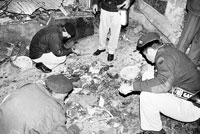 particular, suicide bombers have struck with
a vengeance in the NWFP, which includes the Federally Administered Tribal Areas
(Fata), now under international focus due to allegations regularly being made
in Western capitals that it was being used by al-Qaeda and Taliban to train and
equip fighters to launch attacks in Afghanistan and beyond. The six or more
suicide and other attacks in recent weeks have caused death and destruction on
a scale not experienced before. Resultantly, a climate of fear has been created
affecting economic and social activities in parts of the country.
particular, suicide bombers have struck with
a vengeance in the NWFP, which includes the Federally Administered Tribal Areas
(Fata), now under international focus due to allegations regularly being made
in Western capitals that it was being used by al-Qaeda and Taliban to train and
equip fighters to launch attacks in Afghanistan and beyond. The six or more
suicide and other attacks in recent weeks have caused death and destruction on
a scale not experienced before. Resultantly, a climate of fear has been created
affecting economic and social activities in parts of the country.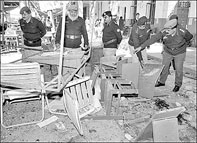 the identification and links of the suicide
bomber could not be known till the filing of this report.
the identification and links of the suicide
bomber could not be known till the filing of this report. able to differentiate blood of an animal
from that of a human being. Reportedly, DNA testing laboratories are being set
up with foreign help in Pakistan -- a supposed hotbed of terrorism -- to
counter terrorist activities and profile DNA data of hardened criminals. This
technology also helps in finding out the identity of the deceased, especially
in cases where they have been destroyed beyond recognition. The Samjhota
Express incident is one such example where the identity of the victims would be
determined by collecting DNA samples from their charred bodies and matching
them with that of those claiming to be their relatives.
able to differentiate blood of an animal
from that of a human being. Reportedly, DNA testing laboratories are being set
up with foreign help in Pakistan -- a supposed hotbed of terrorism -- to
counter terrorist activities and profile DNA data of hardened criminals. This
technology also helps in finding out the identity of the deceased, especially
in cases where they have been destroyed beyond recognition. The Samjhota
Express incident is one such example where the identity of the victims would be
determined by collecting DNA samples from their charred bodies and matching
them with that of those claiming to be their relatives.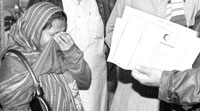 Nafeed is endlessly awaiting
word on her close relative from across the border -- Mohammed Zakir. Thirty
seven year old Zakir's condition is critical. While he is fighting for his life
-- totally unaware that he has lost his parents -- there are 12 more Pakistanis
clinging to their lives in the same unit.
Nafeed is endlessly awaiting
word on her close relative from across the border -- Mohammed Zakir. Thirty
seven year old Zakir's condition is critical. While he is fighting for his life
-- totally unaware that he has lost his parents -- there are 12 more Pakistanis
clinging to their lives in the same unit.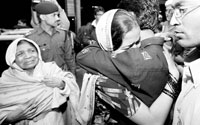 the two burnt coaches recounts:
"A lot of noise and shouts from passengers could be heard. Initially I and
other passengers failed to understand as to what had happened. After seeing
outside from the window, we realised that the bogies behind ours were on
fire".
the two burnt coaches recounts:
"A lot of noise and shouts from passengers could be heard. Initially I and
other passengers failed to understand as to what had happened. After seeing
outside from the window, we realised that the bogies behind ours were on
fire". cent, Pakistan 44 per cent, Iran 40 per cent,
Russia 12 per cent, India 2 per cent, Israel 1 per cent, United States 1 per
cent and others 10 per cent.
cent, Pakistan 44 per cent, Iran 40 per cent,
Russia 12 per cent, India 2 per cent, Israel 1 per cent, United States 1 per
cent and others 10 per cent.