


|
|
|
|
|
 |
 |
   |
analysis Newswatch injustice Endangered
glaciers trade Offering
an alternative Redressing
public grievances agriculture By Dr Noman Ahmed In the third week of January, the Sindh Minister for Katchi Abadis announced regularisation of the 1,200 katchi abadis (slums) in the province. He, however, cautioned that the prerequisites for regularisation would remain the same. On many previous occasions, government functionaries have issued conflicting statements about the fate of katchi abadis. According to one viewpoint, katchi abadis are eyesores for urban dwellers and must be demolished. This view is now commonly shared by a cross section of the power wielders in urban Sindh, who do not favour in-migration from other areas, particularly the NWFP.
Nationalism of the state There are inherent dangers in propagating the idea of nationhood on the basis of an exclusive religious identity
By Aasim Sajjad Akhtar It is stating the obvious that the Indian and Pakistani
polities are indelibly coloured by the partition of the subcontinent. If
nothing else, the immensely destructive conflict between the two states is
testament to this fact. In recent times, tensions have once again reached
fever pitch. It is clear that both the Indian and Pakistani states still
cling onto ideologies that have been the very basis of the conflict over the
past 60 years. After all, establishments on both sides still have a lot to
lose from normalisation. Pakistan’s ruling state oligarchy in particular
has relied entirely on the ‘India syndrome’ to maintain its rigid grip
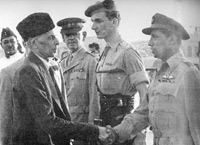
over power. Until the 1930s, the All-India Muslim League was committed only to securing concessions from the colonial state under the guise that Muslims constituted a discrete community in India; the League had not yet clearly asserted the idea of Muslims constituting an indivisible ‘nation’. But as politicisation of religious identities became more and more acute, it was perhaps inevitable that the Muslim League would come to argue in favour of the inherent incompatibility of the ‘Hindu’ and ‘Muslim’ nations, and furthermore that the Muslim nation was insular and indivisible. There was, and still is, little evidence to suggest at any point in the rule of the British in India that Muslims across the subcontinent shared anything more than religious identity, and even then the forms of Islam practiced varied greatly. Nonetheless, it came to pass that Pakistan became the first modern nation-state to be created on the basis of a shared religion. Revisionist historians have argued that until the very end, Jinnah wanted Pakistan to be part of a larger confederation of India. In the end, he accepted the same Pakistan that he had famously rejected in 1946, describing it as "moth-eaten". In any case, once partition had happened, the rot set in. The mythical notion of an indivisible nation was propagated far and wide, and thus a fragmented and confused people were convinced of the inherent righteousness of the Pakistan idea. Kashmir encapsulated the state’s ideology – the slogan ‘Kashmir banega Pakistan’ became a major rallying cry, particularly among the seven million migrants who, having been privy to unspeakable bloodshed during the transfer of power, were the most militant supporters of the anti-India sentiment. Kashmir had to become part of Pakistan because it was – and some would say still is – inconceivable that a Muslim-majority part of the subcontinent should not be part of the state created for Muslims. The huge holes in the argument are plain for all to see. The two-nation theory was stripped of all credibility following the eastern wing’s secession after a murderous army action in 1971 following 24 years of systematic exploitation. Ever since, growing sectarian conflict – which many observers rightly attribute to the manipulations of the state – has proven how ridiculous the idea of an indivisible Muslim nation is. There are still at least as many Muslims in India as in Pakistan itself. Perhaps what should be the biggest indicator of the inherent dangers in propagating the idea of nationhood on the basis of an exclusive religious identity is that the two nation theory has only one counterpart in the modern world – that of Zionism. The Israeli and Pakistani states, thus, share a commitment to an official ideology that has always provided religious obscurantist space to propagate their opaque and hateful politics. The question of Islam and its role in the polity has dominated Pakistani political and intellectual discourses since the state’s inception. The debate over Islam has been so overbearing for so long that many crucial issues that have nothing to do with religion have been trivialised by raising the question of their repugnancy (or not) to Islam. In retrospect, even the history of the Muslim League and its politics has been subject to revision. Up to this day, the educational curriculum and even more scholarly analyses have left ambiguous the intentions of the leaders of the Muslim nationalist movement in India and whether they wanted Pakistan to be a secular or a theocratic state. In fact, the historical evidence is very clear and it is patently incorrect to suggest that Jinnah or any of his contemporaries were even remotely agreeable to the idea of an Islamic state. Nonetheless, official history does not permit such objective reading of the past and, in any case, there is a very clear reason for the persistent ambiguity. While the dominant civil-military state oligarchy has been undeniably secular in its orientation – a fact reflected in the logic of policymaking – its primary raison d’etre, and more specifically the perennial rationale for the need for oligarchic rule, has been the defence of the nation (primarily from India). And since the genesis of the Pakistani state can be traced back to the claim that the Muslim and Hindu nations are irreconcilable, the defence of the nation can easily be equated to defence of Islam from a predominantly Hindu India. By insisting on the need for a separate state for the Muslims of the subcontinent, the Muslim League leadership opened up a Pandora’s box that has remained open ever since. This is because the need to defend Pakistan’s territorial sovereignty – an immediate obsession at partition because of the inherent weakness of the seceding state and the perception within Pakistan that the Indians and the British were colluding to ensure the new state’s collapse – opened up a political space for a religious politics in which Pakistan and Islam became virtually indistinguishable. Maulana Maudoodi, the founder of the Jamaat-e-Islami, and one of the ideologues of modern Islamist movements, opposed the formation of Pakistan, yet brazenly asserted that it would nevertheless be a perfect home for his brand of politics. The seemingly overt conflict between the ‘secularists’ and the ‘Islamists’ at present is considered by many to be a microcosm of the confrontation between secular and religious forces over the question of Islam that has persisted since the state’s inception. However, there are so many reasons to doubt that there is a genuinely confrontational relationship between the two. The instrumentalisation of Islam by every utterly secular leader in Pakistan’s history has been matched by the strident rhetoric of the right. Ayub passed a family law in 1961 that was widely condemned by the right, but at the end of the day neither the right nor the Ayub government ever came into open confrontation about structural issues, including the exclusive configuration of power that prevailed in the country. Bhutto talked openly about ‘Islamic socialism’, but it was the socialism that the right opposed, and not Bhutto’s version of Islam. Ziaul Haq and the right did not need to engage in polemic against each other, because they were the closest of allies. At the end of the day, the ‘secular’ state and the ‘religious’ political parties that regularly spew venom at each other for public consumption continue to cozy up to each other behind the scenes. There is no dispute over the centrality of the ‘Kashmir cause’, the ‘Islamic’ bomb or the larger question of defence of the nation. Indeed, if anything at all, conflict only ever emerges over who better protects these supposedly non-negotiable interests. It is, thus, that the remarkably resilient configuration of power in Pakistan persists. And this is why a ‘peace process’ that relies on the state is always liable to fail. On the other hand, however, the largely urbanised, secular middle class folk that have spearheaded the people-to-people contact in recent times are just as liable to be hoodwinked by the ‘Islam’ debate as anyone else. The supposed threat of ‘Talibanisation’ in the country has this social class completely paranoid. Even after the devastation caused by the so-called ‘war on terror’, the ‘secular’ middle class continues to advocate the use of unbridled force to get rid of the Taliban. Seven years on, with Afghanistan more Talibanised than ever and Pakistan no less so, one wonders how many more charades need to take place before those who consider themselves to be ‘progressive’ in thought and action recognise the depth of the phenomenon. To be sure, it is not the religious right that is the root of the problem but instead the state oligarchy that has cultivated an ideology that allows both itself and the right to continue to undermine the political process, and accordingly provide space for parochialism and militarism to penetrate deeper into society. The one big difference between India and Pakistan is in the extent to which way the legacy of partition has been used and abused by the establishments and their lackeys. Both states have had insidious designs, but the Pakistani state has been far more successful in undermining expansive political and cultural expression. In any case, it is only when the people generate enough power on both sides of the border that things will change. This is the only thing we can know for sure.
Newswatch Concerning bits and pieces of Bush’s disastrous legacy
By Kaleem Omar George W Bush has gone back to his ranch in Crawford, Texas, permanently. And a very good thing it is, too, considering that he spent an inordinate amount of time there anyway even when he was President of the United States. But the disastrous legacy of his eight years in the Oval Office is going to be with the world for who knows how long. It could be decades. This legacy can be divided in two parts: a) that which affects the world at large; and b) that which mainly affects his country. It is some aspects of the latter that I would like to talk about here today. I say "some aspects" because it would take a book – or even several books – to discuss all the aspects in detail. One part of the domestic aspect of his legacy is his administration’s assault on US civil liberties as enshrined in the US Constitution and the Bill of Rights. Following the draconian Patriot Act of October 2001 and the even more draconian Homeland Security Act of January 2002 that the Bush administration railroaded through Congress, the administration launched another assault on civil liberties in March 2003 when a smirking George W Bush, aka ‘Bomber Bush of Baghdad’, flanked by key members of Congress, approved a streamlined version of the Bill of Rights that pared its original 10 amendments (to the Constitution) down to a "tight, no-nonsense" six. A Republican initiative that went unopposed by cowering congressional Democrats, who believe discretion is the better part of indiscretion, the revised Bill of Rights provides American citizens with a "more manageable" set of privacy and due-process rights by elimination of four amendments to the US Constitution and condensing and/or restructuring five others. The Second Amendment, which protects the right of citizens to keep and bear arms, was the only article left unchanged – to the delight of the US National Rifle Association (NRA). "This is a victory for people who love guns," said then-NRA spokesperson and former Hollywood actor Charlton Heston (who died last year). "Guns don’t kill people; people do," he added, echoing the usual NRA lobby’s line. Calling the historic reduction "a victory for America", Bush promised that the new Bill of Rights document would do away with "bureaucratic impediments to the flourishing of democracy at home and abroad." He said that by "abroad", he also meant Iraq, North Korea and Iran – the three ‘axis of evil’ nations. "It is high time we reaffirmed our commitment to this enduring symbol of American ideals," Bush said. "By making the Bill of Rights a tool for progress instead of a hindrance to freedom; we honour the true spirit of our nation’s forefathers." "Way to go, Mr President!" shouted then-National Security Adviser Condoleezza Rice. "Yeah!" said then-Secretary of Defence Donald ‘Weapons of Mass Destruction’ Rumsfeld. Then-Vice-President Dick Cheney, however, said nothing since he was not present at the signing ceremony. He was hiding in his bunker at an undisclosed location, as he had been ever since the events of 9/11. The Fourth Amendment, which long protected citizens’ homes against unreasonable search and seizure, was among the eliminated amendments. Also stricken was the Ninth Amendment, which stated that the enumeration of certain Constitutional rights does not result in the abrogation of rights not mentioned. "Quite honestly, I could never get my head around what the Ninth Amendment meant anyway," said then-House Majority Leader Dick Armey (Republican-Texas), one of the leading advocates of the revised Bill of Rights. "So goodbye to that one. And good riddance, I say," he added. Amendments V through VI, which guaranteed the right to legal counsel in criminal cases, and guarded against double jeopardy, testifying against oneself, biased juries and drawn-out trials, have been condensed into Super-Amendment V: The one about trials. People being held in wire cages at the US Naval Base at Guantanomo Bay in Cuba have no right to trial anyway, nor any other rights for that matter. Incoming President Barack Obama has now promised to close down the Guantanamo Bay prison within a year. But 250 detainees (down from the original 600) are still rotting there without any legal rights. It also needs to be remembered that Obama’s decision to close the prison does not mean that the naval base itself will be closed. Stolen from Cuba in 1905, the base will continue to exist indefinitely. Bush’s then-US Attorney General John Ashcroft hailed the slimmed-down Bill of Rights as "a positive step". He said it would make the Justice Department’s job much easier. "Go up to the average citizen and ask them what’s in the Bill of Rights," Ashcroft said. "The chances are, they’ll have only a vague notion. They just know it’s a set of rules put in place to protect their individual freedoms from government intrusion, and they assume that’s a good thing. In fact, it’s a very bad thing. In any case, individual freedoms mean nothing in the post-9/11 world." Ashcroft, a controversial figure who is somewhere to the right of Ivan the Terrible in his political views, responded sharply to critics who charged that the new Bill of Rights no longer safeguards certain basic, inalienable rights. "We’re not taking away personal rights; we’re increasing personal security," Ashcroft said. "By allowing for greater government control over the particulars of individual liberties, the Bill of Rights will now offer expanded personal freedoms whenever they are deemed appropriate and unobtrusive to the activities necessary to effective operation of the federal government." When reporters asked what he meant by that, he said, "Figure it out for yourself. What I can tell you, though, is that this is the same Bill of Rights that General Tommy Franks intends to put in place in post-war Iraq." Were we expected to believe that that’s what the US invasion and occupation of Iraq was really about: putting the US Bill of Rights ‘in place in Iraq’? The mind boggles at the thought. Ashcroft added that, thanks to several key additions, the Bill of Rights now offers protections that were previously lacking, including the right to be protected by soldiers quartered in one’s home (Amendment III), the guarantee that activities not specifically delegated to the states and people will be carried out by the federal government (Amendment VI), and the freedom of non-combative speech (Amendment I). According to then-US Deputy Secretary of Defence Paul Wolfowitz, one of the Bush administration’s leading hawks and co-author of a 1996 plan advocating the takeover of Iraq, the original Bill of Rights, though well-intentioned, was seriously outdated. "The United States is a different place than it was in 1791," Wolfowitz said (if he hadn’t told us, we would never have known!). "As visionary as they were, the framers of the Constitution could never have foreseen, for example, that our government would one day need to jail someone indefinitely without judicial review. There was no such thing as suspicious Middle Eastern immigrants back then." Echoing Wolfowitz’s sentiments, Ashcroft noted that recent FBI efforts to conduct investigations into ‘unusual activities’ were severely hampered by the old Fourth Amendment. "The Bill of Rights was written more than 200 years ago, long before anyone could even fathom the existence of wiretapping technology or surveillance cameras," Ashcroft said. "Yet through a bizarre fluke, it was still somehow worded in such a way as to restrict the use of these devices. Clearly, it had to go before it could do more serious damage in the future." Bush agreed. "Any machine, no matter how well-built, periodically needs a tune-up to keep it in good working order," he said. "Now that we have the bugs worked out of the ol’ Constitution, she’ll be purring like a kitten by the time we invade Iraq." A case of proverbial overkill After 9/11, crime prevention techniques and philosophy have evolved differently in the West
By Khayyam Mushir It reads like a scene from one of Robert Ludlum’s
Bourne novels. From the initial identification of the suspect, through the
ensuing chase across the streets of London, on foot, on buses and
eventually on the underground, the drama enthralls and the suspense is
nail-biting, a veritable roller-coaster of thrills. It is only when one
reaches the finale that excitement gives way to a sense of dread and
disbelief. It is in the detail of the final moments of what transpired on July 22, 2005, in the life of Jean Charles de Menezes at London’s Stockwell tube station (as reported by the British press) that, despite its macabre quality, must be considered carefully if one is to appreciate the gravity of the preceding events and place them in their correct perspective. In those final moments on that fateful Friday, 27-year-old Jean Charles de Menzes, a poor Brazilian electrician eagerly on his way to a repair job, was shot dead by the London Metropolitan Police for a crime he had never committed. One can only imagine the bewilderment in his mind: relieved at not missing his train to which he gained entrance by a youthful leap from the platform. He took his seat only to see a man standing at the train doors, pointing him out to other men outside concealed by the train compartment. His confusion may have been replaced with dread upon recognising that these were police officers as they charged in the train and formed a rugby ring around him. He probably did not have time to form a suitable reaction as he immediately found himself staring into the barrel of a gun. Seconds later the first shot was fired, followed by another one and then another. Eyewitness reports confirm seven shots at point blank range to the head with another shot to the arm. On the following day, the United Kingdom’s Met Police Service confirmed that they had shot the wrong man, in no way connected with the attempted suicide bombings of July 21, 2005, and for which they expressed their deepest regrets. This was followed by three years of lies, concealment of evidence, and concocting of false accounts by the Met Police despite protest by the victim’s family and mixed public criticism. De Menezes’ family members were offered £585,000 in compensation to secure their silence. Eventually a leaked internal investigation report and CCTV footage, coupled with eyewitness accounts, revealed a story of incomparable police bungling and callousness. Jean Charles was classified as a suspect owing to his address on a gym card in the bags of one of the failed suicide bombers of the previous day. It appears no further investigation was deemed necessary; the police were out for blood and the order of ‘shoot to kill’ was issued to all field operatives chasing the suspect at the very outset. What is baffling is the cat and mouse chase across London without attempting to nab the suspect prior to his entry in the public underground railway system. Could he not have detonated the bomb on the two buses he took en route to Stockwell station? What manner of clairvoyance convinced Met Police commanders to assume that the suspect’s target was the underground system? And why the lies that describe him as wearing a winter jacket bulging with explosives and accuse him of running through the station having noticed he was being tailed, vaulting ticket barriers, leaping down escalators and making the final desperate dash into the train only to be challenged and warned by his pursuers before regretfully killing him? The reality, as confirmed by CCTV footage, is that Jean Charles, wearing a light denim jacket befitting for the temperature of that day, casually strolled through the station, picked up a copy of a daily newspaper and rode the escalator down to the train platform where in order to catch the already waiting train he leapt into the carriage as any Londoner would do; he was never challenged or addressed before being shot. What was the nature of the police briefings and threat assessments that disqualified this apparently harmless man from his right to a simple arrest and instead earned him his John Wooesque-style demise with seven shots lodged point blank in the skull? The answers lie, it seems, in how crime prevention techniques and philosophy have evolved in the West after 9/11. It cannot be denied that what set the stage for Jean Charles’ killing, and the identical harrowing experiences of innumerable other individuals of foreign nationalities at the hands of law enforcement authorities in Western countries, is a world vision that conveniently labels foreigners, particularly Asians, as terrorists, wife-beaters, fanatics, jihadists and suicide bombers. This is not to side with any silly argument that attempts to deny that terrorists and fanatics are not a reality of the present day – they are. They have formidable networks spreading like a virus across the world threatening to destabilise it; therefore, they must be stopped. But what needs to be understood is that what these fanatics have begotten is much more than a few fallen buildings, aircraft and some thousand white Caucasian lives. Every action has an equal and opposite reaction, it is true. But in staring into the abyss of world terrorism, the leaders, thinkers and commanders of the western world have allowed the abyss to stare into them. Out of the ashes of 9/11, therefore, arise a new generation of foot soldiers and policemen, brute killing machines that shoot first and ask questions later, indoctrinated to despise the terrorist, the jihadist, the fanatic; trained to recognise that he is most likely of Asian origin and, thus, to spare him no mercy, all of which is further reinforced regularly through a healthy diet of Hollywood propaganda ‘shoot ‘em ups’ and Fox news and CNN sound bites. The guidelines that determined the police procedure on July 22, 2005, in Jean Charles’ case are given the code name ‘Operation Kratos’. These rules of engagement were drafted immediately following 9/11, based on advice from security forces in Israel and Sri Lanka, countries skilled in dealing with terrorists and suicide bombers, and that permit law-enforcement officers to ‘shoot to kill’. That is all fine and we cannot question the refinement or the effectiveness of these techniques. What needs to be evaluated is the degree of reaction that a particular situation merits. Surely, de Menezes could have been restrained, cautioned at least to prevent him from detonating whatever explosives he was hiding under his thin denim jacket with its open front? Is it excessive to expect a bit more finesse from skilled professionals, trained to deal with such situations and in constant communication with intelligence men perched behind computers linked through satellites to innumerable control rooms across the globe, with customised databases that store the personal details of millions of individuals and which are available at the tap of a button? Isn’t that the difference between the skilled operative in a Clancy or Ludlum novel and the trigger-happy buffoon in the average John Woo film? The answer is no, as the truth is usually far removed from fiction. In reality, special operatives, policemen, soldiers and intelligence analysts are all just human beings with an infinite capacity for violence and cruelty, vulnerable to propaganda and prejudice and therefore capable of making big mistakes. Their training is effective insofar as it allows them to react instantaneously and automatically with the assured convenience of dumping the kill, Jean Charles in this case, as unavoidable ‘collateral damage’; but it fails in two fundamental areas: respect for human life and application of intelligent thought. And so in fighting the monster, one eventually assumes all its qualities. This is the abyss the west is staring into at present. From the streets of London to the avenues of Basra and all the way down to the hills of Bajaur, a doctrine of over reaction, excess and jingoism has become endemic to the Western strategy. With every passing day, it is coloured more and more by racism. Individuals from ethnic minorities in London and across the UK complain of victimisation and rough handling by the police even for minor offences and in the wake of the Menezes shooting the London Metropolitan Police found itself embroiled in one of the biggest racism scandals in its history, eventually having to pay its way out of disgrace. Personal interaction and ties between westerners and Asians all over the world are fractured and limited owing to unfounded suspicion based largely on ignorance and media hype. There are important lessons that the West needs to learn from its recent military adventures and 9/11; ones that it has overlooked. It must take positive steps now to subdue the escalating mistrust between East and West. More importantly, it must dispense with viewing the world in stereotypes, and refrain from understanding and describing it in the vernacular of its intelligence agencies. Its failure to do so will only increase its alienation in a dangerous world. (Email: kmushir@hotmail.com)
Global warming threatens the once indomitable source of freshwater
By Asma Rashid The increasing global temperature is threatening the
world’s ecological system, by accelerating the rate of glacial and
icecaps melting. Mountain glaciers worldwide have reportedly receded over
the last century, with accelerated melting of glaciers and ice fields
particularly during the last two decades. According to World Glacier
Monitoring Service, the measurements taken over the last century
"clearly reveal a general shrinkage of mountain glaciers on a global
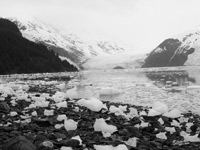
scale." The mighty Hindu Kush, Karakoram and Himalaya mountain ranges – called the ‘Roof of the World’ – stretch across six countries: Bangladesh, Bhutan, India, Myanmar (Burma), Nepal and Pakistan. Collectively, they possess the world’s third largest snow/ice mass after the Antarctic and Greenland ice sheets. These frozen water reservoirs are the only sustainable source of freshwater and of groundwater recharge for the people of the region; these glaciers generate the largest river run-off from any single source in the world, providing more than 70 percent of the freshwater to the people who live downstream in South Asia, Central Asia and China. While these mountains ranges are home to about 170 million people, the rivers Indus, Ganges and Brahmaputra (along with their tributaries) draining from them influence the lives of about 40 percent of the world’s population, by meeting their needs for consumption, irrigation, hydropower and navigation. Over the course of the century, water supplies stored in glaciers and snow cover are projected to decline, thus reducing water availability in regions supplied by melt water from major mountain ranges. International Panel on Climate Change (IPCC) projections of glacier retreat in the region suggest that an increase of 1.0 to 6.0 degrees Celsius (lowest to highest estimate) in the mean annual temperature for High Asia by 2100 is likely to result in a decline in the current coverage of glaciers by 43 to 81 percent, thus reducing the life-giving water supply to millions of people living in the plains. In Pakistan, glaciers of the Karakoram Range contribute up to 80 percent flow in the Indus river. They are reportedly also under threat due to the climate change. Any change in glacial behaviour will have major consequences on water availability in the Indus River system, thus raising food and water security concerns by risking the livelihood of over 43 percent of the country’s population directly or indirectly linked with agriculture. Water loss would also reduce the availability of power, which is already a serious hindrance to development in Pakistan. Currently, 34 percent of total electricity generation in the country is based on hydel sources. The recent electricity load shedding, of up to 18 hours in some areas points, towards the grim scenario that Pakistan might face in the face of reduced glacial water supply. Due to the rising atmospheric temperature, glaciers in the Himalaya Range are reportedly also receding fast. A report by the Working Group on Himalayan Glaciology, International Commission for Snow and Ice, released almost a decade ago, states: "Glaciers in the Himalayas are receding faster than in any other part of the world and, if the present rate continues, the likelihood of them disappearing by the year 2035 is very high." According to the IPCC Fourth Assessment Report, released in November 2007, the area of Himalayan glaciers is likely to shrink from the present 500,000 square kilometres to 100,000 square kilometres by the 2030s. The rapid melting of glaciers is expected to contribute initially to increased water flow and flooding in the region, which will be followed by decreased water flow. In this context, the World Bank’s report titled Pakistan’s Water Economy: Running Dry, published in 2005, projects a terrifying picture of 30 to 40 percent decrease in flow of the Indus river over the century with devastating economic repercussions. Despite the fact that glaciers are receding worldwide, in 2005 Kenneth Hewitt reported widespread glacier expansion in the Central Karakoram during the late 1990s. These conflicting findings underline the need for research on the impact of climate change on glaciers. Institutional capacity building for making quantitative assessment of the changes in the pattern and amount of river flows resulting from glacier melting, as well as of the changes in the climatic patterns, should be carried out regularly. Moreover, an effective communication system should be put in place for dissemination of results among the water managers and policymakers for informed decision-making. (The author is scientific information officer at Global Change Impact Studies Centre, Islamabad. Email: asma.rashid@gcisc.org.pk)
New frontiers The sooner the proposed Afghanistan-Pakistan Trade Agreement becomes a reality, the better for the region
By Aimal Khan
To streamline and boost regional trade, particularly
between Afghanistan and Pakistan, a new transit trade agreement is on the
cards. Compared with the existing Afghan Transit Trade Agreement (ATTA),
the proposed Afghanistan-Pakistan Trade Agreement (APTA) is more
comprehensive; it will facilitate trade between Afghanistan and Pakistan
in line with international trade requirements, besides harmonising and
simplifying related legal instruments and procedures. Under the ATTA, which was inked in 1965 for facilitating regional trade, Pakistan is bound to allow and facilitate tax- and duty-free transit trade to Afghanistan. However, it has become outdated, because it fails to take into account regional economic realities, developments in logistics and new international transit requirements. On the other hand, the APTA aims at facilitating smooth, rapid and efficient movement of goods and transport between and through the two countries. Besides adopting common technical standards and legal instruments regarding transit movement of goods and transport, it will also harmonise transit and transport policies and customs procedures. In 1965, railroad was the major mode of transportation and there was only one seaport in the country: in Karachi. However, now roads have become the dominant mode of transportation in the country and the container traffic is more developed than it was in the 1970s. The ATTA only talks about two transit routes (Chamman and Torkham) to Afghanistan, but now we can use at least 10 more entry/exit points on the Pak-Afghan border. Besides Karachi Port Trust and Port Muhammad Bin Qasim, the Gwadar deep seaport can also be used for transit trade. Moreover, the global energy trade has created a new mode of transportation: transmission lines and pipelines. A draft agreement prepared by the Afghan government is formally and informally under consideration of Pakistani authorities since April 2008. The World Bank is also facilitating a consultative process in the two countries to evolve consensus on the issue. The role of the private sector is especially important in this regard, not only because of its role in the trade sector but also because it can act as a pressure group. Political compulsions and bureaucratic procedures often hinder such initiatives, thus the private sector’s participation in fine-tuning the draft agreement will surely increase its chances of implementation. The APTA is developed in a broader framework than the ATTA; it tries to cater to Afghanistan and Pakistan’s economic and trade interests in a larger regional perspective. The proposed agreement will not only enhance bilateral and transit trade between Pakistan and Afghanistan, but it will also lead to regional cooperation in trade and transport. The development of trade corridors through Pakistan and Afghanistan will link the markets of the two countries with those of Central Asia, South Asia, Middle East and China. Since the collapse of the former Soviet Union, Pakistan is keen on establishing and developing economic and trade ties with Kazakhstan, Kyrgyzstan, Tajikistan, Turkmenistan and Uzbekistan. Unfortunately, the country does not share borders with the natural resources-rich Central Asian Republics (CARs), which can only be accessed via Afghanistan, China or Iran. From Pakistan, the shortest and cheapest routes to the markets of CARs pass through Afghanistan. Due to its geographic location, Pakistan can easily become a trade and energy corridor between China and the Middle East on the one hand, and between CARs and the Middle East and South Asia on the other. The country can provide operationally feasible and economically viable trade corridors in this regard. However, one of the main hurdles is the increasing militancy and deteriorating security situation in the region, particularly in Afghanistan and in northwestern parts of Pakistan. This has also triggered suspicions in capitals of CARs. Besides this, Pakistani policymakers harbour concerns about the APTA. This is understandable if one considers the fact that the country’s relations with Afghanistan are dictated more by its strategic concerns than by its business and trade interests. In short, the say of some actors has remained more important than that of others in the formulation of Pakistan’s Afghan policy. In fact, Pakistan has never hesitated to use the ATTA as a policy tool in the past. Under the agreement, the country only allows Afghanistan’s transit to India; however, trade cargo from India to Afghanistan is not allowed. However, now Afghanistan is asking for transit facility for both its exports to and imports from India. Independent estimates suggest that Pak-India trade can reach $10-12 billion from the current $1 billion per year, while Pak-Afghan $4 billion from the current $1 billion per year, if India is allowed transit facility to Afghanistan via Pakistan. Some powerful state actors as well as certain elements in the private sector have serious reservations over granting transit facility to India. Though most experts agree that Pakistan’s genuine interests have been taken into account in the APTA, the fact remains that it has been developed by the Afghan Ministry of Commerce, thus there are fears that Pakistan’s interests might have been overlooked. After being denied transit via Pakistan to Afghanistan, India started developing an alternative trade corridor with Iran’s assistance. Not only is India interested in using the Iranian route for reaching out to the markets of CARs and securing alternative railroad route to Afghanistan, but it also wants to reduce Afghanistan’s dependence on Pakistan for transit trade. It is for his reason that India is developing the port at Chah Bahar in Iran, as well as transportation facilities in both Afghanistan and Iran. After this corridor becomes operational, Pakistan will be no more remain Afghanistan’s only outlet to sea. In this scenario, Pakistan will lose its position as Afghanistan’s main trading partner in coming years. Both India and Iran are eyeing the Afghan market, and Pakistani manufacturers are losing out to their Indian and Iranian counterparts. As a result, India and Iran’s trade with Afghanistan is continuously increasing. India’s trade with Afghanistan started from zero and reached $216 million in 2006-07. India plans to raise it to $1 billion by 2112. Similarly, Iran’s trade with Afghanistan increased from $52 million in 2001 to $500 million in 2005-2006. Trade between Afghanistan and Pakistan, which increased significantly from $192 million in 2001-02 to $1.5 billion in 2005-06, is on a sharp decline since 2006-07. By end 2008, it had reached only $600 million. Therefore, Pakistan is running out of options. Unfortunately, Islamabad’s relations with Kabul are always determined by its strategic interests, rather than by its economic ones. On the other hand, India and Iran are pursuing their strategic interests in Afghanistan through political, cultural and economic means. Due to geographic and cultural reasons, as well as because of its status as a major trading partner of Afghanistan, Pakistan can accrue many benefits if the APTA becomes a reality. However, if the agreement fails to become a reality, Pakistan will be the main loser. The sooner the agreement comes into effects, the more benefits Pakistan would accrue. A significant portion of the Afghan transit trade has already been diverted to Iran, while Pakistan has missed the bus as far as its economic and trade ties with CARs are concerned. Due to its strategic location, there is vast potential and opportunities for Pakistan to enhance its trade in the region. The country could have benefited from regional cooperation and integration, but for several reasons this could not be done. Mere joining of regional blocks does not ensure prosperity and development. In fact, achieving regional cooperation demands pragmatic approach. Unfortunately, those in power in Pakistan seem to lack this understanding. By adopting the APTA, Pakistan and Afghanistan can become regional hubs of trade and transit between Central Asia and South Asia, the Middle East and China. The agreement promises a new dawn of regional cooperation, and it will lead to development, peace and stability in the region. (The writer is an Islamabad-based political commentator who works with Sustainable Development Policy Institute.)
Offering an alternative The ongoing energy crisis can be overcome by using Thar coal reserves
Dr Shafqat Nawaz and Usman Rahim Embroiled in political turmoil and militancy, Pakistan now has been further traumatised by painful energy crisis that has literally brought life in the country to a halt. It has become abundantly clear that the very basis of our energy policy needs to be revised, because it has failed in coping with the country’s ever-increasing energy demand. Pakistan has a generation capacity of 19,420 megawatts
(MW) of electricity: 36.4 percent from gas, 32.5 percent from hydel
sources, 28.5 percent from oil, 2.5 percent from nuclear and 0.1 percent
from coal. It is a pity that Pakistan generates only 0.1 percent of
electricity from coal, while 41 percent of the world’s electricity is
generated from coal, which also meets 26 percent of the world’s total
energy demand. The world’s demand of coal is estimated to increase to 3,700 million tonnes of oil equivalent (MTOe) by 2030; currently, according to the International Environmental Agency (IEA), it is 2,600 MTOe. Coal is produced in 50, while it is consumed in 70 countries across the globe. Many countries are heavily dependant on coal for their power generation. According to the World Coal Institute, these countries include China 78 percent), India (69 percent) and the United States (50 percent). Therefore, developing Countries like China and India are enhancing their coal-based power generation. According to the IEA, it is expected that coal-fired power generation capacity will increase from 307 gigawatts (GW) to 1,041 GW and from 72 GW to 251 GW in China and India, respectively, by 2030. Another factor that shows the importance of coal is that its world deposits are expected to last for another 160 years at the current production and consumption levels, compared with crude oil and natural gas that will deplete as early as the mid of the current century. Allah has generously blessed Pakistan with coal deposits. At present, it has 185 billion tonnes at its disposal, of which 175 billion tonnes are only in Thar (equivalent to 618 billion barrels of crude oil, according to the Pakistan Energy Yearbook 2007). According to Pakistan Coal Power Generation Potential, a report prepared in 2004 by the Private Power Infrastructure Board, the Government of Pakistan, the Thar coal reserves have power generation potential of 100,000 MW per year, enough to serve Pakistan for centuries. It is said indigenous coal is of inferior quality (lignite to bituminous). The statement may be true, yet it fails to appreciate the fact that stupendous advancements made in coal technology have overcome such issues as the quality of coal. Lignite-based coal firing is being carried out in many countries effectively. As a matter of fact, most of the power-generation is done by the coal (lignite to bituminous) that cannot be used in steel industry, which requires high-quality coal. In 2004, a German company, RWE Private International, worked out the economics of power generation from Thar coal, which showed that electricity will cost Rs3.3 kilowatt per hour (KWh). This cost can be further reduced by using new coal-based power-generation technologies, such as integrated gasification combined cycle, super critical steam, pressurised fluidised bed combustion, etc. As far as environmental aspects of Thar coal-based power-generation are concerned, it can be operated in an environment-friendly way, because a new technology, carbon dioxide capture and geological storage, has made it possible to achieve zero emission of carbon dioxide. Through this technology, the carbon dioxide produced from the coal-based power-generation plant can be captured and stored in underground rocks, where it can stay for thousand of years. Fortunately, the Thar area has the rock structure that can store carbon dioxide. This was also reported in a map published in a report prepared by the World Coal Institute and IEA Greenhouse Gas R&D Program in July 2007. This technology, if adopted, will not only be environment-friendly, but will also be more efficient than the previously used technologies. The higher capital costs of addressing environmental issues can be offset by the rebate under the Kyoto Protocol, a 2005 United Nations agreement that encourages reduction of greenhouse emissions by providing financial assistance on each tonne of carbon dioxide saved from emission. Economic stability of Pakistan is heavily dependent on industrial growth, which can only be achieved by ensuring the availability of energy. Natural gas supply at a substantial sustained rate is an important aspect of Pakistan’s energy policy. On the contrary, proven natural gas reserves will last for another 23 years at current production and consumption levels. But, keeping in view the increasing demand for natural gas at the average annual growth rate of about 10 percent, it is expected to last for only another 13-15 years. Realising the situation, Pakistan was interested in importing natural gas from Iran by constructing an intra-state gas pipeline, but this project appears to have been shelved in view of the price demanded by Iran: $10-11 (Rs800-880) per million British thermal units (mmbtu). The current price of natural gas in Pakistan is Rs394 per mmbtu. The country’s total crude oil reserves are 354 million barrels and indigenous crude oil production (25 million barrels per year) is only one-fourth of its present annual requirements. As a result, Pakistan is heavily dependent on the import of crude oil, high speed diesel oil and furnace oil, which cost the country $11.5 billion in financial year 2007-08 and which consumed more than 60 percent of its total export earnings of $19 billion during this period. The World Bank and China have shown keen interest in developing the Thar coal deposits. Bearing in perspective the existing scenario of natural gas and crude oil in Pakistan, indigenous coal is the only hope for achieving self-reliance in the energy sector and for thermal power-generation in future. Indigenous coal can also be used for producing fuel gasses and different petroleum products, but its economic feasibility needs to be prepared first. Keeping in view the uncertain / escalating prices of crude petroleum in the last decade, Research and Development Solutions, an agency of the US government, prepared in 2007 a feasibility report titled Alaskan Coal Gasification Feasibility Studies: Healy Coal to Gasification Plants. The Alaskan coal is low in sulfur and high in moisture just like the Thar coal deposits, which indicates that synthetic crude oil produced from this coal will cost $60-70 per barrel. Though the current prices of petroleum crude oil are much less ($38 per barrel) than the abovementioned figure for obtaining synthetic crude oil from coal, they are unpredictable and were recorded as high as $146 per barrel only a few months ago. In Pakistan, the current cost of producing energy from indigenous coal is still the cheapest among the fossil fuels: Rs201 per mmbtu in comparison with Rs259 per mmbtu from imported coal, Rs623 per mmbtu from furnace oil and Rs394 per mmbtu from indigenous natural gas. The need of the hour is to develop and invest in indigenous coal resources, particularly the Thar coal deposits, because this is crucial not only for the economy but also for the stability of the country. (The writers are director of and lecturer in the Centre for Coal Technology, Faculty of Engineering and Technology, University of the Punjab, respectively Emails: coaltechnology@yahoo.com and usmanrahim@gmail.com) Redressing public grievances The Ombudsman office needs legislative reforms
By Sibtain Raza Khan Public trust in the government lies in good governance
and judicious administration. During the last 61 years, the Pakistani
public has gradually lost its faith in most of the public institutions due
to maladministration and even the hope in the redress mechanism for public
grievances is eroding. The office of Ombudsman has also suffered trust
deficit among people, because its rectifying means are slow and it is
considered as a toothless office, since the powerful government
institutions do not implement its recommendations. It is, therefore,
believed that the office of Ombudsman direly needs necessary legislative
and administrative reforms to deal with public complaints against
government officials. Despite the fact that the mandate of Ombudsman (mohtasib) is to "diagnose, investigate, redress and rectify any injustice done to a person through maladministration", this office is still struggling to win the confidence of the masses. Nonetheless, this redress process is free of cost and easily accessible. However, at the same time, it does not provide timely relief and justice to the masses. It is said ‘justice delayed is justice denied’. The human nature demands speedy justice, while government offices lag far behind in this regard because of administrative and legislative limitations. When a survey was conducted by The News on Sunday to gather responses from all walks of life about the service delivery of the office of Ombudsman, only 24.5 percent people lauded new initiatives, while the majority of the people criticised the lengthy process of redress of public grievances and the role of government departments, which adopt delaying tactics to implement the recommendations of the Ombudsman. During the survey, Karim, a shopkeeper, commented that to get remedy from the Ombudsman was just a waste of time and nothing else. According to Tahir Saeed, who teaches at a local college, public dealing of the Office of Ombudsman is just like other government departments and there is no difference among them. Irum Akram, a university student, viewed that the Office of Ombudsman was a bureaucratic tactic to diffuse the frustration of the masses against the system. Rahema, a poor peasant, said it was a right step to redress the grievances of the masses, but the process was too lengthy. Indeed, there is a proper judicial system in place in the country to undo any injustice, but there is no blinking the fact that the courts are overburdened, and their procedures are time-consuming and expensive. In a country where over 40 percent of the people live below the poverty line, the majority cannot afford expensive judicial procedures, so free of cost and fast redress mechanism for public grievances is sine qua non for good governance. For responsive and transparent service delivery, some initiatives need to be taken to transform the office of Ombudsman from consultative and recommendatory into effective and meaningful. The people of Pakistan want speedy and prompt actions against the public servants who instead of serving the masses misuse their powers and earn bad name for the government. The office of Ombudsman – in collaboration with the United Nations Development Programme (UNDP), United Nations Children’s Fund (Unicef) and Asian Development Bank (ADB) – has initiated some projects, such as Strengthening of the Public Grievances Redress Mechanisms; Responsible, Enabling and Accountable System for Children Rights; and Strengthening of the Asian Ombudsman Association. The purpose of these projects is to get effective services from the office of Ombudsman; however, they still have a long way to go. The government is also considering creation of a task force for effective working of the office of Ombudsman, which would also provide legislative and administrative inputs. There are also suggestions to set up a web-based system in the office of Ombudsman, whereby complaints of public along with the decisions taken on them are available for public viewing. These actions, if taken and implemented properly, would bring about positive change in the system; however, the office of Ombudsman needs to be given more powers and its decisions and recommendations should be made obligatory for other departments, so that they are not overlooked. The provincial governments of Sindh, Punjab and Balochistan, as well as the government of Azad Jammu and Kashmir (AJK), have established the office of Ombudsman in their respective jurisdictions to investigate and redress public complaints. Like the federal office, the provincial Ombudsman office has also established regional offices for easier public access. There has been some success in solving the problems faced by the general masses; however, there remains the need for further empowering the office. The Ombudsman office should also be established in the North-West Frontier Province (NWFP), along with offices at the district level, for swift and effective service delivery. Cooperation among all the offices of Ombudsman should also be ensured to address wider issues. Most of the cases referred to the Federal Ombudsman office are against utility service providers. For instance, the Water and Power Development Authority (Wapda), according to the Ombudsman’s office annual report 2007, accounts for nearly half of the complaints, Gas companies and PTCL are also at the top of the list. While at the provincial level, complaints against police and revenue department are the most common. Many people also have complaints against government functionaries, but they do not get them registered because of the lack of trust in the government’s rectifying process. Meanwhile, the redress for public complaints is not always ensured by the Ombudsman office, mainly because of administrative hurdles. One of the important aspects is the lack of awareness among public regarding the role of the Ombudsman office. According to a survey, more than 35 percent Pakistanis are unaware of the functions of the office and the relief they can get from it. For this specific reason, it is imperative that a media campaign aimed at providing basic knowledge about the role of Ombudsman be launched. This would not only create public understanding of their rights, but would also inform them about the redress mechanism. To enhance the functioning of the Ombudsman office and for ensuring speedy response, monthly reviews should be made mandatory, describing the working of the office during that month. Such a measure will ensure public accountability of the working of the Ombudsman office. A prompt response and action by the Ombudsman office, at the maximum within a month after the complaint had been filed, should be made binding to restore hope of relief among the masses. (Email sibtainrazakhan@yahoo.com)
Searching for solutions Liberalisation of farm trade has important implications for both developed and developing countries
Hussain H Zaidi The revised draft modalities for liberalisation of farm
trade, devised in December 2008, are the latest attempt to build consensus
among World Trade Organisation (WTO) member countries on an issue that
unfortunately (in particular, for Pakistan) has been the most serious
obstacle to the completion of the Doha Round of talks. The success or
failure to reach a consensus on the issue will have far-reaching
implications for international trade. Although trade in agriculture accounts for less than six percent of global trade, its liberalisation has important implications for both developed and developing countries. One, agriculture is a source of employment for nearly half of the world’s population. Two, food being the primary human need, all countries want to ensure a minimum level of domestic food production. Three, several developing countries, particularly the least-developed countries (LDCs), depend on cheap food imports from developed countries; therefore, increase in world food prices will adversely effect consumers there. Four, in developed countries, the landed class, though small, exercises a lot of political influence. The need to protect the interests of this class accounts largely for the high level of protectionism that characterises the agricultural policies of most of the developed countries. This protectionism is manifest in high tariffs, tariff quotas and subsidisation. The Agreement on Agriculture (AoA) addresses many important issues, but not all. Its Article 20, however, contains the commitment by WTO member countries to continue the reform through fresh negotiations. Launched in 2000, these negotiations have remained largely inconclusive to date. The major outstanding issues are as follows: The AoA provides for converting non-tariff barriers (NTBs),
such as import quotas, into tariffs – a process called ‘tariffication’.
However, since NTBs used in agriculture were restrictive, tariffication
resulted in very high tariff equivalents. This has made market access for
agricultural exports a real problem. Though WTO member countries agree
that high tariffs should be subject to deeper cuts than low tariffs. The
contentious issue has been the extent of the tariff cuts and the number of
products (called ‘sensitive products’ in the case of developed
countries, and ‘sensitive products’ and ‘special products’ in the
case of developing countries) that can be exempted from reduction
commitments. Developed countries dole out subsidies worth billions of dollars to their farm sectors. These subsidies are of two types: domestic support and export subsidies. The AoA distinguishes between three types of domestic subsidies depending on whether they stimulate production directly: ‘amber box’, ‘green box’, and ‘blue box’ subsidies. There is no ‘red box’, which means that WTO member countries are not required to eliminate domestic support. The ‘amber box’ contains the subsidies that directly affect production and distort trade. Such subsidies, with a few exceptions, have to be reduced. The ‘green box’ contains the measures that are decoupled or de-linked from production, and are considered to have minimal impact on trade. Such subsidies can be used freely without any limits. The ‘blue box’ contains certain direct payments to farmers where they are required to limit production. These measures are linked with production and should in principle be in the ‘amber box’. Developing countries would ideally want an end to ‘blue box’ subsidies and, if this is not possible, at least setting of a limit for such subsidies. The ‘green box’ also needs to be re-opened, because some of its measures, such as direct payments to producers, are a fit case to be transferred to the ‘amber box’. Export subsidies is the only area in which Doha Round of talks has borne some fruit; at the 2005 WTO Ministerial Conference in Hong Kong, developed countries agreed to phase out export subsidies by 2013. The new modalities, which build on past negotiations and consultations among WTO member countries, address these issues in an attempt to balance the interests of potential gainers and losers in the event of opening up of farm trade. Regarding market access, the proposal, as in the past, is to use a formula that subjects higher tariffs to deeper cuts. The new thing is that instead of ranges, single number countries have been proposed. In the case of developed countries, tariffs of more than 75 percent (top tier) will be reduced by 70 percent; tariffs between 50 and 75 percent (upper middle tier) by 57 percent; tariffs in the range of 20-50 percent (lower middle tier) by 57 percent; and tariffs below 20 percent (bottom tier) by 50 percent. This will be done in five years. Another condition is that on average tariffs will be reduced by at least 54 percent. Based on the principle of special and differential treatment, developing countries will reduce tariffs by a lesser margin – two-thirds of the cuts to be made by developed countries in each tier – over a longer period: 10 years. In case average tariff reduction by a developing country is more than 36 percent, formula cuts can be reduced. Both developed and developing countries will have flexibilities in the form of deviations from the formula cuts. Developed countries can designate up to four percent of their products as ‘sensitive’. These products would be subject to less than formula cuts by one-third, half or two-thirds. On the other hand, developing countries can designate 5.3 of their products as ‘sensitive’, with the same flexibility for tariff cuts as that accorded to developed countries. In addition, developing members can designate 12 percent of their products as ‘special’ for reasons of food and livelihood security, and rural development. Of these, five percent of the products can be totally excluded from tariff reductions, while the rest will be subject to less than formula cuts. However, average tariff cuts on ‘special products’ will have to be at least 11 percent. Overall trade-distorting domestic support (OTDS) will also be reduced using a tiered formula. OTDS in excess of $60 billion, as in the case of the European Union, falls in the upper tier and will be slashed by 80 percent. The domestic support in the range of $10-$60 billion, as in case of the United States and Japan, is included in the middle tier and it will be reduced by 70 percent. OTDS of less than $10 billion falls in the lower tier and it will be cut by 55 percent. The proposed implementation period for developed and developing countries is five and eight years, respectively. The EU, the US and Japan – the top three subsidisers – will reduce one-third of their OTDS at the start of the implementation period, while the ‘down payment’ for other developed countries is 25 percent. Pakistan does not have much potential for export of agricultural products, thus it is not likely to gain a lot from liberlisation of farm trade. The importance of these negotiations for the country is indirect; it follows from the principle of ‘single undertaking’. In WTO negotiations, nothing is agreed until all is agreed. Hence, consensus in one area cannot develop into an agreement until it is reached in other areas as well and the result is a final package agreed by all member countries. Since Pakistan’s capital stakes in WTO negotiations are in the area of non-agricultural market access (NAMA), the importance of farm trade negotiations for the country consists mainly in their being essential to the success of NAMA negotiations. Reduction of subsidies will not affect Pakistan much, because the level of domestic support provided by the government is well below the permitted level. Therefore, a consensus of WTO member countries on the modalities for opening up of farm trade is in Pakistan’s interest, because it will contribute to an early completion of the Doha Round of talks, with enhanced market access for export of industrial products from the country. (Email: hussainhzaidi@gmail.com)
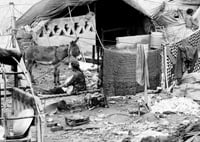
Katchi abadis are a reality that we cannot, and should not, ignore
By Dr Noman Ahmed In the third week of January, the Sindh Minister for
Katchi Abadis announced regularisation of the 1,200 katchi abadis (slums)
in the province. He, however, cautioned that the prerequisites for
regularisation would remain the same. On many previous occasions,
government functionaries have issued conflicting statements about the fate
of katchi abadis. According to one viewpoint, katchi abadis are eyesores
for urban dwellers and must be demolished. This view is now commonly
shared by a cross section of the power wielders in urban Sindh, who do not
favour in-migration from other areas, particularly the NWFP. A technocratic stance, often endorsed by developers and builders, emphasises allowing of high-density, high-rise development on the sites of katchi abadis. Yet another opinion focusses on gradual shifting of katchi abadis to sub-urban locations, where they could not become a burden on the urban infrastructure and services. An objective assessment of this sector informs us that each of these viewpoints is flawed, inadequate and not based on realistic appraisal of basic facts. Katchi abadis, in essence, are a response to the successive failed attempts of state institutions to ensure housing facilities for low-income people. Absence of choices to live and work in large- and medium-sized cities left the poor with no choice but to squat on any available land that could be targeted for the purpose. It is interesting to note that when Pakistan came into being, and millions of new citizens from various parts of the subcontinent opted for urban housing choices, ensuing settlements were not termed katchi abadis despite their otherwise shabby and rundown appearance. It is true that the government announced several schemes for rehabilitation, but they were not commensurate with the burgeoning load of refugees that was searching for a place to live. Economic compulsion forced many million inhabitants of different locations of the country to move towards cities that offered employment in industrial enterprises. State institutions, especially under martial law regimes, never responded to the acute problems of housing faced by the new urban citizens. Left helpless, they had to no choice but to help themselves, albeit in an unorganised manner. Haphazard squatter settlements sprang up in different locations of cities. Karachi was fortunate, because it had abundant reserves of state lands. Initially, the government tried to bulldoze settlements but soon realised that it was impossible. Thereafter, it decided to act ostrich and allowed the people to anchor at will. The process became technically sophisticated with the passage of time. Learning from the evidences of planned settlements, katchi abadis adopted the pattern of grid iron rectilinear layouts. Once the favourable locations were saturated, desperate settlers also swarmed the vulnerable locations. The phenomenon has continued with varying intensities and adjustments in the process and outcomes. The syndrome is in need of a dispassionate analysis. It is common sense that cities are places inhabited by all types of income groups. The cities that take care of only the rich and affluent are bound to fail. Healthy cities are those where the poor have decent access to basic amenities of life. It is disappointing to note that the governments have not given enough importance to the issue of housing. For example, the Junejo government had announced March 23, 1985, as the cut-off date for the regularisation of katchi abadis. The idea was to survey katchi abadis for determining the merit of their existence and granting legal ownership, services and amenities to settlers. It was also assumed that making of new katchi abadis shall be accommodated in the newly-announced five marla and three marla housing progammes, which were the state responses to housing needs in those times. However, poor delivery mechanisms did not allow bulk of the poor to benefit from these approaches of land distribution. Incompatibility of procedures adopted in such schemes favoured the rich and powerful to transform them into speculative enterprises. Delayed occupancy, locational disadvantages, cumbersome paperwork, high prices, uncertain distribution of land and corruption were some of the reasons that led to the failure of public housing schemes in cities. That Karachi has more than half of its population residing in katchi abadis and an inventory of more than 150,000 vacant residential plots is a proof of the blatant contradiction in the housing scenario. It is often claimed that the poor need subsidies in housing, which the state can no longer provide. This is not a veritable fact. The poor pay for every service in the contexts where they dwell, though to the informal sector. Housing is acquired through payments to illegal entrepreneurs, building material providers and contractors. Security is ensured by giving ransom to musclemen of various ranks and profiles. Water is acquired on higher costs from vendors. In most cases, poor end up paying more than the middle- or upper-income groups. The state, though aware, does not assign priority to most of these issues. Several vital steps need to be taken without delay. A housing need assessment survey must be carried for urban areas as the starting point. Under normal circumstances, a housing census must be held after every 10 years, along with a population census. However, it seems to have been delayed. The need assessment shall inform our decision-makers about the scale and characteristics of housing requirements, especially for the poor and low-income groups. Concurrently, a land management study must be done to examine the availability of land for housing the low-income groups. Modified delivery mechanisms, such as incremental housing development approach, may be adopted. It shall ensure eradication of speculation and corruption around it. Housing credit packages on revolutionary lines must be developed. Without proper means, appropriate housing cannot be developed. Experiences in banking have shown that it is not the poor who default on loans. Billions of rupees have written off against the loans taken by the rich and powerful. The housing choices, when generated according to solid preferences and affordability status, mostly succeed in achieving the desired objectives. |
|