


|
|
|
|
 |
 |
|
|
Editorial comment Arabs
in league interview Why
Pakistan is no Egypt The
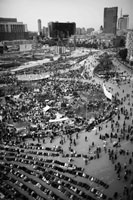
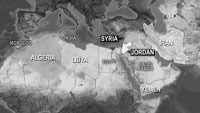
e-Uprising Editorial People march on These are defining moments in history. What is happening in the Arab world in the Middle East and North Africa cannot be explained by all the experts put together. It defies all analysis which keeps pouring in, nonetheless. Some see in these "seismic protests" -- that have shaken the autocratic regimes in one country after the other -- the forward march of secular forces. Others fear the Islamists will take over. The Marxists rejoice the labour is finally revolting the neoliberal onslaught; Islamists feel their time has finally come. The clever Americans change side swiftly, or as some would say shamelessly, and claim to stand with the people. The anti-imperialists see it all as an American conspiracy. The analysis is not easy because it took people of Tunisia literally weeks to unseat a dictator who had ruled the country for 23 years. Food riots and a few suicides shook the country while Indians marvelled why nothing happened in their country even after a thousand peasant suicides. Experts were still trying to understand Tunisia’s courage when Tahrir Square in Cairo filled up with people who refused to go back home. Alongside came the waves in Yemen, Jordan, Bahrain, Libya, Algeria and Morocco as the 30 year old dictator in Egypt was forced to step down. The euphoria in the present case weaves in with tragedy which is most pronounced as the 42 year long autocrat in Libya unleashes violence upon his protesting people. For decades, the world identified Libya with Gaddafi and had forgotten the people living there. No wonder analysts now predict a disintegration of the country if the regime falters. Meanwhile commentators must comment. Are we seeing a revolution in the strictest classic Skocpolian sense? Are there going to be "rapid, basic transformations of society’s state and class structures" in all these states even though Skocpol examined one country at a time? They are not sure as yet. While the movements are pretty organised, one is not sure how will the states transform as a result of these uprisings. The people may force the existing regimes to go but no one knows what are they going to be replaced with. There are no clear alternatives in sight and yet at this point in time, as someone put it brilliantly, the Arabs have lost their fear. Who said revolutions were easy to explain. Just when Skocpol had lumped France, Russia and China into one group came Iran which required a different mode of analysis altogether. Some see the current Arab insurrection as similar to Eastern Europe in 1989. Others compare it with "the Latin American mass mobiliztions after the great offensive of neoliberalism there under a variety of dictatorships". But the Muslim world has its share of cynics. What revolution without a renaissance or without an intellectual foundation? Only the security establishments stand to gain in these countries, they say. Well they may be right. Or they may be wrong. Because the people’s power has defied some commonly held notions -- that the Islamic world is a monolithic whole or that democracy is not suitable for the Muslim world. And people have committed themselves to a future where there is dignity, freedom and democracy.
Nasserism and its discontents The events of 2011 will only be ‘revolutionary’ if new political forces that reflect the widespread sentiments of the Arab people emerge to build upon the legacy of secular nationalism By Aasim Sajjad Akhtar The unprecedented upheavals that have shaken the Arab world are understandably provoking a great deal of debate about possible political outcomes in months and years to come. Is it truly accurate to term the (ongoing) popular uprisings revolutions? What is the constellation of social forces that is at the forefront of the mobilizations? With whom will western powers – and particularly the United States – align themselves in the succession battle? These and many other related questions are of great
importance to the Arab people, and indeed the rest of the world, not least
of all because of the Middle East’s oil wealth that has shaped the modern
world system and underlay the rise of the Arab rentier states that are now
falling like dominoes. Yet it is not possible to meaningfully speculate on
future developments without delving into the past to make sense of the
political trajectories of Tunisians, Egyptians, Libyans, and the people of
the Gulf states. To begin with it is imperative to avoid clumping the Arab world together as an undifferentiated monolith. We Pakistanis all too often think ourselves as kindred souls of all Muslim peoples (and harbour innumerable delusions of grandeur with regard to our ‘leadership of the ‘Islamic world’). In fact, beyond a broad sense of shared identity – which has of course been crucial in fomenting uprisings in one after the other Arab country – the history, culture, economies and polities of the Arab world are incredibly diverse. The countries of the Maghreb – Tunisia, Algeria and Morocco – were French colonies, and have a distinct Berber identity. What is today Saudi Arabia and the other Gulf states remained within the British sphere of influence; the evolution of these societies over the past fifty years has been largely a function of their discovery of oil. Then there are countries like Egypt, Syria, Iraq, Lebanon, Libya and Palestine which have historically been the heartlands of Arab nationalism. When Gamal Abdel Nasser and a handful of other captains and colonels in the Egpytian army came to power through a coup d’etat in 1951, a train of events was set into motion that was to culminate in the humiliation of Arab countries at the hands of Israel and subsequent radicalization of Arab societies along Islamist lines. For a period of 15 years after 1951 however, Nasserism reigned supreme and secular Arab leaders were at the forefront of Third World nationalism. Alongside the communist bloc, the so-called non-aligned
countries forced imperialism into a historic retreat which started with the
dismantling of the European colonial empire and carried on through entities
such as the Organisation of Petroleum Exporting Countries (OPEC) and the
G-77 at the United Nations. In both the Maghreb and the Arab heartlands –
but not in the Gulf countries – modernization proceeded apace and gave
rise to a fairly mature middle class that rallied around the Palestinian
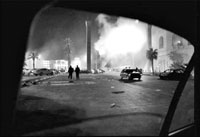
struggle. Yet the authoritarian bent of Nasserism gave rise to inevitable contradictions. Political repression and economic immiseration provided western governments and the Wahhabi states an ideal staging ground for radical Islam. Indeed the British had adopted a carrot and stick policy towards the Ikhwan-al-Muslimeen in Egypt since the 1920s, and when Nasser and other Arab nationalist leaders suffered successive ignominious defeats at the hands of Washington-backed Israeli war machine in the early 1970s, the balance of power shifted decisively towards the religious right. With the Iranian revolution latent sectarian conflicts also raised their ugly head in states such as Iraq and Lebanon – these tensions proved to be the final nail in the Arab nationalist coffin. Of course it is important to bear in mind that the subsequent rise of the right wing was not uniform throughout the Arab world. The Ikhwan, for example, has had an organic presence in Egypt for much longer than organizations such as Hezbollah and Hamas, both of which came to the fore only in the early 1980s. Even today, as was evident during the anti-Mobarak uprising, the Ikhwan does not possess the capability to overrun Egypt – although it does control a fairly consistent percentage of the national vote. Nevertheless the corporate media continues to talk up the possibility of anti-western forces taking power in the post-Mubarak era. As a general rule, mainstream western discourse remains committed to orientalist depictions of the Arab world – alongwith Muslim countries such as Pakistan – even while it fails to acknowledge its complicity in the rise of the religious radicalism. Even now, western governments continue to prop up the Wahhabi monarchs in the Gulf states and reactionary military establishments in Egypt and Pakistan. In the final analysis the present upheavals are most important because they prove conclusively that public sentiments in the Arab countries are driven by secular concerns. But they also indicate that the vacuum that was created by the decline of Nasserism has yet to be filled. The mobilizations were masterminded in Egypt and Tunisia at least by technology-savvy middle-class youth from the comfort of their homes – they may have created the space for a political alternative but there is no party on the scene that can articulate a workable programme that is democratic in its form and emancipatory in its content. An important detail that has been ignored about the immediate post-Mubarak situation is the spate of workers’ strikes in Egypt’s public sector. In effect the organized working class is saying that Mubarak’s departure is no guarantee of an overturning of neo-liberal policies. Once upon a time secular nationalism was able to – at the very least – able to rally the working class around a populist project. Such a project is now conspicuous by its absence. While I have already underscored the necessity of avoiding alarmism when it comes to the religious right, the examples of the Ikhwan, Hamas, Hezbollah and other Islamist political formations in the Arab world suggest that, to some extent at least, the populist mantle has been taken over by the right. The widespread popularity of Hasan Nasrullah (the leader of Hezbollah) in the Arab world in the aftermath of the defeat of Israel in 2006 is testament to this fact. Nasserism will not rise from the ashes to reclaim its place in the Arab popular imagination. The events of 2011 will only be ‘revolutionary’ if new political forces that reflect the widespread sentiments of the Arab people emerge to build upon the legacy of secular nationalism. Arabs in league Arab world is struggling for political freedom and social justice By Mazhar Khan Jadoon It may be part of a ‘greater Israel plot’, or American move to reshape Middle East for a stronger foothold to tap more oil, or the revival of Islamic forces that are out to enforce Sharia in the Arab land. All these speculations will stay in the air until the dust of revolution settles down and a clearer picture emerges. However, all that is happening in the streets of the Arab world shows one thing for sure; "the educated and more aware Arab youth belonging to middle class are calling the shots now for a change that will bring them at par with the rest of the world". No one was expecting that an isolated protest in a
northern African country would trigger a tsunami that would flood the entire
Arab world. Tunisian uprising gathered mass quickly and turned out to be a
revolution pulling down the thrones of worn-out dictators one-by-one. It is
people versus dictators. Absolute power blankets the mind and vision of a
dictator and he fails to see the reality. Libyan dictator Muammar Gaddafi
also showed his true colours when he ordered his forces to crush the ‘rats’.
It is the end of a dictator when he sees his people as rats. The whole Arab world, perhaps, was waiting for a spark to ignite a change -- that could ensure political freedom, social justice and right to speak without the fear of being gagged and imprisoned. Pent up desire for freedom provided the thread for the rosary of change in the Arab world. Mubarak lost people’s confidence because he failed to feel the pulse of the young generation that is capable of juxtaposing their lives with that of the changing world with no room for repression and dictators. Taking their cue from the Tunisian uprising, Egyptians thronged Tahrir Square and forced the generals to send the 82-year-old president into retirement -- as had happened to his counterpart -- Zine el-Abidine Ben Ali in Tunisia. The rage that sprang up in Tunisia and swept through Egypt has morphed into a ‘people versus dictators’ battle. The contagious rage knows no boundaries and is gaining momentum day-by-day. Two of the Arab rulers are down and the rest are nauseated with the event and are waiting for their turn. Mubarak and Ben Ali have been pushed into oblivion by their fate decreed by people and what is in store for the rulers of Libya, Bahrain, Yemen, Algeria, Iraq and Morocco is no different. It is just a matter of how quickly and wisely the rulers read the will of their people and leave without creating mess. In his televised address, Gaddafi tried to scare away the swelling crowds threatening to use force to crush them. He should have talked sense because the use of force will only limit his chances for a safe and honourable exit. Mubarak went down with over 200 deaths while Gaddafi has already crossed the toll of 1000 dead and thousands injured. The resilience of Libyans shows that use of force will only quicken Gaddafi’s downfall. Political analyst Robert Fisk says Gaddafi is facing the forces he cannot control. According to an article that he wrote for The Independent, Fisk suggests Gaddafi is groping in the dark searching for legitimacy for his illegitimate rule, "Gaddafi’s claim that the millions of protesters in Libya want to turn Libya into an Islamic state is exactly the same nonsense that Mubarak peddled before his end in Egypt, the very same nonsense that Obama and Clinton have suggested." In Bahrain, the predominantly Shia Muslim protesters are sticking to their guns occupying the Pearl roundabout ahead of the promised talks between the opposition representatives and the rulers. Bahrain freed at least 23 political prisoners held on terrorism counts on Feb 23 and pardoned two others including an exiled opposition leader whose plan to return to the country may complicate talks with the government on political reforms. More than 100,000 demonstrators recently packed central Pearl Square, in what organisers called, the largest pro-democracy demonstration this tiny Persian Gulf nation had ever seen. Tens of thousands of men, women and children, mostly members of the Shiite majority, got together with one message: "this regime must fall". King Hammad bin Isa al-Khalifa is still clinging to power with calls for a national dialogue to try to bridge differences, preserve the monarchy and unite the nation. Yemen’s President Ali Abdullah Saleh has said, only defeat at the ballot box will make him quit, despite a growing protest movement calling for him to resign. Tens of thousands of protesters continue to rally around the country. For the first time several Yemeni Ministers of Parliament joined the protesters in the streets. Experts are voicing concern, about the US using the presence of Al-Qaeda elements in the country as a pretext for military intervention. According to BBC, many commentators warned against a repetition of the ‘pre-emptive’ action taken against Iraq and Afghanistan. In Iraq, frustrated Kurds are crying foul at the tight grip with which the two ruling parties control the Kurdish autonomous region. Iraqis across the country have staged a number of protests in recent weeks against corruption, high levels of unemployment and poor provision of basic services such as clean water and electricity. Now it could be Algeria’s turn to free itself from the autocratic rule. Fearing a full-blown uprising like that in Tunisia and Egypt, the government officials in the huge North African country are scrambling to stem an accelerating movement of street protests. This kind of a display of anti-government sentiment was unthinkable until recently. Algerian Foreign Minister Mourad Medelci had announced that his country’s 19-year state-of-emergency laws would be revoked within days, ending tight censorship and lifting a ban on political demonstrations win back enraged public. Algeria’s small neighbour is also undergoing change. Two of Morocco’s biggest political parties and human rights groups have joined calls by a youth movement for constitutional reform that could reduce the role of the king. "More political freedom" and "end to dictatorship" are the by-words sending shivers down the spine of rulers in Rabat. interview "...militarism, Zionism and Islamism shall be the main beneficiaries" -- Aijaz Ahmad, political commentator and literary theorist based in New Delhi, India By Ather Naqvi The News on Sunday: In your own words, though you’ve said it with reference to Tunisia ("Autumn of the Patriarchs", Frontline, February 12-25, 2011), Islamism is a weak current and the uprisings in the Middle East and North Africa look like a forward march of the secular forces. Are we going to see the beginning of democracy in these regions? Aijaz Ahmad: These are relative matters and one should avoid generalizations that are too broad. There is little resemblance between Bahrain and Tunisia, or between Yemen and Algeria. Political Islamism is a now a weak current in Tunisia but the Ikhwan (Muslim Brotherhood) are by far the best organized force in Egypt, for instance, even though still a minority current. In Algeria, a war between the Islamist FIS and the ruling FLN took roughly two hundred thousand lives. Each country should be analysed in its own terms. Hamas and Hizbullah are Islamist but also represent the popular will against Zionism and imperialism. The Islamist ruling party of Turkey is, in its social outlook, not terribly different than the German Christian Democrats. So, we have to distinguish not only between different national situations but also between very different currents within the broad category of political Islamism. The real tragedy of the entire region is that not a single country has a really powerful left or even a genuinely anti-imperialist, nationalist party. So long as this situation prevails the attractions of Islamism would be very considerable. TNS: There are similarities that unite these countries
and there are specificities. What is it that happened at this particular
time to generate a response of this kind? Can we call it the domino effect
of revolution? AA: The Arab world has been on a short fuse for quite some time. Wonder is not that it happened now but that it did not happen earlier. Several proximate causes can be identified. First, a number of Arab countries, including Tunisia and Egypt, have been hit by the worst kind of neoliberal policies during the past decade, producing mass immiseration for the lower and middle classes but immense wealth for the ruling elite. In this sense, the Arab uprisings of today resemble the Latin American mass mobilizations after the great offensive of neoliberalism there under a variety of dictatorships. Second, the current Arab uprisings can also be regarded as perhaps the beginning of a global food riot. Food has emerged now, alongside oil and gold, as one of the three key commodities for global speculative capital, from Wall Street downwards. Mass demonstrations in Tunisia, Algeria and Egypt started very much in response to highly publicized suicides in protest against rising inflation and unemployment. Even in Libya, the uprising began not in Tripoli where the twitter revolutionaries are concentrated but in the poorest region of Cyrenaica. Third, the groups of urban youth who have played such an important role in all these uprisings are also connected with each other across national frontiers through information highways and chatrooms. Finally, I think the great strikes and mass mobilizations that broke out all across Europe during 2010, from France to Greece and Ireland to Italy, had an effect, particularly in a country like Tunisia which is closely integrated into EU or Algeria where French events tend to have an impact. TNS: You’ve talked about the army in Tunisia being of a different variety from Egypt, Libya and Syria. What role do you see for the armies in general in different states in the near future? AA: I supported the coup that overthrew the monarchy and brought Nasser to power in Egypt. And I supported the coup that brought PDPA government to power in Kabul and against which the US first organized the Jihad International, al Qaeda and so forth. So, I am not opposed to the role of the army in every instance. In the present situation, however, I do not see an Arab army that will play a progressive role. All I can say is that the Tunisian army shall do less harm than the Egyptian army. TNS: Your analysis is that "imperialism shall not allow that kind of popular, participatory democracy" and would try to "limit the gains of the uprising to merely procedural electoralism" ("Autumn of the Patriarchs", Frontline, February 12-25, 2011). Does that not imply that the democratic aspirations of these people are not strong enough or that imperialism is all powerful? AA: If imperialism were all powerful, there would be no Hizbullah, no Chavez, no Morales, and Iran would have been invaded and occupied by now. The real power of imperialism lies in the presence it commands within our own ruling institutions, and that applies to virtually the whole of the Arab world as much as to Pakistan. That presence runs through armies, internal security agencies, major political parties, dominant sections of the media, corporate houses, well-trained and well-funded NGOS, the syllabi in colleges and universities, etc. So it all depends on what you mean by "democratic aspirations." For instance, poll after poll suggests that roughly ninety percent of Arab populations are seething with anger at the kind of relations their rulers maintain with Israel, at the role the US has played in propping up monarchs and dictators in their region, at the US invasion and occupation of Iraq and Afghanistan. I find it implausible that Arab peoples shall be allowed -- by powers that be, at home and abroad -- a kind of "popular, participatory democracy" that would implement policies based on these "democratic aspirations". TNS: You said that forces within the US are capable of manipulating the social media to their advantage. How about the use of internet and electronic media in the current uprisings? Do you see an element of manipulation there? AA: "Manipulation" is both too strong a word and too weak for what I had in mind. Processes that I was indicating are put in place, as part of contingency planning, well before any uprising takes place. I have no evidence of "manipulation" during the uprising. I do know that the only foreigner whose speech was shown on the massive TV screen in Maidan Tahrir was the President of the United States. What is at issue is not some conspiratorial "manipulation" but a steady creation of mentalities. TNS: These movements are conspicuous by the absence of a prominent leadership. Do you think the people would be able to build on the progress they have made so far and alternative leadership will emerge in due course or that, like Iran, Islamist elements will benefit? AA: There were no charismatic leaders but in both Egypt and Tunisia there were identifiable, disciplined and in many cases highly trained groups that did brilliantly well in coordinating the actions and maintaining the disciplines. Three hundred people died in Egypt but the compact of non-violent agitation was not broken among the protesters. Over five thousand were injured; who provided medical support for them? I believe in what I have said in my Frontline piece. If these uprisings succeed in the more advanced countries such as Egypt, Tunisia or Algeria, the Arab peoples will have another chance to connect with the great revolutions of modernity. If these fail, Zionism, militarism and Islamism shall be the main beneficiaries. TNS: How absurd or relevant is it to compare Pakistan with the volatile situation of Egypt or Libya? AA: Pakistan shares with the Arab countries the misfortune that it has neither a substantial left nor a major political party that is secular and genuinely nationalist. There are of course individuals and small groups that are by any standard heroic. For the rest, Pakistan is getting wrecked by its participation in a US-inspired war that has now lasted for three decades with no end in sight, and getting devoured by an Islamism that was assembled at the very origins of this war. Will there be an uprising? You should ask someone very young. Three-fourths of the people who died or got seriously injured during the Egyptian uprising were 32 years old or younger. In Pakistan and elsewhere, that is the generation that matters. The interview was conducted via email Why Pakistan is no Egypt People are wishing for a revolution in Pakistan like the Middle East without any intelligible points of reference between the two By Muhammad Ali Jan Jubilation at the momentous events taking place in the Middle East has rapidly and perhaps predictably, been accompanied by comparisons between the situation in the Egypt, Tunisia and now Libya with that of Pakistan. Talk shows, newspaper columns and even casual conversations are all littered with what Hamid Dabashi has perceptively identified as ‘lazy clichés, phony metaphors, and easy allegories’ meant to prevent people from properly understanding the precise nature of the events in the Middle East where despite similarities, each country has its particularities. Everyone from Altaf Hussain to Imran Khan is talking
about a revolution without uttering a word about what it means and what it
would look like in Pakistan. Confusion surrounding the lessons of the
uprisings is so high that a group of young protestors recently gathered in
Liberty Roundabout Lahore (perhaps Pakistan’s ‘Tahrir’ according to
the protestors?) in support of the Egyptian people’s struggle as well as
to ‘condemn democracy’ and call for an Islamic Revolution for the
establishment of a Caliphate in Pakistan. It seems as if people are simply wishing for a revolution in Pakistan now that the process has begun in the Middle East without any intelligible points of reference between the two. However, if history is anything to go by, the problems and prospects of the Pakistani revolution are going to arise out of the country’s specific history despite similarities with the Arab world. The starting point of the discussion has to be the fact that all countries are a part of the global capitalist system that has been in the making for the past 500 years. Moreover, unlike current mantras of ‘globalisation’ this world system is built on the difference between the underdeveloped (formerly colonised and subjugated) countries and the developed formations. Therefore, at a high level of abstraction there are similarities between all underdeveloped countries (and not just between an ‘Imagined Islamic Community’ as the Islamists assert) due to their shared histories of colonial and post-colonial domination that was once encapsulated in the notion of the ‘Third World’. The countries of the South have all been subjected to neo-liberal restructuring that has inflicted wide-spread poverty, inequality and unemployment on these societies. There are of course other similarities: one relates to the so-called demographic time bomb whereby the majority of the population (more than 60 percent) in both Pakistan and Egypt is below the age of 30 years. The unemployment unleashed by neo-liberal prescriptions has hit sections of the youth the hardest with youth unemployment extremely high in both these countries. Lack of jobs coupled with increased access to education and a longing for social mobility has created widespread frustration which has been instrumental in fuelling the present resurgence of Arab Nationalism in the Middle East; this nationalism is precisely the point of departure between the revolutionary process in Egypt and the situation in Pakistan. The sense of a continuous shared identity is extremely well-engrained in most of the Arab world especially Egypt, which was the birthplace of modern Arab nationalism. That nationalism of the 1950s and 1960s was built on the foundations of anti-colonialism, secular citizenship and social welfare but the ‘political form’ for implementing these changes were authoritarian, one-party states with strong military apparatuses (minus of course the Gulf states where monarchies of various ‘Islamic’ colours rule to this day). The current wave of unrest is challenging precisely this authoritarian political form with the aim of greater democratisation within the nation-state. Nowhere are the people questioning the contours of the nation-state itself; in other words, there is no ‘national question’ around the territorial integrity of the nation-state but a straight forward ‘political question’ around the best form of managing the existing territory. This is in stark contrast to Pakistan where the very basis of the nation-state has been under attack from ethnic nationalism since its very inception and the political and national questions are inextricably linked. As the culmination of a sub-movement within the Indian Struggle for Independence, Pakistan shared little more than a ‘Muslim’ identity which soon clashed with ethnic identities of the provinces that became Pakistan. The increasing use of Islam by the state was first and foremost meant to counter the competing ethnic nationalism of the Bengalis, Baloch, Sindhis and Pakhtuns who wanted greater economic, political and cultural representation in the new national dispensation. The military-bureaucratic state failed to realize that Pakistan was and continues to be a multi-ethnic and multi-national state where a composite instead of unitary nationalism would be the best guarantee against territorial fragmentation. Instead, it chose to suppress the demands of the different provinces resulting in a proliferation of ethnic nationalism. One does not have to be reminded of the East Pakistan tragedy nor the current conflagration in Balochistan to realize that the greatest difference between the revolutions of the Middle East and Pakistan’s situation is ethno-nationalism. Unfortunately, in their eagerness to draw parallels between Pakistan and Egypt, the mainstream media in Pakistan has conveniently overlooked this basic distinction between the two. As the Arab youths take to the streets and topple one tyrant after another, it will no doubt inspire young people all over Pakistan. However, it would be useful to remember that it is in fact young people (and not Waderas and Sardars as the common stereotype goes) who form the backbone of the ethno-national movements in Balochistan and Sindh. Thus, while youths in the Punjabi heartlands may be inspired by the movements in the Arab world, the young people of Balochistan and Sindh may draw a different inspiration from these revolts. The only hope for a nation-wide movement and the emergence of a truly representative Pakistani nationalism is the recognition of difference alongside the forging of a common struggle for democracy, social justice and freedom from oppression.
A common struggle across the Arab world was fomented by Al-Jazeera and then put in place by Youtube, Twitter and Facebook By Aziz Omar The revolutions of yore used to be cumbersome affairs. Even before attempting to start one, the instigators had to rely on the word of mouth, secret messages written in code and sent through daring messengers to like-minded elements. Soon, electronic modes of communication began to posit the ability to weave an invisible web of information, rallying and organising protestors, literally at the click of a button. The recently unleashed wave of revolutionary fervor that
is sweeping across the Arab world is largely fuelled by electronic news and
networking media over the past dozen years. The uprising in Egypt, that has been one of the most televised revolutions in history, is dubbed as the "Facebook Revolution". This moniker is largely attributed to the power of the social networking site to first bring together people virtually via a Facebook community created by one Wael Ghonim and then to direct them in tens of thousands in the form of a protesting community out on the streets. The public uprising in Tunisia was, to a considerable extent, triggered by the likes of Facebook uploader/provider as well as the target audience. Where the Egyptian news source had no qualms about revealing his identity, the team behind SBZ news chose to remain in the shadows. The power of Facebook in conveying news and criticism of dictatorial regimes in the far and wide was further augmented by user controlled online services, Twitter and Youtube. Last June, a page set upon Facebook commemorating the brutal murder of Khaled Said – who dared to defy the Emergency Law that allows searching anybody, anywhere, anytime – linked a video on Youtube covering his murder and thus was successful in creating enough of an impact in tens of thousands of Egyptians who started calling for regime ouster. Twitter’s ability to provide second to second updates on people and events was channelled alongside Facebook communities calling for protests in the various Arab states, such as by using #25jan in tweets in the case of the Egyptian protests organised on January 25, 2011. Yet the role played by social networking/media sites of Facebook, Twitter and Youtube is but a tip of the virtual iceberg of reality checks delivered to the people in Arab states. Much of the bulk of news, reporting and analysis has been dealt blow-by-blow by the Qatar based Al-Jazeera satellite television network. Born in 1996 out of the now defunct BBC Arabic, with funding provided by the Emir of Qatar, Al-Jazeera was structured right from the start to be less bureaucratic and red-tape laden and more towards integrating social media into what they do. Through its various websites and news channels, the Al-Jazeera network has consistently played hardball with regimes across the Arab world and beyond, and left them rattled in the wake of its broadcasts. Shortly after going on air with original international Arabic-language news channel, anti-Egyptian government coverage on Al-Jazeera in 1997 prompted Cairo to recall its ambassador from Doha. Interestingly in 2000, Al-Jazeera stomped on its own sweet deal with Mubarak’s government to be the first network to use facilities and build studios in a new ‘Media Free Zone’. Al-Jazeera slammed the Arab emergency Sharm al-Sheikh Summit hosted by Mubarak as a "shameful betrayal of the Palestinians" and the Intifada al-Aqsa. This outcry was a response to the failure of the Arab summit in taking sterner measures against Israel and the US, which was attributed to the hosting Egyptian premier. Al-Jazeera camera crews in West Bank and Gaza also provided footage of enraged Palestinians burning Egyptian flags in protest. Similarly in 2002, both the Saudi and Jordanian governments retaliated to intense criticism of its respective ruling families by recalling their ambassadors from Doha. The same year, government of Bahrain banned the Al-Jazeera from reporting from inside its state. The ban was triggered by, Al-Jazeera airing footage of anti-US protests within Bahrain without acquiring permission from Bahrains Ministry of Information. It was only after diplomatic relations between Qatar and Bahrain improved in 2004 that Al-Jazeera reporters were allowed back in. However in May 2010, Al-Jazeera was again barred from operating within the Kingdom soon after the channel aired a report on poverty in Bahrain. Even with the seemingly unfettered power, modern electronic forms of media, news, networking and communication are still prone to manipulation and censorship. Even though websites of Facebook, Youtube and Twitter could not be targeted by the authoritarian regimes, their access was summarily blocked as soon as their role in the protests became apparent. Al-Jazeera has often been accused of following an agenda -- of backing Qatari state, picking and choosing Arab political factions to support or tear down, and downplaying issues at home. The channel’s offices and vehicles have often become the target of the supporters of the regimes that it has been critical of. Yet there is no denying the fact that the very notion of there being a common struggle across the Arab world was fomented by Al-Jazeera and then cemented in place by Youtube, Twitter and Facebook.
|
|