


|
|
|
|
 |
 |
  |
overview
overview The negligence of the
authorities over the years has ensured that coastal
development and tourism remains merely dream for the people of Pakistan. The country has the potential to
provide all kinds of
tourism opportunities for intending travellers, including adventure
tourism that is far more exciting than
what our politicians provide to the public every day. There is vast potential
to exploit a number of options, starting
from the coasts of the country in the south to
the magnificent mountains in the north. While some tourists have been
attracted by the mountains in the north, the beaches of the country have
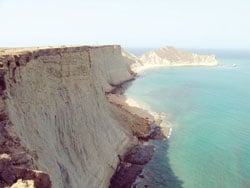
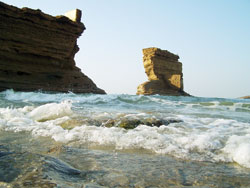
never been tapped for their potential to attract tourists. The country is home to a number of beaches, including Somniani, Ormara, Pasni and Gawadar in Balochistan, and Clifton, Hawks Bay and Sandspit in Sindh.Tourism is one of the world’s largest industries and isclosely interrelated with all other sectors of life: the economic, social, cultural, environmental, and political, says Tahir Qureshi, Senior Advisor Coastal Ecosystem IUCN. He says that it is an irony that Pakistan is blessed with a beautiful coastline and virgin beaches stretching over1,050 kilometers (650 mi), 250 kilometers of which lie in Sindh and 800 km in Balochistan, but there has been no development for coastal tourism in the last 65 years. He said that coastal and marine tourism and recreation are important parts of the largest and most rapidly growing activity in the world. Pakistan has the potential to attract foreign tourism, much of it coastal-motivated, which provides significant economic benefits that relate directly to the country. Pakistan’s tourism potential and its economy can be easily be boosted with just some effort and will on the part of the authorities. Local coastal economies benefit significantly from tourism through relatively higher incomes, higher employment rates and investments, infrastructure development, etc. Tourism and recreation-related development is one of the major factors shaping development patterns in the coastal zones of many countries in the developed world. Unfortunately, the federal government has not paid heed to this untapped potential of the country, and even the provincial governments have deliberately neglected this sector, he laments. He adds that it is not as if we cannot develop our beaches and points to the lack of willingness to provide the best entertainment and recreational facilities to the people of Pakistan and to the new generation. A number of organisations and various departments and ministries do exist but no practical efforts for coastal tourism have been undertaken . Qureshi says there are a number reports regarding the coastal management zone which includes coastal tourism. He adds that back in 1989, the Karachi Development Authority sponsored a report and hired two Consultancy firms: Doxiadis Associates International Group S.A and Osmani and Company for detailed reports on coastal management and tourism. The Karachi Coastal Zone Management and Planning report is very comprehensive and covers every aspect of coastal management and tourism, but no serious work has been done to follow up on the report. The groundwork, he believes, has been done but it just needs a serious effort and will to implement it. He adds that it is not too late for the government at all levels to become proactive to shape and guide coastal tourism development, an activity he believes will generate a lot of income and other benefits Recently, the Karachi Port Trust has awarded a project to the Indus Valley School of Arts & Architecture to survey/study and provide a report for the development of the Sandspit Beach. KPT aims to develop the beach to boost coastal tourism and recreational activities. However, so far the Indus Valley School has not yet started the project, Ali Rashid Tabrez, Director-General National Institute of Oceanography, says that development of beaches should be carried out but for tourism to be sustainable, it should include the optimal use of resources, with a minimum impact on environmental, social and cultural values while providing benefits for local communities. He adds that unfortunately in the name of development and beautification of the beach, reclamation and allotting of that land by various authorities, including the Clifton cantonment board and DHA, has taken place. Clifton beach is one such example, which has shrunk to just a small strip for the masses. In the name of development, the sea has been pushed back and the land has been reclaimed and allotted for commercial purposes. The Clifton beach is the dumping ground for all the sewerage and pollution of DHA and Clifton which ends up in the sea, an environmental disaster for marine life. He says development should be undertaken without disturbing the environment, local communities and marine life and ecosystem of the sea. Another
ocean and marine life expert, Yousuf
Ali, Director Operation Karachi Scuba Diving Center,
laments over the pathetic conditions of coastal tourism and blames the
authorities, including the security
agencies, for the situation. He attributes the underdevelopment of the coasts
to the discriminatory policy of the government. He claims that freedom of movement for
civilians is restricted in many coastal
areas by different agencies in the name of ‘National Security’. He also
blames land grabbers, as well as the
conservative social values as
obstacles to the development of the coasts and the nation. According to him, coastal tourism is not just a business venture but also could provide opportunities for educational and awareness programmes that could provide training and other technical assistance to the local community. He says that the coasts of Pakistan have the potential to be home to a Tourist City or Marine Park in order to achieve and be able to protect our environment as well as to attract tourists to our beaches from all over the world. He added that no project can be successful without the ownership of the local people and training them would be a mutually beneficial step. This development would provide avenues for income generation to the local coastal communities. Coastal tourism would also generate hundreds of thousands of jobs for people of all walks of life and help improve the image of the country in the world. In addition to these factors, tourism is one of the few industries in which many developing countries actually have a comparative advantage over developed countries in terms of cultural heritage, natural wildlife, climate, attractiveness of rural and remote areas, etc. Also, tourism offers an opportunity to support traditional activities such as fisheries, agriculture, handicrafts, etc. Tourism is a labour intensive industry and therefore it provides job opportunities for men, women and young people. Finally, tourism can bring not only economic but also non-economic benefits to local communities in terms of international recognition and valorisation of their culture and the surrounding natural environment, benefits that can only bring pride to local communities. Drawing lines in sand Coastal areas worldwide are major destinations for tourism, which represents the fastest growing sector of the global economy. The coastline of Pakistan is 1050 kilometers wide and is shared by the provinces of Sindh and Balochistan. Unfortunately Pakistan’s coastlines — which boast golden sandy virgin beaches, beautiful islands, marine ecosystem and coastal communities — are rarely in the limelight; this part of Pakistan remains in the darkness of negligence. Communities situated closest to the coast are often the most underprivileged; abject poverty and the absence of basic necessities seems to be their destiny. Such communities — also known as coastal communities — mostly depend upon fishing. Coastal tourism needs to be developed but the interests of the coastal communities should not be sacrificed in the process, said Fiza Qureshi, Regional Program Manager South Pakistan Fisher Folk Forum. Sure enough, the local coastal communities are not against the development of natural resources per se but they fear the exploitation of their community and their individual and collective resources, said Qureshi. She also said that sustainable, responsible coastal, marine and eco-tourism is important for the ultimate livelihood of the coastal communities. Eco-tourism demands the provision of responsible travel to natural areas in a bid to conserve the environment and improve the welfare of the local people, she added. She said that the coastal community is aware of the importance of coastal and eco tourism, and the inhabitants of one of the coastal villages have already initiated eco tourism and converted their homes into small restaurants where their women cook food and serve it to the visitors. The visitors are taken for
eco tourism in their boats — this is helping them earn a livelihood.
However there is continuous resistance from the land grabbers and land mafia. She added that tourism should be such that it should offer some environmental benefits, such as greater appreciation of the value of natural resources, not the exploitation of natural resources. If not properly managed, development can result in pollution, deforestation, destroying of the marine life and marine eco-system. Haroon Baloch a resident of Mubarak Village, a small village near the beach believes that tourism can have lots of benefits but can also have harmful effects — it can lead to unsustainable coastal development as infrastructure is built on the shoreline to accommodate tourists, which will affect their norms, culture and life styles. Haroon fears that there are several century-old villages; both small and big in size; and these can be affected in the name of development and land grabbers and other commercial mafias can encroach their lands and resources in the name of development and tourism. He complained that most of the coastal villages still don’t have basic services such as water, electricity and gas. There is neither a dispensary nor proper education system for our children, he stated. Mubarak Singho Baloch, former nazim of UC-8 Keamari Town, also said that the government should seriously consider developing the coastline and should give priority to the development of coastal tourism. He emphasized the point that for the development of the coast the communities that inhabit it should be taken on board and their interests should be taken under consideration; he clarified that he was aware of the importance of coastal development and tourism but feared the inequitable attitude of the authorities. On the brighter side, Singho Baloch added that if coastal tourism is promoted it can bring prosperity and can improve the living standards of the coastal community; furthermore it can provide improved employment opportunities for them. He reiterated the point that the coastal communities are still struggling for the basic necessities; people are still struggling for their basic rights so how they can trust that anyone will give serious thought to their plight and provide them opportunities for development. Singho added that the city
government appointed around 50 swimmers of the local community as ‘Life
Guards’ — under the Fire Brigade department. He said further that there
are more than 99 coastal community boys who are swimmers — certified by the
WWF — but they are without jobs. “I asked the city government to appoint
them to jobs as Life Guards, and the Life Guards department should be
separated from the fire brigade; they are two different things, but our plea
is still unheard.” He said that from Clifton beach to Hawks bay and onwards to Soneri beach and Mubarak village there is room for all kinds of sea sports, yachts, charter boats — and cruise ships can be the dominant sources of income here and can employ local people, which in turn can serve to attract local and foreign tourists in a manner that the local community can also share in the fruits of development. Specifically, diving, as a form of tourism, can also be developed which will help raise awareness about the need for marine life conservation. There is a hotel, he said — that was constructed by the federal tourism department in 2001 — at Hawkesbay, but it is still non-operational; it shows the tourism ministry’s lack of interest in developing the coastal tourism. Singho fears that the major issue which the coastal community may face is that coastal regions may suffer the cumulative burden of environmental stress from the activities on and overcrowding the coast and from upstream and inland development. He said that development should not be like the Clifton beach where all the sewerage water of the restaurants and the city is dumped in the sea. He added that DHA, in the name of development of the beach, destroyed the whole of Clifton beach and leased out the entire beach to different restaurant owners, builders and thus limited and drastically reduced beach use for the general public. He affirmed his commitment to resisting this kind of development, which destroys the life of the local communities, marine life and eco system, and also denies and restricts the general publics’ right to permissible forms of entertainment and free movement — even at the beach. He added that the horse and camel men — who mostly belong to the coastal communities and earn their living from horse and camel rides provided to visitors of Clifton and Seaview areas — are also exploited. They charge visitors Rs.200 to 300 per animal ride. — Hina Mahgul Rind
|
|