


|
|
|
|
 |
 |
  |
election
2013 Clash
of the lashkars issue Sceptic’s Diary Two
doses too short
election 2013 Though the ruling
Pakistan Peoples Party (PPP) leadership is investing a lot by way of money
and time to bring winning horses from rival political parties into its fold,
it is losing its own loyal cadre by consistently ignoring it when it comes to
development and decision-making. Karachi is being seen as
the major battleground for the PPP where it is facing difficulty in
constituencies that were its strongholds in the past. Mostly, these people are
taking local issues seriously. They say neither the party’s elected
representatives (MNAs and MPAs) initiated any uplift scheme during its five
year tenure nor the party leaders fulfilled the promise to regularise the old
villages, which are under threat of land grabbers and builder ‘mafia’ in
Karachi. This approach of successive governments, especially the PPP, has
left the villages vulnerable to the builder mafia. The government is also
criticised for hardly doing anything for the older settlements of the city. Obviously, it is a setback
to the party which has lost its strong supporters in Karachi. These party
elders have the community’s backing and may pose a great threat to the PPP
as they strongly feel the leadership has abandoned them. The PPP legislators,
commenting on such developments, said: “It is nothing but a futile attempt
by the opponents to create rift within the party. These people are loyal only
to the Bhuttos.” At this, the annoyed cadre
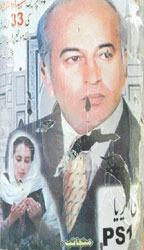
replied: “Now portraits of Bhuttos are slowly disappearing from the
billboards displayed in different areas. This shows the PPP is changing its
face.” Presently, the PPP has
three seats in the National Assembly (NA) and six in Sindh Assembly from
Karachi. Quite recently, around 120
notables, mostly chieftains of villages and community elders, attended a
meeting convened by a PPP local leader and former union council Nazim Mubarak
Sanghu, at his native Sanghu village, located near the famous picnic point
Hawks Bay, to discuss the pre-election situation. The objective of the
meeting was clear — to develop a consensus on a candidate acceptable to the
locals. They say PS-90-Karachi has remained with candidates unknown to the
locals, who never made any effort to come up to the expectations of the local
voters. The host of the meeting
Mubarak Sanghu told TNS: “The party has decided to convey the decisions to
the high command. We want the leadership to realise that we need a party
ticket and support for the local people. We have clarified to the party that
the voters have a right to choose their own candidates. If the party ignores
us, it will be responsible for the consequences.” Mubarak Sanghu is a
committed PPP activist from coastal areas, from where the sitting MPA Nadim
Bhutto was elected, twice. Before him, his father Lal Bakhsh Bhutto had won
the same seat twice on the PPP ticket. Nadim Bhutto hails from Shikarpur and
is contesting the elections from Karachi’s stronghold, depriving the local
deserving candidates. The PPP supporters in other
areas of Karachi have the same reservations about nominations of the
candidates like Muzaffar Shujrah who belongs to Kandhkot, Kashmor district.
He remained MNA and was then elected MPA from Karachi but has done no
development work in his constituency. The area, people say, needs potable
water, sewerage system and healthcare facilities. When contacted, Shujrah
showed anger over the question and refused to comment. Asif Bhatti, President of
Native Islanders Welfare Association, whose family remained the most loyal to
the PPP since its inception, said: “We are conveying to the party
leadership that candidates imposed upon us are not acceptable to local people
any more.” Bhatti represents the
islander community in Karachi. He added: “We have reservations against such
candidates and this time we will not support them at any cost. We intend to
extend support to local candidates. “The PPP supporters in
PS-89 are also planning to have similar meetings to discuss who could be the
suitable candidates for us in the next elections. The present PPP MPA has not
done any work in the area. The island localities have not received a single
uplift scheme during the present PPP tenure.” Former Chairman District
Council of Karachi and a leader of fishermen community, Haji Shafi Jamot, and
Khudadino Shah, President Malir Bachao Movement have recently joined the PML-N,
which inspired other local leaders like former provincial minister Abdul
Hakim Baloch in the Malir area to provide a launching support to PML-N with
his supporters. Now Abdul Hakim Baloch and Haji Shafi Jamot are said to be
potential candidates against the PPP nominees in Karachi’s rural areas. Local people also say that
a broader alliance of nationalists and the PML-F is being formed with the PML-N,
which will benefit these candidates against the common rival PPP. Like other areas of
Karachi, Lyari has been a stronghold of the PPP and almost all national and
provincial seats have always been won by the PPP for the last 40 years.
Presently, there are rumours that PPP may nominate Bilawal Bhutto Zardari for
the NA seat from Lyari. The residents of old city
area have been experiencing a horrible situation; street war among groups,
police operation, killings and kidnappings, prolonged closure of schools,
shutting down of businesses and displacement of families to avoid tension.
The rising tension has also compelled all the elected candidates to shift
their families outside the city and many of them cannot dare to come to meet
their voters. MNA Nabil Gabol took the
initiative to defeat the armed people, who were united under the flag of
Lyari Amn Committee and challenged the party representatives. The Amn Committee has asked
the party leadership that now they will decide who should be given the party
ticket. They have warned that if their chosen candidate is not given the PPP
ticket, nobody from the party will be allowed to enter the area. Surrendering to pressure
from the Amn Committee, the party high command has handed over the Lyari
affairs to this pressure group. Now the Amn Committee may choose the
candidates for the forthcoming elections. This decision has annoyed PPP MNA
Nabil Gabol who is showing reservations against the PPP. Although he denies
having left the party, he has reportedly held a meeting with the PML-N
leadership in Lahore. Local analysts see the situation in Lyari to have far
reaching consequences for the party. caption Posters of Benazir and Z.A.
Bhutto are rarely seen now in Karachi
Clash of the
lashkars Once popular for
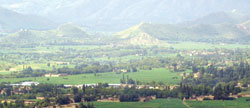
its beauty, the remote and picturesque Tirah Valley in Khyber Agency has
turned into a battlefield between various militant and anti-militant groups
that want to take control of the scenic mountainous region, close to the
Durand Line. The fresh clashes started
on January 24 when the militants attacked the Bagh Maidan to take control of
the strategic area. The local tribesmen, volunteer of the Amn Lashkar and
members of Ansarul Islam (AI), another armed group in the area offered stiff
resistance, triggering a big clash between the well armed warring factions. As the area is so remote
that there is no developed communication there, it is not accessible to
journalists. One has to believe in reports reaching from different sources.
Some of these reports said 52 people have so far been killed in clashes
between the two groups while other reports said the casualties were over 80. Media reported in the first
two days that militants of Lashkar-e-Islam (LI) supported by Tehrik-e-Taliban
Pakistan (TTP) had captured check posts in Angori Morcha, Bucha, and Kala
Wuch, Dri Addi, Haidar Kandau and Adamkhel areas. The tribal volunteers of
the area were deployed in these posts by the local Amn Lashkar in support
with the AI. The spokesman for the AI,
Saadat, said 23 of their men were killed in the attacks. However, he added
that over 45 of the attacker militants were also gunned down. The spokesman
told media people that the AI is not going to let the TTP increase its
influence in the area as they are the ones who are carrying out blasts in
mosques and killing Muslims. The commander of LI, Sabeel
Khan, on the other hand claimed their men were killed in the fighting. According to the political
administration of the Khyber Agency, militants had captured 23 posts of the
AI that their men had vacated due to severe cold and snowfall in the area.
The officials, however, said the AI recaptured 22 of their posts the very
next day while fighting was on for the Singarh Check Post. Several civilians have also
fallen victim to bloody clashes between the two groups in which rockets,
mortar shells and heavy weapons are being openly fired. Among the civilians
killed in the clashes included Anar Gul, his son and wife. They were killed
when a mortar shell landed on their house in the Rajgal area of the valley. Till a few years back,
Tirah was known only as the summer hill station for the tribal Khyber and
Orakzai Agencies. People of Khyber, Orakzai and Kurram Agencies used to spend
their vacations in the area, mostly with their relatives since it was not a
developed tourist spot. The access to the area was not that easy as one had
to walk up the mountains for several hours due to the road condition. Located close to the Durand
Line, Tirah remained virtually independent since the colonial times. It was
in 2003 when, for the first time, Pakistani forces entered the Tirah valley
after militants started spilling over to different tribal areas, first from
Afghanistan and later from the North and South Waziristan. The huge mountains along
with the difficulty of its passes and the fierceness of its inhabitants
protected it from all the invaders whenever they tried to take control of the
valley, comprising the major towns of Maidan, Rajgal, Waran, Bara and Mastura. Tirah is in media for the
last many years, mostly because of clashes between rival groups. The clashes
began when the local tribes opposed and fought with Mangal Bagh-led Lashkar-e-Islam
(LI) when the top men of the banned organisation got shelter in the mountains
of the valley after a military operation was launched against them in the
main Bara town of the Khyber Agency. The Tehrik-e-Taliban Pakistan (TTP)
which was once a rival of the LI openly joined hands with Mangal Bagh against
the army and the local tribes. The TTP and LI are making serious efforts to
take over the Tirah Valley and give tough time to the forces. Besides forces, a militant
group Ansarul Islam — a rival of the LI whose head Haji Namdar was killed
in an attack inside his seminary in August 2008 — and Tauheedul Islam, a
group of local Zakhakhel tribes, are offering strong resistance to the TTP
and LI for the last several months. Tauheedul Islam (TI) was raised in the
Khyber Agency after the LI allegedly killed a local religious scholar Maulana
Hashim in March 2011. The TI men held a commander of the LI and killed him in
revenge announcing a war against the Mangal Bagh-led forces. The fresh clashes, however,
started last week when the TTP launched new attack to capture key points in
the Bagh Maidan area on Thursday January 24. Not only the people of
Tirah Valley but the entire Khyber Agency and other parts of the Fata and
Khyber Pakhtunkhwa are suffering for the last many years, first because of
militant attacks and now compounded with military operations. The killings of
innocent people in suicide bombings, blasts, rocket and other lethal attacks
such as mortar shelling are going on unabated. Peshawar has been the worst
hit where several people died when mortars landed in residential areas of the
provincial capital from the nearby Khyber Agency. Haroon Bilour, an advisor
to the KP government and son of late senior provincial minister Bashir Ahmad
Bilour, has suggested the elders of Pakhtun nation from KP, Fata, Balochistan
and other parts of Pakistan as well as those in Afghanistan to call a grand
jirga and sit together to discuss the law and order situation in the region.
Haroon Bilour believes that tens of thousands of Pakhtuns have been killed on
both sides of the Durand Line and now it’s time for the elders to bring an
end to the bloodshed. The writer can be reached
at javedaziz1@gmail.com and followed on Twitter at storyteller147.
Canada is a strange
country. It is breathtakingly beautiful, its people are among the most
civilised in the world, and they have multi-culturalism in their
Constitution. There is no Punjabi and no Baloch there. Everyone has equal
rights, both as individuals and as groups. Why would a part of Canada then
wish not to be a part of it? Therein lies the strangeness of this country: It
not only recognises the right of a federating unit to secede, it also lays
down the procedure for it and allows dissidents to walk that path safely and
with dignity. Quebec is the largest
province in terms of area and second largest in terms of population. French
speaking people are in majority and the official language of the province and
one of the two official languages of Canada is French. It is a quaint and
pretty European corner preserved in North America. It is hard to imagine that
only forty three years earlier Quebec had its ‘liberation’ army with
extremist leaders and guerilla fighters who looted, bombed and burned the
property of mostly English-speaking Canadians in the province, in the name of
nationalism. In 1970, they kidnapped the deputy chief minister of the
province along with a British diplomat. The former was found strangled with
his own rosary after a few days. The state responded by
arresting less than 500 people of which 62 were charged. The terrorist outfit
was broken before it could become Taliban. Its active membership and public
support died and the brief chapter of secessionist violence ended. Drive to
secede did not. It became a political
movement and advanced in constitutionally sanctioned ways. In1980 the
pro-independence ruling party conducted a referendum to demonstrate public
support for making Quebec an independent country. While a simple majority
would have won them their case, and they seemed to expect that result, at the
least. They lost heavily instead. Secessionist parties nursed their
embarrassment for 15 years before asking Quebecers to come out for the second
referendum. This time they almost succeeded but ended up some decimal points
behind at the finish line of fifty per cent. They still have the option
of calling another referendum but they seem to have understood that it is not
easy trying to liberate people who do not wish to be liberated — during the
referendum campaign a TV reporter asked a French-Canadian woman what passport
would she be carrying as a citizen of an independent state of Quebec and her
answer was: Canadian of course. There aren’t many
similarities between Canada and Pakistan, but we do know a thing or two about
secession, and being a normal country, we treat it very differently. We left
India to make this country, then more than half of us left to make another
country and three of the four provinces want to be independent states. The
federal government usually responds to separatist demands by bombing,
kidnapping and killing dissidents. Southern Punjab has kept alive a voice of
independence — as a separate province not a country though — for decades,
as have half a dozen other ethnic groups in Punjab, Khyber Pakhtunkhwa and
Balochistan. The demands may or may not enjoy public support. As the teacher
in a children’s TV show ‘Magic School Bus’ used to say: ‘there is
only one way to find out’. Ask the people of southern Punjab in this case. No one did, no one does.
Meanwhile the demand for provincial status went into hibernation, as long
standing demands tend to. And suddenly the federal
government wakes up from a bad dream and takes pity on this backwater for
millions of extremely poor people by bringing up the Bill for a new province
to be discussed in the parliament, creating a funny situation where the
province to be bifurcated and the people to be given a new province are all
agitating against the move. Canada is a big and rich
first world country. Pakistan is small, poor and illiterate. Size, money and
education, however, do not make Canada a democracy any more than the opposite
makes Pakistan a third class nation. Relationship between rulers and the
ruled does. The state of Canada demonstrates concern for its people and
that’s what makes it a first world democracy where people willingly submit
to the writ of the state. The state of Pakistan treats its population as
juicy grapes to be crushed under its feet to make a pitcher of wine for the
palace dinner table, and the population, in turn, treats the state as a
highway robber to be avoided at all costs and cheated whenever possible. That is the difference
between democracy, and ‘Pakistani democracy’.
issue Would it be an
overstatement to say the creation of a new province, or provinces, in South
Punjab is the crux of the general elections 2013? The people in the area
associate with the demand strongly; and believe it will eradicate
unemployment and backwardness. According to analysts, their demand is being
led by the PPP both in South Punjab and in the parliament. The parliamentary
commission on the creation of a new province in Punjab has already presented
its report and has proposed a constitutional amendment bill to carve out a
new province. Senator Farhatullah Babar,
chairman of the commission, presented the report to the Speaker National
Assembly, Dr Fehmida Mirza, on January 30, 2012. "To alter the
boundaries of an existing province, the Constitutional Amendment Bill is
required to pass with two-thirds majority in both the houses of the
Parliament. Even after its passage by both houses it is needed to be passed
by the Provincial Assembly of the Punjab with two-thirds majority before the
President could give his assent to the Bill," he said while talking to
media, adding: "It is the right of the parliament to amend, alter,
accept or reject the constitutional amendment bill. Punjab assembly can also
reject the proposed amendment." Jamshad Dasti, PPP MNA from
South Punjab and member of the commission, tells TNS the commission has
proposed the formation of a new province, 'Bahawalpur Janoobi Punjab', with
49 general seats in the National Assembly and 12 reserved for women and
minorities. "It is true the process of formation of new province is
lengthy and complicated. We have initiated the process. No party dare reverse
it. People in South Punjab will not settle for anything less than a new
province." The PML-N is opposing the
formation of the province from day one. Its nominated members refrained from
participating in the proceedings of the commission. "The commission was
formed after the Punjab Assembly unanimously adopted two resolutions which
called for creation of the South Punjab province and the restoration of
provincial status of Bahawalpur, while the presidential reference had also
directed the same to the commission. However, the commission has recommended
the formation of a new province named 'Bahawalpur-South Punjab Province'
which is beyond its mandate, says Chaudhry Saud Majeed, PML-N MNA from
Bahawalpur who was nominated as member of the commission. "A majority of people
in Bahawalpur want its status to be restored as a province because they feel
exploited by Multan. Former PM Yousuf Raza Gilani spent around Rs100 billion
on different projects in Multan division while he did not divert any
development funds to Bahawalpur. "The day PPP submits
the proposed constitutional amendment bill to form Bahawalpur South Punjab
province in the parliament, my party will submit bills for the creation of
two new provinces - Bahawalpur and South Punjab." Dr Mussawar Bokhari,
professor of Political Science at the Islamia University Bahawalpur, says PML-N
does not support the division of Punjab. "It has been playing the
'two-province' card to damage the movement. But I don't think this time
anyone will be able do so. The PPP has been playing its cards wisely while
PML-N is clueless." He recalls Benazir, in her
second tenure as PM, started supporting the Seraiki movement though she never
publicly expressed it. She talked about oppressed nations, and included
Seraiki to Sindhi and Baloch. "The local leadership of the PPP is
running the Seraiki movement effectively. The party is bound to gain
politically in the area in the coming elections". Bokhari says the PML-N has
also been trying other options - like supporting the Baloch nationalist
parties in D.G. Khan and Rajanpur districts that want these districts to be
part of Balochistan. "It would be tough to heed the nationalists'
emotions once they are raised in South Punjab. Any attempt to suppress it
would result in severe consequences for people and society in Southern parts
of Punjab which has good numbers of Punjabi and Baloch settlers," he
says. Presently, Bokhari thinks,
the situation is under control because settlers are also supporting the idea
of new province. But one should have in mind the situation of early 1980s,
when thousands of Punjabi settlers were forced to leave the Sindh province
and many of them settled in South Punjab. "The issue needs to be tackled
wisely", he says. "We will resist the
inclusion of D.G. Khan and Rajanpur districts, that are overwhelmingly Baloch-dominated,
in the South Punjab province," says Kaka Buzdar, member central
executive committee of BNP-Mengal from D.G. Khan. Both D.G. Khan and Rajanpur
were part of Balochistan till 1948. Around 90 per cent of the total
population of these two districts is Baloch and 75 per cent of them speak
Balochi, while only 25 per cent speak Seriaki. "We would never go with
Seraiki," he says, adding that though the PML-N does not been support
the demand openly, Nawaz Sharif knows that Punjab will be disintegrated in
the coming days. Leaders of the Seraiki
nationalist movement strongly condemn the role of the PML-N and term it an
effort to divide the Seraiki nation. "It is a colonial mindset. Nations
are named after their lingo-cultural background and not geography. The PML-N
will soon become a party of G.T. Road. It is so sad that Seraiki has been
made a sign of prejudice by Punjabi elite and media," says Seraiki Qaumi
Party (SQP) general secretary Mansoor Kareem Seyal. Journalist Rauf Klasra, who
hails from South Punjab, says people in the region generally vote for the
PPP, even when it did not support the idea of a new province. "In the
2008 election, when the creation of South Punjab province was nowhere on the
cards, the PPP won 28 out of 48 seats in the area. The PPP started using the
slogan of Seriaki province in 2010. It needs it politically because Asif
Zardari cannot afford to not get re-elected as president for the second term.
The PPP is hoping to win at least 25 National Assembly seats in South Punjab.
If they succeed in forming this province, it will help them secure further
majority in Senate." He believes the PML-N may
face problems within the party ranks when the bill to divide Punjab is
presented in the parliament. "One of the main reasons Javed Hashmi left
the PML-N was its stance on South Punjab. I am afraid if the issue is not
tackled by the leadership of the PML-N, it may lead to severe consequences in
the area," he says. Apparently, according to
the findings of the parliamentary commission, only 18,000 out of 140,000
Punjabi employees of federal government belong to South Punjab. "Of the
46 grade-22 Punjabi officers at the federal level, only four of them belong
to South Punjab," Klasra says. For 2012-13, Punjab
government allocated Rs72 billion for development. However, only Rs16 billion
was allocated for the schemes in South Punjab. "The people of South
Punjab will not be exploited anymore," he says.
Sceptic’s
Diary These are probably
one of the most polite times, throughout human history, in terms of public
discourse. We live in an age of political correctness. We invoke niceties
left, right and centre and refer to laudable words such as neutrality,
integrity and impartiality. We bite our tongues before saying someone is
partial. And evidence of partiality is somehow on assault on someone's
integrity. But should it be that way? There is something deeply
sad about the times in which people with passionate views and beliefs have
their integrity questioned. Why is neutrality a pre-requisite to integrity? A case in point is the
debate surrounding the soon-to-be-announced care-taker set up leading to
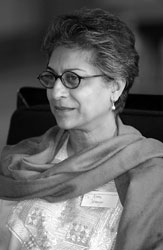
Elections 2013. Recently, Imran Khan has objected to the idea of Asma
Jahangir being appointed care-taker PM since she allegedly is not
"neutral" enough. Jahangir is an indefatigable champion of human
rights and a trail-blazer when it comes to speaking up for marginalised
groups. I am sure Khan would agree to this. But he doesn't seem to trust
Jahangir's ability to show fidelity to relevant requirements of neutrality
under an oath. This is quite simply a contradiction. Allow me to explain why. Why do we have to believe
that someone who is deeply passionate and can advocate nuanced positions is
somehow incapable of having enough integrity to be faithful to the
responsibilities of an office they are saddled with? It is profoundly sad
that Khan believes this. As so often in the past he is trying to align his
voice with that of the times and screaming criticism that lacks nuance. His
loss. And ours too. People like Jahangir are
celebrated precisely because they have the "integrity" to stand out
from the rhetoric of the mob that surrounds them. These people are breathing,
indeed shining, examples of what integrity should be - speaking up for rights
not just because it is convenient but because it is the right thing to do. There is an obvious irony
here too in Khan saying a lawyer can't put aside her personal views. This may
be news to Khan but every day we lawyers put aside our personal views, wear a
hat (reflected in our brief) and faithfully argue positions we may or may not
personally agree with. We argue those positions because the system demands
that "integrity" from us. But there is more to this debate. We are asking people to be
muted conformists if we ask them to believe that neutrality somehow means not
taking a position - and not taking a position ever. What is greatness then if
not taking positions we passionately believe in? Take
Supreme Court judges in any country. We harp on their independence and
neutrality. But think about it: a lot of them were lawyers who helped
corporations, including very rich ones, take positions and prevail with
stances that shaped national policies and economies. They aligned themselves
with certain social, political and economic positions that helped them get
clients and win cases. But once they take an oath we trust them, don't we? It is fidelity to that oath
that defines integrity and not your positions or personal views previously
articulated. We will kill ambition in our future generations if we tell them
that neutrality means not taking a position. Or that taking a position
somehow means being banished from offices that require neutrality or
integrity. All of our public offices
carry implicit and often explicit requirements of integrity - and that
integrity simply cannot be interpreted to suggest never having voiced a
controversial or even partisan opinion or viewpoint. Men and women with a
sense of history and their responsibility separate the personal from the
professional. Everyone including bureaucrats, military generals and judges
cast votes. Those votes are expressions of opinion but would Khan question
their integrity regarding their offices? Isn't he accepting that judges and
bureaucrats, despite holding political opinions, don't let them interfere
with their duties? And doesn't he precisely trust their fidelity to the oath
after they took it? It takes a certain amount
of courage to openly express views and their expression shouldn't be punished
by sidelining people like Jahangir at this time. Intellectual giants like her
enrich our public discourse not only by taking positions but by inspiring us
to voice our views. People like her remind us that integrity resides not in
ever taking a position but by being faithful to your responsibilities at that
particular point in time. The views cited by Khan
were expressed by Jahangir when she was not holding a public office that
demanded impartial treatment of parties. Her criticism of the superior
judiciary reflects her courage and not partisanship. Public offices will be
poorer if they are occupied by people who cannot voice a difference of
opinion. Nothing in Jahangir's past
gives anyone a reason to doubt that she will be faithful to her oath as
caretaker PM of this country. Professor Noah Feldman at
Harvard Law School reflects upon such discourse too. While talking about his
book, "Scorpions: The battles and triumphs of FDR's Great Supreme Court
Justices", Feldman has repeatedly lamented the discourse suggesting that
future US Supreme Court Justices should play it "safe" throughout
their career if they want to be nominated to the bench. He is justifiably
saddened that our ideas of greatness, independence and impartiality are now
coloured with requirements of never writing or voicing an opinion in which
you might be seen as taking sides. No ambitious person will aspire to any
public office (since all require "integrity" as Khan defines it) if
integrity is equated with never speaking your mind. All integrity should mean
is: don't allow your personal views to violate requirements of your oath. It
shouldn't mean "stop voicing views since someday you might aspire to an
office requiring impartial conduct." This can only be done by
individuals who are brave, courageous and can handle criticism. Jahangir is
one such champion. Khan is being short-sighted. It may or may not cost him an
election but it has cost him the respect of many Pakistanis - including this
one. Does my opinion here mean I can never aspire to be a holder of a public
office requiring impartiality or integrity? I will take my chances - and that
is an inspiration I and many others owe to the likes of Jahangir. Kudos to
her.
The start of the
year 2013 does not augur too well for Pakistan - as the outbreak of measles
has claimed lives of more than 100 children across the country in January
alone. Statistics gathered by the
World Health Organisation (WHO) are shocking: More than 310 children died of
measles in 2012 as opposed to 64 in 2011.
The worst hit province is
Sindh, where this respiratory disease has killed 69 children in the first
month of the year 2013. Last year, mostly between October and December, some
210 child deaths were reported, says a WHO official. According to this global
health organisation, Punjab has reported 25 children dead due to measles and
Balochistan 33 in the first three weeks of 2013. "It's certainly an
alarming situation," says Maryam Yunus, spokesperson WHO, adding,
"The WHO and UNICEF together provided 4.4 million doses of measles
vaccines last year to target children in the flood-affected areas of Sindh."
Figures collected from various official sources and surveys place abysmally
low vaccination coverage, malnutrition, severe deficiency of Vitamin A and
low immunity at the root of this problem. According to Pakistan
Social and Living Standards Measurement survey (2010-2011), Pakistan's
routine immunisation coverage does not meet the optimal routine immunisation
rate of more than 80 per cent. "Pakistan's routine immunisation coverage
is close to 65 per cent with only some important cities of Punjab recording a
better performance," says Dr Sabatinelli, country director WHO. He
maintains that the huge difference of routine immunisation coverage between
provinces, districts and cities is at the root of the current measles
outbreaks. As an emergency response to
the outbreak of measles in Sindh, the Provincial Health Ministry started a
measles vaccination campaign, targeting 2.9 million (2,900,000) children
between December 31, 2012 and January 9, 2013 in eight districts of Sindh -
Sukkur, Khairpur, Larkana, Qamber-Shadadkot, Shikarpur, Jacobabad, Ghotki and
Kashmore. Measles is a highly
contagious disease caused by a virus, specifically paramyxovirus. In 1980,
before widespread vaccination, measles caused an estimated 2.6 million deaths
each year. It is one of the most readily transmitted communicable diseases. A
dose of measles vaccine, given by the intramuscular or subcutaneous route,
with opportunity for second dose at least a month after, may prevent a child
from this disease. The WHO recommends every child must receive two doses of
measles vaccine. The vaccination campaign is
now well expanded in Pakistan. Vitamin A doses are being provided to all
vulnerable children during vaccination campaign and health awareness and
education is also being imparted at operational sites. "We have also
stepped-up the vaccination campaign while control room has been established
in the office of director general health o monitor the campaign," says
Dr Nisar Cheema, director general Health Services Punjab. "Measles spreads
rapidly among un-immunised children and adults," says Dr Tariq Bhutta,
chairman National Immunization Technical Advisory Committee WHO, which works
independently in Pakistan. He says the measles
vaccination coverage in Pakistan is only 50 per cent, and even among those
who have been immunised about 20 per cent is likely to not develop immunity
against measles. "This means that every second year there will be an
outbreak of measles in the country," he adds. In Pakistan,
"displaced people are particularly vulnerable to the disease. Severe
malnutrition and overcrowding causes the virus to spread rapidly," Dr
Bhutta adds. Even though the strategy of
responsive surveillance by the government has improvement, "it's too
late now. We always wake up late," he laments. Currently, he says,
"measles vaccine is available in Pakistan in short supply. There is also
shortage of the Vitamin A. Punjab and Sindh have placed an order for more
doses of measles vaccination". The situation could be
further alarming in Pakistan in coming weeks, fears Dr Bhutta, adding,
"The devolution of ministry of health after the 20th Amendment and lack
of capacity of the provinces to handle the issues of health is also a major
cause of the low coverage of vaccinations and outbreaks." vaqargillani@gmail.com |
|