|
|
| |
instep
comment
Living and learning in a post-Jackson world
The man, the music, the magic, the headlines… the system that made Michael Jackson ensures that he lives on after death. Where do we stand?
By Muniba Kamal |
| |
It's a strange time to live in – this post-Michael Jackson world; and a stranger time to chronicle the brighter face of Pakistan, which would be our culture - or to reduce it to its hippest most happening face, music, fashion, and television. If there is anything that drives home the importance of these seemingly trivial facets of civilization, it's the death of Michael Jackson and all that ensued.
I concede that while the Taliban, violence and terrorism are, by far, more serious pressing matters - they are not inspirational. These are not issues that pick us up, they are issues that pull us down. They are the harsh realities of life, not at all the stuff of dreams and what would living be without dreaming? |
 |
|
| |
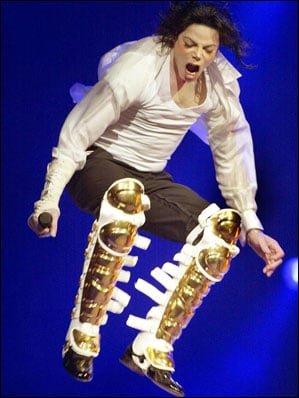
Michael Jackson's memorial was the most watched event in television history. People mourned his death all over the world. The Thriller who taught us how to (or at least try to) moonwalk was no more; a voice we grew up listening to, the magical man who moved like no one we remember or have seen since, who lifted us up from the hum drum into a fantastical realm was gone. The world felt the pinch.
While he was rather low profile during his final years apart from the occassional scandal, in death Michael Jackson was everywhere: on television and radio, on Youtube, Facebook, MySpace and more. His death made front page headlines around the world and grabbed television viewership across the globe. It's being reported that the activity recorded in terms of exchanging and posting Michael Jackson related content online is unprecedented. The Nielsen Company is trying to gather the global viewership of his memorial both on television and on the web and they say the task could take weeks. In America, the ratings for Michael Jackson's memorial rivals President Obama's inauguration. however, it would be safe to say that Obama's years in office will not generate the mind boggling archives Michael Jackson's career did. |
| |
 |
Jackson's death made the world reflect on his life and times. Out came clips from the Jackson 5 performing at Soul Town, the song 'Ben' that he sung at the Oscars in 1973, the unforgettable recording of Michael Jackson performing 'Billie Jean' at Motown's 25th Anniversary a decade later in 1983, all the versions of 'Thriller' ever released and all the videos they inspired - in Pakistan, South India and the Philippines, both the videos for the controversial 'They Don't Really Care About Us' for which Michael faced allegation for being Anti-Semitic. The list goes on and on; it is as endless as the stories that are still being churned out about him. The stories about how Michael Jackson desegregated MTV by the force of his talent alone, anecdotes of his work with the great Quincy Jones, about how Berry Gordy of Motown discovered him but tutored Michael to say Diana Ross discovered him instead to create a splash make a fascinating read. Watching the archived history of Michael Jackson come out in one forceful final tumble makes the mind reel. |
|
| |
Cynics would say that he was the product of the media machine that finally consumed, but if truth be told, it was machine that made Michael Jackson the force that he was. One can clearly see that at his peak Jackson was a phenomenon riding masterfully on the wave of an industry that in turn rode on him. Yes, he let it spiral out of control, but that's missing the point. If you don't get the game, you become easy game - end of the sob story.
One can see similarities between the American system that hurls massive stars out into the stratosphere - for whom the concert circuit extends from New York to London to Dubai to Delhi, to Sydney and umpteen places in between - and India which is getting there. They may not have the musicians but they have Amitabh Bachchan and Shahrukh Khan who have a global fan base in their own right and sell out shows around the world on a scale that gets bigger every time.
We have sparks of brilliance like like the late and great Nusrat Fateh Ali Khan who garnered respect around the world. He was recommended to Peter Gabriel by another Pakistani legend Imran Khan, who scaled heights not just on basis of his talent but also his savvy. Coming back to Nusrat, he was pure talent and no vision. He had no idea that a song he recorded with A.R. Rahman would land up on an album titled Vande Mataram, just like Atif Aslam had no idea that 'Pehli Nazar', a song he recorded for the for the Indian film Race, and that became a raging hit on both sides of the border, will be used to advertise a condom called Manforce in India. No one looks out for our stars. There is no representation perhaps because so far the system (whatever there is of it here) is too busy figuring itself out to create icons.
|
| |
At one point they say Michael Jackson was the 'M' in MTV. Lets look at all our music channels that are fast becoming youth channels. They focus more on veejays than the musicians.
They would rather make a swift buck by having viewers 'call in' to shows hosted by a plethora of attractive (a few even intelligent) girls who could be hugely effective were they not to field phone calls from random Pakistanis who call in to say "Aap na, mujhe bohat achchi lagti hain aur meri bhabi ko bhi.Aap nay kitna pyara dress pehna hai." It shouldn't take a rocket scientist to figure out that this not what they mean by interactive programming.
Our music/youth channels don't have much of a following, which is surprising because we are a young country, with the vast majority in their teens and twenties. If the youth in Pakistan were actually watching these channels, they would be a rollicking success. Something is wrong somewhere. |
|
|
But we have flashes of brilliance alright. Music right now is riding the marvelous high of Coke Studio (the show is heavy on content with a capital 'C'). Rohail Hyatt hasn't just put together musicians and make them belt out their songs, he's crafted songs with them, given a new sound, involved umpteen instrumentalists with the finesse of a producer looking for greatness, not one directing ten shows in one month. No wonder the show is a success. I haven't seen a Pakistani program so heavily traded online before. Coke Studio is groundbreaking, which is what we need and that it is more about the collective than one man makes it so necessary in the greater scheme of things.
A flash of brilliance and then we go down. The music industry is trying to band together under one banner with the Union for Pop. Previously, they also formed the Association for Music Professionals of Pakistan (AMPP) so one sees no need for a newer platform. There also seems to some confusion as to whether they are one and the same organization.
|
| |
|
| |
Some musicians say they are the same, others say they are not… but no clear answer is given. It's an idea announced with no follow through and one predicts that like AMPP it will come to naught. On the other hand Farhad Humayun's The System sounds like a good idea, grass roots, with little dependence on corporations to give a green signal to shows. It remains to be seen where it goes… the tragedy is that in this country grand schemes are often floated and they end in nothing because they haven't been well-planned out and because of infighting and ego tussles.
Fashion is faring slightly better within its niche framework. There are bonafide Pakistani retail brands now like Khaadi, Ego, Stone Age, Crossroads, FnkAsia and Teejay's that Feeha Jamshed is breathing a whole new style sensibility into. Multi-label boutiques have opened up in all three cities. Big shows are being held in both Karachi and Lahore, with Ensemble taking the lead in Karachi and the Pakistan Fashion Design Council in Lahore. Yet the latter gets minimal coverage because members of the fashion press are banned. And when that happens it's almost like the show hardly happened if it ever did. For anyone who wants to be in the limelight, banning the press is essentially cutting off their nose to spite their face. And many in the fashion industry seem short-sighted enough to do it. But fear not, the pond is getting bigger. |
| |
The Lux Style Awards have contributed hugely to making designers household names. They put fashion on the red carpet, designers, models and photographers in the nominees and make sure that the national spotlight is on the fashion industry that would otherwise be restricted to glossies that print in meager thousands or English newspapers that have slightly more readership, but it is nothing compared to the sweeping reach of television. Fashion channels aren't helping either because no one is watching them really, thanks to a lack of real content. Fashion shows on television don't make for exciting viewing. Yet it is among the fashion industry that the LSAs find the least support. Infighting and politics marks them every year. Designers who bad mouth the awards turn up to accept trophies . And then there are designers who question the credibility of the awards despite being nominated because their friends (read camp members) didn't make it as nominees. The fashion politics around the LSAs is a veritable theatre of the absurd, but I guess that's fashion! |
|
|
| |
However, in the larger scheme of things, fashion doesn't really matter. People tune in to see the stars. Despite the Shaan-Iman Ali fiasco on stage when they pulled each other down and Khuda Kay Liye with them, the last LSAs got the highest ratings yet, which means more viewers are tuning in every year. That soon after this fiasco, Iman Ali and Shaan kissed and made up to appear in the Lux commercial and said very sweet things about each other at the launch of the commercial made one sick. It showed up the 'paisa phaink, tamasha dekh' mentality of our reigning stars. And then we wonder why we don't have icons. However, the way both actors were universally bashed by the press and Fawad Khan, who acted with great dignity, came out as the bigger person especially after the airing of the show will add to the learning curve of Shaan and Iman. I'm sure in the future, they will at least ACT dignified if need be. |
|
 |
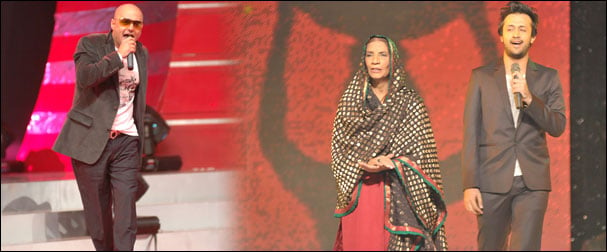
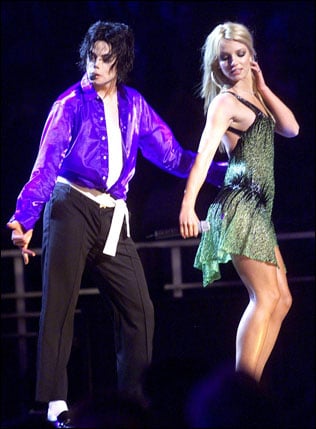
Yet in retrospect, their fight is a moment, just like Rizwan Beyg's speech welcoming young designers into the fold, Babra Sharif's electrifying performance, Naheed Akhtar singing live to funky remixes of her hits and Atif Aslam dancing with Aaminah Haq. These are moments that are archived on film and can be picked up and run as need be. Just watching Michael Jackson perform 'The Way You Make Me Feel' with Britney Spears at the Madison Square Garden takes your breath away; just as Atif Aslam singing 'Lambi Judaai' with Reshma left a lump in everyone's throat. These moments are magic.
Michael Jackson's career is littered with these moments of magic. The red leather jacket he wore in the 'Beat It' video is a part of fashion history. His moonwalk is copied by millions around the world. After his death, the media has turned him into a saint again and
|
|
the Michael Jackson machine continues to rake in millions as his albums hit the top of the charts again. The system ensures his magic lives on. Let's not tear our fragile system down at the least given opportunity. |
| |
|